Targeting Pulmonary Endothelium in Acute Lung Injury and Acute Respiratory Distress Syndrome

88kviews
Editorial08 October 2025
Editorial: Targeting pulmonary endothelium in acute lung injury and acute respiratory distress syndrome

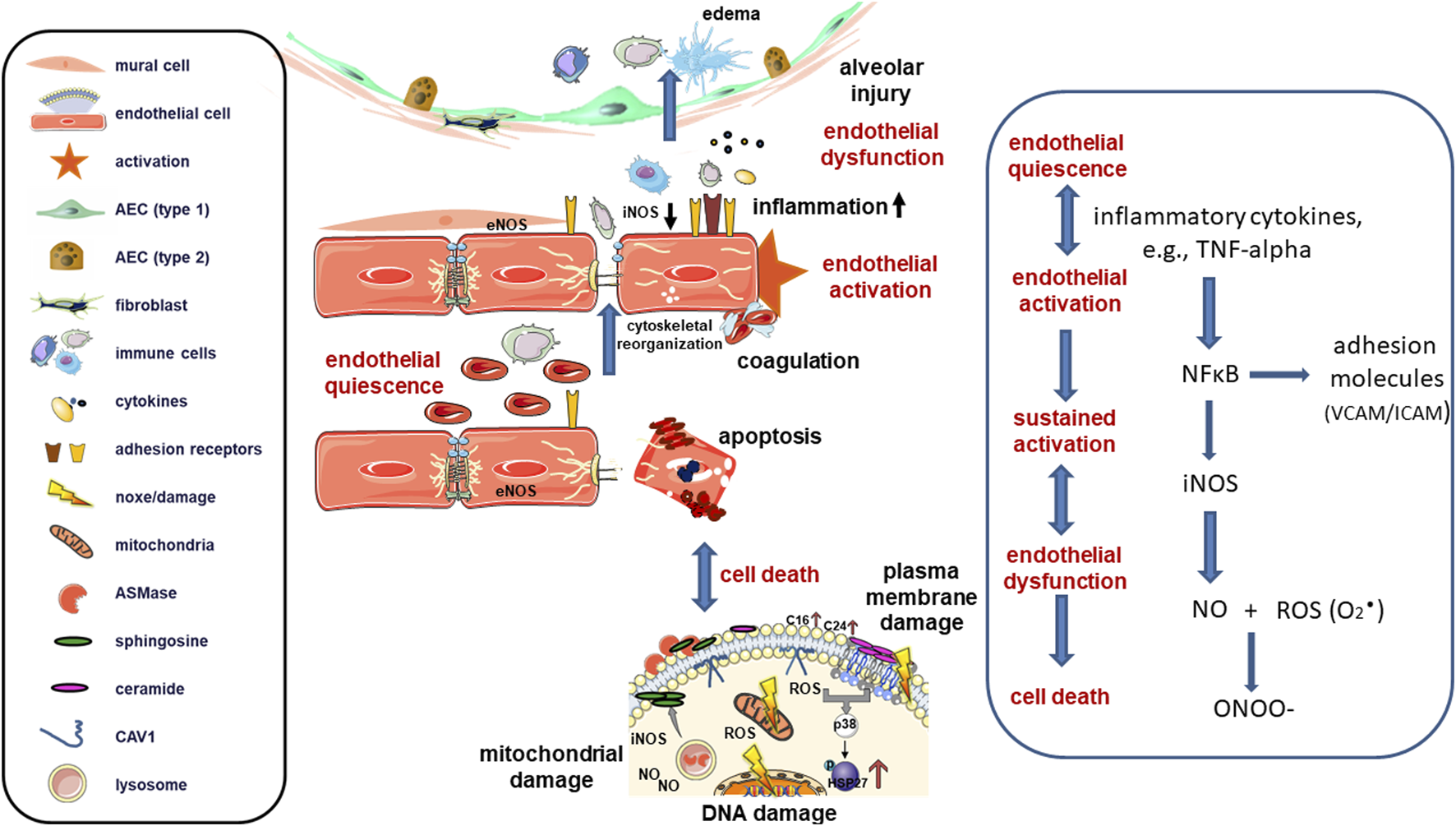
Acute lung injury (ALI) and acute respiratory distress syndrome (ARDS) remain major causes of mortality in critical care, despite advances in mechanical ventilation and supportive care (1,2). The pulmonary endothelium, a thin, semipermeable barrier lining the pulmonary vasculature, plays a central role in the pathogenesis of ALI/ARDS. Endothelial dysfunction drives vascular leak, inflammation, and coagulation abnormalities-hallmark features of ALI/ARDS that culminate in alveolar edema and hypoxemia (3,4). This Research Topic, "Targeting Pulmonary Endothelium in Acute Lung Injury and Acute Respiratory Distress Syndrome," brings together 13 articles that dissect the molecular mechanisms of endothelial injury, identify novel biomarkers, and explore endothelial-targeted therapeutic strategies, addressing critical gaps in our understanding of these devastating conditions.

2,308 views

The pathogenesis and therapeutic strategies of heat stroke-induced endothelial injury
REVIEW
9 July 2025
The pathogenesis and therapeutic strategies of heat stroke-induced endothelial injury
Shaokang Wang, 4 more and Meitang Wang
Heat stroke is a severe and life-threatening condition characterized by elevated core body temperature and central nervous system dysfunction, often accompanied by multi-organ damage. The incidence and mortality of heat stroke are increasing due to global warming and more frequent heatwaves. This review aims to summarize the recent progress in understanding the pathogenesis of heat stroke-induced endothelial injury and explore potential therapeutic strategies. The vascular endothelium plays a crucial role in maintaining vascular homeostasis, and its dysfunction is a key factor in the development of heat stroke complications. The pathogenesis of heat stroke-induced endothelial injury involves multiple mechanisms, including degradation of the endothelial glycocalyx, impaired vascular tone regulation, disruption of intercellular junctional proteins, and activation of regulated cell death pathways. Biomarkers such as syndecan-1, endothelin-1, and von Willebrand factor are associated with endothelial injury and can predict disease severity and outcomes. Potential interventions include early fluid resuscitation, heat acclimation, and targeted therapies to inhibit specific cell death pathways or protect the endothelial glycocalyx. Further research is needed to elucidate the detailed mechanisms and develop targeted therapeutic interventions to reduce the morbidity and mortality of heat stroke.

7,551 views

19 citations

MINI REVIEW
22 July 2025
Ferroptosis: a key driver and therapeutic target in the pathogenesis of acute respiratory distress syndrome
Mingjun Yao, 5 more and Yi Wang

7,428 views

16 citations

REVIEW
17 June 2025
Single-cell RNA sequencing: new insights for pulmonary endothelial cells
Ying Yang, 3 more and Chengfang Yao

6,062 views

2 citations

ORIGINAL RESEARCH
25 June 2025
Dexmedetomidine reduces acute lung injury caused by LPS through the SIRT3 signaling pathway in vivo
Jian Chen, 5 more and Yingying Sun

2,247 views

2 citations

REVIEW
22 May 2025
Unraveling the deadly dance: endothelial cells and neutrophils in sepsis-induced acute lung injury/acute respiratory distress syndrome
Xiujuan Xu, 6 more and Shangwen Pan

8,022 views

31 citations

ORIGINAL RESEARCH
24 March 2025
CMTM3 regulates vascular endothelial cell dysfunction by influencing pulmonary vascular endothelial permeability and inflammation in ARDS
Ziyan Xiao, 7 more and Fengxue Zhu

3,277 views

4 citations

ORIGINAL RESEARCH
1 April 2025
Dexmedetomidine alleviates lung ischemia-reperfusion injury by inhibiting cuproptosis: an in vivo study
Hanqun Liu, 5 more and Wenjie Jiao

2,940 views

3 citations

Cell death in acute lung injury: caspase-regulated apoptosis, pyroptosis, necroptosis, and PANoptosis
REVIEW
21 March 2025
Cell death in acute lung injury: caspase-regulated apoptosis, pyroptosis, necroptosis, and PANoptosis
Jun Xiao, 2 more and Ana Hou
There has been abundant research on the variety of programmed cell death pathways. Apoptosis, pyroptosis, and necroptosis under the action of the caspase family are essential for the innate immune response. Caspases are classified into inflammatory caspase-1/4/5/11, apoptotic caspase-3/6/7, and caspase-2/8/9/10. Although necroptosis is not caspase-dependent to transmit cell death signals, it can cross-link with pyroptosis and apoptosis signals under the regulation of caspase-8. An increasing number of studies have reiterated the involvement of the caspase family in acute lung injuries caused by bacterial and viral infections, blood transfusion, and ventilation, which is influenced by noxious stimuli that activate or inhibit caspase engagement pathways, leading to subsequent lung injury. This article reviews the role of caspases implicated in diverse programmed cell death mechanisms in acute lung injury and the status of research on relevant inhibitors against essential target proteins of the described cell death mechanisms. The findings of this review may help in delineating novel therapeutic targets for acute lung injury.

10,457 views

35 citations

ORIGINAL RESEARCH
21 February 2025
Inhibition of renin-angiotensin system attenuates type I alveolar epithelial cell necroptosis in rats after hyperbaric hyperoxic exposure
CuiHong Han, 6 more and WenWu Liu

1,685 views

1 citations

ORIGINAL RESEARCH
17 February 2025
The value of heparin-binding protein in bronchoalveolar lavage fluid in acute respiratory distress syndrome
Yang Liu, 5 more and Shao-lin Ma

2,219 views

3 citations

SYSTEMATIC REVIEW
3 February 2025
Comparative outcomes of corticosteroids, neuromuscular blocking agents, and inhaled nitric oxide in ARDS: a systematic review and network meta-analysis
Zhiyuan Xu, 2 more and Xianliang Yan

5,396 views

4 citations

REVIEW
13 August 2024
Idiopathic pulmonary fibrosis (IPF) is a chronic progressive disease of unknown origin and the most common interstitial lung disease. However, therapeutic options for IPF are limited, and novel therapies are urgently needed. Histone deacetylases (HDACs) are enzymes that participate in balancing histone acetylation activity for chromatin remodeling and gene transcription regulation. Increasing evidence suggests that the HDAC family is linked to the development and progression of chronic fibrotic diseases, including IPF. This review aims to summarize available information on HDACs and related inhibitors and their potential applications in treating IPF. In the future, HDACs may serve as novel targets, which can aid in understanding the etiology of PF, and selective inhibition of single HDACs or disruption of HDAC genes may serve as a strategy for treating PF.
Histone deacetylases: potential therapeutic targets for idiopathic pulmonary fibrosis

6,372 views

14 citations