Pathophysiology of Sensitive Skin

150kviews
Editorial28 April 2020
Editorial: Pathophysiology of Sensitive Skin

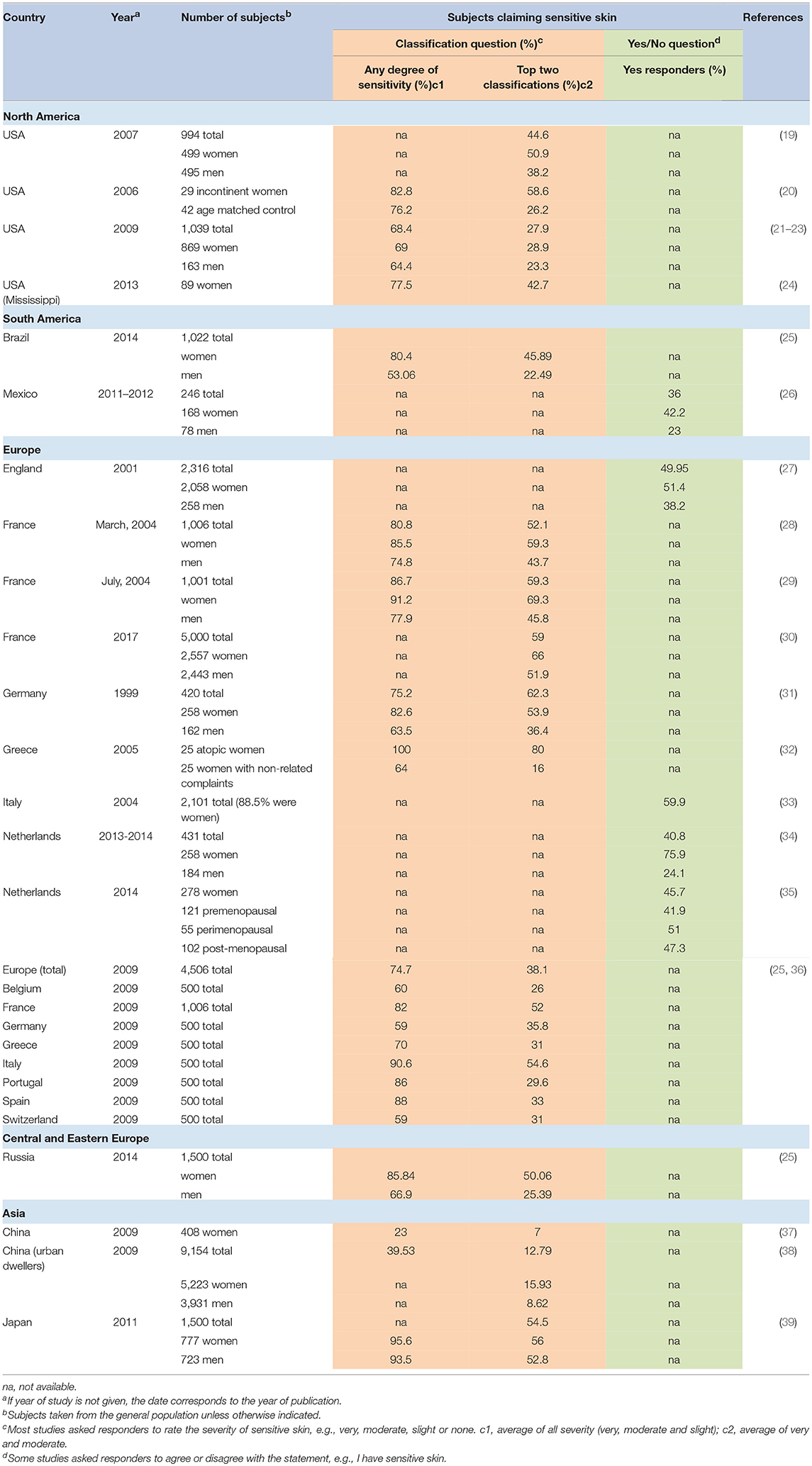
Sensitive skin is more and more studied 1 Farage reviewed survey data on the prevalence of self-declared sensitive skin in various geographies, among different gender and age groups, and at various anatomic sites. In addition, she reviewe the factors that may contribute to sensitive skin, and the physiological characteristics associated with this condition, including impaired barrier function and heightened neuralreactions. Approximately 60-70% of women and 50-60% of men report having some degree of sensitive skin. Brenaut et al. provided new data for India. In total, 27.9% of men and 36.7% of women declared having "sensitive" or "very sensitive" skin. Farage also reviewed data on sensitive skin in the genital area.The genital area can be exposed to conditions of higher temperature, different habits and practices and moisture due to the semi-occlusive environment. For some individuals, additional challenges such as incontinence can provide triggering factors for skin sensitivity that effect only the genital area. The effects of menopause were also considered.Schmelz summarized data on itch processing in the skin. Individuals classified as having sensitive skin report increased itch and pain sensations upon weak external stimuli that are not painful or itchy in the control group. Taken together, these and other recent publications emphasize that sensitive skin is real-and not an industry claim invention -suggesting that understanding the mechanisms involved -will aid the patient/consumer.

5,221 views

3 citations

MINI REVIEW
28 May 2019
Sensitive Skin: Lessons From Transcriptomic Studies
Adeline Bataille, 2 more and Laurent Misery
In 2016, a special interest group from the International Forum for the Study of Itch defined sensitive skin (SS) as a syndrome that manifests with the occurrence of unpleasant sensations (stinging, burning, pain, pruritus, and tingling sensations) after stimuli that should not cause a reaction, such as water, cold, heat, or other physical and/or chemical factors. The pathophysiology of sensitive skin is still poorly understood, but the symptoms described suggest inflammation and peripheral innervation. Only two publications have focused on sensitive skin transcriptomics. In the first study, the authors performed a microarray comparison of SS and nonsensitive skin (NSS) samples and showed differences in the expression of numerous genes in SS and NSS samples. Moreover, in the SS samples, two clusters of genes were identified, including upregulated and downregulated genes, compared to NSS samples. These results provide some interesting clues for the understanding of the pathophysiology of SS. The second study compared SS and NSS samples using RNA-seq assays. This method allowed the identification of long noncoding RNAs (lncRNAs) and differentially expressed mRNAs and provided a comprehensive profile in subjects with SS. The results showed that a wide range of genes may be involved in the pathogenesis of SS and suggested pathways that could be associated with them. In this paper, we discuss these two studies in detail and show how transcriptomic studies can help understand the pathophysiology of sensitive skin. We call for new transcriptomic studies on larger populations to be conducted before putative pathogenic mechanisms can be detected and analyzed to achieve a better understanding of this complex condition..

6,590 views

16 citations

The Prevalence of Sensitive Skin
Sensitive skin has been described as unpleasant sensory responses to stimuli that should not provoke such sensations. Objectively measurable signs of irritation are not always present in individuals with sensitive skin, however, subjective sensory effects such as, itching, burning, stinging, tightness and dryness, are consistently present. Given the subjective nature of the phenomenon known as sensitive skin, surveys have been a popular approach to evaluating the prevalence of this condition among the general population, and a number of them have been conducted worldwide. Overall, approximately 60-70% of women and 50-60% of men report having some degree of sensitive skin. However, there are differences between populations in various geographies, and perceptions of sensitive skin at specific anatomic sites. This article is a review of survey data on the prevalence of self-declared sensitive skin in various geographies, among different gender and age groups, and at various anatomic sites. In addition, we review the factors that may contribute to sensitive skin, and the physiological characteristics associated with this condition, including impaired barrier function and heightened neural reactions.

95,338 views

118 citations

Sensitive Skin in the Genital Area
When evaluating sensitive skin, it is common to focus on the face. However, it is becoming increasingly clear that individuals can have different perceptions about the degree of skin sensitivity at distinct anatomic sites. Structural variations in the skin of different body sites can contribute to differences in barrier function, which may contribute to differences in skin sensitivity. Potential triggering factors for skin sensitivity would be expected to vary by body site. For example, the face is exposed to all ambient environmental conditions in the course of daily life, and to several products (e.g., cosmetics for women) and practices (e.g., shaving for men) that may lead to adverse sensations associated with sensitive skin. In contrast, the skin of the genital area is protected from ambient environmental conditions. However, the genital area can be exposed to conditions of higher temperature, different habits and practices and moisture due to the semi-occlusive environment. For some individuals, additional challenges such as incontinence can provide triggering factors for skin sensitivity that effect only the genital area. This article reviews data on the perception of sensitive skin of the genital area, differences based on gender, age, racial differences, and the effects of incontinence on skin sensitivity. The effects of menopause are also considered with regards to sensitive skin perceptions and to emerging differences in biomolecular and physical measures of the urogenital skin.

67,107 views

21 citations

BRIEF RESEARCH REPORT
17 April 2019
Comparison of Characteristics of Neuropathic and Non-neuropathic Pruritus to Develop a Tool for the Diagnosis of Neuropathic Pruritus: The NP5
Johanna Huguen, 6 more and Laurent Misery

8,533 views

14 citations