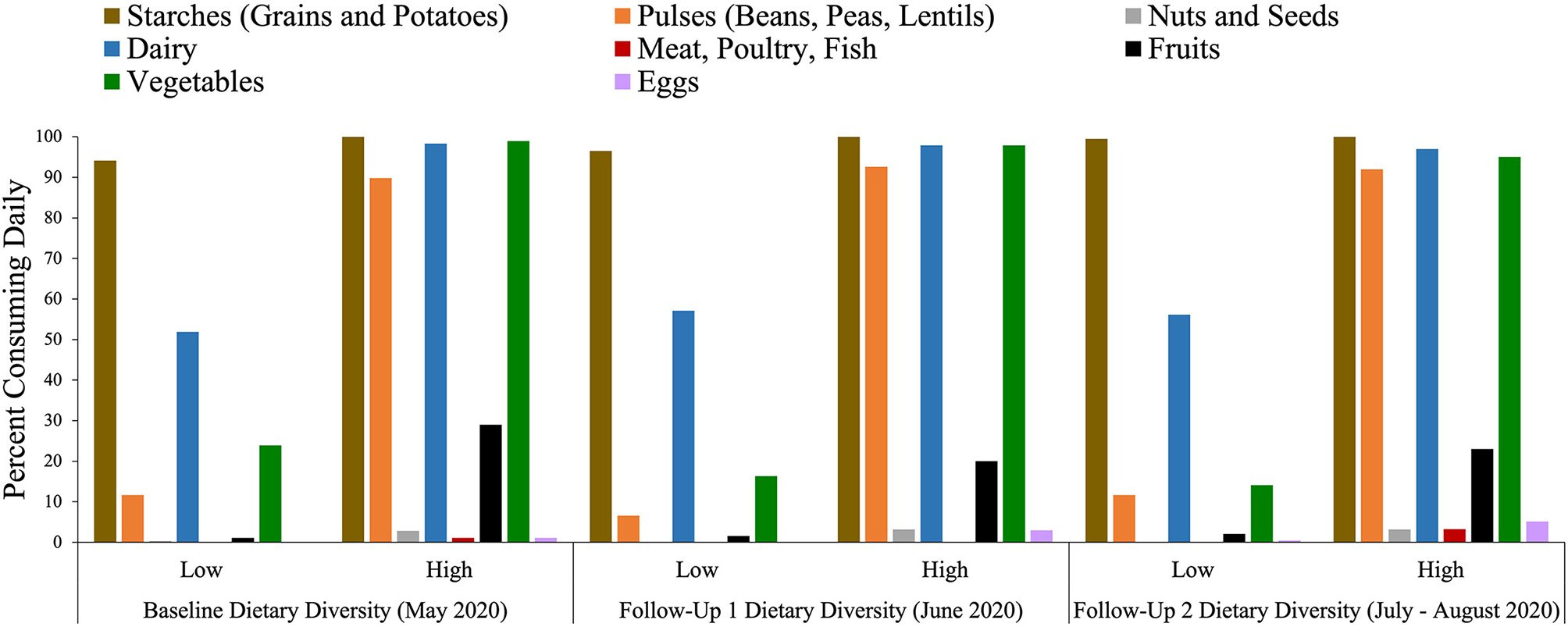
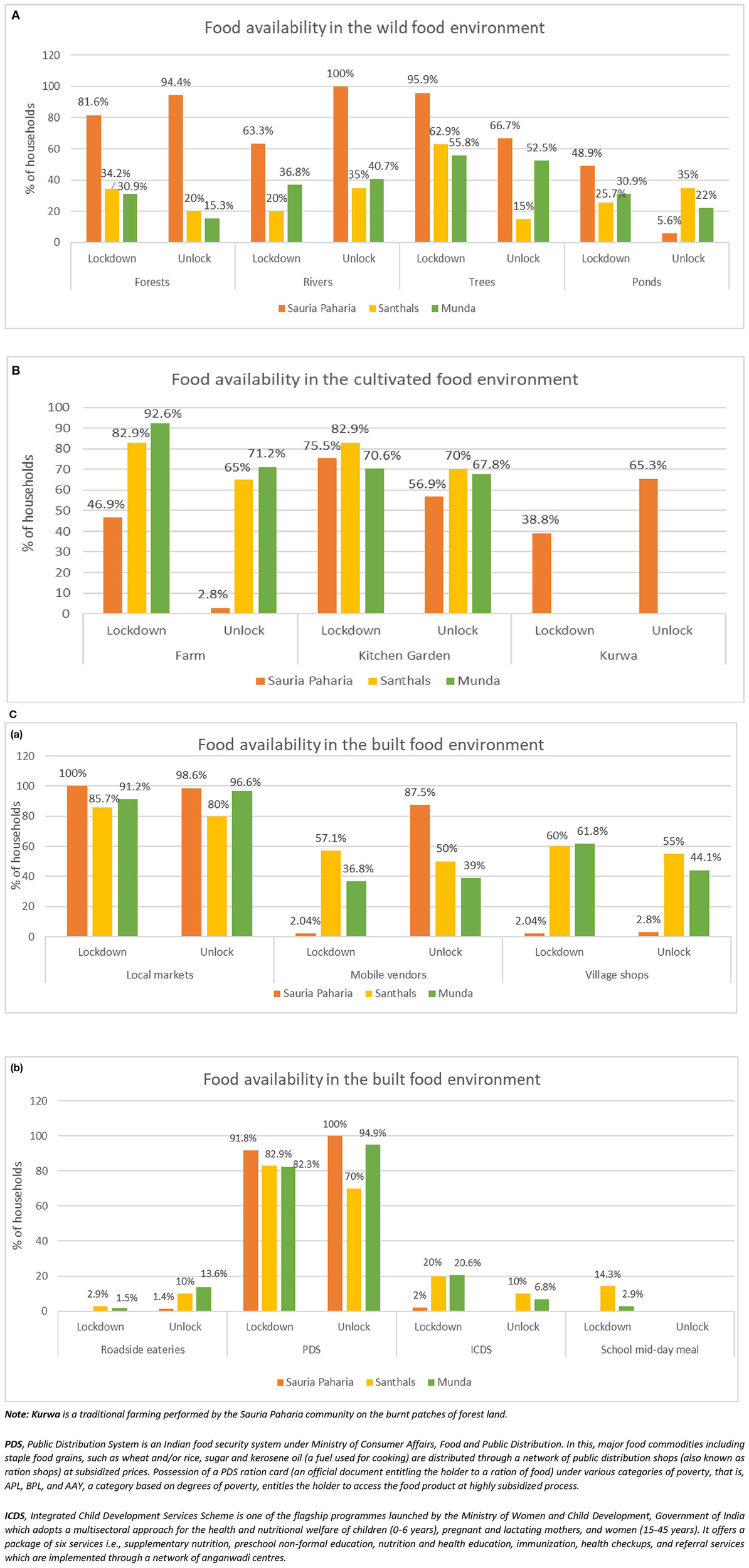
two articles have been accepted by the editors for publication out of 29 that were submitted.The articles consider food systems world-wide -eight countries in Asia, seven from North America, three in Africa, , two each from Central and South America and one from Australia and Europe.The challenges to Food security affected initially its stability dimension and the ability to withstand shocks, but soon involved the whole pathway of availability (at national level), accessibility (household) level) and utilization (individual) and also to include sustainability (Berry, 2015). The new food security dimension of agency (Clapp, 2022) was very engaged in the responses of the social media providing positive coping strategies (including humor) (Peng & Berry, 2021) and negative influences such as anti-vaccination messages (Wilhelm, 2023). The urgency of the situation, unfortunately, placed the on-going challenges of sustainability and climate change in the background, as well as the pandemic of obesity and malnutrition which affects far more people than were stricken by Covid.Responses were considered at different levels -governments, non-profit organizations, the private sector and communities (Maren, 2022) and involving most of the actors along the food chain, especially farmers (Connors , 2021, , Ebel, 2022, Ghosh-Jerath, 2022,) The articles may also be grouped into three principal categories essential for dealing with the Covid pandemic, future zoonoses and general disaster risk reduction (Sendai framework, UNISDR, 2015): Prevention and Preparedness (5); Resilience (10) and Policy (7). Some articles cover more than one of these areas.With regard to short term actions for pandemics, plans must be put in place for national food storage and local food distribution (DuPuis, 2022) during lockdowns especially for at risk groups -homeless, unemployed, elderly, lonely and more. In India, farmers with more crop diversity were more resilient to disruptions in the markets (Connors, 2021). An important practical step, for example, is to ensure the continuation of school meals programs.National and supra-national organizations will have to guarantee that medical aid and vaccinations will be available to countries with weak public health infrastructures. As the pandemic is retreating, there should be national and international mechanisms to help economic recovery in low-and middle-income countries, where the resource-poor became unemployed (Joshi, 2022) and more food insecure, especially in informal settlements around urban areas (Chege, 2022).Actions for the long term include: helping developing countries access the major securities of food, energy and water. Establishing national committees for contingency plans for emergency disasters, which should deal with all aspects of risk management. Health infrastructures must be strengthened regarding personal protective equipment, intensive care units and staff training. Global alert networks should operate for disease surveillance and control of animal markets (Leahy, 2022). Further, it will be important to empower the civil society to counter misinformation on the social media, especially against antivaccination campaigns and anti-public health recommendations (Wilhelm, 2023). In Bangladesh, there was fake news that poultry could transmit the disease (Sattar, 2021).There is a consensus that transparent communication with the general public is of utmost importance to ensure compliance with the public health and other measures necessary for crisis management, particularly when they affect personal liberty and movement.Other considerations identified by the authors necessary to build resilient food systems, deal with unexpected compound risks from extreme weather events (Shalika, 2021); attempts at dietary manipulation with flavonoids for protection (Ghidoli, 2021); ensuring food safety hygiene of food handlers and food supply chain (Eiman, 2021); developing cultural ecosystem services such as community gardens. These provided positive connection with other gardeners and safe spaces of refuge and joint activities such as composting, food donation (Falkowski, 2022). Resilience to market disruption was linked to crop diversity in India (Connors, 2021), and to sanitation in The Gambia (Sidebottom, 2022).In the global food system, many small farmers experienced economic difficulties (Daley, 2022) and depended on off-farm incomes (Ebel, 2022). Their work was hindered by restrictions in movement of farm labour and supplies (Ghosh-Jerath, 2022). The shock of the pandemic did not affect the system equally. Some supply chains lost business while others experienced increased demands. Consumers were not fully confident in the supply chains (Jones, 2022). Overall, exorbitant food prices tested the preparedness of family food security (Munonye, 2022;Dou, 2021). There were also the dangers of food hoarding as consumers attempted to increase their household food security in response to the unpredictable fluctuations and uncertainty in food supplies.However, we believe that the global experiences during Covid may be leveraged to produce positive reactions at national and international levels for planning food systems towards the Sustainable Development goals. But for this to occur, requires a major re-thinking of the policies, methodologies and science involved in the multi-disciplinary activities of food systems (Bene, 2020). The move should be made towards complex adaptive systems where a perfect understanding of the individual parts does not automatically convey a perfect understanding of the whole system's behavior. These systems are dynamic and non-linear with both positive and negative feed-back loops, multiple interconnections; and synergies & trade-offs (Nayak, 2018;Deconinck, 2021).Among the opportunities identified in this research topic we note: transformation of food systems towards sustainability (Frank, 2022) from agro-ecology, finding alternative practices by local food actors to form self-organized producer groups. To improve food security by decentralizing the food supply chain (Tirado-Kulieva, 2022), whereby local producers and vendors collaborated to maintain food availability and multi-level interventions involved government, industry, academia and the general population. Alternative seafoods networks encouraged local and direct marketing, providing functional diversity in the food chain (Stoll, 2021).Opportunities arose to gain access to the diverse wild food environment and revitalize biocultural resources (Ghosh-Jerath, 2022). There were also innovations using e-marketing, relying on family jobs and sharing information for positive resilience effects as found across the USA, China and Norway (Måren, 2022).We hope that this research topic will be used by all the actors in sustainable food systems, and especially policy makers, to learn lessons from this past pandemic (Klassen, 2020), to be better prepared for the next one which will surely come. These, and more, are necessary to safeguard the survival of our planet (Rockstrom, 2023;Smil, 2022).


6 Authors
- SG
Suparna Ghosh-Jerath
Indian Institute of Public Health-Delhi, Public Health Foundation of India, India
- RK
Ridhima Kapoor
Indian Institute of Public Health-Delhi, Public Health Foundation of India, India
- AD
Ayushi Dhasmana
Indian Institute of Public Health-Delhi, Public Health Foundation of India, India
- AS
Archna Singh
Department of Biochemistry, All India Institute of Medical Sciences (AIIMS), India
- SD
Shauna Downs
Department of Urban-Global Public Health, Rutgers School of Public Health, United States
- SA
Selena Ahmed
Department of Health and Human Development, Montana State University, United States

13,599 views
6 citations

10 Authors
- AA
Abdullah Al Sattar
Department of Medicine and Surgery, Faculty of Veterinary Medicine, ChattogramVeterinary and Animal Sciences University, Bangladesh
- RM
Rashed Mahmud
Department of Medicine and Surgery, Faculty of Veterinary Medicine, ChattogramVeterinary and Animal Sciences University, Bangladesh
- MA
Md. Abu Shoieb Mohsin
Department of Medicine and Surgery, Faculty of Veterinary Medicine, ChattogramVeterinary and Animal Sciences University, Bangladesh
- NN
Nurun Nahar Chisty
Department of Medicine and Surgery, Faculty of Veterinary Medicine, ChattogramVeterinary and Animal Sciences University, Bangladesh
- MH
Md. Helal Uddin
Department of Medicine and Surgery, Faculty of Veterinary Medicine, ChattogramVeterinary and Animal Sciences University, Bangladesh
- NI
Nusrat Irin
Department of Medicine and Surgery, Faculty of Veterinary Medicine, ChattogramVeterinary and Animal Sciences University, Bangladesh
- TB
Tony Barnett
Veterinary Epidemiology, Economics and Public Health Group, Department of Pathobiology and Population Sciences, The Royal Veterinary College, University of London, United Kingdom
- GF
Guillaume Fournie
Veterinary Epidemiology, Economics and Public Health Group, Department of Pathobiology and Population Sciences, The Royal Veterinary College, University of London, United Kingdom
- EH
Eve Houghton
Veterinary Epidemiology, Economics and Public Health Group, Department of Pathobiology and Population Sciences, The Royal Veterinary College, University of London, United Kingdom
- MA
Md. Ahasanul Hoque
Department of Medicine and Surgery, Faculty of Veterinary Medicine, ChattogramVeterinary and Animal Sciences University, Bangladesh