targets. Results from both the computational and experimental studies led them to conclude cinnamaldehyde as a promising multifunctional molecule. Xiao-Long Yuan and the team, in their article "Transcriptome Profiling and Cytological Assessments for Identifying Regulatory Pathways Associated With Diorcinol N-Induced Autophagy in A3 Cells" had noticed the potential of a fungal originated secondary metabolite, Diorcinol N for the treatment and management of acute lymphoblastic leukemia. The authors had utilized both the bioinformatic tools and in vitro methodologies. Diorcinol N was capable of controlling the growth of A3 leukemia cells in a multimodal way. Yanfei Wei and the team, in their article "Computational and In Vitro Analysis of Plumbagin's Molecular Mechanism for the Treatment of Hepatocellular Carcinoma" had studied Plumbagin, naphthoquinone from Plumbago zeylanica L., for the treatment and management of hepatocellular carcinoma. Results from the network pharmacology-based analysis were further validated experimentally using the human hepatocellular carcinoma cell lines, SMMC-7721 and BEL-7404. To combat hepatocellular carcinoma, authors had observed that Plumbagin was able to exert anticancer effects via multiple targets and signaling pathways, including that related to oxidative stress, autophagy, and apoptosis. In their article "Network Pharmacology and Pharmacological Evaluation Reveals the Mechanism of the Sanguisorba Officinalis in Suppressing Hepatocellular Carcinoma" had identified 41 bioactive ingredients from Sanguisorba Officinalis by utilizing some databases like TCMSP and BATMAN-TCM, which then reduced to 12 after filtering through ADME parameters. Network pharmacology approaches were used to analyze those 12 compounds against the selected targets of hepatocellular carcinoma. The results were validated experimentally using human hepatocellular carcinoma cell lines, HepG2, MHCC97H, SMCC7721, and BEL-7404. Based on the bioinformatics analysis, they noticed four compounds like quercetin, kaempferol, mairin, and beta-sitosterol. Overall, they had concluded the significance of Sanguisorba Officinalis as an anticancer agent against hepatocellular carcinoma. Md. Ataur Rahman and the team, in their review article "Phytochemicals as a Complement to Cancer Chemotherapy: Pharmacological Modulation of the Autophagy-Apoptosis Pathway" had critically analyzed and compiled the knowledge about the plant-based natural products which were having potential to modulate autophagy and apoptosis. The authors had represented the pathways well in the form of interactive figures. They illustrated the detailed pathways for the phytomolecules like 18-α-Glycyrrhetinic acid, Oxyresveratrol, and other polyphenolic and alkaloids. They had also indicated the phytochemicals which have currently been investigated in the clinical trials for the treatment and management of various types of cancer. Maryam Ghanbari-Movahed and the team, in their systematic review article "A Systematic Review of the Preventive and Therapeutic Effects of Naringin Against Human Malignancies" had covered several studies indicating the potential of naringin, either alone or synergistic with other drugs or as metal complexes for the treatment and management of various types of human malignancies. They had also specified the plant sources for naringin, all of which belong to the Citrus genus and Rutaceae family. They had reported the significance of naringin against various cancers like bladder, leukemia, lymphoma, brain, breast, cervical, colon, colorectal, esophageal, laryngeal, liver, lung, neuroblastoma, ovarian, prostate, osteosarcoma, chondrosarcoma, melanoma, gastric, and thyroid cancer. Thus, naringin is a multitarget and multiple signaling pathways acting bioactive molecule. Fayyaz Rasool and the team, in their article "Evaluation of the Anticancer Properties of Geranyl Isovalerate, an Active Ingredient of Argyreia nervosa Extract in Colorectal Cancer Cells" had evaluated the effect of geranyl isovalerate against HCT116 and HT29 cell lines related to colorectal cancer. The authors adopted various experimental methodologies for cytotoxicity, live and dead cell detection, JC-1 staining, generation of reactive oxygen species (ROS), genes related to apoptosis, and proteins related to apoptosis. Their results indicated the significance of geranyl isovalerate and generated further interest to assess the translational potential of this WHO-approved food additive as a food supplement. Laeza Alves Sampaio and the team, in their systematic review article "Antitumor Effects of Carvacrol and Thymol: A Systematic Review" had covered the literature published from 2003 to 2021 and systematically analyzed the significance of carvacrol, and its isomeric analog, thymol, in the treatment and management of various types of cancer. Authors have recorded the scientific evidence claiming anticancer potential of these two molecules against cancers like that of breast, liver, colon, liver, lung, prostate, etc. Accordingly, authors have indicated various chemopreventive and antimetastatic effects of these molecules as per the recorded literature. Further studies on these molecules can provide vital information about their therapeutic and translational potential to reach the bedside.Vivek P. Chavda and the team, in their review article "Advanced Computational Methodologies Used in the Discovery of New Natural Anticancer Compounds" had discussed the utility aid of computational techniques in the advancement of natural products-based research with a focus on anticancer compounds. In Table 1, they had also discussed 25 natural compounds with details about their anticancer potential, while Table 2 briefly indicated the computational methodologies and tools used during natural anticancer research. Further, the illustrations made by authors represented the global cancer statistics, stepwise structure elucidation, and protocol for fragment-based screening. This article highlighted the crucial role of reliable computational methodologies in the translational process of natural anticancer agents. Mario Allegra and the team, in their article "Evaluation of the IKKβ Binding of Indicaxanthin by Induced-Fit Docking, Binding Pose Metadynamics, and Molecular Dynamics" had assessed the molecular level mechanistic information related to the inhibition of hIKKβ by Indicaxanthin (a betaxanthin from betalain class), using computational tools and techniques like induced-fit docking, binding pose metadynamics, MD simulations, as well as MM-GBSA binding free energy calculation. Previous reports indicated that Indicaxanthin exhibited activity against human melanoma cells by modulating NF-κB and ceasing IκBα degradation. This had generated interest in the team of Mario to explore the mechanisms further on the molecular level, and their results have indeed provided insights and significant knowledge for readers and researchers. Nuclear factor-κB signalling pathway is a significant and well-known factor influencing immunity, inflammation, cancer, and functioning of the nervous system (Liu et al., 2017;Albensi, 2019). Md. Sahab Uddin and the team, in their review article "Natural Small Molecules Targeting NF-κB Signaling in Glioblastoma" had discussed the structural and functional properties of NF-κB, role of NF-κB in glioblastoma, as well as the information about small natural products like resveratrol, quercetin, apigenin, isothiocyanates, sulforaphane, etc which were able to target NF-κB in glioblastoma. This article will be interesting for the readers, researchers, and clinicians to explore the translational potential of these natural products for the treatment and management of the most aggressive brain cancer, glioblastoma multiforme. Crotoxin, a major constituent from the venom of Crotalus durissus terrificus, is a known for its pharmacological actions like anticancer activity against breast cancer (Almeida et al., 2021), pain alleviation (Teixeira et al., 2020), antithrombotic (de Andrade et al., 2019, etc along with its venomous effects. Ellen Emi Kato and the team, in their research article "Crotoxin Inhibits Endothelial Cell Functions in Two-and Three-dimensional Tumor Microenvironment" studied the antiangiogenic role of the crotoxin in detail and mentioned as to how it will be supportive in the inhibition of tumor progression. Xiao-Yi Feng and the team in their research article "Downregulation of ATP1A1 Expression by Panax notoginseng (Burk.) F.H. Chen Saponins: A Potential Mechanism of Antitumor Effects in HepG2 Cells and In Vivo", had evaluated the saponin enriched formulation (commercial source containing notoginsenoside R1, ginsenoside Rg1, ginsenoside Re, ginsenoside Rb1, and ginsenoside Rd) of Panax notoginseng (Burk.) F.H. Chen against ATP1A1, an important target for the treatment and management of hepatic carcinoma. They had noticed that the saponin enriched formulation was able to downregulate ATP1A1 and its associated signaling pathway when observed in HepG2 cells. These observations will increase the interest of clinicians' and researchers' interest in assessing the translational potential of this saponin enriched formulation of Panax notoginseng (Burk.) F.H. Chen. Rajeev K. Singla and the team, in their review article "Natural Product-Based Studies for the Management of Castration-Resistant Prostate Cancer: Computational to Clinical Studies", had covered the literature from last 36 years, and analysed the information about natural products which were effective against castration-resistant prostate cancer (CRPC). They had covered the epidemiology, tumor microenvironment, signaling pathways, genomic targets related information of CRPC. They had covered the computational studies, preclinical studies, and clinical studies that had proved the therapeutic potential of the natural products against CRPC. Clinical studies are undergoing for the phytomolecules like curcumin, EGCG, gossypol, quercetin, lycopene, soy isoflavones, and resveratrol. These observations will increase the interest of clinicians and researchers to assess the translational potential of natural products for the treatment and management of CRPC.
Editorial22 February 2022
Editorial: Exploration of Natural Product Leads for Multitarget-Based Treatment of Cancer—Computational to Experimental Journey
Background: It is estimated that one in five people worldwide face a diagnosis of a malignant neoplasm during their lifetime. Carvacrol and its isomer, thymol, are natural compounds that act against several diseases, including cancer. Thus, this systematic review aimed to examine and synthesize the knowledge on the antitumor effects of carvacrol and thymol.
Methods: A systematic literature search was carried out in the PubMed, Web of Science, Scopus and Lilacs databases in April 2020 (updated in March 2021) based on the PRISMA 2020 guidelines. The following combination of health descriptors, MeSH terms and their synonyms were used: carvacrol, thymol, antitumor, antineoplastic, anticancer, cytotoxicity, apoptosis, cell proliferation, in vitro and in vivo. To assess the risk of bias in in vivo studies, the SYRCLE Risk of Bias tool was used, and for in vitro studies, a modified version was used.
Results: A total of 1170 records were identified, with 77 meeting the established criteria. The studies were published between 2003 and 2021, with 69 being were in vitro and 10 in vivo. Forty-three used carvacrol, 19 thymol, and 15 studies tested both monoterpenes. It was attested that carvacrol and thymol induced apoptosis, cytotoxicity, cell cycle arrest, antimetastic activity, and also displayed different antiproliferative effects and inhibition of signaling pathways (MAPKs and PI3K/AKT/mTOR).
Conclusions: Carvacrol and thymol exhibited antitumor and antiproliferative activity through several signaling pathways. In vitro, carvacrol appears to be more potent than thymol. However, further in vivo studies with robust methodology are required to define a standard and safe dose, determine their toxic or side effects, and clarify its exact mechanisms of action.
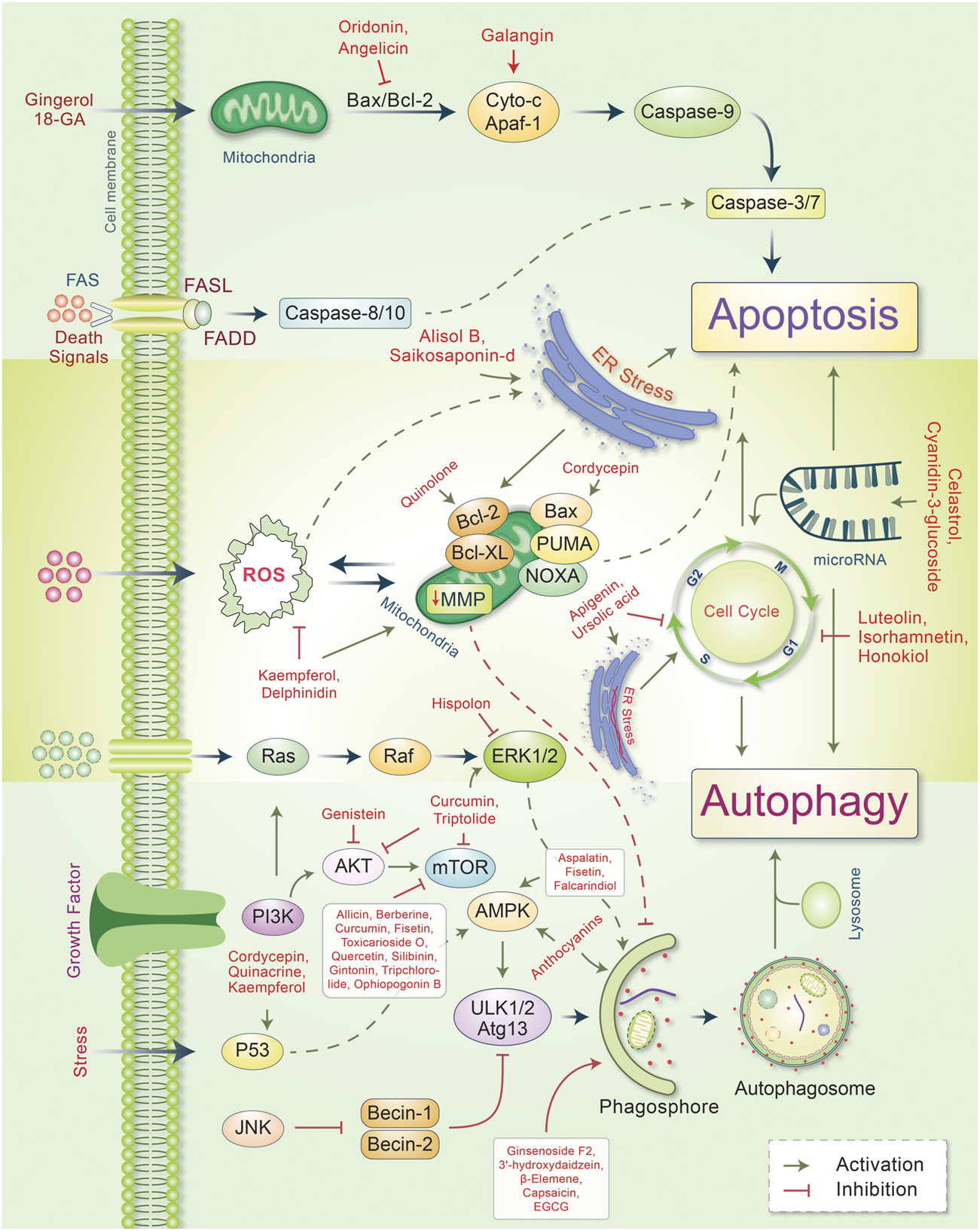
Phytochemicals, a class of well-known bioactive plant derived compounds with a wide range of therapeutic applications, are constituents of traditionally used herbal medicines that display promising anticancer properties. Further evidence suggests that phytochemicals modulate autophagy and apoptosis, the two crucial cellular pathways involved in the underlying pathobiology of cancer development and regulation. Pharmacological targeting of autophagy and apoptosis signaling using phytochemicals therefore offers a promising strategy that is complementary to conventional cancer chemotherapy. In this review, we sought to highlight the molecular basis of the autophagic-apoptotic pathway to understand its implication in the pathobiology of cancer, and explore this fundamental cellular process as a druggable anticancer target. We also aimed to present recent advances and address the limitations faced in the therapeutic development of phytochemical-based anticancer drugs.

SYSTEMATIC REVIEW
29 March 2021
Maryam Ghanbari-Movahed, 2 more and Anupam Bishayee
4 Authors
- MG
Maryam Ghanbari-Movahed
Medical Technology Research Center, Health Technology Institute, Kermanshah University of Medical Sciences, Iran
- GJ
Gloria Jackson
Lake Erie College of Osteopathic Medicine, United States
- MH
Mohammad Hosein Farzaei
Medical Technology Research Center, Health Technology Institute, Kermanshah University of Medical Sciences, Iran
- AB
Anupam Bishayee
Lake Erie College of Osteopathic Medicine, United States
Background: Natural product-based cancer preventive and therapeutic entities, such as flavonoids and their derivatives, are shown to have a noticeable capability to suppress tumor formation and cancer cell growth. Naringin, a natural flavanone glycoside present in many plant species, has been shown to modulate various signaling pathways and interact with numerous cell signaling molecules, which allows for an extensive variety of pharmacological actions, such as amelioration of inflammation, oxidative stress, metabolic syndromes, bone disorders, and cancer. The aim of this systematic review is to present a critical and comprehensive assessment of the anticancer ability of naringin and associated molecular targets in various cancers.
Methods: Studies were identified through systematic searches of Science Direct, PubMed, and Scopus as well as eligibility checks according to predefined selection criteria.
Results: Eighty-seven studies were included in this systematic review. There was strong evidence for the association between treatment with naringin alone, or in combination with other drugs and anticancer activity. Additionally, studies showed that naringin-metal complexes have greater anticancer effects compared to free naringin. It has been demonstrated that naringin employs multitargeted mechanisms to hamper cancer initiation, promotion, and progression through modulation of several dysregulated signaling cascades implicated in cell proliferation, apoptosis, autophagy, inflammation, angiogenesis, invasion, and metastasis.
Conclusion: The results of our work show that naringin is a promising candidate for cancer prevention and treatment, and might offer substantial support for the clinical application of this phytocompound in the future. Nevertheless, further preclinical and clinical studies as well as drug delivery approaches are needed for designing novel formulations of naringin to realize the full potential of this flavonoid in cancer prevention and intervention.