Department of Sociology, Faculty of Political Sciences and Sociology, University of Granada, Spain
Abstract
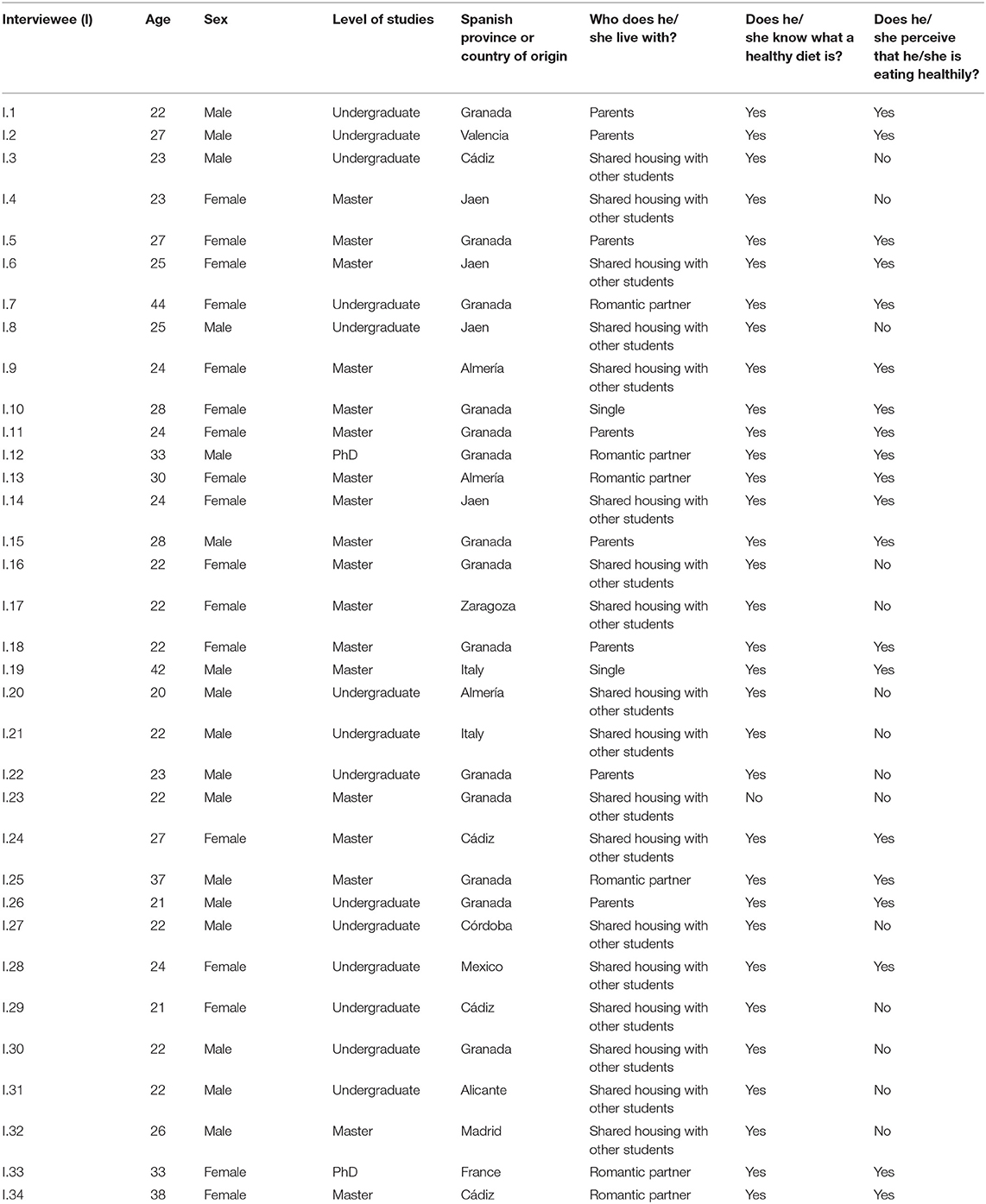
This article focuses on an analysis of the discourses produced during 34 semi-structured interviews (17 men and 17 women) conducted at the University of Granada (Spain) with undergraduate, Master and PhD students. The interviewees were between 20 and 44 years old. It was observed that the fact of having a high educational level did not prevent University students from eating unhealthily. There is a gap between the fact that 97.1% of 34 students interviewed (that is, 33 of them) know what healthy food is and their self-perception about whether or not what they are eating is healthy, since in 41.2% of them said self-perception is negative. This gap narrows as the interviewees' age increases and their socio-economic and vital situation is stabilizing which favors that their eating habits become more regular and healthier. Thus, all the interviewees aged 27 or over self-perceived that they were eating healthily. But the biggest differences are those that have to do with the gender of interviewees. Thus, while 23.5% of women interviewed perceived that they were not eating healthy, 76.5% of them felt that they were eating healthy. However, among the men interviewed, these percentages were somehow reversed, in such a way that 58.8% of them believed that they were not eating healthy, compared to 41.2% of them who indicated that they were eating healthy. Therefore, the investigation revealed that women tend to have the best chances of assuming healthy eating habits. Male students living outside the family home or without female partners exhibited greater feeding problems, while females living under similar conditions tended to display healthier eating habits. This is related to the fact that women have traditionally been in charge of acquiring and preparing food. So, women's food education has not been restricted to the mere transmission to them of knowledge about what healthy food is, but from their childhood they were food trained through their active involvement in practical experiences.