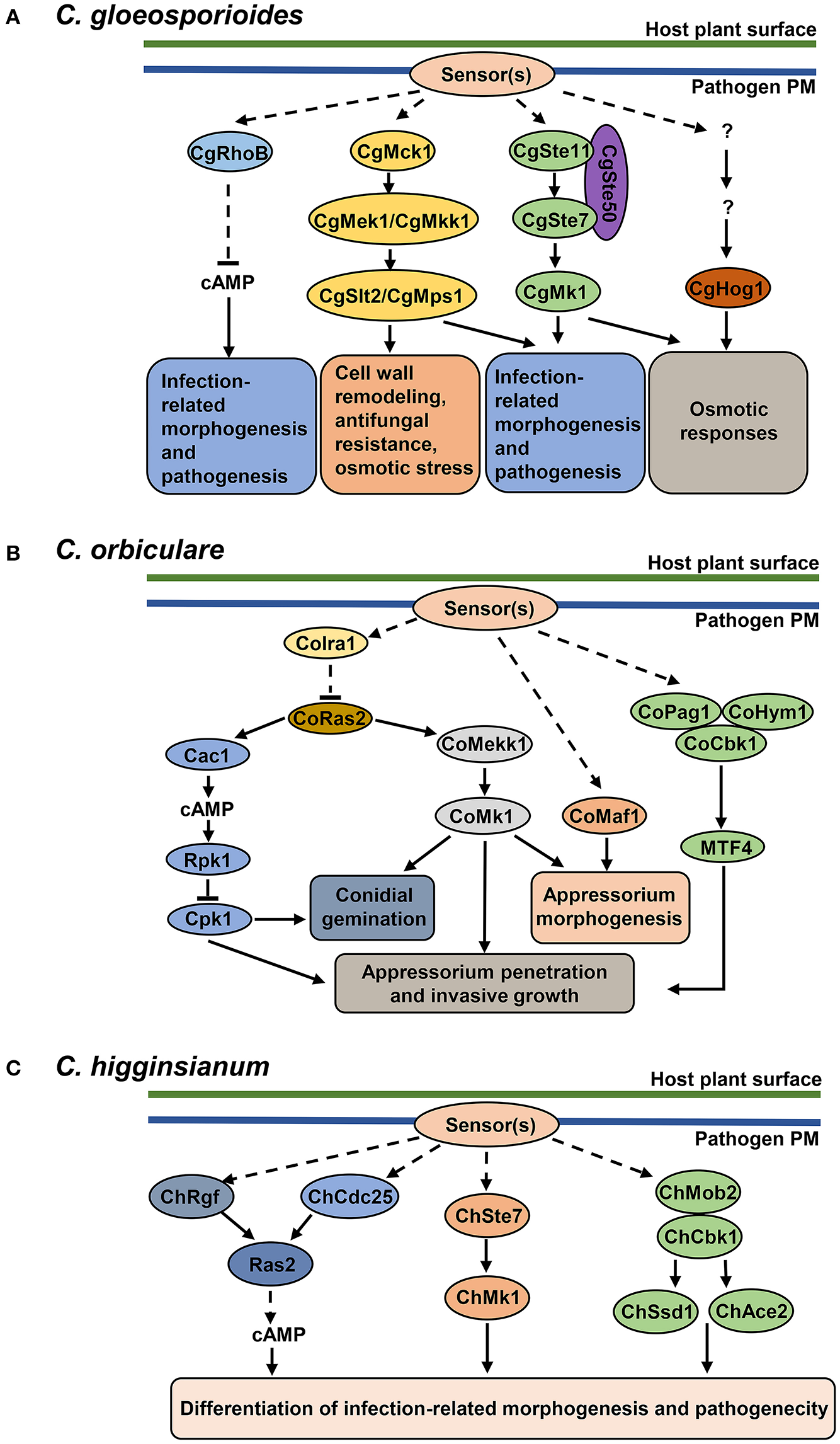
Phosphoproteomics has been successfully applied to studying dynamic phosphorylation events during PTI and ETI (Benschop et al., 2007;Nühse et al., 2007;Kadota et al., 2019). To date, phosphoproteome changes during SAR have not been explored. Through quantitative phosphoproteomics, Zhou et al., identified 859 significantly changed phosphoproteins in systemic leaves 48h after Psm ES4326 treatment, at a time point when SAR has been successfully established. In future, it would still be interesting to explore dynamic changes of phosphoproteome during the establishment of SAR with short time points. Another proteomic study in this Research Topic screened putative targets and interacting proteins of ILK1, an atypical kinase belonging to the ILK family of Raf-like MAP3K (Brauer et al., 2022). Though ILK1 is classified as a pseudo-kinase, it showed kinase activity in vitro, with unusual preference for Mn2 + as cofactor (Brauer et al., 2016). ILK1 activity is essential for flg22-, elf18-and pep1-induced root growth inhibition (Brauer et al., 2016). Recently, ILK5 was shown to be a true MAP3K function upstream of MKK5-MPK3/MPK6 in extracellular perception (Kim et al., 2022). The identification of MEEK1 and MEKK3 as potential ILK1 interactors encourages future work to test whether ILK1 functions as MAP3K or MAP4K in PTI.In plants, the MKK4/MKK5-MPK3/MPK6 is the key module functioning downstream of many MAP3Ks in both development and immunity (Jagodzik et al., 2018;Sun and Zhang, 2022). Previous work suggested MPK3 promote Agrobacterium-mediated gene transformation by phosphorylating of VIP1 (Pitzschke et al., 2009). However, an original article in this Research Topic suggests that MKK5/MKK5-MPK3/MPK6 negatively regulates Agrobacterium-mediated gene transformation with classical genetic studies (Liu et al., 2022). Enhanced transformation was observed in both mkk4 mkk5 double and mpk3 mpk6 mutants (Liu et al., 2022). Accordingly, inducible activation of MPK3/MPK6 by MKK4 or MKK5 suppressed Agrobacterium-mediated gene transformation (Liu et al., 2022). It worths noting that MPK3/MPK6 activation is transient during Agrobacterium treatment (Liu et al., 2022), but is long-lasting when induced by inducible expression of upstream constitutive MEKs (Su et al., 2018). Though mkk4 mkk5 and mpk3 mpk6 mutants showed an increased transformation ratio, the possibility that MPK3 promotes transformation by phosphorylating VIP1 could still not be excluded. Thus, the role of MKK4/MKK5-MPK3/MPK6 in Agrobacterium-mediated gene transformation is remain to be examined further.Altogether, these articles in this Research Topic highlight the importance and complexity of protein phosphorylation in different types of plant-microbe interactions. With rapid improvements in phosphoproteomics and precision gene editing technologies, comprehensive phosphorylation regulatory networks and mechanisms will be revealed.
JS prepared the first draft of this editorial. YL, JS 4,5 and AL revised the editorial. All authors approved it for publication.