METHODS
30 August 2022
Pneumatic and Optical Characterization and Optimization of Hydrogen Injectors for Internal Combustion Engine Application
Philipp Rolke, 3 more and O. Nett
Pneumatic and Optical Characterization and Optimization of Hydrogen Injectors for Internal Combustion Engine Application
To achieve future emission targets for internal combustion engines, the use of hydrogen gas generated by renewable energy sources (known as “green” hydrogen) instead of fossil fuels plays a key role in the development of new combustion based engine concepts. For new hydrogen engine generations, there are different challenges concerning the injector functionality. On the on hand the requested amount of hydrogen gas amount needs to be provided in time and on the other hand accurately metered in order to provide an appropriate mixing formation quality inside the combustion chamber. This work discusses deep injector analysis techniques with pneumatic and optical approaches for an improved overall understanding of functionality and effects caused by operation with a gaseous fuel. A metering technique for gas flow characterization and, for test simplification, a comparison for the behavior of hydrogen with helium and nitrogen as possible surrogate gases will be introduced. Furthermore, this contribution will focus on the usability of helium instead of hydrogen for the determination of spray properties. This is shown by comparison of spray propagation images which were observed with schlieren-technique in a pressure vessel. In a next step, the usage of spray-guiding devices to improve the global gas distribution during the injection period, will be discussed.
4,055 views

24 citations

ORIGINAL RESEARCH
18 July 2022
Characterization of the Rate of Injection of Diesel Solenoid Injectors Operated in the Multiple Injection Strategy: A Comparison of the Spray Momentum and Bosch Tube Methods
Bassam S. Aljohani, 5 more and William L. Roberts
Characterization of the Rate of Injection of Diesel Solenoid Injectors Operated in the Multiple Injection Strategy: A Comparison of the Spray Momentum and Bosch Tube Methods
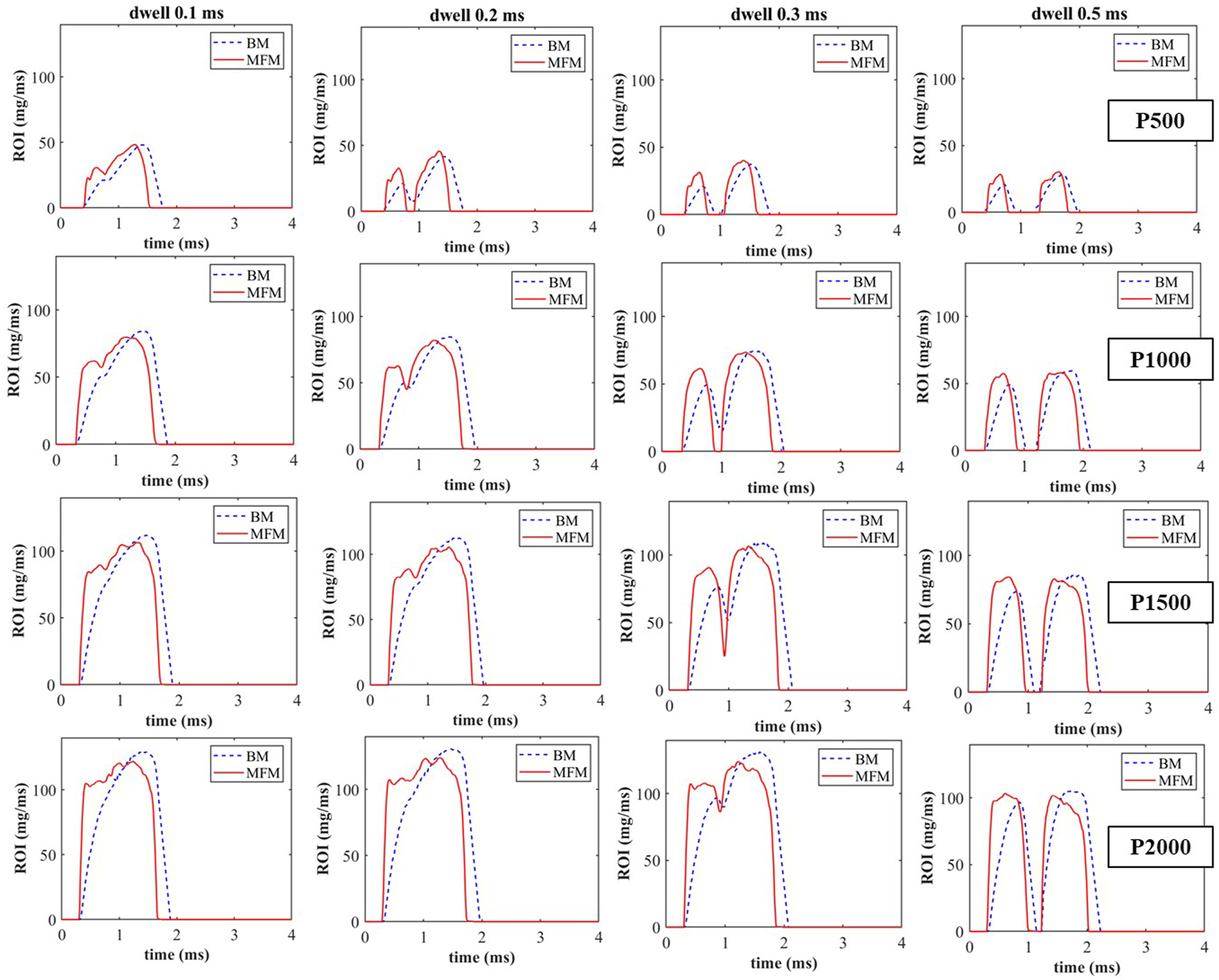
Multiple injection strategies can be used for controlling the heat release rate, particularly in compression ignition engine configuration. This can mitigate the heat transfer losses and overcome the limitation related to the maximum pressure allowed for a particular engine. Controlling heat release with repetitive injections requires precise characterization of the fuel injection rates. In such a configuration, the injector used should be characterized for its hydraulic delay, rate of injection, and the effect of dwell timing with multiple injections. This paper investigates the fuel injection behavior of a high flow-rate solenoid injector operated with single and double injections. Two characterization methods, the momentum flux, and the Bosch tube are used and compared to investigate their suitability with the multiple injection strategies. Experiments with single injection are conducted by varying the Energizing Timing (ET) from 0.5 up to 2 ms. The tests with multiple injections (i.e., double injections) are conducted with a fixed ET of 0.5 ms while the dwell times (δt) are varied from 0.1 up to 1 ms. All tests are performed at 500, 1000, 1500, and 2000 bar rail pressures. Depending on the injection pressure, the injector’s needle could not fully close with short dwell times and the injections are merged. The momentum flux method have faster ramp-up and decaying and more oscillations in the quasi-steady state phase compared to the Bosch tube method. The effective duration of injection is overpredicted with the Bosch tube method. The momentum flux method is demonstrated to be more suitable for measuring the ROI of multiple injection strategies.

9,040 views

15 citations

On Modeling of Spray G ECN Using ROI-Based Eulerian-Lagrangian Simulation
ORIGINAL RESEARCH
15 July 2022
On Modeling of Spray G ECN Using ROI-Based Eulerian-Lagrangian Simulation
Akhil Ailaboinaand Kaushik Saha
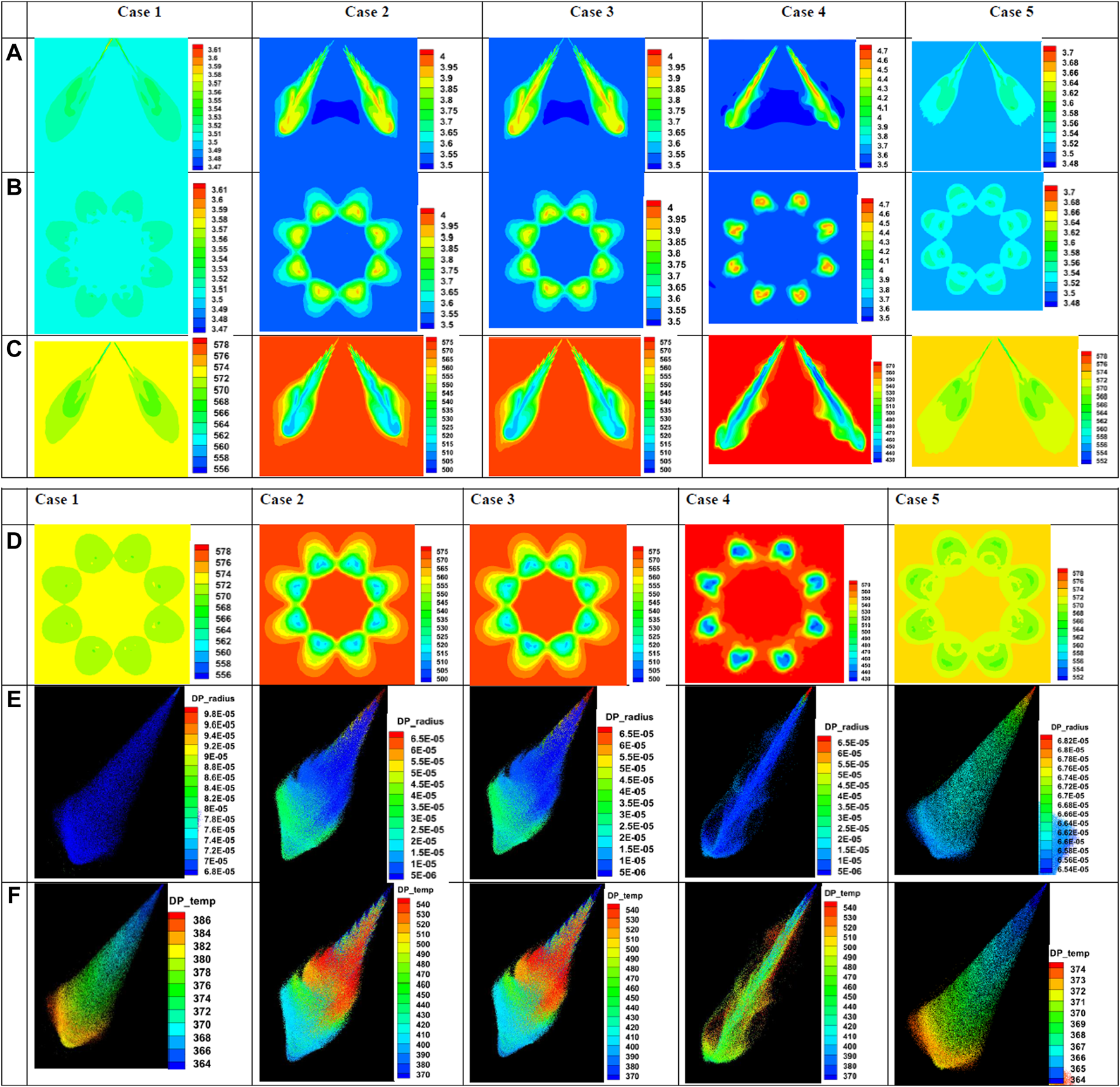
A numerical study has been carried out to understand the effect of Unsteady Reynolds Averaged Navier-Stokes (URANS) (standard 𝑘 ― 𝜀 and RNG 𝑘 ― 𝜀 model) and large eddy simulations (LES) on a multi-hole gasoline direct injection (GDI) fuel injector. The fuel injector considered in this study is the Spray G nozzle from the Engine Combustion Network (ECN). To initiate the simulation rate of injection (ROI) profile is used and a blob injection model is considered in this study. The simulations with standard 𝑘 ― 𝜀 turbulence model, is tuned with the C_ε1 model constant to match the experimental data of liquid and vapor penetrations. The KH breakup model time constant (B_1) and RT breakup length constant 〖(C〗_bl) are tuned for the RNG 𝑘 ― 𝜀 turbulence model. It is observed that by increasing the breakup length model constants 〖(C〗_bl), the radial dispersion of the spray increases, and the extent of the breakup is lowered. Parametric studies are carried out using the different LES sub-grid models. The simulated results are compared in terms of spray penetration, gas axial velocity, and local droplet diameter at 15 mm downstream of the injector tip. The parametric study was also performed by including the geometry of the stepped holes in the computational domain. The ROI-based simulation is initiated at the end of the smaller hole. The case including the stepped holes led to over-prediction compared to the case with the usual computational domain (i.e., without the stepped holes), in terms of spray penetrations. Finally, parametric studies are carried out to understand the relative importance of the individual spray sub-models and the results are conclusive that for a spray simulation both the breakup and evaporation models are dominant and they will help in the understanding of charge preparation mixture in a combustible environment.

6,526 views

8 citations

ORIGINAL RESEARCH
27 May 2022
Experimental Investigation of Cavitation-Induced Erosion Using X-Ray Imaging and Tomography
Chi Young Moon, 4 more and Christopher F. Powell

3,938 views

5 citations