Biomarkers and Therapeutic Strategies in Acute Lymphoblastic Leukemia

62kviews
Editorial: Biomarkers and therapeutic strategies in acute lymphoblastic leukemia
Editorial17 May 2023
Editorial: Biomarkers and therapeutic strategies in acute lymphoblastic leukemia

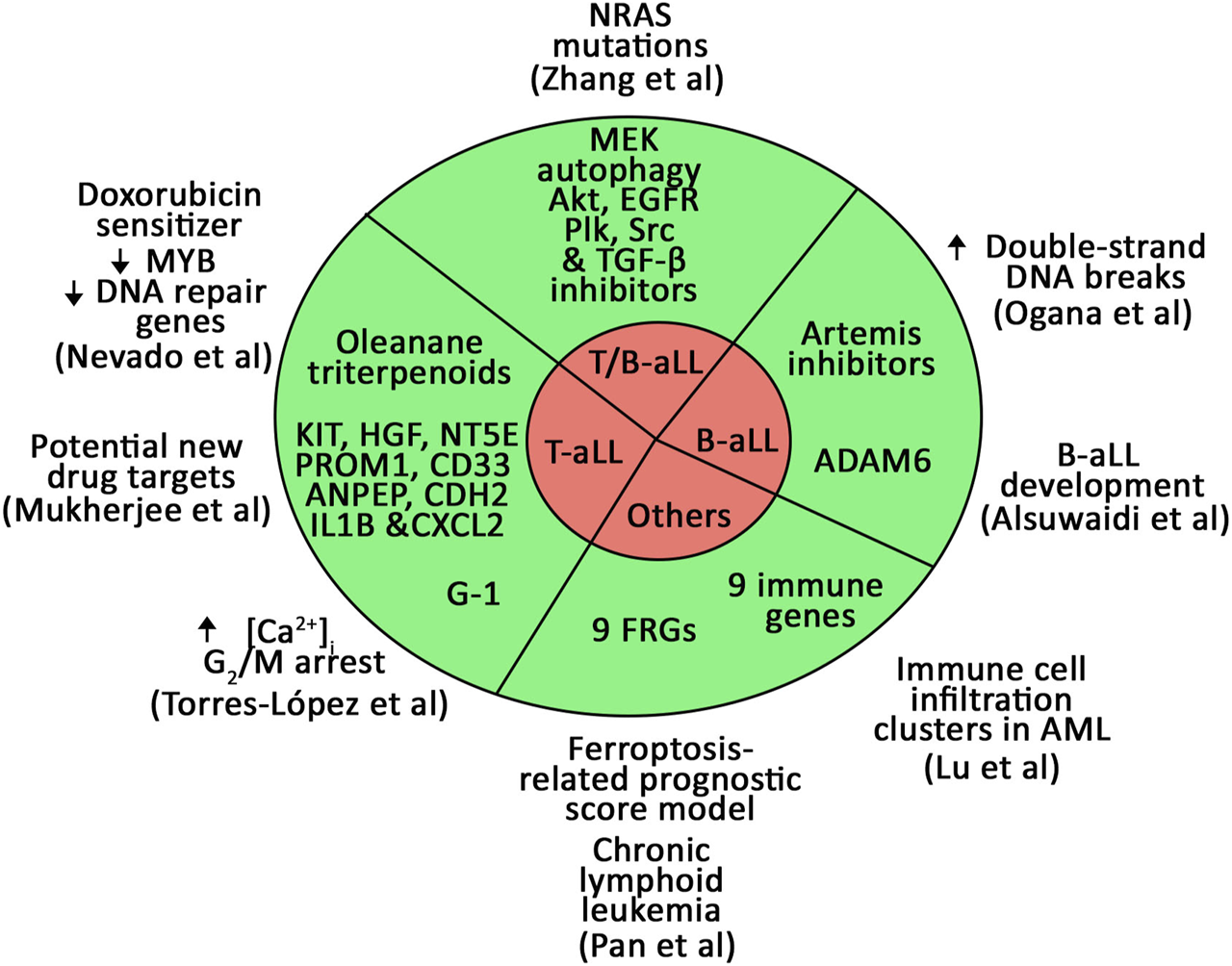
Acute lymphoblastic leukemia (aLL) is a malignancy characterized by an expeditious increase in immature B-(in ~85% of cases) and T-(in ~15% of cases) lymphocytes in the blood and bone marrow. It is the most prevalent cancer in children and the primary cause of death from pediatric cancer 1 . Chemotherapy continues to be the main treatment for aLL 2 . There has been considerably superior outcome from multiple series of highly intensive chemotherapy 3 , but the risk of acquiring resistance and toxicity could be fatal. Although novel therapies such as monoclonal antibodies have been developed, their effectiveness is greatly enhanced when used in combination with chemotherapy. Thus, there is continued interest in chemotherapy. However, while certain chemotherapy drug combinations are effective in some patients, they have no clinical benefit to others, and their broad-spectrum effects make them intolerable to many. Unnecessary drug toxicity or minimal residual disease (MRD), a cumbersome issue that is characterized by proliferation of few cancer cells resistant to therapies 4 , may cause mortality or further patient suffering from relapsed and refractory aLL, which remains a major concern. A growing number of resistance biomarkers for aLL drugs have been identified 2,5 , increasing the current understanding of the molecular mechanisms by which chemotherapy resistance develops. On the other hand, the extensive genetic heterogeneity in B-and T-acute lymphoblastic leukemia precursor cells indicates a range of biomarkers that promote disease development and recurrence.The objective of this Research Topic is to bring forth recent advances in biomarkers and potential therapeutic strategies in aLL as well as their implications in managing the disease. The ultimate goal is to foster exploitation of these discoveries and provide insight into the development of more innovative and effective therapeutic approaches for aLL. Pan et al (https://www.frontiersin.org/articles/10.3389/fimmu.2022.962000/full) built a novel prognostic model to improve risk stratification in chronic lymphoid leukaemia patients based on ferroptosis, a lipid peroxidation-induced cell death. Using the ferroptosis-related prognostic score (FPS) model, which was based on nine ferroptosis-related genes (FRGs: AKR1C3, BECN1, CAV1, CDKN2A, CXCL2, JDP2, SIRT1, SLC1A5 and SP1), they showed that patients with high FPS correlated with worse overall and treatment free survival.Mukherjee et al (https://www.frontiersin.org/articles/10.3389/fcell.2022.899752/full) tackled early T precursor-aLL (ETP-aLL), which still exhibits poor clinical outcome. Gene expression of ETP-aLL blasts was compared to non-ETP-aLL blasts and nine genes (KIT, HGF, NT5E, PROM1, CD33, ANPEP, CDH2, IL1B, and CXCL2) were validated as possible diagnostic ETP-aLL markers using another gene expression dataset (GSE78132) with 17 ETP-aLL and 27 non-ETP-aLL samples. Blineage-skewed markers were also identified, with distinct functionality and possible druggability in ETP-aLL. These data could help identifying the dominant lineage specification programmes in the ETP-aLL blasts on a personalized level, thus providing new drug targets.Qian et al (https://www.frontiersin.org/articles/10.3389/fcell.2022.712484/full) studied NRAS mutations, which affect relapse susceptibility in the ∼15% of aLL cases with negative outcomes. About one-third of the NRAS mutations significantly transformed Ba/F3 cells as measured by IL3independent growth and, through a high-throughput drug screening method, the authors uncovered that leukemogenic-NRAS mutations might respond to MEK, autophagy, Akt, EGFR signaling, Polo−like Kinase, Src signaling, and TGF-β receptor inhibition depending on the mutation profile.The current Research Topic highlights new biomarkers and prognostic models for aLL and other types of leukemias. They have the advantage of expanding the potential targets for personalized medicine, which, as it is emerging from clinical practice, paves the way for improved therapy outcome, reducing off-target side effects, and preventing relapse 6 .
2,854 views

2 citations

ORIGINAL RESEARCH
31 March 2023
Artemis inhibition as a therapeutic strategy for acute lymphoblastic leukemia
Heather A. Ogana, 8 more and Yong Mi Kim
Artemis inhibition as a therapeutic strategy for acute lymphoblastic leukemia
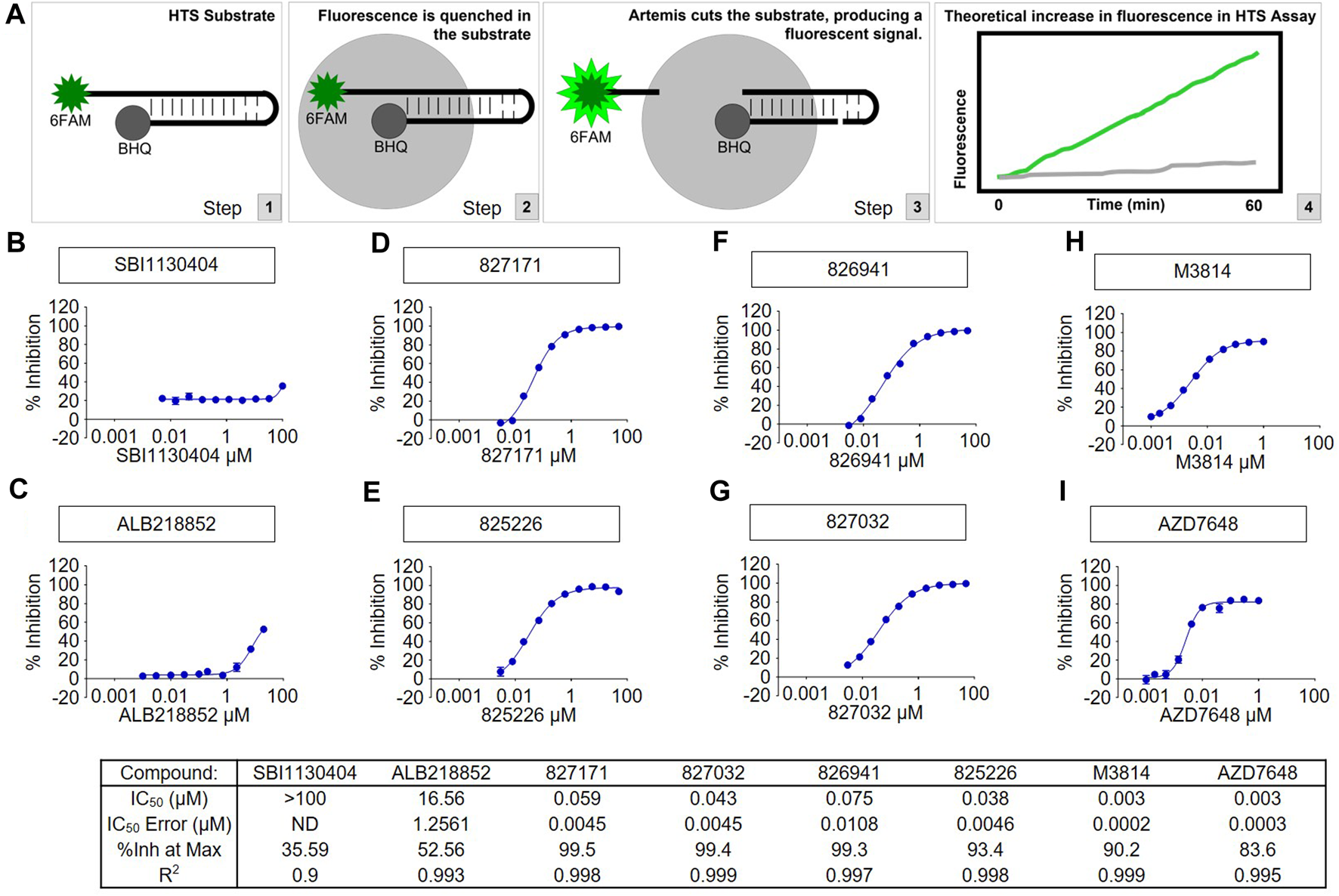
As effective therapies for relapse and refractory B-cell acute lymphoblastic leukemia (B-ALL) remain problematic, novel therapeutic strategies are needed. Artemis is a key endonuclease in V(D)J recombination and nonhomologous end joining (NHEJ) of DNA double-strand break (DSB) repair. Inhibition of Artemis would cause chromosome breaks during maturation of RAG-expressing T- and B-cells. Though this would block generation of new B- and T-cells temporarily, it could be oncologically beneficial for reducing the proliferation of B-ALL and T-ALL cells by causing chromosome breaks in these RAG-expressing tumor cells. Currently, pharmacological inhibition is not available for Artemis. According to gene expression analyses from 207 children with high-risk pre-B ALL high Artemis expression is correlated with poor outcome. Therefore, we evaluated four compounds (827171, 827032, 826941, 825226), previously generated from a large Artemis targeted drug screen. A biochemical assay using a purified Artemis;DNA-PKcs complex shows that the Artemis inhibitors 827171, 827032, 826941, 825226 have nanomolar IC50 values for Artemis inhibition. We compared these 4 compounds to a DNA-PK inhibitor (AZD7648) in three patient-derived B-ALL cell lines (LAX56, BLQ5 and LAX7R) and in two mature B-cell lines (3301015 and 5680001) as controls. We found that pharmacological Artemis inhibition can decrease viability, but more substantially decreases proliferation of B-ALL cell lines while normal mature B-cell lines are not markedly affected. Inhibition of DNA-PKcs (which regulates Artemis) using the DNA-PK inhibitor AZD7648 had minor effects on these same primary patient-derived ALL lines, indicating that inhibition of V(D)J hairpin opening requires direct inhibition of Artemis, rather than indirect suppression of the kinase that regulates Artemis. Our data provides a basis for further evaluation of pharmacological Artemis inhibition of proliferation of B- and T-ALL.

6,292 views

8 citations

ORIGINAL RESEARCH
3 April 2023
Synthetic oleanane triterpenoids suppress MYB oncogene activity and sensitize T-cell acute lymphoblastic leukemia cells to chemotherapy
Paloma Tejera Nevado, 4 more and Mattias K. Andersson

3,328 views

7 citations

Identifying a novel ferroptosis-related prognostic score for predicting prognosis in chronic lymphocytic leukemia
ORIGINAL RESEARCH
6 October 2022
Identifying a novel ferroptosis-related prognostic score for predicting prognosis in chronic lymphocytic leukemia
Bihui Pan, 11 more and Wei Xu
Background: Chronic lymphocytic leukemia (CLL) is the most common leukemia in the western world. Although the treatment landscape for CLL is rapidly evolving, there are still part of the patients remain drug resistance or disease refractory. Ferroptosis is a type of lipid peroxidation-induced cell death, and has been suggested with the prognostic value in several cancers. Our research aims to build a prognostic model to improve risk stratification in CLL patients and facilitate more accurate assessment for clinical management. Methods: The differentially expressed ferroptosis-related genes (FRGs) in CLL were filtered through univariate Cox regression analysis based on public databases. Least Absolute Shrinkage and Selection Operator (LASSO) Cox algorithms were performed to construct a prognostic risk model. CIBERSORT and single-sample gene set enrichment analysis (ssGSEA) were performed to estimate the immune infiltration score and immune-related pathways. A total of thirty-six CLL patients in our center were enrolled in this study as a validation cohort. Moreover, a nomogram model was established to predict the prognosis. Results: A total of differentially expressed 15 FRGs with prognostic significance were screened out. After minimizing the potential risk of overfitting, we constructed a novel ferroptosis-related prognostic score (FPS) model with nine FRGs (AKR1C3, BECN1, CAV1, CDKN2A, CXCL2, JDP2, SIRT1, SLC1A5 and SP1), and stratified patients into low risk and high risk groups. Kaplan–Meier analysis showed that patients with high FPS had worse overall survival (OS) (P<0.0001) and treatment free survival (TFS) (P<0.0001). ROC curves evaluated the prognostic prediction ability of FPS model. Additionally, the immune cell types and immune-related pathways were correlated with the risk scores in CLL patients. In the validation cohort, the results confirmed that the high-risk group was related to worse OS (P<0.0001), progress-free survival (PFS) (P=0.0140) and TFS (P=0.0072). In the multivariate analysis, only FPS (P=0.011) and CLL-IPI (P=0.010) were independent risk indicators for OS. Furthermore, we established a nomogram including FPS and CLL-IPI which could strongly and reliably predict individual prognosis. Conclusion: A novel FPS model could be used in CLL for prognostic prediction. The model index may also facilitate the development of new clinical ferroptosis-targeted therapies in patients with CLL.

4,776 views

15 citations

CASE REPORT
5 January 2023
Cardiac involvement in a patient with B-cell lymphoblastic lymphoma/acute lymphoblastic leukemia and a history of allogeneic hematopoietic stem cell transplantation and CAR T-cell therapy: A case report
Yigeng Cao, 11 more and Mingzhe Han

3,201 views

5 citations

In Silico Integration of Transcriptome and Interactome Predicts an ETP-ALL-Specific Transcriptional Footprint that Decodes its Developmental Propensity
Early T precursor acute lymphoblastic leukemia (ETP-ALL) exhibits poor clinical outcomes and high relapse rates following conventional chemotherapeutic protocols. Extensive developmental flexibility of the multipotent ETP-ALL blasts with considerable intra-population heterogeneity in terms of immunophenotype and prognostic parameters might be a target for novel therapeutic interventions. Using a public gene expression dataset (GSE28703) from NCBI GEO DataSets with 12 ETP-ALL and 40 non-ETP-ALL samples, such heterogeneity was found to be reflected in their transcriptome as well. Hub genes were identified from the STRING-derived functional interaction network of genes showing differential expression between ETP-ALL and non-ETP-ALL as well as variable expression across ETP-ALL. Nine genes (KIT, HGF, NT5E, PROM1, CD33, ANPEP, CDH2, IL1B and CXCL2) among the hubs were further validated as possible diagnostic ETP-ALL markers using another gene expression dataset (GSE78132) with 17 ETP-ALL and 27 non-ETP-ALL samples. Linear dimensionality reduction analysis with the expression levels of the hub genes in ETP-ALL revealed their divergent inclinations towards different hematopoietic lineages, proposing them as novel indicators of lineage specification in the incompletely differentiated ETP-ALL blasts. This further led to the formulation of a personalized lineage score calculation algorithm, which uncovered a considerable B-lineage-bias in a substantial fraction of ETP-ALL subjects from the GSE28703 and GSE78132 cohorts. In addition, STRING-derived physical interactome of the potential biomarkers displayed complete segregation of the B-lineage-skewed markers from other lineage-associated factors, highlighting their distinct functionality and possible druggability in ETP-ALL. A panel of these biomarkers might be useful in pinpointing the dominant lineage specification programmes in the ETP-ALL blasts on a personalized level, urging the development of novel lineage-directed precision therapies as well as repurposing of existing therapies against leukemia of different hematopoietic lineages; which might overcome the drawbacks of conventional chemotherapy.

5,781 views

26 citations

Abstract Background: The extensive genetic heterogeneity found in the B cell precursor acute lymphoblastic leukemia (BCP-ALL) subtype of childhood ALL represents a potential repository of biomarkers. To explore this potential, we have carried out in silico analysis of publicly available ALL datasets to identify genetic biomarkers for childhood BCP-ALL which could be used either individually or in combination as markers for early detection, risk stratification, and prognosis. Methods: To explore novel genes that show promising clinical and molecular signatures, we examined the cBiorpotal online tool for publicly available datasets on lymphoid cancers. Three studies on lymphoblastic and lymphoid leukemia with 1706 patients and 2144 samples of which were identified. To decrease heterogeneity, only the 1978 samples identified as B-Lymphoblastic Leukemia/Lymphoma samples were selected for further analysis. Chromosomal changes were assessed to determine novel genomic loci for the leukemia of lymphoid origin was identifiable. The cBioportal tool was used for the analysis of clinical and molecular profiles while the miRDB online database for miRNA target prediction and functional annotations was used for transcriptomic analysis. Results: Findings showed that ADAM6 gene homozygous deletions (HOM:DEL) were present in 25% of the patients and were associated with poor 10 years of overall patients’ survival. Moreover, patients with ADAM6 HOM:DEL showed a distinguished clinical and molecular profile with higher bone marrow and Central Nervous System (CNS) sites of relapse. In addition, ADAM6 HOM:DEL was significantly associated with unique microRNAs gene expression patterns. Conclusions: ADAM6 has the potential to be a novel biomarker for the development and progress of BCP- ALL.

4,823 views

11 citations