The Quantum world is the central area in Physics for the study of oscillations, spanning the properties of light waves with a wide spectrum of applications. In a paper by Choi, quantum light waves studied formerly by the same author in a static environment in the q-quadrature space were extended to an investigation in the p-quadrature space, along with an inquiry of the coupling between the two. The conjecture of nonstatic waves can be applied to interferometers, gravitational-wave detection, quantum information processing, highprecision measurements, and nano-quantum dots.From light waves to the Physics of particles, objects and droplets. Two articles analyze the evolution of the motion of self-propelled objects. Kitahata and Koyano reported a mathematical approach to uncover fundamental behaviors of a cluster of two or three selfpropelled particles. One of the common self-propelled particle changes its surrounding chemical concentration profile and succeeds to get driving force.Mechano-chemical effects were studied by Fujita et al. in a nonlinear science context. Selfpropelled objects in nonlinear multi-dimensional motion on an aqueous surface exhibit a socalled undulatory 'swimming'. Experimental implementation was tested on two systems: a filament on water and a floating camphor disc.The filament exhibits periodic pendulum motion horizontally with an oscillation phase propagated in the opposite direction of the motion, a regime (or module) coined undulatory swimming. In a camphor disc on a water surface submerged with a nervonic acid condensed fluid phase layer, different modes of motion were determined, with both lateral and vertical oscillations at the air-water interface.Polo et al. analyzed mechanical forcing transferred to a milling ball within two reactors with slightly different geometries: rectangular with flat bases, and rectangular with semi-circular bases. The oscillations amplitude, the number of collisions and the mean square velocity per collision were monitored by varying two essential parameters: the disc radius and the restitution coefficient. Those parameters critically control the transition from periodic to chaotic regimes via period doubling-like routes. The geometry of the reactor governs the dynamics of the milling body and hence controlling the powder dragging and mixing, and the transfer of mechanical energy The present special issue extrapolates the interest in the motion of solid particles, to the study of liquid droplets and their clustering properties. Itatani and Nabika reported novel chemical systems in which droplets spontaneously moved with interfacial chemical reaction. They carefully measured interfacial tension depending on the concentration of surfactant and related to the droplet motion, in particular movement length.Particle physics using a coarse-grained model could be extended to biological systems, notably that autonomous oscillatory dynamics are ubiquitous at every level in Biology. At the cellular level, one of the most relevant and well-characterized examples of periodic behavior is the cyclic assembly and disassembly of actomyosin networks. Hernández-Del-Valle et al. recently proposed that this cyclic behavior arises as a system's property from the competition between the cooperative assembly and the tension-induced disassembly of actin networks. In their contribution to this special issue, the authors perform experiments and simulations to characterize the properties of the actomyosin oscillations and how they depend on different features of the system. This research collection touches on widely diverse aspects and perspectives of applications of nonlinear dynamics in Biology and Medicine: the behavior of ant colonies, the formation of Turing patterns on zebra fish and the diagnosis of schizophrenia.Yamanaka et al. clearly showed characteristic collective behavior of ants, namely ants use two different tactic behaviors. One is to follow pheromone and the other is to use visual information. To show such complex behaviors, they prepared a circular-shaped pheromone road connecting between nest and food and observed much amount of ants' behaviors. Stochastic analysis of the data indicated that ants switched the two different tactic behaviors. This paper provides a biological strategy for the special issue. It is expected to inspire chemical and physical experimentalists of nonlinear sciences.In the paper by Nakamasu, pattern formation on a zebrafish skin was mathematically investigated by introducing a three-variable nonlinear reaction-diffusion model. The main objective of this study was to link the parameters in the reaction-diffusion model and connexin (gap junction protein in the cells) functions during the Turing pattern formation. Higher diffusivity of the chemical species was implemented by using channels in the membranes of pigment cells.Bose and Gorecki describe a method that can be used in the diagnosis of schizophrenia based on the analysis by networks of chemical oscillators. The networks were constructed by using a 2-variable mathematical model (Oregonator), which describes the kinetics of the Belousov-Zhabotinsky reaction. The overall accuracy of schizophrenia diagnosis can be improved when using the majority decision from a network consisting of three oscillators.The experimental and theoretical characterization of some novel properties discovered in the well-known Belousov-Zhabotinsky oscillating chemical reaction, was also the focus of two further contributions. Okamoto et al. exploited the nonlinear behavior of the Belousov-Zhabotinsky reaction to relate the degree of homogeneity of a reactive mixture with the characteristics of the travelling waves that may form in a reaction-diffusion system. In particular, they found that the wavelength and the wavenumber of a BZ pulse-train depend on the mixing state of the solution.Wodlei et al. thoroughly reinvestigated the transient chaotic dynamics generally observed in unstirred Belousov-Zhabotinsky media. They discovered that periodic bulk motions, in form of convective cells, appeared during the aperiodic regime. Single and double convection cells were observed and they were found to be related to the duration of the chaotic transient.Precipitation patterns are perhaps the earliest observed manifestation of self-organization in chemical systems after the discovery of the Liesegang phenomenon in 1896. Hayashi explored a wide diversity of such patterns with the Prussian blue (PB) reagent and its analogs (PBA) in agarose hydrogel as the supporting anion, and a variety of metal cations in the presence of an applied electric field (both constant and alternating voltages). A wealth of colorful patterns is obtained and displayed, along with the generation of Liesegang bands in the cyclic voltage mode experiments with the Cu-Fe PBA system.The coupling of simple chemical reaction schemes to transport and hydrodynamic effects can result in complex behavior engendering oscillations. Tiani and Rongy, describe a mechanism for the emergence of spatial and temporal oscillations of the surface tension and of the velocity field in a bimolecular system (A + B C reaction-type) with no chemical nor hydrodynamic instability involved. Such oscillations emerge as the result of the interplay of differential diffusion of chemical species and chemically-driven Marangoni stresses at the air/liquid interface.Last but not least, nonlinear dynamics and chaos theory transcended beyond the natural sciences reaching out to the social sciences, notably in population dynamics and the study of uncertainty in economic systems. Economy and market are prototypical complex systems that influence (and are influenced by) life styles, well-being and behaviors of human societies all over the world. In their contribution, Yesiltas et al. constructed an economic index based on data from social media (Twitter) to track out and somehow predict market fluctuations and economic risks at a country level. By using macroeconomic modeling techniques, the authors developed a set of key financial indicators for tracking financial developments in Turkey, the country chosen as a benchmark.Istvan Lagzi 1,2 1 Department of Physics, Institute of Physics, Budapest University of Technology and Economics, Budapest, Hungary
Editorial18 October 2022
Editorial: Oscillations, waves and patterns in the physical and life sciences
ORIGINAL RESEARCH
8 July 2022
Florian Wodlei, 1 more and Giuseppe Alberti
The Belousov Zhabotinsky reaction, a self-organized oscillatory color-changing reaction, can show complex behaviour when left unstirred in a cuvette environment. The most intriguing behaviour is the transition from periodicity to chaos and back to periodicity as the system evolves in time. It was shown that this complex behaviour is due to the decoupling of reaction, diffusion and convection. We have recently discovered that, as the so-called chaotic transient takes place, periodic bulk motions in form of convective cells are created in the reaction solution. In this work we investigated this phenomenon experimentally by changing cuvette size and reaction volume to allow different types of convection patterns to appear. So far, we have observed single and double convection cells in the system. There are indications that the convection patterns are connected to the duration of the chaotic phase. A simplified mathematical model confirms the form and dynamics of the observed convection cells and explains the connection between chemical chaos and hydrodynamical order.
ORIGINAL RESEARCH
30 May 2022
A Twitter-Based Economic Policy Uncertainty Index: Expert Opinion and Financial Market Dynamics in an Emerging Market Economy
Sevcan Yeşiltaş, 2 more and Sumru Altuğ
4 Authors
- SY
Sevcan Yeşiltaş
College of Administrative Sciences and Economics, Koç University, Türkiye
- AŞ
Anıl Şen
College of Administrative Sciences and Economics, Koç University, Türkiye
- BA
Beyza Arslan
College of Administrative Sciences and Economics, Koç University, Türkiye
- SA
Sumru Altuğ
Department of Economics, American University of Beirut, Lebanon
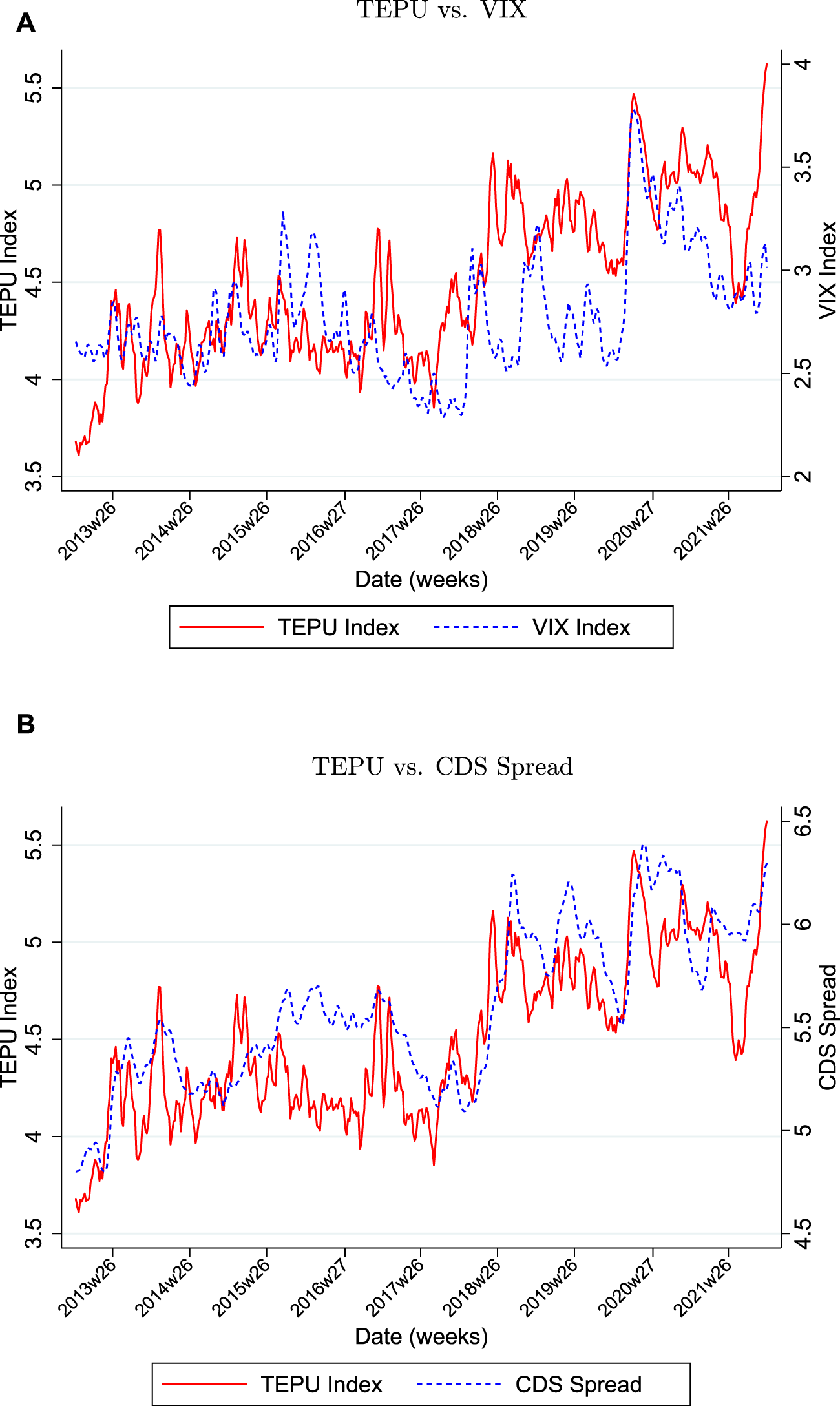
In this paper, we construct a Twitter-based high-frequency Economic Policy Uncertainty (TEPU) index built on a select set of Twitter user accounts whose tweets are considered to reflect expert opinion on the topic. We study the relationship between the TEPU index and a key set of financial indicators for tracking financial developments in Turkey over the sample period 2013-2021. Based on the results from a vector autoregressive analysis, we find evidence that changes in expert opinion described by fluctuations in the TEPU index interact with fluctuations in financial indicators such as the exchange rate and the stock market index to capture information about high frequency events during our sample period. Second, fluctuations in the TEPU index emerge as a key indicator that helps to predict domestic assessments of the country risk premium measured by the CDS spread. We also find evidence that the conditional volatility of the different series reflects salient events that occurred over our sample period.


ORIGINAL RESEARCH
6 April 2022
Hiroyuki Kitahata and Yuki Koyano
2 Authors
- HK
Hiroyuki Kitahata
Department of Physics, Japan
- YK
Yuki Koyano
Department of Human Environmental Science, Japan
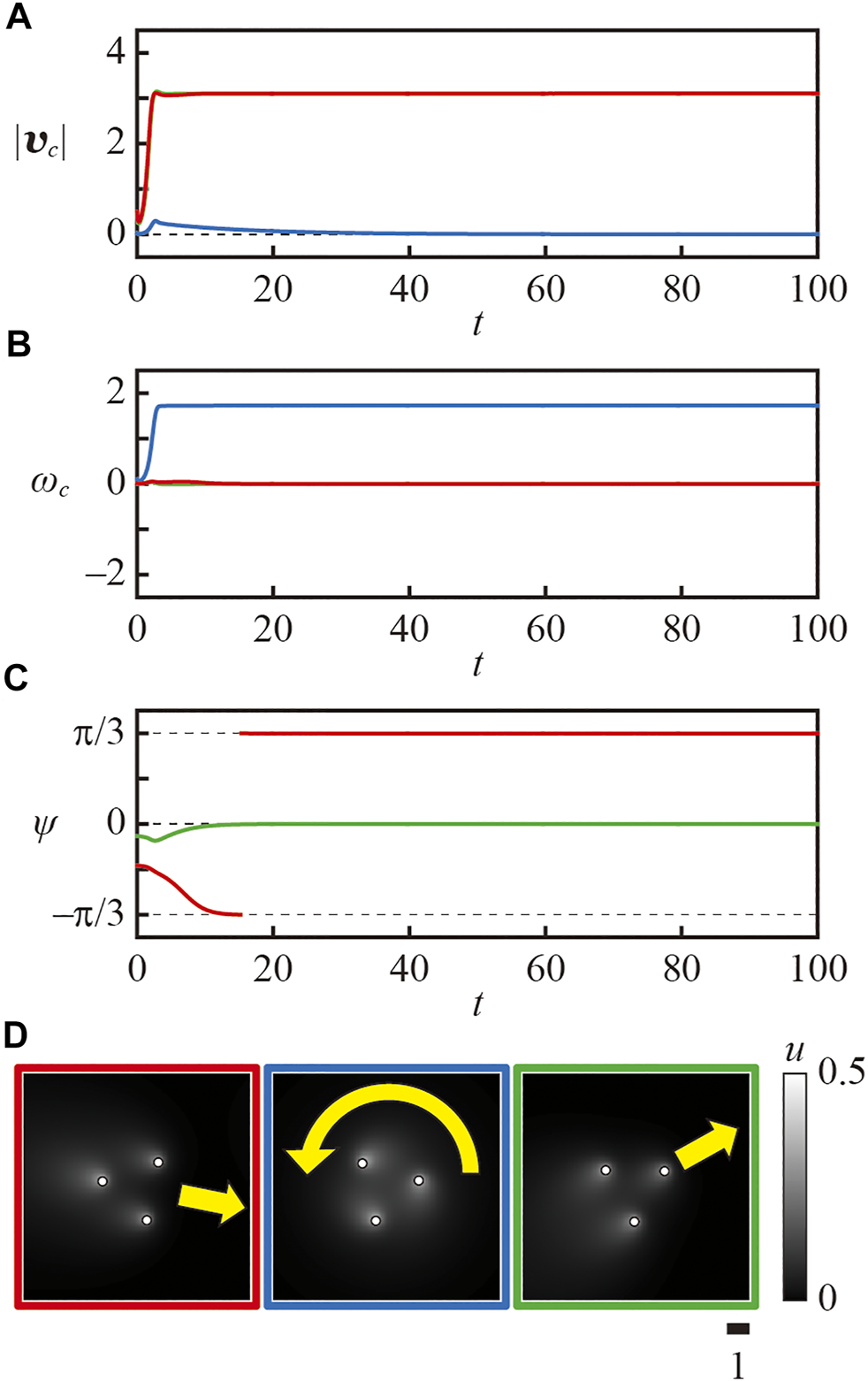
It is known that a camphor particle at a water surface exhibits self-propulsion since it releases camphor molecules at the surface and reduces the surface tension, and the gradient of surface tension drives the camphor particle itself. Such a motion is considered to be driven by the concentration field of the chemicals emitted by the particle itself. It is also known that the shape of the particle seriously affects the mode of motion. In order to understand the universal mechanism on the effect of the shape on such a self-propelled motion, we theoretically investigated the bifurcation structure of the motion of the camphor float with $n$-fold rotational symmetry, which comprises n camphor disks attached to a rigid light circular plate along a periphery with an equivalent spacing. Here, we mainly studied the cases with n=2 and 3. We found that the camphor float with n=2 moves in the direction perpendicular to the line connecting the two camphor disks, while that with n=3 changes its direction of motion depending on the size of the camphor float.
ORIGINAL RESEARCH
1 April 2022
Hisashi Hayashi
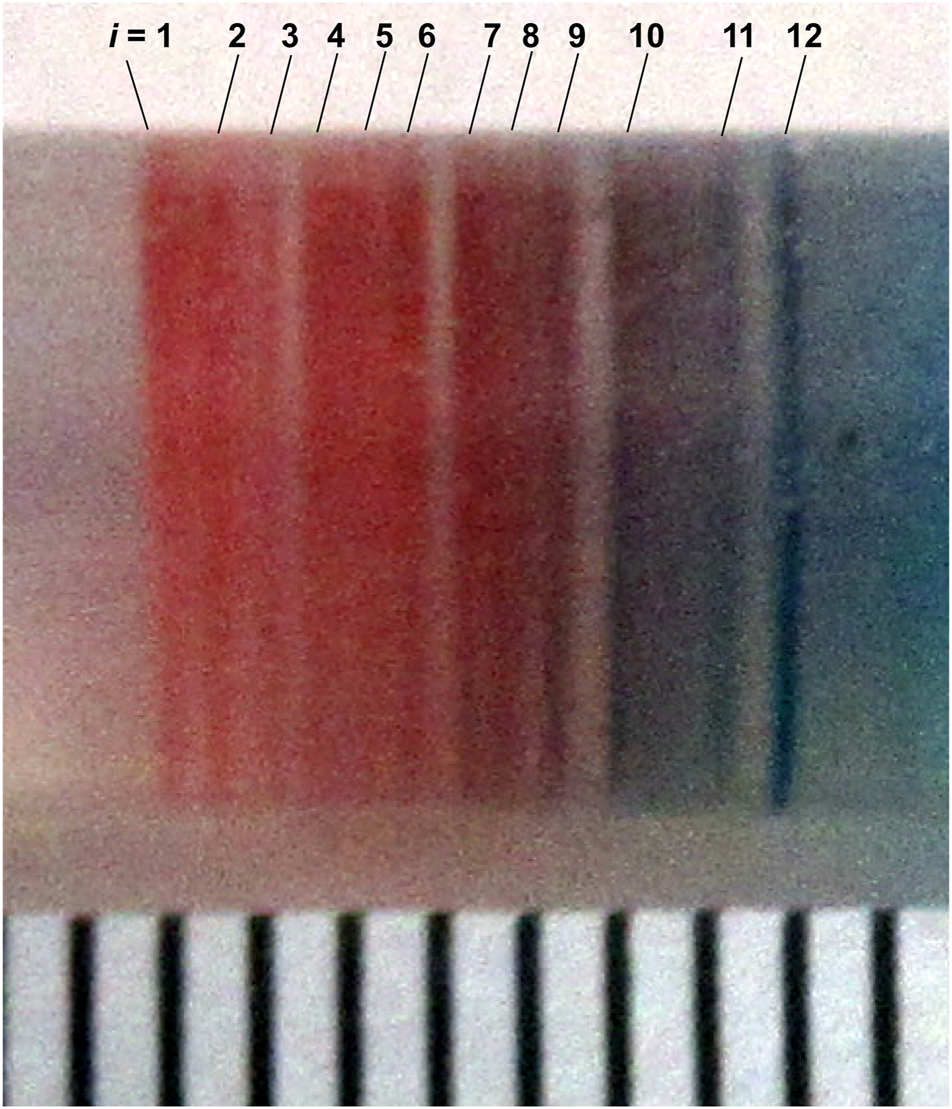
In agarose gel containing [Fe(CN)6]3‒ ions and sandwiched between two metal rods (Ti, Fe, or Cu) with a voltage of 1‒5 V applied for 20‒100 h, reaction–diffusion–reaction (RDR) processes (that is, electrochemical reactions at metal rods to generate reactant ions, diffusion of the reactant ions influenced by the electric field in agarose gel, and reactions of the reactant ions to form/decompose precipitates) were coupled to generate diverse precipitation patterns of Prussian blues (PB) or Cu–Fe-based Prussian blue analogs (Cu–Fe PBA). These patterns strongly depended on the type of metal electrode, applied voltage, initial [Fe(CN)6]3‒ concentration, and elapsed time after voltage application. Under the application of 2 V for 20/50 h, the PB/Cu–Fe PBA formed a discrete precipitation band on the anode/cathode side in an agarose gel containing 0.050 M [Fe(CN)6]3‒ ions. In the Cu–Fe PBA system, a relatively long precipitation band of Cu(OH)2 was also generated on the anode side by OH‒ ions produced on the cathode as a byproduct. Longer voltage applications promoted propagation of the Cu–Fe PBA band to the anode side and caused the discrete PB band to disappear. Higher initial [Fe(CN)6]3‒ concentrations deepened the color of the generated patterns. Higher voltage applications suppressed the propagation of the Cu–Fe PBA band to the anode side and caused the PB band to disappear. Experiments using a Ti cathode suggested that the formation and subsequent decomposition of PB or Cu–Fe PBA at the cathode surface are important for forming precipitation band(s) in the gel near the cathode. The application of cyclic alternating voltages (particularly, 4 V for 1 h and 1 V for 4 h) was effective in generating Liesegang-band-like periodic bands, particularly for the Cu–Fe PBA system.
ORIGINAL RESEARCH
7 March 2022
Masaki Itatani and Hideki Nabika
3,295 views
3 citations
1,233 views

ORIGINAL RESEARCH
16 February 2022
Ashmita Bose and Jerzy Gorecki
Chemical reactions are responsible for information processing in living organisms, yet biomimetic computers are still at the early stage of development. The bottom-up design strategy commonly used to construct semiconductor information processing devices is not efficient for chemical computers because the lifetime of chemical logic gates is usually limited to hours. It has been demonstrated that chemical media can efficiently perform a specific function like labyrinth search or image processing if the medium operates in parallel. However, the number of parallel algorithms for chemical computers is very limited. Here we discuss top-down design of such algorithms for a network of chemical oscillators that are coupled by the exchange of reaction activators. The output information is extracted from the number of excitations observed on a selected oscillator. In our model of a computing network, we assume that there is an external factor that can suppress oscillations. This factor can be applied to control the nodes and introduce input information for processing by a network.
We consider the relationship between the number of oscillation nodes and the network accuracy. Our analysis is based on computer simulations for a network of oscillators described by the Oregonator model of a chemical oscillator. As the example problem that can be solved with an oscillator network, we consider schizophrenia diagnosis on the basis of EEG signals recorded using electrodes located at the patient's scalp. We demonstrated that a network formed of interacting chemical oscillators can process recorded signals and help to diagnose a patient. The parameters of considered networks were optimized using an evolutionary algorithm to achieve the best results on a small training dataset of EEG signals recorded from 45 ill and 39 healthy patients. For the optimized networks, we obtained over 82 \% accuracy of schizophrenia detection on the training dataset. The diagnostic accuracy can be increased to almost 87 \% if the majority rule is applied to answers of 3 networks with different number of nodes.
ORIGINAL RESEARCH
18 January 2022
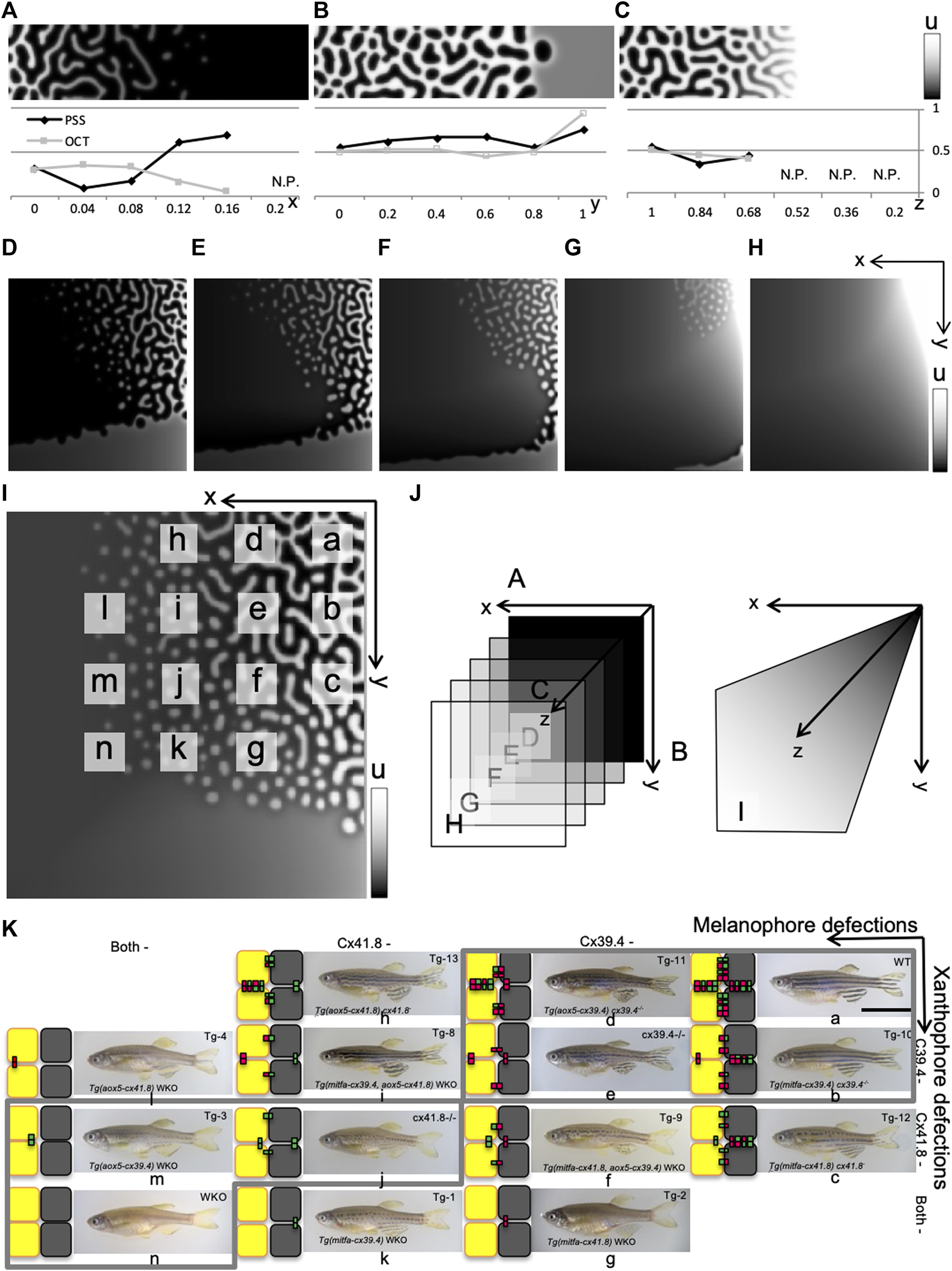
Different diffusivities among interacting substances actualize the potential instability of a system. When these elicited instabilities manifested as forms of spatial periodicity, they are called Turing patterns. Simulations using general reaction-diffusion (RD) models had demonstrated that pigment patterns on the body trunk of growing fish follow a Turing pattern. Laser ablation experiments performed on zebrafish revealed apparent interactions among pigment cells, which allowed for a three-components RD model to be derived. However, the underlying molecular mechanisms responsible for Turing pattern formation in this system had been remained unknown. A zebrafish mutant with a spotted pattern was found to have a defect in Connexin41.8 (Cx41.8) which, together with Cx39.4, exists in pigment cells and controls pattern formations. Here, molecular-level evidence derived from connexin analyses was linked to the interactions among pigment cells described in previous RD modeling. Channels on pigment cells were generalized as “gates,” and the effects of respective gates were deduced. The model used partial differential equations (PDEs) enabled numerical and mathematical analyses of characteristics observed in the experiments. Furthermore, the improved PDE model including nonlinear reaction terms enabled the consideration of the behavior of components realistically.