149kviews
Despite a growing trend of more women entering pediatric critical care training programs, women continue to be underrepresented in leadership positions. A 2019 report on the pediatric critical care workforce revealed that only 32% of division directors are women and 25% of Department of Pediatrics Chairs are women. Women in critical care face systemic barriers to advancement into leadership positions which often lead women to reject leadership positions despite being appropriately matched or even overqualified for the position. The obstacles can appear insurmountable, especially for women of color and mothers of young children. In this article, I share my perspective on strategies to reduce these hurdles by providing guidance on preparing for these roles, embracing and promoting women when opportunities arises and matching recruitment packages to women’s values. If the goal is to recruit and retain more women into the ranks of academic leadership, especially women of color, academia must transform current practices. An approach that aims to fully understand the leader’s motivation is a key first step. Additionally, we need to invest in women earlier in their career, reward often uncompensated work, value women at their home institution, offer salary transparency and recognize the unique challenges of leading while mothering.

5,890 views

4 citations

MINI REVIEW
30 August 2022
A review of key strategies to address the shortage of analgesics and sedatives in pediatric intensive care
Roberta Esteves Vieira de Castro, 5 more and Anne Stormorken

4,115 views

5 citations

ORIGINAL RESEARCH
6 June 2022
Myeloid-Derived Suppressor Cells and Clinical Outcomes in Children With COVID-19
Katherine Bline, 11 more and Octavio Ramilo

3,974 views

6 citations

ORIGINAL RESEARCH
6 June 2022
Predictive Value of Optic Nerve Sheath Diameter for Diagnosis of Intracranial Hypertension in Children With Severe Brain Injury
Fleur Cour-Andlauer, 12 more and Etienne Javouhey

4,502 views

13 citations

ORIGINAL RESEARCH
25 April 2022
Multiple Organ Dysfunction Interactions in Critically Ill Children
Colleen M. Badke, 1 more and L. Nelson Sanchez-Pinto

5,095 views

12 citations

ORIGINAL RESEARCH
17 March 2022
Exploring Pediatric Nurses’ Perspectives on Their Work Environment, Work Attitudes, and Experience of Burnout: What Really Matters?
Laura Buckley, 2 more and Kimberley Widger
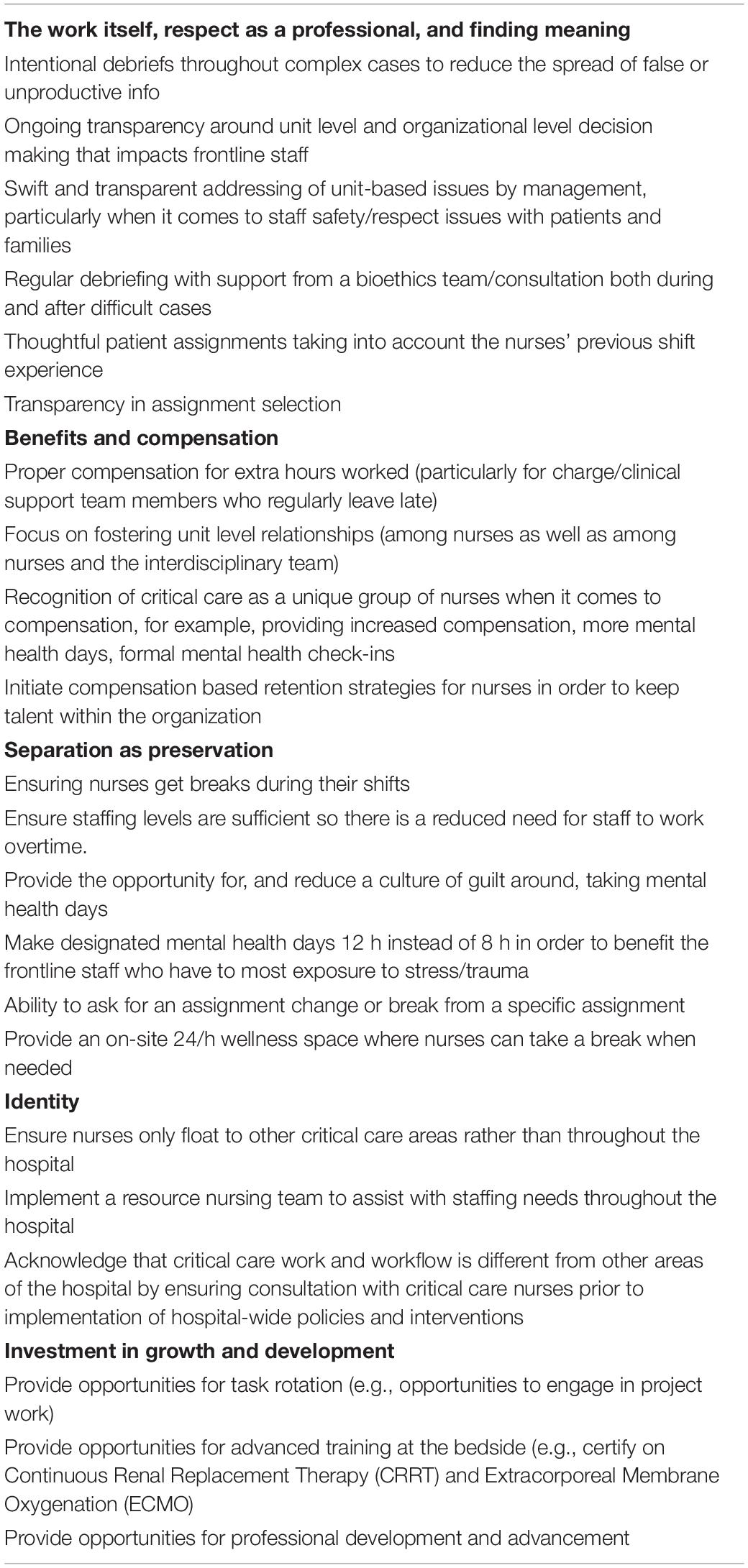
Burnout is a psychological syndrome emerging as a prolonged response to chronic interpersonal stressors on the job. Paediatric nurses care for some of the most vulnerable patients in our healthcare system, and are themselves vulnerable to the impact of the stress of their work on their well-being. A thorough understanding of the underpinnings of the experience of workplace burnout for organizations is important, in the interests of mitigating or preventing this workplace outcome. Therefore, we sought to engage paediatric/neonatal critical care nurses to explore the thoughts and attitudes that elucidate their work experience through the following objectives: Objective 1: To explain and expand our understanding of paediatric critical care nurses experience of burnout in relation to their work environment and work engagement. Objective 2: To provide recommendations for nursing administrators to improve nurses’ work environment, work attitudes, and work outcomes. A convenience sample of paediatric critical care nurses from a large paediatric quaternary care hospital in Ontario, Canada were invited to participate in the study as part of the second phase of a sequential explanatory mixed-methods design. Semi-structured interviews were conducted and main themes and subthemes were distilled through the method of interpretive description. Results: A total of 18 PICU/CCCU/NICU nurses participated in the qualitative interviews. Derived themes included their experiences of burnout, including its prevalence and elusiveness. Their experiences of quality of work-life including themes such as compensation, emotional support at work, respect, their professional identity, and spill over into home life. They discussed components of work engagement, including the work itself, investment into their growth and development, and the meaning of their work. The self-care subthemes included the importance of preparation and recovery, and the use of physical and mental separation as a preservation strategy. Recommendations for strategies to mitigate burnout was summarized from the participants. Burnout is a complex and regularly occurring experience for paediatric critical care nurses. Although the experience may be difficult to identify, the impacts on the individuals are profound. Further research is needed to test practical interventions suggested by the participants themselves to pragmatically move forward with protecting the well-being of this population.
Exploring Pediatric Nurses’ Perspectives on Their Work Environment, Work Attitudes, and Experience of Burnout: What Really Matters?

13,444 views

20 citations

Cost Efficacy of Rapid Whole Genome Sequencing in the Pediatric Intensive Care Unit
ORIGINAL RESEARCH
24 January 2022
Cost Efficacy of Rapid Whole Genome Sequencing in the Pediatric Intensive Care Unit
Erica Sanford Kobayashi, 18 more and Nicole G. Coufal
The diagnostic and clinical utility of rapid whole genome sequencing (rWGS) for critically ill children in the intensive care unit (ICU) has been substantiated by multiple studies, but comprehensive cost-effectiveness evaluation of rWGS in the ICU outside of the neonatal age group is lacking. In this study, we examined cost data retrospectively for a cohort of 38 children in a regional pediatric ICU (PICU) who received rWGS. We identified seven of 17 patients who received molecular diagnoses by rWGS and had resultant changes in clinical management with sufficient clarity to permit cost and quality adjusted life years (QALY) modeling. Cost of PICU care was estimated to be reduced by $184,846 and a total of 12.1 QALYs were gained among these seven patients. The total cost of rWGS for patients and families for the entire cohort (38 probands) was $239,400. Thus, the net cost of rWGS was $54,554, representing $4,509 per QALY gained. This quantitative, retrospective examination of healthcare utilization associated with rWGS-informed medicine interventions in the PICU revealed approximately one-third of a QALY gained per patient tested at a cost per QALY that was approximately one-tenth of that typically sought for cost-effective new medical interventions. This evidence suggests that performance of rWGS as a first-tier test in selected PICU children with diseases of unknown etiology is associated with acceptable cost-per-QALY gained.

11,348 views

51 citations

The Relationships Amongst Pediatric Nurses' Work Environments, Work Attitudes, and Experiences of Burnout
ORIGINAL RESEARCH
21 December 2021
The Relationships Amongst Pediatric Nurses' Work Environments, Work Attitudes, and Experiences of Burnout
Laura Buckley, 2 more and Kimberley Widger

24,945 views

33 citations