Microbiome Assembly and Functions in Non-Soil-Borne Plant Diseases

Cover image for Research Topic "Microbiome Assembly and Functions in Non-Soil-Borne Plant Diseases"
64kviews
Leaf, root, and soil microbiomes of an invasive plant, Ardisia crenata, differ between its native and exotic ranges
Ecological underpinnings of the invasion success of exotic plants may be found in their interactions with microbes, either through the enemy release hypothesis and the enhanced mutualism hypothesis.Whereas recent high-throughput sequencing techniques have significantly expanded our understanding of plant-associated microbiomes and their functional guilds, few studies to date have used these techniques to compare the microbiome associated with invasive plants between their native and exotic ranges. In this study, we extracted fungal and bacterial DNA within leaf endosphere, root endosphere and rhizosphere soil of an invasive plant, Ardisia crenata, sampled from their native range Japan and exotic range Florida, USA. By analyzing an Illumina sequencing data, we compared microbial community compositions and diversity between the native and exotic ranges. Furthermore, we tested whether abundance of pathogenic or mutualistic microbes differ between the native or exotic ranges in accordance to the enemy release hypothesis or the enhanced mutualism hypothesis. Our results revealed different community compositions across all plant parts between the native and exotic ranges for both fungi and bacteria, leading to two key conclusions. Firstly, despite a higher microbial diversity in the rhizosphere soil in the exotic range than in the native range, the microbial diversity within leaf and root was notably lower in the exotic range compared to the native range. This implies a plant control over what microbes out of the locally available species pool in the soil become associated with roots. Secondly, leaves in the native range harbored a greater number of plant pathogenic fungi compared to those in the exotic range. Some of these fungi are known to cause specific disease in A. crenata in its native range, as predicted by the enemy release hypothesis. These findings suggested potential importance of leaf pathogenic fungi in explaining the difference in population dynamics of invasive plants between their native and exotic ranges.

5,945 views

20 citations

Effects of Bacillus velezensis GUAL210 control on edible rose black spot disease and soil fungal community structure
ORIGINAL RESEARCH
27 July 2023
Effects of Bacillus velezensis GUAL210 control on edible rose black spot disease and soil fungal community structure
Wanpeng Dong, 7 more and Haixia Ding
Rose black spot is an economically important disease that significantly decreases flower yield. Fungicide and biological control are effective approaches for controlling rose black spot. The objective of this study was to evaluate the effect of application of biological and chemical control agents, including Bacillus velezensis (GUAL210), Bacillus sp. (LKW) and fungicide (CP) on the black spot disease and rhizosphere fungal community structure of edible rose. The results showed that both disease incidence and disease index differed significantly among groups (LKW < GUAL210 < CP < CK), and disease control effect exhibited no significant difference between GUAL210 and LKW (60.96 % and 63.86 %, respectively). Biological control was superior to chemical control in terms of disease prevention effects and duration, and it significantly increased the number of branches and flowers of rose plants. Ascomycota and Basidiomycota accounted for more than 74% of the total fungal abundance, and the abundance of Ascomycota was highest in CK, followed by GUAL210, CP and LKW, which was consistent with the disease occurrence in each group. The analysis of metabolic pathways showed that the HSERMETANA-PWY in each experimental group was significantly lower than that in control group. The Shannon index in each experimental group was significantly lower than that in control group. PCoA analysis showed that the rhizosphere fungal community structure in each experimental group was significantly different from that in control group. Trichoderma, Paraphaeosphaeria, Suillus, Umbelopsis in GUAL210, and Galerina in LKW replaced Mortierella, Pestalotiopsis, Ustilaginoidea, Paraconiothyrium, Fusarium and Alternaria as dominant flora, and played a nonneglectable role in reducing disease occurrence. The difference in rhizosphere fungal community structure had an important impact on the incidence of rose black spot disease. Biological control is crucial for establishing environment-friendly ecological agriculture. GUAL210 has promising prospects for application and development, and may be a good substitute for chemical control agents.

10,493 views

14 citations

Identification and characterization of pathogens causing saffron corm rot in China
ORIGINAL RESEARCH
9 June 2023
Identification and characterization of pathogens causing saffron corm rot in China
Tingdan Ren, 3 more and Chuanqing Zhang
Corm rot is the most important disease of saffron, for which fungi from several genus such as Fusarium spp. Penicillium spp. and Botrytis spp., have been previously reported to be the pathogens. It is treated as a typic soil-borne disease until present and therefore the“saffron-rice”rotation was adopted as the main technique for the management and which don’t get satisfied efficacy. In this research, we used a combination of amplicon sequencing and traditional isolation methods to identify the causal agents, main infection source. The diversity of microbial communities in diseased saffron corms and soil decreased significantly compared with healthy corms and soil. The contents of Penicillium and Botrytis in healthy and diseased corms were similarly high, indicating that them were not directly related to the occurrence of corm rot. But the relative abundance of Fusarium, Cadophora and Fusicolla were significantly higher in the diseased corms than healthy ones. The abundance of Fusarium increased, while the abundance of Oidiodendron, Paraphaeosphaeria and the endophytic beneficial bacteria Pseudomonas decreased, which may relate to the occurrence of the disease. The co-occurrence network diagram showed that the correlation between fungal and bacterial communities was mainly positive. Plant pathogens were relatively abundant in the diseased soil, according to functional gene prediction. At the same time, we also collected 100 diseased corms from the fields in Jiande, where is known as the “hometown of saffron”. All isolated pathogenic strains were identified as Fusarium oxysporum through morphological observation and phylogenetic tree analysis of ITS, Tef-1α and β-tubulin. To better clarify the biological characteristics of F. oxysporum, we cultured the isolates at different temperatures and pH values. The optimum temperature for mycelial growth and sporulation was 25°C , pH 6,carbon sources sorbitol and nitrogen sources, peptone. In short, our results suggests that F. oxysporum was the pathogen causing corm rot in Jiande and corms other than soils are the main primary infection source. These new understanding of saffron corm rot will provide the theoretical basis for its better and efficiently management.

6,897 views

12 citations

ORIGINAL RESEARCH
25 May 2023
Coptischinensis Franch root rot infection disrupts microecological balance of rhizosphere soil and endophytic microbiomes
Tao Tang, 8 more and Jingmao You

6,765 views

5 citations

ORIGINAL RESEARCH
12 May 2023
Improvement effect of biochar on soil microbial community structure and metabolites of decline disease bayberry
Haiying Ren, 11 more and Khlode S. A. Radwan
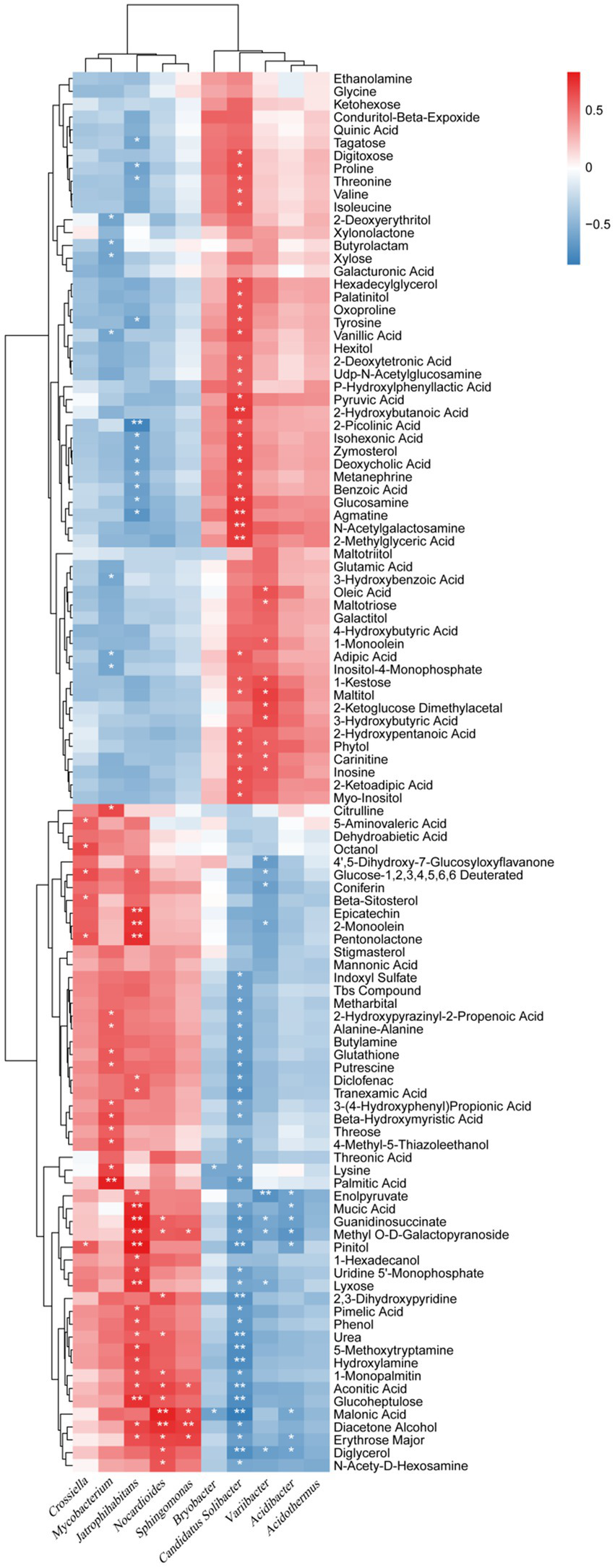
Decline disease is a new disease that has recently caused severe damage in the bayberry industry. After applying biochar to treat the soil of declining diseased trees, the changes in its vegetative growth, fruit quality, soil physical and chemical properties, soil microbial community structure, and metabolites were studied to analyze the disease prevention mechanism and control. Results indicated that the application of biochar could improve the vigor of diseased trees, the fruit quality, and the diversity and species number of microbial communities at the level of phyla, orders, and genera in the rhizosphere soil. The relative abundance of bacterial Mycobacterium and Crossiella and the fungal Geminibasidium and Fusarium were significantly increased in rhizosphere soil after biochar treatment on the decline diseased bayberry. In contrast, the bacterial Acidothermus, Bryobacter, Acidibacter, and the fungal Cladophialophora, Mycena, and Rickenella significantly decreased. Analysis of redundancies (RDA) of microbial communities and soil characteristics revealed that the composition of bacterial and fungal communities in bayberry rhizosphere soil was significantly affected by the main seven, including the pH, organic matter, alkali hydrolyzable nitrogen, available phosphorus, available potassium, exchangeable calcium and exchangeable magnesium in the rhizosphere soil, and all the contribution rates to fungi larger than those to bacteria, at genus levels. The biochar greatly influenced the metabolomics distribution of rhizosphere soils from the decline disease bayberry. There were 109 different metabolites in the control of the decline disease and the treatment of biochar, mainly including acid, alcohol, ester, amine, amino acid, sterol, sugar, and other secondary metabolites, of which 52 kinds of contents were increased significantly such as aconitic acid, threonic acid, pimelic acid, epicatechin, and lyxose with the largest was aconitic acid. The contents of 57 species decreased significantly, such as conduritol β-expoxide, zymosterol, palatinitol, quinic acid, and isohexoic acid, with the least was ketohexose. Overall, this study highlighted the significant influence of biochar in declining disease by regulating soil microbial community, physical and chemical properties, and secondary metabolites in the bayberry rhizosphere, which provided a novel strategy for managing bayberry decline disease.
Improvement effect of biochar on soil microbial community structure and metabolites of decline disease bayberry

5,426 views

38 citations

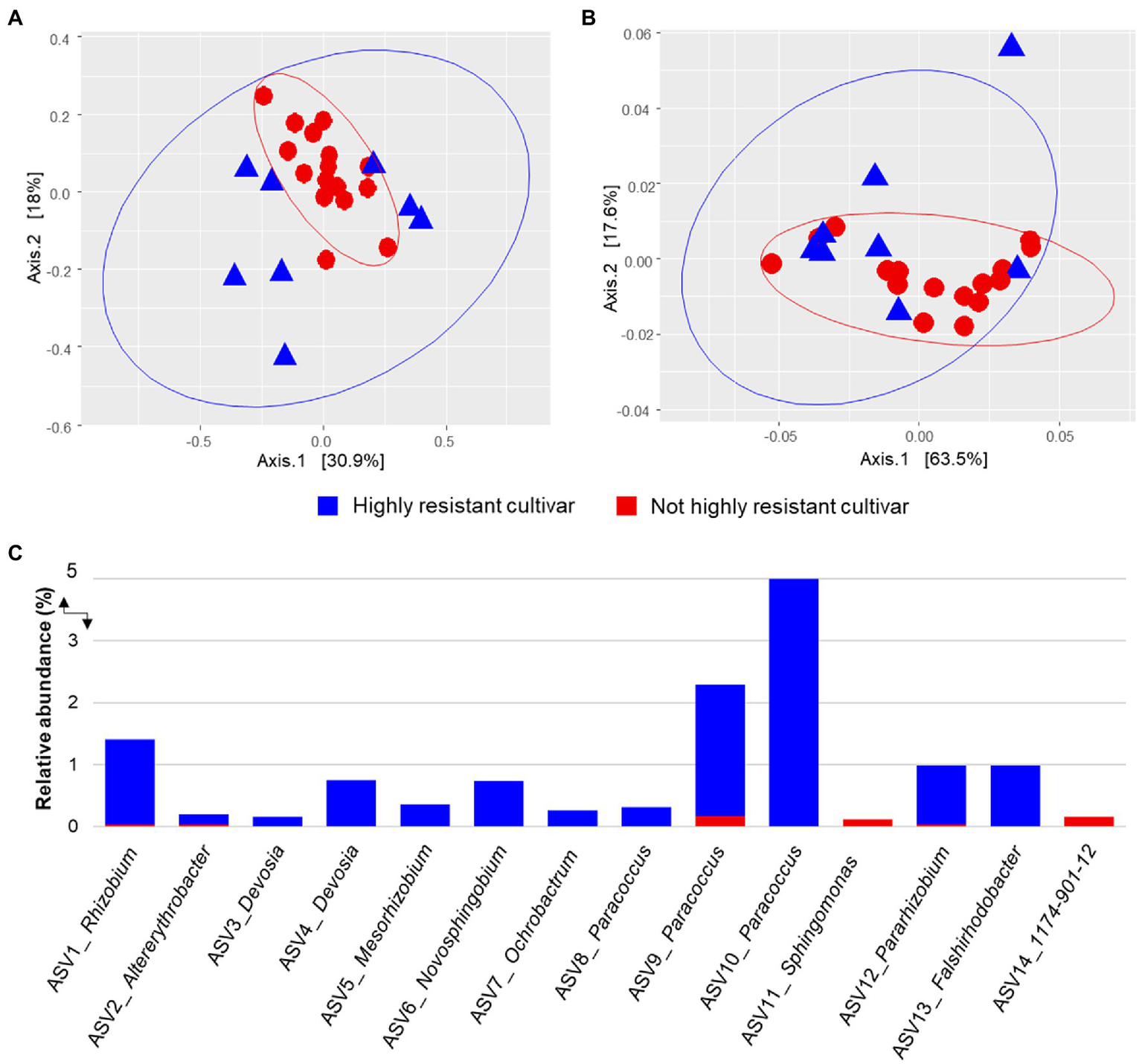
Phyllosphere microbiota represents a substantial but hardly explored reservoir for disease resistance mechanisms. The goal of our study was to understand the link between grapevine cultivars susceptibility to Plasmopara viticola, one of the most devastating leaf pathogens in viticulture, and the phyllosphere microbiota. Therefore, we analyzed a 16S rRNA gene library for the dominant phyllosphere phylum Alphaproteobacteria of seven Vitis genotypes at different developmental stages i.e., flowering and harvesting via amplicon sequencing. Communities sampled from young leaves expressed a significantly higher richness and diversity without significant host-specificity. In contrast, the microbial communities of mature leaves were structurally distinct in accordance with P. viticola resistance levels. This statistically significant link between mature bacterial phyllosphere communities and resistant phenotypes was corroborated by beta diversity metrics and network analysis. Beyond direct host-driven effects via the provision of microhabitats, we found evidence that plants recruit for specific bacterial taxa that were likely playing a fundamental role in mediating microbe-microbe interactions and structuring clusters within mature communities. Our results on grape-microbiota interaction provide insights for targeted biocontrol and breeding strategies.

5,366 views

30 citations