
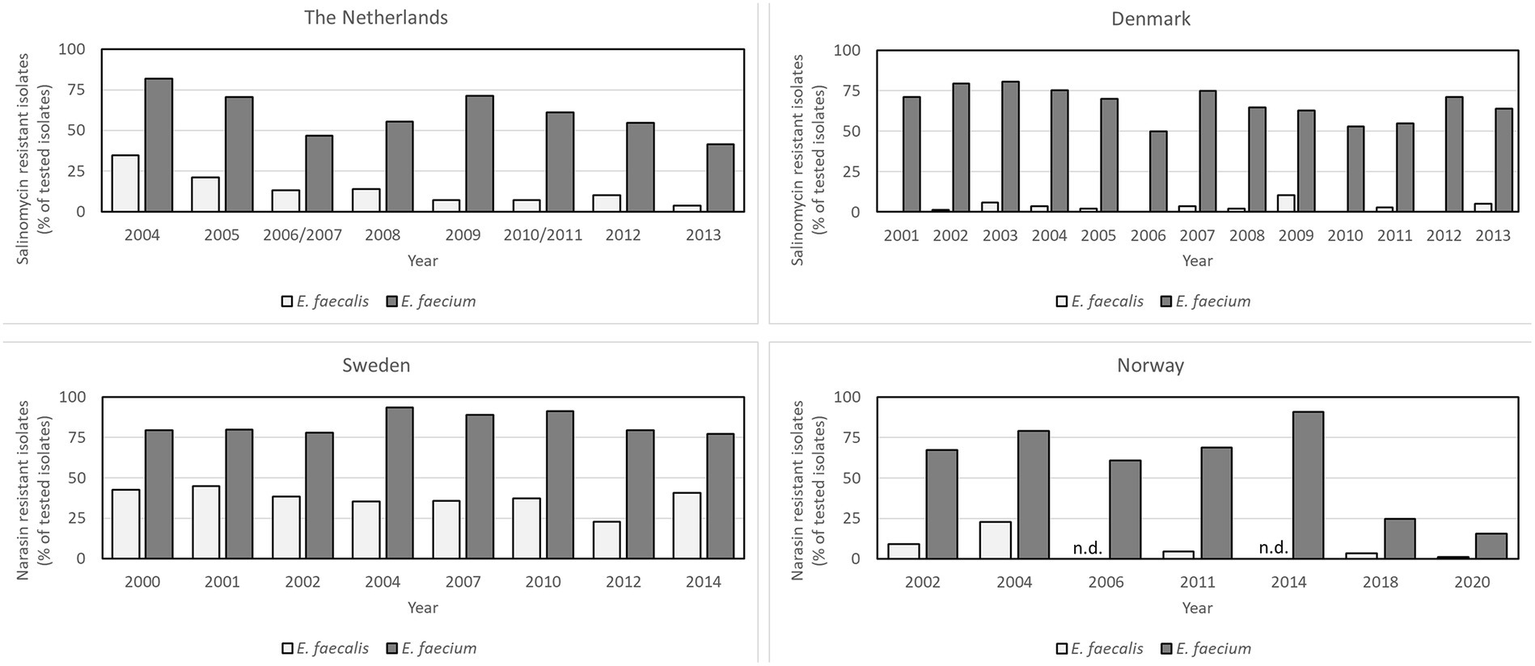
The international symposium on Antimicrobial Resistance in Animals and the Environment (ARAE) is a renowned scientific event gathering many scientists in the field from all over the world every 2 years since 2005. Its 9 th edition was held in July 2023 in Tours, France. The aim of the ARAE conference is to present an up-to-date vision of the impact of antibiotic use and resistance in the animal setting, its environment and subsequent impact on human health. All aspects related to epidemiology of antibiotic-resistant strains, genetic spread of antimicrobial resistance genes, emerging resistance mechanisms, resistome in microbiota, and the role of the environment as dissemination route and potential reservoir for resistance genes acquisition are discussed. The 9 th edition of ARAE welcomed 170 registered participants from 23 countries (Australia, Belgium, Canada, China, Czech Republic, Denmark, Finland, France, Germany, Ireland, Israel, Italy, Japan, Netherlands, Norway, Philippines, Poland, Portugal, South Korea, Spain, Tunisia, United Kingdom, United States). Early-career scientists represented almost 40% of participants. Five topic sessions gathered 59 oral presentations including keynote lectures and 94 research studies presented as posters. The proceedings of this 9 th ARAE symposium can be found at https://hal.inrae.fr/hal-04170355. The present conference research topic offered the opportunity to 150 authors worldwide to publish their studies presented during the conference as well as for scientists who were unable to attend the ARAE symposium. It includes 1 review, 1 systematic review and 16 original research articles.First, in an original review, Frederiksen et al. addressed the current knowledge on polyether ionophore resistance and the potential consequences in a One Health perspective. Polyether ionophores are largely used as feed additives in poultry production worldwide, especially monensin, to control avian coccidiosis due to Eimeria spp. Beside anti-parasitic activity, polyether ionophores has antibacterial activity but are not used in human medicine due to their toxicity. While Gram-negative bacteria are generally intrinsically resistant to polyether ionophores, Gram-positive bacteria such as Enterococcus faecium have been reported to harbour plasmid-borne narAB resistance genes against narasin with a yet unknown mechanism.Currently, there are sparse evidences of cross-resistance between ionophoric antibiotics and critically-important antibiotics for human medicine. However, the narAB resistance genes have been found to co-localize on conjugative plasmids of E. faecium with antibiotic resistance genes to macrolides, tetracycline and glycopeptides. This suggests that the use of narasin in broiler production systems could co-select vancomycin-resistant Enterococci that can pose a threat to human health.Salmonella enterica spp. are important zoonotic pathogens related to foodborne diseases worldwide. Multidrug-resistant (MDR) Salmonella spp. have been classified by the World Health Organisation as high priority pathogens for which new antibiotics are urgently needed.Here, Yan et al. carried out a bibliometric analysis to document trends in past and current researches dealing with horizontal gene transfer implicated in antimicrobial resistance spread in bacterial isolates of S. enterica. Since 1999, the number of publications in this field has shown an increasing trend with more than 100 publications per year in the recent years. There has been an evolution of research hotspots from (i) understanding of multidrug resistance in S. enterica serovar Typhimurium DT104 and other S. enterica serovars, (ii) emergence of plasmid-mediated expanded-spectrum cephalosporin resistance, to (iii) the analysis of whole genome sequences that has significantly enriched our understanding of the population structure, transmission dynamics, and epidemiology of antimicrobial resistance in S. enterica. Recent methods such as high-throughput long-read sequencing will provide exciting opportunities to deepen scientific understanding in this research domain.This conference research topic included also 3 articles focused on recent methodologies for rapid typing of MDR bacterial isolates and to harmonize methodologies in veterinary clinical laboratories. Zendri et al. assessed the potential of the InfraRed spectroscopy using the IR Biotyper for typing of nosocomial outbreaks of MDR pathogens in veterinary hospitals. They compared InfraRed spectroscopy and whole genome analysis of retrospective collections of Klebsiella pneumoniae and Pseudomonas aeruginosa isolated from companion animals (dogs and cats) and horses in 2 veterinary hospitals. InfraRed spectroscopy revealed a significant discriminatory power for K. pneumoniae isolates to identify clonal transmission events within veterinary hospital settings. However, this methodology appears less accurate for typing veterinary P. aeruginosa isolates indicating that further optimisation is needed before applying in routine veterinary laboratories. In another research article, dealing with bacterial morphology and antibiotic resistance, Ikebe et al. reported morphological differences using light microscopy between laboratory-evolved antibiotic-resistant E. coli strains and their susceptible parental ones. They correlated morphological features of resistant strains with phenotypic resistance and gene expression changes in energy metabolism and multidrug efflux systems. They proposed a novel image-based deep learning method for single-cell classification between resistant and susceptible strains. Further improvements of such deep learning algorithm would probably enable the identification of resistant bacterial cells using light microscopy in a near future.Finally, Koritnik et al. reported the results of a European survey about methodologies in veterinary microbiology laboratories (n= 241 labs from 34 European countries). They highlighted a broad diversity of methods for bacterial culture and identification with result reports ranging from 2 to 8 days. In European veterinary microbiological diagnostic laboratories, disc-diffusion method and minimal inhibitory concentration determination were both used for antimicrobial susceptibility testing as well as EUCAST and CLSI clinical breakpoints as interpretative criteria. This large European survey clearly emphasizes that harmonization is needed in bacterial culture and identification and in antimicrobial susceptibility testing for reporting and comparison purposes.A large set of original research articles (n=7) concerned molecular epidemiology of antimicrobial-resistant bacteria, mainly E. coli, isolated from food-producing animals, food, horses and veterinary hospitals. Antimicrobial resistance (AMR) is an important One Health issue in broiler production worldwide, notably by the carriage of MDR bacteria in the gut of healthy animals that can contaminate meat (Seiffert et al. 2013). Leclercq et al. performed an in depth genomic analysis of MDR E. coli isolated in an experimental facility reproducing the entire broiler production pyramid without antibiotic use since more than 10 years. They demonstrated that no transmission of MDR E. coli occurred from hens to offspring nor acquisition at the hatchery during 3 generations, but that the downstream rearing environment may constitute the source of few MDR E. coli clonal populations able to colonize young chicks.In addition, they showed a strong association between each major E. coli clonal populations and their own MDR IncF plasmid subtypes over chicken generations. Davies et al. reported a study focused on commensal E. coli broilers from live bird markets in Bangladesh. They described an extremely high occurrence of genetically-diverse MDR E. coli from caecal samples (93%). While ciprofloxacin resistance was very common, other resistances to critically-important antibiotics remained rare or absent (cephalosporins, carbapenems, colistin) with very few plasmid-borne resistance genes (blaCTX-M, mcr-1, fosA, tet(X)). In another study, Dixit et al. assessed the diversity of resistant bacteria in raw chicken and pork meat samples in Australia. They identified 33 bacterial species belonging to 17 genera. Among a total of 288 isolates, 12% were phenotypically MDR. Chicken meat samples carried more MDR isolates than pork samples. WGS analysis of all isolates revealed a large diversity of AMR genes, few ones being considered of critically importance for human medicine.Resistance to expanded spectrum cephalosporins in veterinary medicine is a major concern for human health (Seiffert et al. 2013)

18 Authors
- TK
Tom Koritnik
Department for Public Health Microbiology Ljubljana, Centre for Medical Microbiology, National Laboratory of Health, Environment and Food, Slovenia
- IC
Iskra Cvetkovikj
Department of Microbiology and Immunology, Faculty of Veterinary medicine-Skopje, Ss Cyril and Methodius University in Skopje, Republic of North Macedonia
- FZ
Flavia Zendri
Department of Veterinary Anatomy, Physiology and Pathology, Institute of Infection, Veterinary and Ecological Sciences, School of Veterinary Science, Leahurst Campus, University of Liverpool, United Kingdom
- SE
Shlomo Eduardo Blum
Department of Bacteriology and Mycology, Kimron Veterinary Institute, Israel
- SC
Serafeim Christos Chaintoutis
Diagnostic Laboratory, School of Veterinary Medicine, Faculty of Health Sciences, Aristotle University of Thessaloniki, Greece
- PA
Peter A. Kopp
IDEXX Vet Med Labor GmbH, Germany
- CH
Cassia Hare
Department of Veterinary Medicine, University of Cambridge, United Kingdom
- ZŠ
Zrinka Štritof
Department of Microbiology and Infectious Diseases with Clinic, Faculty of Veterinary Medicine, University of Zagreb, Croatia
- SK
Sonja Kittl
Department of Infectious Diseases and Pathobiology, Institute of Veterinary Bacteriology, University of Bern, Switzerland
- JG
José Gonçalves
MARE−Marine and Environmental Sciences Centre, ARNET−Aquatic Research Network Associate Laboratory, NOVA School of Science and Technology, NOVA University Lisbon, Portugal
- IZ
Irena Zdovc
Veterinary Faculty of Ljubljana, Institute of Microbiology and Parasitology, Slovenia
- EP
Erik Paulshus
Department of Analysis and Diagnostics, Microbiology, Norwegian Veterinary Institute, Norway
- AL
Andrea Laconi
Department of Comparative Biomedicine and Food Science, University of Padua, Italy
- DS
David Singleton
Department of Veterinary Anatomy, Physiology and Pathology, Institute of Infection, Veterinary and Ecological Sciences, School of Veterinary Science, Leahurst Campus, University of Liverpool, United Kingdom
- FA
Fergus Allerton
Willows Veterinary Centre and Referral Service, United Kingdom
- EM
Els M. Broens
ESCMID Study Group for Veterinary Microbiology (ESGVM), Switzerland
- PD
Peter Damborg
ESCMID Study Group for Veterinary Microbiology (ESGVM), Switzerland
- DT
Dorina Timofte
Department of Veterinary Anatomy, Physiology and Pathology, Institute of Infection, Veterinary and Ecological Sciences, School of Veterinary Science, Leahurst Campus, University of Liverpool, United Kingdom
5 Authors
- MI
Miki Ikebe
SANKEN (Institute of Scientific and Industrial Research), Osaka University, Japan
- KA
Kota Aoki
SANKEN (Institute of Scientific and Industrial Research), Osaka University, Japan
- MH
Mitsuko Hayashi-Nishino
SANKEN (Institute of Scientific and Industrial Research), Osaka University, Japan
- CF
Chikara Furusawa
Center for Biosystems Dynamics Research, RIKEN, Japan
- KN
Kunihiko Nishino
SANKEN (Institute of Scientific and Industrial Research), Osaka University, Japan


8 Authors
- EK
Emily K. Herman
Department of Agricultural, Food, and Nutritional Science, Faculty of Agricultural, Life, and Environmental Sciences, University of Alberta, Canada
- SR
Stacey R. Lacoste
Department of Large Animal Clinical Sciences, Western College of Veterinary Medicine, University of Saskatchewan, Canada
- CN
Claire N. Freeman
Department of Large Animal Clinical Sciences, Western College of Veterinary Medicine, University of Saskatchewan, Canada
- SJ
Simon J. G. Otto
HEAT-AMR (Human-Environment-Animal Transdisciplinary AMR) Research Group, School of Public Health, University of Alberta, Canada
- EL
E. Luke McCarthy
Department of Animal and Poultry Science, College of Agriculture and Bioresources, University of Saskatchewan, Canada
- MG
Matthew G. Links
Department of Animal and Poultry Science, College of Agriculture and Bioresources, University of Saskatchewan, Canada
- PS
Paul Stothard
Department of Agricultural, Food, and Nutritional Science, Faculty of Agricultural, Life, and Environmental Sciences, University of Alberta, Canada
- CL
Cheryl L. Waldner
Department of Large Animal Clinical Sciences, Western College of Veterinary Medicine, University of Saskatchewan, Canada
9 Authors
- PH
Pedro Henrique Imazaki
INTHERES, University of Toulouse, INRAE, ENVT, France
- BV
Bertille Voisin
INTHERES, University of Toulouse, INRAE, ENVT, France
- NA
Nathalie Arpaillange
INTHERES, University of Toulouse, INRAE, ENVT, France
- BB
Béatrice B. Roques
INTHERES, University of Toulouse, INRAE, ENVT, France
- ED
Emilie Dordet-Frisoni
INTHERES, University of Toulouse, INRAE, ENVT, France
- VD
Véronique Dupouy
INTHERES, University of Toulouse, INRAE, ENVT, France
- AA
Aude A. Ferran
INTHERES, University of Toulouse, INRAE, ENVT, France
- AB
Alain Bousquet-Mélou
INTHERES, University of Toulouse, INRAE, ENVT, France
- DB
Delphine Bibbal
INTHERES, University of Toulouse, INRAE, ENVT, France
3,284 views
3 citations
8 Authors
- AH
A. H. Strickland
Department of Veterinary Integrative Biosciences, Texas A&M University, United States
- SA
S. A. Murray
Department of Veterinary Pathobiology, Texas A&M University, United States
- JV
J. Vinasco
Department of Veterinary Pathobiology, Texas A&M University, United States
- BW
B. W. Auvermann
Texas A&M AgriLife Research and Extension Center at Amarillo, United States
- KJ
K. J. Bush
Texas A&M AgriLife Research and Extension Center at Amarillo, United States
- JE
J. E. Sawyer
Department of Animal Sciences, Texas A&M University, United States
- HM
H. M. Scott
Department of Veterinary Pathobiology, Texas A&M University, United States
- KN
K. N. Norman
Department of Veterinary Integrative Biosciences, Texas A&M University, United States
1,305 views
9 Authors
- FZ
Flavia Zendri
Department of Veterinary Anatomy, Physiology and Pathology, Institute of Infection, Veterinary and Ecological Sciences, University of Liverpool, United Kingdom
- VS
Vanessa Schmidt
Department of Small Animal Clinical Science, Institute of Infection, Veterinary and Ecological Sciences, University of Liverpool, United Kingdom
- NM
Norman Mauder
Bruker Daltonics, Germany
- AL
Anette Loeffler
Department of Clinical Science and Services, Royal Veterinary College Hawkshead Campus, Hatfield, United Kingdom
- RE
Rosanne Ellen Jepson
Department of Clinical Science and Services, Royal Veterinary College Hawkshead Campus, Hatfield, United Kingdom
- CI
Cajsa Isgren
Western Counties Equine Hospital Ltd., United Kingdom
- GP
Gina Pinchbeck
Department of Livestock and One Health, Institute of Infection, Veterinary and Ecological Sciences, University of Liverpool, United Kingdom
- SH
Sam Haldenby
Centre for Genomic Research, University of Liverpool, United Kingdom
- DT
Dorina Timofte
Department of Veterinary Anatomy, Physiology and Pathology, Institute of Infection, Veterinary and Ecological Sciences, University of Liverpool, United Kingdom
1,501 views
2 citations



10 Authors
- FG
Francois Gravey
Department of Infectious Agents, Bacteriology, Université de Caen Normandie, Université de Rouen Normandie, INSERM, DYNAMICURE UMR1311, CHU Caen, France
- CS
Corinne Sévin
ANSES, Normandy Laboratory for Animal Health, Physiopathology and Epidemiology of Equine Diseases Unit, France
- SC
Sophie Castagnet
Department of Infectious Agents, Bacteriology, Université de Caen Normandie, Université de Rouen Normandie, INSERM, DYNAMICURE UMR1311, CHU Caen, France
- NF
Nathalie Foucher
ANSES, Normandy Laboratory for Animal Health, Physiopathology and Epidemiology of Equine Diseases Unit, France
- KM
Karine Maillard
Research Department, LABÉO, France
- JT
Jackie Tapprest
ANSES, Normandy Laboratory for Animal Health, Physiopathology and Epidemiology of Equine Diseases Unit, France
- AL
Albertine Léon
Department of Infectious Agents, Bacteriology, Université de Caen Normandie, Université de Rouen Normandie, INSERM, DYNAMICURE UMR1311, CHU Caen, France
- BL
Bénédicte Langlois
Department of Infectious Agents, Bacteriology, Université de Caen Normandie, Université de Rouen Normandie, INSERM, DYNAMICURE UMR1311, CHU Caen, France
- SL
Simon Le Hello
Department of Infectious Agents, Bacteriology, Université de Caen Normandie, Université de Rouen Normandie, INSERM, DYNAMICURE UMR1311, CHU Caen, France
- SP
Sandrine Petry
ANSES, Normandy Laboratory for Animal Health, Physiopathology and Epidemiology of Equine Diseases Unit, France
