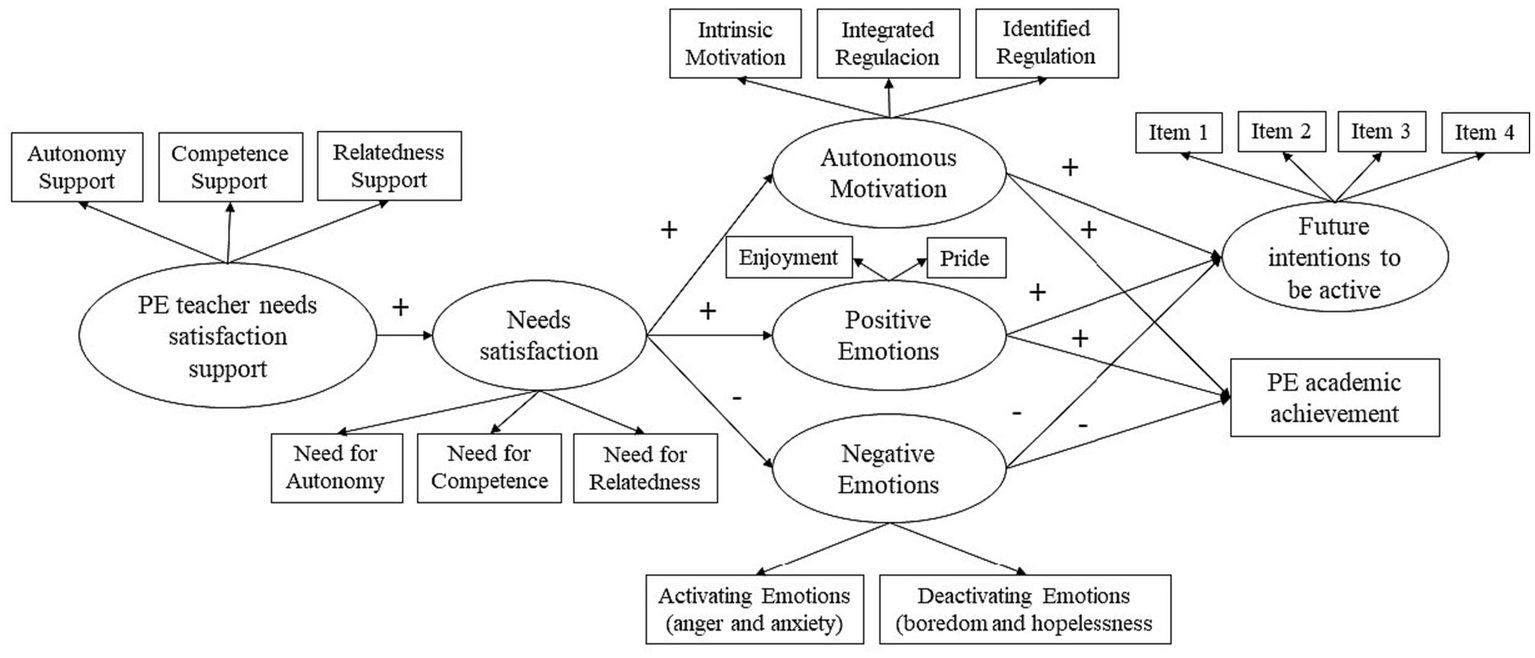
perspective on the latest trends in the field, with the potential to enrich our understanding of mental and emotional processes in sports.This volume reflects the dynamic evolution of the discipline, and we hope it serves as a valuable resource for both researchers and practitioners interested in sport psychology and its practical applications.To provide a comprehensive overview of the contributions included in this volume, we present a summary based on different criteria:1. Conceptual scope. Majority of the articles (11) are original research, one focuses on a protocol (Luo et al., 2024), and one is strictly conceptual in nature (Tossici et al., 2024). This Research Topic includes reference works exploring personality variables and their relationship with sports practice (Pineda-Espejel et al., 2024), including tactical decision-making in basketball (Díaz-Rodríguez & Pérez-Córdoba, 2024) and gym-goers' behavior (Tavares et al., 2024). Some studies analyze personal motivation and emotion, examining their relationship with academic performance and sports practice (Fierro-Suero et al., 2023). Other focus on methodological aspects, comparing self-perception and observational methodologies in handball (Prudente et al., 2024). Several contribute to scale validation studies in Chinese athletes, specifically on anxiety (Zhang et al., 2023) and non-clinical insomnia (Tan et al., 2023), or in Spanish-speaking Mexican athletes through the validation of the Interpersonal Behavior Questionnaire (IBQ) (Pineda-Espejel et al., 2024). Finally, several articles incorporate a neuroscientific perspective, examining the relationship between sports skills and cognitive/emotional functions through direct neural activity recordings (Carey et al., 2024;Wang et al., 2023;Yu et al., 2024). Additionally, one study proposes a protocol for neuroimaging research (Luo et al., 2024), while another focuses on neuropsychological aspects of sports performance (Carames et al., 2024).The empirical studies included in this collection demonstrate different procedural orientations. The majority use questionnaires, either exclusively (Fierro-Suero et al., 2023;Pineda-Espejel et al., 2023;Tavares et al., 2024;Tan et al., 2023;Zhang et al., 2023) Some studies incorporate cognitive or practical tasks (Carames et al., 2024;Carey et al., 2024;Wang et al., 2023;Yu et al., 2024) in combination with neuroscientific techniques, such as electroencephalography (EEG) (Carey et al., 2024;Wang et al., 2023;Yu et al., 2024) and eye-tracking (Carey et al., 2024). This research topic includes various software tools and analytical methods relevant to sport psychology.Regarding software, the studies utilize SPSS, JASP (Carey et al., 2024) (Carames et al., 2024;Tan et al., 2023), McDonald's omega (Prudente et al., 2024;Pineda-Espejel et al., 2024;Tan et al., 2024), and confirmatory factor analysis (Pineda-Espejel et al., 2024). Neuroscientific analyses focus on EEG signal processing (Carey et al., 2024;Yu et al., 2024;Wang et al., 2023), power spectrum analysis (Wang et al., 2023), and independent component analysis (Carey et al., 2024;Yu et al., 2024).Additionally, some studies implement machine learning techniques, such as decision trees using CHAID (Tavares et al., 2024). This collection presents a diverse set of methodologies, statistical techniques, and neuroscientific tools applicable to sport psychology, providing valuable insights for future research and interventions in the field.Topic present a particular focus on personality factors influencing physical activity (Díaz-Rodríguez and Pérez-Córdoba, 2024;Fierro-Suero et al., 2023;Pineda-Espejel et al., 2024;Tavares et al., 2024), with some studies applying these concepts to specific sports, such as basketball (Díaz-Rodríguez and Pérez-Córdoba, 2024).Others examine neurophysiological correlates of specific sport tasks, including golf (Carey et al., 2024;Yu et al., 2024), or sport-related skills such as visuomotor ability (Wang et al., 2023).In addition, a mixed-methods approach is used to increase data reliability, applied to specific situations in handball (Prudente et al., 2024). The neuropsychological approach is also employed to predict anxiety in athletes prior to sporting events (Caramés et al., 2024). Furthermore, three articles focus on the adaptation or validation of questionnaires for use with Chinese athletes (anxiety questionnaire, Zhang et al., 2023;non-clinical insomnia, Tan et al., 2023) or Mexican athletes (IBQ, Pineda-Espejel et al., 2024). This collection also includes a conceptual work that focuses on the Psiconeuroendocrinological (PNEI) approach to stress phenomena in sports performance, providing a holistic perspective (Tossici et al., 2024). Moreover, a protocol is presented for implementing fMRI in sport psychology, specifically in the practice of Baduanjin (Luo et al., 2024).In summary, we highlight the contributions of the 13 articles published in this Research Topic and offer them to our readers, with the hope that they will help expand knowledge in this field.The articles included in this Research Topic provide a comprehensive range of theoretical and methodological contributions. As editors, we are pleased to present these works and their valuable transfer to the scientific community.The articles in this volume have garnered significant attention, as evidenced by their high number of views, according to internal metrics. All of the articles were published between 2023 and 2024. Of the 26 articles initially submitted, 13 were ultimately accepted, yielding an acceptance rate of 50%. This collection reflects the evolving landscape of Sport Psychology, and we are confident that it will make a substantial impact in advancing knowledge and informing future research in the field.
2,220 views
2 citations
2 Authors
- CD
Carlos Díaz-Rodríguez
Department of Physical Education and Sport, Faculty of Health and Sport, University EUNEIZ, Spain
- EP
Eugenio Pérez-Córdoba
Department of Experimental Psychology, Faculty of Psychology, University of Seville, Spain
3,308 views
7 citations
7 Authors
- LM
Laura M. Carey
Health and Life Sciences, University of the West of Scotland, United Kingdom
- GA
Georgia Alexandrou
Institute of Social Marketing and Health, University of Stirling, United Kingdom
- SL
Simon Ladouce
Brain & Cognition, KU Leuven, Belgium
- DK
Dimitrios Kourtis
Psychology and Natural Sciences, University of Stirling, United Kingdom
- MB
Marika Berchicci
Department of Psychological, Health and Territorial Sciences, G. d'Annunzio University of Chieti and Pescara, Italy
- AM
Angus M. Hunter
Department of Sport Science, Nottingham Trent University, United Kingdom
- DI
David I. Donaldson
School of Psychology and Neuroscience, University of St Andrews, United Kingdom
7,793 views
5 citations
10 Authors
- WL
Weiming Luo
Acupuncture and Tuina School, Chengdu University of Traditional Chinese Medicine, China
- JZ
Jun Zhou
Acupuncture and Tuina School, Chengdu University of Traditional Chinese Medicine, China
- XZ
Xinyue Zhang
Acupuncture and Tuina School, Chengdu University of Traditional Chinese Medicine, China
- YT
Yuke Teng
Acupuncture and Tuina School, Chengdu University of Traditional Chinese Medicine, China
- ST
Siyuan Tao
Acupuncture and Tuina School, Chengdu University of Traditional Chinese Medicine, China
- NC
Nuo Chen
Acupuncture and Tuina School, Chengdu University of Traditional Chinese Medicine, China
- DT
Dan Tong
Acupuncture and Tuina School, Chengdu University of Traditional Chinese Medicine, China
- PS
Peiling Su
Acupuncture and Tuina School, Chengdu University of Traditional Chinese Medicine, China
- KY
Kaijie Ying
Sichuan Health Qigong Management Center, Sichuan Provincial Sports Bureau, China
- ZJ
Zheng jie Li
Acupuncture and Tuina School, Chengdu University of Traditional Chinese Medicine, China
3,527 views
5 citations
8 Authors
- JN
João Nunes Prudente
Department of Physical Education and Sport, Faculty of Social Sciences, Portugal
- AR
Américo Ramos Cardoso
Higher School of Technologies and Management, University of Madeira, Portugal
- AJ
Ana José Rodrigues
Department of Physical Education and Sport, Faculty of Social Sciences, Portugal
- JN
João N. Mendes
Higher School of Technologies and Management, University of Madeira, Portugal
- CF
Catarina Fernando
Department of Physical Education and Sport, Faculty of Social Sciences, Portugal
- HL
Helder Lopes
Department of Physical Education and Sport, Faculty of Social Sciences, Portugal
- AT
Alejandro Trejo-Silva
Instituto Superior de Educación Física, University of the Republic, Uruguay
- DF
Duarte Filipe Sousa
Department of Physical Education and Sport, Faculty of Social Sciences, Portugal
4,176 views
2 citations
5 Authors
- AS
Ana Sofia R. Tavares
H&TRC- Health & Technology Research Center, ESTeSL – Escola Superior de Tecnologia da Saúde, Instituto Politécnico de Lisboa, Portugal
- EC
Elisabete Carolino
H&TRC- Health & Technology Research Center, ESTeSL – Escola Superior de Tecnologia da Saúde, Instituto Politécnico de Lisboa, Portugal
- PT
Pedro Teques
N2i, Polytechnic Institute of Maia, Portugal
- LC
Luis Calmeiro
National Institute of Education, Physical Education and Sports Science, Nanyang Technological University, Singapore
- SS
Sidonio Serpa
Research Center in Sport, Physical Education, Exercise and Health (CIDEFES), Universidade Lusofona, Portugal
3,319 views
3 citations
6 Authors
- JM
José María Caramés
Department of Personality, Assessment and Psychological Treatment, Faculty of Psychology and Speech Therapy, University of Malaga, Spain
- RE
Rafael E. Reigal
Department of Social Psychology, Social Anthropology, Social Work and Social Services, University of Malaga, Spain
- VM
Verónica Morales-Sánchez
Department of Social Psychology, Social Anthropology, Social Work and Social Services, University of Malaga, Spain
- JL
José Luis Pastrana-Brincones
School of Computer Science and Engineering, University of Málaga, Spain
- MT
M. Teresa Anguera
Faculty of Psychology, Institute of Neurosciences, University of Barcelona, Spain
- AH
Antonio Hernández-Mendo
Department of Social Psychology, Social Anthropology, Social Work and Social Services, University of Malaga, Spain
2,960 views
3 citations