
This Topic brought together researchers with expertise in chemical biology, structural pharmacology, and drug discovery to explore how small molecule probes can be utilized to better understand the proteome, identify disease-relevant targets, and support therapeutic development. The accepted studies in the research topics collectively illustrate the creativity, technical advancement, and translational potential enclosed in small molecule probe research today.One notable contribution, "Utilizing small molecules to probe and harness the proteome by pooled protein tagging with ligandable domains", introduces an elegant strategy to systematically study protein-small molecule interactions. By integrating pooled protein tagging with ligandable domains, this approach offers a scalable way to profile the ligandability of the proteome, which could significantly accelerate probe development pipelines and functional annotation of understudied proteins.In another study, researchers reported the development of a high-throughput acoustic droplet ejection mass spectrometry assay and a solid-supported membrane (SSM)-based electrophysiological assay to study the pharmacological inhibition of SLC1-A3, -A2 and -A1. These assays provide complementary, label-free platforms to investigate the pharmacology of excitatory amino acid transporters, which play crucial roles in neurotransmission and are increasingly being explored as therapeutic targets in neuropsychiatric and neurodegenerative disorders.Using Structure-Based Virtual Screening and Biological Evaluation describes the identification of new FLT3-ITD inhibitors through virtual screening and biological validation. This work not only underscores the utility of in silico techniques in lead discovery but also offers promising scaffolds for further preclinical development.Similarly, the study titled Discovery of novel PARP1/NRP1 dual-targeting inhibitors with strong antitumor potency introduces a multitargeted approach to cancer therapy. By designing dual inhibitors that engage both PARP1 and NRP1, the authors present a strategy that could improve efficacy and overcome resistance mechanisms associated with monotherapy. Such dual-targeting molecules exemplify the expanding capabilities of small molecule probes to modulate complex signaling networks in cancer.The final article, Radiosynthesis and in-vitro identification of a molecular probe 131I-FAPI targeting cancer-associated fibroblasts, highlights the intersection of chemical probe development and diagnostic imaging. Fibroblast activation protein (FAP) has emerged as a relevant target in tumor stroma, and the synthesis of a radiolabeled FAPI probe enables selective detection of cancer-associated fibroblasts. This study offers valuable tools for imaging applications and further supports the idea that molecular probes can bridge therapeutic and diagnostic objectives.Together, these contributions emphasize the versatility and impact of small molecule probes across disciplines-from proteomics and neuropharmacology to oncology and nuclear medicine. Importantly, they demonstrate how methodological advances (e.g., new assay systems, virtual screening platforms, and radiochemical synthesis) are driving the next generation of pharmacological tools.Looking forward, continued progress in this field will require integration of multidisciplinary approaches, including computational chemistry, structural biology, systems pharmacology, and medicinal chemistry. Further attention to probe selectivity, cellular permeability, and in vivo stability will enhance the translational value of these tools. As small molecule probes continue to evolve from research reagents to potential therapeutics, the importance of open, collaborative platforms such as this Research Topic cannot be overstated.We would like to thank all authors who contributed to this collection, the reviewers who provided thoughtful and constructive feedback, and the editorial team for supporting this initiative. We hope this Topic serves as a valuable resource for the community and inspires further innovation in the design and application of small molecule probes in pharmacological research.
Editorial09 July 2025
Editorial: Exploring small molecule probes: advancements and applications in pharmacological research
ORIGINAL RESEARCH
16 April 2025
Yasmin Zuschlag, 3 more and Felix Bärenz
5 Authors
- YZ
Yasmin Zuschlag
Sanofi, Germany
- AP
Antje Pommereau
Sanofi, Germany
- JW
Jennifer Warkentin
Sanofi, Germany
- TL
Thomas Licher
Sanofi, Germany
- FB
Felix Bärenz
Sanofi, Germany
IntroductionThe solute carrier (SLC) family comprises a diverse group of membrane proteins essential for transporting a variety of substrates across cellular membranes. These transporters play crucial roles in cellular homeostasis, nutrient uptake, and neurotransmitter clearance. The SLC1 subfamily, specifically SLC1A3 (EAAT1), SLC1A2 (EAAT2), and SLC1A1 (EAAT3), are excitatory amino acid transporters that regulate glutamate concentrations in the synaptic cleft, making them important targets for neurological disorder therapeutics. Despite their significance, drug discovery efforts targeting these transporters have been hampered by limitations in available screening methodologies.MethodsWe are utilizing advanced methodologies such as Acoustic Droplet Ejection Mass Spectrometry (ADE‐MS) and Solid Supported Membrane (SSM)-based electrophysiology to develop assays for the SLC1 family members: SLC1A3 (EAAT1), SLC1A2 (EAAT2), and SLC1A1 (EAAT3).Results and DiscussionIn this manuscript, we present the successful development of novel assays specifically designed for drug discovery applications targeting the SLC1 family members. Our Acoustic Droplet Ejection Mass Spectrometry (ADE‐MS) platform demonstrated high sensitivity and reproducibility in detecting substrate transport activity across all three transporters. The complementary Solid Supported Membrane (SSM)‐based electrophysiology assay provided real-time kinetic measurements of transporter function with minimal background interference. These assays exhibited Z’ factors exceeding 0.7, indicating their robustness for high-throughput screening campaigns. Initial validation using known inhibitors confirmed the assays’ ability to identify compounds with varying potencies and mechanisms of action against SLC1A3, SLC1A2, and SLC1A1.ConclusionWe endeavor to establish robust assays that can facilitate future drug discovery campaigns.
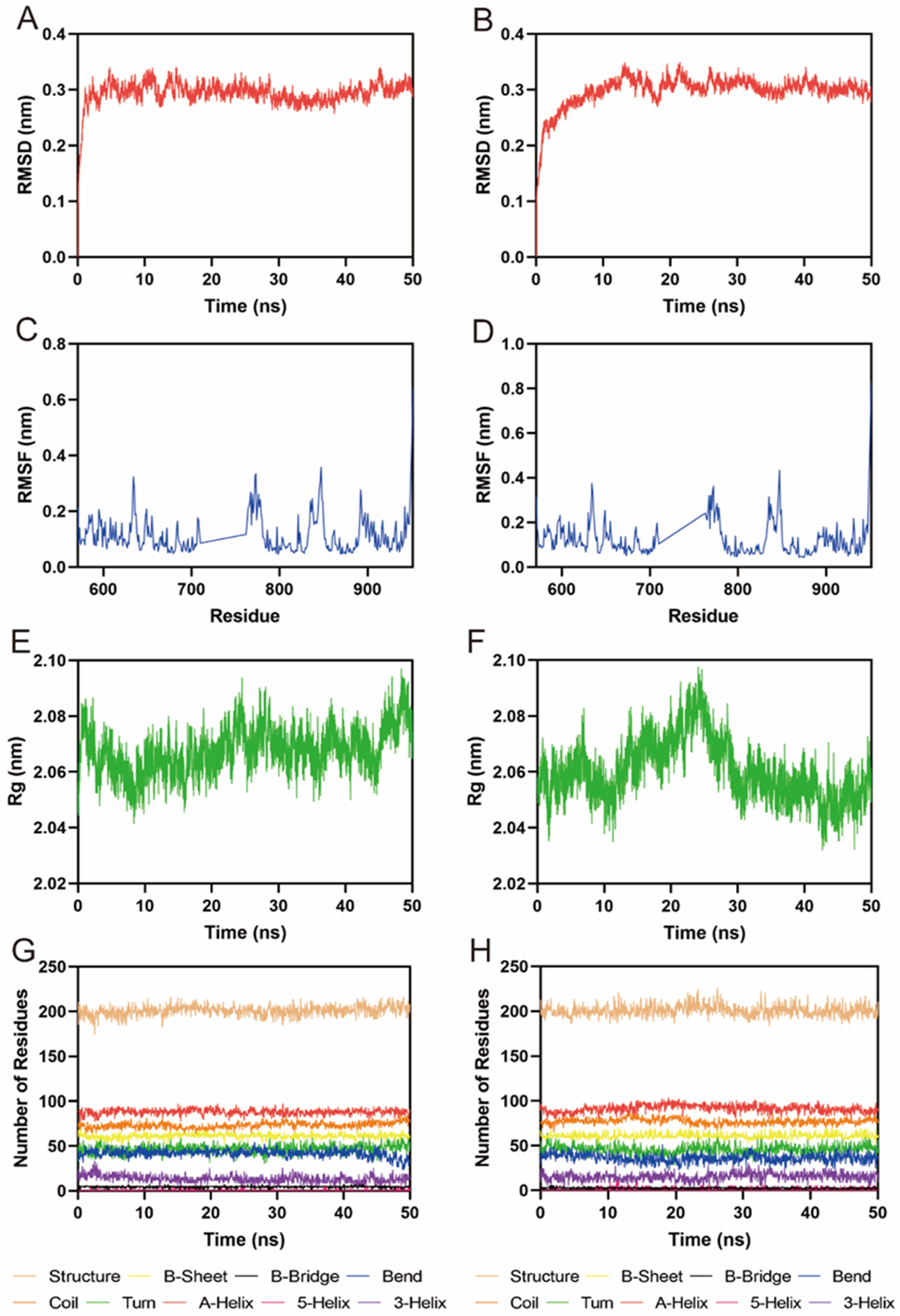
Considering the essential role of FLT3-ITD mutations in the development of acute myeloid leukemia (AML), the research and development of FLT3 inhibitors hold significant therapeutic potential. In this study, we identified a novel, highly potent small molecule inhibitor, FLIN-4, targeting FLT3 through structure-based virtual screening. Notably, FLIN-4 showed exceptional inhibitory effects in kinase activity inhibition assays, exhibiting a potent inhibitory effect against FLT3 (IC50 = 1.07 ± 0.04 nM). This potency was significantly superior to that of the known positive inhibitor Midostaurin, showing approximately 27 times higher inhibitory potency. Molecular dynamics simulations have confirmed the stable interaction between FLIN-4 and FLT3. Furthermore, cytotoxicity assays revealed that FLIN-4 has significant anti-proliferative activity against the AML cell line MV4-11 (IC50 = 1.31 ± 0.06 nM). Overall, these data suggest that FLIN-4, as a potential therapeutic candidate for AML, is valuable for further research and development.

ORIGINAL RESEARCH
29 November 2024
Juanjuan Liu, 5 more and Jindong Li
7 Authors
- JL
Juanjuan Liu
Department of Pharmacy, China
- YG
Yifei Geng
Department of Pharmaceutical Analysis, China
- SJ
Su Jiang
Department of Pharmacy, China
- LG
Lixia Guan
Department of Pharmaceutical Analysis, China
- JG
Junyi Gao
Department of Pharmacy, China
- MN
Miao-Miao Niu
Department of Pharmaceutical Analysis, China
- JL
Jindong Li
Department of Pharmacy, China
Given that overexpression of Poly (ADP-ribose) polymerase-1 (PARP1) and Neuropilin-1 (NRP1) is implicated in the pathogenesis of human breast cancer, the design of dual PARP1/NRP1 inhibitors has wide therapeutic prospect. However, there have been no reports of such inhibitors so far. Herein, we discovered novel small molecule inhibitors that simultaneously target PARP1 and NRP1 using structure-based virtual screening for the treatment of breast cancer. Notably, PPNR-4 was the most potent inhibitor targeting PARP1 (IC50 = 7.71 ± 0.39 nM) and NRP1 (IC50 = 24.48 ± 2.16 nM). PPNR-4 showed high affinity and binding stability to PARP1 and NRP1. The cytotoxicity assays showed that PPNR-4 demonstrated significant antiproliferative activity on MDA-MB-231 cells (IC50 = 0.21 μM) without effect on normal human cells. In vivo experiments exhibited that PPNR-4 showed more effective than the positive controls in inhibiting the growth of tumors. Overall, these data suggest that PPNR-4 is an effective antitumor candidate and deserves further research.