Department of Neurology, Shenzhen People’s Hospital (The Second Clinical Medical College, Jinan University, The First Affiliated Hospital, Southern University of Science and Technology), China
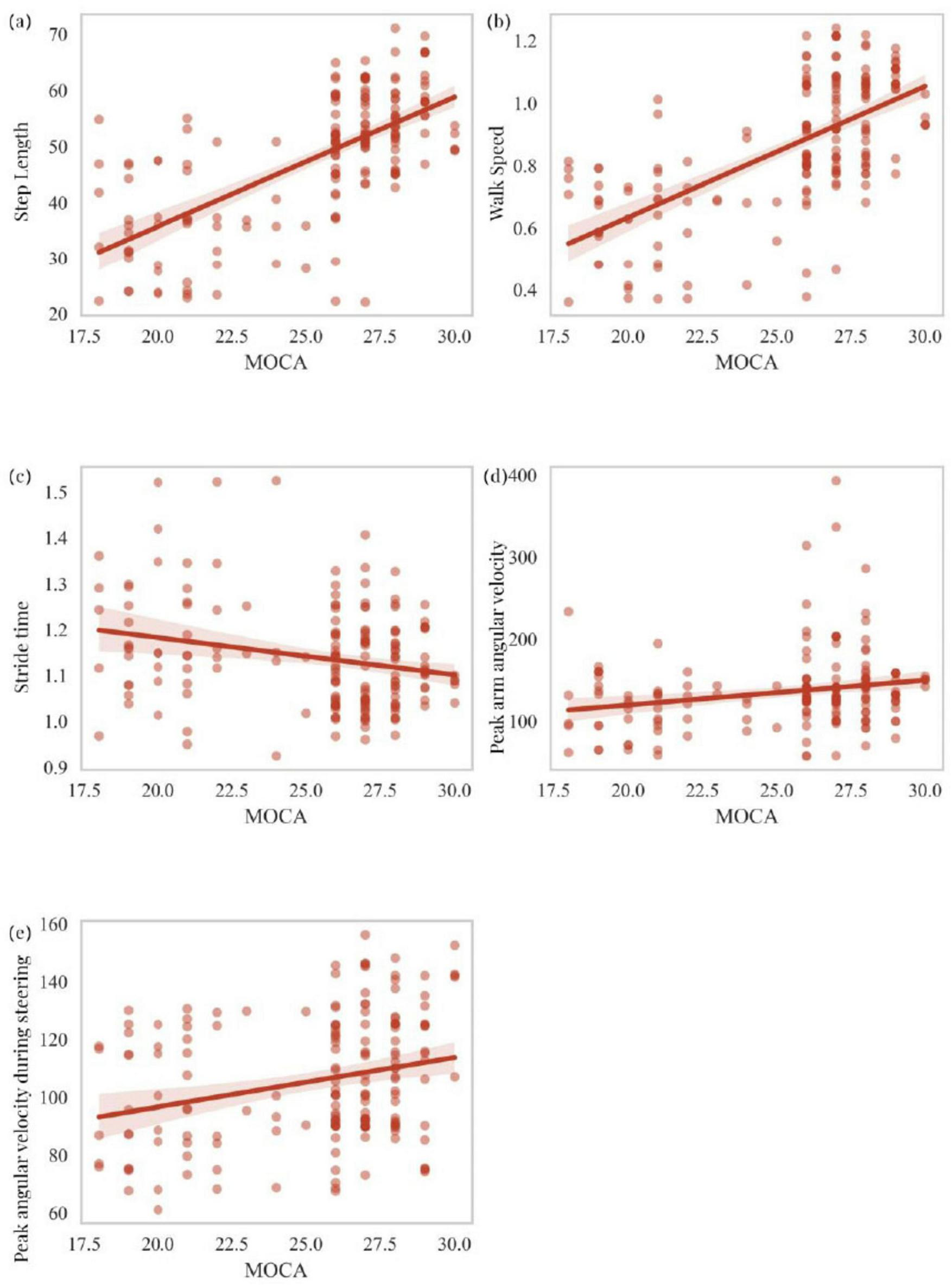
BackgroundCognitive impairment is a common non-motor symptom of Parkinson’s disease (PD) that significantly impacts patients’ quality of life and disease progression. Despite its clinical importance, the underlying mechanisms linking motor and cognitive dysfunction in PD remain poorly understood. Wearable sensor technology offers an innovative approach to quantifying gait parameters and exploring their relationship with cognitive decline, providing a non-invasive, objective method to identify individuals at risk of cognitive impairment.ObjectiveThis study aimed to develop and validate a diagnostic model using gait parameters derived from wearable sensors to predict cognitive impairment in PD patients. Additionally, it sought to integrate these findings with machine learning methods to enhance prediction accuracy.MethodsA cross-sectional study was conducted on early-to-mid-stage PD patients, with approximately 28.8% diagnosed with cognitive impairment. A total of 38 clinically relevant variables were collected, including demographic data, medical history, cognitive scale scores, and gait data captured by wearable sensors. Baseline comparisons, univariate, and multivariate logistic regression analyses were performed to identify independent risk factors for cognitive impairment. Selected variables were used to train and evaluate six machine-learning models. The models’ predictive performance was comprehensively assessed using receiver operating characteristic (ROC) curves, area under the curve (AUC) values, decision curve analysis (DCA), calibration curves, precision-recall (PR) curves, and forest plots. Shapley Additive Explanations (SHAP) analysis was also employed to enable personalized risk assessment. Finally, correlations between cognitive scores (MoCA and MMSE) and key gait parameters were analyzed.ResultsAmong the 38 clinical variables, seven were identified as independent risk factors for cognitive impairment in PD, including Duration of PD, UPDRS-III score, Step Length, Walk speed, Stride time, Peak arm angular velocity, Peak angular velocity during steering. The logistic regression model demonstrated superior predictive performance (test set AUC: 0.957), outperforming other machine learning algorithms. SHAP analysis revealed that Step Length, UPDRS-III score, Duration of PD, and Peak angular velocity during steering were the most influential predictors in the logistic regression model. Additionally, correlation analysis showed a significant association between lower cognitive scores and deteriorating gait parameters.ConclusionThis study highlights the potential of gait parameters derived from wearable sensors as biomarkers for cognitive impairment in PD patients. It also underscores the intricate interplay between motor and cognitive dysfunction in PD. The integration of gait analysis with machine learning models, particularly logistic regression, provides a robust, non-invasive, and scalable approach for early identification and risk stratification of cognitive decline in PD. By leveraging wearable technology, this work paves the way for innovative diagnostic strategies to enhance clinical decision-making and improve patient outcomes.
ObjectivesTo investigate the utility of eye-tracking features as a neurobiological marker for identifying depression with mixed features (DMF), a psychiatric disorder characterized by the presence of depressive symptoms alongside subsyndromal manic features, thereby complicating both diagnosis and therapeutic intervention.MethodsA total of 93 participants were included, comprising 41 patients with major depressive disorder (MDD), of whom 20 were classified as DMF, and 52 healthy controls (HC). Eye-tracking features were collected using an infrared-based device, and participants were evaluated using clinical scales including the Montgomery-Åsberg Depression Rating Scale (MADRS), Young Mania Rating Scale (YMRS), and Brief Psychiatric Rating Scale (BPRS). Performance of extreme gradient boosting (XGBoost) model based on demographic and clinical characteristics was compared with that of the model created after adding ocular movement data.ResultsSignificant differences were observed in certain eye-tracking features between DMF, MDD, and HC, particularly in orienting saccades and overlapping saccades. Incorporating eye-tracking features into the XGBoost model enhanced the predictive accuracy for DMF, as evidenced by an increase in the area under the curve (AUC) from 0.571 to 0.679 (p < 0.05), representing an 18.9% improvement. This suggests a notable enhancement in the model’s ability to distinguish DMF from other groups. The velocity of overlapping saccades and task completion time during free viewing were identified as significant predictive factors.ConclusionEye-tracking features, especially the velocity of overlapping saccades and free viewing task completion time, hold potential as non-invasive biomarkers for the identification of DMF. The integration of these parameters into the XGBoost machine learning model significantly improved the accuracy of DMF diagnosis, offering a promising approach for enhancing clinical decision-making in psychiatric settings.
Department of Rehabilitation Medicine, Tianjin Medical University General Hospital, China
XL
Xinyi Li
Department of Rehabilitation Medicine, Tianjin Medical University General Hospital, China
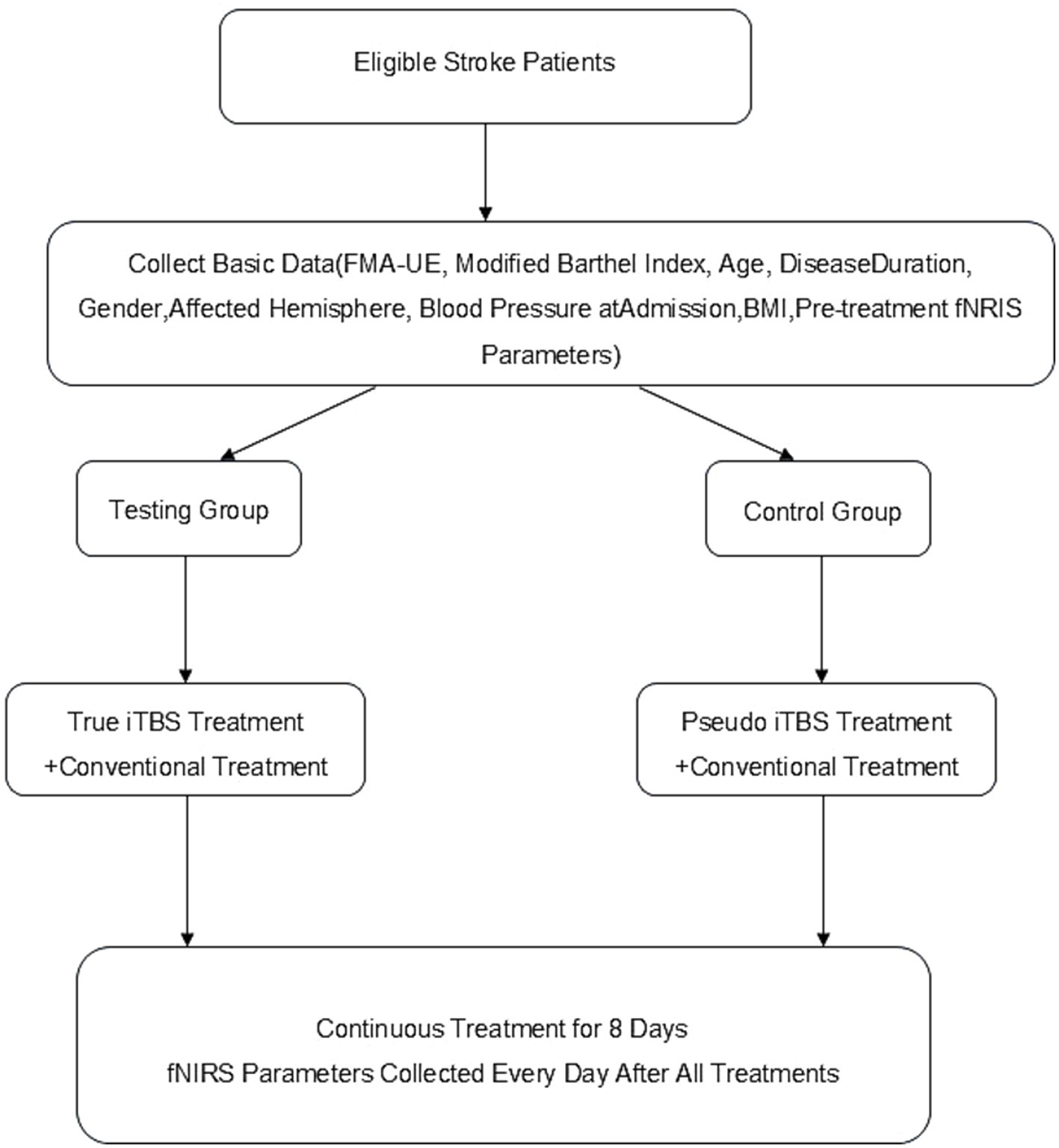
ObjectiveTo explore the recovery of upper limb motor function and the changes in cortical functional connectivity in patients with early subcortical small infarcts accompanied by severe upper limb motor dysfunction (PESSUM) after intermittent theta burst stimulation (iTBS) via functional near-infrared spectroscopy (fNIRS) and to explore the related mechanisms.MethodsWe enrolled 56 subcortical ischemic stroke patients with FMA-UE ≤28 and randomly assigned them to receive either genuine (TG, n = 29) or sham (CG, n = 23) iTBS plus standard rehabilitation over 8 days. fNIRS was used to monitor cerebral HbO, HbD, and HbT concentrations, and RSFC changes were analyzed. The FMA-UE and MBI scores were used to evaluate upper limb motor function and daily activities. Intergroup comparisons were conducted using independent samples t tests, whereas intragroup comparisons were performed using paired samples t tests or Mann–Whitney U tests. The trend of the RSFC changes was analyzed via repeated-measures Analysis of Variance (ANOVA).ResultsBoth groups showed significant improvements in FMA-UE and MBI scores postintervention (p < 0.001). The TG had higher MBI scores than the CG (p = 0.005). fNIRS revealed accelerated cyclical changes in cortical activity in the TG.ConclusioniTBS significantly improved motor function and daily living ability in stroke patients, supporting a role for iTBS in promoting neural repair by accelerating cortical recovery cycles. This study provides evidence that iTBS is an effective rehabilitation strategy poststroke.Clinical trial registrationhttps://www.chictr.org.cn/showproj.html?proj=169674, ChiCTR2200060955.