The issue of melatonin synthesis is then taken further by Dr. Reiter, one of the pioneers in melatonin biology. The authors ask the question of the very first origins of melatonin that is likely to have occurred before the development of the pineal gland. They are advocating for a bacterial origin of melatonin synthesis that is maintained in all plant and animal cells containing mitochondria and chloroplasts, which are considered to represent ancient bacteria originally engulfed by ancient eukaryotic unicells (Zhao et al., 2019). This viewpoint considerably opens our perspective of pineal melatonin in vertebrates and poses the question of the function(s) and putative molecular targets of melatonin in early evolution.The issue of melatonin targets is taken up by Dr. Jockers and colleagues who summarize and comment on the high number, more than fifteen, of reported melatonin targets . Among them those with the highest affinity for melatonin are those found in vertebrates (~0.1 nM), the G protein-coupled MT1 and MT2 receptors matching physiological circulating melatonin levels of 5 to 150 pg/mL (~0.65 nM) (Jockers et al., 2016). Further receptors, enzymes, pores, transporters etc. have been suggested to interact with melatonin at higher (up to millimolar) concentrations . The chemical properties of melatonin itself as a free radical scavenger in in vitro assays, hints to additional non-receptor mediated properties of melatonin as a cellular antioxidant (Zhao et al., 2019).By activating MT1 and MT2 receptors, melatonin entrains circadian rhythms, regulates seasonal reproduction and retinal physiology and initiates sleep, the latter discussed in the present Research Topic by Drs. Gobbi and Comai (Gobbi and Comai, 2019). Non-selective agonists targeting MT1 and MT2 receptors like Ramelteon are already marketed for insomnia.The latest pharmacological and knockout studies in mice indicate that subtype selective agonists might be even a better therapeutic choice as MT1 and MT2 receptors have opposing functions on sleep regulation.Melatonin's metabolic effects are increasingly recognized and summarized here by Dr.Tosini and colleagues, who made important contributions to the field by studying receptor knockout mouse models (Owino et al., 2019). Central melatonin receptors in the SCN might be important metabolic regulators as the dysregulation of the circadian master clock in these brain nuclei contribute to metabolic diseases like type 2 diabetes mellitus (Karamitri and Jockers, 2019). Melatonin receptors are also found in peripheral tissues such as the liver, muscle and pancreas where they participate in glucose homeostasis and body weight regulation. The translation of these animal studies into humans remains to be shown. The association of genetic variants of the MTNR1B gene, encoding the MT2 receptor, with risk of T2DM argues in this direction.The role of melatonin in reproduction is well established in seasonal breeders. In humans, which are not seasonal, the situation is less clear as summarized by Dr. Olcese, a pioneer in this field. In his article (Olcese, 2020), he discusses controversial findings on melatonin and puberty, the entraining role of circulating maternal melatonin on the fetus and its role in oogenesis. Potential therapeutic applications in infertility and melatonin's synergism with oxytocin in inducing labor are also discussed.Neurodegenerative diseases such as Parkinson and Alzheimer disease represent a challenge of for our aging society. Dr. Cardinali, a pioneer of melatonin biology and its clinical translation, advocates in his article for the complementation of the age-related decline of melatonin levels in the prevention of neurodegenerative diseases (Cardinali, 2019). Beneficial effects of melatonin include its hypnotic, chronobiotic and cytoprotective properties to improve sleep latency and alleviate sundowning, to stabilize biological rhythms and to limit to a low degree inflammatory damage and neuronal death.The last word of this Research Topic is due to Dr. Arendt, the 'Grande Dame' in the melatonin field. By studying free-running blind subjects, she demonstrated the entrainment effect of exogenous melatonin in humans among many other finding (Arendt, 2019).Concerning the function of endogenous melatonin, she advocates that melatonin acts as a brake on abrupt short-term changes of circadian phase by maintaining the circadian status quo. Abrupt changes in the light-dark cycle are experienced by shift workers and time zone travelers and the list of associated risks is substantial (increased rate of accidents, lowered alertness and performance, gut problems, increased risk for metabolic diseases etc.).In conclusion, the contributions found in the Research Topic on "Melatonin in Health and Disease" illustrate the power and promises -but also the questions and limitations -in the melatonin field as seen by the experts. The future goal for all remains the same: "… to define the known, to evaluate the novel, and ultimately to inspire unknown future research into this fascinating, ancient molecule."
Editorial26 November 2020
Editorial: Melatonin in Health and Disease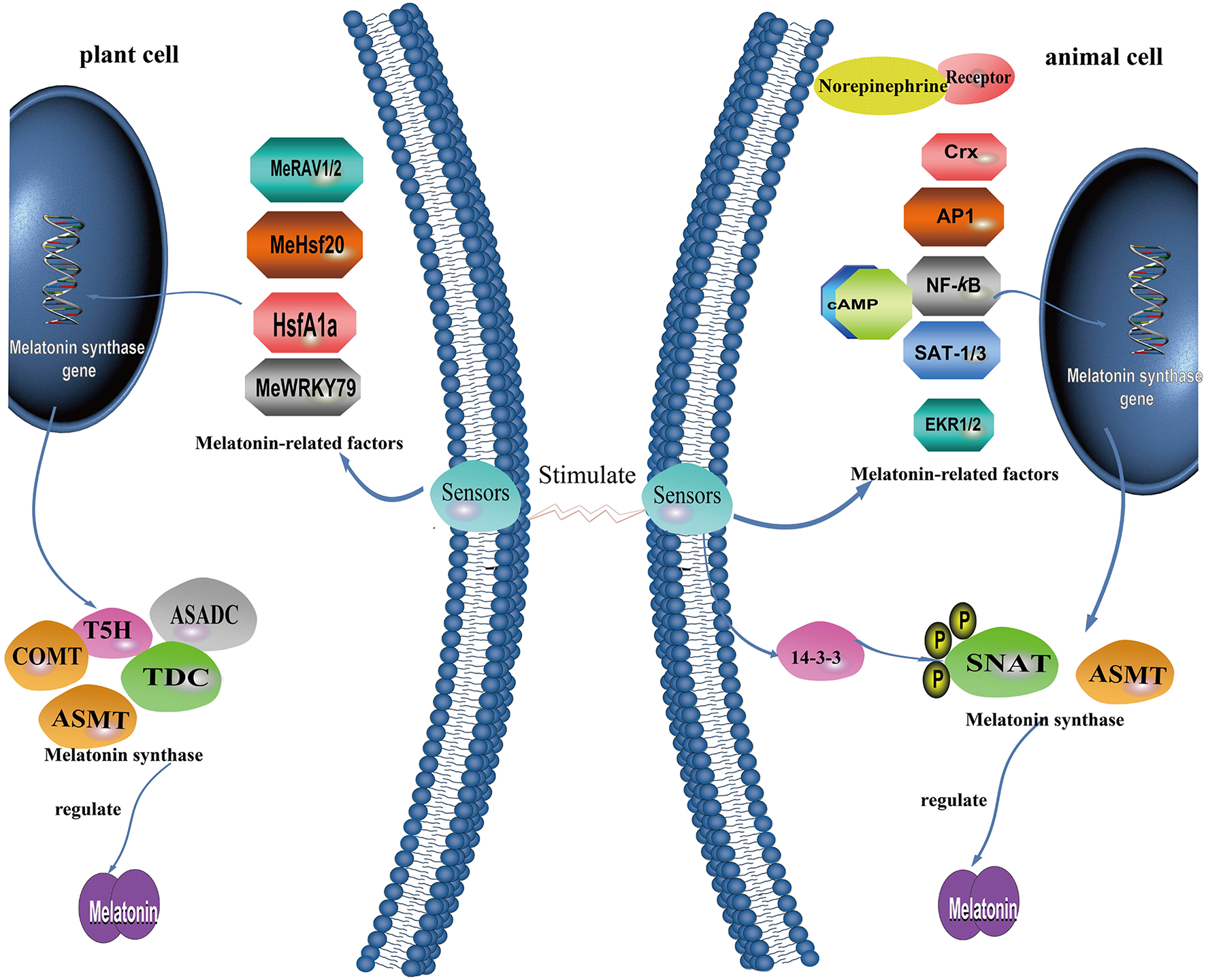
Melatonin is an ancient molecule that can be traced back to the origin of life. Melatonin’s initial function was likely that as a free radical scavenger. Melatonin presumably evolved in bacteria; it has been measured in both α-proteobacteria and in photosynthetic cyanobacteria. In early evolution, bacteria were phagocytosed by primitive eukaryotes for their nutrient value. According to the endosymbiontic theory, the ingested bacteria eventually developed a symbiotic association with their host eukaryotes. The ingested α-proteobacteria evolved into mitochondria while cyanobacteria became chloroplasts and both organelles retained their ability to produce melatonin. Since these organelles have persisted to the present day, all species that ever existed or currently exist may have or may continue to synthesize melatonin in their mitochondria (animals and plants) and chloroplasts (plants) where it functions as an antioxidant. Melatonin’s other functions, including its multiple receptors, developed later in evolution. In present day animals, via receptor-mediated means, melatonin functions in the regulation of sleep, modulation of circadian rhythms, enhancement of immunity, as a multifunctional oncostatic agent, etc., while retaining its ability to reduce oxidative stress by processes that are, in part, receptor-independent. In plants, melatonin continues to function in reducing oxidative stress as well as in promoting seed germination and growth, improving stress resistance, stimulating the immune system and modulating circadian rhythms; a single melatonin receptor has been identified in land plants where it controls stomatal closure on leaves. The melatonin synthetic pathway varies somewhat between plants and animals. The amino acid, tryptophan, is the necessary precursor of melatonin in all taxa. In animals, tryptophan is initially hydroxylated to 5-hydroxytryptophan which is then decarboxylated with the formation of serotonin. Serotonin is either acetylated to N-acetylserotonin or it is methylated to form 5-methoxytryptamine; these products are either methylated or acetylated, respectively, to produce melatonin. In plants, tryptophan is first decarboxylated to tryptamine which is then hydroxylated to form serotonin.