Congenital Heart Disease: A Lifelong Chronic Condition

126kviews
ORIGINAL RESEARCH
15 December 2022
Pulmonary artery debanding in the cath lab: Lessons learned!
Rana Zareef, 5 more and Mariam Arabi

4,956 views

7 citations

ORIGINAL RESEARCH
20 December 2022
Outcomes of treatment for right atrial isomerism with functional single ventricle and extracardiac total anomalous pulmonary venous connection beyond neonatal period: Delayed surgical treatment, improving outcomes
Weidan Chen, 5 more and Xinxin Chen

3,061 views

4 citations

ORIGINAL RESEARCH
14 November 2022
Is the six-minute walk test still reliable compared to cardiopulmonary exercise test for exercise capacity in children with congenital heart disease?
Jiangbo Qu, 5 more and Yanqin Cui

5,693 views

7 citations

ORIGINAL RESEARCH
14 November 2022
Clinical significance of right ventricular–pulmonary arterial coupling in patients with tricuspid regurgitation before closure of atrial septal defect
Seon Hwa Lee, 8 more and Chi Young Shim

3,308 views

6 citations

REVIEW
28 October 2022
Current state of the art in hypoplastic left heart syndrome
Aditya K. Birla, 9 more and Ravi K. Birla
Current state of the art in hypoplastic left heart syndrome
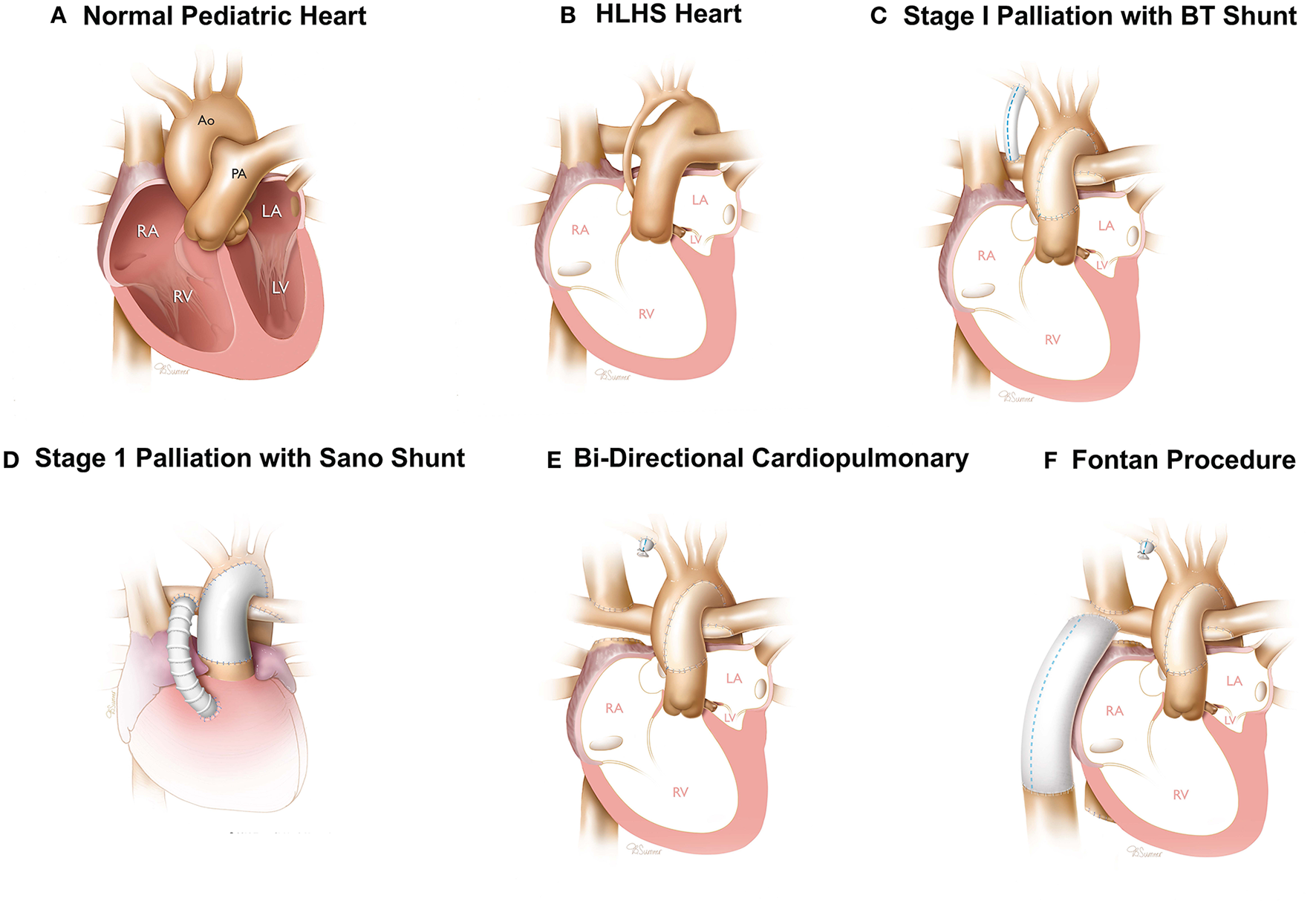
Hypoplastic left heart syndrome (HLHS) is a complex congenital heart disease in which a neonate is born with an underdeveloped left ventricle and associated structures. Without palliative interventions, HLHS is fatal. Treatment typically includes medical management at the time of birth to maintain patency of the ductus arteriosus, followed by three palliative procedures: most commonly the Norwood procedure, bidirectional cavopulmonary shunt, and Fontan procedures. High survival rates are now obtained at tertiary treatment centers, though adverse neurodevelopmental outcomes remain a clinical challenge. The genetic basis of this condition has not fully been elucidated, though mutations in several candidates have been postulated to be responsible. Stem cell therapy has been evaluated to increase right ventricle ejection fraction, though it is in a stage of infancy and of only marginal functional benefit to the patient. Recent innovations in tissue engineering and regenerative medicine promise to provide important tools to both understand the underlying basis of HLHS as well as provide new therapeutic strategies. In this review article, we provide a broad overview of HLHS, starting with a historical description and progressing through a discussion of the genetics, surgical management, post-surgical outcomes, stem cell therapy, hemodynamics and tissue engineering approaches.

12,778 views

25 citations

ORIGINAL RESEARCH
7 September 2022
Functional hepatic deterioration determined by 13C-methacetin breath test is associated with impaired hemodynamics and late Fontan failure in adults
Anastasia Schleiger, 12 more and Stanislav Ovroutski

2,544 views

2 citations

Anxiety and depression can worsen outcome in patients with heart disease. We elucidate the prevalence of anxiety and depression in a cohort of adults with congenital heart disease (ACHD). Methods: Prospective screening for anxiety or depression was performed in 204 consecutive patients of the outpatient clinic of our tertiary care center using the Hospital Anxiety and Depression Scale (HADS) questionnaire and the distress thermometer (DT) as a potential ultra-short screening test. Functional data were assessed at liberty of the responsible physician. HADS scores ≥8 were considered doubtful and scores ≥ 11 as confirmed cases of anxiety or depression, respectively. HADS results were compared with a historical group of 100 patients with non-Hodgkin Lymphoma (NHL) as well as German reference values from the literature. Results: Patients from the ACHD cohort were 28±10 years old (Mean±SD, 54% male), 34% had a simple, 51% a moderate, including 52 patients with transposition of the great arteries after arterial switch operation, and 15% a heart defect of severe complexity. Prevalence of depression in ACHD was comparable to the German normal population (5.9% ACHD vs 5.4% control). In contrast, prevalence of anxiety was higher than expected from reference values (12.7% ACHD versus 5.6% control). There was a positive association between psychological distress and NYHA class (anxiety: OR 2.67 (95% CI; 1.50-4.76) p=0.001; depression: OR 2.93 (95% CI; 1.60-5.35) p=0.0005), but not with age, gender or heart defect severity. Percentages of ACHD patients with anxiety were significantly higher than in a cohort of patients with indolent Non-Hodgkin lymphoma (NHL) but comparable to those with aggressive NHL (HADS-A ≥ 11: ACHD 12.7%, indolent NHL 2.2%, aggressive NHL 13.2%; p=0.037 ACHD vs. indolent NHL; p= 0.929 ACHD vs. aggressive NHL). The distress thermometer screening test had only a fair discriminatory ability (AUC 0.708; p=0.002) and is therefore of limited usability. Conclusion: Adults with congenital heart disease exibit an increased risk for anxiety disorders independently of the severity of the underlying heart defect. Anxiety prevalence was comparable to a historical cohort of patients with aggressive NHL underlining the importance of a routine screening for psychosocial distress in congenital heart disease.

6,048 views

28 citations

2,753 views

7 citations

Background:Advances in the management of congenital heart disease (CHD) patients have enabled improvement in long-term survival even for those with serious defects. Research priorities (for patients, families and clinicians) have shifted from a focus on how to improve survival to exploring long-term outcomes in patients with CHD. A comprehensive appraisal of available evidence could inform best practice to maximize health and well-being, and identify research gaps to direct further research towards patient and clinical need. We aimed to critically appraise all available published systematic reviews of health and well-being outcomes in adult patients with CHD. Methods: We conducted an umbrella review, including any systematic reviews that assessed the association of having versus not having CHD with any long-term health (physical or mental), social (e.g., education, occupation) or well-being (e.g., quality of life (QoL)) outcome in adulthood (≥18-years). Results: Out of 1330 articles screened, we identified five systematic reviews of associations of CHD with adult outcomes. All but one (which studied QoL) explored health outcomes: one cardiovascular, two mental, and one mortality after transplant. CHD patients had a higher risk of stroke, coronary heart disease and heart failure, with the pooled relative risk (RR) for any outcome of 3.12 (95% CI: 3.01 to 3.24),with substantial heterogeneity (I2=99%) explained by the outcome being studied (stronger association for heart failure) and geography (stronger in Europe compared with other regions). CHD patients had a higher risk of anxiety (OR=2.58 (1.45 to 4.59)), and higher mean scores for depression/anxiety symptoms (difference in means= -0.11 SD (−0.28 to 0.06), I2=94%)). Compared with patients having a cardiac transplant for other (non-CHD) diseases, CHD patients had higher short-term mortality (RR at 30-days post-transplant = 2.18 (1.62 to 2.93)),with moderate heterogeneity (I2=41%) explained by previous surgery (higher mortality with prior Fontan/Glenn operation).All domains of QoL were lower in patients with Fontan’s circulation than non-CHD adults. Conclusions:CHD Adults have poorer cardiovascular, mental health and QoL outcomes, and higher short-term mortality after transplant. The paucity of systematic reviews,in particular for outcomes such as education, occupation and lifestyles,highlights the need for this to be made a priority by funders and researchers.

4,746 views

19 citations

Prevalence of Congenital Heart Disease in Chinese Children With Different Birth Weights and Its Relationship to the Neonatal Birth Weight
ORIGINAL RESEARCH
19 May 2022
Prevalence of Congenital Heart Disease in Chinese Children With Different Birth Weights and Its Relationship to the Neonatal Birth Weight
Hui Yan, 6 more and Yang Zhou

6,049 views

19 citations

ORIGINAL RESEARCH
6 May 2022
Pulmonary Valve Replacement in Repaired Tetralogy of Fallot: Midterm Impact on Biventricular Response and Adverse Clinical Outcomes
Fengpu He, 6 more and Shoujun Li

5,479 views

7 citations

Exercise Capacity in Children and Adolescents With Congenital Heart Disease: A Systematic Review and Meta-Analysis
Background: Congenital heart disease (CHD) entails structural defects in the morphogenesis of the heart or its main vessels. Analysing exercise capacity of children and adolescents with CHD is important to improve their functional condition and quality of life, since it can allow timely intervention on poor prognostic factors associated with higher risk of morbidity and mortality. Objective: To describe exercise capacity in children and adolescents with CHD compared with healthy controls. Methods: A systematic review was carried out. Randomised clinical trials and observational studies were included assessing exercise capacity through direct and indirect methods in children and adolescents between 5 and 17 years-old. A sensitive analysis was performed including studies with CHD repaired participants. Additionally, it was sub-analyzed by age range (< and ≥ 12 years old). Two independent reviewers analysed the studies, extracted the data, and assessed the quality of the evidence. Results: 5619 articles were found and 21 were considered for the review. Eighteen articles used the direct exercise capacity measurement method by cardiopulmonary exercise test (CPET). The CHD group showed significant differences in peak oxygen consumption (VO2peak) with a value of −7.89 ml/Kg/min (95% CI: −9.89, –5.88, p= 0.00001), maximum workload (Wmax) −41.52 (95% CI: −57.92, –25.12 watts, p= 0.00001), ventilatory equivalent (VE/VCO2) slope 2.56 (95% CI: 0.34, 4.77), oxygen pulse (O2 pulse) -2.43 ml/beat (95% CI: -3.74, -1.11, p = 0.0003), and maximum heart rate (HRmax) −15.14 bpm (95% CI: −18.11, -12.16 bpm, p = 0.00001), compared with healthy controls. Adolescents (≥ 12yrs) with CHD had a greater reduction in VO2peak (−10.04 ml/Kg/min (95% CI: −11.98, –5.33), p <0.00001), Wmax (−45.54 watts (95% CI: −54.36, –36.71), p <0.00001) and HRmax (−20.63 bpm (95% CI: −27.53, -13.73), p <0.00001). Conclusion: Suffering CHD in childhood and adolescence is associated with lower exercise capacity as shown by worse VO2peak, Wmax, VE/VCO2 slope, O2 pulse, and HRmax compared with matched healthy controls. The reduction in exercise capacity was greater in adolescents.

9,818 views

44 citations

ORIGINAL RESEARCH
29 April 2022
Clinical Characteristics of Congenital Atresia of the Left Main Coronary Artery in 12 Children
Xiaokun Jiang, 7 more and Qi Meng

3,009 views

6 citations

CASE REPORT
16 March 2022
Case Report: Residual Atrial Shunt Lesions in Aging Adults With Congenital Heart Disease: An Underestimated Risk of Stroke?
Matthias Schneider, 5 more and Leif-Hendrik Boldt

2,168 views