Agro-food Wastes & By-products Ingredients: New insights and perspective in nutritional quality improvement

44kviews
ORIGINAL RESEARCH
20 October 2022
Pear pomace soluble dietary fiber ameliorates the negative effects of high-fat diet in mice by regulating the gut microbiota and associated metabolites
Yuehong Ji, 7 more and Yaxin Sang

5,112 views

24 citations

ORIGINAL RESEARCH
7 September 2022
Positive effects of dietary fiber from sweet potato [Ipomoea batatas (L.) Lam.] peels by different extraction methods on human fecal microbiota in vitro fermentation
Yan Cao, 7 more and Weicheng Wu
Positive effects of dietary fiber from sweet potato [Ipomoea batatas (L.) Lam.] peels by different extraction methods on human fecal microbiota in vitro fermentation
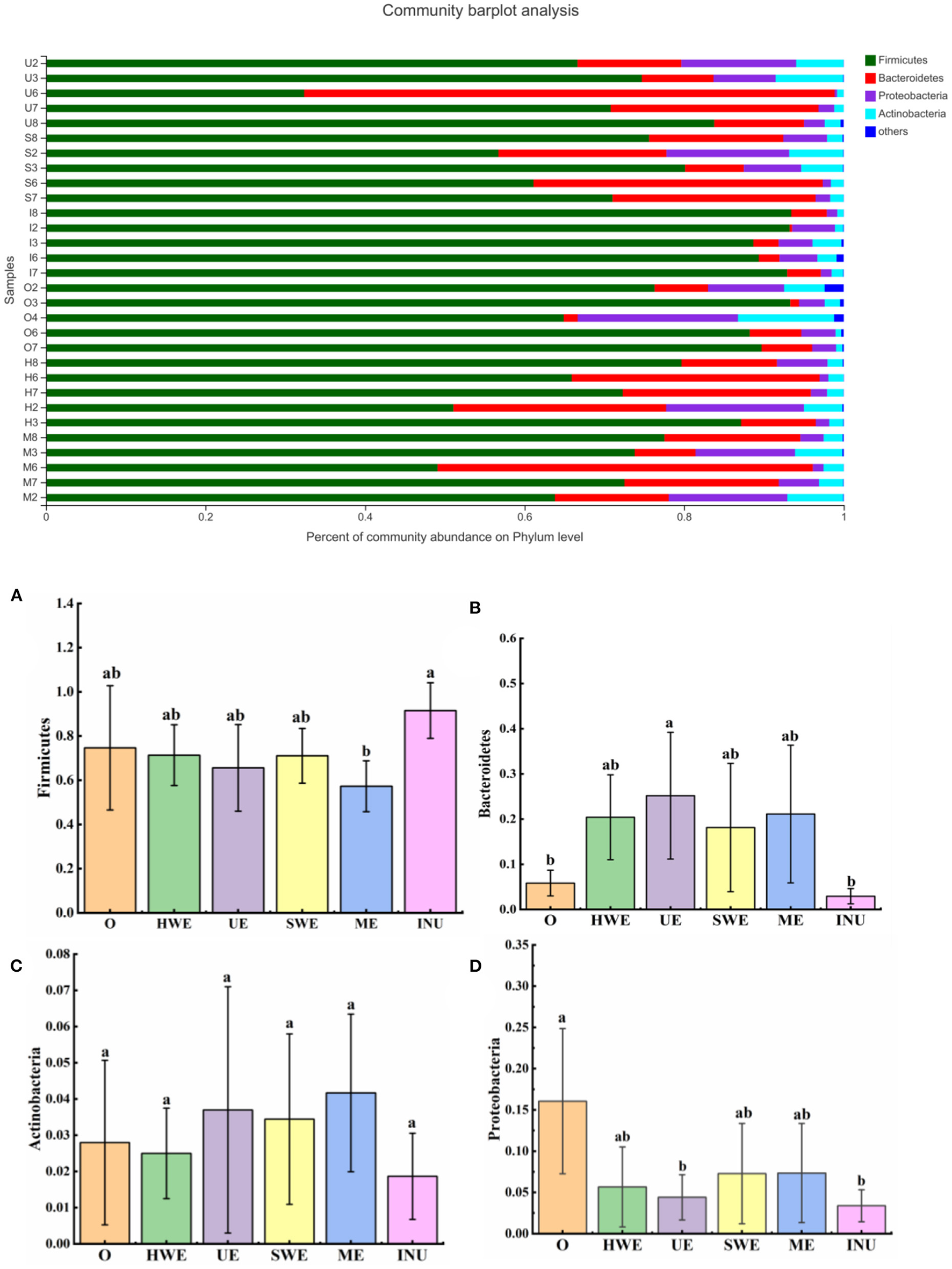
Abstract The purpose of this study was to compare the effects of sweet potato peels dietary fiber obtained by different extraction methods on intestinal health. Specifically, four different dietary fibers were extracted by hot water, microwave, ultrasonic and subcritical water methods. And the prebiotics effects of sweet potato peels dietary fibers were explored in an in vitro fermentation model, by determining intestinal gas content, short-chain fatty acid content, pH, ammonia content and the gut microbiota composition. The results showed that dietary fiber obtained by four different extraction methods could be utilized by GM and improve human health by increasing the abundance of beneficial bacteria (e.g. Bifidobacterium, Faecalibacterium, and Prevotella) and reducing the abundance of harmful bacteria (e.g. Proteobacteria, Romboutsia and Dorea), enhancing the relative abundance of SCFA-producing bacteria, promoting the production of short-chain fatty acids, reducing intestinal pH from 6.89 to 4.63 and ammonia. Among them, dietary fiber extracted by ultrasound is better than the other three extraction methods. This study suggests that all the four different extraction methods are available for sweet potato peels dietary fiber, and the extracted dietary fiber could be served as potential functional foods with great development value. In addition, it is beneficial to reduce the environmental pollution of sweet potato peels and improve the high-value processing and utilization of sweet potato by-products.

11,266 views

28 citations

Structural characterization of polysaccharides recovered from extraction residue of ginseng root saponins and its fruit nutrition preservation performance
ORIGINAL RESEARCH
1 August 2022
Structural characterization of polysaccharides recovered from extraction residue of ginseng root saponins and its fruit nutrition preservation performance
Jing Sun, 5 more and Yujun Liu
Polysaccharides recovered from extraction residue of ginseng root saponins, i.e., ginsenosides-extracting residue polysaccharides (GRP), were separated into two fractions, GRP-1 and GRP-2. Fourier infrared and nuclear magnetic resonance spectra, as well as high-performance liquid chromatography and gel permeation chromatography measurements, showed GRP-1 was composed of mainly starch-like glucans and GRP-2, relatively a smaller portion, was a mixture of heteropolysaccharides composed of starch-like glucans, rhammogalacturonan-Ⅰ pectin, and arabinogalactans, and they had similar molecular weights. These results proved that the structure of GRP was not destroyed and GRP still maintained strong antioxidant activities. In addition, GRP coating on surfaces of fruit slowed their deterioration and maintained their nutritional effects. Correlation and PCA analyses on various quality and antioxidant parameters supported the above findings and a possible mechanism in fruit preservation was then proposed. Knowing the structural features and bioactivities of GRP gives insights into its application. Specifically, GRP serves as an environmentally friendly coating can be used to preserve the nutrients and other quality indicators of strawberries and fresh-cut apples, paving the way for future new approaches for food preservation using polysaccharides or other natural products.

5,588 views

26 citations