
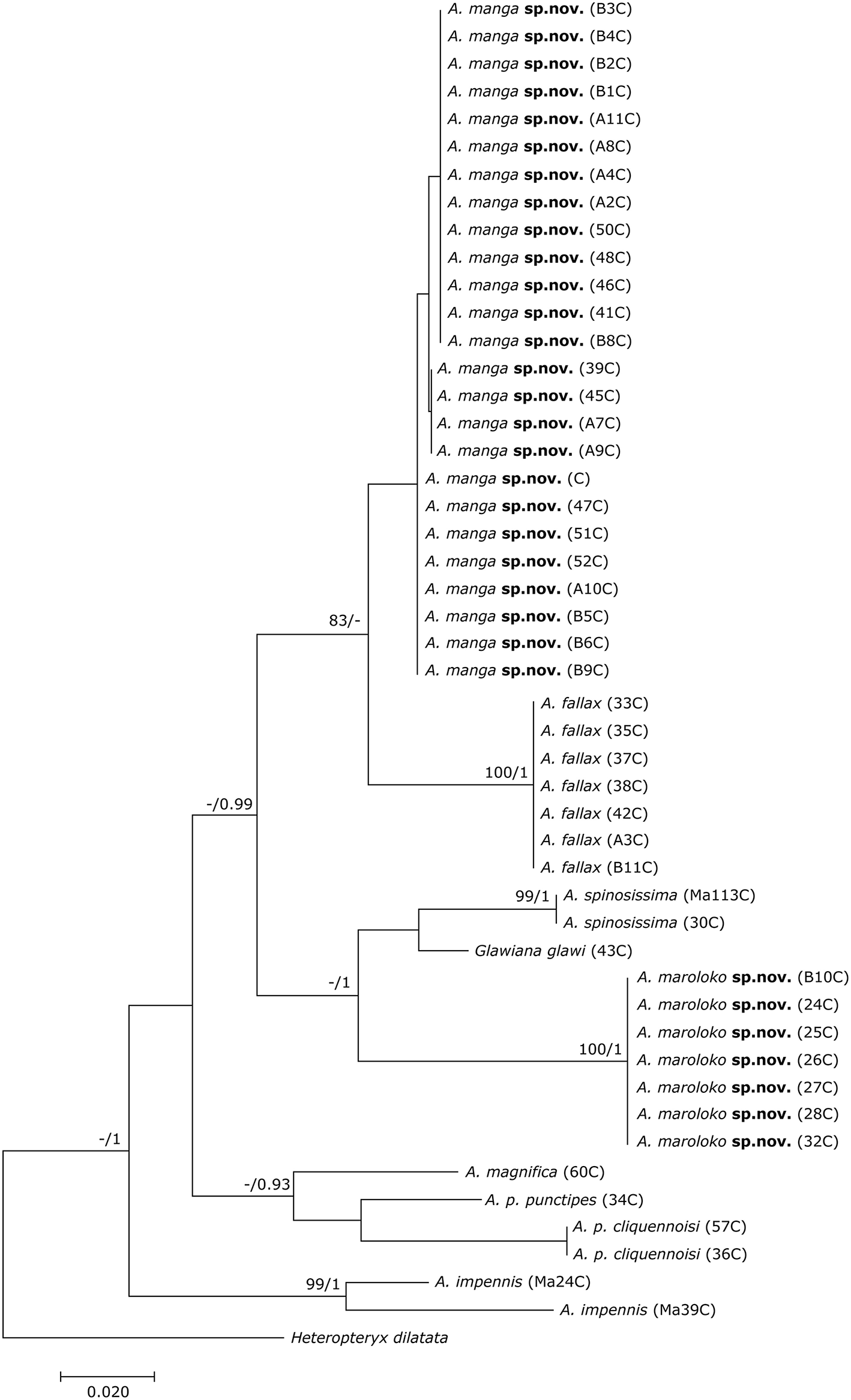
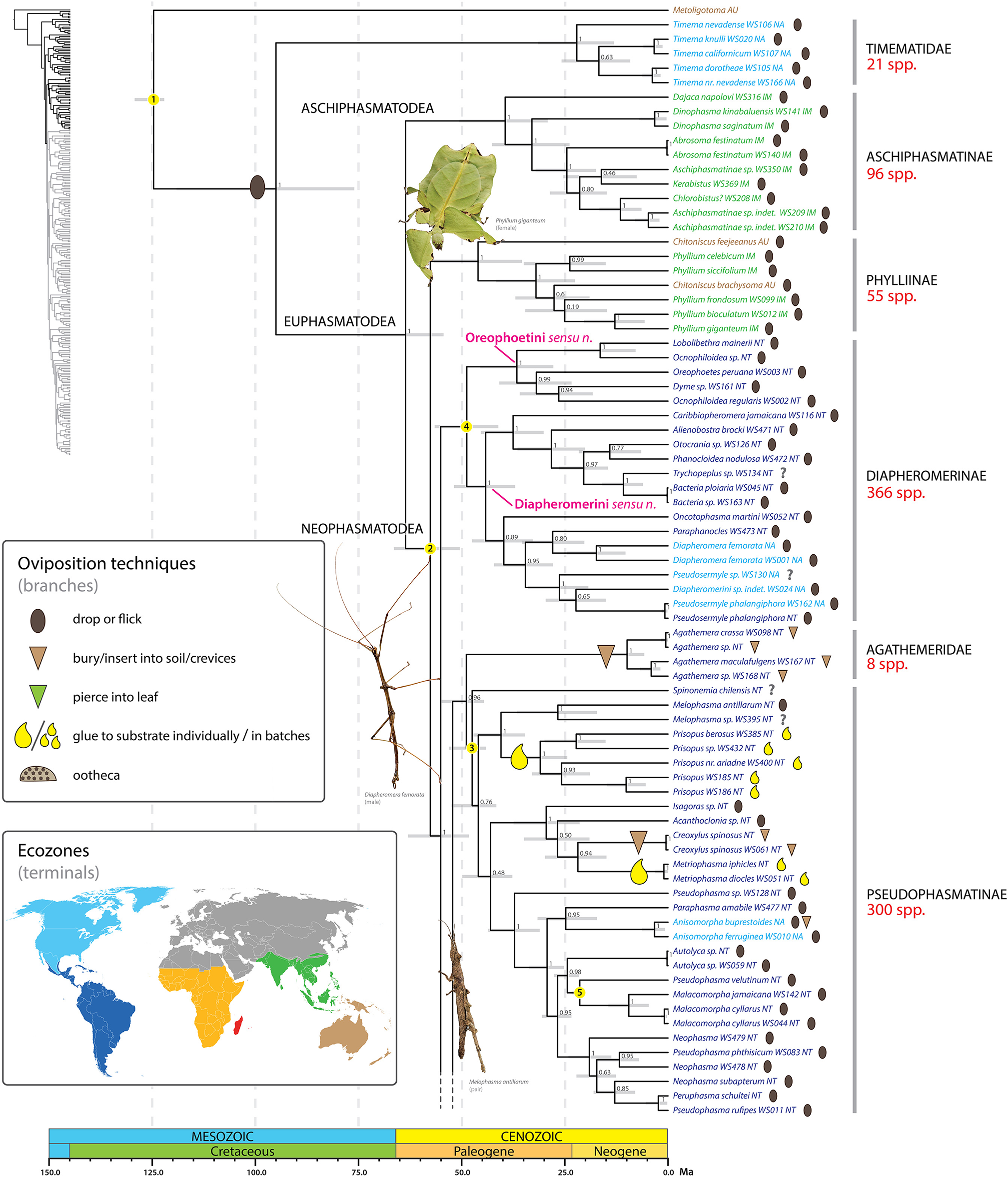
Stick and leaf insects are an emerging model system for exploring evolutionary biology, with a vibrant and increasing community of scientists dedicated to using these insects as research tools. In 2016, part of this community met in Orlando, Florida (USA) during the 25th International Congress of Entomology (ICE) and participated at a symposium held on September 26th that gave rise to the present research topic. Most of the papers were inspired by this symposium of the same title, but further authors felt encouraged to contribute their studies to this collection of articles that now covers a wide range of issues in phasmatodean biology and evolution. The scientific themes investigated on this research topic include speciation and evolution of reproductive strategies, asexual reproduction, for which the species-poor and phylogenetically relictual Californian Timema serves as model taxon and provides significant insights (e.g., Schwander et al. 2011). In this context, Parker and colleagues (https://www.frontiersin.org/articles/10.3389/fevo.2019.00101/full) infer the role of olfactory proteins by comparing their differential expression in juveniles and both sexual and asexual Timema species. Unexpectedly, the authors could not find evidence that olfactory proteins with a putative role in sexual communication are under relaxed selection in the asexual species. Hopefully, the list olfactory genes provided in this study will trigger future studies on olfaction in stick insects within and beyond the Timema model system and more precise functional studies that will shed more light on the molecular evolutionary patterns observed. Another aspect of phasmatodean reproductive strategies is reflected by the highly diverse egg-laying modes that Robertson and colleagues (https://www.frontiersin.org/articles/10.3389/fevo.2018.00216/full) investigate within a phylogenetic framework. The author team reveals numerous independent origins of various oviposition techniques that can be expected to play an important role in ecological niche diversification. Besides egg-laying techniques, the properties of the diversely shaped and structured seed-like eggs themselves (as most recently reviewed by O'Hanlon et al. 2020) need to be taken into account in future studies. Büscher et al. (https://www.frontiersin.org/articles/10.3389/fevo.2018.00069/full) unveiled an equally high diversity among phasmatodean tarsal attachment structures, again with an impressive degree of convergent evolution. The variety of tarsal adhesive structures and egg-laying strategies might be best explained in the context of adaptive radiations in geographic isolation that regularly shaped the diversity in this group (Bradler et al. 2015). A further trait of major significance for these insects's radiation is their flight ability or lack thereof, which regularly varies between closely related taxa and even between sexes of the same species (Whiting et al. 2003). The scenario by Whiting et al. (2003) according to which wings were lost in the ancestral stick insect and regained after a radiation of wingless taxa led to an extremely controversial discussion as being a violation of Dollo's law, the assumption of irreversible evolution (Stone and French 2003;Goldberg and Igic 2008). This problem is tackled here by Zeng and colleagues (https://www.frontiersin.org/articles/10.3389/fevo.2020.00121/full) who investigated wing mophology across a representative taxon sampling and suggest relatively rapid evolutionary transitions between wingless and volant forms in both directions.Although molecular analyses account for most of the progress in understanding the phylogeny and evolution of phasmatodeans, reconstructions based on traditional Sanger sequencing data (including above studies) still suffer from a poorly resolved phylogenetic backbone. This has now dramatically changed with the transcriptomic data set presented by Simon et al.(https://www.frontiersin.org/articles/10.3389/fevo.2019.00345/full) which resolves even the deepest branching events in the phasmid-tree-of-life with high support. Surprisingly, even for the earliest lineages biogeographic distribution played a major role as has been demonstrated many times for younger clades (Bradler et al. 2015).These transcriptomic data do not only contribute to the previously difficult-to-resolve phasmatodean relationships but also facilitate a plethora of further comparative studies such as the investigation of phasmatodean pectinase enzymes, which apparently stem from gut bacteria via ancient horizontal gene transfer (Shelomi et al. 2016), or neuropeptide precursors (Bläser and Predel 2020 Based on these highly resolved trees, it will be now possible to reconstruct the evolution of crucial traits more reliably. One being body size, a fundamental and easily observable attribute of organisms, which has been largely neglected in the past but is inferred here for European stick insects by Shelomi and Zeuss (https://www.frontiersin.org/articles/10.3389/fevo.2017.00025/full). The authors could not find evidence for the validity of Bergmann's rule, the assumption of organisms being larger at higher latitudes, and rightfully state that the largest stick insects are in fact known from the tropics, such as the two spectacular new Achrioptera species from Madagascar (Glaw et al. https://www.frontiersin.org/articles/10.3389/fevo.2019.00105/full). Another rule that awaits investigation is Cope's rule which describes the tendency of organisms to evolve toward larger body size over time). While the advantages associated with larger size appear obvious, such as increased success in defence and predation (Hone and Benton 2005), this influential concept came under criticism as being merely a psychological artifact (Gould 1997). However, recent large-scale analyses across metazoan fossils revitalised the validity of Cope's concept (Heim et al. 2015), for which the regularly giant-sized stick insects might serve as an ideal study system. Finally, the various defensive systems exhibited by phasmatodeans have never been studied in an evolutionary context. This includes their impressive camouflage that enables phasmatodeans to deceive visually hunting predators, but also the lesser known defensive glands that are ubiquitous among stick insects and described here by Strauß and co-workers (https://www.frontiersin.org/articles/10.3389/fevo.2017.00151/full) as consisting of conserved and novel elements. Hopefully, broader comparative studies will follow for all the fascinating aspects covered in this compilation of articles.

13 Authors
- SS
Sabrina Simon
Biosystematics Group, Wageningen University and Research, Netherlands
- HL
Harald Letsch
Department of Botany and Biodiversity Research, University of Vienna, Austria
- SB
Sarah Bank
Department of Animal Evolution and Biodiversity, Johann-Friedrich-Blumenbach Institute for Zoology and Anthropology, University of Göttingen, Germany
- TR
Thomas R. Buckley
New Zealand Arthropod Collection, Manaaki Whenua–Landcare Research, New Zealand
- AD
Alexander Donath
Center for Molecular Biodiversity Research, Zoological Research Museum Alexander Koenig, Germany
- SL
Shanlin Liu
Beijing Advanced Innovation Center for Food Nutrition and Human Health, College of Plant Protection, China Agricultural University, China
- RM
Ryuichiro Machida
Sugadaira Research Station, Mountain Science Center, University of Tsukuba, Japan
- KM
Karen Meusemann
Center for Molecular Biodiversity Research, Zoological Research Museum Alexander Koenig, Germany
- BM
Bernhard Misof
Center for Molecular Biodiversity Research, Zoological Research Museum Alexander Koenig, Germany
- LP
Lars Podsiadlowski
Center for Molecular Biodiversity Research, Zoological Research Museum Alexander Koenig, Germany
- XZ
Xin Zhou
Beijing Advanced Innovation Center for Food Nutrition and Human Health, College of Plant Protection, China Agricultural University, China
- BW
Benjamin Wipfler
Center for Taxonomy and Evolutionary Research, Zoological Research Museum Alexander Koenig, Germany
- SB
Sven Bradler
Department of Animal Evolution and Biodiversity, Johann-Friedrich-Blumenbach Institute for Zoology and Anthropology, University of Göttingen, Germany
5 Authors
- FG
Frank Glaw
Zoologische Staatssammlung München (ZSM-SNSB), Germany
- OH
Oliver Hawlitschek
Zoologische Staatssammlung München (ZSM-SNSB), Germany
- AD
Andreas Dunz
Zoologische Staatssammlung München (ZSM-SNSB), Germany
- JG
Julia Goldberg
Johann-Friedrich-Blumenbach-Institut für Zoologie und Anthropologie, Georg-August-Universität Göttingen, Germany
- SB
Sven Bradler
Johann-Friedrich-Blumenbach-Institut für Zoologie und Anthropologie, Georg-August-Universität Göttingen, Germany

2,061 views