Sustainametrics - Envisioning a Sustainable Future with Data Science

Cover image for Research Topic "Sustainametrics - Envisioning a Sustainable Future with Data Science"
187kviews
Editorial: Sustainametrics—Envisioning a sustainable future with data science
Editorial02 February 2023
Editorial: Sustainametrics—Envisioning a sustainable future with data science

It is time for us, researchers and practitioners, to reinvigorate global strides toward a sustainable future through coordinated efforts to utilize data in analyzing every aspect of sustainability. What is particularly needed today is the quantitative analysis of global development based on the empirical development of sustainability theory and observation. With this approach -which we named sustainametrics -academics may be able to present a viable path to a sustainable future (Figure 1). Figure 1. Sustainametrics -Envisioning a Sustainable Future with Data Science.

Pioneers have long strived to pursue sustainametrics over the past generations, even before the advent of data science. We can trace the origin of sustainametrics to the Essay on the Principle of Population by Thomas Robert Malthus (1798), where Malthus argued that exponential population growth would eventually outpace linear agricultural production, leading to famine or war. This argument had become the underlying proposition of the famous report The Limits to Growth by the Club of Rome (1972), which showcased the groundbreaking application of the system dynamics in the field of sustainability.Recent developments in data science have provided academics and practitioners the ability to analyze the progress of sustainable development more holistically and swiftly than these pioneers --a critical ability in a rapidly changing post-COVID landscape. Artificial intelligence (AI) is already proving useful in assessing the environmental impact from remote sensing data. Machine learning algorithms are being deployed to track poverty in real-time from alternative data including remittance. Further, existing quantitative methodologies, such as life cycle assessment (LCA), input-output analysis, material flow analysis, not to mention system dynamics, are also benefiting greatly from enhanced access to data supported by applied AI.

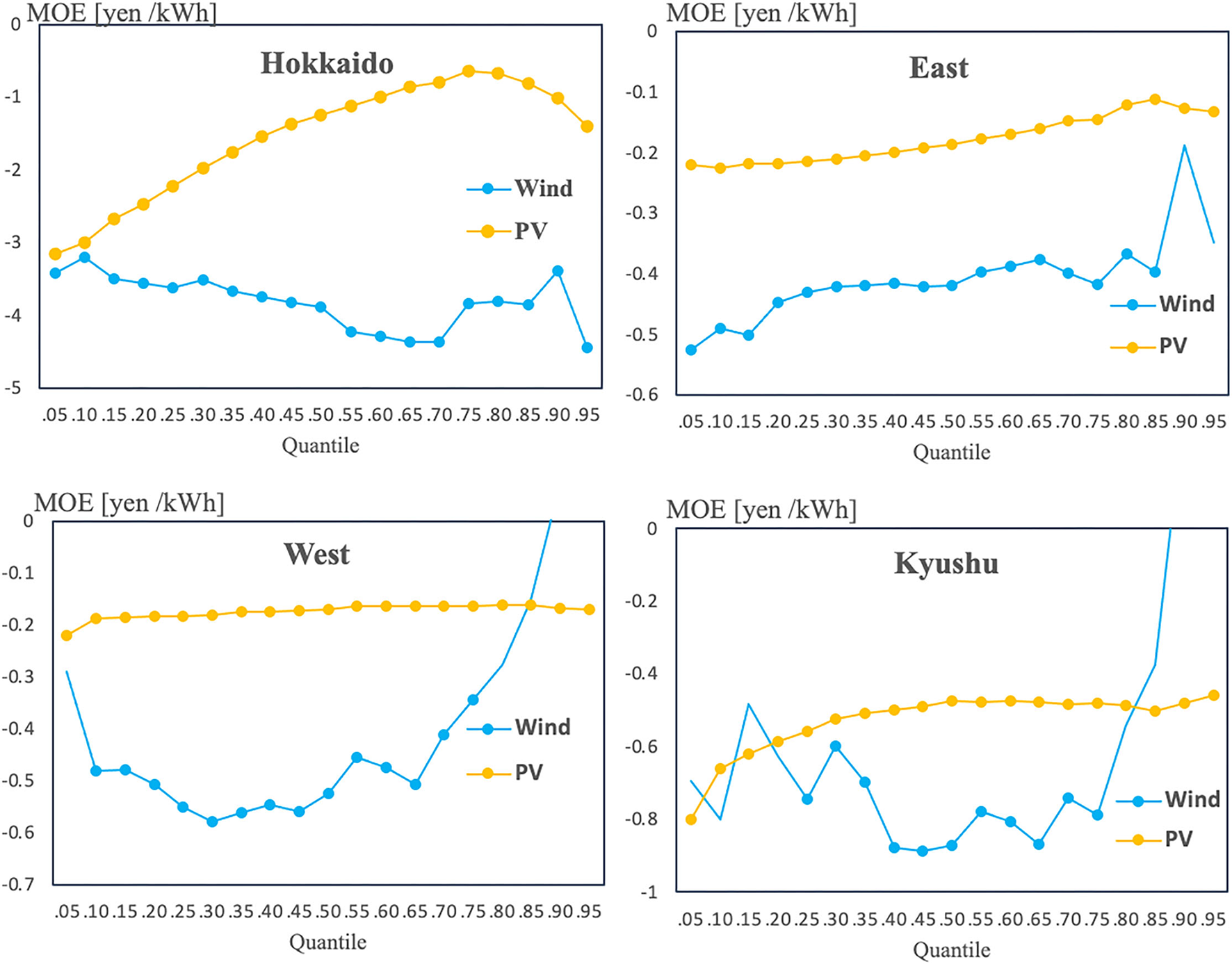
There are challenges to overcome toward establishing sustanametrics as an academic field. Some practitioners are still skeptical of the usefulness of data science in the actual world due to the incompatibility, uncertainty, and gaps in real-life data; others have suspicions about the capabilities of simple analytical models on understanding the inherently indeterminate real-life consequences. However, revealing new insights and gaining experience to bolster confidence is not enough. As Okui and Takeda (2022) conclude, catalyzing civic action through disclosure of what sustainametric professionals see and understand that other do not is essential to making real progress. Therefore we see the need to bring together the wisdom on how data science and other quantitative methodologies can push the sustainability development forward now more than ever.Our first collection on sustanametrics has gathered the 15 most insightful and inspiring contributions from like-minded researchers worldwide that is truly worthy of a start of a new academic field. Keeley et al. (2022a) provides a closer look at the ESG metrics, which plays a crucial role as an enabler of investment strategies that consider ESG factors. The study confirms that ESG investments can be expected to provide stable and high returns especially over the long term. However, the study also identifies that there is significant divergence among the different ESG metrics in the elements assessed, and the weak correlation of ESG ratings of widely used ESG metrics.Plugge (2022) proposes a new set of metrics that provides companies with a tool to measure and report on progress toward a circular economy. The proposed set of metrics is composed of quantitative risk and hazard metric combining chemical exposure and environmental health hazard within the supply chain. Similarly, Betts et al. (2022) propose a new set of metrics to measure the circularity and impact of reusable packages in supply chains, by connecting the existing research on circular economy metrics with reuse strategies in supply chains. The authors categorize these metrics as product-level or system-level based on the level of detail they incorporate and demonstrate their application with a case study from an omnichannel retail company. Keeley et al. (2022b) calculates the cumulative ESG ownership based on the ESG scores of invested companies, the total market price of invested companies, and the investor history portfolio report. The study identifies the major players in the field, differences in the trend by type of investor and country and expands the study by investigating the relation between calculated ESG ownership score and investor's ESG commitment and ESG performance. Aboginije et al. (2022) measure the life-cycle sustainability performance of a waste management system in South Africa and shows that the South African construction industry is hitherto to fully adopt and implement a sustainable waste management system for effective waste minimization, although the overall performance shows that the waste sectors are thriving and improving in their approach to waste management. Rinawati et al. (2022) focuses on LCA studies of hydrogenbased power generation and provide thorough review of the technological and methodological choices made in hydrogen-based power generation LCAs. The study points out that no studies that addressed social impact were identified through the systematic review and assert the importance of applying social LCA methodology to the research and development process for understanding the future impact of the hydrogen-based power generation more holistically. Zulfhazli et al. (2022) shed light on techno-economic aspect of hydrogen production from power generation through comparatively investigating the energy sources, feedstocks, and various methods of hydrogen production in detail. Schubert et al. (2022) illustrates the complementary value of multidisciplinary inferential models in informing large predictive models by applying structural equation modeling to investigate the relationships that delineate the underlying mechanisms for energy consumption behaviors in the case of private transportation. Kitsuki and Managi (2022) proposes a framework for weighting priority for the multidimensional domains of slum development from the viewpoint of residents and demonstrate this approach by accessing residents' needs for slum development focusing on India with employing a large-scale questionnaire data. The study sheds light on the importance of information on marginal utilities of each domain, as well as satisfaction scores for designing sustainable path for slum development.Jin and Ialnazov (2022) also investigates the elements that are important for sustainable rural development, focusing on house-hold level solar energy projects in rural and remote areas. The study applies analytic hierarchy process and fuzzy comprehensive evaluation method to assess sustainability performance of the solar energy projects conducted in Jinzhai County, China.Sakaguchi and Fujii (2021) investigate the impact of renewable energy on wholesale electricity prices. The result of the study implicates that compared with solar power, wind power has stronger merit order effect, which is the price reducing effect of renewable energy on wholesale electricity prices. Hao et al. (2021) sheds light on the solar PV locations' hazard risks at a national scale employing satellite data. The study investigates the risks stemming from landslides and floods for the existing solar PV power plants and finds that the shares of medium and largescale solar PV power plants found in areas where landslides and floods are likely to occur are about 8.5 and 9.1% respectively in Japan. Edwards et al. (2022) provides thorough review of satellite data application in the study and practice of sustainable energy system development and shows that satellite data are increasingly applied to a wide range of energy issues with varying information needs, from planning and operation of renewable energy projects, to tracking changing patterns in energy access and use, to monitoring environmental impacts and verifying the effectiveness of emissions reduction efforts. Similarly, Kazawa et al. (2022) emphasizes the effectiveness of using satellite data for assessing urban environment and urban design and understanding industrial clusters. The study examines whether nighttime light can be a proxy for building height and finds a high correlation between night light and building height.Finally, Okui and Takeda (2022) revisit the measure of development and provide a critique of sustainametrics. Following Heidegger's and Arendt's threads of thought, the authors stress that any measures of development must be fundamentally grounded in disclosure through speech and action in the public realm; thus if the discipline of sustainametrics is to devise and propose measures for the sustainability of the world, then it must be conscious of the limit and prevent the reproduction of its thoughtless adoption by constantly exposing its outcomes to the scrutiny of political debate in the public realm.

2,364 views

Key metrics to measure the performance and impact of reusable packaging in circular supply chains
Circular supply chains comprise the industrial production and supply chain systems integral to the concept of a circular economy, which decouples economic growth from material depletion and waste generation. There are a variety of circular strategies used by companies to eliminate waste and recover value in products and materials including recycling in waste management, returns and repair in consumer-facing industries, and reusable packaging in supply chains. Packaging plays an important role in supply chains, protecting products from production to end consumers. Packaging also uses material resources and results in waste that enters our environment. Reusable packaging is one solution that may address these challenges, and successful implementation and management of this and other circular strategies requires the ability to measure and report on progress across different functions and processes. In this paper, we review the literature on metrics in circular supply chain management and reusable packaging in supply chains. We then propose a new set of metrics to measure the performance of reusing items in a circular supply chain and demonstrate the use of these new metrics with an omnichannel retail company case study. We categorize these metrics as product-level or system-level based on the level of detail they incorporate. With the case study, we found that product-level metrics facilitate the comparison of different types of reusable and single-use packages with the potential to reduce lifecycle greenhouse gas emissions. We also found that measuring system-level total logistics costs helps identify potential challenges with the feasibility of a reusable packaging system including the implications of not recovering packaging and amortizing initial costs across multiple use cycles. Our aim was to address the gap in circularity and impact metrics focused on reuse strategies in supply chains. This new set of metrics provides companies with a tool to measure and report on progress toward a circular economy. It also suggests future avenues for research to assess the economic, environmental, and social dimensions of sustainability.

15,885 views

33 citations

ORIGINAL RESEARCH
9 January 2023
Modeling and usage of a sustainametric technique for measuring the life-cycle performance of a waste management system: A case study of South Africa
Ademilade Aboginije, 1 more and Wellington Thwala

3,325 views

12 citations

Satellite Data Applications for Sustainable Energy Transitions
REVIEW
3 October 2022
Satellite Data Applications for Sustainable Energy Transitions
Morgan R. Edwards, 18 more and Paul W. Stackhouse

23,337 views

31 citations

For sustainametrics to gain a firm ground as an effective concept, the meaning of development shall be revisited first without depending on any statistical measurement. The word “development” originally meant the act of disclosure or opening a cover to disclose what is inside. Martin Heidegger (1889–1976) analyzed the significance of alētheuein, or “to bring the world out of its hidden and covered state and into ours,” and explicates that the alētheia under the condition of modern technology is dominated by a mode of revealing that is destructive to the earthly beings. Here, the danger inherent in the essence of technology, i.e, enframing [Ge-stell], renders human beings incapable of encountering the essence of beings as they are challenged and demanded to frame everything they encounter, including themselves, as mere variables. In contrast to Heidegger’s mood of releasement [Gelassenheit], Hannah Arendt’s (1906–1975) conception of disclosure is closely tied to action. Following Heidegger’s and Arendt’s threads of thought, the authors conclude that any measure in development must be fundamentally grounded in disclosure through speech and action in the public realm. In this respect, the experts on the sustainametrics shall inspire fellow citizens to join the discourse by taking the risk of acting and speaking in public, disclosing who they are and what it is really meant for us. The course of development must ultimately be grounded in such an act of disclosure, only through which we may find something worth sustaining in our future development, and sustainametrics is no exception.

1,959 views

1 citations

Hydrogen is a low or zero-carbon energy source that is considered the most promising and potential energy carrier of the future. In this study, the energy sources, feedstocks, and various methods of hydrogen production from power plants are comparatively investigated in detail. In addition, this study presents an economic assessment to evaluate cost-effectiveness based on different economic indicators, including sensitivity analysis and uncertainty analysis. Proton exchange membrane fuel cell (PEMFC) technology has the most potential to be developed compared to several other technologies. PEMFCs have been widely used in various fields and have advantages (i.e., start-up, zero-emissions, high power density). Among the various sources of uncertainty in the sensitivity analysis, the cost estimation method shows inflationary deviations from the proposed cost of capital. This is due to the selection process and untested technology. In addition, the cost of electricity and raw materials, as the main factors that are unpredictable

14,059 views

42 citations

During the past two decades, the world has seen exponential growth in the number of companies reporting environmental, social, and governance (ESG) data, and various ESG metrics have been proposed and are now in use. ESG metrics play a crucial role as an enabler of investment strategies that consider ESG factors, which are often referred to as “ESG investments”. The ESG metrics and investment market are evolving rapidly, as investors, corporations, and the public are giving more priority to the “S” in ESG, including social equity issues, such as diversity, income inequality, worker safety, systemic racism, and companies’ broader role in society. In this critical, systematic review, utilizing in-depth assessments, we investigate and compare the approaches employed in major ESG metrics and studies, then, we shed light on the “S” aspect by reviewing existing approaches used to assess social equity to clarify commensurability with ESG. Through the systematic review, this paper confirms that ESG investments can be expected to provide stable and high returns especially over the long term. This paper also clarifies how elements considered in social equity studies are largely reflected in major ESG metrics.

13,890 views

47 citations

Life-cycle assessment of hydrogen utilization in power generation: A systematic review of technological and methodological choices
Interest in reducing the greenhouse gas emissions from conventional power generation has increased the focus on the potential use of hydrogen to produce electricity. Numerous life-cycle assessment (LCA) studies of hydrogen-based power generation have been published. This study reviews the technological and methodological choices made in hydrogen-based power generation LCAs. A systematic review was chosen as the research method to achieve a comprehensive and minimally biased overview of hydrogen-based power generation LCAs. Relevant articles published between 2004 and 2021 were identified by searching the Scopus and Web of Science databases. Electrolysis from renewable energy resources was the most widely considered type of hydrogen production in the LCAs analyzed. Fuel cell technology was the most common conversion equipment used in hydrogen-based electricity LCAs. A significant number of scenarios examine the use of hydrogen for energy storage and co-generation purposes. Based on qualitative analysis, the methodological choices of LCAs vary between studies in terms of the functional units, allocations, system boundaries, and life-cycle impact assessment methods chosen. These discrepancies were likely to influence the value of the environmental impact results. The findings of the reviewed LCAs could provide an environmental profile of hydrogen-based electricity systems, identify hotspots, drive future research, define performance goals, and establish a baseline for their large-scale deployment.

18,630 views

43 citations

The merit order effect (MOE), which renewable energy sources can decrease wholesale electricity prices, plays an important role in establishing low-carbon societies. After the liberalization of the electricity market, the trade volume of the Japan Electric Power Exchange (JEPX) day-ahead spot market drastically increased between 2016 and 2019; however, price spikes still occur often. Ordinary least squares and quantile regression analyses were applied in this study to investigate how wind and solar photovoltaics (PV) energy generation affect the JEPX day-ahead spot price by time, price range, and area, and we concluded that the MOE of wind increased between 2016 and 2019 while that of PV decreased during this time. In regard to the high price ranges, although wind generation is not significant in terms of reducing price spikes, PV had this effect in 2016 and 2017 but not during the other years covered. The study area was divided into four regions, and each area followed trends that were different from those of the national analysis. Overall, the key finding of our study is that wind power has more potential to reduce electricity prices than PV.

10,953 views

19 citations

ORIGINAL RESEARCH
21 December 2021
GIS Analysis of Solar PV Locations and Disaster Risk Areas in Japan
Kazuki Hao, 1 more and Yosuke Yamashiki

9,661 views

20 citations