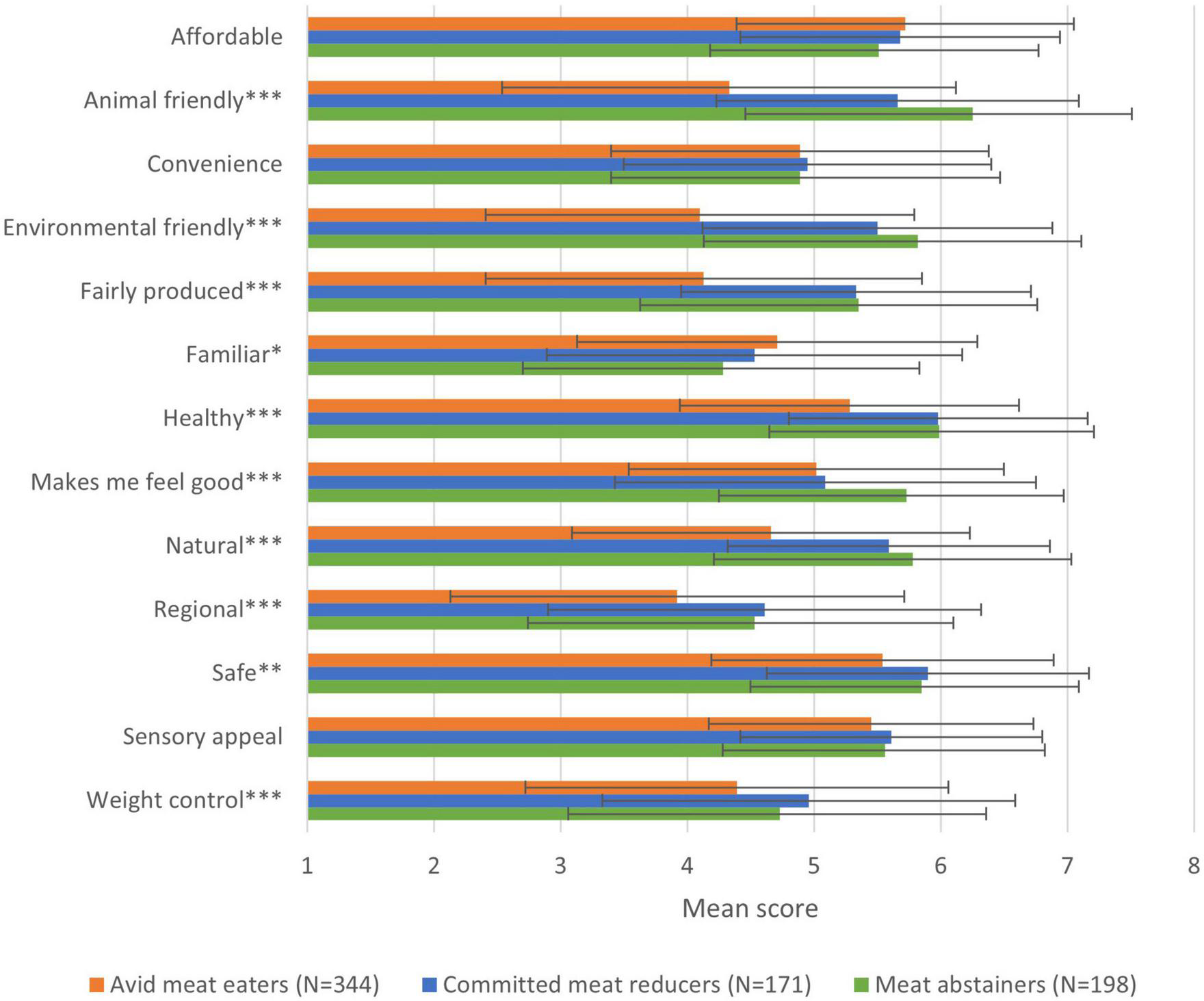
While these institutions have an important role to play, they are ultimately beholden to individuals: generally, governments cannot implement policies without the support of voters, and companies cannot reshape their offerings without buy-in from consumers. Therefore, research into the public's attitudes about animal-product reduction and alternative proteins is a vital field of study. This Research Topic called upon psychologists, behavioural scientists, and the broader scientific community to investigate the psychology of meat reduction, design and test interventions, and recommend ways forward to reduce the consumption of animal products. The resulting Research Topic contains over a dozen high-quality scientific studies covering a range of topics including vegetarian and vegan identity, moral psychology, behaviour change, alternative proteins, health outcomes, and political science. All of these papers contribute to our understanding of relevant issues, which, in turn, can help to advance a more sustainable food system.On vegetarian identity and moral psychology, behavioural scientists in Belgium provided an identity-based motivational account of resistance to veg*n advocacy. They theorised that veg*n (i.e., vegetarian and/or vegan) advocacy can threaten the moral and meat-eating identities of omnivores, which often causes them to engage in motivated reasoning to justify their consumption. They argue, however, that this apparent resistance often masks privately held beliefs that align with veg*n attitudes, and can precede later behavioural change 13 . Scientists in Serbia found that individual and group affirmations of personally or collectively important values -for example, perceiving one's group as valuing democracy, trust, social connectedness and solidarity in society -increased openness to meat reduction, including openness to cultured meat 14 . Likewise, psychologists in France showed how a perceived mismatch between an individual's own meat reduction and that of their group can motivate individuals to engage in behaviours (e.g., veg*n advocacy) aimed at positively shifting group norms 15 .Meanwhile, psychologists in the UK demonstrated a 'halo effect' occurring for participants who were given positive environmental information about a cheese product. Relative to a no-environmental-information control condition, these individuals tended to infer that the environmentally-friendly product entailed higher animal welfare (their dairy cows treated better) -despite no information being given about the latter 16 . As a result of this spreading positivity, they were more likely to endorse the product.On behavioural change, psychologists in the Netherlands employed a reasoned action approach to investigate the attitudes that predict an intention to follow a vegetarian or vegan diet. They found that, in the Netherlands and the USA, instrumental and experiential attitudes (e.g., perceptions of dietary necessity and enjoyment, respectively) predicted dietary change intent. Additionally, in the Netherlands, descriptive norms about other people's intent to reduce their animal-product consumption predicted dietary change intent 17 .Economists in the Netherlands proposed that, with regard to animal products, dietary consumer groups can be modelled on a continuum. They investigated relative differences between meat abstainers, committed meat reducers, and avid meat eaters. They found that, compared to meat reducers, meat abstainers had more positive attitudes towards plant-based products and alternatives, such as tofu, veggie burgers, pulses and mushrooms. In comparison with avid meat eaters, committed meat reducers had a preference for non-meat animal proteins, such as eggs and cheese, and their diets were motivated more by environmental concerns and animal welfare. 18 Compared to both other groups, avid meat eaters tended to be male and preferred to eat animal products over plant-based products.Psychologists in Canada investigated the role of autonomous motivation -pursuing goals because one wants to, rather than has to -in maintaining a meat-free diet. In a longitudinal study of individuals transitioning to a veg*n diet, the researchers found no directional effect of autonomous motivation on dietary goal progress or goal facilitating behaviours. Nonetheless, goal progress within the study was related to subsequent reports of autonomous motivation suggesting that progress towards a veg*n diet may help build competence around meat-free eating 19 .A team led by psychologists in the UK followed Veganuary participants -meat eaters practising a vegan diet for a month. They found that those who engaged with the pledge and reduced their meat consumption tended to develop stronger disgust reactions to meat afterwards, supporting the view that increased meat disgust follows (rather than precedes) meat reduction 20 . This demonstrates how meat avoidance -pursued through a pledge -can promote meat disgust and, possibly, spearhead future reduction.On alternative proteins, marketing researchers in China demonstrated that increased intensity of social media marketing of plant-based meat can increase purchase intentions by influencing cognitive fluency, which broadens consumers' imaginations and reduces their perception of risk 21 . Meanwhile, food and marketing scientists from across Europe investigated the impact of giving consumers health-related information for plant-based products, such as egg-free pasta, before or after tasting. They found that giving health information before tasting -rather than after or without -was associated with higher purchase intentions and stable taste perceptions across three phases of the experiment 22 .Further, a research team spanning Germany, the UK, and the USA investigated consumer perceptions of animal-free dairy from precision fermentation. In focus groups of potential early adopters from the United States, Germany, and Singapore, animal welfare considerations were among the most convincing, while concerns about consumer health, process safety and "messing with nature" were also shared. The researchers observed a cautious openness to animal-free dairy -an overall promising result for stakeholders investing in this emerging market. 23 On political science, a researcher in the USA investigated the impact of emphasising the environmental or animal rights case for meat reduction on simulated election performance. They found that, while the environmental case for meat reduction provoked a voter backlash, especially among Republicans, there was no such backlash for candidates who focused on farmed animal rights. In fact, candidates who demonstrated a personal concern for farmed animals received substantial boosts in voter support 24 .On health outcomes, medical researchers in China demonstrated that adherence to healthy plant-based diets was associated with better body composition in children aged 6-9. In particular, greater adherence was associated with lower abdominal obesity risk in girls, and stronger handgrip strength in boys 25 .While environmental scientists continue to stress the importance of a shift away from industrially-farmed animal products, and food scientists develop ever-higher-quality alternatives, the social and psychological dimensions of consumer attitudes and behaviour continue to present a challenge. All of the contributions in this Research Topic can help improve our understanding of the nexus of factors that impact on consumer decisions and individuals' choices and, ultimately, help to advance a more just and sustainable food system.
Editorial28 August 2023
Editorial: Reducing consumption of animal products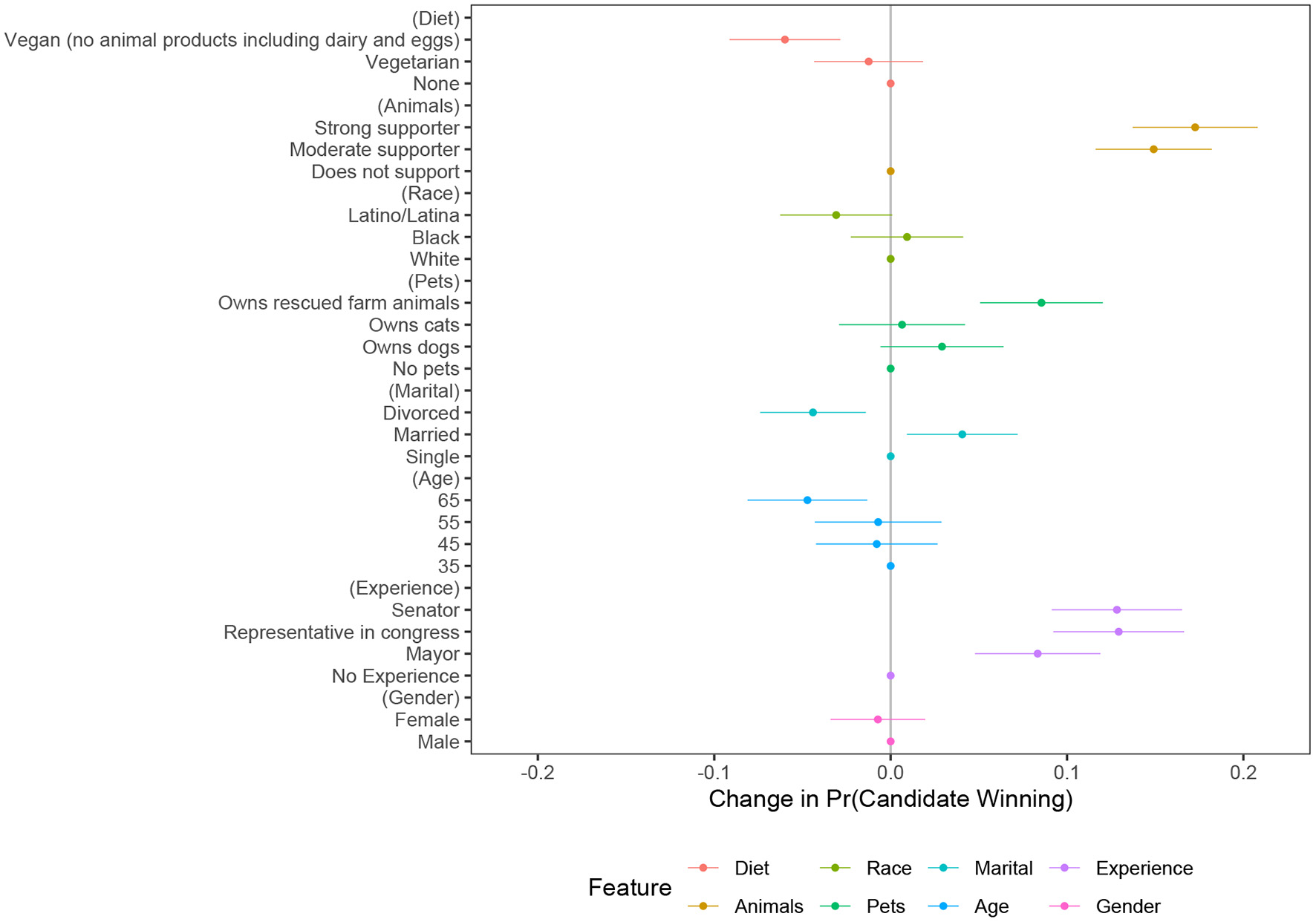
Building on literature from political science and psychology, I argue that political attention on animals and animal-friendly political candidates cause voter backlash. I test this using two different kinds of experiments with large, representative samples. I ask respondents to consider political candidates running for office in a U.S. presidential primary context. I find that, overall, political attention on the need to reduce meat consumption for environmental reasons caused voter backlash compared to both a control condition and attention on the need to reduce reliance on gasoline-powered vehicles (also for environmental reasons). But, the heterogeneous effects of partisan identification were strong: voter backlash was mainly driven by Republicans and Democrats were neutral. Surprisingly, candidates who put attention on farm animal rights during elections faced no voter backlash from Republicans or Democrats. Animal-friendly candidates, particularly Black women and Latinas, with attributes that demonstrate personal concern for farm animals and strong support for animal rights generally fared very well in elections, receiving large boosts in voter support. This work launches a research agenda in political psychology that ‘brings the animal in’ to politics.
ORIGINAL RESEARCH
13 February 2023
Emma L. Zaal, 1 more and John C. J. Hoeks
3 Authors
- EL
Emma L. Zaal
Center for Language and Cognition Groningen, Faculty of Arts, University of Groningen, Netherlands
- YP
Yfke P. Ongena
Center for Language and Cognition Groningen, Faculty of Arts, University of Groningen, Netherlands
- JC
John C. J. Hoeks
Center for Language and Cognition Groningen, Faculty of Arts, University of Groningen, Netherlands
6,298 views
3 citations
ORIGINAL RESEARCH
21 April 2023
Marija Branković, 2 more and Jovana Janković
4 Authors
- MB
Marija Branković
Insitute for Philosophy and Social Theory, University of Belgrade, Serbia
- AB
Anastasija Budžak
Faculty of Media and Communications, Singidunum University, Serbia
- NT
Nađa Tulić
Faculty of Media and Communications, Singidunum University, Serbia
- JJ
Jovana Janković
Faculty of Media and Communications, Singidunum University, Serbia
3,594 views
3 citations