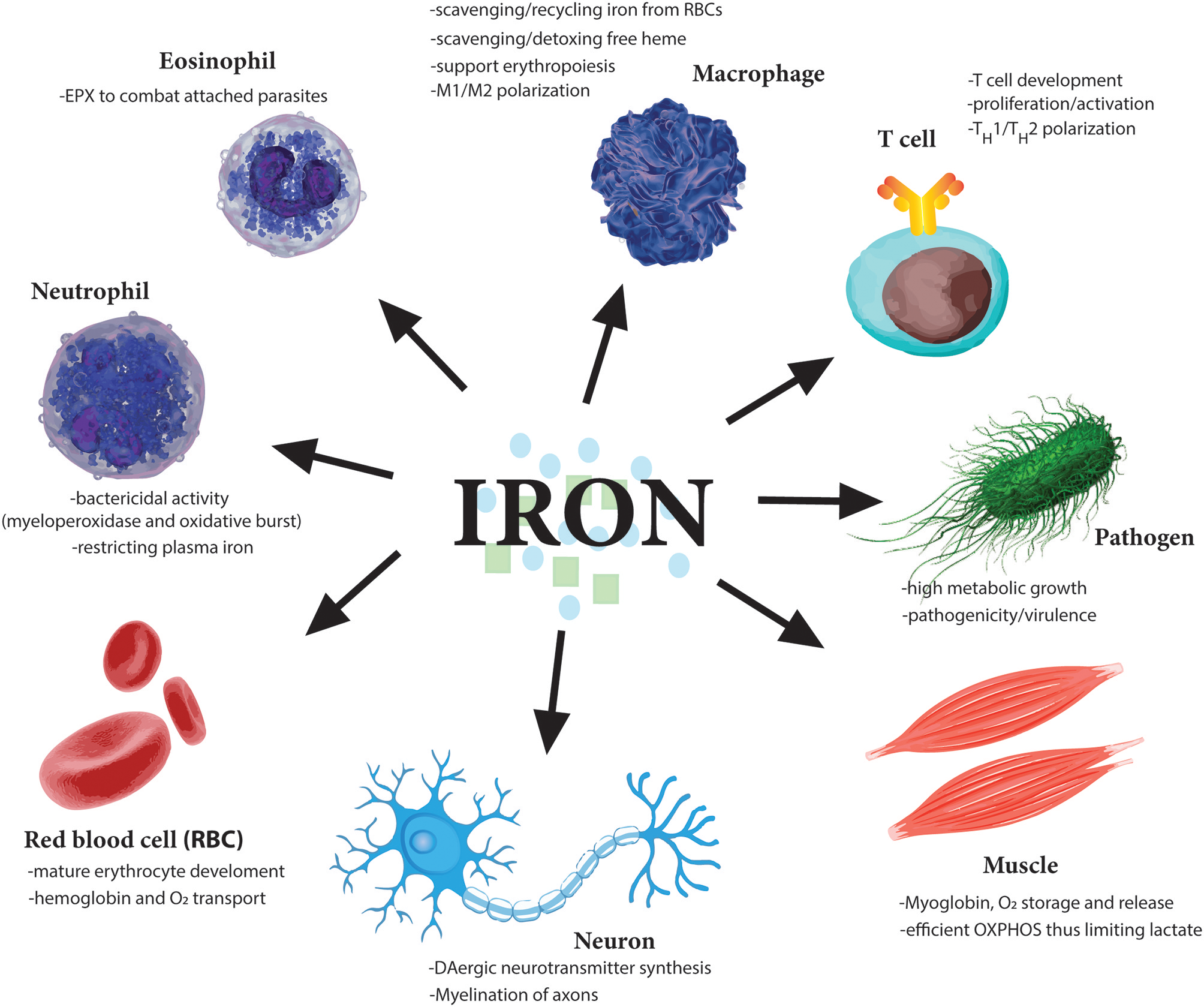
Over the last decade we have witnessed the emergence of 'immunometabolism' as one of the most exciting areas, of many fields of basic research and clinical medicine. While we now appreciate that profound metabolic changes occur in immune cells during normal physiological process and pathophysiology, more recent research has shed light on the molecular mechanisms governing these alterations. In time, we hope that this basic research can be translated into the development of novel therapies and diagnostic strategies for numerous diseases.Here, we have collected review articles and abstracts, from some of the groups, focused on understanding the complex molecular mechanisms controlling the metabolic reprogramming of immune cells under pathophysiological conditions. We hope that this broad spectrum of discussion will provide a comprehensive overview of your current knowledge and open-up new avenues of research to explore.Chambers and Matosevic discuss the role of hypoxia signalling on CD73 activity and how this effects natural killer (NK) cell metabolism in the tumor microenvironment. Specifically, they discuss the role of hypoxia inducible factor (HIF) the master regulator of the transcriptional response to hypoxia in controlling CD73, which in turn regulates glycolysis. In addition, CD73 also generates adenosine. Thus the authors also discuss adenosine signalling via the adenosine receptors, in particular Adenosine2A receptor, in the dysfunction of NK cell metabolism. They conclude their discussion with a detailed overview on the potential of targeting the hypoxia-CD73 axis as an immunotherapeutic strategy for solid tumors.Fitzpatrick initially provided a detailed overview of the changes which occur in the glycolytic, pentose phosphate pathway, tricyclic acid cycle and arginine metabolic pathways in innate immune cells in experimental models of sepsis and clinical sepsis. The second part of the review discusses the role of HIF in regulating these metabolic pathways during sepsis and the complex molecular mechanisms driving HIF expression. While the precise signalling mechanisms regulating HIF mediated metabolic changes remain to be fully elucidate, the author highlights that the situation is further complicated by the dynamics of the HIF response, the different roles of HIF in different immune cell populations and in response to different pathogens. In determining the validity of HIF as a therapeutic or diagnostic marker for sepsis these issues will need to be addressed Iron levels are rate limiting steps for bacterial growth and thus their regulation is of critical importance in host defense and immunity. Cronin provided a very detailed review on iron metabolism at the cellular and organismal level starting at dietary and cellular uptake and mitochondrial utilization, furthermore describing intracellular storage and export from the cell. They then move on to immunepathophysiological mechanisms of iron dysregulation and relevance of iron metabolism for different cell types like neutrophils, macrophages and T cells. It finishes with tetrahydrobiopterin (BH4), which links T cell activation with iron metabolism in mitochondria. BH4 can reduce Fe 3+ to Fe 2+ and therefore affect cytochrome C mediated activity within the electron transport chain. The review finishes with an outlook of therapeutic interventions to target BH4 in diseases like cancer and autoimmunity.Munford and Dimeloe provide a detailed review on intrinsic and extrinsic mechanisms of T cell metabolism in health and disease. They describe metabolic reprogramming during T cell activation and how this is linked to T cell function. They also describe intrinsic mechanisms of altered T cell function in different diseases like cancer including the role of PD1 as a checkpoint inhibitor target influencing metabolism of tumor cells as well as T cells. Regarding extrinsic factors that regulate T cell metabolism they put a focus on glucose availability, lactate and other metabolites and the role of HIF1a in hypoxia.Voss present original research data on Fatty Acid Synthase that contributes to restimulation-induced cell death (RICD) of human CD4 T Cells in their paper. RICD is an apoptotic pathway triggered in activated effector T cells after T cell receptor engagement. They show that pharmacological blockade of fatty acid synthase significantly protected CD4 effector T cells from RICD. Decreased RICD in treated CD4 T cells correlated with reduced FAS ligand expression and a Th2-skewed phenotype, which appeared in previously naïve as well as memory T cells.In response to Mycobacterium tuberculosis infection, host immune cells undergo considerable metabolic alterations. These immunometabolic adaptations are of significant importance, as they might decide the course of the infection. Kumar and Singh offer us a detailed review of the involved immunometabolic networks regulating the host response to Myocbacterium tuberculosis infection. First, they focus on the metabolic reprogramming of specific phagocytic cell types such as macrophages, dendritic cells and neutrophils. Then they provide a more detailed analysis of the involved molecular mechanisms with an in-depth description of important metabolic regulators, such as HIF1, mTOR, cMyc, PPARs and others.This collection of excellent articles covering various cell types, diseases and physiologic pathways, highlights the fundamental importance of metabolic processes for immune cell function. Although there has been groundbreaking progress in this field, we feel that we have only just begun to recognize the true significance. We are excited to participate in this research and are looking forward to any new discoveries.
27,988 views
89 citations
17,865 views
98 citations
4 Authors
- KV
Kelsey Voss
Department of Pharmacology & Molecular Therapeutics, Uniformed Services University of the Health Sciences, United States
- CR
Christopher R. Luthers
Department of Pharmacology & Molecular Therapeutics, Uniformed Services University of the Health Sciences, United States
- KP
Katherine Pohida
Department of Pharmacology & Molecular Therapeutics, Uniformed Services University of the Health Sciences, United States
- AL
Andrew L. Snow
Department of Pharmacology & Molecular Therapeutics, Uniformed Services University of the Health Sciences, United States
26,438 views
34 citations
2 Authors
- HM
Haydn Munford
Institute of Immunology and Immunotherapy, Institute of Metabolism and Systems Research, College of Medical and Dental Sciences, University of Birmingham, United Kingdom
- SD
Sarah Dimeloe
Institute of Immunology and Immunotherapy, Institute of Metabolism and Systems Research, College of Medical and Dental Sciences, University of Birmingham, United Kingdom
28,924 views
19 citations