 Dou-Dou Ding
 Man-Zhen Zuo*
 Quan Zhou
- Department of Obstetrics and Gynecology, The People's Hospital of China Three Gorges University/The First People's Hospital of Yichang, Yichang, China
Background: Intrauterine adhesionis caused by a variety of reasons, such as damage of the endometrial basal layer, adhesion or occlusion of the uterine cavity or cervix in different degrees. Seriously endangering women's physical and mental health.
Objective: The purpose of this paper is to analyze the research development of intrauterine adhesions in recent 15 years, explore the future development direction, and promote the development of this field.
Methods: With intrauterine adhesions and Ashman's syndrome as the theme, the related literatures from January 2006 to July 2021 in the Web of Science were searched, and the visual atlas was analyzed by CiteSpace software.
Results: A total of 644 literatures were included. The key words related to intrauterine adhesion mainly include adhesion, pregnancy, expression, intrauterine adhesions, women, adhesion molecule, diagnosis, activation, hysteroscopy and fertility, etc. Six clusters were obtained by keywords analysis, involving hysteroscopy, placenta, office hysteroscopy, uterus and laparoscopy. Co-occurrence of keywords shows that the research focus in recent years is on endometrial repair and regeneration.
Conclusions: Through the bibliometric analysis of WOS research on intrauterine adhesions in recent 15 years, the comprehensive analysis of countries, institutions, authors and keywords is obtained, which has a clear guiding significance for guiding the future development of intrauterine adhesions.
Introduction
Intrauterine adhesion (IUA) was first proposed by Heinrich Fritsch in 1894 (1), and Joseph G Asher-Man published a series of papers in 1948 to name the disease and describing it in detail, so it is also called Asherman syndrome (2). IUA is a common intrauterine disease, referring to adhesion or even occlusion of uterine isthmus and cervical canal caused by various reasons (3–5). After the occurrence, it will cause serious harm to the reproductive function of patients (6, 7), and IUA patients may face serious obstetric complications (8), including placenta previa, placenta accreta and fetal growth restriction (9–12). In recent years, with the increasing number of intrauterine operations such as induced abortion and curettage, the incidence of intrauterine adhesion has also shown an increasing trend year by year (13, 14). Because of the high incidence and recurrence rate of the disease, the disease is still difficult to treat at present (15). Hysteroscopic adhesiolysis is the most effective method to treat intrauterine adhesion, however the rate of re-adhesion formation after surgery is still high (16). At present, the conventional clinical treatment treatment methods can't solve the serious intrauterine adhesion problem, which can only lead to limited effect and long treatment period (17).
It is essential to understand the research hotspots of intrauterine adhesion for studying effective treatment methods. Understanding the current research trends and hotspots will help medical workers keep up with the development and changes of professional research and provide reference for future professional research and high-quality practical work. Therefore, we use bibliometrics to help us understand the research focus and direction of intrauterine adhesion in the past 15 years.
Bibliometrics is a subject which uses mathematical and statistical methods to quantitatively analyze information (18, 19). It is a comprehensive knowledge system which integrates mathematics, statistics and philology that pays attention to quantification (20, 21). It uses statistical indicators to measure the achievements in this research field (22, 23). It can not only qualitatively and quantitatively analyze the contributions and cooperation of authors, institutions, countries and journals (24, 25), but also make an in-depth assessment of the theme trends and focuses in a certain field (26, 27).
Although bibliometric analysis has been widely used in many disciplines, it is rarely used in the medical field, especially in obstetrics and gynecology. Up to now, there is no comprehensive study on intrauterine adhesions by bibliometrics. This paper aims to use CiteSpace, a free computer program, to analyze the current research progress and future development trend in the field of intrauterine adhesions in recent 15 years from a longitudinal perspective, to help medical workers accurately grasp the research trends and hot spots.
Materials and Methods
Research Method
CiteSpace (version 5. 7 R2) is a Java application that realizes the visualization of the retrieval bibliographic database (28). This software can show the development trend and trend of a certain discipline or knowledge field in a certain period, and form the evolution process of several research frontier fields (29, 30). It is vividly presented in front of us in the form of a map (31, 32). Finally, it is analyzed and summarized manually to gain a general grasp of a certain research field.
Data Source and Retrieval Methods
We searched the Web of Science (WoS, http://login.webofknowledge.com) comprehensively (33). It is a large comprehensive, multidisciplinary and core journal citation index database (34), then this database has been used for bibliometric research before (35–37). Use topic search, and enter “intrauterine adhesion” or “aherman syndrome” in the search box. The search time is from January 1985 to July 2021. The literature sources are academic journals, and to avoid deviation caused by frequent database updates, all searches and data downloads were completed on July 21st, 2021, the results are exported in refworks format, a total of 816 records were retrieved.
Data Reduction
Using CiteSpace, 816 records were scientifically processed, and correction (1), editorial material (26), letter (12), meeting abstract (20) and review (113) were removed, and 644 valid documents were obtained, and the detailed information is shown in Figure 1. The time slicing area is set from 2006 to 2021 to deal with the literature from 2006 to 2021, and node type is checked one at a time, including author, institution, country, keyword.

Figure 1. The process of screening articles in bibliometric analysis.
Results
Analysis of Published Articles
In the past 15 years from 2006 to 2020, the annual distribution of research papers related to intrauterine adhesion is shown in Figure 2. As can be seen from the figure, since 2006, the number of articles published has been increasing year by year, and the upward trend in 2008 from 2020 is clearly higher than that in previous years.
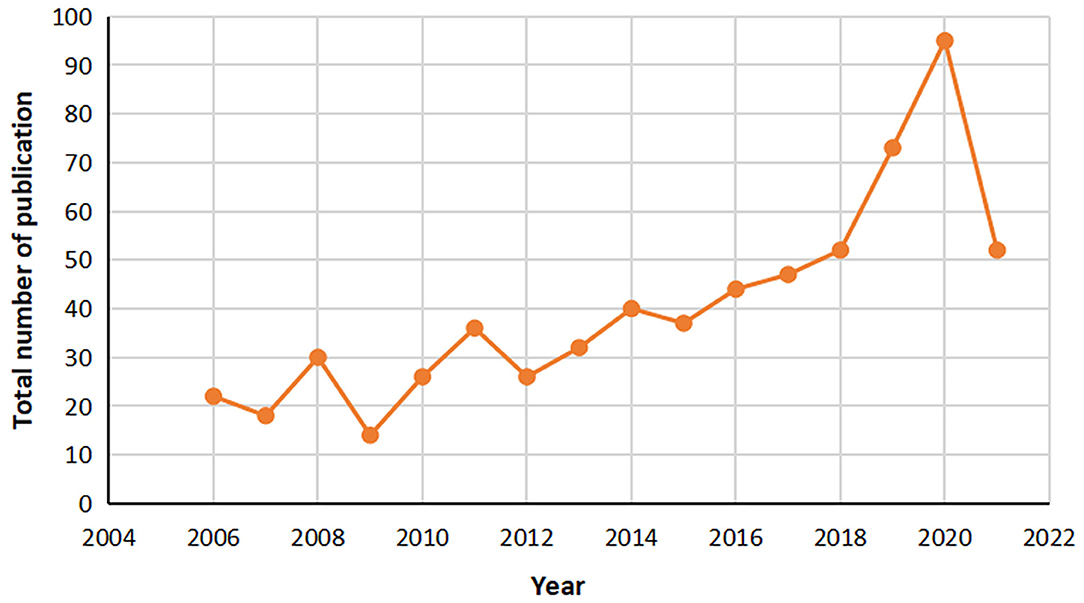
Figure 2. Annual publication curve of WOS (2006–2021) in the field of intrauterine adhesion. The abscissa in the figure represents the year and the ordinate represents the total number of publications.
Countries and Institutions Analysis
During this period, a total of 61 countries have published articles on this research field, and China (Circulation = 238) is the country with the largest contribution, followed by the United States (Circulation = 103), France (Circulation = 32), Britain (Circulation = 30) and Australia (Circulation = 23), in Figures 3A,B and Table 1. And from 2006 to 2021, more than 385 institutions published articles in this field. Capital Med Univ was the institution with the most publications (34), as shown in Table 2.
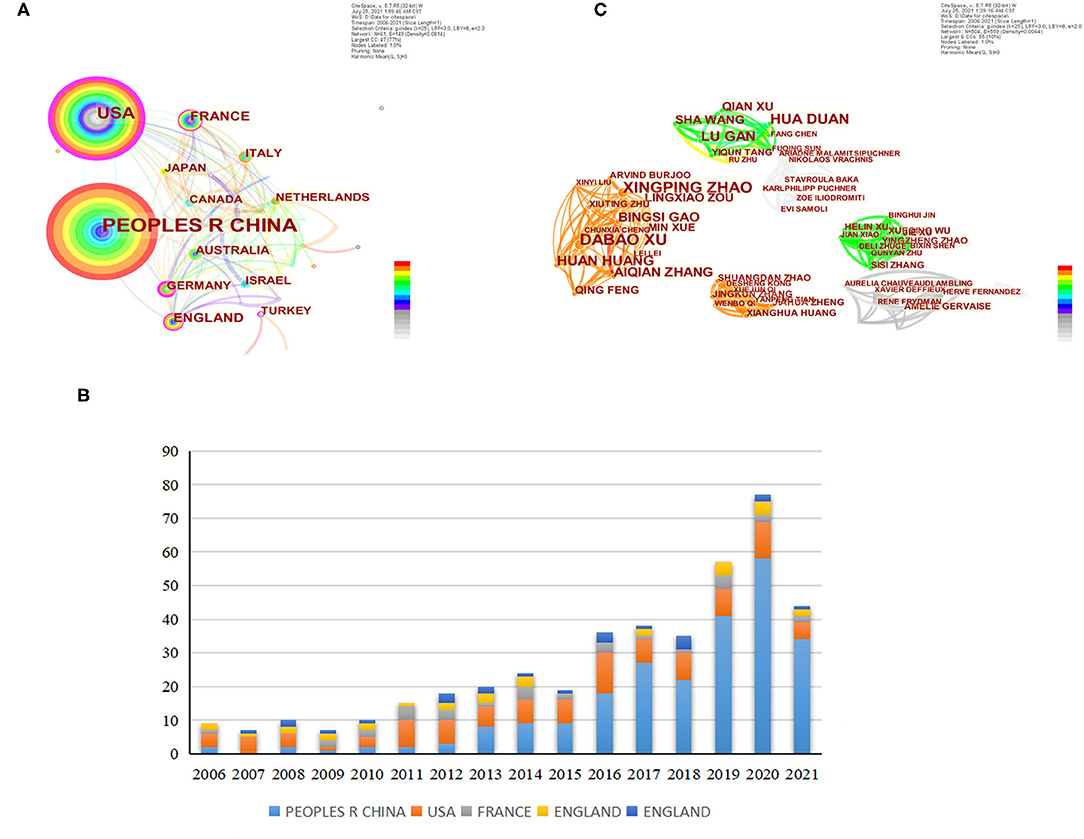
Figure 3. The visual images of countries and institutions generated by CiteSpace software. (A) The visual images of countries. (B) Annual circulation of the top 5 countries with total circulation from 2006 to 2021. (C) The visual images of authors.
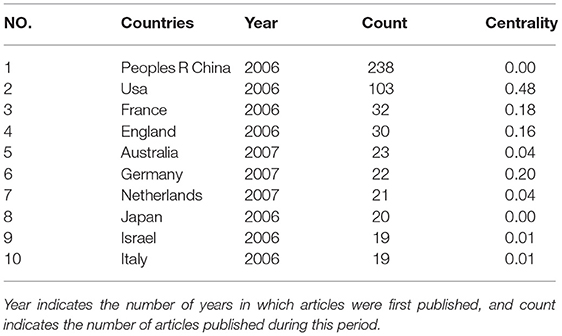
Table 1. Top 10 countries by publishing frequency.
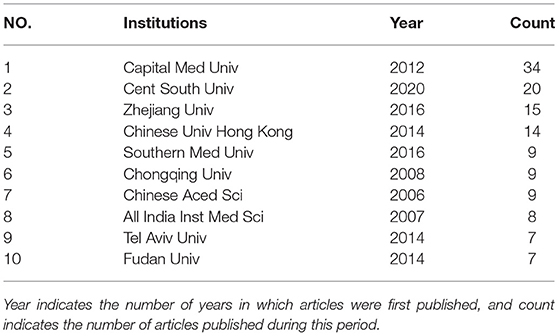
Table 2. Top 10 institutions by publishing frequency.
Authors Analysis
As shown in Figure 3C and Table 3, during the period from 2006 to 2021, more than 504 authors published articles, among which DABAO XU was considered the most active author in this field, with the largest number of articles (number = 10), XINGPING ZHAO the second most (number = 9), HUA DUAN (number = 8), HUAN HUANG (number = 7), LU GAN (number = 7), and they are closely related.
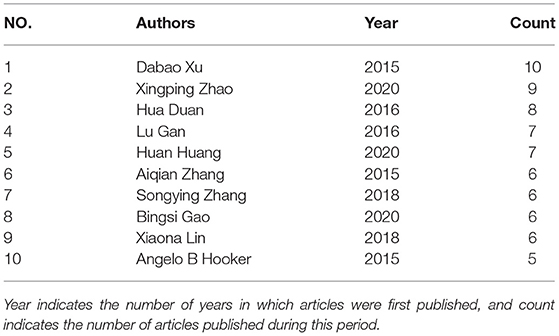
Table 3. Top 10 authors by publishing frequency.
Keyword Analysis
A total of 465 keywords were obtained from 614 literatures, and a co-occurrence map of keywords was drawn, as shown in Figure 4A. Among them, the ten most frequently used keywords were intrauterine adhesionis (frequency = 228), hysteroscopy (frequency = 109), women (frequency = 92), management (frequency = 89), expression (frequency = 80), pregnancy (frequency = 75), ashermans syndrome (frequency = 72), infertility (frequency = 68), prevention (frequency = 55) and fertility (frequency = 52), in Figure 4B. And in Table 4, the most significant keywords were adhesion (centrality = 0.24), pregnancy (centrality = 0.20), expression (centrality = 0.13), intrauterine adhesionis (centrality = 0.12), women (centrality = 0.10), adhesion molecule (centrality = 0.09), diagnosis (centrality = 0.08), activation(centrality = 0.08), hysteroscopy (centrality = 0.07) and fertility (centrality = 0.07). Then we obtained the largest 6 clusters as shown in Figures 4C,D and Table 5, and the modularity Q is 0.4518, the weighted mean silhouette S is 0.8038. Summarizing the main research directions of the six clusters, we found that most of them are treatments for intrauterine adhesions. After analyzing the keywords by timeline, it is found that new keywords appear almost every year. As shown in Figure 5, according to keyword burst analysis, during 2006–2021, there were 23 keywords to be found to have the strongest citation outbreak. It can be observed that before 2014, the research hotspots of intrauterine adhesions mainly focused on the treatment of intrauterine adhesions, infertility and assisted reproductive technology, while in recent years, the hotspots focused on stem cell technology, endometrial repair and regeneration. Moreover, the concept of endometrial repair and regeneration which was proposed in 2018 has the highest citation rate, and is considered as the hottest and newest research direction in this field.
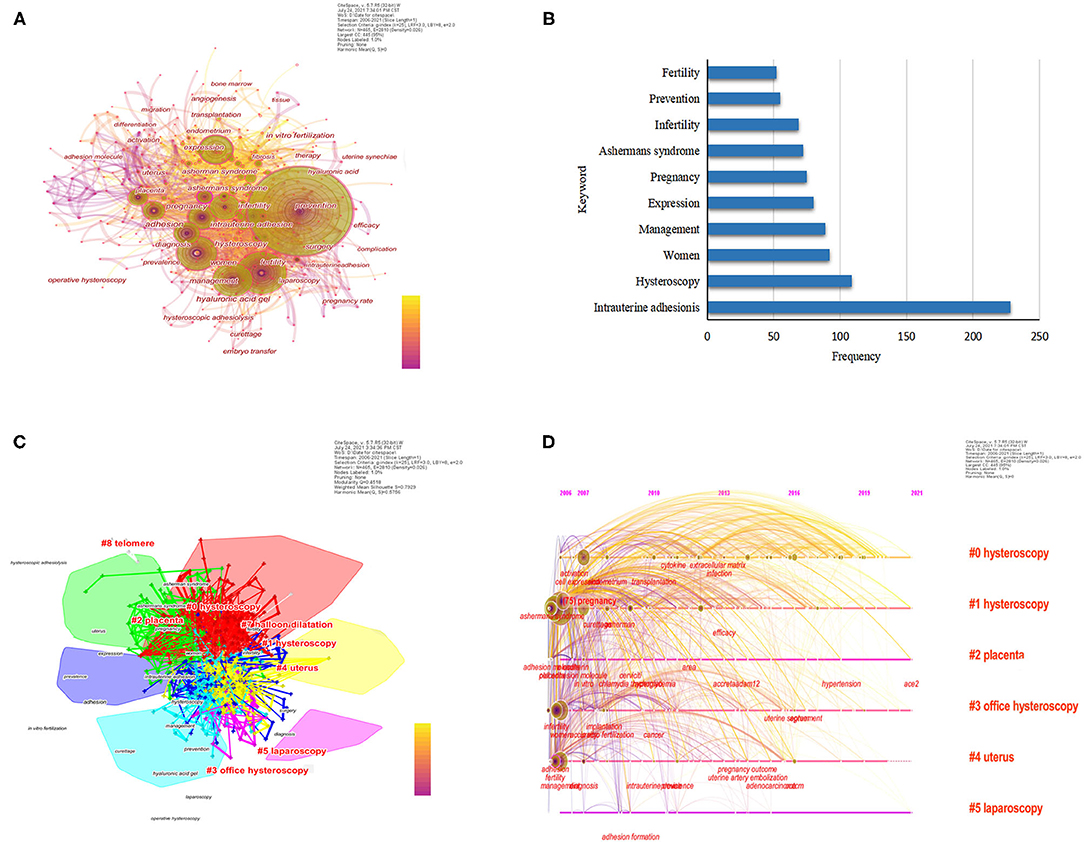
Figure 4. The visual images of keywords generated by CiteSpace software. (A) The visual images of the totel of keywords. (B) Top 10 keywords with the highest frequency. (C) The visual images of cluster analysis of all keywords. (D) The timeline zone of top 8 clusters.
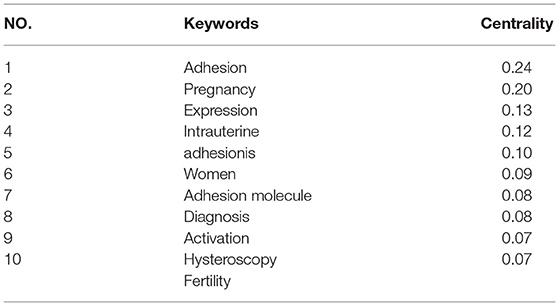
Table 4. The top 10 keywords sorted by centrality.
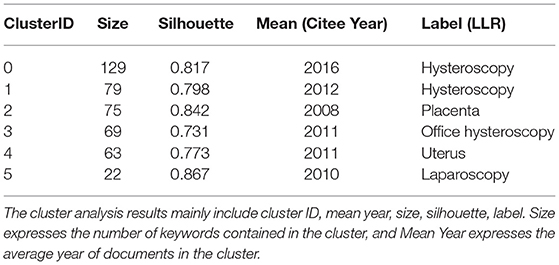
Table 5. The analysis of the top 6 clusters.
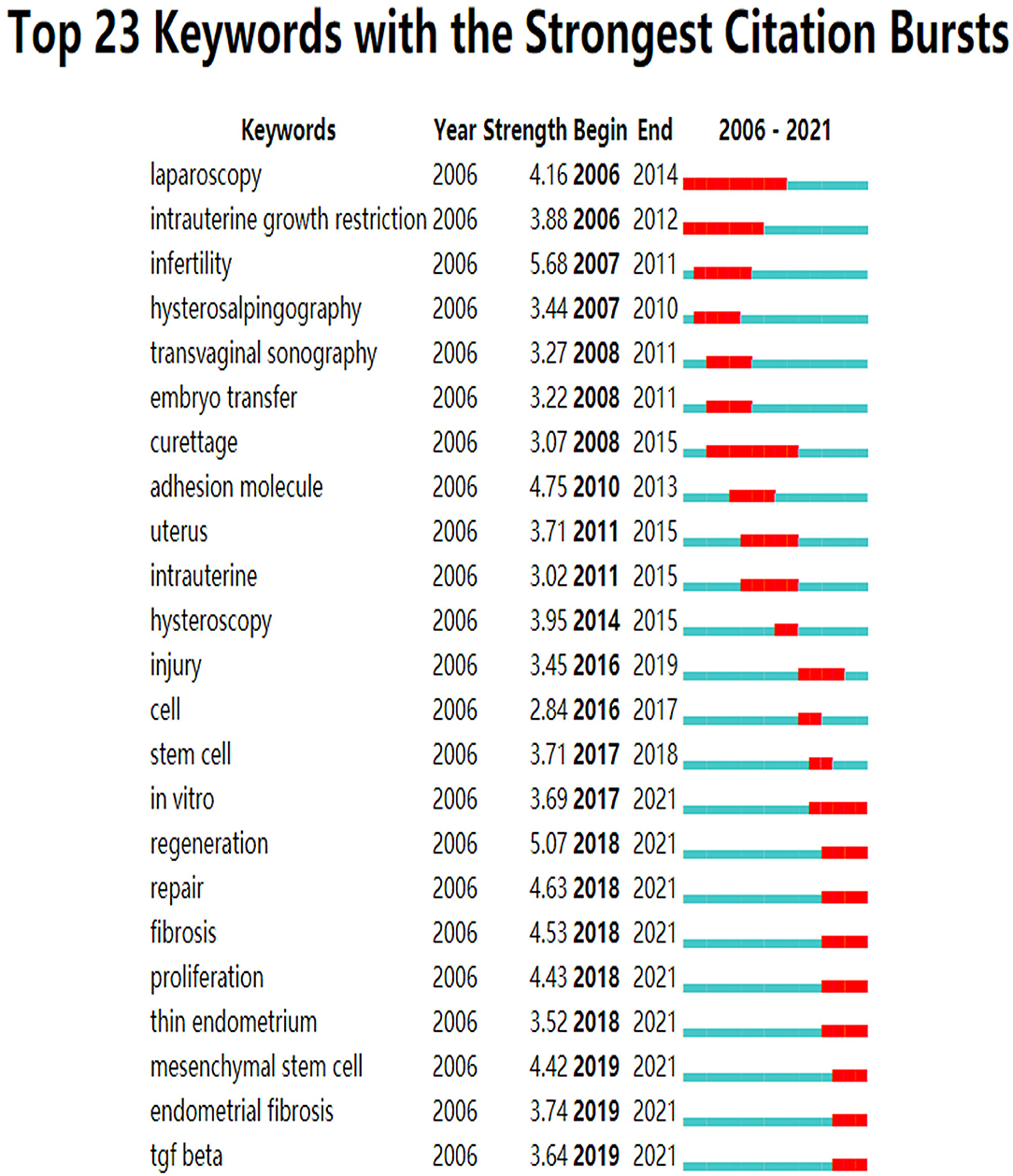
Figure 5. Burst of keywords in CiteSpace. Red indicates the duration of a burst, indicating that keywords are frequently quoted, while green indicates keywords that are not frequently quoted.
Discussion
In this paper, CiteSpace was used to retrospectively analyze 644 papers on intrauterine adhesion since 2006, and the publication time distribution, cooperation network of the main authors, research hotspots and development trend of the papers in the field of intrauterine adhesion were intuitively reflected by the visual analysis of the knowledge map.
It can be seen from the publishing trend of the article that the published volume is steadily increasing year by year, this shows that intrauterine adhesions are paid increasingly attention by medical workers, and China has made great contributions to the diagnosis and treatment of intrauterine adhesions. And through our analysis, we also find that not only the countries and regions involved in the research are relatively concentrated, but also the research institutions and researchers are relatively concentrated, and the centrality value is not very high.
According to the burst test of keywords, in recent years, we have paid increasingly attention to the repair and regeneration of endometrium, and stem cell therapy technology is also a hot research topic now. This will become the direction of our follow-up research. Based on the existing work, we will deeply explore the pathogenesis and diagnosis and treatment of intrauterine adhesions.
In summary, we have made a bibliometric analysis of the research hotspots and research reversals of intrauterine adhesions. Intrauterine adhesion has been paid close attention to by a wide range of medical workers, and increasingly clinical studies have promoted the diagnosis and treatment of intrauterine adhesion and the invention of new technologies. In the future, more multicenter in-depth research is needed to further provide evidence-based medicine research. This may have obvious guidance for the future work of researchers and medical workers. However, CiteSpace's analysis may be controversial and not deep enough. We will overcome these shortcomings by further evidence-based medicine analysis later.
Data Availability Statement
The datasets presented in this study can be found in online repositories. The names of the repository/repositories and accession number(s) can be found below: http://login.webofknowledge.com.
Author Contributions
D-DD designing this study and writing initial draft and revision. D-DD and QZ reviewing the literature and analyzing. Z-XH making figures and tables. M-ZZ rechecking the manuscript and putting forward suggestions for amendment. QZ revising language and content. All authors contributed to the article and approved the submitted version.
Funding
This study was supported by Hubei Provincial Health Commission Joint Fund Key Project, with Grant No. WJ2019H500.
Conflict of Interest
The authors declare that the research was conducted in the absence of any commercial or financial relationships that could be construed as a potential conflict of interest.
Publisher's Note
All claims expressed in this article are solely those of the authors and do not necessarily represent those of their affiliated organizations, or those of the publisher, the editors and the reviewers. Any product that may be evaluated in this article, or claim that may be made by its manufacturer, is not guaranteed or endorsed by the publisher.
References
1. Morales B, Movilla P, Wang J, Wang J, Williams A, Chen T, et al. Patient-reported menstrual and obstetric outcomes following hysteroscopic adhesiolysis for asherman syndrome. F S Rep. (2021) 2:118–25. doi: 10.1016/j.xfre.2021.01.002
2. Cenksoy PO, Ficicioglu C, Yesiladali M, Kizilkale O. The diagnosis and management of asherman's syndrome developed after cesarean section and reproductive outcome. Case Rep Obstet Gynecol. (2013) 2013:450658. doi: 10.1155/2013/450658
3. Zhao YX, Chen SR, Huang QY, Chen WC, Xia T, Shi YC, et al. Repair abilities of mouse autologous adipose-derived stem cells and ShakeGel3D complex local injection with intrauterine adhesion by bmp7-smad5 signaling pathway activation. Stem Cell Res Ther. (2021) 12:191. doi: 10.1186/s13287-021-02258-0
4. Liu X, Xu Q, Chen C, Duan H. miR-543 inhibits the occurrence and development of intrauterine adhesion by inhibiting the proliferation, migration, and invasion of endometrial cells. Biomed Res Int. (2021) 2021:5559102. doi: 10.1155/2021/5559102
5. Liao Z, Liu C, Wang L, Sui C, Zhang H. Therapeutic role of mesenchymal stem cell-derived extracellular vesicles in female reproductive diseases. Front Endocrinol. (2021) 12:665645. doi: 10.3389/fendo.2021.665645
6. Lee WL, Liu CH, Cheng M, Chang WH, Liu WM, Wang PH. Focus on the primary prevention of intrauterine adhesions: current concept and vision. Int J Mol Sci. (2021) 22(10). doi: 10.3390/ijms22105175
7. Zhang F, Feng Q, Yang L, Liu X, Su L, Wang C, et al. Analysis of the Etiologies of Female Infertility in Yunnan Minority Areas. BMC Womens Health. (2021) 21:88. doi: 10.1186/s12905-021-01216-5
8. van Wessel S, Hamerlynck T, Schutyser V, Tomassetti C, Wyns C, Nisolle M, et al. Anti-adhesion gel versus no gel following operative hysteroscopy prior to subsequent fertility treatment or timed intercourse (AGNOHSTIC), a Randomised Controlled Trial: Protocol. Hum Reprod Open. (2021) 2021:Hoab001. doi: 10.1093/hropen/hoab001
9. Qiu T, Liu L, Zhou H, Sheng H, He Y, Liu M, et al. Analysis of endometrial microbiota in intrauterine adhesion by high-throughput sequencing. Ann Transl Med. (2021) 9:195. doi: 10.21037/atm-20-2813
10. Ge J, Chen Y, Yang H, Zhao J, Ren D, Wu X. Expression and significance of estrogen receptor and progesterone receptor in endometrial tissue of patients with intrauterine adhesions. Gland Surg. (2021) 10:1478–86. doi: 10.21037/gs-21-232
11. Wu C, Dong Y, Li Y, Liu H. The efficacy of amniotic membrane-mediated sequential double-barrier therapy for the treatment of postoperative intrauterine adhesions. Medicine (Baltimore). (2021) 100:E25416. doi: 10.1097/MD.0000000000025416
12. Pan LZ, Wang Y, Chen X. A randomized controlled study on an integrated approach to prevent and treat re-adhesion after transcervical resection of moderate-to-severe intrauterine adhesions. Clinics (São Paulo). (2021) 76:E1987. doi: 10.6061/clinics/2021/e1987
13. Zhang X, Liu W, Zhou Y, Qiu J, Sun Y, Li M, et al. Comparison of therapeutic efficacy of three methods to prevent re-adhesion after hysteroscopic intrauterine adhesion separation: a parallel, randomized and single-center trial. Ann Palliat Med. (2021) 10:6804–23. doi: 10.21037/apm-21-1296
14. Gao Y, Wu G, Xu Y, Zhao D, Zheng L. Stem cell-based therapy for asherman syndrome: promises and challenges. Cell Transplant. (2021) 30:9636897211020734. doi: 10.1177/09636897211020734
15. Benor A, Gay S, DeCherney A. An update on stem cell therapy for asherman syndrome. J Assist Reprod Genet. (2020) 37:1511–29. doi: 10.1007/s10815-020-01801-x
16. Fei Z, Bin Z, Xin X, Fei H, Yuechong C. Meta-analysis on the use of hyaluronic acid gel to prevent recurrence of intrauterine adhesion after hysteroscopic adhesiolysis. Taiwan J Obstet Gynecol. (2019) 58:731–6. doi: 10.1016/j.tjog.2019.09.002
17. Li B, Zhang Q, Sun J, Lai D. Human amniotic epithelial cells improve fertility in an intrauterine adhesion mouse model. Stem Cell Res Ther. (2019) 10:257. doi: 10.1186/s13287-019-1368-9
18. Zhao Y, Huang L, Liu M, Gao H, Li W. Scientific knowledge graph of acupuncture for migraine: a bibliometric analysis from 2000 to 2019. J Pain Res. (2021) 14:1985–2000. doi: 10.2147/JPR.S314174
19. Yeung AWK, Kletecka-Pulker M, Eibensteiner F, Plunger P, Volkl-Kernstock S, Willschke H, et al. Implications of twitter in health-related research: a landscape analysis of the scientific literature. Front Public Health. (2021) 9:654481. doi: 10.3389/fpubh.2021.654481
20. You Y, Min L, Tang M, Chen Y, Ma X. Bibliometric evaluation of global tai chi research from 1980-2020. Int J Environ Res Public Health. (2021) 18(11). doi: 10.3390/ijerph18116150
21. Baminiwatta A, Solangaarachchi I. Trends and developments in mindfulness research over 55 years: a bibliometric analysis of publications indexed in web of science. Mindfulness (N Y). (2021) 2021:1-18. doi: 10.1007/s12671-021-01681-x
22. Kim AR, Park HY. Theme trends and knowledge-relationship in lifestyle research: a bibliometric analysis. Int J Environ Res Public Health. (2021) 18:14. doi: 10.3390/ijerph18147503
23. Mbogning Fonkou MD, Bragazzi NL, Tsinda EK, Bouba Y, Mmbando GS, Kong JD. COVID-19 pandemic related research in africa: bibliometric analysis of scholarly output, collaborations and scientific leadership. Int J Environ Res Public Health. (2021) 18:14. doi: 10.3390/ijerph18147273
24. Kostrzewski M, Melnik R. Condition monitoring of rail transport systems: a bibliometric performance analysis and systematic literature review. Sensors (Basel). (2021) 21:14. doi: 10.3390/s21144710
25. Djoutsop OM, Mbougo JV, Kanmounye US. Global Head and Neck Surgery Research During the COVID Pandemic: a Bibliometric Analysis. Ann Med Surg (Lond). (2021) 68:102555. doi: 10.1016/j.amsu.2021.102555
26. Song X, Jiang N, Li H, Ding N, Wen D. Medical professionalism research characteristics and hotspots: a 10-year bibliometric analysis of publications From 2010 to 2019. Scientometrics. (2021) 2021:1–19. doi: 10.1007/s11192-021-03993-0
27. Zhang J, Song L, Xu L, Fan Y, Wang T, Tian W, et al. Knowledge domain and emerging trends in ferroptosis research: a bibliometric and knowledge-map analysis. Front Oncol. (2021) 11:686726. doi: 10.3389/fonc.2021.686726
28. Shi J, Gao Y, Ming L, Yang K, Sun Y, Chen J, et al. A bibliometric analysis of global research output on network meta-analysis. BMC Med Inform Decis Mak. (2021) 21:144. doi: 10.1186/s12911-021-01470-5
29. Chen C. Searching for intellectual turning points: progressive knowledge domain visualization. Proc Natl Acad Sci U S A. (2004) 101:5303–10. doi: 10.1073/pnas.0307513100
30. Zhou Y, Zhu XP, Shi JJ, Yuan GZ, Yao ZA, Chu YG, et al. Coronary heart disease and depression or anxiety: a bibliometric analysis. Front Psychol. (2021) 12:669000. doi: 10.3389/fpsyg.2021.669000
31. Zheng J, Zhou R, Meng B, Li F, Liu H, Wu X. Knowledge framework and emerging trends in intracranial aneurysm magnetic resonance angiography: a scientometric analysis from 2004 to 2020. Quant Imaging Med Surg. (2021) 11:1854–69. doi: 10.21037/qims-20-729
32. Xu H, Li Y, Tan Y, Deng N. A scientometric review of urban disaster resilience research. Int J Environ Res Public Health. (2021) 18:7. doi: 10.3390/ijerph18073677
33. Gao M, Gao D, Sun H, Cheng X, An L, Qiao M. Trends in research related to premenstrual syndrome and premenstrual dysphoric disorder from 1945 to 2018: a bibliometric analysis. Front Public Health. (2021) 9:596128. doi: 10.3389/fpubh.2021.596128
34. Zhang X, Hui L, Wei L, Song F, Hu F. A bibliometric analysis of human-machine interaction methodology for electric-powered wheelchairs driving From 1998 to 2020. Int J Environ Res Public Health. (2021) 18:14. doi: 10.3390/ijerph18147567
35. Gao Z, Zhang J, Liu GF, Ji LX. Research trends from 2010 to 2020 for pain treatment with acupuncture: a bibliometric analysis. J Pain Res. (2021) 14:941–52. doi: 10.2147/JPR.S300911
36. You Y, Wang D, Wang Y, Li Z, Ma X. A bird's-eye view of exercise intervention in treating depression among teenagers in the last 20 years: a bibliometric study and visualization analysis. Front Psychiatry. (2021) 12:661108. doi: 10.3389/fpsyt.2021.661108
Keywords: intrauterine adhesionis, Ashman's syndrome, CiteSpace, visualization analysis, knowledge mapping
Citation: Ding D-D, Zuo M-Z, Zhou Q and He Z-X (2022) Visual Analysis of Uterine Adhesion Research Based on CiteSpace: Bibliometric Analysis From 2006 to 2021. Front. Reprod. Health 4:757143. doi: 10.3389/frph.2022.757143
Received: 04 September 2021; Accepted: 28 February 2022;
Published: 09 May 2022.
Edited by:
Ibrahim A. Abdelazim, Ain Shams University, EgyptReviewed by:
Akmal El-Mazny, Cairo University, EgyptLudovica Bartiromo, San Raffaele Hospital (IRCCS), Italy
Copyright © 2022 Ding, Zuo, Zhou and He. This is an open-access article distributed under the terms of the Creative Commons Attribution License (CC BY). The use, distribution or reproduction in other forums is permitted, provided the original author(s) and the copyright owner(s) are credited and that the original publication in this journal is cited, in accordance with accepted academic practice. No use, distribution or reproduction is permitted which does not comply with these terms.
*Correspondence: Man-Zhen Zuo, Y2hlcnJ5X2RkZEAxNjMuY29t