 Zoltán Szabó
 Tamás Marosvölgyi
 Éva Szabó
 Péter Bai4,5,6
 Zsófia Verzár
- 1Faculty of Health Sciences, Institute of Nutritional Sciences and Dietetics, University of Pecs, Pecs, Hungary
- 2Medical School, Institute of Bioanalysis, University of Pecs, Pecs, Hungary
- 3Department of Biochemistry and Medical Chemistry, Medical School, University of Pecs, Pecs, Hungary
- 4Department Medical Chemistry, Faculty of Medicine, University of Debrecen, Debrecen, Hungary
- 5MTA-DE Lendület Laboratory of Cellular Metabolism, Debrecen, Hungary
- 6Faculty of Medicine, Research Center for Molecular Medicine, University of Debrecen, Debrecen, Hungary
- 72nd Department of Internal Medicine and Nephrology Centre, Clinical Centre, University of Pecs, Pecs, Hungary
In the recent COVID-19 (caused by SARS-Cov-2 virus) pandemic a subgroup of patient death is attributed to the so-called “cytokine storm” phenomenon (also called cytokine release syndrome or macrophage overactivation syndrome) (Mehta et al., 2020). To date, the molecular events that precipitate a “cytokine storm” or the applicable therapeutic strategies to prevent and manage this process is not elucidated because of the complex nature of this problem (Tisoncik et al., 2012). Recent articles suggest that specific nutrients such as vitamin B6, B12, C, D, E, and folate; trace elements, including zinc, iron, selenium, magnesium, and copper may play a key role in the management of cytokine storm (Calder et al., 2020; Grant et al., 2020; Muscogiuri et al., 2020). Among these micronutrients LC-PUFAs (long chain polyunsaturated fatty acids) such as EPA (eicosapentaenoic acid) and DHA (docosahexaenoic acid) are noteworthy because of their direct influence in the immunological response to viral infections (Calder et al., 2020; Messina et al., 2020).
In this paper, we would like to draw the attention to the possible beneficial effect of EPA and DHA supplementation in SARS-CoV-2 infection and urge the medical community for further investigations and conduction of clinical trials.
Evidence suggests that n-3 LC-PUFAs can modulate the immune response and function in many ways (Calder, 2007, 2013; Zivkovic et al., 2011; Maskrey et al., 2013; Tao, 2015; Allam-Ndoul et al., 2017). Among these complex immunomodulatory effects, interleukin-6 (IL-6) and interleukin-1ß (IL-1β)—because of the suspected central regulatory role in the “cytokine storm”—should be highlighted. These cytokines can be affected by dietary EPA and DHA intake (Figure 1). In addition, poly(ADP-ribose) polymerase enzymes that have anti-inflammatory properties, translatable to human COVID-19 infection were shown to improve tissue levels of DHA and EPA, as well as the downstream anti-inflammatory metabolites of EPA and DHA (Kiss et al., 2015; Curtin et al., 2020) further underscoring the applicability of DHA and EPA in COVID-19.
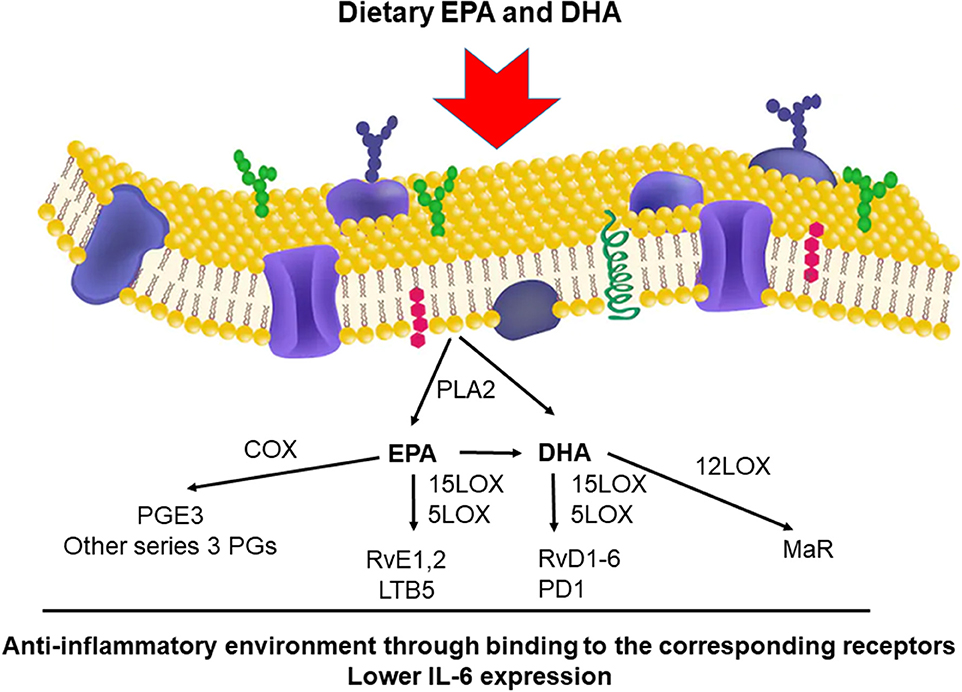
Figure 1. Main pathways for the metabolism of DHA and EPA yielding anti-inflammatory metabolites. The two most important n-3 LCPUFAs, DHA and EPA, can be either released from the membrane of cells by PLA2 or dietary DHA and EPA can be utilized for enzymatic conversion by LOX and COX enzymes that generate bioactive, anti-inflammatory downstream metabolites. These metabolites bind to their respective receptors and elicit anti-inflammatory changes in cells mainly through rearranging the transcriptome. These pleiotropic effects altogether lead to decreases in IL-6, IL-1, or TNFα, key cytokines provoking cytokine storm. PLA2, phospholipase A2; EPA, eicosapentaenoic acid; DHA, docosahexaenoic acid; LOX, Lipoxygenase; PGs, Prostaglandins; PGE3, Prostaglandin E3; RvE1,2, Resolvin E1 and E2; LTB5, Leukotriene B5; RvD1-6, D-series resolvins; PD1, Protectin D1; MaR, Maresin. The sketch of the membrane is a stock image from shutterstock.com (No. 1106910629).
IL-6 blockade using Tocilizumab monoclonal antibody has been identified as a feasible therapeutic target in SARS-CoV-infections (Liu et al., 2020), nevertheless, reducing the expression of additional proinflammatory cytokines (e.g., IL-1ß, IL-38) may have beneficial effects (Conti et al., 2020).
Both EPA and DHA can decrease the secretion of inflammatory cytokines in vitro and animal studies (Gutierrez et al., 2019). Pre-supplementation with DHA (400 mM) significantly decreased the release of IL-6 and IP-10 by Calu-3 cells infected with Rhinovirus RV-43 and RV-1B (Saedisomeolia et al., 2009).
Based on the results of a randomized, controlled study published in 2018, high-dose (1.5 g/day EPA and 1.0 g/day DHA) n-3 supplementation can reduce plasma levels of both IL-6 and IL-1ß (Tan et al., 2018). The anti-inflammatory effect of EPA and DHA supplementation seems consistent with most of the previous clinical findings (Fritsche, 2006; Vedin et al., 2008; Kiecolt-Glaser et al., 2012; Muldoon et al., 2016; Calder et al., 2020) (Table 1).
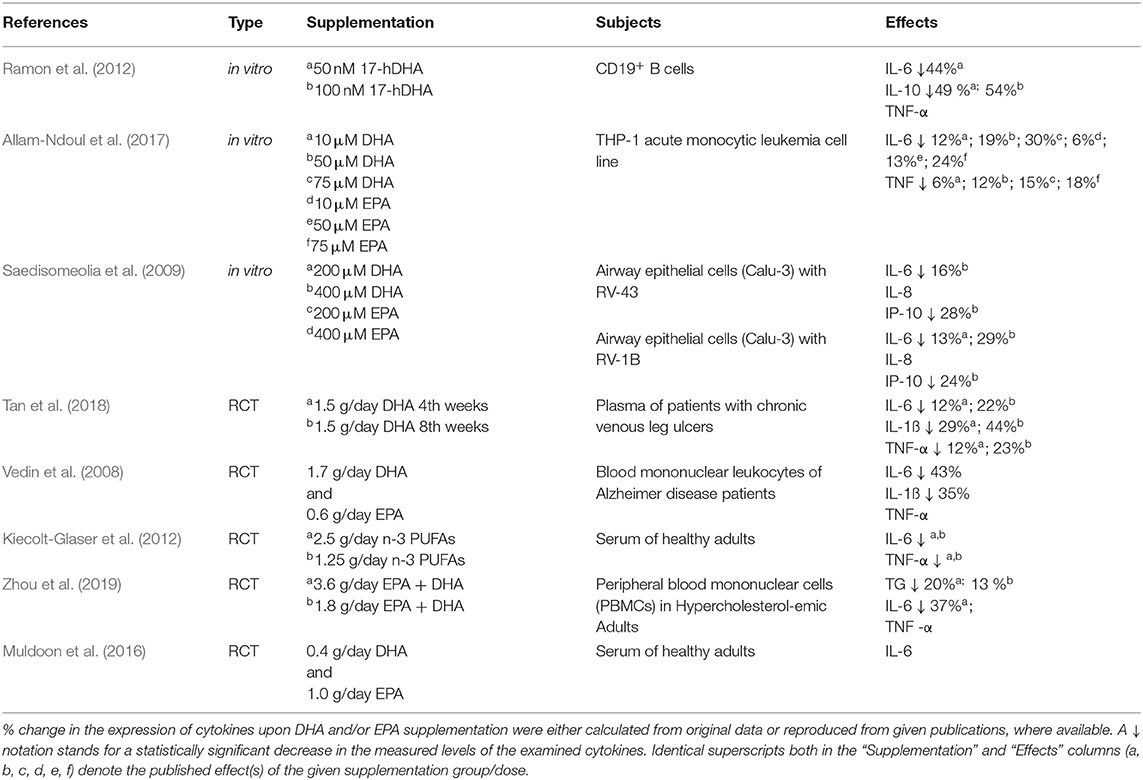
Table 1. The effects of DHA and EPA supplementation on cytokine production.
A DHA metabolite (17-hDHA) can reduce IL-6 secretion in human B cells (Ramon et al., 2012).
The triglyceride-lowering effect of n-3 LC-PUFA supplementation is well-known (Yanai et al., 2018; Zhou et al., 2019; Abdelhamid et al., 2020). Lower levels of triglyceride present a lower risk of developing a “cytokine storm” based on the score from the available sHLH score system (Mehta et al., 2020). This approach represents another standpoint for the promotion of n-3 LC-PUFA supplementation in COVID-19 disease.
In addition, evidence suggests that in non-viral infected critically ill patients n-3 LC-PUFA supplementation can be helpful but data are highly limited (Rangel-Huerta et al., 2012). A recent meta-analysis reported the effects of omega-3 fatty acids and/or antioxidants in adults with acute respiratory distress syndrome in which the authors concluded that any beneficial effect in the duration of ventilator days and ICU length of stay or oxygenation at day 4 seems uncertain because of the very low quality of evidence (Dushianthan et al., 2019). To date there is no direct evidence of any beneficial or deleterious effect of immunonutrition with EPA and DHA in COVID-19 patients.
EPA and DHA supplementation can alter many biological pathways which may have direct influence in the outcome of COVID-19 (Fenton et al., 2013; Duvall and Levy, 2016; Curtin et al., 2020).
The safety of EPA and DHA supplementation should be also highlighted. Although, the US Department of
Health & Human Services National Institutes of Health Office of Dietary Supplements (ODS) concluded that a daily intake of EPA+DHA of up to 3.0 g/d is safe (Usdhhs N. I. O. H. and Office of Dietary Supplements, 2019), the European Food Safety Authority (EFSA) stated that the long-term consumption of EPA and DHA supplements at combined doses of up to about 5 g/day appears to be safe for the general public (EFSA, 2012). In addition some evidence suggest that long-term supplementation of EPA and DHA may have side effects such as increasing risk of certain types of cancers, but the results are conflicting (Gerber, 2012; Alexander, 2013; Serini and Calviello, 2018). It should be also noticed that the usage of algae- or plant-based sources of EPA and DHA seems more preferable than marine or animal-based sources (Doughman et al., 2007; Lane et al., 2014; Harwood, 2019).
Summary: Based on the available data, the supplementation of EPA and DHA in COVID-19 patients appears to have potential beneficial effect in managing the “cytokine storm.” Therefore, the use of EPA and DHA supplementation should be considered as both a supportive therapy and a prevention strategy in SARS-Cov-2 infection.
Author Contributions
ZS, TM, and ÉS drafted the manuscript. TM, PB, and ZS designed the figure and the table. MF, ZV, and ÉS substantial contributions to the conception by supervising all the processes. PB, MF, ZV, and ÉS revised the manuscript critically for important intellectual content. TM and ZS drafted the reference list. ZS and TM proofread the final manuscript. All authors agree that our work is accountable for all aspects of the work in ensuring that questions related to the accuracy or integrity of any part of the work are appropriately investigated and resolved. All authors read and approved the final manuscript.
Conflict of Interest
The authors declare that the research was conducted in the absence of any commercial or financial relationships that could be construed as a potential conflict of interest.
Acknowledgments
TM and ÉS was supported by grants from NKFIH K120193. PB work was supported by grants from NKFIH (K123975, GINOP-2.3.2-15-2016-00006), the Momentum fellowship of the Hungarian Academy of Sciences and the University of Debrecen. The research was financed by the Higher Education Institutional Excellence Programme (NKFIH-1150-6/2019) of the Ministry of Innovation and Technology in Hungary, within the framework of the Biotechnology thematic programme of the University of Debrecen.
References
Abdelhamid, A. S., Brown, T. J., Brainard, J. S., Biswas, P., Thorpe, G. C., Moore, H. J., et al. (2020). Omega-3 fatty acids for the primary and secondary prevention of cardiovascular disease. Cochrane Database Syst. Rev. 3:CD003177. doi: 10.1002/14651858.CD003177.pub5
Alexander, W. (2013). Prostate cancer risk and omega-3 Fatty Acid intake from fish oil: a closer look at media messages versus research findings. P T 38, 561–564.
Allam-Ndoul, B., Guenard, F., Barbier, O., and Vohl, M. C. (2017). A study of the differential effects of eicosapentaenoic acid (EPA) and docosahexaenoic acid (DHA) on gene expression profiles of stimulated Thp-1 macrophages. Nutrients 9:424. doi: 10.3390/nu9050424
Calder, P. C. (2007). Immunomodulation by omega-3 fatty acids. Prostaglandins Leukot. Essent. Fatty Acids 77, 327–335. doi: 10.1016/j.plefa.2007.10.015
Calder, P. C. (2013). n-3 fatty acids, inflammation and immunity: new mechanisms to explain old actions. Proc. Nutr. Soc. 72, 326–336. doi: 10.1017/S0029665113001031
Calder, P. C., Carr, A. C., Gombart, A. F., and Eggersdorfer, M. (2020). Optimal nutritional status for a well-functioning immune system is an important factor to protect against viral infections. Nutrients 12:1181. doi: 10.3390/nu12041181
Conti, P., Ronconi, G., Caraffa, A., Gallenga, C. E., Ross, R., Frydas, I., et al. (2020). Induction of pro-inflammatory cytokines (IL-1 and IL-6) and lung inflammation by Coronavirus-19 (COVI-19 or SARS-CoV-2): anti-inflammatory strategies. J. Biol. Regul. Homeost. Agents. doi: 10.23812/CONTI-E. [Epub ahead of print].
Curtin, N., Banyai, K., Thaventhiran, J., Le Quesne, J., Helyes, Z., and Bai, P. (2020). Repositioning PARP inhibitors for SARS-CoV-2 infection (COVID-19); a new multi-pronged therapy for ARDS? Br. J. Pharmacol. doi: 10.1111/bph.15137. [Epub ahead of print].
Doughman, S. D., Krupanidhi, S., and Sanjeevi, C. B. (2007). Omega-3 fatty acids for nutrition and medicine: considering microalgae oil as a vegetarian source of EPA and DHA. Curr. Diabetes Rev. 3, 198–203. doi: 10.2174/157339907781368968
Dushianthan, A., Cusack, R., Burgess, V. A., Grocott, M. P., and Calder, P. C. (2019). Immunonutrition for acute respiratory distress syndrome (ARDS) in adults. Cochrane Database Syst. Rev. 1:CD012041. doi: 10.1002/14651858.CD012041.pub2
Duvall, M. G., and Levy, B. D. (2016). DHA- and EPA-derived resolvins, protectins, and maresins in airway inflammation. Eur. J. Pharmacol. 785, 144–155. doi: 10.1016/j.ejphar.2015.11.001
EFSA (2012). EFSA Panel on Dietetic Products, Nutrition and Allergies (NDA); Scientific Opinion Related to the Tolerable Upper Intake Level of Eicosapentaenoic acid (EPA), Docosahexaenoic Acid (DHA) and Docosapentaenoic Acid (DPA). P. European Food Safety Authority (Efsa), Italy. EFSA Journa).
Fenton, J. I., Hord, N. G., Ghosh, S., and Gurzell, E. A. (2013). Immunomodulation by dietary long chain omega-3 fatty acids and the potential for adverse health outcomes. Prostaglandins Leukot. Essent. Fatty Acids 89, 379–390. doi: 10.1016/j.plefa.2013.09.011
Fritsche, K. (2006). Fatty acids as modulators of the immune response. Annu. Rev. Nutr. 26, 45–73. doi: 10.1146/annurev.nutr.25.050304.092610
Gerber, M. (2012). Omega-3 fatty acids and cancers: a systematic update review of epidemiological studies. Br. J. Nutr. 107(Suppl. 2), S228–S239. doi: 10.1017/S0007114512001614
Grant, W. B., Lahore, H., Mcdonnell, S. L., Baggerly, C. A., French, C. B., Aliano, J. L., et al. (2020). Evidence that vitamin D supplementation could reduce risk of influenza and COVID-19 infections and deaths. Nutrients 12, 988. doi: 10.3390/nu12040988
Gutierrez, S., Svahn, S. L., and Johansson, M. E. (2019). Effects of Omega-3 fatty acids on immune cells. Int. J. Mol. Sci. 20, 5028. doi: 10.3390/ijms20205028
Harwood, J. L. (2019). Algae: critical sources of very long-chain polyunsaturated fatty acids. Biomolecules 9, 708. doi: 10.3390/biom9110708
Kiecolt-Glaser, J. K., Belury, M. A., Andridge, R., Malarkey, W. B., Hwang, B. S., and Glaser, R. (2012). Omega-3 supplementation lowers inflammation in healthy middle-aged and older adults: a randomized controlled trial. Brain Behav. Immun. 26, 988–995. doi: 10.1016/j.bbi.2012.05.011
Kiss, B., Szanto, M., Szklenar, M., Brunyanszki, A., Marosvolgyi, T., Sarosi, E., et al. (2015). Poly(ADP) ribose polymerase-1 ablation alters eicosanoid and docosanoid signaling and metabolism in a murine model of contact hypersensitivity. Mol. Med. Rep. 11, 2861–2867. doi: 10.3892/mmr.2014.3044
Lane, K., Derbyshire, E., Li, W., and Brennan, C. (2014). Bioavailability and potential uses of vegetarian sources of omega-3 fatty acids: a review of the literature. Crit. Rev. Food Sci. Nutr. 54, 572–579. doi: 10.1080/10408398.2011.596292
Liu, B., Li, M., Zhou, Z., Guan, X., and Xiang, Y. (2020). Can we use interleukin-6 (IL-6) blockade for coronavirus disease 2019 (COVID-19)-induced cytokine release syndrome (CRS)? J. Autoimmun.111:102452. doi: 10.1016/j.jaut.2020.102452
Maskrey, B. H., Megson, I. L., Rossi, A. G., and Whitfield, P. D. (2013). Emerging importance of omega-3 fatty acids in the innate immune response: molecular mechanisms and lipidomic strategies for their analysis. Mol. Nutr. Food Res. 57, 1390–1400. doi: 10.1002/mnfr.201200723
Mehta, P., Mcauley, D. F., Brown, M., Sanchez, E., Tattersall, R. S., Manson, J. J., et al. (2020). COVID-19: consider cytokine storm syndromes and immunosuppression. Lancet 395, 1033–1034. doi: 10.1016/S0140-6736(20)30628-0
Messina, G., Polito, R., Monda, V., Cipolloni, L., Di Nunno, N., Di Mizio, G., et al. (2020). Functional role of dietary intervention to improve the outcome of COVID-19: a hypothesis of work. Int. J. Mol. Sci. 21:3104. doi: 10.3390/ijms21093104
Muldoon, M. F., Laderian, B., Kuan, D. C., Sereika, S. M., Marsland, A. L., and Manuck, S. B. (2016). Fish oil supplementation does not lower C-reactive protein or interleukin-6 levels in healthy adults. J. Intern. Med. 279, 98–109. doi: 10.1111/joim.12442
Muscogiuri, G., Barrea, L., Savastano, S., and Colao, A. (2020). Nutritional recommendations for CoVID-19 quarantine. Eur. J. Clin. Nutr. 74, 850–851. doi: 10.1038/s41430-020-0635-2
Ramon, S., Gao, F., Serhan, C. N., and Phipps, R. P. (2012). Specialized proresolving mediators enhance human B cell differentiation to antibody-secreting cells. J. Immunol. 189, 1036–1042. doi: 10.4049/jimmunol.1103483
Rangel-Huerta, O. D., Aguilera, C. M., Mesa, M. D., and Gil, A. (2012). Omega-3 long-chain polyunsaturated fatty acids supplementation on inflammatory biomakers: a systematic review of randomised clinical trials. Br. J. Nutr. 107(Suppl. 2), S159–S170. doi: 10.1017/S0007114512001559
Saedisomeolia, A., Wood, L. G., Garg, M. L., Gibson, P. G., and Wark, P. A. (2009). Anti-inflammatory effects of long-chain n-3 PUFA in rhinovirus-infected cultured airway epithelial cells. Br. J. Nutr. 101, 533–540. doi: 10.1017/S0007114508025798
Serini, S., and Calviello, G. (2018). Long-chain omega-3 fatty acids and cancer: any cause for concern? Curr. Opin. Clin. Nutr. Metab. Care 21, 83–89. doi: 10.1097/MCO.0000000000000439
Tan, A., Sullenbarger, B., Prakash, R., and Mcdaniel, J. C. (2018). Supplementation with eicosapentaenoic acid and docosahexaenoic acid reduces high levels of circulating proinflammatory cytokines in aging adults: a randomized, controlled study. Prostaglandins Leukot. Essent. Fatty Acids 132, 23–29. doi: 10.1016/j.plefa.2018.03.010
Tao, L. (2015). Oxidation of polyunsaturated fatty acids and its impact on food quality and human health. Adv. Food Technol. Nutr. Sci. 1, 135–137. doi: 10.17140/AFTNSOJ-1-123
Tisoncik, J. R., Korth, M. J., Simmons, C. P., Farrar, J., Martin, T. R., and Katze, M. G. (2012). Into the eye of the cytokine storm. Microbiol. Mol. Biol. Rev. 76, 16–32. doi: 10.1128/MMBR.05015-11
Usdhhs N. I. O. H. Office of Dietary Supplements (2019). Omega-3 Fatty Acids Fact Sheet for Health Professionals [Online]. US. Department of Health & Human Services, National Institutes of Health Office of Dietary Supplements: Office of Dietary Supplements (ODS) Available online at: https://ods.od.nih.gov/factsheets/Omega3FattyAcids-HealthProfessional/?fbclid=IwAR3NkUQvHD0vrabGnuegLuCJ1GGWFNtv21Kv8QYLguUwKe_4GwPpsUTJKAU (accessed June 1, 2020).
Vedin, I., Cederholm, T., Freund Levi, Y., Basun, H., Garlind, A., Faxen Irving, G., et al. (2008). Effects of docosahexaenoic acid-rich n-3 fatty acid supplementation on cytokine release from blood mononuclear leukocytes: the OmegAD study. Am. J. Clin. Nutr. 87, 1616–1622. doi: 10.1093/ajcn/87.6.1616
Yanai, H., Masui, Y., Katsuyama, H., Adachi, H., Kawaguchi, A., Hakoshima, M., et al. (2018). An improvement of cardiovascular risk factors by Omega-3 polyunsaturated fatty acids. J. Clin. Med. Res. 10, 281–289. doi: 10.14740/jocmr3362w
Zhou, Q., Zhang, Z., Wang, P., Zhang, B., Chen, C., Zhang, C., et al. (2019). EPA+DHA, but not ALA, improved lipids and inflammation status in hypercholesterolemic adults: a randomized, double-blind, placebo-controlled trial. Mol. Nutr. Food Res. 63, e1801157. doi: 10.1002/mnfr.201801157
Keywords: COVID-19, DHA – 22:6n-3, EPA - 20:5n-3, supplementation, IL-6 (Interleukin 6), IL-1ß
Citation: Szabó Z, Marosvölgyi T, Szabó É, Bai P, Figler M and Verzár Z (2020) The Potential Beneficial Effect of EPA and DHA Supplementation Managing Cytokine Storm in Coronavirus Disease. Front. Physiol. 11:752. doi: 10.3389/fphys.2020.00752
Received: 27 April 2020; Accepted: 10 June 2020;
Published: 19 June 2020.
Edited by:
Anna Maria Giudetti, University of Salento, ItalyReviewed by:
Angelo Baldassare Cefalù, University of Palermo, ItalyGérard Lizard, Université de Bourgogne, France
Copyright © 2020 Szabó, Marosvölgyi, Szabó, Bai, Figler and Verzár. This is an open-access article distributed under the terms of the Creative Commons Attribution License (CC BY). The use, distribution or reproduction in other forums is permitted, provided the original author(s) and the copyright owner(s) are credited and that the original publication in this journal is cited, in accordance with accepted academic practice. No use, distribution or reproduction is permitted which does not comply with these terms.
*Correspondence: Zoltán Szabó, c3phYm8uem9sdGFuLmRpZXRAZ21haWwuY29t