MG
matjaž gregorič
Research Centre of the Slovenian Academy of Sciences and Arts
Ljubljana, Slovenia
3,135
Total downloads
16k
Total views and downloads
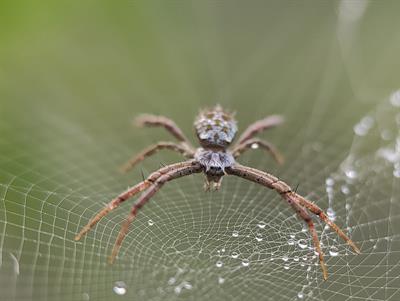
Silk has evolved multiple times among arthropods, but spiders and spider mites are the only groups that use silk in all parts of their lives. Perhaps the most prominent among the great diversity of silk uses is the construction of prey capture webs by spiders. However, this invaluable material is also used by other arachnids, notably mites and pseudoscorpions, and for a number of structures, all of which allowed these animals to adapt to diverse habitats that range from terrestrial to aquatic. Arachnids use silks for the construction of retreats, nests, and egg sacs, to immobilize captured prey, they create sail-like silk to utilize it as ballooning devices and to bridge habitat obstacles during relocation, and they use silk threads as signal and safety lines. The functional diversification of silk use may have also facilitated arachnid diversification. Today, silk structures are popular models in behavioral, ecological, and evolutionary research, ongoing and thriving.
The goal of this Research Topic is to highlight recent and impactful advances in research of the extraordinary diversity of arachnid silk structures. The variety of functions and the behavioral plasticity of their engineers provides insights into their evolutionary success story: be it spiders, the largest group of true predators in the world; mites, encompassing two diverse groups of immense ecological diversity; or pseudoscorpions, tiny and often overlooked soil predators. Through this collection of original research papers, our aim is to present an overview of the most dynamic areas of current research on arachnid silks as well as to highlight open research questions, thus encouraging the next generation of arachnologists to close them and to develop new routes for future investigations.
This Research Topic invites empirical and theoretical contributions from all fields of research related to arachnid silk structures. We encourage original papers that focus on the function and diversity of any silk structures and their significance in arachnid taxonomy and systematics, behavior, ecology, and evolution. Novel descriptions of previously unknown structures and functions are welcome too, if accompanied with inspiring ideas how to develop future research to elucidate their merits. We thus welcome all types of manuscript formats, ranging from descriptive, novel natural-history records and experimental research, to reviews that critically discuss the state of the art within a certain sub-field in silk structure research. Submitted contributions to this Research Topic may cover the fields of taxonomy and systematics, ecology, behavior, and molecular ecology; always with a clear connection to evolutionary implications of the discussed/presented.
Keywords: spider, web function, prey capture, retreat, egg sac, web building, building behavior, silk evolution, web evolution, mite, pseudoscorpion, web, silk, nest
Important note: All contributions to this Research Topic must be within the scope of the section and journal to which they are submitted, as defined in their mission statements. Frontiers reserves the right to guide an out-of-scope manuscript to a more suitable section or journal at any stage of peer review.
