AL
anna lena burger-schulz
Faculty of Biological Sciences, Goethe University Frankfurt
Frankfurt, Germany
3,137
Total downloads
14k
Total views and downloads
Understanding animal behavior during diurnal and nocturnal cycles is crucial for comprehending ecological dynamics and organism adaptations. Assessing behavioral time allocation, including the distribution of time and energy among activities, provides insights into daily routines and energy needs. Behavioral adaptation enables animals to respond to changing environmental conditions. Research on captive and wild populations reveals the complex interplay between organisms and their environment. Technological advancements like long-term monitoring and artificial intelligence revolutionize data collection and analysis of extensive behavioral data across species and time. These tools offer unprecedented opportunities to study how animals adapt behavior to development, environment, and biology. However, further research is needed to enhance our understanding of behavioral adaptations to biological and environmental changes. Investigating behavioral plasticity in diverse ecological contexts and identifying factors that shape behavioral patterns are crucial for effective wildlife management and conservation. Interdisciplinary research can develop evidence-based strategies to ensure animal population welfare and persistence in both captive and natural habitats.
By investigating a species’ activity budget, its behavioral rhythm over 24 hours, and the factors that shape behavioral patterns and resource utilization, this Research Topic aims to shed light on the intricate relationships between animals and their environments. The ultimate goal is to improve animal welfare, promote species conservation, and ensure the long-term survival of animal populations in diverse ecological contexts. The Research Topic welcomes studies on diurnal and nocturnal behavior of captive and wild animals. Current behavioral studies often focus short periods during the day, so studies examining nocturnal behavior are highly encouraged. Continuous data acquisition and analysis over 24 hours are of great importance for analyzing behavioral patterns and daily rhythms. Long-term studies will enhance our understanding of behavioral adaptation across different life stages and in response to environmental changes and are therefore appreciated. Furthermore, studies that employ long-term monitoring methods and utilize artificial intelligence to collect and analyze extensive behavioral data on various species over extended periods are highly welcomed. The knowledge gained from both captive and wild populations will inform management practices and conservation strategies, ensuring the resilience and survival of animal populations.
This Research Topic aims to promote interdisciplinary, transdisciplinary, and multidisciplinary studies on the behavior of captive and wild populations. We welcome manuscripts that contribute to the following aspects:
- Analysis of activity budgets of a species or systematic group emphasizing the daily and nightly behavioral rhythms.
- Investigations into shifts in temporal niches as an adaptive response.
- Identification of environmental and individual factors that influence behavior in captive and wild animals. Potential factors may include: enclosure conditions, social environment, transportation, contraception, temperature, season, predation pressure, human disturbance, light, etc.
- Comparison of behavioral patterns and rhythms between wild and captive individuals.
- Validation and establishment of new methods of behavioral observation and analysis.
- Welfare assessments of captive species through behavioral monitoring.
- Investigating the relationships between natural rest-activity rhythms and their disruption and species vulnerability to conservation threats.
- Presenting and evaluating in-situ conservation projects focusing on behavioral adaptation to different habitats (e.g. nature reserves, protected areas, game drive/touristic areas, highly populated areas or agricultural areas).
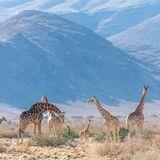
Keywords: Behavioural monitoring, activity budgets, nocturnal behaviour, animal welfare, behavioural adaptation, zoo animals, wildlife, diurnal and nocturnal rhythms, resting, sleep behaviour, bioacoustic
Important note: All contributions to this Research Topic must be within the scope of the section and journal to which they are submitted, as defined in their mission statements. Frontiers reserves the right to guide an out-of-scope manuscript to a more suitable section or journal at any stage of peer review.
Faculty of Biological Sciences, Goethe University Frankfurt
Frankfurt, Germany
University of Pretoria
Pretoria, South Africa
Department of Animal and Food Science, Faculty of Veterinary Medicine, Autonomous University of Barcelona
Barcelona, Spain
Acoustics Research Institute, Austrian Academy of Sciences (OeAW)
Vienna, Austria
