SG
shawn g rhind
Defence Research and Development Canada (DRDC)
Ottawa, Canada
591
Total views and downloads
Submit your idea
You will be redirected to our submission process.
Manuscript Summary Submission Deadline 31 January 2026 | Manuscript Submission Deadline 30 April 2026
This Research Topic is currently accepting articles.
Background
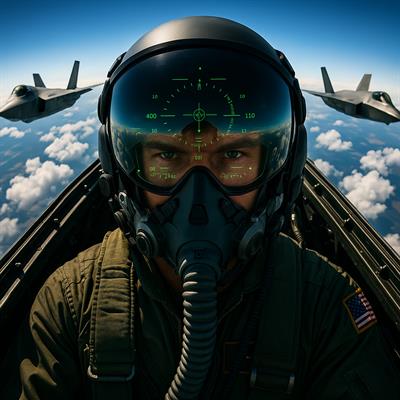
The emergence of fifth- and sixth-generation fighter aircraft—such as the F-35 Lightning II and advanced air dominance systems—has fundamentally redefined the physical and cognitive realities of modern air combat. These platforms integrate high-G maneuverability, helmet-mounted augmented reality, stealth technologies, and AI-enabled decision support, enabling enhanced mission performance and real-time battlefield awareness. However, these same features impose extreme psychophysiological stress on pilots. Aircrew are now required to operate in complex environments involving rapid acceleration, intermittent hypoxia, cognitive saturation, thermal extremes, and intensive sensor fusion. This evolving operational context challenges key performance domains including vision, hearing, cognition, fatigue resilience, vestibular regulation, and musculoskeletal tolerance.
Goal
This Research Topic seeks to explore the human performance limitations, stressors, and adaptive capacities relevant to operating fifth- and sixth-generation fighter jets. Although engineering advances have significantly enhanced platform capabilities, the integration of these systems with the physiological and cognitive limits of the human operator is far less understood. Emerging stressors—such as extended solo sorties, AI-assisted decision-making, human-autonomy teaming, and persistent non-linear cognitive demands—require reimagined approaches to training, health surveillance, and cockpit design. We aim to highlight interdisciplinary research that addresses these gaps, informs future system integration, and optimizes aircrew health, safety, and mission effectiveness. Contributors are encouraged to explore both near-term mitigation strategies and long-term solutions that incorporate biomarker monitoring, adaptive technologies, predictive analytics, and performance modeling.
Scope and Information for Authors
This Research Topic welcomes original research articles, reviews, brief reports, and translational studies that explore psychophysiological challenges and human–system integration in next-generation fast-jet aviation. We welcome submissions spanning the domains of aerospace physiology and medicine, cognitive neuroscience, operational medicine, bioengineering, and human factors engineering. Studies that bridge laboratory findings with real-world flight operations, leverage advanced monitoring technologies, or propose innovative solutions to optimize aircrew training, health, safety, and performance are particularly encouraged.
Key areas of interest include:
• Pilot selection, retention, and training optimization to enhance readiness and performance across career stages
• Cognitive load, decision fatigue, and human–automation interaction in complex cockpit environments
• Visual, auditory, and vestibular system stressors and their implications for flight safety and mission effectiveness
• Real-time physiological monitoring, wearable biosensors, and adaptive feedback systems for early risk detection and performance sustainment
• High-G tolerance, hypoxia exposure, and thermal strain mitigation through physiological conditioning and technological countermeasures
• Artificial intelligence and machine learning applications for performance prediction, workload assessment, and decision support
• Sleep disruption, fatigue management, and mental health resilience in operational and training contexts
• Human–autonomy teaming, situational awareness, and trust calibration in AI-augmented flight systems
• Sensorimotor adaptation, spatial disorientation, and recovery mechanisms under dynamic flight conditions
• Ethical, legal, and operational challenges arising from increased automation and human-out-of-the-loop decision systems
Submissions from military researchers, flight surgeons, clinicians, systems engineers, and aviation/aeromedical specialists are especially encouraged. The goal is to foster a high-impact, cross-disciplinary dialogue that supports human-centered innovation in combat aviation and contributes to evidence-informed guidance for warfighter/aircrew readiness, performance optimization, and long-term health.
This Research Topic accepts the following article types, unless otherwise specified in the Research Topic description:
Articles that are accepted for publication by our external editors following rigorous peer review incur a publishing fee charged to Authors, institutions, or funders.
Keywords: Aerospace Physiology, Cognitive Overload, Human-Systems Integration, Biomarker Monitoring, Performance Optimization, aviation, aeromedical, high G, Future Fighter, hypoxia, brain helath, F-35, Joint Strike Fighter
Important note: All contributions to this Research Topic must be within the scope of the section and journal to which they are submitted, as defined in their mission statements. Frontiers reserves the right to guide an out-of-scope manuscript to a more suitable section or journal at any stage of peer review.
Manuscripts can be submitted to this Research Topic via the main journal or any other participating journal.
Submit your idea
You will be redirected to our submission process.
