CR
claus-peter richter
Feinberg School of Medicine, Northwestern University
Chicago, United States
413
Total views and downloads
Submit your idea
You will be redirected to our submission process.
Manuscript Submission Deadline 29 May 2026
This Research Topic is currently accepting articles.
Photonics offers non-invasive, high-resolution tools for inner ear diagnostics. Micron-level imaging and real-time monitoring are emerging to support diagnostics and intraoperative decision-making.
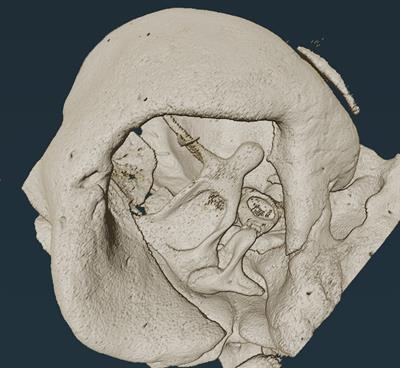
The objective of the research topic is to compile a series of publications that explain and showcase the potential of recently established and emerging novel photonic methods and technologies, and to highlight their potential for basic research on cochlear function and as a tool for diagnostics and medical procedures.
The goal of this special series is to educate and showcase new methods and technologies that use photons to study the normal function of the auditory system, for diagnostics and during clinical procedures. We welcome submissions that present validation studies and brief reports involving patient data. Contributions may include feasibility assessments, method validations, pilot clinical implementations, and early translational results, provided that appropriate ethical approvals and patient privacy safeguards are documented. These reports should clearly articulate clinical relevance, performance metrics, and limitations to help accelerate rigorous adoption of photon-based techniques in auditory diagnostics and care.
A list of potential methods include ptychography, X-ray microscopy, X-ray tomography, X-ray fluorescent microscopy (XFM), Raman spectroscopy, autofluorescence imaging, second harmonic imaging, multiphoton imaging, Fluorescence In-Situ Hybridization (FISH), optical coherence tomography (OCT), dynamic OCT, polarization sensitive-OCT (PS-OCT), pole scope, magnetic resonance imaging (MRI), focused Ion Beam Scanning Electron Microscopy (FIB SEM), atomic force microscopy, functional near-infrared spectroscopy (fNIRS), Thin-sheet Laser Imaging Microscopy (TSLIM), positron emission tomography (PET), ultrasonic imaging.
This Research Topic accepts the following article types, unless otherwise specified in the Research Topic description:
Articles that are accepted for publication by our external editors following rigorous peer review incur a publishing fee charged to Authors, institutions, or funders.
Keywords: Ptychography, tomography, x-rays, fluorescence, second harmonic imaging, optical coherence tomography, polarization sensitivity, and synchrotron radiation.
Important note: All contributions to this Research Topic must be within the scope of the section and journal to which they are submitted, as defined in their mission statements. Frontiers reserves the right to guide an out-of-scope manuscript to a more suitable section or journal at any stage of peer review.
Manuscripts can be submitted to this Research Topic via the main journal or any other participating journal.
Submit your idea
You will be redirected to our submission process.
