NG
nandu goswami
College of Medicine, Mohamed Bin Rashid University of Medicine and Health Sciences
Dubai, United Arab Emirates
356
Total views and downloads
Submit your idea
You will be redirected to our submission process.
Manuscript Summary Submission Deadline 2 March 2026 | Manuscript Submission Deadline 3 July 2026
This Research Topic is currently accepting articles.
Network Physiology is an multidisciplinary field dedicated to uncovering the complexity of physiological interactions across diverse physiological systems and hierarchical networks to understand integrative functions in health and disease. Manuscripts submitted to this Research Topic should be in the context of Network Physiology and explicitly consider, utilize, or inform perspectives and methodologies from Network Physiology.
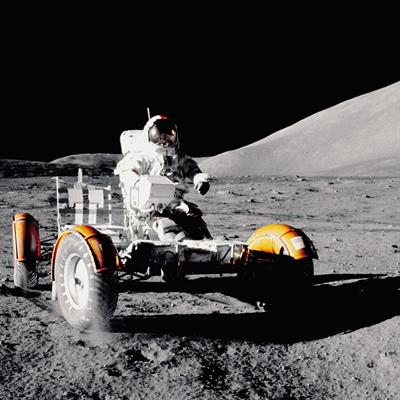
Spaceflight exposes humans to microgravity, radiation, isolation, and circadian disruption, challenging physiological networks that sustain life. Network Physiology in Space: Exploring Physiological Networks during Space Flight for the Benefit of Life on Earth investigates how studying physiological systems interactions as a network, across spatial and temporal scales and levels of integration from the metabolic and genomic networks to cellular signaling and organ systems interactions, reveals insights into adaptation, health, and disease. Using systems biology, omics, and computational modeling, researchers examine how molecular, cellular, and organ networks reorganize to maintain balance in space. Taking these approaches, it may be possible to better understand the mechanisms underpinning adaptations resulting in muscle and bone loss, cardiovascular de-conditioning and immune and neuro-vestibular modulation. The integrative framework of space physiology may also inform new diagnostics and therapies for aging, metabolic, and rehabilitation medicine. Life in space thus serves as a model for resilience and adaptability, advancing both human spaceflight and healthcare innovations on Earth.
This Research Topic highlights space as a living laboratory, advancing understanding of physiological networks and improving human health and performance on Earth. Contributing papers should address one or more of the following aspects and may draw on data from humans and animals in spaceflight, analogue studies (e.g., bed rest, dry immersion, isolation), ground-based facilities (e.g., parabolic flights, artificial gravity experiments), or investigations employing lower body negative pressure (LBNP) or other countermeasures:
1. Molecular and cellular networks: Effects of microgravity, radiation, and isolation on gene expression, epigenetics, proteomics, metabolic and cell signaling pathways and networks
2. Organ and system-level adaptations: Mechanisms of measurable and potentially functionally significant adaptations, including coordination and network associations between muscle deconditioning, bone loss, cardiovascular and respiratory adaptions, immune dysregulation, neuro-vestibular modulation, etc.
3. Methodological Approaches: Systems biology, multi-omics integration, systems synchronization, dynamic and adaptive networks, computational modeling, and biomarker discovery to study network adaptations.
4. Translational applications: Space-inspired diagnostics, therapies and interventions addressing aging, metabolic disorders, neurodegeneration, rehabilitation, and resilience on Earth.
5. Multidisciplinary studies: Integrating physiology and space medicine with bioinformatics, information theory, network science, biomedical engineering, comparative analyses between spaceflight, analog environments, and terrestrial health.
6. Mathematical modeling and artificial intelligence (AI): Mathematical modeling and AI are increasingly central to understanding physiological networks in space environments. Mathematical models capture complex interactions among cardiovascular, musculoskeletal, metabolic, and neural systems, enabling prediction and analysis of systemic responses under microgravity and other space-specific conditions. AI techniques, such as machine learning and network analysis, complement these models by identifying patterns, inferring network dynamics, and uncovering hidden relationships in high-dimensional physiological data.
Development of hybrid quantitative models incorporating both mechanistic modeling and machine learning approaches can allow for expanded use of known data to supplement gaps in current detailed physiological knowledge of system function and control response mechanisms.
Integrating AI with mechanistic models allows the creation of computational physiological networks that can simulate system-wide responses, predict outcomes of interventions, and guide personalized countermeasures. These approaches also support hypothesis testing and design and optimization of control and treatment strategies, informing adaptive protocols for exercise, nutrition, and medical interventions to maintain astronaut health. By combining predictive modeling with data-driven AI, researchers can explore interdependencies among physiological subsystems, anticipate critical changes, and optimize mission planning under resource constraints. This synergy provides a powerful framework for understanding human physiology in extreme environments, enabling safer, more effective, and individualized countermeasures at cellular, organ, and systemic levels during long-duration space missions.
Manuscripts submitted to Frontiers in Network Physiology should include an explanation of how the article is relevant to Network Physiology in the introduction or the discussion of reported new results, and have "Network Physiology" as a keyword.
This Research Topic accepts the following article types, unless otherwise specified in the Research Topic description:
Articles that are accepted for publication by our external editors following rigorous peer review incur a publishing fee charged to Authors, institutions, or funders.
Keywords: Network Physiology, spaceflight, microgravity, analogue environments, multi-omics, modeling, countermeasures, artificial gravity, parabolic flights, bedrest, water immersion, LBNP
Important note: All contributions to this Research Topic must be within the scope of the section and journal to which they are submitted, as defined in their mission statements. Frontiers reserves the right to guide an out-of-scope manuscript to a more suitable section or journal at any stage of peer review.
College of Medicine, Mohamed Bin Rashid University of Medicine and Health Sciences
Dubai, United Arab Emirates
Medical University of Graz
Graz, Austria
European Astronaut Centre (EAC)
Cologne, Germany
Boston University
Boston, United States
Manuscripts can be submitted to this Research Topic via the main journal or any other participating journal.
Submit your idea
You will be redirected to our submission process.
