 Sandra A. Gallegos-Fernández1
 Jorge A. Trujillo-Córdova1
 Vicente Guzmán-Hernández2
 F. Alberto Abreu-Grobois3
 Patricia Huerta-Rodríguez1,4
 Pilar A. Gómez-Ruiz5
 Abigail Uribe-Martínez6
 Eduardo Cuevas7*
- 1Graduate Program in Ecological Restoration, Facultad de Ciencias Naturales, Universidad Autónoma del Carmen, Ciudad del Carmen, Mexico
- 2Consejo Consultivo de Expertos de la Comisión Interamericana para la Protección y Conservación de las Tortugas Marinas, Ciudad del Carmen, Mexico
- 3Instituto de Ciencias del Mary Limnología, Unidad Mazatlán, Universidad Nacional Autónoma de México, Mazatlán, Mexico
- 4Sea Turtle Conservation Program, Área de Protección de Flora y Fauna Laguna de Términos, Comisión Nacional de Áreas Naturales Protegidas, Ciudad del Carmen, Mexico
- 5Unidad de Recursos Naturales, Centro de Investigación Científica de Yucatán, Mérida, Mexico
- 6Instituto de Ingeniería, Unidad Académica Sisal, Universidad Nacional Autónoma de México, Sisal, Mexico
- 7Instituto de Investigaciones Oceanológicas, Universidad Autónoma de Baja California, Ensenada, Mexico
Marine turtles inhabit various coastal and marine ecosystems and play significant ecological roles throughout their life cycles. Because of the significant overlap with other species at risk in their geographic ranges, the successful conservation of marine turtles also protects numerous co-occurring species, a phenomenon known as the “umbrella species effect.” Since several marine turtle populations have shown positive trends, suggesting incipient recovery, it is expected that their umbrella characteristics will coevolve as their populations grow and expand. Recognizing the considerable potential of marine turtles as umbrella species, we advocate for promoting this concept and explicitly integrating it into management and recovery programs. This approach would facilitate concurrent benefits not only for marine turtles but also for other species and their associated habitats. To achieve this goal, we analyzed the conservation status of marine turtles in the Gulf of Mexico and Western Caribbean within the framework of the legal regulations. Additionally, we reviewed the current challenges in marine turtle recovery in the framework of ecological restoration, while also aiming to target and encourage their utilization as umbrella species.
1 Introduction
Given the intensive human extractive activities in our marine and coastal habitats, such as oil industries and fisheries, environmental assessments by regulatory authorities and interested private entities (operating corporations, financing groups, and insurers) require access to reliable information on marine ecosystems (Golf Coast Ecosystem Restoration Task Force, 2012). There are noteworthy examples of multinational and multi-institutional monitoring initiatives (e.g. GEOBON, OBIS-SEAMAP) that provide this necessity (Halpin et al., 2009; Navarro et al., 2017). Endangered and vulnerable indicator species become the focal point of management, conservation, and restoration efforts that promise the highest returns while incurring no losses and yielding net gains for biodiversity and ecosystems (Gilby et al., 2017; Zhang et al., 2020).
Umbrella species are taxa with such an extensive habitat requirements that management and restoration efforts targeted at them are predicted to benefit co-occurring species (Simberloff, 1998). Consequently, conserving these species offers protection to a broad array of co-occurring species (Roberge and Angelstam, 2004), and are valuable to support restoration actions (Mekonnen et al., 2022). These species represent an opportunity to maximize mitigation, compensation, and restoration efforts, promoting the protection and amelioration of habitat quality and viability of other co-occurring species of interest, yielding the greatest benefits to impacted ecosystems.
Endangered marine turtle species, hawksbills (Eretmochelys imbricata), green turtles (Chelonia mydas), loggerheads (Caretta caretta), Kemp’s ridleys (Lepidochelys kempii), and leatherbacks (Dermochelys coriacea), are of significant ecological importance because of their roles on habitat and community maintenance and connectivity, among others, as we describe further (Wallace et al., 2011; Valverde and Holzwart, 2017). They inhabit critical basins, including the Gulf of Mexico (GoM), where extensive extractive activities (oil extraction, fisheries) and other threats (hurricanes, tourism, chemical pollution) are frequent (Aleksa et al., 2018; Hart et al., 2018; Gradzens and Shaver, 2020; Iverson et al., 2020; Uribe-Martínez et al., 2021).
As top predators inhabiting various habitats throughout their life cycles, marine turtles are a recognized natural umbrella species, exerting influence on the structure and function of their ecosystems through both inter and intraspecific interactions (Kalinkat et al., 2017; Hazen et al., 2019). These interactions encompass several aspects, for example, maintenance of strong competitor species on coral reef ecosystems (Goatley et al., 2012), including sponges (León and Bjorndal, 2002); promotion of carbon sequestration in seagrass meadows (Johnson et al., 2020), which is important for mitigating CO2 levels in the environment; contribution to nutrient flow, nesting females enhance nutrient flow between marine and terrestrial ecosystems by introducing organic matter to beaches when they lay their eggs, benefiting dune plant communities (Hannan et al., 2007). Other biological features that confer umbrella species status to marine turtles include their wide geographic distribution which implies a broad utilization of multiple coastal, neritic, and oceanic habitats throughout their lifetimes, long dispersal and migration movements that connect ecosystems (Plotkin, 2003), and all the interactions they engage during their prolonged life histories.
Exposure to natural and anthropogenic disturbances can disrupt their population dynamics and hinder their ability to fulfill their ecosystem functions efficiently (Bjorndal and Bolten, 2003; Gaus et al., 2019). Therefore, efforts to facilitate the recovery of marine turtles and enhance the ecological health of their habitats contribute to management strategies aimed at mitigating significant adverse changes and maintaining the health and resilience of oceans, and are expected to also benefit other key species and ecosystems (Fleishman et al., 2000; Roberge and Angelstam, 2004; Goatley et al., 2012; Bjorndal et al., 2017; Wildermann et al., 2018; Almpanidou et al., 2019; Dickson et al., 2022; Mekonnen et al., 2022).
Recently, Calderon-Aguilera et al. (2021) and Wabnitz et al. (2010) placed marine turtles at the highest levels of the marine trophic webs they assessed, describing several positive and negative interspecific interactions of marine turtles with ecologically and economically important species. The latter supports the fact that marine turtles play a multifaceted role in ecosystem dynamics and functions, and their presence in turn has far-reaching effects on the viability of the ecosystems they inhabit, making them pertinent umbrella species (Eckert and Hemphill, 2005; Hannan et al., 2007; Rousso et al., 2015; Cárdenas and Lew, 2016; Johnson et al., 2020; Mortimer et al., 2021; Scott et al., 2021; Wulf, 2021; Ashford et al., 2022; Guzmán-Hernández et al., 2022; Liceaga-Correa et al., 2022; Li et al., 2023).
From this perspective, it is strategic to formally introduce into management and mitigation discussions how the recovery or restoration efforts of umbrella species, such as marine turtles, contribute to better focus decision-making, restoration, and conservation planning, to maximize the returns on investments. In this context, we summarized and presented some highlights on (i) the legal framework and conservation status of marine turtles in the Gulf of Mexico (GoM) and Western Caribbean, as well as some indicators of their conservation status and how these provide a positive cascading effect onto habitat management, (ii) how marine turtle restoration is taking place, along with some ecological and management implications, and (iii) how appropriate management and restoration actions regarding marine turtles as umbrella species are expected to increase the benefits of public and private investments.
The analysis presented in this article primarily focuses on marine turtle populations in the GoM and Western Caribbean due to the authors’ expertise; however, the analysis of ecological management and the umbrella species approach is applicable to other regions because it is based on their geographic coexistence with other species and their habitats, as well as their intra and interspecific ecological interactions they have, and we will present some examples from other regions.
2 Legal framework and cascading habitat management
The seven marine turtle species are included in the Red List of Threatened Species (three under Vulnerable category, two Critically endangered, one Endangered, and one Data deficient, Table 1) (Seminoff, 2004; Webb, 2008; Mortimer and Donnelly, 2008; Wallace et al., 2013; Casale and Tucker, 2017; Wibbels and Bevan, 2019). In Mexico, marine turtles are protected by the Mexican Official Norm NOM-059-SEMARNAT-2010 (DOF, 2019), which lists all species inhabiting Mexican territory as Endangered.
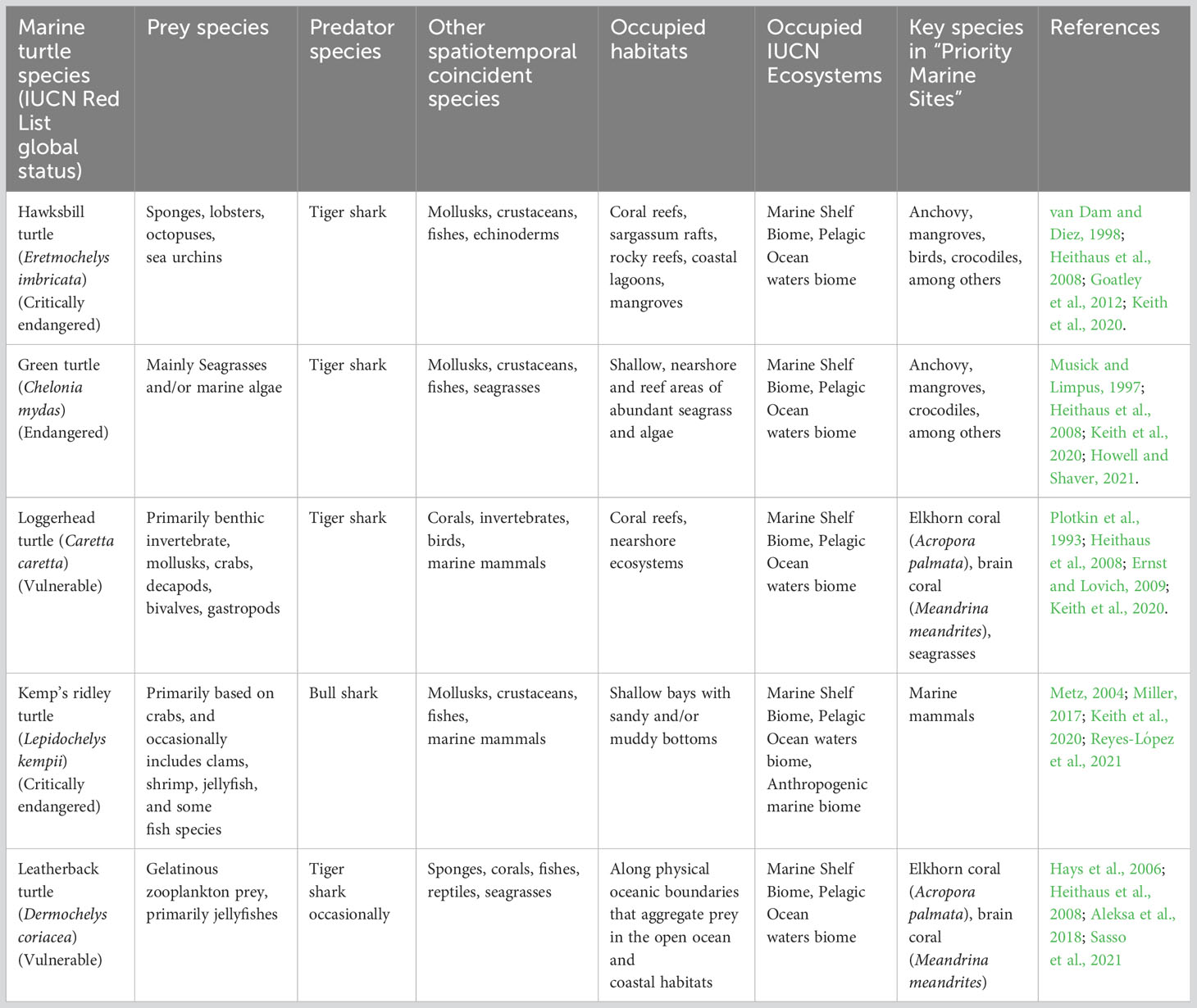
Table 1 Main characteristics for each marine turtle species, as well as the Red List of Ecosystems they occupy and the Priority Marine Sites they inhabit in the southern Gulf of Mexico.
The International Union for Conservation of Nature (IUCN) has also published a Red List of Ecosystems, many of which are inhabited and critical for maintaining the life cycle of marine turtles (Keith et al., 2020) (Table 1). Also, in the southern GoM, in Mexican waters, the National Commission for Biodiversity Knowledge in Mexico (CONABIO, in Spanish) has defined Priority Marine Sites (PMS), which harbor high marine biodiversity under distinct levels of threat (CONABIO et al., 2007). Marine turtles occupy several of those threatened ecosystems listed by IUCN and the PMS (Table 1), interacting with numerous key species (Liceaga-Correa et al., 2022). Any conservation and management action implemented on those sites targeting marine turtles is expected to integrally benefit the ecosystem.
The co-occurrence of marine turtles with other species of ecological (also Endangered) and economic interest (for fisheries and tourism) has been documented, highlighting their relevance as umbrella species for management, conservation, and restoration strategies (Gradzens et al., 2014; Hammerschlag et al., 2015; Hays et al., 2019). Knowing about such interactions helps management planning and restoration actions targeting marine turtles that could benefit other relevant species, making resource investment more effective and efficient. One key interspecific interaction is predation; marine turtle preys (seagrasses, jellyfish, lobsters, octopuses, crabs, and sponges) also have important ecosystem functions, and as they are essential food sources for endangered marine turtles, their management and conservation relevance scale up (Hamann et al., 2010) (Table 1).
Since 1986, 16 sanctuaries on marine turtle nesting beaches in Mexico were designated as natural protected areas (DOF, 2022). These sanctuaries serve as refuges for protecting, conserving, rewilding, developing, and controlling the nesting habitats of marine turtles in Mexico. This designation recognizes that these areas host a significant richness of flora and fauna, including species and habitats with restricted distribution, and encompass topographic units that require protection. Notably, this includes dune vegetation and mangrove communities (also Threatened and protected in Mexico; DOF, 2003; DOF, 2019) because they are vital for the marine turtle life cycle during nesting, foraging, and development stages. Most of those sanctuaries are adjacent to high and very high ecological integrity areas (Figure 1) (CONABIO, 2018), as well as high and extreme restoration priority sites (CONABIO, 2016). These sanctuaries also enforce administrative rules regarding public usage of these areas, primarily permitting only scientific research, conservation efforts, ecological restoration, and low-impact non-extractive activities. These management actions focused on conserving marine turtle populations have legal conservation status with cascading effects benefiting the flora and fauna species that share these habitats with marine turtles, even when marine turtles are not nesting, as the administrative rules persist (Comisión Nacional de Áreas Naturales Protegidas, 2018). Also, given the interactions between marine turtles with dune vegetation and mangroves, specific management actions about connectivity and fluxes are expected to be considered in the conservation programs of those natural protected areas (Comisión Nacional de Áreas Naturales Protegidas, 2018).
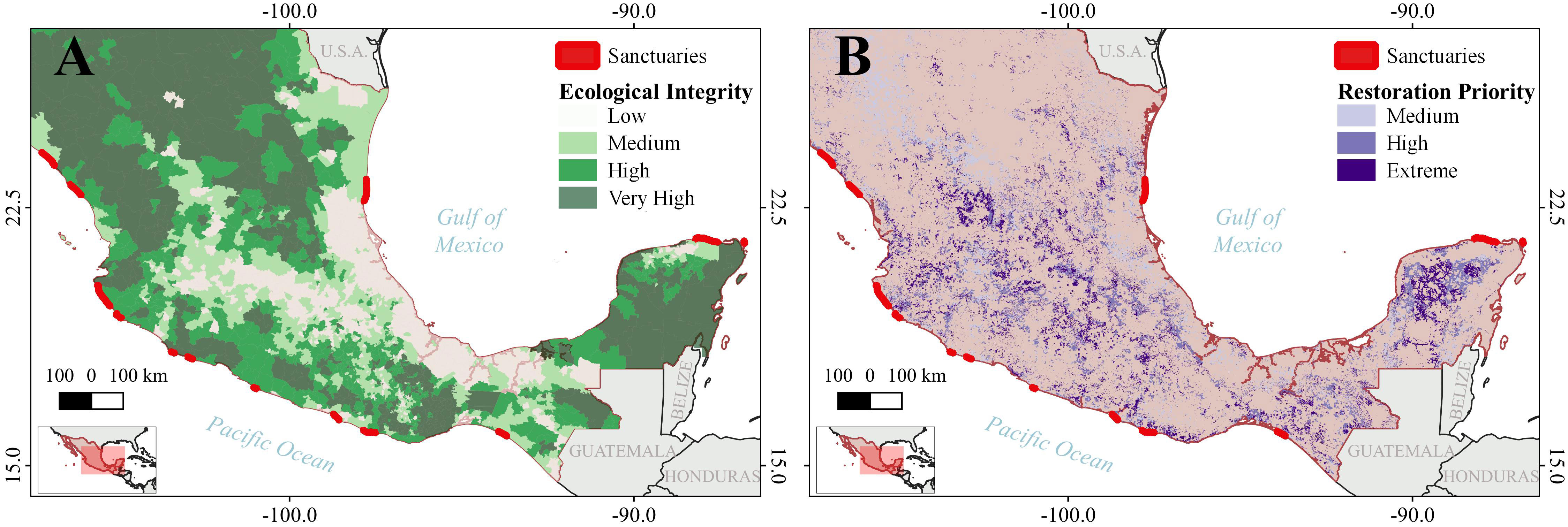
Figure 1 Geographic distribution of the 16 marine turtle sanctuaries in Mexico with conservation status for nesting habitats (Comisión Nacional de Áreas Naturales Protegidas, 2023). Ecological Integrity (A) measures the ecological value of ecosystems, aiming for sustainable development based on a set of ecological features (human impact, self-organization, trophic mobility, and stability) of the species and their habitats (CONABIO, 2018). Restoration priority (B) evaluates the biological value of significant areas and in terms of these results, identifies the extent of required restoration actions that will ensure the persistence of their biodiversity, ecological functions, and ecosystem services in the long term. These evaluations guide Mexico's actions to accomplish Goal 15 of the Aichi Convention (CONABIO, 2016).
Marine turtles have also influenced management and conservation actions for their in-water habitats, such as coral reefs and the extensive Caribbean seascapes they inhabit. Chevis et al. (2017) argued for the implementation of conservation measures on coral reefs in Belize due to the presence of hawksbill turtles, as these turtles significantly impact the ecological integrity of the coral reefs. Additionally, Eckert and Hemphill (2005) emphasized the importance of considering the use of the Caribbean by marine turtles when analyzing management actions in this vast basin. These examples illustrate how these species strongly influence the ecosystems they inhabit.
3 Recovery of marine turtles and some implications
Ecological restoration discipline has scarcely focused on the recovery of fauna populations and their interactions (SER, 2004; McAlpine et al., 2016; Palmer et al., 2016); however, a singular interest in recovering endangered marine species, their critical habitats, and their ecological functions has constantly increased in the last decades (Bayraktarov et al., 2016; UNEP, 2021); acknowledging fauna as a key ecosystem element that facilitates a balanced recovery of ecosystem functions (Volis, 2019). Umbrella species may maximize management and restoration efforts and investments, increasing the likelihood of recovery of many associated species that may be in critical condition.
Marine turtles are an excellent example of umbrella species because they have a top-down cascading influence on populations of other species that share the same habitat. This influence is associated with their cohabitation in areas where other threatened species are present; therefore, the implemented restoration, and management actions amplify their ecosystem benefit. Additionally, a positive influence arise from the ecological functions performed by viable and healthy marine turtle populations, which, in turn, benefit other species by maintaining the habitat where they coexist.
Marine turtles occupy various marine ecosystems throughout their life history, such as lagoons, mangroves, coastal dunes, and oceanic habitats. They play a role in attracting management actions that benefit other species through cohabitation and ecological interactions, facilitating an umbrella cascade effect, and making them strategic target species for an integrated biodiversity management and restoration approach (Bjorndal et al., 2011; Webb, 2012; Oliver et al., 2015; Bayraktarov et al., 2016; DWH NRDA Trustees, 2016; Molinos et al., 2016; Guzmán Hernández et al., 2019; Hays et al., 2019; Open Ocean Trustee Implementation Group, 2019; Frasier et al., 2020; Ashford et al., 2022).
For instance, concerning conservation and restoration policies, the recovery plans for marine turtles in several countries (such as Antigua and Barbuda, Aruba, Mexico, Panama, Trinidad and Tobago, to name a few) emphasize the need to protect and restore dune vegetation communities, mangroves, coral and rocky reefs, seagrasses, and sandy beaches (Fuller et al., 1992; Barmes et al., 1993; Ruiz et al., 2007; WIDECAST, 2010; SEMARNAT, 2018a; SEMARNAT, 2018b; SEMARNAT, 2018c; SEMARNAT, 2018d; SEMARNAT, 2020). These plans also aim to strengthen the economic resilience of coastal communities to improve their welfare and facilitate the understanding and conservation of marine turtle species. These solutions were established in those public policy instruments under the influence of the marine turtle umbrella effect due to their interactions with socio-environmental components and their cohabitation.
Successful marine turtle restoration programs have also been documented (Mazaris et al., 2017; Godley et al., 2020), and one of the species with outstanding results is C. mydas, with some examples of effective population recovery in the Gulf of Mexico (Fuentes et al., 2013; Piacenza et al., 2016; López-Castro et al., 2022; Del Monte-Luna et al., 2023). C. mydas, considered an umbrella species, has led to the discovery of previously unknown seagrass meadows (Hays et al., 2018) and highlights the positive interactions between turtles and seagrasses (Christianen et al., 2011; Atwood et al., 2015; Johnson et al., 2020), as well as the connectivity benefits provided by green turtles for seagrass meadows (Patrício et al., 2022). However, this success also poses new challenges for lower trophic communities, and a potential imbalance in restoration actions could lead to significant ecological impacts as rapid green turtle populations recovery is impacting the viability of some seagrass meadows because of the higher foraging intensity on them (Murdoch et al., 2007; Fourqurean et al., 2010; Heithaus et al., 2014; Molina-Hernández and van Tussenbroek, 2014; Ramesh et al., 2018; Esteban et al., 2020; Christianen et al., 2021; Gulick et al., 2022).
As we implement robust, synchronized monitoring strategies for the different populations’ vital signs and the performance of management actions (Halpern et al., 2008; Love et al., 2017) for marine turtles and other species, we will gain more robust empirical understanding of how the umbrella species effect operates. Meanwhile, significant baseline knowledge regarding the spatiotemporal distribution of marine turtles has been established, particularly in the Gulf of Mexico, over the past 15 years (e.g., Cuevas et al., 2008; Girardt et al., 2009; Shaver et al., 2013; Cuevas et al., 2020; Gradzens and Shaver, 2020; Hart et al., 2020; Iverson et al., 2020; Evans et al., 2021; Cuevas et al., 2022).
Marine turtles’ populations recovery will make their intra and interspecific interactions more intense and extended, reaching levels and spaces that we may not have been previously recorded. The later examples show how the recovery of an umbrella species provokes benefits (protect blue carbon stocks, fertilize vegetal communities) and impacts on communities associated with habitats that marine turtles occupy (may degrade seagrass resilience and viability). These cases may be understood as ecological cascades (Polis et al., 1997) implied by the umbrella effect of marine turtles.
4 Discussion
The need to integrate fauna recovery actions has become more evident as they drive vital ecological processes and functions (Cristescu et al., 2013), and are fundamental for ecosystems’ stability and health (see Hannan et al., 2007; and Guzmán-Hernández et al., 2022 for a discussion). Fauna species are crucial elements for ecosystem restoration, particularly those classified as umbrella species, as they strongly contribute to the recovery of associated species and ecosystem functionality. This represents a significant challenge that requires important efforts and investment (Cross et al., 2020) to promote the recovery of the composition, structure, and functions of habitats based on previous conditions before degradation or a specific reference time to realize the optimal dynamics of ecosystems.
Nevertheless, it may still be controversial whether an umbrella species can effectively promote the conservation of associated species (Caro and O’Doherty, 1999). Andelman and Fagan (2000) and Roberge and Angelstam (2004) emphasized the need for deeper empirical assessments demonstrating the benefits of adopting the umbrella species approach. We acknowledge the need for generating further examples of the umbrella effect afforded by the conservation efforts on marine turtles, and admit that there have been cases where biased restoration actions may have disrupted ecological interactions in some ecosystems. Nevertheless, we have presented robust examples that illustrate how management, conservation, and restoration actions targeting the recovery of marine turtle populations benefit other flora and fauna species and human communities due to the interspecific linkages that marine turtles establish. We believe that sufficient empirical knowledge supports the management approach based on marine turtles as umbrella species, as recognized and implemented in public policy instruments in several countries.
In this regard, it is undeniable that high trophic level species influence numerous lower ecological interactions among species that are directly and indirectly associated with umbrella species, such as marine turtles. Therefore, an approach based on marine turtles opens a window of opportunity to contribute to a better understanding (Zacharias and Roff, 2001) and implementing management, conservation, and restoration actions that also benefit other coastal (dune vegetation, mangroves) and marine species (corals, seagrasses, nesting marine birds). Furthermore, they have the potential to serve as indicators of marine conservation issues, thereby promoting the protection of critically important areas (Eckert and Hemphill, 2005; Frazier, 2005).
Management, including conservation and restoration actions are context-dependent processes. We do not imply that all the successful actions to restore marine turtle populations will be equally effective for all the species they interact with, but they can establish a fertile context for facilitating the implementation of other actions. The umbrella species approach is expected to broaden the benefits of actions, and when accompanied by specific restoration actions directed at other key ecosystem components, it can synergistically enhance their recovery. Public policy instruments (recovery plans) are already implicitly operationalizing the umbrella property of marine turtles, as they promote benefits to other flora and fauna species. They exemplify how regulatory authorities and interested private entities (such as operating corporations, financing groups, and insurers) may direct investments from mitigation, compensation, and Biodiversity Action Plans (IFC, 2019) to maximize regional socio-environmental benefits.
Finally, questions about the restoration approach for marine fauna species, including marine turtles, remain as knowledge gaps. What reference condition should be used to set the restoration goal for a population? Do our ecosystems have the capacity to sustain recovered populations at the expected level? How can we balance and link management actions to integrally attend to species and their critical habitats? While we have important advances in ecological knowledge on key ecological and economic interest species, there are still planning tasks in terms of integrally attending to the conservation and restoration needs of species and their habitats. This includes an adaptive model that permits the modulation of actions as the ecosystem components respond to management so we can foster a balanced recovery of the entire ecosystem.
Author contributions
SG-F: Conceptualization, Data curation, Formal Analysis, Investigation, Writing – original draft. JT-C: Conceptualization, Data curation, Formal Analysis, Investigation, Writing – original draft. VG-H: Conceptualization, Supervision, Validation, Writing – original draft. FA-G: Conceptualization, Supervision, Validation, Writing – review & editing. PH-R: Data curation, Formal Analysis, Investigation, Writing – review & editing. PG-R: Supervision, Validation, Writing – review & editing. AU-M: Conceptualization, Project administration, Supervision, Writing – review & editing. EC: Conceptualization, Formal Analysis, Investigation, Methodology, Project administration, Writing – original draft.
Funding
The author(s) declare financial support was received for the research, authorship, and/or publication of this article. This research did not receive any specific grant from funding agencies in the public, commercial, or not-for-profit sectors. The APC cost was paid by the General Coordination of Research and Graduate studies in the Universidad Autónoma de Baja California, Project #UABC 403/841/E.
Acknowledgments
We thank Editage, a brand of Cactus communications, for language and grammar editing services.
Conflict of interest
The authors declare that the research was conducted in the absence of any commercial or financial relationships that could be construed as a potential conflict of interest.
Publisher’s note
All claims expressed in this article are solely those of the authors and do not necessarily represent those of their affiliated organizations, or those of the publisher, the editors and the reviewers. Any product that may be evaluated in this article, or claim that may be made by its manufacturer, is not guaranteed or endorsed by the publisher.
References
Aleksa K. T., Sasso C. R., Nero R. W., Evans D. R. (2018). Movements of leatherback turtles (Dermochelys coriacea) in the Gulf of Mexico. Mar. Biol. 165 (10), 1–13. doi: 10.1007/s00227-018-3417-9
Almpanidou V., Markantonatou V., Mazaris A. D. (2019). Thermal heterogeneity along the migration corridors of sea turtles: Implications for climate change ecology. J. Exp. Mar. Biol. Eco. 520, 151223. doi: 10.1016/j.jembe.2019.151223
Andelman S. J., Fagan W. F. (2000). Umbrellas and flagships: efficient conservation surrogates or expensive mistakes? PNAS 97 (11), 5954–5959. doi: 10.1073/pnas.100126797
Ashford M., Watling J. I., Hart K. (2022). One shell of a problem: cumulative threat analysis of male sea turtles indicates high anthropogenic threat for migratory individuals and gulf of Mexico residents. J. Remote Sens. 14, 3887. doi: 10.3390/rs14163887
Atwood T. B., Connolly R. M., Ritchie E. G., Lovelock C. E., Heithaus M. R., Hays G. C., et al. (2015). Predators help protect carbon stocks in blue carbon ecosystems. Nat. Clim. Change 5, 1038–10-45. doi: 10.1038/NCLIMATE2763
Barmes T., Eckert K. L., Sybesma J. (1993)WIDECAST Sea Turtle Recovery Action Plan for Aruba. In: CEP Technical Report No. 25 (UNEP Caribbean Environment Programme). Available at: https://www.widecast.org/Resources/Docs/STRAP_Aruba_1993.pdf (Accessed November 1, 2023).
Bayraktarov E., Saunders M. I., Abdullah S., Mills M., Beher J., Possingham H. P., et al. (2016). The cost and feasibility of marine coastal restoration. Ecol. Appl. 26 (4), 1055–1074. doi: 10.1890/15-1077
Bjorndal K. A., Bolten A. B. (2003). From ghosts to key species: restoring sea turtle populations to fulfill their ecological roles. Mar. Turtle. Newslett. 100 (100), 16–21. Available at: http://www.seaturtle.org/mtn/archives/mtn100/mtn100p16.shtml.
Bjorndal K. A., Bolten A. B., Chaloupka M., Saba V. S., Bellini C., Marcovaldi M. A., et al. (2017). Ecological regime shift drives declining growth rates of sea turtles throughout the West Atlantic. Glob. Change Biol. 23 (11), 4556–4568. doi: 10.1111/gcb.13712
Bjorndal K. A., Bowen B. W., Chaloupka M., Crowder L. B., Heppell S. S., Jones C. M., et al. (2011). Better science needed for restoration in the Gulf of Mexico. Science 331 (6017), 537–538. doi: 10.1126/science.1199935
Calderon-Aguilera L. E., Reyes-Bonilla H., Olán-González M., Castañeda-Rivero F. R., Perusquía-Ardón J. C. (2021). Estimated flows and biomass in a no-take coral reef from the eastern tropical Pacific through network analysis. Ecol. Indic. 123 (2021), 107359. doi: 10.1016/j.ecolind.2021.107359
Cárdenas S. A., Lew D. K. (2016). Factors Influencing willingness to donate to marine endangered species recovery in the Galapagos National Park, Ecuador. Front. Mar.Sci 3. doi: 10.3389/fmars.2016.00060
Caro T. M., O’Doherty G. (1999). On the use of surrogate species in conservation biology. Conserv. Biol. 13 (4), 805–814. doi: 10.1046/j.1523-1739.1999.98338.x
Casale P., Tucker A. D. (2017). Caretta caretta (amended version of 2015 assessment). The IUCN Red List of Threatened Species 2017: e.T3897A119333622. doi: 10.2305/IUCN.UK.2017-2.RLTS.T3897A119333622.en (Accessed November 1, 2023).
Chevis M. G., Godley B. J., Lewis J. P., Lewis J. J., Scales K. L., Graham R. T. (2017). Movement patterns of juvenile hawksbill turtles Eretmochelys imbricata at a Caribbean coral atoll: Long-term tracking using passive acoustic telemetry. Endang. Species. Res. 32, 309–319. doi: 10.3354/esr00812
Christianen M. J. A., Govers L. L., Bouma T. J., Kiswara W., Roelofs J. G. M., Lamers L. P. M., et al. (2011). Marine megaherbivore grazing may increase seagrass tolerance to high nutrient loads. J. Ecol. 100 (2), 546–560. doi: 10.1111/j.1365-2745.2011.01900.x
Christianen M. J. A., van Katwijk M. M., van Tussenbroek B. I., Pagès J. F., Ballorain K., Kelkar N., et al. (2021). A dynamic view of seagrass meadows in the wake of successful green turtle conservation. Nat. Ecol. Evol. 5, 553–555. doi: 10.1038/s41559-021-01433-z
Comisión Nacional de Áreas Naturales Protegidas (2018) Estudio Previo Justificativo para la modificación de la declaratoria de Santuarios de Playas Tortugueras (Mexico City, Mexico: SEMARNAT). Available at: https://www.conanp.gob.mx/anp/consulta/EPJ%20santuarios%20Platas%20Tortugueras%20Aviso.pdf (Accessed November 1, 2023).
Comisión Nacional de Áreas Naturales Protegidas (2023) Información Espacial de las Áreas Naturales Protegidas (Mexico City, Mexico: SEMARNAT). Available at: http://sig.conanp.gob.mx/website/pagsig/info_shape.htm (Accessed November 1, 2023).
CONABIO (2016) Sitios prioritarios para la restauración, escala: 1:1 000000 (Mexico City, Mexico: Comisión Nacional para el Conocimiento y Uso de la Biodiversidad. México). Available at: http://www.conabio.gob.mx/informacion/metadata/gis/spr_gw.xml?_httpcache=yes&_xsl=/db/metadata/xsl/fgdc_html.xsl&_indent=no (Accessed November 1, 2023).
CONABIO (2018) Índice de integridad ecológica (IIE) por municipios, escala: 1:250000 (Mexico City, Mexico: Comisión Nacional para el Conocimiento y Uso de la Biodiversidad). Available at: http://www.conabio.gob.mx/informacion/metadata/gis/iiemgw.xml?_httpcache=yes&_xsl=/db/metadata/xsl/fgdc_html.xsl&_indent=no (Accessed November 1, 2023).
CONABIO, CONANP, TNC, PRONATURA, FCF, UANL (2007). Análisis de vacíos y omisiones en conservación de la biodiversidad marina de México: océanos, costas e islas (Mexico City: Comisión Nacional para el Conocimiento y Uso de la Biodiversidad, Comisión Nacional de Áreas Naturales Protegidas, The Nature Conservancy-Programa México, Pronatura, A.C., Facultad de Ciencias Forestales, Universidad Autónoma de Nuevo León).
Cristescu R. H., Rhodes J., Frére C., Banks P. B. (2013). Is restoring flora the same as restoring fauna? Lessons learned from koalas and mining rehabilitation. J. Appl. Ecol. 50 (2), 423–431. doi: 10.1111/1365-2664.12046
Cross S. L., Bateman P. W., Cross A. T. (2020). Restoration goals: Why are fauna still overlooked in the process of recovering functioning ecosystems and what can be done about it? Ecol. Manage. Restor. 21 (1), 4–8. doi: 10.1111/emr.12393
Cuevas E., Abreu-Grobois F. A., Guzmán-Hernández V., Liceaga-Correa M. A., van Dam R. P. (2008). Post-nesting migratory movements of hawksbill turtles (Eretmochelys imbricata) around the Yucatan Peninsula, Mexico. Endang. Spec. Res. 10, 123–133. doi: 10.3354/esr00128
Cuevas E., Liceaga-Correa M. A., Uribe-Martínez A., Gallegos-Fernández S. A., Moncada-Gavilán F., González-Díaz-Mirón R. J., et al. (2022). Marine turtle hotspots in the Gulf of Mexico and Mesoamerican Reef: Strengthening management and preparedness. Front. Mar. Sci. 9. doi: 10.3389/fmars.2022.1059678
Cuevas E., Putman N. F., Uribe-Martínez A., López-Castro M. C., Guzmán-Hernández V., Gallegos-Fernández S. A., et al. (2020). First spatial distribution analysis of male sea turtles in the southern Gulf of Mexico. Front. Mar. Sci. 7. doi: 10.3389/fmars.2020.561846
Del Monte-Luna P., Nakamura M., Guzmán-Hernández V., Cuevas E., López-Castro M., Arreguín-Sánchez F. (2023). Time-varying stock-recruitment model for estimating population characteristics: An application to the green turtle. Sci. Rep. 13, 1542. doi: 10.1038/s41598-023-28574-4
Dickson L. C. D., Negus S. R. B., Eizaguirre C., Katselidis K., Schofield G. (2022). Aerial drone survey reveals the efficacy of a protected area network for marine megafauna and the value of sea turtles as umbrella species. Drones 6, 291. doi: 10.3390/drones6100291
DOF. (2003). NORMA Oficial Mexicana NOM-022-SEMARNAT-2003, Que establece las especificaciones para la preservación, conservación, aprovechamiento sustentable y restauración de los humedales costeros en zonas de manglar, publicada el 10 de abril de 2003. Diario Oficial de la Federación. Available at: https://dof.gob.mx/nota_detalle.php?codigo=697013&fecha=10/04/2003#gsc.tab=0 (Accessed November 1, 2023).
DOF. (2019). Modificación del Anexo Normativo III, Lista de especies en riesgo de la Norma Oficial Mexicana NOM-059-SEMARNAT-2010, Protección ambiental. Especies nativas de México de flora y fauna silvestres. Categorías de riesgo y especificaciones para su inclusión, exclusión o cambio. Lista de especies en riesgo, publicada el 30 de diciembre de 2010. Diario Oficial de la Federación. Available at: https://www.dof.gob.mx/nota_detalle.php?codigo=5578808&fecha=14/11/2019 (Accessed September 16, 2023).
DOF. (2022). Decreto que reforma, deroga y adiciona diversas disposiciones del Decreto por el que se determinan como zonas de reserva y sitios de refugio para la protección, conservación, repoblación, desarrollo y control, de las diversas especies de tortuga marina, los lugares en que anida y desova dicha especie, publicado el 29 de octubre de 1986, para establecer las previsiones acordes a los santuarios de tortugas marinas. Diario Oficial de la Federación. Available at: https://www.dof.gob.mx/nota_detalle.php?codigo=5675485&fecha=24/12/2022#gsc.tab=0 (Accessed September 16, 2023).
DWH NRDA Trustees. (2016). Deepwater Horizon oil spill: Final Programmatic Damage Assessment and Restoration Plan and Final Programmatic Environmental Impact Statement. Deepwater Horizon Natural Resource Damage Assessment Trustees. Available at: http://www.gulfspillrestoration.noaa.gov/restoration-planning/gulf-plan (Accessed September 16, 2023).
Eckert K. L., Hemphill A. H. (2005). Sea turtles as flagships for protection of the wider Caribbean region. Marit. Stud. 3 (2), 4. Available at: https://www.dcbd.nl/sites/default/files/documents/Sea%20Turtles%20as%20Flagships%20for%20Protection%20of%20the%20Wider%20Caribbean%20Region%20.pdf.
Esteban N., Mortimer J. A., Stokes H. J., Laloë J. O., Unsworth R. K. F., Hays G. C. (2020). A global review of green turtle diet: sea surface temperature as a potential driver of omnivory levels. Mar. Biol. 167, 183. doi: 10.1007/s00227-020-03786-8
Evans A., Valveree R. A., Ordoñez C., Carthy R. R. (2021). Identification of the Gulf of Mexico as an important high-use habitat for leatherback turtles from Central America. Ecosphere 12 (8), e03722. doi: 10.1002/ecs2.3722
Fleishman E., Murphy D. D., Brussard P. F. (2000). A new method for selection of umbrella species for conservation planning. Ecol. Appl. 10 (2), 569–579. doi: 10.1890/1051-0761(2000)010[0569:ANMFSO]2.0.CO;2
Fourqurean J. W., Manuel S., Coates K. A., Kenworthy W. J., Smith S. R. (2010). Effects of excluding sea turtle herbivores from a seagrass bed: overgrazing may have led to loss of seagrass meadows in Bermuda. Mar. Ecol. Prog. Ser. 419, 223–232. doi: 10.3354/meps08853
Frasier K. E., Solsona-Berga A., Stokes L., Hildebrand J. A. (2020). “Impacts of the Deepwater Horizon Oil Spill on Marine Mammals and Sea Turtles,” in Deep Oil Spills. Eds. Murawski S. A., Ainsworth C. H., Gilbert S., Hollander D. J., Paris C. B., Schlüter M., Wetzel D. L. (Cham: Springer), 431–462. doi: 10.1007/978-3-030-11605-7_26
Frazier J. G. (2005). Marine turtles: the role of flagship species in interactions between people and the sea. Mast 3 (2), 5–38. Available at: https://www.marecentre.nl/mast/documents/Mast-2004p.5-38.pdf.
Fuentes M. M., Pike D. A., Dimatteo A., Wallace B. P. (2013). Resilience of marine turtle regional management units to climate change. Glob. Change Biol. 19 (5), 1399–1406. doi: 10.1111/gcb.12138
Fuller J. E., Eckert K. L., Richardson J. I. (1992)WIDECAST Sea Turtle Recovery Action Plan for Antigua and Barbuda. In: CEP Technical Report No. 16 (UNEP Caribbean Environment Programme). Available at: https://www.widecast.org/Resources/Docs/STRAP_Antigua_Barbuda_1992.pdf (Accessed November 1, 2023).
Gaus C., Villa C. A., Dogruer G., Heffernan A., Vijayasarathy S., Lin C. Y., et al. (2019). Evaluating internal exposure of sea turtles as model species for identifying regional chemical threats in nearshore habitats of the Great Barrier Reef. Sci. Total. Environ. 658, 732–743. doi: 10.1016/j.scitotenv.2018.10.257
Gilby B. L., Olds A. D., Connolly R. M., Yabsley N. A., Maxwell P. S., Tibbetts I. R., et al. (2017). Umbrellas can work under water: Using threatened species as indicator and management surrogates can improve coastal conservation. Estuar. Coast. Shelf. Sci. 199, 132–140. doi: 10.1016/j.ecss.2017.10.003
Girardt C., Tucker A. D., Calmettes B. (2009). Post-nesting migrations of loggerhead sea turtles in the Gulf of Mexico: dispersal in highly dynamic conditions. Mar. Biol. 156, 1827–1839. doi: 10.1007/s00227-009-1216-z
Goatley C. H., Hoey A. S., Bellwood D. R. (2012). The role of turtles as coral reef macro herbivores. PloS One 7 (6), e39979. doi: 10.1371/journal.pone.0039979
Godley B. J., Broderick A. C., Colman L. P., Formia A., Godfrey M. H., Hamann H., et al. (2020). Reflections on sea turtle conservation. Oryx 54 (3), 287–289. doi: 10.1017/S0030605320000162
Golf Coast Ecosystem Restoration Task Force. (2012). Estrategia para la Restauración del Ecosistema Regional del Golfo de México.| US EPA Archive Document (Environmental Protection Agency). Available at: https://policycommons.net/artifacts/2395084/estrategia-para-la-restauracion-del-ecosistema-regional-del-golfo-de-Mexico-us-epa-archive-document/3416612/ (Accessed September 16, 2023). CID: 20.500.12592/5v60kf.
Gradzens C., Marsh H., Fuentes M. M. P. B., Limpus C. J., Shimada T., Hamann M. (2014). Satellite tracking of sympatric marine megafauna can inform the biological basis for species co-management. PloS One 9 (6), e98944. doi: 10.1371/journal.pone.0098944
Gradzens C., Shaver D. J. (2020). Satellite tracking can inform population-level dispersal to foraging grounds of post-nesting Kemp’s ridley sea turtles. Front. Mar. Sci. 7. doi: 10.3389/fmars.2020.00559
Gulick A. G., Johnson R. A., Palma L. A., Kusel A. M., Pollock C. G., Hillis-Starr Z., et al. (2022). An underwater Serengeti: Seagrass-mediated effects on intake and cultivation grazing behavior of a marine megaherbivore. Ecosphere 13 (11), e4259. doi: 10.1002/ecs2.4259
Guzmán-Hernández V., del Monte-Luna P., López-Castro M. C., Uribe-Martínez A., Huerta-Rodríguez P., Gallegos-Fernández S. A., et al. (2022). Recuperación de poblaciones de tortuga verde y sus interacciones con la duna costera como línea base para una restauración ecológica integral. Acta Bot. Mex. 129, e1954. doi: 10.21829/abm129.2022.1954
Guzmán Hernández V., García-Alvarado P., Cuevas E. (2019). “34 años de registros de tortugas lora (Lepidochelys kempii) en el sureste del Golfo de México,” in El uso del conocimiento de las tortugas marinas para la restauración de sus poblaciones y hábitats asociados. Eds. Cuevas Flores E., Guzmán-Hernández V., Guerra-Santos J. J., Rivas-Hernández G. (México. (Cd. del Carmen: Universidad Autónoma del Carmen), 121–123.
Halpern B. S., Walbridge S., Selkoe K. A., Kappel C. V., Micheli F., D’Agrosa C., et al. (2008). A global map of human impact on marine ecosystems. Science 319 (5865), 948–952. doi: 10.1126/science.114934
Halpin P. N., Read A. J., Fujioka E., Best B. D., Donnelly B., Hazen L. J., et al. (2009). OBIS-SEAMAP: The world data center for marine mammal, sea bird, and sea turtle distributions. Oceanography 22 (2), 104–115. doi: 10.5670/oceanog.2009.42
Hamann M., Godfrey M. H., Seminoff J. A., Arthur K., Barata P. C. R., Bjorndal K. A., et al. (2010). Global research priorities for sea turtles: informing management and conservation in the 21st century. Endang. Spec. Res. 11 (3), 245–269. doi: 10.3354/esr00279
Hammerschlag N., Broderick A. C., Coker J. W., Coyne M. S., Dodd M., Frick M. G., et al. (2015). Evaluating the landscape of fear between apex predatory sharks and mobile sea turtles across a large dynamic seascape. Ecology 96 (8), 2117–2126. doi: 10.1890/14-2113.1
Hannan L. B., Roth J. D., Ehrhart L., Weishampel J. F. (2007). Dune vegetation fertilization by nesting sea turtles. Ecology 88 (4), 1053–1058. doi: 10.1890/06-0629
Hart K. M., Iverson A. R., Fujisaki I., Lamont M. M., Bucklin D., Shaver D. J. (2018). Marine threats overlap key foraging habitat for two imperiled sea turtle species in the gulf of Mexico. Front. Mar. Sci. 5. doi: 10.3389/fmars.2018.00336
Hart K. M., Lamont M. M., Iverson A. R., Smith B. J. (2020). The importance of the northeastern gulf of Mexico to foraging loggerhead sea turtles. Front. Mar. Sci. 7. doi: 10.3389/fmars.2020.00330
Hays G. C., Alcoverro T., Christianen M. J. A., Duarte C. M., Hamann M., Macreadie P. I., et al. (2018). New tools to identify the location of seagrass meadows: Marine grazers as habitat indicators. Front. Mar. Sci. 5. doi: 10.3389/fmars.2018.00009
Hays G. C., Bailey H., Bograd S. J., Bowen W. D., Campagna C., Carmichael R. H., et al. (2019). Translating marine animal tracking data into conservation policy and management. Trends Ecol. Evol. 34, 459–473. doi: 10.1016/j.tree.2019.01.009
Hays G. C., Hobson V. J., Metcalfe J. D., Righton D., Sims D. W. (2006). Flexible foraging movements of leatherback turtles across the North Atlantic Ocean. Ecology 87 (10), 2647–2656. doi: 10.1890/0012-9658(2006)87[2647:FFMOLT]2.0.CO;2
Hazen E. L., Abrahms B., Brodie S., Carroll G., Jacox M. G., Savoca M. S., et al. (2019). Marine top predators as climate and ecosystem sentinels. Front. Ecol. Environ. 17 (10), 565–574. doi: 10.1002/fee.2125
Heithaus M. R., Alcoverro T., Arthur R., Burkholder D. A., Coates K. A., Christianen M. J. A., et al. (2014). Seagrasses in the age of sea turtle conservation and shark overfishing. Front. Mar. Sci. 1. doi: 10.3389/fmars.2014.00028
Heithaus M. R., Wirsing A. J., Thomson J. A., Burkholder D. A. (2008). A review of lethal and non-lethal effects of predators on adult marine turtles. J. Exp. Mar. Biol. 356 (1-2), 43–51. doi: 10.1016/j.jembe.2007.12.013
Howell L. N., Shaver D. J. (2021). Foraging habits of green sea turtles (Chelonia mydas) in the Northwestern Gulf of Mexico. Front. Mar. Sci. 8. doi: 10.3389/fmars.2021.658368
IFC (2019) International Finance Corporation’s Guidance Note 6: Biodiversity Conservation and Sustainable Management of Living Natural Resources (World Bank Group). Available at: https://www.ifc.org/content/dam/ifc/doc/2010/20190627-ifc-ps-guidance-note-6-en.pdf (Accessed November 1, 2023).
Iverson A. R., Benscoter A. M., Fujisaki I., Lamont M. M., Hart K. M. (2020). Migration corridors and threats in the Gulf of Mexico and Florida Straits for Loggerhead Sea turtles. Front. Mar. Sci. 7. doi: 10.3389/fmars.2020.00208
Johnson R. A., Gulick A. G., Constant N., Bolten A. B., Smulders F. O. H., Christianen M. J. A., et al. (2020). Seagrass ecosystem metabolic carbon capture in response to green turtle grazing across Caribbean meadows. J. Ecol. 108 (3), 1101–1114. doi: 10.1111/1365-2745.13306
Kalinkat G., Cabral J. S., Darwall W., Ficetota F., Fisher J. L., Giling D. P., et al. (2017). Flagship umbrella species needed for the conservation of overlooked aquatic biodiversity. Cons. Biol. 31 (2), 481–485. doi: 10.1111/cobi.12813
Keith D. A., Ferrer-Paris J. R., Nicholson E., Bishop M. J., Polidoro B. A., Ramirez-Llodra E., et al. (2020). Indicative distribution maps for Ecological Functional Groups-Level 3 of IUCN Global Ecosystem Typology. doi: 10.5281/zenodo.3949428 (Accessed November 1, 2023).
León Y. M., Bjorndal K. A. (2002). Selective feeding in the hawksbill turtle, an important predator in coral reef ecosystems. Mar. Ecol. Prog. Ser. 245, 249–258. doi: 10.3354/meps245249
Li M., Zhang T., Liu Y., Li Y., Fong J. J., Yu Y., et al. (2023). Revisiting the genetic diversity and population structure of the endangered Green Sea Turtle (Chelonia mydas) breeding populations in the Xisha (Paracel) Islands, South China Sea. PeerJ 11, e15115. doi: 10.7717/peerj.15115
Liceaga-Correa M. A., Uribe-Martínez A., Cuevas E. (2022). Ecological vulnerability of adult female marine turtles as indicators of opportunities for regional socioecosystem management in the southern gulf of Mexico. Sustainability 14, 184. doi: 10.3390/su14010184
López-Castro M. C., Cuevas E., Guzmán-Hernández V., Raymundo-Sánchez A., Martínez-Portugal R. C., Lira-Reyes D., et al. (2022). Trends in reproductive indicators of green and hawksbill sea turtles over a 30-year monitoring period in the Southern Gulf of Mexico and their conservation implications. Animals 12, 3280. doi: 10.3390/ani12233280
Love M., Robbins C., Baldera A., Eastman S., Bolton A., Hardy R., et al. (2017). Restoration without borders: An assessment of cumulative stressors to guide large-scale, integrated restoration of sea turtles in the Gulf of Mexico. (Ocean Conservancy). St. PEtersburg. Available at: https://oceanconservancy.org/wp-content/uploads/2017/10/Restoration_Without_Borders.pdf (Accessed November 1, 2023).
Mazaris A. D., Schofield G., Gkazinou C., Almpanidou V., Hays G. C. (2017). Global sea turtle conservation success. Sci. Adv. 3 (9), e1600730. doi: 10.1126/sciadv.1600730
McAlpine C., Catterall C. P., Nally R. M., Lindenmayer D., Reid J. L., Holl K. D., et al. (2016). Integrating plant-and animal-based perspectives for more effective restoration of biodiversity. Front. Ecol. Environ. 14 (1), 37–45. doi: 10.1002/16-0108.1
Mekonnen A., Fashing P. J., Chapman C. A., Venkataraman V. V., Stenseth N. C. (2022). The value of flagship and umbrella species for restoration and sustainable development: Bale monkeys and bamboo forest in Ethiopia. J. Nat. Conserv. 65, 126117. doi: 10.1016/j.jnc.2021.126117
Metz T. L. (2004) Factors influencing Kemp’s ridley sea turtle (Lepidochelys kempii) distribution in nearshore waters and implications for management (Texas A&M University Thesis). Available at: https://oaktrust.library.tamu.edu/handle/1969.1/1247 (Accessed September 16, 2023).
Miller J. D. (2017). “Reproduction in sea turtles,” in The biology of sea turtles, vol. Vol.1 . Eds. Lutz P. L., Musick J. A. (Boca Raton, FL: CRC Press), 51–81.
Molina-Hernández A. L., van Tussenbroek B. I. (2014). Patch dynamics and species shifts in seagrass communities under moderate and high grazing pressure by green sea turtles. Mar. Ecol. Prog. Ser. 517, 143–157. doi: 10.3354/meps11068
Molinos J. G., Halpern B. S., Schoeman D. S., Brown C. J., Kiessling W., Moore P. J., et al. (2016). Climate velocity and the future global redistribution of marine biodiversity. Nat. Clim. Change 6, 83–88. doi: 10.1038/nclimate2769
Mortimer J. A., Donnelly M. (2008). Eretmochelys imbricata. The IUCN red list of threatened species 112. doi: 10.2305/IUCN.UK.2008.RLTS.T8005A12881238.en
Mortimer C., Dunn M., Haris A., Jompa J., Bell J. (2021). Estimates of sponge consumption rates on an Indo-Pacific reef. Mar. Ecol. Prog. Ser. 672, 123–140. doi: 10.3354/meps13786
Murdoch T. J. T., Glasspool A. F., Outerbridge M., Ward J., Manuel S., Gray J., et al. (2007). Large-scale decline in offshore seagrass meadows in Bermuda. Mar. Ecol. Prog. Ser. 339, 123–130. doi: 10.3354/meps339123
Musick J. A., Limpus C. J. (1997). “Habitat utilization and migration in juvenile sea turtles,” in The biology of sea turtles, vol. 1. Eds. Lutz P., Musick J. A. (Boca Raton, FL: CRC Press), 137–163.
Navarro L. M., Fernández N., Guerra C., Guralnick R., Kissling W. D., Londoño M. C., et al. (2017). Monitoring biodiversity change through effective global coordination. Curr. Opin. Environ. Sustain. 29, 158–169. doi: 10.1016/j.cosust.2018.02.005
Oliver T. H., Heard M. S., Isaac N. J., Roy D. B., Procter D., Eigenbrod F., et al. (2015). Biodiversity and resilience of ecosystem functions. Trends Ecol. Evol. 30 (11), 673–684. doi: 10.1016/j.tree.2015.08.009
Open Ocean Trustee Implementation Group (2019). Deepwater Horizon Oil Spill Natural Resource Damage Assessment, Open Ocean Trustee Implementation Group, Draft Restoration Plan 2/Environmental Assessment: Fish, Sea Turtles, Marine Mammals, and Mesophotic and Deep Benthic Communities. Available at: https://www.gulfspillrestoration.noaa.gov/sites/default/files/DWH-ARZ003947.pdf (Accessed November 1, 2023).
Palmer M. A., Zedler J. B., Falk D. A. (2016)Ecological Theory and Restoration Ecology. In: Foundations of Restoration Ecology (Washington, DC: Island Press) (Accessed September 16, 2023).
Patrício A. R., Beal M., Barbosa C., Diouck D., Godley B. J., Madeira F. M., et al. (2022). Green turtles highlight connectivity across a regional marine protected area network in West Africa. Front. Mar. Sci. 9. doi: 10.3389/fmars.2022.812144
Piacenza S. E., Balazs G. H., Hargrove S. K., Richards P. M., Heppell S. S. (2016). Trends and variability in demographic indicators of a recovering population of green sea turtles Chelonia mydas. Endang. Spec. Res. 31, 103–117. doi: 10.3354/esr00753
Plotkin P. (2003). “Adult migrations and habitat use,” in The biology of sea turtles, vol. Volume II . Eds. Lutz P. L., Musick J. A., Wyneken J. (Boca Raton, FL: CRC Press), 225–242.
Plotkin P. T., Wicksten M. K., Amos A. F. (1993). Feeding ecology of the loggerhead sea turtle Caretta caretta in the Northwestern Gulf of Mexico. Mar. Biol. 115 (1), 1–5. doi: 10.1007/BF00349379
Polis G. A., Anderson W. B., Holt R. D. (1997). Toward an integration of landscape and food web ecology: The dynamics of spatially subsidized food webs. Annu. Rev. Ecol. Syst. 28, 289–316. doi: 10.1146/annurev.ecolsys.28.1.289
Ramesh R., Banerjee K., Selvam A. P., Lakshmi A., Krishnan P., Purvaja R. (2018). Legislation and policy options for conservation and management of seagrass ecosystems in India. Ocean. Coast. Manage. 159, 46–50. doi: 10.1016/j.ocecoaman.2017.12.025
Reyes-López M. A., Camacho-Sánchez F. Y., Hart C. E., Leal-Sepúlveda V., Zavala-Félix K. A., Ley-Quiñónez C. P., et al. (2021). Rediscovering kemp’s ridley sea turtle (Lepidochelys kempii): molecular analysis and threats. (IntechOpen) doi: 10.5772/intechopen.96655 (Accessed November 1, 2023).
Roberge J. M., Angelstam P. E. R. (2004). Usefulness of the umbrella species concept as a conservation tool. Conserv. Biol. 18 (1), 76–85. doi: 10.1111/j.1523-1739.2004.00450.x
Rousso S., Sánchez C. C., Lara-Aragón C. D. L. (2015). “Quantifying sea turtle nesting habitat: Using beach profiling and nest distribution as a conservation tool,” in Successful conservation strategies for sea turtles. Eds. Lara-Uc M. M., Rodríguez-Baron J. M., Riosmena-Rodríguez R. (New York: NOVA), 79–102.
Ruiz A., Díaz M., Merel R. (2007)WIDECAST Plan de Acción para la Recuperación de las Tortugas Marinas de Panamá. In: Informe Técnico del PAC No. 47 (UNEP Caribbean Environment Programme). Available at: https://www.widecast.org/Resources/Docs/STRAP_Panama_2007.pdf (Accessed November 1, 2023).
Sasso C. R., Richards P. M., Benson S. R., Judge M., Putman N. F., Snodgrass D., et al. (2021). Leatherback turtles in the eastern gulf of Mexico: foraging and migration behavior during the autumn and winter. Front. Mar. Sci. 8. doi: 10.3389/fmars.2021.660798
Scott A. L., York P. H., Rasheed M. A. (2021). Spatial and temporal patterns in macroherbivore grazing in a multi-species tropical seagrass meadow of the Great Barrier Reef. Diversity 13 (1), 12. doi: 10.3390/d13010012
SEMARNAT (2018a) Programa de Acción para la Conservación de la Especie Tortuga Verde/Negra (Chelonia mydas) (Año de edición 2018). Available at: https://www.gob.mx/conanp/documentos/programa-de-accion-para-la-conservacion-de-la-especie-tortuga-verde-negra-chelonia-mydas (Accessed September 16, 2023).
SEMARNAT (2018b) Programa de Acción para la Conservación de la Especie Tortuga Lora (Lepidochelys kempii) (Año de edición 2018). Available at: https://www.gob.mx/conanp/documentos/programa-de-accion-para-la-conservacion-de-la-especie-en-riesgo-tortuga-lora-lepidochelys-kempii (Accessed September 16, 2023).
SEMARNAT (2018c) Programa de Acción para la Conservación de la Especie Tortuga Golfina (Lepidochelys olivacea) (Año de edición 2018). Available at: https://www.gob.mx/cms/uploads/attachment/file/443997/PACE_Tortuga_Golfina.pdf (Accessed November 1, 2023).
SEMARNAT (2018d) Programa de Acción para la Conservación de la Especie Tortuga CaGuama (Caretta caretta) (Año de edición 2018). Available at: https://www.gob.mx/cms/uploads/attachment/file/471554/PACE_Tortuga_CaGuama_VF.pdf (Accessed November 1, 2023).
SEMARNAT (2020) Programa de Acción para la conservación de la especie (PACE): Tortuga carey (Eretmochelys imbricata). Available at: https://www.gob.mx/conanp/documentos/programa-de-accion-para-la-conservacion-de-la-especie-pace-tortuga-carey-eretmochelys-imbricata-actualizado (Accessed September 16, 2023).
Seminoff J. A. (2004). Chelonia mydas. The IUCN Red List of Threatened Species 2004: e.T4615A11037468 (Southwest Fisheries Science Center, U.S). doi: 10.2305/IUCN.UK.2004.RLTS.T4615A11037468.en (Accessed November 1, 2023).
SER. (2004). Grupo de trabajo sobre ciencia y políticas. Principios de SER International sobre la restauración ecológica. Society for Ecological Restoration International. Available at: http://www.ser.org/content/spanishprimer.asp (Accessed September 16, 2023).
Shaver D. J., Hart K. M., Fujisaki I., Rubio C., Sartain A. R., Pena J., et al. (2013). Foraging area fidelity for Kemp’s ridleys in the Gulf of Mexico. Ecol. Evol. 3 (7), 2002–2012. doi: 10.1002/ece3.594
Simberloff D. (1998). Flagships, umbrellas, and keystones: Is single-species management passé in the landscape era? Biol. Cons. 83 (3), 247–257.
UNEP. (2021). Becoming #GenerationRestoration: Ecosystem restoration for people, nature and climate. (Nairobi: United Nations Environment Programme and UN Environment Programme World Conservation Monitoring Centre).
Uribe-Martínez A., Liceaga-Correa M., Cuevas E. (2021). Critical in-water habitats for post-nesting sea turtles from the southern gulf of Mexico. J. Mar. Sci. Eng. 9, 793. doi: 10.3390/jmse9080793
Valverde R. A., Holzwart K. R. (2017). “Sea Turtles of the Gulf of Mexico,” in Habitats and Biota of the Gulf of Mexico: before the Deepwater Horizon Oil Spill. Ed. Ward C. (New York, NY: Springer). doi: 10.1007/978-1-4939-3456-0_3
van Dam R. P., Diez C. E. (1998). Caribbean hawksbill turtle morphometrics. Bull. Mar. Sci. 62 (1), 145–155.
Volis S. (2019). Conservation-oriented restoration–a two for one method to restore both threatened species and their habitats. Plant Diver. 41 (2), 50–58. doi: 10.1016/j.pld.2019.01.002
Wabnitz C., Balazs G., Beavers S., Bjorndal K., Bolten A., Christensen V., et al. (2010). Ecosystem structure and processes at Kaloko Honokohau, focusing on the role of herbivores, including the green sea Turtle Chelonia Mydas, in Reef Resilience. Mar. Ecol. Prog. Ser. 420, 27–44. doi: 10.3354/meps08846
Wallace B. P., DiMatteo A. D., Bolten A. B., Chaloupka M. Y., Hutchinson B. J., Abreu-Grobois F. A., et al. (2011). Global conservation priorities for marine turtles. PloS One 6 (9), e24510. doi: 10.1371/journal.pone.0024510
Wallace B. P., Tiwari M., Girondot M. (2013). Dermochelys coriacea. The IUCN Red List of Threatened Species 2013: e.T6494A43526147. doi: 10.2305/IUCN.UK.2013-2.RLTS.T6494A43526147.en. (Accessed, November 1, 2023).
Webb G. (2008). The dilemma of accuracy in IUCN Red List categories, as exemplified by hawksbill turtles Eretmochelys imbricata. Endangered. Species. Res. 6, 161–172. doi: 10.3354/esr00124
Webb T. J. (2012). Marine and terrestrial ecology: unifying concepts, revealing differences. Trends Ecol. Evol. 27 (10), 535–541. doi: 10.1016/j.tree.2012.06.002
Wibbels T., Bevan E. (2019). Lepidochelys kempii (errata version published in 2019). The IUCN Red List of Threatened Species 2019: e.T11533A155057916. doi: 10.2305/IUCN.UK.2019-2.RLTS.T11533A155057916.en (Accessed November 1, 2023).
WIDECAST. (2010). Sea Turtle Recovery Action Plan for Trinidad & Tobago. CEP Technical Report No. 49 (UNEP Caribbean Environment Programme). Available at: https://www.widecast.org/Resources/Docs/STRAP_Trinidad_and_Tobago_2010.pdf (Accessed November 1, 2023).
Wildermann N. E., Gredzens C., Avens L., Barrios-Garrido H. A., Bell I., Blumenthal J., et al. (2018). Informing research priorities for immature sea turtles through expert elicitation. Endang. Spec. Res. 37, 55–76. doi: 10.3354/esr00916
Wulf J. L. (2021). Targeted predator defenses of sponges shape community organization and tropical marine ecosystem function. Ecol. Monog. 91 (2), e01438. doi: 10.1002/ecm.1438
Zacharias M. A., Roff J. C. (2001). Use of focal species in marine conservation and management: a review and critique. Aquat. Conservation: Mar. Freshw. Ecosyst. 11 (1), 59–76. doi: 10.1002/aqc.429
Keywords: population recovery, ecological restoration, management investment, operational ecology, strategic planning
Citation: Gallegos-Fernández SA, Trujillo-Córdova JA, Guzmán-Hernández V, Abreu-Grobois FA, Huerta-Rodríguez P, Gómez-Ruiz PA, Uribe-Martínez A and Cuevas E (2023) Marine turtles, umbrella species undergoing recovery. Front. Amphib. Reptile Sci. 1:1303373. doi: 10.3389/famrs.2023.1303373
Received: 27 September 2023; Accepted: 16 November 2023;
Published: 01 December 2023.
Edited by:
Hector Barrios-Garrido, University of Zulia, VenezuelaReviewed by:
Thilina Dilan Surasinghe, Bridgewater State University, United StatesCopyright © 2023 Gallegos-Fernández, Trujillo-Córdova, Guzmán-Hernández, Abreu-Grobois, Huerta-Rodríguez, Gómez-Ruiz, Uribe-Martínez and Cuevas. This is an open-access article distributed under the terms of the Creative Commons Attribution License (CC BY). The use, distribution or reproduction in other forums is permitted, provided the original author(s) and the copyright owner(s) are credited and that the original publication in this journal is cited, in accordance with accepted academic practice. No use, distribution or reproduction is permitted which does not comply with these terms.
*Correspondence: Eduardo Cuevas, ZWR1YXJkby5jdWV2YXNAdWFiYy5lZHUubXg=