 Owen M. Bachhuber1*†
 Max C. Roberts1*†
 Ryan M. Singer1
 Doug R. Brewster2Rob A. Brewster2Kevin K. Dunham2
 Scott M. Boback3
 Emily N. Taylor1*
- 1Biological Sciences Department, California Polytechnic State University, San Luis Obispo, CA, United States
- 2Bailey College of Science and Mathematics Design and Fabrication Facility, California Polytechnic State University, San Luis Obispo, CA, United States
- 3Biology Department, Dickinson College, Carlisle, PA, United States
As people become increasingly disconnected from nature, novel approaches are needed to facilitate empathy and conservation action for wildlife. Recent advances in livestreaming cameras enable the public’s observation of wild animals in real time and facilitate engagement in community science. In 2024, we launched an off-grid livestreaming camera at a rattlesnake mega-den in Colorado, where hundreds of snakes emerge in the spring and dozens of females rest for the summer and prepare to give birth in the fall. This paper provides the first detailed description of the equipment and setup needed for remote, off-grid camera livestreaming. The camera continually streamed live to YouTube over the snakes’ active season (May 15 through November 5). During this time, a group of students and volunteers operated the camera and moderated a live-chat by interacting with viewers and answering questions. YouTube comments reflected a feeling of community among the viewers, and many of them contributed to data collection from the livestream as community scientists. Media coverage of the livestream resulted in increased viewership. Livestreaming technology shows great potential for showcasing animal aggregations, connecting the public with nature and scientific research, and improving the public perceptions of unpopular animals like rattlesnakes.
Introduction
Spending time in nature improves human wellbeing (reviewed by Shanahan et al., 2019) and supports pro-environmental behaviors (DeVille et al., 2021; Soga and Gaston, 2024; Whitburn et al., 2019). These experiences can have consequences on people’s perceptions of and actions toward wildlife, especially unpopular animals like snakes (Larson et al., 2024), one of the most feared animals on the planet (Frynta et al., 2023; Kawai, 2019). People living in urbanized areas may experience less “green time” (Larson et al., 2019; McCrorie et al., 2021; Olsen et al., 2022; Park et al., 2021), leading to increasing influence from sensational media portrayals of snakes that elicit fear and disgust (Ali et al., 2019; Robertson et al., 2023; Sui et al., 2023). Technologies that provide virtual access to nature may encourage pro-environmental behaviors in people (Chirico et al., 2023) while simultaneously improving viewers’ feelings of wellbeing (Mauldin et al., 2025).
Virtual observations of nature also support community science projects that rely on members of the public to help analyze extensive images taken on remote time-lapse or motion-activated cameras (e.g. Pardo et al., 2021; reviewed in Cox et al., 2015). More recently, livestreaming camera technology has allowed people to watch wild animals in real time instead of analyzing previously recorded footage. Such technology may increase public engagement by making viewers feel like they are a part of the action (von Essen and Peterson, 2024). Top-of-the-line modern livestreaming cameras have remote pan-tilt-zoom plus the ability to connect with software to facilitate live-chatting with viewers on YouTube, further increasing the public’s connection with what they are watching.
For the most part, livestreaming cameras to date have broadcasted popular wildlife like bears and birds (Houssein et al., 2021; Houtz et al., 2020; Rogers et al., 2020; Searle et al., 2022) though few have focused on more heavily maligned animals, such as snakes. In 2021, we launched Project RattleCam, a community science initiative aimed at studying rattlesnake behavior and changing public perceptions of snakes through the use of livestreaming cameras. We started with a pilot, off-grid livestream of a small Western Rattlesnake (Crotalus oreganus) rookery (communal birthing site) in California and have continued running this livestream each year since. While the California RattleCam Livestream showed great potential for increasing public engagement with snakes, its impact was limited by the timeframe (07:00 – 21:00 PST between June and October) and low snake density (0–8 snakes per day).
In 2024, we added a second livestream at a combined den (hibernaculum) and rookery of Prairie Rattlesnakes (Crotalus viridis) that broadcasted 24–7 throughout the species’ active season. The goal of the 2024 Colorado RattleCam Livestream was to showcase how wild rattlesnakes behave when humans are not present. Rattlesnakes are more feared than any other western hemisphere snakes (Frynta et al., 2025), leading some US states sponsor “rattlesnake roundups,” which include mass-killing events that have been shown to negatively impact snake populations and perpetuate negative attitudes about snakes (Fitzgerald and Painter, 2000; Means, 2009). Messaging strategies focusing on the utility of rattlesnakes for people or empathetic approaches that show rattlesnakes engaging in social behaviors can improve people’s perceptions of them (Allison et al., 2024). Therefore, we endeavored to improve viewers’ perceptions of snakes by livestreaming pregnant female rattlesnakes birthing and then caring for their pups at a communal rookery. In this paper, we provide detailed information about the equipment and methods we used to operate the 2024 Colorado RattleCam Livestream, its current limitations, and the public response to the livestream as facilitated by media coverage.
Methods
Study area and population
The livestreaming camera was installed at a den of Prairie Rattlesnakes (C. viridis) on a private ranch in Colorado. We chose to keep the location of the camera private to respect the privacy of the landowners and prevent trespassers from visiting the area. After overwintering at the den, the snakes begin to emerge and bask near the den entrance in April before departing to hunt in the surrounding prairie in May and June. The den also serves as a rookery, where pregnant females stay behind all summer and give birth beginning in late August. While we don’t know the exact number of rattlesnakes at the den, we estimate that there are several hundred individuals that overwinter there each year. Western Terrestrial Gartersnakes (Thamnophis elegans) also inhabit this den and can most often be seen from April through May and September through October.
Camera technology
We chose to use the Axis Q6225-LE PTZ (Lund, Sweden) security camera, as it met several requirements for weather conditions and included 360° rotation with pan, tilt and zoom. The camera used 850 nm infrared light for night vision (Axis Communications, 2024), a wavelength well below the range detected by infrared-sensing snakes (3,000-12,000 nm, Grace et al., 1999). Additionally, the camera had a wiper blade and a heated lens for use during inclement weather. The camera was mounted on top of 1.5-inch galvanized steel pipe arranged into a tripod using structural pipe fittings (McMaster-Carr, Elmhurst, Illinois) and anchored to the ground with threaded rod and anchor epoxy for rock, and earth anchor screws (PE10, American Earth Anchors, Woonsocket, RI) for dirt (see Figure 1). 24 Volt DC power and data connection to the camera was transferred through a CAT6 cable from an AXIS 90 W Midspan AC/DC or “POE” (02209-001, Lund Sweden). Using the camera power requirements and considering cloud cover patterns from historical weather data at the site (National Weather Service, 2023), we calculated the size of the battery pack and solar panels needed to run the camera for 5 sunless days. We chose to use three Battleborn heated LiFePO4 deep cycle batteries (BB5024H 50 Ah 24 Volt, Reno, Nevada), which were charged by two 525-watt bifacial solar panels (each panel 2.3 m length, 1.1, width, Jinko JKM525M-72HL4-V, Economic Development Zone Shangrao Jiangxi Sheng 334100 CN) wired in parallel through a Victron charge controller (BlueSolar MPPT100/20, Almere, The Netherlands). Solar panels were mounted to a custom-built 2-inch galvanized steel pipe frame with solar panel mounting track and hardware (IronRidge, Hayward, CA). The pipe frame was constructed using structural pipe fittings (McMaster-Carr, Elmhurst, Illinois) and anchored to the ground with earth anchor screws (PE18, American Earth Anchors, Woonsocket, RI).
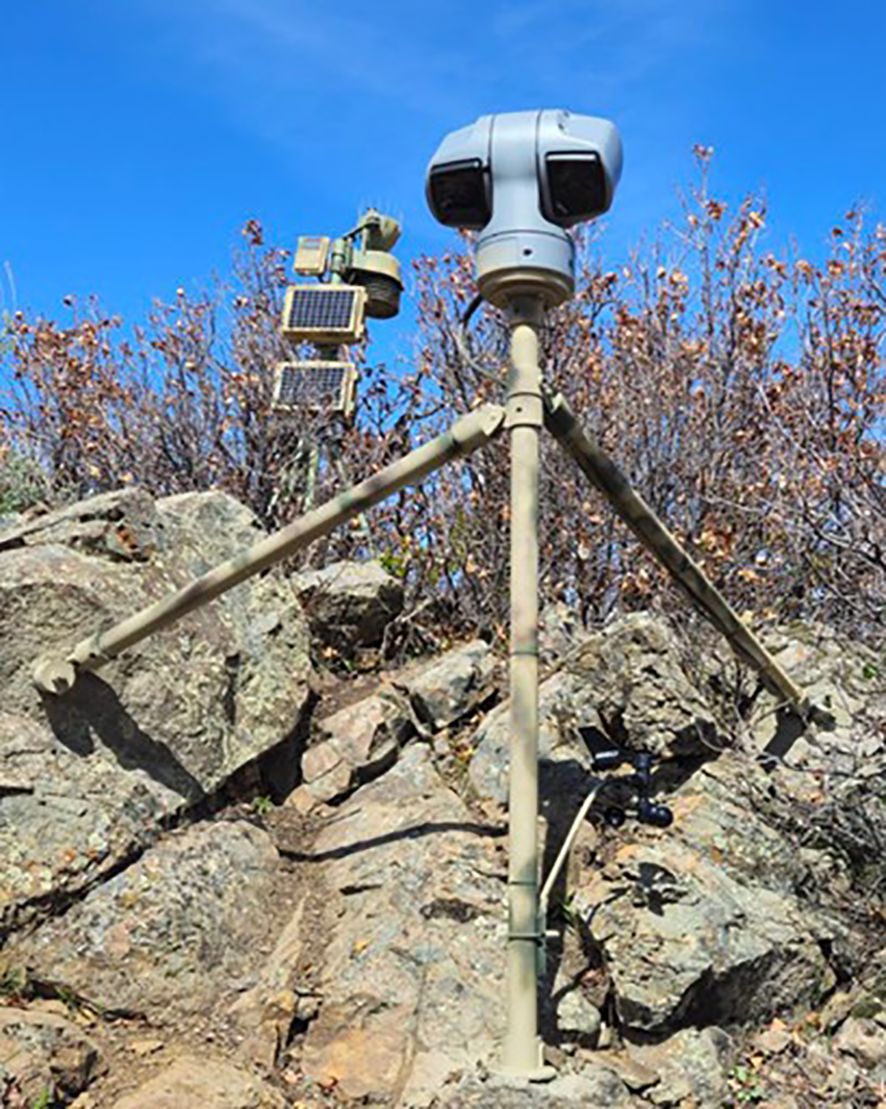
Figure 1. The Axis Q6225-LE PTZ security camera used to capture the footage of the 2024 Colorado RattleCam Livestream that was streamed to the Project RattleCam YouTube channel. In the background, a Davis Instruments Vantage Pro 2 weather station reported current conditions that were visible online to both researchers and YouTube viewers.
Remote access to the charge controller (for monitoring battery state of charge, solar output, and temperature) was processed through a Victron Cerbo GX (BPP900450100, Almere, The Netherlands). Cellular access to the Cerbo GX and live video streaming signals were made possible by using a Sierra Wireless modem (Air Link MP70 LTE, Camarillo, California) wired to a Bolton long-range directional antenna (BT974976, Stafford, TX) mounted on top of a Mars energy tripod (Mars V2.0 Lander, Florissant, Colorado). The directional Bolton antenna was manually aimed at a single cell tower with the strongest signal. We were able to remotely control three operational states: System off, Hibernation, and Viewing mode via sequential latching relay (McMaster-Carr, Elmhurst, Illinois), which were connected to and controlled through the Air Link MP70 LTE. These modes allowed us to control energy usage for different times of the year. The wide range of temperatures in the summer (3°C – 36°C) and severe winter conditions (average of 86 cm of snow cover with temperatures as low as -24°C) necessitated thorough protection of the electronics. As shown in Figure 2, all electronics and batteries were enclosed in a fiberglass Rough Water deck box (50”W x 29”D x 33”H, RWDB50, C&M Marine Products, Lake Placid, Florida) lined with 8 inches of closed-cell urethane foam insulation (FOAM-0380, US Composites, West Palm Beach, Florida). All electronics were mounted on a custom aluminum cooling tunnel heat sink with temperature-controlled fans ducted to the exterior of the box. Temperatures for the batteries, electrical components, and exterior air were monitored via Victron temperature sensors (ASS000001000, Almere, The Netherlands) connected to and monitored by the Cerbo GX. The camera and solar panel wires were connected to the control box through wet-location cord grips (McMaster-Carr, Elmhurst, Illinois) and cables were covered in stainless steel braided cable sleeving (Techflex, Sparta, NJ) to protect the wires from rodent damage. The control box and solar panels were surrounded by electric fencing to prevent cattle and other hoofed mammals from trampling the equipment.
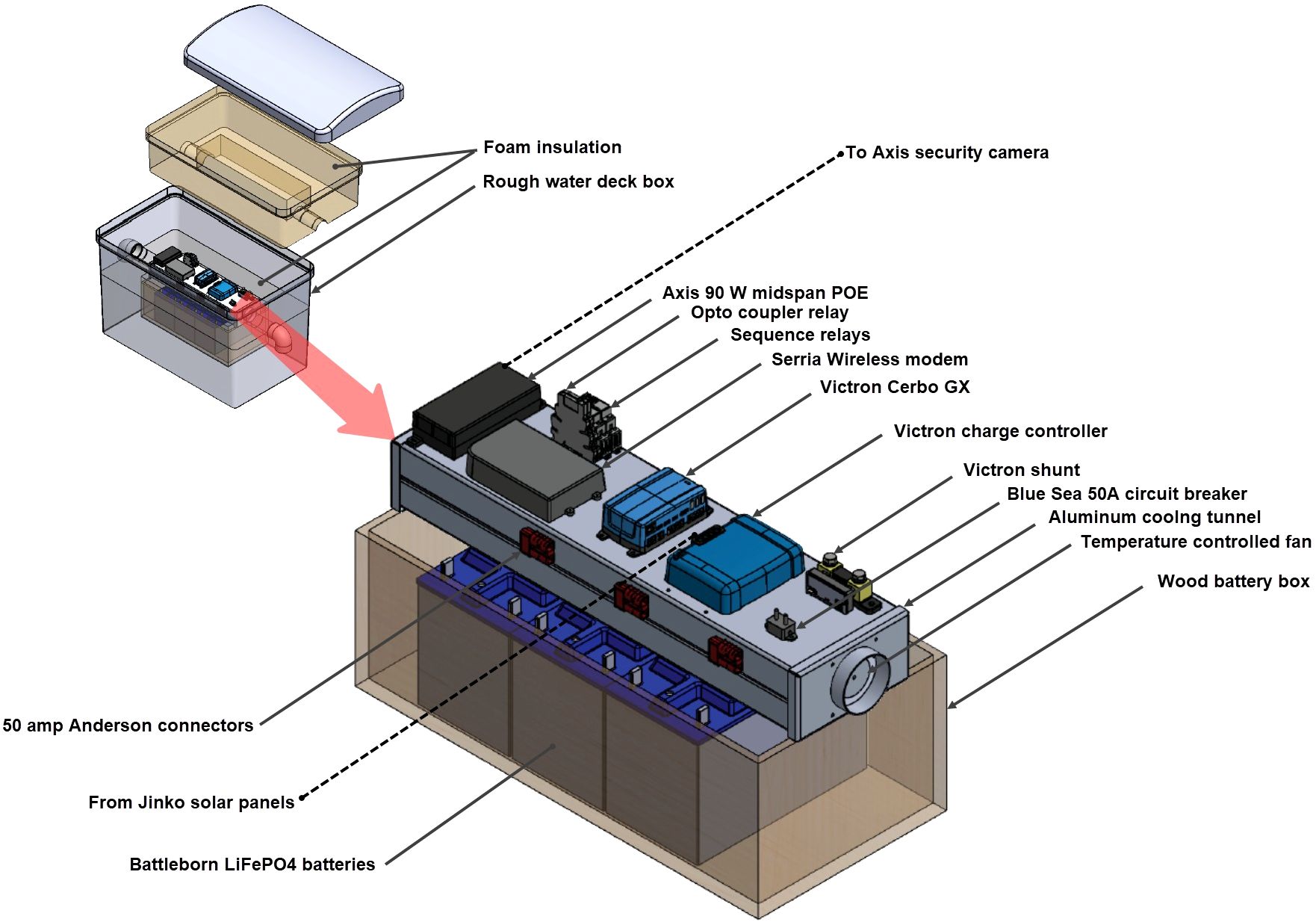
Figure 2. Diagram of the control box setup used to run the remote live-cam for the 2024 Colorado RattleCam Livestream. See Methods for description.
Livestream settings and recording information
We evaluated cellular signal strength at the camera site using information from Google Earth, cellmapper.net, and onsite cell phone signal tests to determine that Verizon Wireless signal was best. An unlimited data business plan from Verizon Wireless allowed the creation of a fixed IP address, which simplified accessing the camera remotely. We used the CamStreamer App (Prague, Czech Republic) to automate the start and stop of the YouTube livestream and control the quality of the feed. We set the livestream quality using the settings available under the Video Options panel on the CamStreamer App. A full list of the video settings and inputs is shown in Table 1. YouTube archives footage of 12 hours or less for future playback. To make sure they were recorded, our livestreams ran for two 11 hour, 45 minute sessions: first from 08:00 to 19:45 MST (the daytime stream), then from 20:00 to 07:45 MST (the nighttime stream), leaving a 15-minute break in between each stream. We set the video resolution to 1920x1080 pixels per inch during the daytime streams to produce the highest quality video possible. During the nighttime streams, we set the resolution to 1280x720 pixels per inch as the higher resolution did not produce a higher quality image when the camera’s infrared light was on.
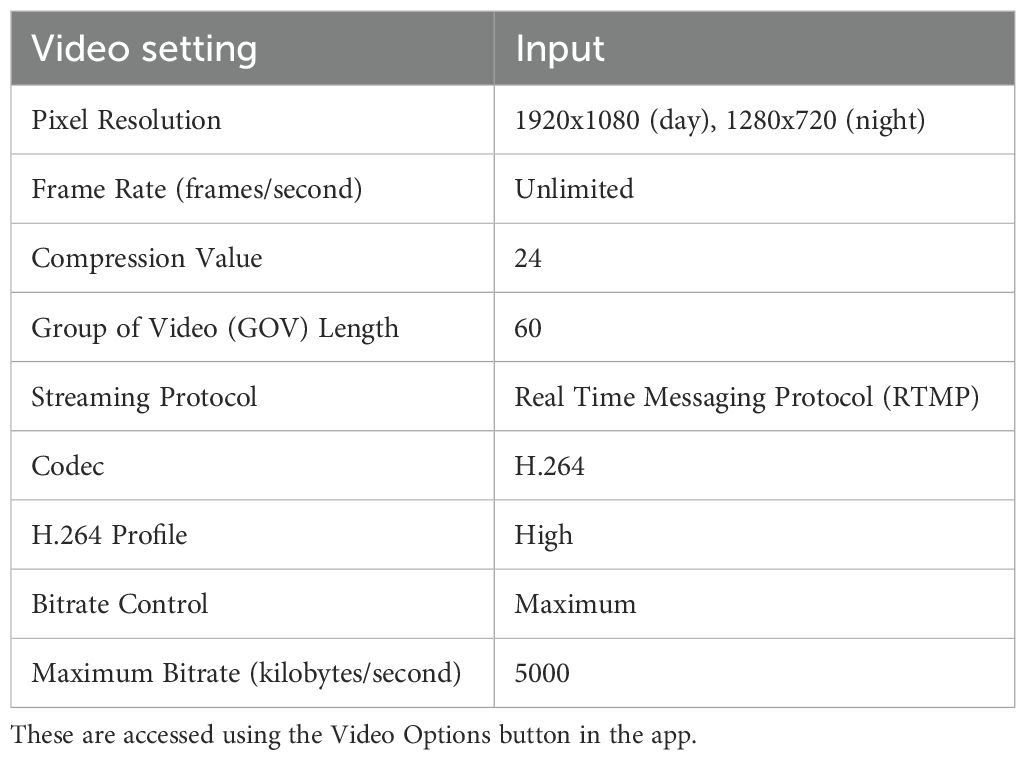
Table 1. List of the video settings and inputs used in the CamStreamer App to control the quality of the 2024 Colorado RattleCam Livestream feed and video.
We installed the camera on April 30, 2024, and it livestreamed 24-7 (minus the 15 minute breaks between the day/night streams) until November 5th, 2024 when we turned it off for the winter. The Project RattleCam YouTube channel (www.youtube.com/@projectrattlecam) has complete archived footage publicly available and highlight clips made for social media.
Camera operation
From its installation in early May until June 18, 2024, we broadcast the livestream with partial moderation of the live-chat. Beginning on June 18, 18 volunteers and undergraduate researchers took turns operating the camera and moderating the YouTube live-chat (shown in Figure 3) between 08:00 to 19:45 MST until October 30, 2024. The operators usually controlled the cameras from our lab on the California Polytechnic State University (Cal Poly) campus in San Luis Obispo, California, USA, but the camera interface allowed us to operate the camera from our personal devices while travelling, so the camera was also successfully operated from Minnesota, Wisconsin, Michigan, Colorado, and Hawaii, USA. The operators panned the camera every few minutes in search of snake activity and moved the camera to four preset positions every thirty minutes to gain a more unbiased sense of snake activity throughout the day.
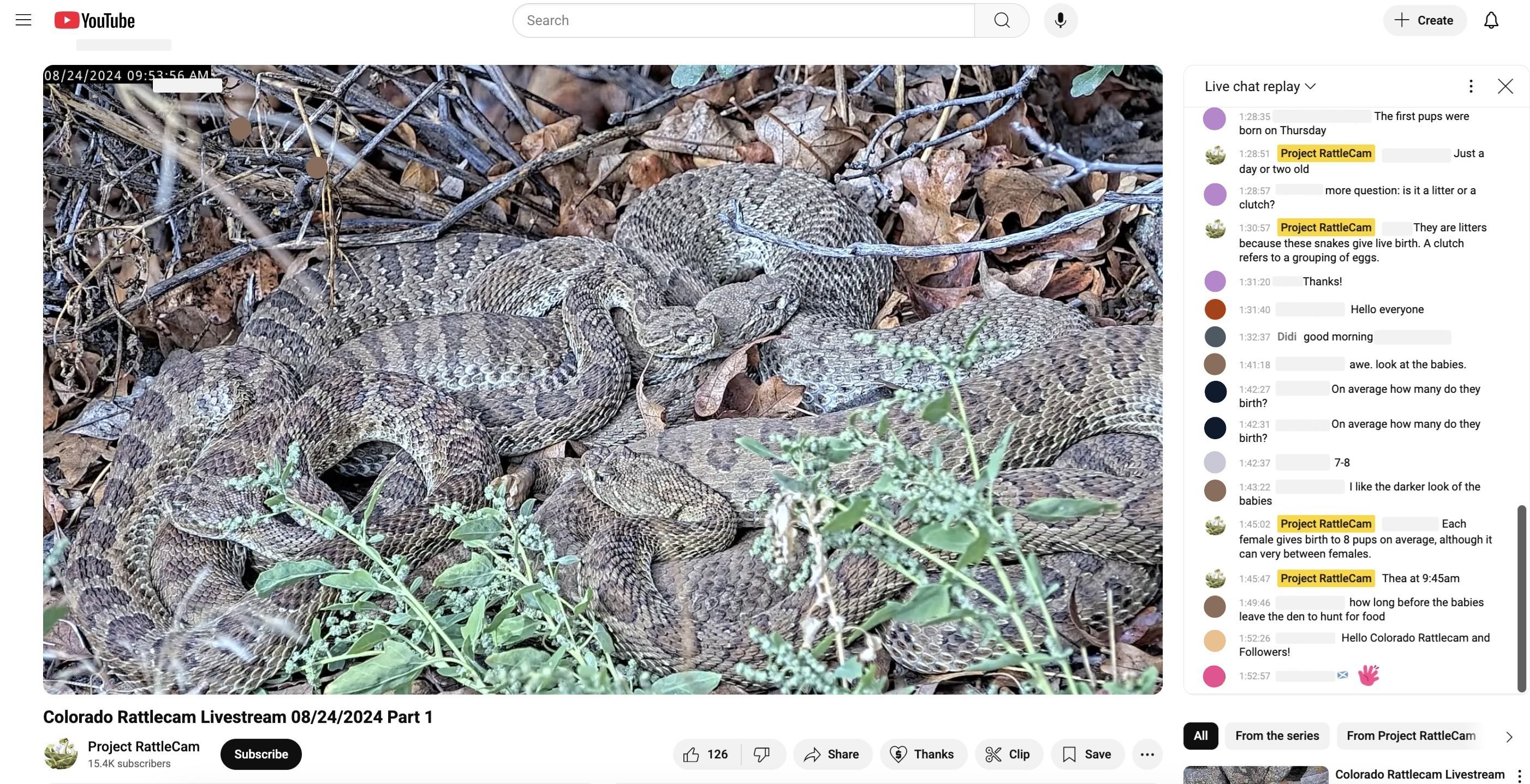
Figure 3. A screenshot showing the 2024 Colorado RattleCam Livestream as seen by the viewers on YouTube. The live-chat, where viewers can comment and ask questions, is shown on the right side of the window. Several answers to viewer-submitted questions are visible in the chat.
In addition to operating the camera, our volunteers and undergraduate researchers fostered a positive, inclusive, and educational atmosphere in the live-chat where viewers could ask questions and start conversations about snakes and other wildlife seen on camera. We created a frequently asked questions (FAQ) page on the Project RattleCam website for the operators and viewers. The operators also discussed answers to more nuanced questions with each other through our Slack channel before posting answers. Our ability to converse with viewers while controlling the camera allowed the viewers to influence camera orientation; for example, live-chat viewers could request that the camera operator zoom in to investigate details and/or search for particular snakes (see below). The livestream also featured a link to the weather conditions at the rookery. The URL updated every 15 minutes with temperature, humidity, wind speed, and UV Index measurements recorded by a Vantage Pro 2 weather station manufactured by Davis Instruments (Hayward, California) that we installed onsite (see Figure 1).
The livestream resumed nightly from 20:00 to 07:45 MST, but during these times the live-chat was not officially moderated, and we did not pan/zoom the camera as regularly.
Community science engagement
YouTube viewers around the world acted as community scientists by sharing their observations and identifying individual snakes. We instructed viewers on how to report live-chat observations, including a timestamp and a description in their comments, and created a Google form for observations when the chat wasn’t moderated (e.g., 20:00 to 07:45 nightly). The 2024 “Name a Snake” campaign encouraged viewers to identify individual snakes to help us study their social relationships. Viewers submitted livestream screenshots via a Google Form that showed the snakes’ unique scale patterns. Once successfully named, we sent an adoption package to each participant and displayed individual snake profiles on RattleCam.org. Community scientists successfully named 23 snakes through the “Name a Snake” campaign, driving viewer investment in the lives of individual animals.
Media coverage
The Communications and Marketing office of Cal Poly posted a press release about the live-cam on July 15, 2024. Dickinson College’s “Expert Show” also broadcasted an interview with Scott Boback on August 29, 2024 when mother rattlesnakes were giving birth to pups. To quantify resulting media coverage, we systematically searched the web (a Cal Poly press database, Google, Bing, and DuckDuckGo) using keywords “rattlesnake mega-den”, “Project RattleCam”, and “newborn rattlesnake mega-den”. We recorded the resulting media mentions, including only coverage from 2024. Media coverage was binned into two categories: local news and popular media. We defined local news as small, community-serving outlets with a narrow reach to specific audiences, often consisting of regional news stations and local subsidiaries of corporate news franchises. Popular media coverage featured outlets with a wide-reaching impact that did not specifically target any one community. Popular media sources typically had nationwide or international influence and broad engagement. We excluded print media and radio stories from our searches because of their limited representation in our selected search engines and databases.
Measuring public engagement
We downloaded subscriber and viewership data for Project RattleCam through YouTube Analytics to measure channel engagement. YouTube Analytics data included daily changes in the number of channel subscribers, new livestream viewers, returning livestream viewers, and total livestream watch time. YouTube defined returning viewers as individuals who had watched a Project RattleCam YouTube video in the previous 90 days while new viewers had not. The reported metrics included both the Colorado and California RattleCams Livestreams, though engagement with the California RattleCam was far less than the more active Colorado RattleCam. We used the tidyverse collection of R packages (Wickham et al., 2019) in RStudio (Posit Team, 2024) to summarize and graph the media coverage and YouTube engagement data.
This manuscript was not designed a priori to collect data from viewers on how the livestream impacted their perception of rattlesnakes, so we cannot attempt to quantify its impact. However, viewers regularly left comments in the YouTube live-chat. We selected a small quantity of footage (14 days in July and August) and extracted comments from the live-chat that suggested an improvement in perception of snakes. These comments are shown in Table 2.
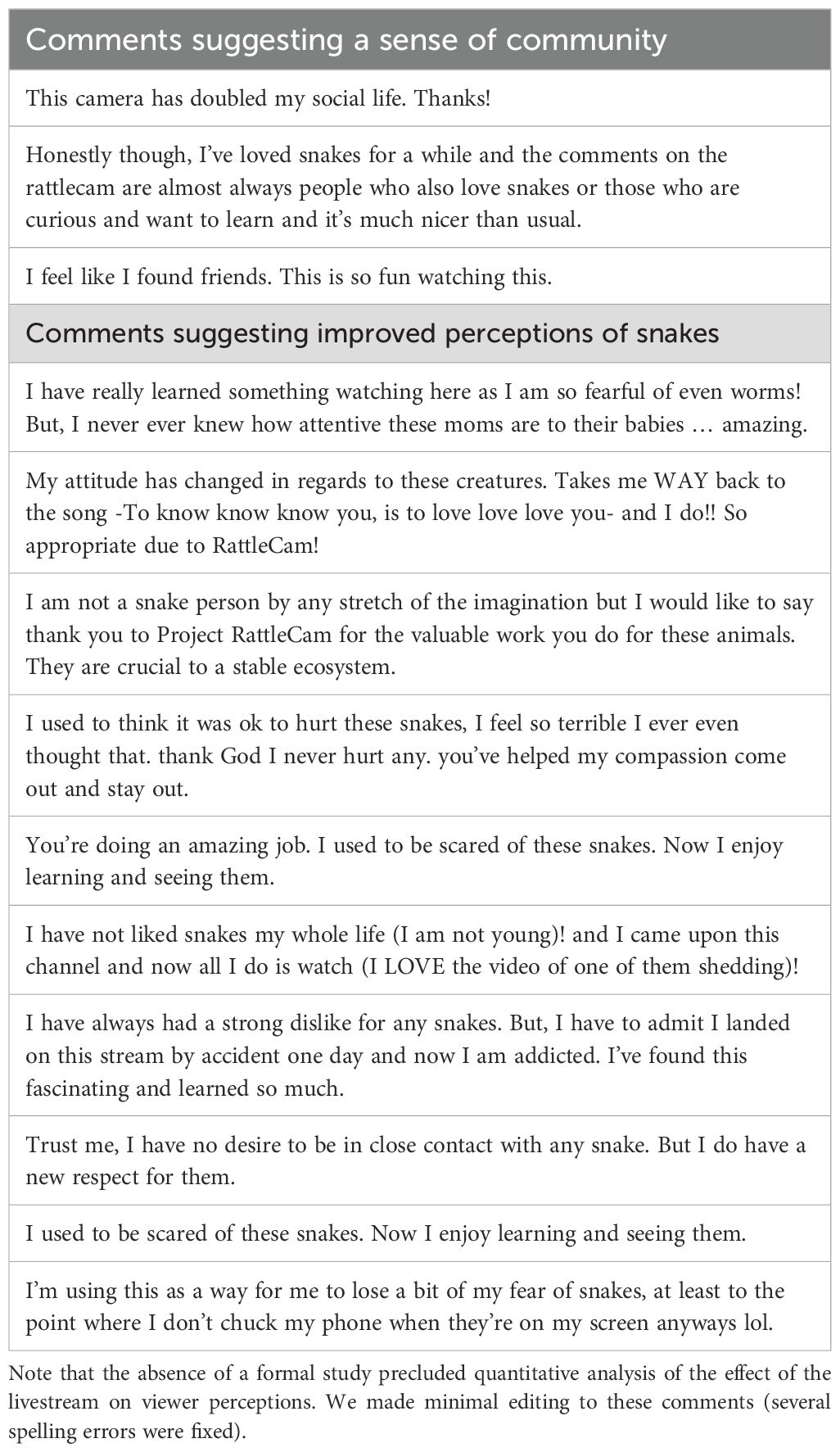
Table 2. A small subset of positive feedback from viewers of the 2024 Colorado RattleCam Livestream suggesting a sense of community and improved perceptions of snakes after watching the livestream (selected from the YouTube live-chat comments over the course of 14 days in July and August).
Results
Media coverage and engagement
Media coverage was concentrated around two dates. The first was around mid-July 2024, when numerous media outlets picked up Cal Poly’s press release. Then in late Aug 2024, Dickinson College interviewed Scott Boback and the Associated Press released an article announcing that rattlesnake pups had been born, and this was subsequently picked up by other media. Of the 83 media articles reporting on the project, 44 were published by local news outlets and 39 in popular media. Prior to media coverage, there were no more than 30 viewers at one time, despite our regular social media posts about Project RattleCam since 2021. Following the two main spikes in media coverage, we observed large increases in average YouTube watch time and the number of channel subscribers (Figure 4A), as well as increases in the numbers of new (Figure 4B) and returning viewers (Figure 4C). When the camera was turned off for the season on Nov 5, 2024, the YouTube channel had accumulated 13,761 new subscribers (from 813 subscribers in early May 2024 to 14,576 on Nov 5, 2024), and our livestreams had been viewed 1,616,398 times by viewers from 122 countries for a total of 175,306 watch hours.
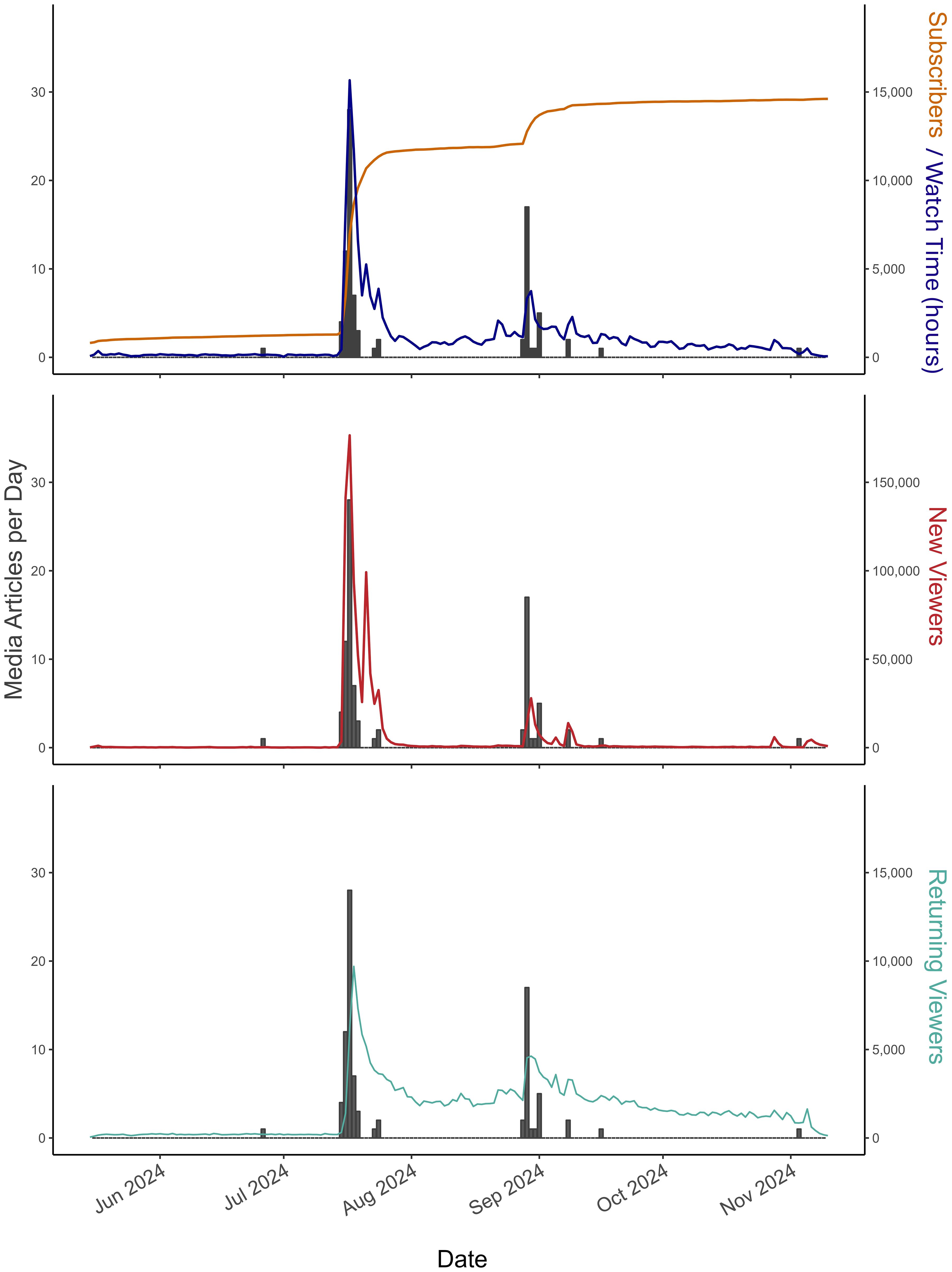
Figure 4. Public engagement with the 2024 Colorado RattleCam Livestream. Increases in YouTube channel subscribers and watch time (A) appeared to be tightly associated with the number of media articles about the livestream published per day throughout the livestream’s duration. New viewership (B) and returning viewership (C) responded similarly to the media articles, though returning viewership remained high well after spikes in media coverage.
Livestream viewer comments and feedback
While a systematic analysis of viewer comments was not possible given our inability to receive informed consent from viewers, we are able to provide a small subset of comments that demonstrate the positive impact of the livestream on viewer perceptions of rattlesnakes or snakes in general. Numerous viewers reported a change from a state of fear to one of respect, love or similar, in the live-chat (Table 2). Most other responses (not shown here) were also positive but did not report a change in perception, suggesting that those viewers may have previously liked snakes.
Discussion
Livestreaming camera technology has advanced rapidly since the first remote wildlife live-cam was placed inside a bear’s hibernaculum (Rogers et al., 2020), yet little information is available on the equipment and materials such livestreams use. Of those where more information is available, most appear to be rather simple plug-n-play packages that are powered on-grid and require a Wi-Fi internet connection. Building off-grid systems is far more challenging in terms of power and streaming. Though off-grid wildlife livestreams certainly exist, we were unable to locate any descriptions with explicit directions on how to design and install such systems. We hope that our detailed instructions will facilitate the construction of additional off-grid wildlife live-cams to facilitate remote wildlife viewing and learning around the world.
The 2024 Colorado RattleCam Livestream was largely successful in showcasing rattlesnakes at a communal den site. Viewers around the world watched live as hundreds of rattlesnakes basked in the sun, interacted with other snakes, and encountered potential predators. Similar results could be achieved in other places where animals gather predictably in aggregations, and livestreaming technology shows great potential for observing animal behavior in such systems.
While the equipment and methods we describe in this paper resulted in a high-quality livestream, we encountered several problems that were not straightforward to solve. First, an unlimited cellular data plan was necessary to accommodate the vast amounts of data used daily (~38 GB). We created a fixed IP address for the camera that facilitated remote cellular connection through our Verizon Wireless unlimited plan. If the rattlesnake hibernaculum did not have a direct line of sight to a Verizon tower, this would not have worked. Until recently, satellites such as Starlink could not be used for remote livestreaming because they were incompatible with fixed IP addresses, an issue that has been resolved as of 2024. However, Starlink requires far more energy and would have necessitated doubling of our solar and battery bank. Although only encountered occasionally, we did experience a few instances throughout the year where cellular outages, weak connections, and the weather restricted the ability to control the camera and affected how the footage was recorded on YouTube. For example, we found that the livestream would buffer, and the camera responded very slowly to commands during extremely warm or windy conditions. There were also 2–3 occasions when the livestream was offline for an hour or longer due to the local cell towers being down. While not a regular occurrence, these issues are still an important consideration for those interested in setting up similar remote livestreaming cameras.
Livestreaming cameras also have several other limitations. The most immediate drawback is the cost of constructing the camera system, as the camera hardware and materials alone cost about $12,000 USD. Acquiring funding to install similar cameras may be a barrier for many researchers and makes projects that involve multiple cameras (i.e., comparing patterns across multiple sites) impractical in most cases. Our camera setup is also stationary, meaning that it can only view animals from a single fixed location. As a result, this setup can only monitor activity at a very limited spatial scale, and its use on highly mobile animals is more limited. Another major limitation of this technology is that it requires a cellular connection or high-energy satellite communication to stream the live video and record the footage. While the livestream can run automatically, the camera’s zoom and tilt features must be controlled manually. As far as we could tell, there were no camera settings for movement-sensitive triggers as seen in game cameras. This means that a camera operator must be present when an animal appears on the camera to zoom in, change the viewpoint, and follow the animal, something that is likely easier for monitoring slow moving animals like rattlesnakes. It is possible to leave the camera zoomed out when the camera operator is off duty, but some fine resolution visual details, such as body markings used to identify individuals, may not be captured on the recorded footage. The camera could also potentially disrupt the behavior of some animals, meriting further examination. Although the infrared light emitted by the camera is outside the range detected by a snake’s pit organs (Axis Communications, 2024; Grace et al., 1999), its impacts on the behaviors of other animals needs to be assessed. It is also possible that the camera’s movement as it changes its point of view may alter some animals’ behavior. On several occasions, Black-billed Magpies (Pica hudsonia) flew away when the camera tilted to face them. Whether they were scared away by the movement or the slight sound of the camera is unclear. While there were few (if any) observable instances of other animals appearing to notice the camera’s movements, this does raise the question of how effective this technology is at passively monitoring species with sensitive hearing and vision, like some birds and mammals.
In terms of educational outreach, the livestream appeared highly successful in engaging the public during its first year showing the Colorado mega-den. Much of this success was due to the heavy media coverage. Despite much effort to gain public attention through regular social media posts, viewership of the livestream remained low prior to the press releases. Media coverage following the press releases caused the Project RattleCam YouTube channel subscriber count to rise dramatically from 813 subscribers in early May 2024 to 14,576 on Nov 5, 2024 (see Figure 4A). We also saw increases in the number of new viewers following media coverage of the livestream (see Figure 4B). The second spike in media coverage was also notable because the press release focused on the arrival of the newborn baby rattlesnakes. Returning viewership remained high well after spikes in media coverage, with returning viewers exploring the livestream (see Figure 4C) and participating in the live-chat regularly throughout the year. The sustained engagement of the returning viewers suggests that many viewers watched the livestream regularly and often. Not only did viewers from 122 countries watch the livestream, but we also received many unsolicited comments from viewers about their experiences (see Table 2). In many of these comments, viewers expressed their appreciation for the livestream and how it changed the way they view snakes. While we do not currently have quantitative evidence that viewing the livestream caused a change in how people perceive snakes, we are interested in testing this in future studies.
Although difficult to quantify, many viewers also said that participating in the live-chat helped give them a sense of community, something that has been observed with other wildlife livestreams (Blaer, 2023; von Essen and Peterson, 2024). There were numerous times throughout the year where our returning viewers appeared excited about what they were witnessing on the camera, with the live-chat subsequently filling up with comments. Even when the snakes were not very active, many viewers engaged in respectful discussions about snakes in the live-chat. This kind of community building may help increase and extend public engagement in community science and make it accessible to a more diverse and widespread audience. The sense of community on the Colorado RattleCam Livestream is further supported by the high volume of returning daily viewers maintained after the initial round of media coverage. Similar livestreams could facilitate environmental education in a variety of contexts. We partnered with six Association of Zoos and Aquariums-accredited zoos to feature the Colorado RattleCam livestream in their exhibits. Anecdotal feedback from zoo staff revealed that these exhibits have been impactful for some zoo visitors, suggesting that installing similar exhibits at zoos and museums could enrich visitors’ experiences. Livestreaming cameras also present an opportunity for enhancing educational programs in schools and homeschool programs. The Colorado RattleCam Livestream could be introduced to classrooms and implemented in educational curricula, giving students the ability to observe rattlesnakes, learn about science, and construct student-led research projects using technologies already present in most classrooms. RattleCam educational experiences would be particularly beneficial to people with limited access to nature, such as those living in heavily urbanized areas (Neuvonen et al., 2007; Schipperijn et al., 2010) or those who are disabled and cannot physically access many forms of nature recreation (Corazon et al., 2019). In this way, the Colorado RattleCam Livestream and similar livestreams could greatly increase equitable access to nature education and help foster meaningful connections between people and the natural world.
Data availability statement
The raw data supporting the conclusions of this article will be made available by the authors, without undue reservation.
Ethics statement
Ethical approval was not required for the study involving humans in accordance with the local legislation and institutional requirements. Written informed consent to participate in this study was not required from the participants or the participants’ legal guardians/next of kin in accordance with the national legislation and the institutional requirements. The animal study was approved by Cal Poly Institutional Animal Care and Use Committee (IACUC Protocol #2112) and Colorado Parks and Wildlife (Permit #2520788611). The study was conducted in accordance with the local legislation and institutional requirements.
Author contributions
OB: Methodology, Visualization, Data curation, Conceptualization, Investigation, Project administration, Writing – review & editing, Funding acquisition, Writing – original draft, Formal Analysis. MR: Data curation, Funding acquisition, Project administration, Writing – review & editing, Methodology, Conceptualization, Investigation, Writing – original draft. RS: Writing – original draft, Data curation, Writing – review & editing, Investigation, Methodology. DB: Writing – review & editing, Writing – original draft, Conceptualization, Visualization, Methodology. RB: Methodology, Conceptualization, Writing – review & editing. KD: Methodology, Conceptualization, Writing – review & editing, Writing – original draft. SB: Conceptualization, Supervision, Project administration, Writing – review & editing. ET: Writing – review & editing, Funding acquisition, Project administration, Methodology, Conceptualization, Supervision, Writing – original draft, Data curation.
Funding
The author(s) declare that financial support was received for the research and/or publication of this article. Project RattleCam received seed funding from the Cal Poly Center for Expressive Technologies; the Cal Poly Research, Scholarly, and Creative Activities Program; and the Cal Poly Baker-Koob Endowment. A Barney Tomberlin Memorial Grant for Herpetological Field Research to Owen Bachhuber and Max Roberts provided research funding. Most of the funding for the project came from hundreds of private donors, to whom we express our sincere gratitude for their generosity in support of community science and research that advances technology and our understanding of secretive wildlife.
Acknowledgments
This work was conducted on ancestral homelands of the Ute, Arapahoe, and Cheyenne indigenous communities. We thank the owner and ranch manager of the private property on which the live-cam was installed for their permission, support, and logistical assistance. We thank Amber Brewster and Steve Van Middlesworth for their assistance with equipment design and/or installation. We thank the following people for volunteering to operate the camera and live-chat: Tanya Luthin, Alara Walcott, Ava Sabella, Emma Reardon, Ariel Bigelow-Gee, Joy Turkstra, Rheanna Dunton, Rayyan Ibrahim, Grace CadwalladerOlsker, Piper Tyssee, Morgan Francis, Evan Odberg, Taylor Saville, and Haley Moniz. We thank Cal Poly Bailey College of Science and Math Communication Specialist Nick Wilson and Dickinson College Media Relations (Craig Layne, Stephen Munchel, and Joe O’Neill) for their efforts in publicizing Project RattleCam. We are grateful to the following people and zoos who coordinated with us to livestream the RattleCam at their institutions: Karen Bootz (Charles Paddock Zoo), Brent Weston (Dakota Zoo), Tom Weaver (Arizona-Sonora Desert Museum), Wilson Sherman (Oakland Zoo), Nadya Seal Faith (Santa Barbara Zoo), Mark Halvorsen, Steve Sharp, David Horsham, and Rory Telemeco (Fresno Chaffee Zoo).
Conflict of interest
The authors declare that the research was conducted in the absence of any commercial or financial relationships that could be construed as a potential conflict of interest.
Generative AI statement
The author(s) declare that no Generative AI was used in the creation of this manuscript.
Publisher’s note
All claims expressed in this article are solely those of the authors and do not necessarily represent those of their affiliated organizations, or those of the publisher, the editors and the reviewers. Any product that may be evaluated in this article, or claim that may be made by its manufacturer, is not guaranteed or endorsed by the publisher.
References
Ali K., Zain-ul-abdin K., Li C., Johns L., Ali A. A., and Carcioppolo N. (2019). Viruses going viral: Impact of fear-arousing sensationalist social media messages on user engagement. Sci. Communication 41, 314–338. doi: 10.1177/1075547019846124
Allison E. B., Taylor E. N., Graham Z. A., Amarello M., Smith J. J., and Loughman Z. J. (2024). Effects of relational and instrumental messaging on human perception of rattlesnakes. PloS One 19, e0298737. doi: 10.1371/journal.pone.0298737
Axis Communications (2024). Axis Q6225-LE PTZ camera: heavy-duty PTZ camera with long-range IR. Available online at: https://www.axis.com/products/axis-q6225-letechnical-specifications (Accessed April 17th, 2025).
Blaer M. (2023). Interactive webcam travel: supporting wildlife tourism and conservation during COVID-19 lockdowns. Inf Technol. Tourism 25, 47–69. doi: 10.1007/s40558-023-00242-3
Chirico A., Pizzolante M., Borghesi F., Bartolotta S., Sarcinella E. D., Cipresso P., et al. (2023). Standing up for earth rights”: Awe-inspiring virtual nature for promoting pro-environmental behaviors. Cyberpsychol. Behavior Soc. Networking 26, 300–308. doi: 10.1089/cyber.2022.0260
Corazon S. S., Gramkov M. C., Poulsen D. V., Lygum V. L., Zhang G., and Stigsdotter U. K. (2019). I would really like to visit the forest, but it is just too difficult: A qualitative study on mobility disability and green spaces. Scandinavian J. Disability Res. 21, 1–13. doi: 10.16993/sjdr.50
Cox J., Oh E. Y., Simmons B., Lintott C., Masters K., Greenhill A., et al. (2015). Defining and measuring success in online citizen science: a case study of Zooniverse projects. Computing Sci. Enginering 17, 28–41. doi: 10.1109/MCSE.2015.65
DeVille N. V., Tomasso L. P., Stoddard O. P., Wilt G. E., Horton T. H., Wolf K. L., et al. (2021). Time spent in nature is associated with increased pro-environmental attitudes and behaviors. Int. J. Environ. Res. Public Health 18, 7498. doi: 10.3390/ijerph18147498
Fitzgerald L. A. and Painter C. W. (2000). Rattlesnake commercialization: Long-term trends, issues, and implications for conservation. Wildlife Soc. Bull. 1973-2006) 28, 235–253.
Frynta D., Elmi H. S. A., Rexová K., Janovcová M., Rudolfová V., Štolhoferová I., et al. (2023). Animals evoking fear in the Cradle of Humankind: snakes, scorpions, and large carnivores. Sci. Nat. 110, 33. doi: 10.1007/s00114-023-01859-4
Frynta D., Janovcová M., Elmi H. S. A., Štolhoferová I., Rudolfová V., Rexová K., et al. (2025). Why are some snakes more terrifying and what is behind the fear? Animals 15, 731. doi: 10.3390/ani15050731
Grace M. S., Church D., Kelly C. T., Lynn W. F., and Cooper T. M. (1999). The python pit organ: imaging and immunocytochemical analysis of an extremely sensitive natural infrared detector. Biosensors Bioelectronics 14, 53–59. doi: 10.1016/S0956-5663(98)00101-8
Houssein F. A., O’Reilly K. E., Peters B. W., Bueseke M. A., and Lamberti G. A. (2021). High-frequency photographic imaging provides novel insights into nesting bald eagle diet and opportunities for public engagement. Am. Midland Nat. 186, 122–135. doi: 10.1674/0003-0031-186.1.122
Houtz J. L., Mandy R. P., and Uehling J. J. (2020). A virtual bird’s eye view: Live streaming nestboxes to continue outreach in the era of COVID-19. Acad. Pract. Ecol. Evol. 11, 3559–3564. doi: 10.1002/ece3.6998
Kawai N. (2019). The Fear of Snakes: Evolutionary and Psychobiological Perspectives on Our Innate Fear (Singapore: Springer Nature Singapore Pte Ltd).
Larson K. L., Clark J. A. G., Bateman H. L., Enloe A., and Hughes B. (2024). To kill or not to kill? Exploring normative beliefs and attitudes toward snakes. Biol. Conserv. 290, 110399. doi: 10.1016/j.biocon.2023.110399
Larson L. R., Szczytko R., Bowers E. P., Stephens L. E., Stevenson K. T., and Floyd M. F. (2019). Outdoor time, screen time, and connection to nature: troubling trends among rural youth? Environ. Behav. 51, 966–991. doi: 10.1177/0013916518806686
Mauldin R. L., Highfill M. C., Schuman D., Henderson S., and Anderson K. (2025). Viewing nature-focused livestreams and subjective well-being: A Scoping Review. Ecopsychology 17, 42–54. doi: 10.1089/eco.2024.0007
McCrorie P., Olsen J. R., Caryl F. M., Nicholls N., and Mitchell R. (2021). Neighbourhood natural space and the narrowing of socioeconomic inequality in children’s social, emotional, and behavioural wellbeing. Wellbeing Space Soc. 2, 100051. doi: 10.1016/j.wss.2021.100051
Means D. B. (2009). Effects of rattlesnake roundups on the eastern diamondback rattlesnake (Crotalus adamanteus). Herpetological Conserv. Biol. 4, 132–141.
National Weather Service. (2023). Available online at: https://forecast.weather.gov/MapClick.php?lat=40.482710000000054&lon=-106.82885999999996 (Accessed October 14, 2023).
Neuvonen M., Sievänen T., Tönnes S., and Koskela T. (2007). Access to green areas and the frequency of visits – A case study in Helsinki. Urban Forestry Urban Greening 6, 235–247. doi: 10.1016/j.ufug.2007.05.003
Olsen J. R., Caryl F. M., McCrorie P., and Mitchell R. (2022). Socioeconomic inequality in Scottish children’s exposure to and use of natural space and private gardens, measured by GPS. Landscape Urban Plann. 223, 104425. doi: 10.1016/j.landurbplan.2022.104425
Pardo L. E., Bombaci S. P., Huebner S., Somers M. J., Fritz H., Downs C., et al. (2021). Snapshot Safari: A large-scale collaborative to monitor Africa’s remarkable biodiversity. South Afr. J. Sci. 117, 1–4. doi: 10.17159/sajs.2021/8134
Park K., Rigolon A., Choi D., Lyons T., and Brewer S. (2021). Transit to parks: An environmental justice study of transit access to large parks in the U.S. West. Urban Forestry Urban Greening 60, 127055. doi: 10.1016/j.ufug.2021.127055
Posit team (2024). RStudio: Integrated development environment for R (Boston, MA: Posit Software, PBC). Available online at: http://www.posit.co/ (Accessed March 2, 2025).
Robertson C. E., Pröllochs N., Schwarzenegger K., Pärnamets P., Van Bavel J. J., and Feuerriegel S. (2023). Negativity drives online news consumption. Nat. Hum. Behav. 7, 812–822. doi: 10.1038/s41562-023-01538-4
Rogers L. L., McColley L., Dalton J., Stroner J., Hajicek D., Partin A., et al. (2020). Behavior in free-living American black bear dens: parturition, maternal care, and cub behavior. Animals 10, 1123. doi: 10.3390/ani10071123
Schipperijn J., Ekholm O., Stigsdotter U. K., Toftager M., Bentsen P., Kamper-Jørgensen F., et al. (2010). Factors influencing the use of green space: Results from a Danish national representative survey. Landscape Urban Plann. 95, 130–137. doi: 10.1016/j.landurbplan.2009.12.010
Searle A., Turnbull J., and Adams W. (2022). The digital peregrine: a technonatural history of a cosmopolitan raptor. Trans. Institute Br. Geographies 48, 195–2212. doi: 10.1111/tran.12566
Shanahan D. F., Astell-Burt T., Barber E. A., Brymer E., Cox T. C., Deam J., et al. (2019). Nature-based interventions for improving health and wellbeing: the purpose, the people, and the outcomes. Sports 7, 141. doi: 10.3390/sports7060141
Soga M. and Gaston K. J. (2024). Do people who experience more nature act more to protect it? A meta-analysis. Biol. Conserv. 289, 110417. doi: 10.1016/j.biocon.2023.110417
Sui M., Hawkins I., and Wang R. (2023). When falsehood wins? Varied effects of sensational elements on users’ engagement with real and fake posts. Comput. Hum. Behav. 142, 107654. doi: 10.1016/j.chb.2023.107654
von Essen E. and Peterson J. (2024). Digital wildlife expeditions and their impact on human-wildlife relations: Inside the phenomenon of livestreaming an annual moose migration. Digital Geogr. Soc. 7, 100097. doi: 10.1016/j.diggeo.2024.100097
Whitburn J., Linklater W., and Abrahamse W. (2019). Meta-analysis of human connection to nature and proenvironmental behavior. Conserv. Biol. 34, 180–193. doi: 10.1111/cobi.13381
Keywords: wildlife camera, human-snake relationship, human-wildlife coexistence, rattlesnake, livestream, virtual nature experiences, Project RattleCam, environmental education
Citation: Bachhuber OM, Roberts MC, Singer RM, Brewster DR, Brewster RA, Dunham KK, Boback SM and Taylor EN (2025) Using livestreaming technology to connect the public with secretive and maligned animals. Front. Amphib. Reptile Sci. 3:1599382. doi: 10.3389/famrs.2025.1599382
Received: 24 March 2025; Accepted: 26 May 2025;
Published: 24 June 2025.
Edited by:
Robert Jehle, University of Salford, United KingdomReviewed by:
Leo Fleishman, Union College, United StatesTrevor Proctor, University of Hawaii at Manoa, United States
Copyright © 2025 Bachhuber, Roberts, Singer, Brewster, Brewster, Dunham, Boback and Taylor. This is an open-access article distributed under the terms of the Creative Commons Attribution License (CC BY). The use, distribution or reproduction in other forums is permitted, provided the original author(s) and the copyright owner(s) are credited and that the original publication in this journal is cited, in accordance with accepted academic practice. No use, distribution or reproduction is permitted which does not comply with these terms.
*Correspondence: Owen M. Bachhuber, b3dlbi5iYWNoaHViZXJAZ21haWwuY29t; Max C. Roberts, bWF4Y2Fyb2JlcnRzQGdtYWlsLmNvbQ==; Emily N. Taylor, ZXRheWxvckBjYWxwb2x5LmVkdQ==
†These authors have contributed equally to this work and share first authorship