 Hessah A. Alsalamah1,2*
 Shorog Nasser3,4
 Shada Alsalamah1,5,6
 Albatoul I. Almohana4,7
 Areej Alanazi4Fay Alrrshaid4
- 1Department of Information Systems, College of Computer and Information Sciences, King Saud University, Riyadh, Saudi Arabia
- 2Department of Computer Engineering, College of Engineering and Architecture, Al Yamamah University, Riyadh, Saudi Arabia
- 3Saudi Technology and Security Comprehensive Control Company (Tahakom), Riyadh, Saudi Arabia
- 4Safe House Lab, Center of Excellence in Information Assurance, College of Computer and Information Sciences, King Saud University, Riyadh, Saudi Arabia
- 5National Health Information Center, Saudi Health Council, Riyadh, Saudi Arabia
- 6Digital Health and Innovation Department, Science Division, World Health Organization, Geneva, Switzerland
- 7National Cybersecurity Authority, Riyadh, Saudi Arabia
Obesity is considered one of the leading causes of chronic and noncommunicable diseases; these include diabetes, cardiovascular disease, and cancer. The obesity prevalence is threefold higher in the Arab Gulf Cooperation Council (GCC) population than the rest of the world and leaves healthcare providers within the region with no alternative than to offer continuous and sustainable healthcare services. Obesity prevention would be more economical for governments than providing treatment. Preventing obesity is challenging because it requires motivating individuals to live a healthy lifestyle. Personal health (pHealth) has recently been actively involved in finding solutions to encourage healthy living. However, pHealth does not address the high percentage of people lacking the desire to maintain healthy living plans, which could have a negative effect on attempts aimed at reducing obesity prevalence. This study sheds light on the challenges faced by the GCC governments in reducing high obesity rates using pHealth; we propose a solution, Wholesome Coin, which incorporates advanced technologies to help governments reduce high obesity rates. Wholesome Coin has two components: one uses wearable IoT (WIoT) to help patients manage their behavior by tracking their physical activities and diet, and the other utilizes blockchain technology to help healthcare payers to incentify patients to maintain a healthy living plan by awarding digital coins that can be redeemed for real goods and services. GCC governments’ adoption of Wholesome Coin could improve the quality of life of obese patients in a seamless, secure, and self-motivated manner, resulting in a healthier tomorrow, especially amid challenging times featuring global social distance campaigns.
Introduction
Obesity and being overweight are well-known health issues with significant risks that raise a major global concern (Zenag et al., 2011) (World Health Organization, 2000). According to the World Health Organization (WHO) (World Health Organization, 2020), approximately 70% of all deaths worldwide are due to noncommunicable diseases (NCDs), including heart disease, stroke, cancer, diabetes, and chronic lung disease. Obesity is a major cause of chronic diseases including cardiovascular diseases, cancers, and related issues that may lead to morbidity and mortality (Akil and Ahmad, 2011). Premature deaths due to type 2 diabetes mellitus (T2DM) and cardiovascular diseases (CVD) are also associated with obesity (Burns, 2016). The danger of obesity goes beyond its health risks, and it is extremely costly in terms of economics (Saudi Ministry of Health, 2018), mainly because treating obesity requires sustainable and continuous health care resources.
Obesity Rates in Gulf Cooperation Council (GCC) Countries
Diabetes rates are significantly higher in the Arab GCC region than other parts of the world. The International Diabetes Federation reported a diabetes prevalence of 23.9% in Saudi Arabia, 23.1% in Kuwait, and 19.8% in Qatar; the global average in 2015 was just 8.3% (International Diabetes Federation, 2021). The prevalence is expected to increase to 50% by 2025 in some GCC countries (International Diabetes Federation, 2021). The cost of treating diabetes is equally staggering in the Middle East and North Africa (MENA) regions. The immediate cost of diabetes treatment alone—discounting stunted productivity and indirect treatment costs—is expected to increase four-fold in Abu Dhabi by 2030. MENA spent USD 16.8 billion on obesity treatment in 2014 (International Diabetes Federation, 2021). Obesity is considered a serious problem in Saudi Arabia as the country is listed as the 15th most obese country in the world according to the World Atlas data (Alqarni, 2016). NCDs account for 73% of all deaths in Saudi Arabia (World Health Organization, 2018). In 2018, the General Authority for Statistics in Saudi Arabia (GASSA) (Saudi General Authority of Statistics, 2018) published figures indicating that only 18.99% of Saudis engage in sports activities, while the remaining 81.01% do not engage regularly in any kind of sports activity. Moreover, not being physically active is a known cause of obesity (World Health Organization, 2020), which implies that a high percentage of people with no desire to exercise or engage in sports, could have a negative effect on attempts aimed at reducing obesity prevalence in Saudi Arabia. Finally, having established the seriousness of obesity prevalence, it is important to mention the value of developing and implementing obesity prevention measures. However, the GCC governments exhibit no coherent regional plans to mitigate this challenge. Isolated policy responses in the form of detection campaigns and initiatives, some in line with WHO-suggested programs, remain markedly dwarfed by the size of the diabetes epidemic (World Health Organization, 2020).
Enabling Personal Health Through Emerging Technologies
Technology has impacted almost every facet of our lives; it is self-evident that the wide application of emerging technologies can help overcome obesity. Wearable Internet of Things (WIoT) (Hiremath et al., 2014) is one of the most important technologies that is utilized to enable the concept of a pHealth system. pHealth is one suggested paradigm to ensure low-cost and qualitative health services related to chronic diseases that require sustainable care (Teng et al., 2008) (Poon, and Zhang, 2008). This is mainly because engaging people is at the heart of the pHealth notion by encouraging people’s early participation in preventing or predicting illness through personalized healthcare (Teng et al., 2008). WIoT is defined as “Technological infrastructure that interconnects wearable sensors to enable monitoring human factors including health, wellness, behaviors and other data useful in enhancing individuals’ everyday quality of life” (Hiremath, et al., 2014). WIoT has great influence in the fields of health and fitness, as it has features for tracking physiological functions and biofeedback (Wright and Keith, 2014). WIoT presents various products such as watches, glasses, bracelets, and smart shirts (Wright and Keith, 2014).
Another important technology that is gaining popularity is the blockchain technology (Mettler, 2016) (Nakamoto, 2008). Governments, organizations, and businesses have started to search for solutions that can adopt blockchain technology (Mettler, 2016). Initially, blockchain was used for financial transactions. Bitcoin, the digital coin described by Satoshi Nakamoto’s (pseudonym) in whitepaper in 2008, was the first implementation of blockchain (Mettler, M., 2016; Nakamoto, 2008). Since then, the distributed platform, which allows information flow through a shared and seamlessly accessed ledger that everyone owns, seems to attract many investors (Mettler, 2016). The accessibility and flexibility of access to information are controlled through the blockchain platform. Authors (Alsalamah and Nuzzolese, 2020) classified blockchain types into four main groups based on their accessibility and visibility, as illustrated in Figure 1. In terms of the blockchain applications, according to Swan, there are three generations of blockchain revelation: blockchain 1.0 for digital currency, blockchain 2.0 for contracts in relation to financial services, and finally blockchain 3.0 for general applications beyond currency and financial services (Swan, 2015).
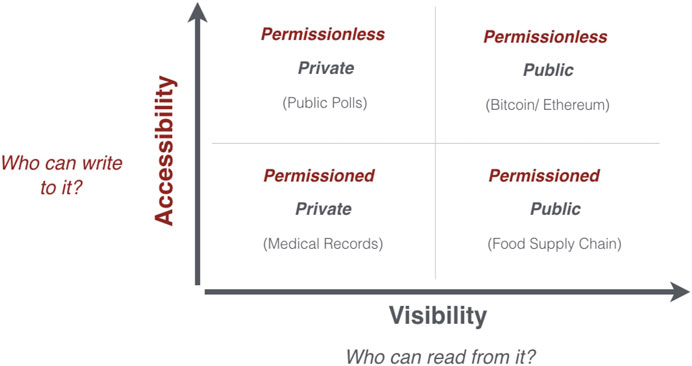
FIGURE 1. Blockchain systems matrix (Alsalamah and Nuzzolese, 2020).
In 2015, approximately half a billion dollars were invested in blockchain startups (Mettler, 2016). Another report released by the research group shows that almost USD 3.9 billion in investments were raised in the first three quarters of 2018 by blockchain and cryptocurrency-focused startups (Diar, 2018). Moreover, blockchain technology was adopted by some governments, such as Saudi government, which announced launching of the “Aber” project, the common digital currency between Saudi Arabian Monetary Authority (SAMA) and United Arab Emirates Central Bank (UAECB) (Saudi Arabian Monetary Authority, 2019). Along with the rise of investments in blockchain, the diversity of its applications has expanded (Mettler, 2016). Blockchain has recently begun to disturb many important industries, such as healthcare (Mettler, 2016). Furthermore, Bitcoin was the first to present the idea of digital currency (Kuo et al., 2017) (Nakamoto, 2008), which was used in financial disciplines, but through the years, the concept of digital coins has further been applied to disciplines such as health and medication.
Gamification to Fight Obesity
To encourage people to prevent illness and apply pHealth, gamification is a known methodology that can influence their behavior (Cugelman, 2013). Gamification is defined as “the use of game design elements in non-game contexts” (Cugelman, B., 2013). According to (Tang, 1992), money has a significant impact on people’s behavior, which is important because it is crucial to be motivated to overcome obesity or to become physically active. Many benefits can be derived from reducing obesity prevalence. Preventing people from becoming obese helps them to avoid noncommunicable and chronic diseases associated with obesity, and positively affect their quality of life (Cameron et al., 2011). Moreover, eliminating obesity as a cause of death, will have a significant impact on countries such as the United States, where approximately 300,000 people die prematurely due to obesity every year (Colman, 2000). In addition to the positive impact on people’s health, reducing obesity prevalence prevents associated diseases that usually require continuous and regular healthcare expenses, thereby affecting the economy. This study proposes a WIoT and blockchain-based solution to defeat obesity by encouraging people to engage in physical activities, and by motivating them with incentives that impact their behavior, such as gamification. The remainder of this paper is organized as follows: Literature Review reviews the literature and existing pHealth solutions and identifies the gap in the literature, Wholesome Coin Solution proposes the Wholesome Coin solution in detail, finally, in Wholesome Coin Design and Development, the paper concludes with a comprehensive discussion of challenges, impact, and further research recommendations.
Literature Review
Many studies mention that a lifestyle that heavily depends on technology is one cause of physical inactivity, which is associated with obesity (Rosin, 2008). However, the expansion of WIoT produced new technical devices that aim to help people live healthier lifestyles by encouraging them to engage in physical activities and by providing them with health measurements and feedback through mobile health applications (Ananthanarayan and Siek, 2012). Fitbit (2020) is a well-known example of a wristband wearable device used as an activity tracker. Fitbit tracks and records the measurements of different activities and health-related data, such as heart rate, walking distance, sleep patterns, and body temperature. The Fitbit wristband can be connected to a mobile application where the user can review a record of their activities and health-related data. One problem with Fitbit and similar devices is that although they are designed to encourage people to engage in physical activity by providing them with a self-monitoring tool, the effects are limited. According to a study conducted (Wang et al., 2015), simply providing Fitbit as a self-monitoring tool was insufficient to achieve an increase in target physical activity levels in a sample of overweight and obese adults. In addition, Fitbit admits that their average user is overweight, which signals the company to reconsider the development of its technology (Wright and Keith, 2014). More problems associated with such wearable devices are security and privacy issues. The Fitbit wristband collects health-related data that are considered highly sensitive and that can be used for nefarious purposes (Ching and Singh, 2016). One main concern is that the data can be exploited by insurance companies to obtain users’ health-related data (Ching and Singh, 2016).
To overcome the issues of data protection and user privacy invasion, newer technologies, such as blockchain, are being used to provide healthcare solutions (Kuo et al., 2017). In the following sections, we present some commercial and research solutions that use blockchain technology to overcome obesity, and to share, read, store, and manipulate personal health data, as a mobile health application (mHealth). A solution to provide an electronic health record system that shares personal health data in a way that ensures privacy, security, and interoperability, was proposed by Liang et al. (2017). The solution depends on wearable devices, manual inputs by the user, and medical records containing personal health data. The data are collected by a mobile health application, which is responsible for synchronizing data to a cloud-based database platform. A blockchain network is used to ensure the integrity of data, manages access requests by different parties, and record requests for future auditing (Liang, et al., 2017). Although the solution uses blockchain to improve security, one main vulnerability is the use of cloud database platforms to store health-related data. Public cloud services might generally be secure; however, its security depends on the provider’s security and privacy policies, which might not be adequate for highly sensitive data such as health-related data.
Another solution specializing in defeating obesity and encouraging people to engage in physical activity is HealthCoin Plus (Healthcoin+, 2021a). It is a commercial company that provides a digital coin called HealthCoin Plus that aims at reinventing health and wellness payment systems (Healthcoin+, 2021b). The system has a mobile application that allows the user to gain HealthCoin Plus coins after completing health-related challenges listed in the application. The user can use the coins to buy real goods and services. In their published whitepaper, (Healthcoin+, 2021b), they admit that the business model of HealthCoin Plus depends on finding a strategic partnership that supports the development of the community. In addition, the paper does not provide any details on how the user’s health-related data, which are supposed to be collected by the application, are stored and accessed. Universal HealthCoin (Jones, 2017) is another commercial blockchain-based health delivery and payment platform. It is a platform that aims to make health-related services more efficient and democratic (Jones, 2017). It focuses on allowing the provider to provide healthcare to people without concerning about payment-related issues, since the platform’s main focus is to enhance healthcare payment systems (Jones, 2017). Moreover, the platform has a feature that rewards people with tokens when they complete health-related activities. Although the platform has many features, it mainly focuses on improving healthcare payment systems for the providers. Universal HealthCoin states in their published whitepaper that the tokens or the coins gained after completing a health-related activity, can only be used to pay providers. Therefore, the user cannot use these tokens or coins to buy other goods or services (Jones, 2017). This may adversely affect user maintainability and negatively impact on user motive to gain more coins because coins can only be used to pay the provider. It is evident that some solutions fail to motivate obese people to engage in physical activities, while others fail to provide a comprehensive system that ensures the security and privacy of users’ health-related data.
Wholesome Coin Solution
Wholesome Coin provides a comprehensive platform that motivates obese people to engage in physical activity without invading the user’s privacy. Wholesome Coin comprises of two components: one uses WIoT to help patients manage their behavior by tracking their physical activities and diet; and the other utilizes blockchain-based cryptocurrency to allow healthcare payers to incentify patients by awarding digital coins that can be redeemed for real goods and services.
System Overview
The Wholesome Coin platform is based on a mobile system connected to a device that the user wears and measures the user’s health-related data, including walking distance, blood pressure, sleeping hours, eating habits, and heartbeats. The data are stored in and updated to a blockchain node. Each user is the manager of their own information and can allow access to health providers, government institutions, and insurance companies to view the data. The Wholesome Coin system applies the concept of patient-centric care by giving the user control over their health-related data that contain highly sensitive information. The user’s data are stored in a blockchain network providing security superior to cloud stored data. Through the blockchain network, government institutions and/or insurance companies can monitor and retrieve all stored information related to a user’s lifestyle upon receiving permission from the user; thereafter, when the user reaches a certain predetermined level of healthy lifestyle, the user will earn a corresponding amount of Wholesome Coin, which should be a digital coin verified by the government. In the event that the coin is verified and adopted by the government, Wholesome Coin will become an ideal currency for companies to accept as payment. The success of the system depends on the user’s ability to convert the maximum of the user’s assessed score into corresponding amount of coins. The user can then convert those coins to cash or even use them to buy goods and services because the coins are valuable, legible, and verified by the government. Digital coins are used to apply the gamification concept to entice the users to use the system by employing gaming strategies such as collecting coins, but with real money that the user can benefit from in real life. Every piece of health data generated by the wearable devices, will be uploaded to the blockchain network for record keeping. Furthermore, every request for access or permission for access granted, will be recorded in the blockchain for future auditing. By using blockchain, users will be guaranteed to have control over their health information, and will be able to give access to whomever they choose. Moreover, when data are uploaded to the blockchain, it is not removable, therefore the user cannot defraud any information. Blockchain is known for its fast transfer and identity authentication capabilities, which block any attempt to commit fraud, and can also handle increased scalability of transactions. Figure 2 demonstrates the Wholesome Coin ecosystem.
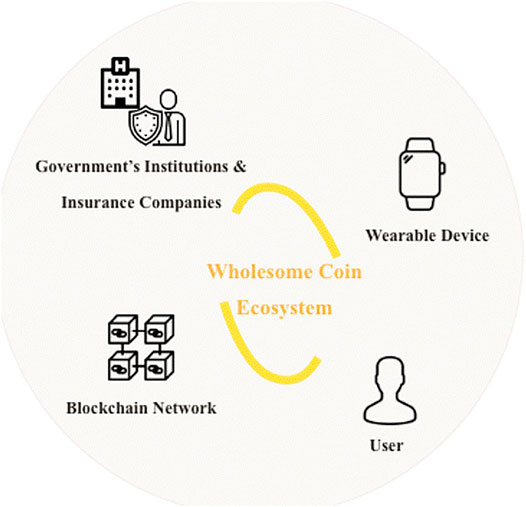
FIGURE 2. Wholesome coin ecosystem.
Wholesome Coin is a multi-user ecosystem that collects, assesses, and manipulates data coming from different sources that need to flow seamlessly. To integrate this solution with existing information resources, it would be best achieved by using a distributed infrastructure that would avoid discarding existing solutions that are not interoperable. This solution can be offered by blockchain technology rather than a traditional centralized infrastructure.
Wholesome Coin is a permissioned private type of blockchain that preserves users’ privacy, while allowing all system users to contribute to one or all of the three components of this ecosystem, i.e., diet tracking, exercise tracking, and coin rewards. The system allows only authorized users access to a user’s data ledger.
System Entities
System Users
System users are those users who store health-related data on the system and are authorized to grant access of such data to other entities. For example, a user can grant a private sector health payer reading and writing rights to their data, while limiting other health payers (government) to only reading rights. Furthermore, users can access their full transaction history (exercise, diet, coins, etc.) that has been recorded in the blockchain ledger.
Wearable Devices
Wearable devices are responsible for collecting users’ health-related data, such as walking distance, heartbeat, blood pressure, burned calories, and sleep patterns. The wearable device is connected to the user’s account through the mobile health application, which works as a dashboard and control port for the user. The data are directly uploaded to the blockchain network.
Health Payers
Health payers (including governments and insurance companies) are responsible to verify transactions from users’ requests to redeem coins. In addition, government institutions might, for example, allow a better exchange rate for Wholesome Coin to obese people for calories burned to encourage them to continue exercising. However, insurance companies might exert users’ exercise data to the user’s detriment, such as refusing to process a treatment for abnormal blood pressure because the user does not exercise sufficiently. Conversely, insurance companies can reward people who exercise.
Blockchain Network
A blockchain network is an ecosystem in which relevant user data are shared with a list of trusted participants of health payers. Wholesome Coin allows system users to completely control the data collected and the list of participants using private wallets (accessed through mobile-based apps). Simultaneously, health payer participants can grant users awards through a web-based app (Dapp). In addition, Wholesome Coin records all access requests and transactions for future auditing.
Wholesome Coin Design and Implementation
Wholesome Coin architecture comprises of 5-tier layered architecture as illustrated in Figure 3:
• User Interface Layer: with different interfaces for the user (mobile-based app) and health payer participants (web-based Dapp);
• Application Services Layer: containing the three key services provided for the Wholesome Coin users and participants;
• Authorization Layer: authorizes users before granting them access rights to the solution. Health payers are authorized to reward users with digital coins, while users are authorized to track their exercise and diet;
• Blockchain Layer: stores the on-chain data that must be immutable, known generator, and time sequence on a shared ledger. This is linked to the final physical layer, where all the data are stored. Access to data is granted based on access rights and implemented through a smart contract for each service; and
• Physical Layer: contains local off-chain database and WIoT sensor data that feeds the on-chain data.
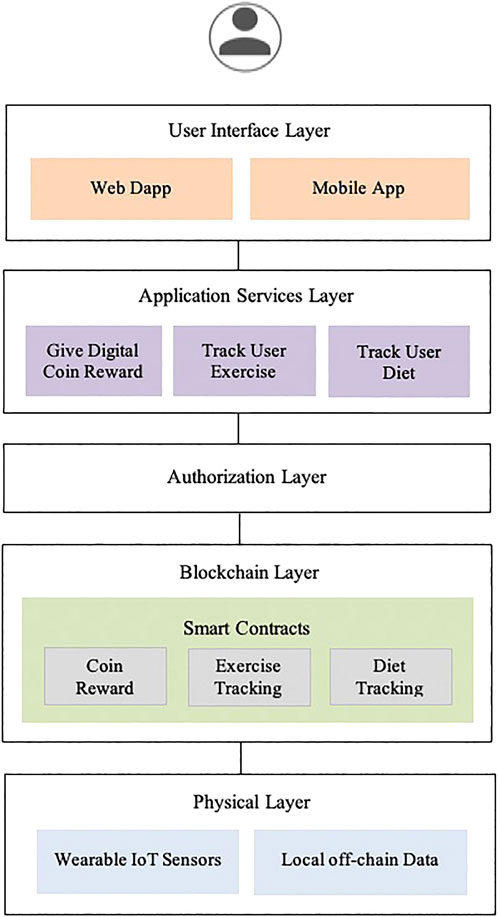
FIGURE 3. Wholesome coin architecture design.
Two types of data are used to serve Wholesome Coin users: first, data that is stored locally in a database (i.e., off-chain data) and are protected by health payers’ internal protocol and policies; second, data that is stored in the solution’s blockchain ledger (i.e., on-chain data) and is available to the user and all participants in the blockchain network. Figure 4 (Alsuwailem et al., 2019) illustrates the off-chain and on-chain data components along with the remaining system components. Users access to data was through a mobile-based iOS app and Web Dapp. First, the off-chain data was implemented using Firebase and connected to the XCode project using Swift programming language, as illustrated in Figure 5 (Alsuwailem et al., 2019). All requests to access the off-chain data on Firebase were checked against an authentication list. Second, the Web Dapp for Ethereum blockchain was developed separately from the iOS app. As shown in Figure 6 (Alsuwailem et al., 2019), the Web Dapp consists of a front-end, back-end, and server. Remix was used to write, compile, and deploy smart contracts written in Solidity programming language. The Web3 provider was chosen as the execution environment and connected to the Ethereum client node at the local host. The front-end was developed using VScode to build a web page with HTML, JavaScript, and CSS. The back-end to front-end connection uses Web3 to interact with the smart contract and the HTML page. The link between them was achieved by conveying the ContractABI and contract address from Remix to the HTML page. Web3 was written on the HTML page using JavaScript. The back-end and front-end interactions with the TestRPC server, are the Ethereum blockchain emulator for running the transactions. When the TestRPC server is activated, it provides 10 fake Ethereum accounts with 100 Ethers for each account, allowing calls to be made to the blockchain. The smart contracts are called via Web3 on the HTML page using an account address, and the transactions are made in the TestRPC server. Finally, the Dapp was built on a private Ethereum blockchain with three smart contracts and used Truffle to compile it to the private Ethereum network; the Geth Server was used to run it. The Ethereum platform was chosen over Bitcoin. This is because it is an open source that supports blockchain’s third generation, supporting general applications beyond currency and financial services (Swan, 2015). The Wholesome Coin application uses the platform to support the three system cases used in the healthcare sector to collect medical data, create cryptocurrency to incentivize users, and provide financial services to redeem the coins collected as rewards.
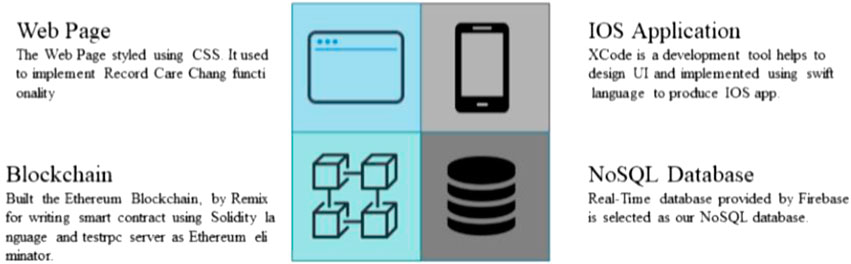
FIGURE 4. Off-chain and on-chain components (Alsuwailem et al., 2019).
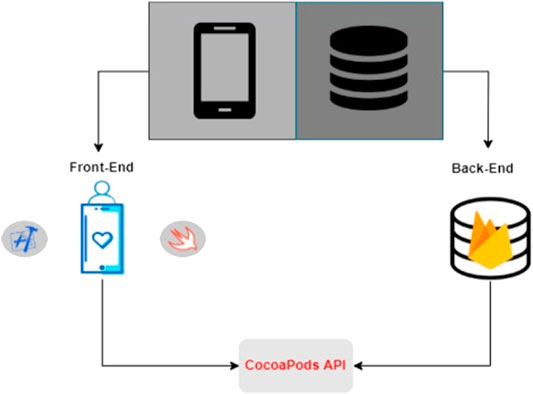
FIGURE 5. Wholesome Coin off-chain components (Alsuwailem et al., 2019).

FIGURE 6. Wholesome Coin on-chain system components (Alsuwailem et al., 2019).
Discussion
Obesity is a major problem that has a negative impact on health, societies, and economies. It was considered an epidemic that needed to be treated effectively. Overcoming obesity is challenging because, to prevent people from becoming obese, they need to be motivated and engaged in physical activities. To date, there is no cryptocurrency-based digital eHealth solutions in GCC countries that targets the population and incentivizes them. In this study, we proposed a solution that encourages people to become healthier by exploiting technology. The solution integrates two rising technologies: WIoT and blockchain. The digital coins employed through blockchain technology enabled the concept of gamification in which users are motivated to engage in more physical activities because the more activities the user take part in, the more coins the user gains. Considering that the digital coins are real and can be used to buy goods and services, it can be expected to increase the user’s motivation. In addition, the use of blockchain, which is a reliable and secure platform to keep users’ data, increases the user’s trust because health-related data are highly protected. Wholesome Coin can help people to easily achieve a healthier lifestyle as they move closer to becoming fit and wholesome. Inevitably, encouraging people to live healthier, assists in preventing chronic diseases such as diabetes, high cholesterol, knee and back problems, heart diseases, and depression.
Conclusion
Wholesome Coin can have a positive impact on the government’s economy for the reason that the solution firmly involves government institutions as the main partners and sponsors. When people are healthy, medical costs are less and hospital visits diminish. People are also less likely to need surgical procedures, such as sleeve gastrectomy and medicines for diseases such as diabetes and high cholesterol. Because our solution depends on the accuracy of WIoT in measuring health-related data and its development in identifying identity techniques, this might result in the solution depending mainly on the evolution of such technology. Therefore, we encourage further research into and development of WIoT in general, as well as investigating the degree to which people are willing to use such systems in the region. In conclusion, the authors do not have concerns about the likelihood of government to use a system that depends on digital coins and blockchain, because some governments in the GCC have already started adopting projects that use similar technologies such as Masdar in UAE (Masdar, 2021) and NEOM in Saudi Arabia (NEOM, 2020), thereby providing a strong indication that the Wholesome Coin system, which depends on the same technology, can be adopted and implemented in the near future.
Like any digital health solution, Wholesome Coin has a few key challenges of which adoption and misuse are paramount. Like any other commercial solution, it is prone to misuse because it involves money. Even with a tight access control model, authorized users can manipulate the system to redeem more coins, which could be managed through regular or random physical visits to verify user assessments. With regards to adoption, greenfield projects such as smart cities (Masdar, 2021; NEOM, 2020), are the ideal targets to adopt the Wholesome Coin application as the environment attracts people with the right mindset, most likely prone to adopt to new smart solutions.
Data Availability Statement
The original contributions presented in the study are included in the article/Supplementary Material, further inquiries can be directed to the corresponding author.
Author Contributions
HA contributed to solution development, article writing, and overall article review from the perspective of subject-matter expertize to validate the solution and design. SN conceptualized the article, designed the solution ecosystem, reviewed the literature, and wrote relevant sections in this article. SA supervised and evaluated the concepts and development of the solution and designed the architecture. AA, AA, and FA contributed to the ecosystem design and literature review.
Funding
This work has received funding from the Deanship of Scientific Research at the King Saud University.
Conflict of Interest
SN was employed by Saudi Technology and Security Comprehensive Control Company.
The remaining authors declare that the research was conducted in the absence of any commercial or financial relationships that could be construed as a potential conflict of interest.
Acknowledgments
The author would like to thank Ghada Alsuwailm, Fatima Bin Rajeh, Samar Alharbi, Salmah AlQahtani, Razan Alarifi, and Shaden Alshargi for both on-chain and off-chain data implementation support, which contributed significantly to Wholesome Coin’s design and implementation.
References
Akil, L., and Ahmad, H. A. (2011). Relationships between Obesity and Cardiovascular Diseases in Four Southern States and Colorado. J. Health Care Poor Underserved 22 (4), 61–72. doi:10.1353/hpu.2011.0166
Alqarni, S. M. (2016). A Review of Prevalence of Obesity in Saudi Arabia. J. Obes. Eat. Disord. 2, 2. doi:10.21767/2471-8203.100025
Alsalamah, S., and Nuzzolese, E. (2020). Promising Blockchain Technology Applications and Use Case Designs for the Identification of Multinational Victims of Mass Disasters. Front. Blockchain 3, 34. doi:10.3389/fbloc.2020.00034
Alsuwailem, G. N., Alrajeh, F., Aharbi, S., AlQahtani, S., AlArifi, R., and AlShargi, S. (2019). eHomeCaregiving: A Patient-Centered Blockchain for Family Caregiving [Dissertation]. Riyadh: King Saud University.
Ananthanarayan, S., and Siek, K. A. (2012). Persuasive Wearable Technology Design for Health and Wellness in 2012 6th International Conference on Pervasive Computing Technologies for Healthcare (PervasiveHealth), 236–240. doi:10.4108/icst.pervasivehealth.2012.248694
Burns, K. (2016). Estimating the Economic Cost of Obesity in Canadian Population. Manitoba, Canada: University of Winnipeg.
Cameron, A. J., Magliano, D. J., Dunstan, D. W., Zimmet, P. Z., Hesketh, K., Peeters, A., et al. (2011). A Bi-directional Relationship between Obesity and Health-Related Quality of Life: Evidence from the Longitudinal AusDiab Study. Int. J. Obes. 36:2, 295–303. doi:10.1038/ijo.2011.103
Ching, K. W., and Singh, M. M. (2016). Wearable Technology Devices Security and Privacy Vulnerability Analysis. Ijnsa. 8: 3, 19–30. bio: doi:10.5121/ijnsa.2016.8302
Cugelman, B. (2013). Gamification: What it Is and Why it Matters to Digital Health Behavior Change Developers. JMIR Serious Games. 1:e3, doi:10.2196/games.3139
Diar. (2018). The Digital Assets & Regulation Trade Publication. Available at: https://diar.co/. (Accessed March 15, 2020).
Fitbit. (2020). Fitbit Official Site for Activity Trackers and More. Available at: https://www.fitbit.com/my/home. (Accessed March 13, 2020).
Healthcoin+. (2021a). H+: A New Cryptocurrency for a New World of Care. Available at: https://www.healthcoinplus.com/ (Accessed January 16, 2021).
HealthCoin+ (2021b). HealthCoin+ Whitepaper: The Coin to Reinvent Health and Wellness Payment Systems. HealthCoin Plus. Available at: https://www.healthcoinplus.com/wp-content/uploads/2019/02/Ammended-HealthCoin-Plus-Whitepapers-with-DCRC.pdf. (Accessed January 16, 2021).
HiremathYang, S. G., and Mankodiya, K. (2014). “Wearable Internet of Things: Concept, Architectural Components and Promises for Person-Centered Healthcare,” in 2014 4th International Conference on Wireless Mobile Communication and Healthcare - Transforming Healthcare Through Innovations in Mobile and Wireless Technologies (MOBIHEALTH), Athens, Greece, 304–307. doi:10.1109/MOBIHEALTH.2014.7015971
International Diabetes Federation (2021). The Global Impact of Diabetes. Available at: https://www.idf.org/. (Accessed January 16, 2021).
Jones, G. (2017). Universal Health Coin: The Story of a Public Benefit Corporation Creating a Cash-Based Health Cost Sharing System That Utilizes Blockchain Technology to Provide Fair Payment for Health Services. Bloomington, IN, USA: AuthorHouse.
Kuo, T.-T., Kim, H.-E., and Ohno-Machado, L. (2017). Blockchain Distributed Ledger Technologies for Biomedical and Health Care Applications. J. Am. Med. Inform. Assoc. 24: 6, 1211–1220. bio: doi:10.1093/jamia/ocx068
Liang, X., Zhao, J., Shetty, S., Liu, J., and Li, D. (2017). Integrating Blockchain for Data Sharing and Collaboration in mobile Healthcare Applications, 2017 IEEE 28th Annual International Symposium on Personal, Indoor, and Mobile Radio Communications (PIMRC). doi:10.1109/pimrc.2017.8292361
Masdar. (2021). Developing Clean Energy Worldwide. Available at: https://masdar.ae/. (Accessed February 25, 2021).
Mettler, M. (2016). “Blockchain Technology in Healthcare: The Revolution Starts Here,” in 2016 IEEE 18th International Conference on e-Health Networking, Applications and Services (Healthcom), Munich, Germany, 1–3. doi:10.1109/HealthCom.2016.7749510
NEOM. (2020). Avision of a New Future. Available at: https://www.neom.com/.(Accessed February 25, 2021).
Poon, C. C. Y., and Yuan-Ting Zhang, Y. T. (2008). Perspectives on High Technologies for Low-Cost Healthcare. IEEE Eng. Med. Biol. Mag. 27 (5), 42–47. doi:10.1109/memb.2008.923955
Rosin, O. (2008). The Economic Causes of Obesity: a Survey. J. Econ. Surv. 22 (4), 617–647. doi:10.1111/j.1467-6419.2007.00544.x
Saudi Arabian Monetary Authority. (2019). A Statement on Launching “ABER” Project, the Common Digital Currency between Saudi Arabian Monetary Authority (SAMA) and United Arab Emirates Central Bank (UAECB). SAMA 2019. Available at: http://www.sama.gov.sa/en-US/News/Pages/news29012019.aspx. (Accessed March 14, 2020).
Saudi General Authority of Statistics (2018). Bulletin of Household Sport Practice Survey. Saudi Arabia: GASTAT.
Saudi Ministry of Health. (2018). Health Days 2018. Available at: https://www.moh.gov.sa/en/HealthAwareness/healthDay/2018/Pages/HealthDay-2018-10-11.aspx. (Accessed March 13, 2020).
Swan, M. (2015). Blockchain: Blueprint for New Economy. 1st edition. Sebastopol, CA, USA: O’Reilly Media Inc.
Tang, T. L.-P. (1992). The Meaning of Money Revisited. J. Organiz. Behav. 13: 2, 197–202. doi:10.1002/job.4030130209
Teng, X. F., Zhang, Y., Poon, C. C. Y., and Bonato, P. (2008). Wearable Medical Systems for P-Health. IEEE Rev. Biomed. Eng. 1, 62–74. doi:10.1109/rbme.2008.2008248
Wang, J. B., Cadmus-Bertram, L. A., Natarajan, L., White, M. M., Madanat, H., Nichols, J. F., et al. (2015). Wearable Sensor/device (Fitbit One) and SMS Text-Messaging Prompts to Increase Physical Activity in Overweight and Obese Adults: a Randomized Controlled Trial. Telemed. e-Health, 21:10, 782–792. bio: doi:10.1089/tmj.2014.0176
World Health Organization (2020). Noncommunicable Diseases and Their Risk Factors. Available at: https://www.who.int/ncds/introduction/en/. (Accessed March 13, 2020).
World Health Organization (2018). Noncommunicable Diseases Country Profiles 2018. Geneva: World Health Organization.
World Health Organization (2000). Obesity: Preventing and Managing the Global Epidemic: Report of a WHO Consultation (WHO Technical Report Series 894. Geneva: World Health Organization.
Wright, R., and Keith, L. (2014). Wearable Technology: if the Tech Fits, Wear it. J. Electron. Resour. Med. Libraries 11 (4), 204–216. doi:10.1080/15424065.2014.969051
Keywords: Arab Gulf Cooperation Council, blockchain, COVID-19, eHealth, gamification, obesity, pHealth, wearable
Citation: Alsalamah HA, Nasser S, Alsalamah S, Almohana AI, Alanazi A and Alrrshaid F (2021) Wholesome Coin: A pHealth Solution to Reduce High Obesity Rates in Gulf Cooperation Council Countries Using Cryptocurrency. Front. Blockchain 4:654539. doi: 10.3389/fbloc.2021.654539
Received: 16 January 2021; Accepted: 24 May 2021;
Published: 12 July 2021.
Edited by:
Immaculate Dadiso Motsi-Omoijiade, University of Birmingham, United KingdomReviewed by:
Iztok Perus, University of Maribor, SloveniaTaghreed Justinia, King Saud bin Abdulaziz University for Health Sciences, Saudi Arabia
Copyright © 2021 Alsalamah, Nasser, Alsalamah, Almohana, Alanazi and Alrrshaid. This is an open-access article distributed under the terms of the Creative Commons Attribution License (CC BY). The use, distribution or reproduction in other forums is permitted, provided the original author(s) and the copyright owner(s) are credited and that the original publication in this journal is cited, in accordance with accepted academic practice. No use, distribution or reproduction is permitted which does not comply with these terms.
*Correspondence: Hessah A. Alsalamah, aGFsc2FsYW1haEBLU1UuRURVLlNB