 Amirhosein Shabani
- Department of Built Environment, Oslo Metropolitan University, Oslo, Norway
Seismic vulnerability assessment is crucial for evaluating the resilience of structures. OpenSees, an open-access and versatile tool, plays a pivotal role in accurately simulating the complex behavior of structures subjected to seismic loads. However, lacking a built-in graphical user interface (GUI) is one of the limitations of OpenSees that can hinder usability and accessibility. Moreover, users must rely on command-line inputs and scripts for interaction, potentially limiting its adoption by non-programmers. To address this, several GUIs were designed as pre- and post-processor for OpenSees. In this study, 15 GUIs were categorized as open access or commercial. The functionalities and features of the GUIs, such as open-source nature, three-dimensional (3D) modeling and visualization capabilities, automation of incremental dynamic analysis (IDA), and simplification of soil-structure interaction (SSI) modeling, were examined. Note that certain GUIs were introduced with a focus on modeling and analysis of specific structures that were reviewed in this study. This mini-review aims to guide OpenSees users in choosing an appropriate GUI for their projects and support developers in improving existing GUI functionality or creating advanced GUIs that comprehensively cater to users’ needs.
1 Introduction
Recent earthquakes have revealed significant losses and damages to existing structures, underscoring the critical role of seismic analysis in ensuring their safety and reliability (Zucconi et al., 2018; Papazafeiropoulos and Plevris, 2023). The behavior of structures under seismic loads is characterized by high complexity and nonlinearity, rendering traditional linear analysis methods insufficient in capturing the full extent of their response (Caprili et al., 2012; Sandoli et al., 2021). Consequently, advanced techniques like nonlinear static and dynamic analysis have become imperative for accurately predicting how structures will react to earthquakes (Shabani et al., 2021a; Gönen and Soyöz, 2022). These sophisticated analysis methods empower engineers to design structures that can effectively withstand seismic forces, thereby mitigating the risk of structural failure and safeguarding lives and property (Shabani et al., 2021b).
OpenSees (Open System for Earthquake Engineering Simulation) is a powerful open-source finite element software widely used for seismic analysis of structures (Mazzoni et al., 2006). OpenSees was created at the University of California, Berkeley’s Pacific earthquake engineering research center (PEER) in 1998 (McKenna, 2011). The objective of the PEER research program was to establish a formalized performance-based earthquake engineering approach, supplying valuable data, models, and software tools. The decision to develop OpenSees as an open-source software stemmed from the desire to foster collaboration, engage the community, enable customization and adaptability, and facilitate educational and training opportunities (Mazzoni et al., 2006). OpenSees was implemented using a combination of programming languages, including C, C++, and Fortran (McKenna, 2011).
OpenSees offers several advantages over other software, including its open-source nature, advanced material models, extensive element library, and support for parallel computing. Additionally, OpenSees has been extensively validated through comparisons with experimental data and other software, making it a reliable and trustworthy tool for seismic analysis (ASDEA, 2020). Various studies encompass the verification or validation of numerical models for a wide range of structural systems, such as reinforced concrete shear walls (Kolozvari et al., 2018), steel (Lignos et al., 2011; Elhami Khorasani et al., 2015), unreinforced masonry buildings (Camata et al., 2022), and timber connections (Dong et al., 2021). Despite mentioned advantages, OpenSees has several limitations compared to other structural analysis software. OpenSees may have limited user support from the software developers themselves, potentially making it more difficult for users to seek assistance with complex issues or troubleshooting problems. Learning OpenSees and starting to work with it can be challenging for users who are unfamiliar with finite element analysis or computer programming. The most critical limitation of OpenSees is the lack of a built-in graphical user interface (GUI) (Mazzoni et al., 2006). Therefore, users have to rely on command-line inputs and scripts to interact with OpenSees, which can be less intuitive and more time-consuming, especially for users without programming expertise. This may limit the accessibility of OpenSees to a wider range of users who prefer a more visual and interactive interface for their analysis tasks. To address these limitations, various GUIs have been developed to enhance the usability of this versatile and powerful software framework. Consequently, conducting a study to evaluate and introduce GUIs, assess their practicality, and identify their strengths and limitations would provide valuable insights for users and developers.
This study focuses on conducting a comprehensive review of the prominent GUIs available for the OpenSees software framework. The primary objective is to present the advantages and disadvantages of these GUIs, enabling OpenSees users to identify the most effective approach for model development and nonlinear analysis. The GUIs under investigation are classified into open access and commercial categories, and their characteristics were examined, including their capability for three-dimensional (3D) modeling, the range of analysis types they support, and integration with other software for importing the numerical models. Furthermore, the study explores GUIs developed for specific purposes, offering insights into their functionalities. By providing this information, the article aims to assist OpenSees users in selecting the optimal GUI solution for their modeling and analysis needs and aid developers in enhancing the functionality of existing GUIs or developing advanced GUIs that comprehensively meet the needs of users.
2 Open access GUIs
Open access GUIs are available at no cost, making them accessible to users with limited budgets. Users can benefit from a large user community that provides support and tutorials. Some open access GUIs are also open-source, allowing users to access and modify the source code to suit their needs and customize the GUI’s functionalities. However, open access GUIs have some disadvantages. They may have limited functionalities and fewer capabilities compared to commercial GUIs. Additionally, the support options provided by the developers may be limited. The development pace of open access GUIs may be slower, resulting in less frequent updates and the introduction of new features. Moreover, open access GUIs may not have undergone rigorous testing, increasing the likelihood of encountering bugs or crashes.
Some of the open access GUIs were developed for specific types of models. Build-X was specifically designed to support the modeling and nonlinear analysis of buildings (Psyrras and Sextos, 2018). The GUI offers a wide selection of frame members with rectangular and circular cross-sections, which are extensively utilized in reinforced concrete (RC) buildings and are widely regarded as the preferred options. In addition, Build-X does not support interactive navigation within the GUI and does not allow for changing inputs once they have been confirmed. As a result, most choices made within the software are considered final and cannot be easily modified. Build-X sets itself apart from other GUIs by offering a user-friendly platform to consider soil-structure interaction (SSI) effects. This means that Build-X can take into account the influence of soil compliance on the structural response of buildings in an approximate yet acceptable and computationally efficient manner. Given that SSI has a notable impact on the modal properties, including natural frequency values and mode shapes, and seismic behavior of structures, it is essential to incorporate this platform into OpenSees GUIs (Shabani et al., 2022). The GUI provides modeling options for commonly used foundation types, including footings and basements. To capture inertial interaction, the system automatically manages soil-foundation springs (Psyrras and Sextos, 2018). Additionally, Build-X offers options to incorporate kinematic interaction and account for strain-dependent soil shear modulus (Psyrras and Sextos, 2018).
DYANAS is another GUI with a specific feature developed for nonlinear dynamic analysis of single-degree-of-freedom (SDOF) systems (Baltzopoulos et al., 2018). The software is a user-friendly graphical interface based on Matlab® that interacts with the OpenSees. Users can perform incremental dynamic analysis (IDA) (Vamvatsikos and Cornell, 2002), cloud analysis, and multi-stripe analysis (Jalayer and Cornell, 2009) using the software. These analyses involve subjecting the systems to diverse earthquake-induced ground motion records (Gönen and Soyöz, 2021). Hence, automating the intricate procedure of importing, applying, and adjusting seismic records, as well as generating the resultant curves, can prove valuable for earthquake engineers and users who may have limited expertise in the field. The primary objective of this software is to establish the correlation between seismic intensity and engineering demand parameters by utilizing dynamic analysis methods commonly employed in performance-based earthquake engineering (Baltzopoulos et al., 2018).
2-dimensional (2D) models are suitable for buildings with simple plan forms that lack mass or stiffness cross-coupling between orthogonal horizontal directions. Although 2D numerical models are computationally efficient, they are limited to modeling planar structures focusing on a motion in a single plane direction (Zaherdannak et al., 2020). 2D models do not capture the full 3D behavior of structures (Park et al., 2009). In particular, 2D models may not accurately capture the torsional response of structures.
FM-2D is an open-source GUI that was developed for seismic analysis of different steel buildings and RC moment-resisting frames that can be numerically idealized in a 2D environment (Elkady, 2022). Automating IDA and determining the seismic fragility curves are the most important features of this Matlab®-based GUI.
Hyperomet dedicates to modeling unreinforced masonry buildings based on DM-MVLEM and performing nonlinear analysis, including IDA (Shabani and Kioumarsi, 2022a). DM-MVLEM is a macroelement for the nonlinear modeling of unreinforced masonry piers and spandrels (Shabani and Kioumarsi, 2022b). The unified method is another modeling strategy in Hyperomet for nonlinear modeling of unreinforced masonry buildings with higher uncertainty levels and less computational effort than the DM-MVLEM (Shabani and Kioumarsi, 2022c). Calculators were also provided to determine the mechanical properties of the structural elements, including initial in-plane stiffness and maximum lateral strength. The GUI allows the analysts to perform different types of analysis by importing the model file in the tcl format; then, the GUI produces the necessary subroutine files. In addition to the limitations posed by the software’s 2D environment, the GUI also lacks visualization features for displaying and interpreting the analysis results (Shabani and Kioumarsi, 2022a).
INSPECT-SPSW was designed for nonlinear modeling and seismic performance evaluation of steel walls based on the strip method in a 2D environment (AlHamaydeh et al., 2023). The user-friendly environment of GUI allows the user to model the steel shear walls efficiently and perform several types of analyses, including the cyclic pushover analysis that can be useful for validation purposes against the test results. Furthermore, the results visualizations can be beneficial for detecting the possible failure modes of the walls. The GUI does not provide a platform to run computational effort IDA, and no interoperability features with other computer-aided engineering (CAE) software is provided (AlHamaydeh et al., 2023).
OpenSeesPL (Lu et al., 2011) and MSBridge (Almutairi et al., 2018) are two GUIs designed by a developers’ group dedicated to modeling and analysis of 3D pile-ground interaction and multi-span bridge systems, respectively. The user-friendly GUI of OpenSeesPL allows the user to choose between the built-in materials, assigning damping parameters and performing nonlinear pushover and transient analysis (Lu et al., 2011). The same features were also provided in MSBridge to facilitate the nonlinear modeling and analysis of bridges. The effect of SSI can be considered using the sub-structure method by modeling the soil springs and choosing the built-in soil materials (Bapir et al., 2023). Furthermore, the transient analysis can be done by importing multiple ground motions. The results of the multiple transient analyses can be used for deriving the probabilistic repair cost, repair time, or carbon footprint plots as outcomes of the performance-based earthquake engineering platform (Mackie et al., 2010). The unique characteristics of the mentioned results and hazard curves distinguish this GUI from other similar software packages, setting it apart in terms of its features and capabilities (Almutairi et al., 2018).
OpenSees navigator (Yang et al., 2017), GID + OpenSees (Papanikolaou et al., 2017), and NextFEMdesigner (NextFEM, 2023) are well-known GUIs that were developed for modeling and analysis of different types of structures in a 3D environment. These GUIs allow the users to choose between different types of elements and material models from the OpenSees library to develop numerical models and perform different types of analysis using the OpenSees as a calculation engine. However, an interface that can facilitate the IDA is not provided in all the mentioned GUIs. Furthermore, a simplified platform for modeling the SSI is not provided. NextFEMdesigner is a GUI with additional paid features such as automatic generation of load combinations, checking the structural elements based on the design codes, or exporting drawing exchange format (dxf) drawing files, etc. Thermal analysis and integration with industry foundation classes (IFC) files are two features that can be accessible in the free version of the software (NextFEM, 2023).
FeView (Rahman et al., 2021), OpenSeesPyView (Guo et al., 2023), and OSLite (Chen, 2023) are alternative GUIs that offer pre- or post-processing capabilities for making general structural models. However, when compared to the aforementioned GUIs designed for general modeling purposes, they have more limited features. OpenSeesPyView serves as a GUI for OpenSeesPy (Zhu et al., 2018), the Python interpreter of OpenSees. With this GUI, users can export vector figures of the model and mode shapes to dxf file formats. While importing dxf files was possible in older versions of OSLite, it is not available in the latest versions. Moreover, the object-oriented feature of OSLite for interactive model creation of structures is not as powerful as the mentioned GUIs. It is under development, but the GUI can be utilized as a user-friendly model viewer tool (Chen, 2023).
Table 1 provides a comprehensive overview of the key features offered by these open-access GUIs. Some GUIs were designed for a specific purpose, as mentioned above; therefore, this capability is mentioned in the table to facilitate the comparison. It assists OpenSees users in selecting the most suitable options for their modeling and analysis needs. Additionally, Table 1 simplifies the comparison of functionalities among the GUIs and enables developers to enhance existing GUIs or create new advanced tools.
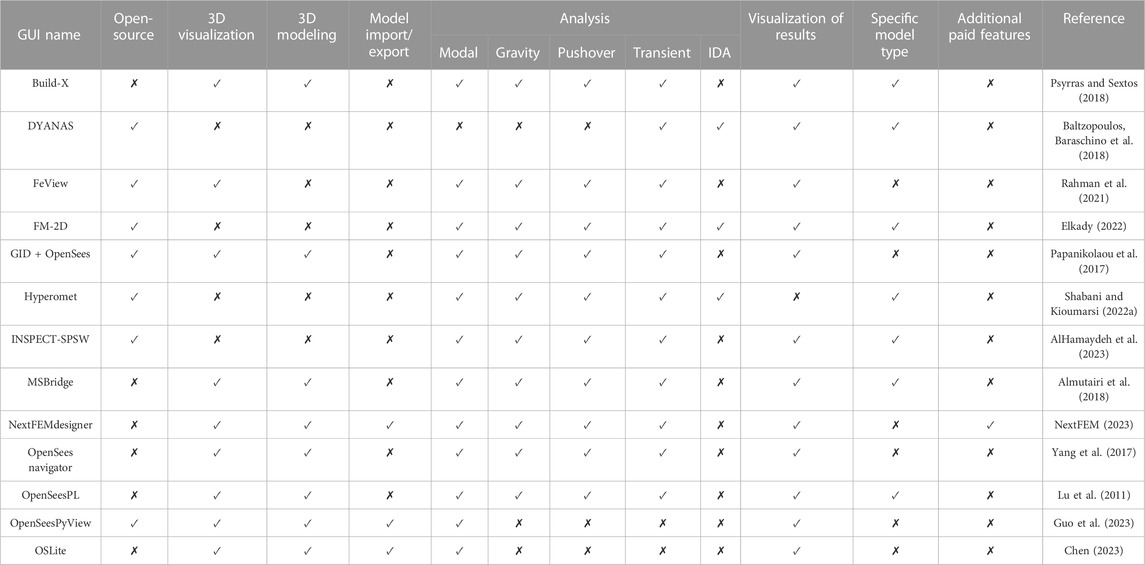
TABLE 1. Open access GUIs for OpenSees and their features and functionalities with relevant references.
3 Commercial GUIs
Commercial software often offers a wider range of features and capabilities than free ones. Professional support which is provided by developers, and the comprehensive documentation, tutorials, and training resources are the advantages of commercial GUIs. However, the licensing restrictions and their cost may be a barrier for users with limited budgets, and the users rely on the software vendors for updates, support, and future development.
eSEES is one of the commercial GUIs for OpenSees with a user-friendly environment (Mazzoni, 2023). So many courses for users from different levels of skills in the field of earthquake engineering and structural analysis were provided by the developer. Users can choose the required course for their project or use the GUI with various built-in materials or element types to model and analyze various structures. The feature of importing or exporting model files from other software is not provided in eSEES. The ability to interoperate with other modeling software, such as computer-aided design (CAD) software, can be valuable in handling large models and maximizing efficiency for the user. Furthermore, an interface for automating the IDA is not provided.
STKO, known as one of the most advanced GUIs for OpenSees, offers a comprehensive range of modeling capabilities for various structural systems (ASDEA, 2023). A notable advantage of STKO is its ability to import complex geometries through different file formats, enabling users to work with intricate structures for analysis. The GUI provides a user-friendly environment equipped with a vast library of materials and elements, simplifying the modeling process. Additionally, STKO supports parallel analysis using OpenSees MP (McKenna and Fenves, 2008), which allows users to perform computationally demanding nonlinear analyses on large numerical models. OpenSees MP serves as a secondary interpreter that facilitates the execution of multiple analyses. Users can define subdomains, specify parallel numberer and parallel equation solver settings, and benefit from the accelerated execution of analyses. This capability significantly enhances the efficiency of engineers and researchers when dealing with large models and more computationally intensive problems (McKenna and Fenves, 2008). By leveraging OpenSees MP, they can address complex structural analyses within a reasonable timeframe, unlocking the potential to tackle ambitious projects and explore intricate designs. However, it is worth noting that the GUI does not offer a dedicated platform for automating the computationally demanding IDA.
The features and functionalities of commercial GUIs with relevant references are provided in Table 2.

TABLE 2. Commercial GUIs for OpenSees and their features and functionalities with relevant references.
4 Discussion and future perspectives
The primary objective of this mini-review is to assist OpenSees users in selecting a suitable GUI that aligns with their specific project requirements. In the context of numerical modeling and nonlinear analysis of RC buildings with consideration of SSI, Build-X emerges as a recommended choice. For IDA of SDOF systems, DYANAS proves to be a valuable tool. When it comes to the structural analysis of multi-span RC bridges, the MSBridge GUI offers tailored functionalities. OpenSees PL is a favorable option for conducting nonlinear modeling and analysis of 3D pile-ground interaction. FM-2D, Hyperomet, and INSPECT-SPSW are freely available GUIs designed for modeling and analyzing various structural systems in a 2D environment. FM-2D is a suitable option for conducting analysis on different types of steel buildings and the RC moment-resisting frame system. Hyperomet offers a specialized solution for analyzing unreinforced masonry buildings. Lastly, INSPECT-SPSW provides a dependable platform for the analysis of steel shear wall systems.
Additionally, this study investigated various features of the 15 GUIs, including 3D modeling and visualization, interoperability with other CAE software, support for computationally demanding IDA, provision of a platform for modeling SSI, and results visualization. These investigations aim to help developers enhance the functionality of existing GUIs or develop more advanced GUIs that meet user needs comprehensively. Among the examined GUIs, 3D modeling and visualization emerged as crucial features for a finite element modeling GUI. However, FM-2D, Hyperomet, and INSPECT-SPSW lack these features and should consider incorporating them in future updates. Interoperability with other CAE software allows users to import or export numerical models in different file formats. This capability enables the utilization of advanced 3D modeling CAE tools for complex structure modeling, which can then be imported into a GUI for further structural analysis. Unfortunately, this valuable feature is absent in GUIs such as Build-X, Hyperomet, MSBridge, and the commercial eSEES GUI. Furthermore, user-friendly platforms for modeling SSI using the sub-structure method are only available in Build-X and MSBridge GUIs. As a computationally demanding seismic analysis method used in probabilistic seismic hazard analysis, IDA is only automated in FM-2D and Hyperomet. It is worth noting that DYANAS solely automates the IDA of SDOF oscillators, limiting its scope. Visualization of the results is considered one of the essential features of a GUI, which is provided in all the reviewed GUIs except Hyperomet, which should be added to the updated versions.
Among the 13 reviewed open access GUIs, users have the freedom to select the most suitable GUI for their project requirements. However, those with ample budget flexibility and a preference for advanced GUIs that offer a wide range of built-in materials and elements, along with responsive developer support, can opt for eSEES or STKO by purchasing the necessary licenses. Additionally, developers of these GUIs provide comprehensive tutorials, documentation, and supplementary courses to assist users in utilizing the software effectively.
Author contributions
AS is the sole author responsible for the conception of the study, conducting research, analyzing data, and drafting this article.
Acknowledgments
This work is a part of the HYPERION project. HYPERION has received funding from the European Union’s Framework Programme for Research and Innovation (Horizon 2020) under grant agreement No. 821054.
Conflict of interest
The author declares that the research was conducted in the absence of any commercial or financial relationships that could be construed as a potential conflict of interest.
Publisher’s note
All claims expressed in this article are solely those of the authors and do not necessarily represent those of their affiliated organizations, or those of the publisher, the editors and the reviewers. Any product that may be evaluated in this article, or claim that may be made by its manufacturer, is not guaranteed or endorsed by the publisher.
Author disclaimer
The contents of this publication are the sole responsibility of Oslo Metropolitan University (Work Package 5, Task 2) and do not necessarily reflect the opinion of the European Union.
References
AlHamaydeh, M., Maky, A. M., and Elkafrawy, M. (2023). INSPECT-SPSW: INelastic seismic performance evaluation computational tool for steel plate shear wall modeling in OpenSees. Buildings 13 (4), 1078. doi:10.3390/buildings13041078
Almutairi, A., Lu, J., Elgamal, A., and Mackie, K. (2018). MSBridge: OpenSees pushover and earthquake analysis of multi-span bridges-user manual. SSRP 16 (5).
Baltzopoulos, G., Baraschino, R., Iervolino, I., and Vamvatsikos, D. (2018). Dynamic analysis of single-degree-of-freedom systems (DYANAS): A graphical user interface for OpenSees. Eng. Struct. 177, 395–408. doi:10.1016/j.engstruct.2018.09.078
Bapir, B., Abrahamczyk, L., Wichtmann, T., and Prada-Sarmiento, L. F. (2023). Soil-structure interaction: A state-of-the-art review of modeling techniques and studies on seismic response of building structures. Front. Built Environ. 9. doi:10.3389/fbuil.2023.1120351
Camata, G., Marano, C., Sepe, V., Spacone, E., Siano, R., Petracca, M., et al. (2022). Validation of non-linear equivalent-frame models for irregular masonry walls. Eng. Struct. 253, 113755. doi:10.1016/j.engstruct.2021.113755
Caprili, S., Nardini, L., and Salvatore, W. (2012). Evaluation of seismic vulnerability of a complex RC existing building by linear and nonlinear modeling approaches. Bull. Earthq. Eng. 10 (3), 913–954. doi:10.1007/s10518-011-9329-4
Chen, J. (2023). OSLite-0.7.7. See http://www.oslite.tech/".), (Accessed 03, 2022).
Dong, H., He, M., Wang, X., Christopoulos, C., Li, Z., and Shu, Z. (2021). Development of a uniaxial hysteretic model for dowel-type timber joints in OpenSees. Constr. Build. Mater. 288, 123112. doi:10.1016/j.conbuildmat.2021.123112
Elhami Khorasani, N., Garlock, M. E. M., and Quiel, S. E. (2015). Modeling steel structures in OpenSees: Enhancements for fire and multi-hazard probabilistic analyses. Comput. Struct. 157, 218–231. doi:10.1016/j.compstruc.2015.05.025
Elkady, A. (2022). FM-2D - open-source platform for the 2-dimensional numerical modeling and seismic analysis of buildings. SoftwareX 17, 100927. doi:10.1016/j.softx.2021.100927
Gönen, S., and Soyöz, S. (2022). Reliability-based seismic performance of masonry arch bridges. Struct. Infrastructure Eng. 18 (12), 1658–1673. doi:10.1080/15732479.2021.1918726
Gönen, S., and Soyöz, S. (2021). Seismic analysis of a masonry arch bridge using multiple methodologies. Eng. Struct. 226, 111354. doi:10.1016/j.engstruct.2020.111354
Guo, J., Ye, A., Wang, X., and Guan, Z. (2023). OpenSeesPyView: Python programming-based visualization and post-processing tool for OpenSeesPy. SoftwareX 21, 101278. doi:10.1016/j.softx.2022.101278
Jalayer, F., and Cornell, C. A. (2009). Alternative non-linear demand estimation methods for probability-based seismic assessments. Earthq. Eng. Struct. Dyn. 38 (8), 951–972. doi:10.1002/eqe.876
Kolozvari, K., Orakcal, K., and Wallace, J. W. (2018). New opensees models for simulating nonlinear flexural and coupled shear-flexural behavior of RC walls and columns. Comput. Struct. 196, 246–262. doi:10.1016/j.compstruc.2017.10.010
Lignos, D. G., Chung, Y., Nagae, T., and Nakashima, M. (2011). Numerical and experimental evaluation of seismic capacity of high-rise steel buildings subjected to long duration earthquakes. Comput. Struct. 89 (11), 959–967. doi:10.1016/j.compstruc.2011.01.017
Lu, J., Elgamal, A., and Yang, Z. (2011). OpenSeesPL: 3D lateral pile-ground interaction user manual (beta 1.0). San Diego, CA, USA: Department of Structural Engineering, University of California, 147.
Mackie, K. R., Wong, J.-M., and Stojadinović, B. (2010). Post-earthquake bridge repair cost and repair time estimation methodology. Earthq. Eng. Struct. Dyn. 39 (3), 281–301. doi:10.1002/eqe.942
Mazzoni, S. (2023). eSEES, a graphical and scripting user interface for OpenSees. University of California, Santa Monica, CA, USA.
Mazzoni, S., McKenna, F., Scott, M. H., and Fenves, G. L. (2006). “OpenSees command language manual,” in Pacific earthquake engineering research (PEER) center (Richmond, CA, USA).
McKenna, F., and Fenves, G. L. (2008). Using the OpenSees interpreter on parallel computers. Berkeley, CA, USA: USA: University of California.
McKenna, F. (2011). OpenSees: A framework for earthquake engineering simulation. Comput. Sci. Eng. 13, 58–66. doi:10.1109/MCSE.2011.66
NextFEM, (2023). NextFEM desinger user's manual, Version 2.1. NextFEM, Oderzo, Italy (piazza del Foro Romano 12, 31046 Oderzo (TV) Italy).
Papanikolaou, V., Kartalis-Kaounis, T., Protopapadakis, V., and Papadopoulos, T. (2017). “GiD+ OpenSees interface: An integrated finite element analysis platform,” in Lab of R/C and masonry structures (Thessaloniki, Greece: Aristotle University of Thessaloniki).
Papazafeiropoulos, G., and Plevris, V. (2023). Kahramanmaraş—gaziantep, türkiye mw 7.8 earthquake on 6 february 2023: Strong ground motion and building response estimations. Buildings 13 (5), 1194. doi:10.3390/buildings13051194
Park, J., Towashiraporn, P., Craig, J. I., and Goodno, B. J. (2009). Seismic fragility analysis of low-rise unreinforced masonry structures. Eng. Struct. 31 (1), 125–137. doi:10.1016/j.engstruct.2008.07.021
Psyrras, N. K., and Sextos, A. G. (2018). Build-X: Expert system for seismic analysis and assessment of 3D buildings using OpenSees. Adv. Eng. Softw. 116, 23–35. doi:10.1016/j.advengsoft.2017.11.007
Rahman, M. M., Nahar, T. T., and Kim, D. (2021). FeView: Finite element model (FEM) visualization and post-processing tool for OpenSees. SoftwareX 15, 100751. doi:10.1016/j.softx.2021.100751
Sandoli, A., Pacella, G., Cordasco, E. A., and Calderoni, B. (2021). PROS and CONS of linear and nonlinear seismic analyses for existing URM structures: Application to a historical building. Structures 32, 532–547. doi:10.1016/j.istruc.2021.03.021
Shabani, A., Alinejad, A., Teymouri, M., Costa, A. N., Shabani, M., and Kioumarsi, M. (2021a). Seismic vulnerability assessment and strengthening of heritage timber buildings: A review. Buildings 11 (12), 661. doi:10.3390/buildings11120661
Shabani, A., Feyzabadi, M., and Kioumarsi, M. (2022). Model updating of a masonry tower based on operational modal analysis: The role of soil-structure interaction. Case Stud. Constr. Mater. 16, e00957. doi:10.1016/j.cscm.2022.e00957
Shabani, A., and Kioumarsi, M. (2022). A novel macroelement for seismic analysis of unreinforced masonry buildings based on MVLEM in OpenSees. J. Build. Eng. 49, 104019. doi:10.1016/j.jobe.2022.104019
Shabani, A., and Kioumarsi, M. (2022). Hyperomet: An OpenSees interface for nonlinear analysis of unreinforced masonry buildings. SoftwareX 20, 101230. doi:10.1016/j.softx.2022.101230
Shabani, A., and Kioumarsi, M. (2022). “Pros and cons of various equivalent frame models for nonlinear analysis of URM buildings,” in 8th European congress on computational methods in applied sciences and engineering (ECCOMAS 2022). June 2022, (Oslo, Norway).
Shabani, A., Kioumarsi, M., and Zucconi, M. (2021). State of the art of simplified analytical methods for seismic vulnerability assessment of unreinforced masonry buildings. Eng. Struct. 239, 112280. doi:10.1016/j.engstruct.2021.112280
Vamvatsikos, D., and Cornell, C. A. (2002). Incremental dynamic analysis. Earthq. Eng. Struct. Dyn. 31 (3), 491–514. doi:10.1002/eqe.141
Yang, T., Schellenberg, A., and Kohama, E. (2017). OpenSees navigator. Berkeley, CA, USA: Pacific Earthquake Engineering Research Center. See https://openseesnavigator.berkeley.edu/.
Zaherdannak, A., Shabani, A., and Erfani, S. (2020). Seismic performance evaluation of special RC frames with gravity steel columns under the base level. Shock Vib. 2020, 8825258. doi:10.1155/2020/8825258
Zhu, M., McKenna, F., and Scott, M. H. (2018). OpenSeesPy: Python library for the OpenSees finite element framework. SoftwareX 7, 6–11. doi:10.1016/j.softx.2017.10.009
Keywords: graphical user interface, OpenSees, software functionalities, numerical modeling, seismic analysis, soil-structure interaction
Citation: Shabani A (2023) A review of graphical user interfaces of OpenSees software framework. Front. Built Environ. 9:1233116. doi: 10.3389/fbuil.2023.1233116
Received: 01 June 2023; Accepted: 17 July 2023;
Published: 26 July 2023.
Edited by:
Yang Song, Southwest Jiaotong University, ChinaReviewed by:
Zhao Xu, Tongji University, ChinaSemih Gonen, Universitat Politecnica de Catalunya, Spain
Copyright © 2023 Shabani. This is an open-access article distributed under the terms of the Creative Commons Attribution License (CC BY). The use, distribution or reproduction in other forums is permitted, provided the original author(s) and the copyright owner(s) are credited and that the original publication in this journal is cited, in accordance with accepted academic practice. No use, distribution or reproduction is permitted which does not comply with these terms.
*Correspondence: Amirhosein Shabani, YW1pcmhvc2VAb3Nsb21ldC5ubw==