 Ahmed S. Qazi1*
 Daphne Schmid1Nicole Gridley2Kate Lambourne3
 Andrew J. Daly-Smith4,5
 Phillip D. Tomporowski1
- 1Department of Kinesiology, University of Georgia, Athens, GA, United States
- 2Carnegie School of Education, Leeds Beckett University, Leeds, United Kingdom
- 3ICF Inc., Fairfax, VA, United States
- 4Faculty of Life Sciences and Health Studies, University of Bradford, Bradford, United Kingdom
- 5Centre for Applied Education Research, Wolfson Centre for Applied Health Research, Bradford Royal Infirmary, Bradford, West Yorkshire, United Kingdom
Research findings reveal a relationship between acute bouts of exercise and procedural/declarative memory. Prior systematic reviews report small/moderate effects of acute exercise on episodic long-term declarative memory. A somewhat overlooked issue is the influence of exercise on specific types of episodic memory processing. The primary focus of this systematic review and meta-analysis was to evaluate the effects of acute bouts of exercise prior to, during, and following encoding on free-, cued-recall, and recognition episodic memory. PubMed, Scopus, and EBSCO databases were entered, and 42 experiments were subject to meta-analysis. Exercise prior to encoding improved memory (d = 0.23) and affected free-recall (d = 0.40) tests of memory more than cued-recall (d = 0.08) or recognition (d = −0.06) memory. Exercise following encoding improved memory (d = 0.33) and affected recognition (d = 0.62) memory more than free- (d = 0.19) or cued-recall (d = 0.14) memory. Exercise during encoding did not influence memory (d = −0.04). Moderator analyses revealed that exercise before encoding impacted memory differentially on the basis of age, exercise type, and test-timing. When exercise occurred after encoding, age and exercise type, but not timing of the test influenced memory performance. Exercise before and after encoding has selective effects on episodic memory. Additional experiments that evaluate how bouts of exercise influence memory encoding are warranted.
Systematic review registration: PROSPERO, identifier CRD42020202784.
1 Introduction
There has been a marked increase in recent years in studies of the effects of individual bouts of exercise on long-term memory. Much of this research activity was spurred by several literature reviews that provide clear support for the view that acute exercise enhances memory (Lambourne and Tomporowski, 2010; Roig et al., 2013). Reviewers conclude that the strength of the acute exercise-memory relation is moderated by such characteristics as the type of exercise performed and its intensity and duration, the temporal relation between exercise and encoding, and the delay between encoding and testing. Questions remain, however, concerning the degree to which the impact of exercise depends on the manner in which memories are processed, stored, and retrieved. Answers to these questions have implications for both researchers and practitioners who are interested in designing exercise or broader physical activity interventions that can maximally affect memory and learning.
A meta-analytic review of the exercise-memory literature conducted by Roig et al. (2013) categorized memory tasks in terms of short-term and long-term memory tests. Studies were classified on the basis of the time between encoding and testing, with delays longer than 2 min categorized as long-term memory. Further, long-term memory tests were divided into declarative (episodic or semantic) and non-declarative (procedural) memory tests. The results of seven experiments indicated that acute bouts of exercise enhanced performance on long-term procedural and declarative memory tests, with moderate to large effect sizes. More recently, Loprinzi et al. (2019a) focused specifically on the effects of acute bouts of exercise on short-term and long-term episodic memory. The authors' review of 25 experiments provided information concerning the temporal relation between exercise bouts and encoding (prior, during, and following encoding) and such study characteristics as exercise type, intensity, and duration. Exercise performed prior to and following encoding enhanced performance, with larger effect sizes when exercise was performed following encoding than prior to encoding. Exercise performed during encoding had a negative effect on episodic memory.
The meta-analytic reviews by Roig et al. (2013) and Loprinzi et al. (2019a) and others (Lambourne and Tomporowski, 2010) support a causal relation between acute exercise and memory storage. These reviews also clarify exercise parameters and individual difference factors that influence the strength of the relation. Yet to be addressed, however, are questions concerning the uniformity of acute exercise effects across different forms of memory. The memory tests employed in experiments evaluated in previous reviews vary widely and the cognitive processes involved in performing individual tests cannot be clearly delineated. Roig et al. (2013), for example, included tests of verbal fluency, associative memory, paragraph reading, code-substitution, object recognition tasks, and an assortment of word recall tests. Similarly, Loprinzi et al. (2019a) included studies that employed the California Verbal Learning Test, Rey Auditory Verbal Learning Test (RAVLT), paragraph recall, image recognition, recall of filmed scenarios, and laboratory constructed tests. The consensus among re-searchers is that humans possess several different types of memory, all of which are maintained via underlying brain networks (Schacter et al., 1999; Squire and Wixted, 2011; Eichenbaum, 2017; Loprinzi et al., 2017) and are controlled by cognitive processes that are involved in encoding and retrieval (Wilson and Criss, 2017).
The present systematic review was designed to provide clarity concerning the effects of exercise on long-term memory by focusing on episodic memory, a type of declarative memory that is involved in storing information about temporally arranged or dated events. Acute exercise experiments typically involve asking participants to study material (e.g., words) in conjunction with a bout of exercise. Episodic memory is typically measured via tests of recognition, cued-recall, or free-recall. Recognition tests are characterized by methods in which a participant is asked to identify whether or not a specific item (e.g., word) was previously presented. Cued-recall tests often involve the presentation of pairs of items (e.g., word pairs), one of which is to be remembered while the other serves as a priming stimulus that assists in the reintegration of the targeted item. Free-recall tests require an individual to remember target items without the aid of cues. Recognition memory test performance is typically considered easier than cued- and free-recall test performance because the participant is not required to generate a memory of the item and then determine if it was previously seen (Malmberg et al., 2019).
Numerous psychological theories of memory have been proposed to explain how sensory experiences are manipulated and stored in memory and how stored memories are retrieved (Malmberg et al., 2019). An important contribution to memory research was a model of memory processing introduced by Atkinson and Shiffrin (1968, 1971). Central to their theory was conceptualization of the processes of a short-term memory buffer and its relation to long-term storage and retrieval. Theory-based experimentation over the course of five decades led to several modifications and an eventual reconceptualization of the processes involved in recall and recognition memory. The Search of Associative Memory (SAM) (Figure 1) (Raaijmakers and Shiffrin, 1981; Gillund and Shiffrin, 1984) and Retrieving Effectively from Memory (REM) (Figure 2) (Cox and Shiffrin, 2017) models emerged; they continue to guide contemporary memory research (Malmberg et al., 2019). As shown in Figure 1, the SAM model of episodic memory is based on the assumption that experienced events are held in short-term memory where rehearsal processes create separate memory traces that strengthen as new information is added. Retrieval consists of a search process in which multiple traces are sampled; selection is based on trace strength. Long-term forgetting is thought to be due to interference and search termination rather than a function of a decay in trace strength. Central to the SAM model is the prediction that memory retrieval reflects a dual-coding process that includes memories of the items to be re-membered and memories of the environmental context present when items are studied. During encoding, the environmental setting provides “background” information (e.g., location, mood, temperature, arousal) that is not experimentally varied and is not the focus of the experiment. Recall and recognition memory performance reflects the combination of the strength of individual memory traces for items and for context. As shown in Figure 2, the SAM-REM model makes explicit assumptions concerning strengths of item and context memory and how trial-to-trial variations (e.g., list length, item similarity) create “noise” that affects memory retrieval (Criss and Shiffrin, 2004). The environmental context in which items are encoded contribute to how well memory search leads to an appropriate match. Retrieval from long-term memory involves sampling of memory traces and a reconstructive process that involves probabilistic judgements based on the relevance of sample traces (Criss and Shiffrin, 2004).
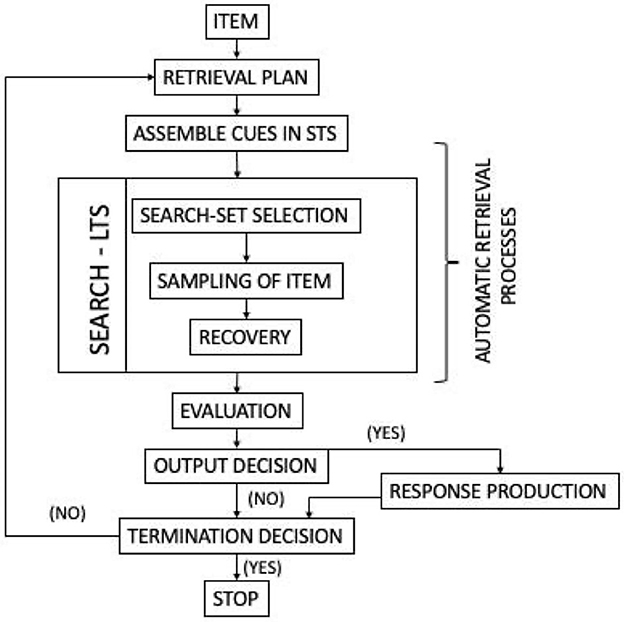
Figure 1. The Search of Associative Memory (SAM) model. A generalized depiction of the various phase of retrieval (STS, short-term search; LTS, long-term search). Modified from Raaijmakers and Shiffrin (1981).
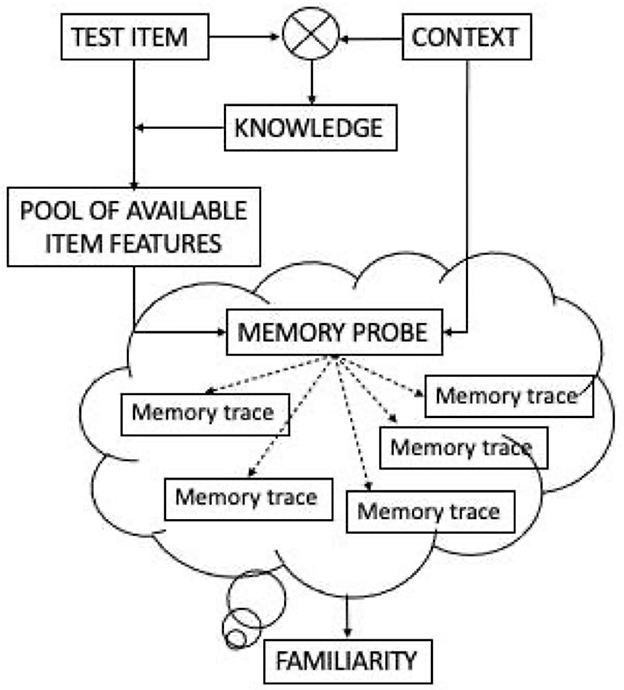
Figure 2. The Retrieving Effectively from Memory (REM) model. A schematic depiction of the recognition process. A memory probe is formed from a combination of the current context and both physical and semantic features of the test item. Item features are gradually sampled into the probe which is continually compared in parallel to all the traces in memory, each of which is activated to a degree depending on the similarity between features in the probe and those in the trace. To make a recognition decision, a participant tracks changes in the overall level of activation of these traces – termed “familiarity – from an initial level determined by context alone.” Modified from Cox and Shiffrin (2017).
The SAM-REM models describe different processes for free-recall and recognition. For free recall, there is a competition among memory traces; selection is based on how well an internally generated context cue matches the context stored in a trace. Episodic recognition memory does not require the generation of past episodic details from memory. All that is required is to distinguish an item that is presented during the context of encoding from foils that were not presented. Free recall is often described synonymously as remembrance, whereas recognition reflects familiarity. Confusion during recognition memory is created by noise associated with items experienced in different environmental contexts.
Acute bouts of exercise are hypothesized to produce systemic changes in physiological arousal and alterations in neural noise that affect neural networks involved in executive processing and mental performance (McMorris, 2016a) and memory storage (McGaugh, 2015; Meeusen et al., 2017). Several narrative and systematic reviews conclude that acute bouts of exercise affect working-term memory processes and decision-making speed (Tomporowski, 2003; Lambourne and Tomporowski, 2010; Chang et al., 2012; McMorris and Hale, 2015). The physiological changes that occur during a bout of exercise may also influence the strength of item and context memory traces stored in memory, which would facilitate memory retrieval. Several neurophysiological mechanisms have been identified that may explain how acute exercise improves memory processes. Functional changes in neurotransmission, neurotrophic factors (e.g., BDNF and vascular endothelial growth factor), increased blood flow, receptor activity, and glucose/oxygen metabolism may ensue as a result of acute bouts of exercise (Loprinzi et al., 2017; El-Sayes et al., 2019; Loprinzi, 2019). Increases in neurotrophic and growth factors have been shown to improve cellular processes that lead to structural changes that are correlated with behavioral change. Neurophysiological adaptations may improve the encoding, storage, and retrieval of memory items. Given the evidence for the existence of different types of memory stores, which differ in their underlying mechanisms, it is of theoretical and practical interest to determine whether acute exercise has a global effect on all types of memory processing, or whether the effects are selective.
The standard view of salutary interventions, such as physical activity and exercise, is that they promote global brain health, which leads to gains in cognition (Hillman et al., 2008). Theory-based research conducted over the past decade on the neurobiology of memory provides evidence to suggest that environmental and contextual factors exert selective effects on episodic memory. Reviews of experiments that examine both behavioral and neurophysiological outcomes reveal that contextual manipulations differentially influenced free-recall and recognition memory (Eichenbaum et al., 2007; Yonelinas et al., 2019). The pattern of results obtained under contextual conditions present during encoding (e.g., study time, elaboration, attention, and rote repetition) and retrieval (e.g., attention and test delay), are explained in terms of specific neurological structures and networks. Tests that involve the recollection of items are dependent on hippocampal structures while tests of familiarity and recognition depend on parahippocampal structures and the entorhinal cortex (Brickman et al., 2014). The double anatomical dissociation observed in clinical studies conducted with individuals with amnesia and laboratory experiments conducted with humans, monkey, and rats indicate that contextual factors may differentially impact underlying neural networks that are involved in episodic memory (Yonelinas et al., 2019). Such studies provide clear evidence that there exists a distinct double dissociation among several brain structures responsible for the consolidation of long-term memory. This double dissociation between the perirhinal cortex and hippocampus has been implicated among animal models to produce differential outcomes with respect to recognition, spatial, and recall memory (Winters et al., 2004). Given that acute bouts of physical activity impact episodic memory similarly to other contextual contexts, it will shed light on the neuroanatomical pathways that impact memory storage and retrieval as well as help predict the effectiveness of specific educational methods designed to benefit long-term memory.
The present review extends previous literature analyses (Roig et al., 2013; Loprinzi et al., 2019a) by focusing on the effects of acute bouts of exercise performed before, during, and after encoding on specific types of episodic memory processes described in contemporary psychological theory and neurobehavioral hypotheses.
2 Materials and methods
The primary aim of the present paper was to conduct a systematic review and meta-analysis to assess the impact of acute bouts of exercise on episodic memory. The systematic review protocol was registered with International Prospective Register of Systematic Reviews on 27th August 2020 (CRD42020202784) and adheres to the Preferred Reporting Items for Systematic Review and Meta-Analysis Protocols (PRISMA-P). We undertook a two-stage search process to identify relevant articles for the meta-analysis; first, a search of scientific databases, and then a manual search of the reference lists of included studies for additional papers not previously identified. We also conducted a follow-up search procedure in February 2023 to identify any additional references that were subject to our systematic review. The secondary search methods were identical to the primary search. These methods for systematic review and meta-analysis were in line with those used previously (Siddaway et al., 2019).
Three commercial platforms (Pubmed, Scopus and EBSCO) hosting six scientific databases (CINAHL Complete, ERIC, MEDLINE, APA PsycArticles, APA PsycInfo, SPORTDiscus with Full Text) were searched in March 2020 and then once again in November 2020. Databases were searched in English. The PRISMA flow diagram illustrating retrieval is presented in Figure 3. A detailed flow diagram is presented in the Supplementary material. Following searches, reference lists of identified articles and previous systematic reviews were reviewed to identify further relevant studies. As shown in Figure 3, the database search identified 6,855 references. In 1,708 duplicates were identified and removed, leaving 5,147 references for screening. The first screening phase (titles and abstracts) yielded 90 references for full text screening after 5,057 references were excluded. Of these, 48 were excluded, leaving 42 to meet our inclusion criteria. The review considered studies published in English; no date limits were set. Both control trials and cross-over trials were included. Studies were excluded when they did not meet the key inclusion criteria described below. Gray literature was not consulted, on the basis that most rigorous studies will include peer-reviewed consideration. The secondary search resulted in 967 references. Seven hundred and sixty five duplicates were identified and removed, leaving 202 for full text screening. The initial screening phase (title and abstract) yielded 11 references for full text review. Following the full text review, 6 references met our inclusion criteria and were included in the secondary analysis.
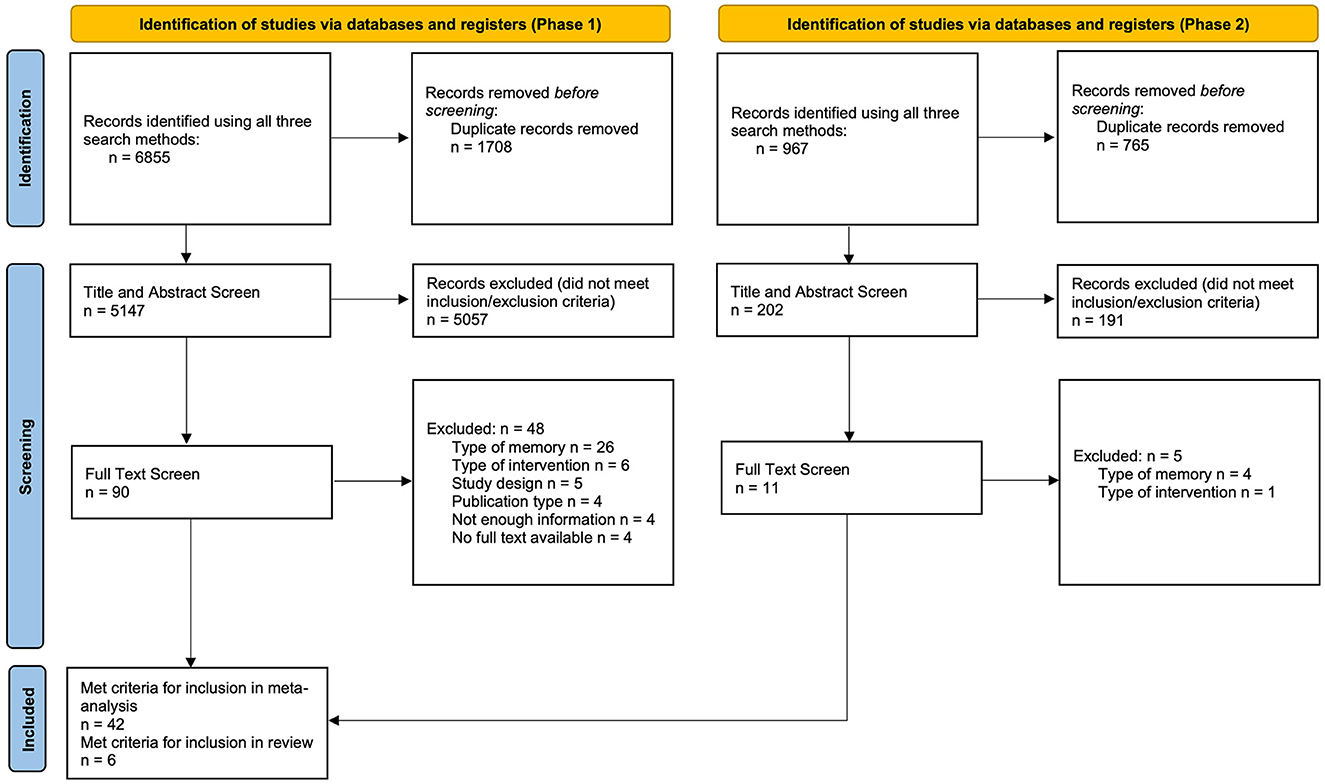
Figure 3. PRISMA flow diagram illustrating retrieval and inclusion in meta-analysis.
2.1 Inclusion/exclusion criteria
The keyword search strategy was iteratively developed via the author team. Key search terms and their derivatives were pooled in two key themes related to memory and the mode of exercise prior to being combined for the final searches. The population specified human participants aged 5 years or older. The environment was not specified to enable a broad array of studies in both lab and field-based settings. The intervention type was an acute bout of exercise before, during, or after an encoding task, that may be a repeated design within a day or in a cross-over condition. The exercise modes were developed through an initial review of the literature to identify all of the acute exercise modes. The outcome measures were aligned to memory types (long-term declarative memory, semantic memory, episodic memory, and spatial memory) and memory assessment (free-recall, cued-recall, recognition, paired-associate, object location, sentence recall, and word fluency). Exclusion criteria was opposite to the inclusion criteria, in addition to the studies included; participants who reported suffering from a concussion or similar head trauma within the past 6 months, studies on participants prescribed psychotropic medications, a condition that influences memory (e.g., learning disorders, developmental disorders, specific clinical diagnosis based on memory disorders), studies focused on specific health conditions (e.g. cancer, diabetes), no assessment of memory retention over time, and studies that used the following designs: cross-sectional studies, longitudinal studies, or chronic studies (more than one bout of exercise over an extended period of time or extending two or more days).
2.2 Article screening and data extraction
All articles retrieved as part of the scientific platform search were downloaded into an Endnote database and duplicates were removed. One author (NG) performed a title and abstract screen while a second author (AD-S) performed a random check of 20% of the articles. Before performing a full-text screen, the inclusion/exclusion criteria outlined above was applied. All authors performed full text screening of articles that met the initial criteria. Once the final eligible studies were identified, a second search of the literature was conducted by assessing the accompanying reference sections. The reference sections were manually searched, cited articles were extracted by hand, and the article name, authors and date of publication were inserted into an Excel spreadsheet. These extractions were cross checked against the original Endnote database, duplicates were identified and removed, and all titles and abstracts were assessed prior to proceeding to a full-text screen by all authors using Google Scholar. Several discrepancies in the application of selection criteria were identified within the selection process but were resolved through consensus with all co-authors. Study characteristics, effect size data, and data for moderator variable coding were extracted from all eligible articles. At the onset of coding, approximately 10% of articles were double–coded and any inconsistencies were discussed. Upon consensus between all authors, the remaining articles were single-coded by KL and cross-checked for accuracy (PT and AQ). Data extracted to an Excel spreadsheet included author names, publication year, study design, sample type and characteristics (gender, age, sample size), memory test characteristics (timing, type), exercise protocol (type, mode, intensity, length), and results.
The screening and data extraction process for the secondary search was identical to the primary search. Two authors (AQ and DS) performed a title and abstract screening. Similar to the primary search, study characteristics and effect size data were extracted from all articles. All data was cross checked for accuracy (AQ and DS) and any discrepancies were resolved through consensus.
2.3 Assessment of study quality
Consistent with PRISMA-P guidelines, two independent reviewers (NG and AD-S) assessed overall and subdomain risk of bias using a modified version of the Downs and Black (Downs and Black, 1998) checklist for methodological quality for both randomized and non-randomized studies of health care interventions (Daly-Smith et al., 2018). The use of the modified criteria reflected the need for a risk-of-bias tool that was specific to acute experimental studies. Study authors further developed the criteria to address specific issues discussed in previous reviews (online Supplementary file 2). Standardization was used on three papers. The remaining papers were divided equally between the two authors for assessment. A 20% sample of both authors' assessment was moderated by the other reviewer. Disagreements between re-view authors over the risk of bias were resolved by discussion, with a review of the specific criteria being performed on all non-moderated papers.
Assessment of study quality for the secondary search was identical to the primary search and was conducted independently by two authors (AQ and DS). Any disagreements between the authors were resolved via discussion.
2.4 Meta analytic methods
To assess the effect of acute exercise on different encoding paradigms (encoding before exercise, during exercise, or following exercise), three separate meta-analyses were conducted. Meta-analyses were conducted using Comprehensive Meta-Analysis CMA software (Version 3 for Windows, Biostat company, Englewood NJ, USA). CMA enables the harmonization of data presented in different formats and from different study designs (i.e., between-subjects, within-subjects). Cohen's d was calculated when means, standard deviations, and sample sizes were available. When these data were not available, Cohen's d was estimated using t or p values and sample size information. Cohen's d was used to control for Type I error rates (Huedo-Medina et al., 2006). Effect sizes were calculated such that a beneficial effect of acute exercise on long-term memory was indicated by a positive effect size. The degree of heterogeneity of the effect sizes was evaluated with the Cochran's Q-statistic. Egger's regression test was used to evaluate the potential publication bias.
Categorical moderators were determined a priori and were chosen based on logical, theoretical, and previous empirical relations between acute exercise and episodic memory. Similar to the previous meta-analysis by Loprinzi et al. (2019a), cardiorespiratory fitness was not examined because few studies reported the measure. The acute exercise paradigm was coded as exercise prior to encoding, exercise during encoding, and exercise following encoding. Episodic memory type was coded as free-recall, cued-recall, and recognition. The timing of the memory test was coded as same day, 1 day later, 2 days later, 1 week later, and 2 weeks later. Age was categorized as elementary (6–13 years), high school (14–17 years), young-adult (18–24 years), adult (25–44 years), middle-age (45–60 years), and older adults (>60 years) (Roig et al., 2013; Loprinzi et al., 2019a). Sex was coded as males, females, mixed, predominately male (>70% of sample), or predominantly female (>70% of sample). For the exercise protocol, exercise was coded by type (aerobic, anaerobic, or muscular resistance), mode [running/walking, cycling, other (e.g., circuit training, resistance training, stepping)], duration (very short = 10 min or less, short = 11–20 min, medium = 21–39 min, long ≥ 40 min), and intensity (low, low to moderate, moderate, high) (Garber et al., 2011; Roig et al., 2013). Note that many different metrics for exercise intensity were used (RPE, HRR, max HR, etc.) which made it difficult to apply standard thresholds such as those suggested by the American College of Sports Medicine. The author's descriptor of the intensity level was used when provided; when it was not stated we used our expert judgement. Moderators also included study quality (excellent, good, fair, or poor) (O'Connor et al., 2015) and study design (between-subjects, within-subjects).
Moderators were tested using Q with a mixed effects analysis. Heterogeneity was determined by Cochrane's Q statistic and I2 values, whereby values of < 25, 50, and 75 were considered to indicate low, moderate, and high levels of heterogeneity, respectively (Higgins et al., 2003). Subgroup moderator analyses were conducted for the encoding paradigms if I2 values demonstrated at least moderate heterogeneity.
3 Results
3.1 Articles included in analyses
Using the predefined search strategies, three stages of article searches were conducted. At the conclusion of the first stage, 23 articles were considered eligible for inclusion in the final meta-analysis. At the conclusion of the second stage, 12 articles were deemed eligible for inclusion in the final meta-analysis. At the conclusion of the third stage, 7 articles were considered eligible for inclusion in the final meta-analysis.
In total, 42 articles met the inclusionary criteria and were used for quantitative analyses in the present meta-analytic review. A detailed visual representation of the retrievals at each stage of the review is summarized in the flow diagram in Appendix A. Table 1 provides a summary of the included experiments.
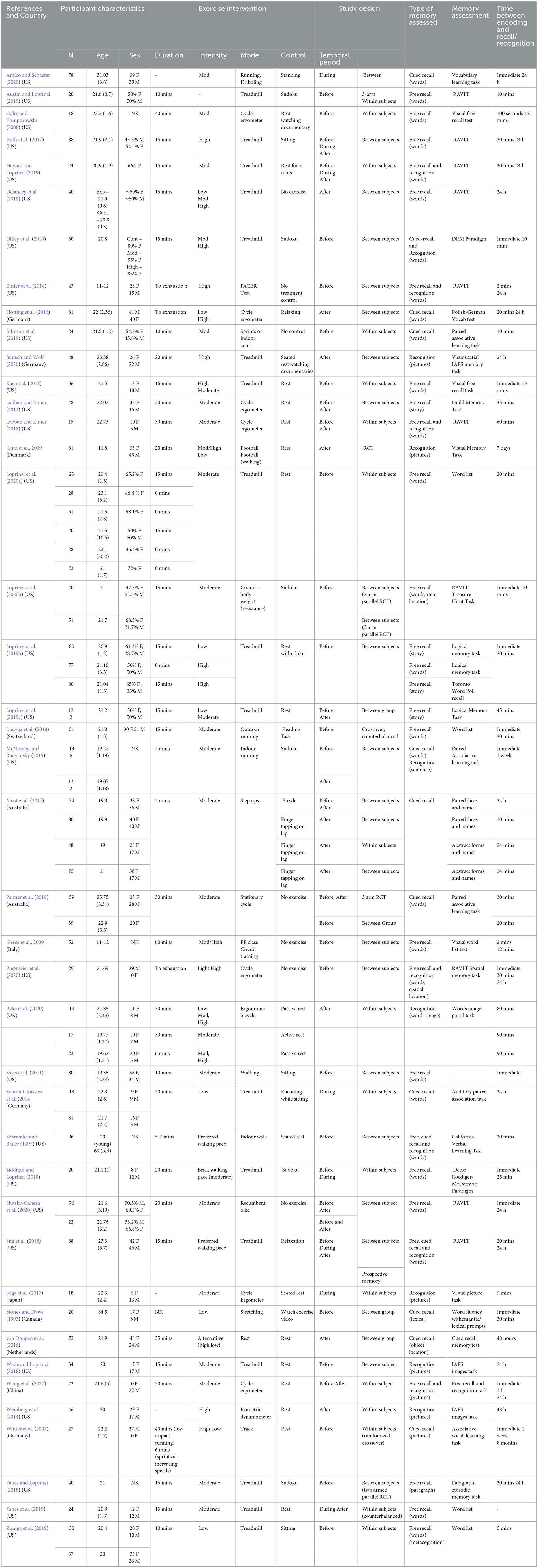
Table 1. Summary characteristics of experiments included in meta-analysis.
3.2 Quantitative analyses
The total number of effects per primary moderating variable are displayed in Figure 4. Focusing on conditions in which acute bouts of exercise were performed after memory encoding, several moderators influenced long-term episodic memory. Performance differed as a function of participant's age, with young adults showing improved memory performance while the opposite was true for older adults. Our results indicated that older adults' memory performance did not improve before, during, or after acute bouts of exercise.
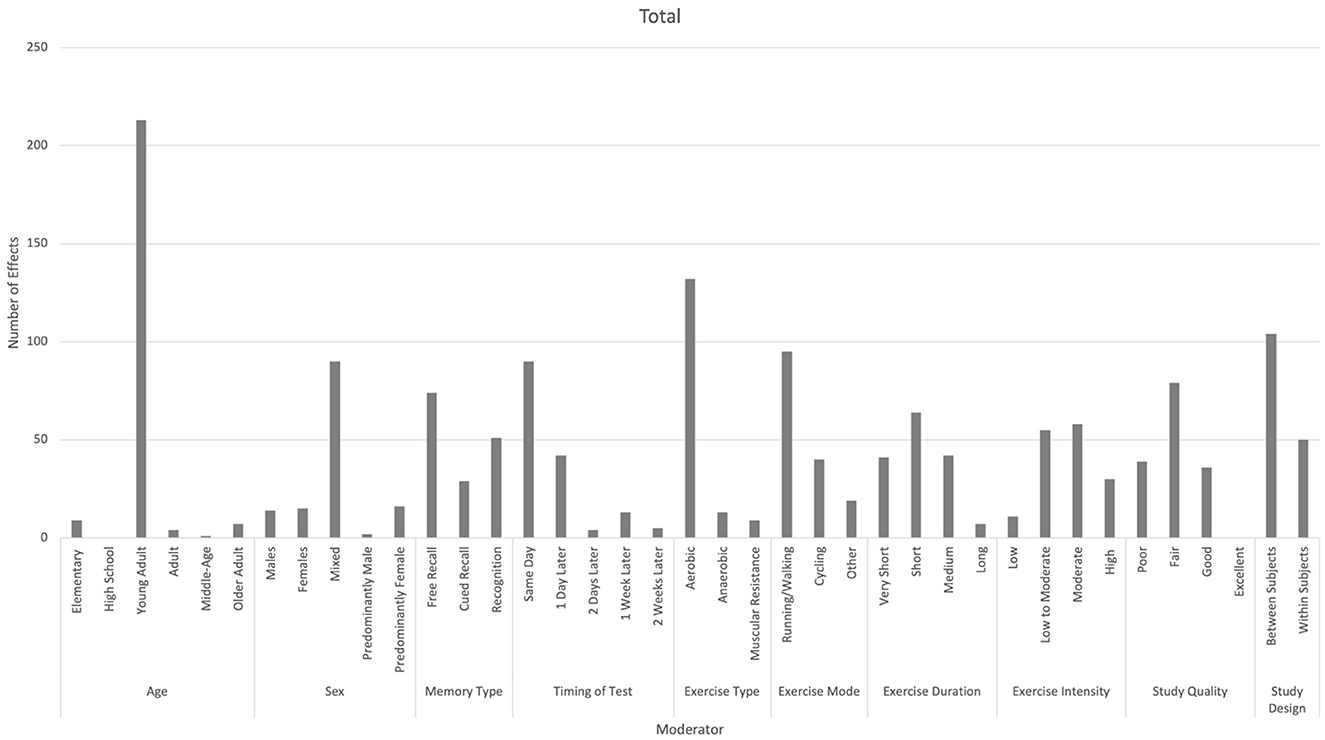
Figure 4. Total number of effects for each moderator.
3.2.1 Exercise before encoding
The overall effect size for exercise before memory encoding compared to control conditions was d = 0.23 (95% CI: [0.13, 0.34], p < 0.001; Table 2, Figure 5), which constitutes a small effect size. There was evidence of a significant moderating effect for the analysis [Q = 317.17, df (92), p < 0.001, I2 = 70.81]. For the primary moderator of interest, free-recall (d = 0.40, 95% CI: [0.27, 0.53], p < 0.001) memory was improved significantly. Cued-recall (d = 0.077, 95% CI [−0.267, 0.421]) and recognition memory (d = −0.057, 95% CI [−0.207, 0.092]) were not significantly influenced. Analyses of moderators of secondary interest revealed that elementary school children's (d = 0.70, 95% CI: [0.37, 1.03], p < 0.001) and young adults' (d = 0.19, 95% CI: [0.09, 0.30], p < 0.001) episodic memory improved, while older adults' (d = −0.47, 95% CI: [−0.89, −0.06], p = 0.03) memory performance declined significantly. Additionally, significant improvements in episodic memory were detected when mixed-sex samples were measured (d = 0.37, 95% CI [0.01, 0.23], p < 0.001), memory testing occurred on the same day as encoding (d = 0.30, 95% CI [0.17, 0.43], p < 0.001), and when exercise parameters included aerobic protocols (d = 0.24, 95% CI [0.12, 0.35], p < 0.001), cycling modality (d = 0.61, 95% CI [0.39, 0.84], p < 0.001), medium duration (d = 0.64, 95% CI[0.43, 0.85], p < 0.001), and moderate intensity (d = 0.56, 95% CI [0.38, 0.74], p < 0.001). The regression intercept for the Egger's test (intercept 1.90, p = 0.002) was statistically significant, indicative of publication bias.
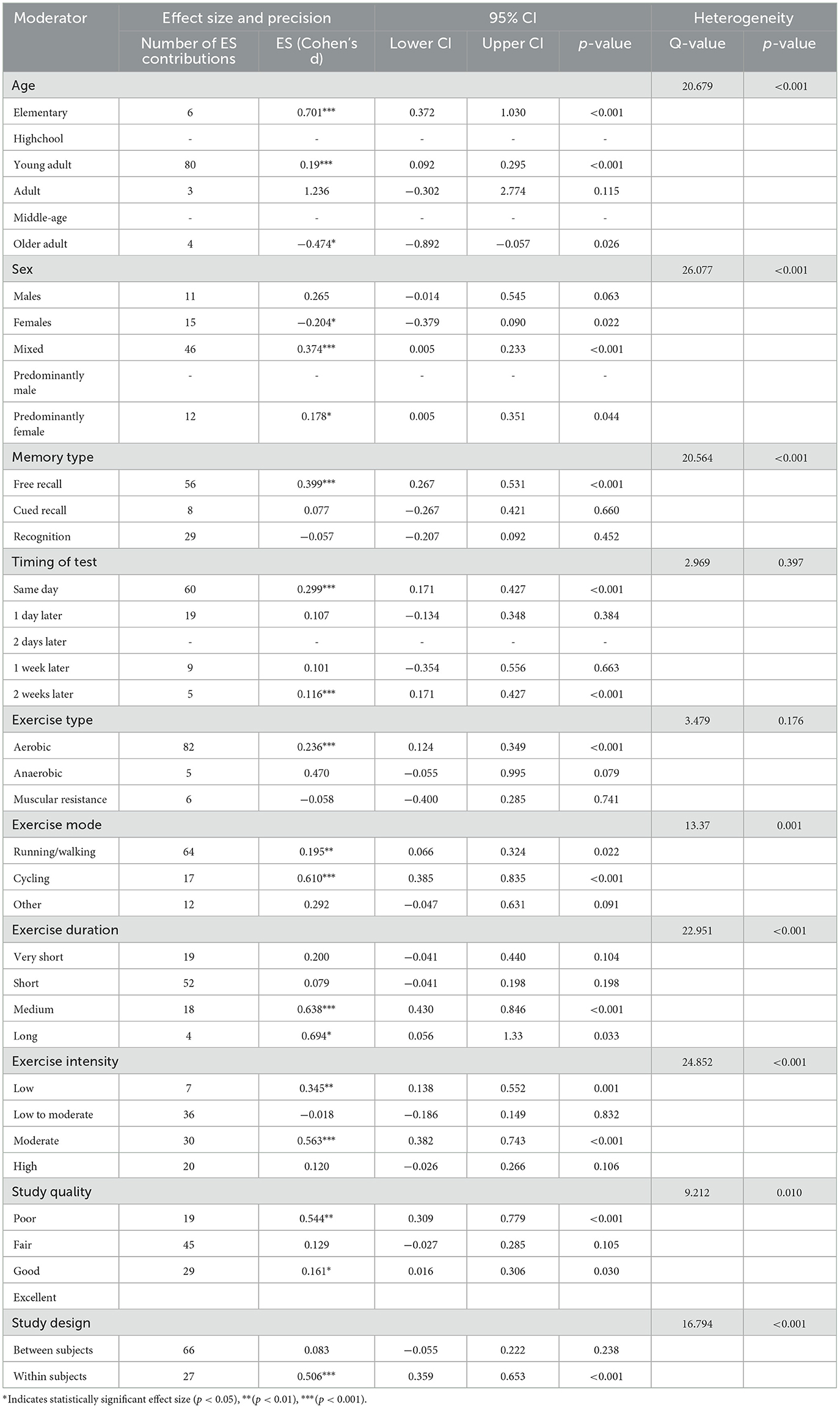
Table 2. Moderation results for exercise before memory encoding vs. control.
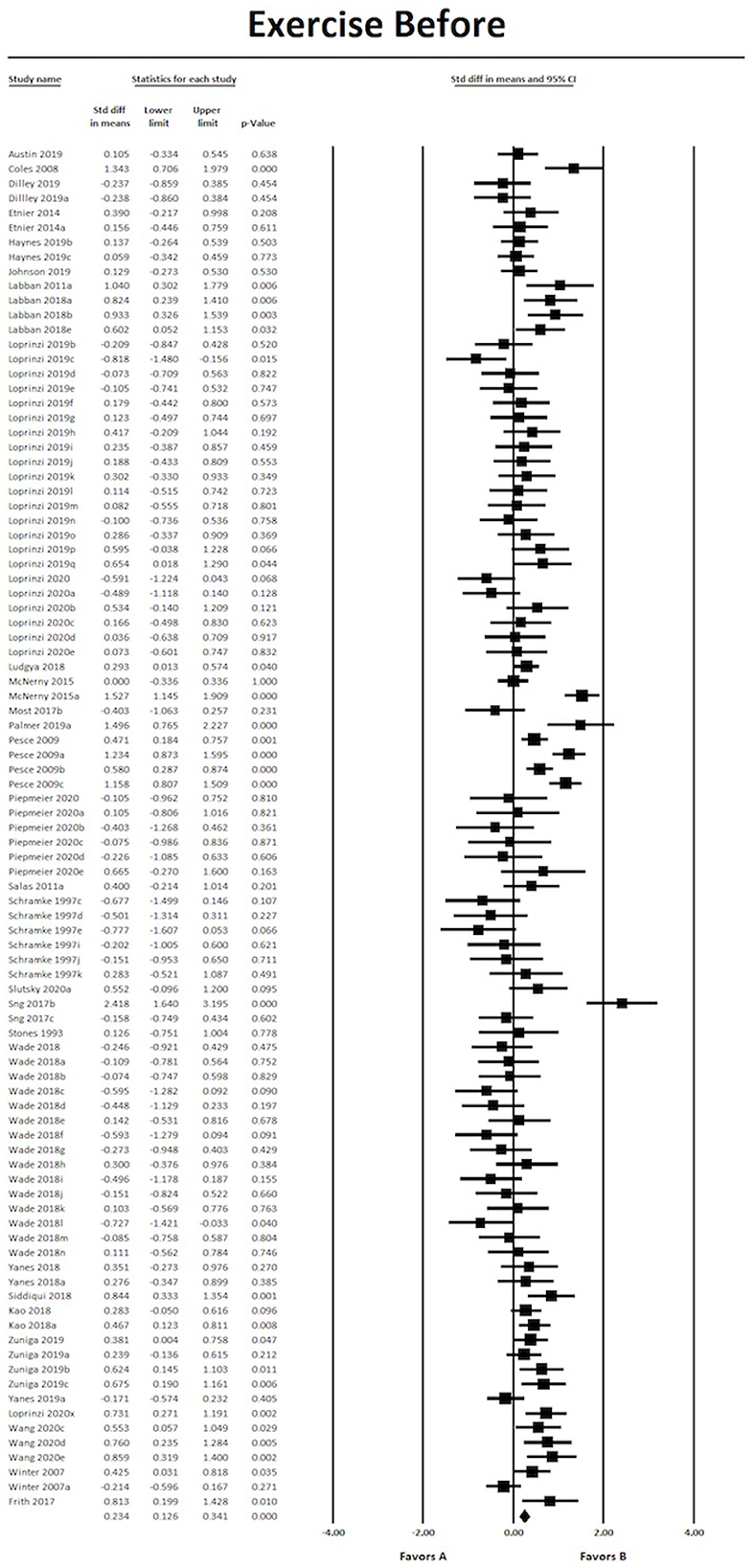
Figure 5. Forest plot indicating effect sizes for exercise before memory encoding.
Reinforcing the findings of the primary search, the secondary search indicated that exercise before encoding led to the largest mnemonic benefits in studies by Etnier et al. (2020), Etnier et al. (2021), McSween et al. (2021), and Schmid et al. (2023).
3.2.2 Exercise after encoding
The overall effect size for exercise bouts performed following memory encoding compared to control conditions was d = 0.33 (95% CI [0.89, 0.56], p = 0.007; Table 3, Figure 6), which constitutes a small-to-medium effect size. There was evidence of significant moderation effects [Q = 440.37, df (48), p < 0.001, I2 = 89.10]. For the primary moderator of interest, recognition memory significantly improved when exercise occurred following memory encoding (d = 0.623, 95% CI [0.12, 1.13], p = 0.015), while free-recall (d = 0.194, 95% CI [−0.16, 0.55], p = 0.283), and cued-recall (d = 0.142, 95% CI [−0.22, 0.51], p = 0.448) memory processes were not significantly influenced. Analyses of moderators of secondary interest revealed that young adults' memory function improved (d = 0.43, 95% CI [0.18, 0.68], p = 0.001) while older adults' episodic memory performance declined (d = −0.94, 95% CI [−1.43, −0.45, p < 0.001). Other moderators that significantly influenced episodic memory function were detected when samples were predominantly female (d = 1.15, 95% CI [0.44, 1.85], p = 0.001) and exercise parameters included resistance exercise (d = 2.68, 95% CI [1.99, 3.37], p < 0.001), long duration exercise (d = 2.68, 95% CI [1.99, 3.37], p < 0.001), and moderate intensity (d = 0.81, 95% CI: [0.43, 1.18], p < 0.001). The regression intercept for the Egger's test (intercept 0.71, p = 0.67) was not statistically significant, indicating that there was no evidence of publication bias in this set of studies.
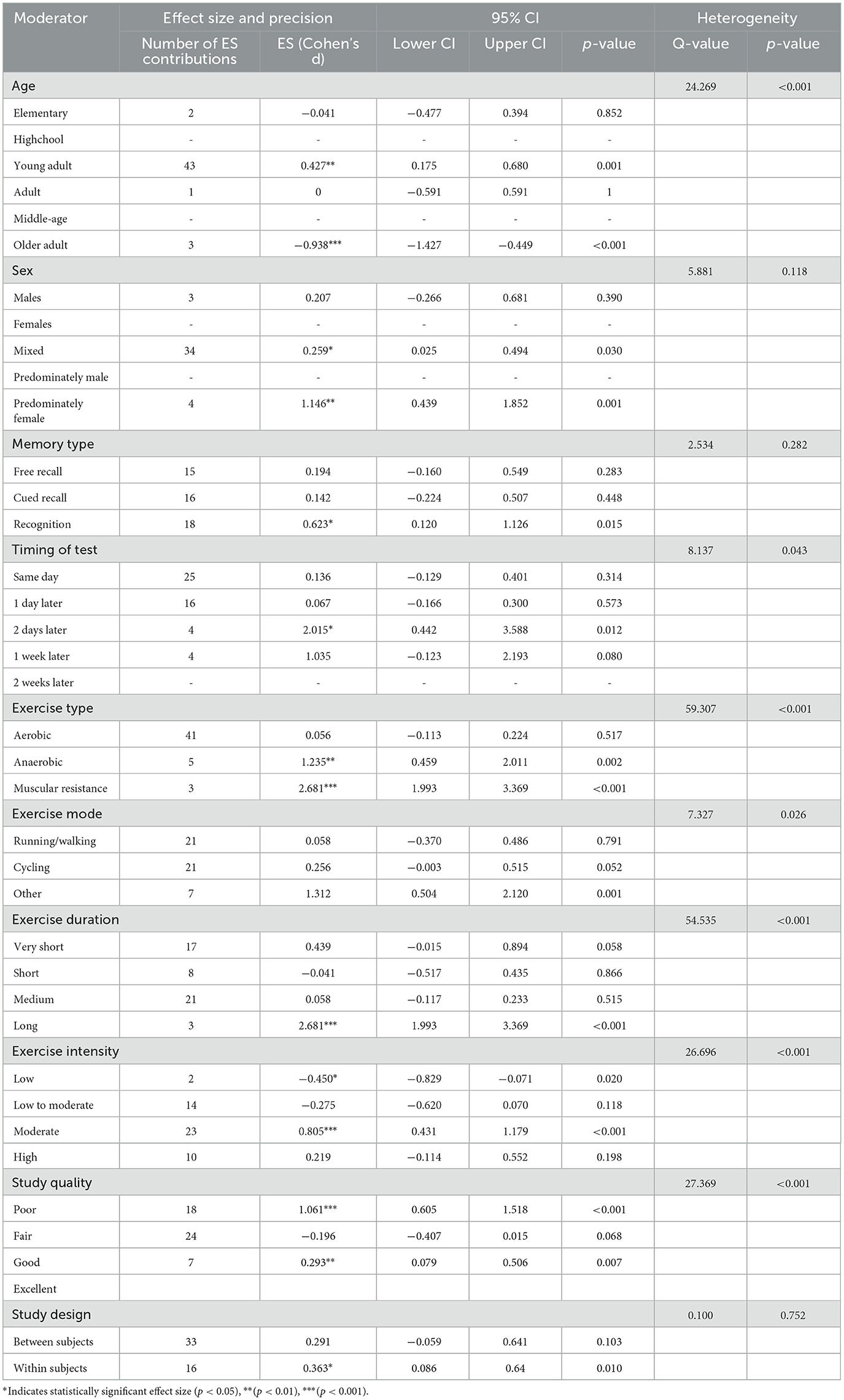
Table 3. Moderation results for exercise after memory encoding vs. control.
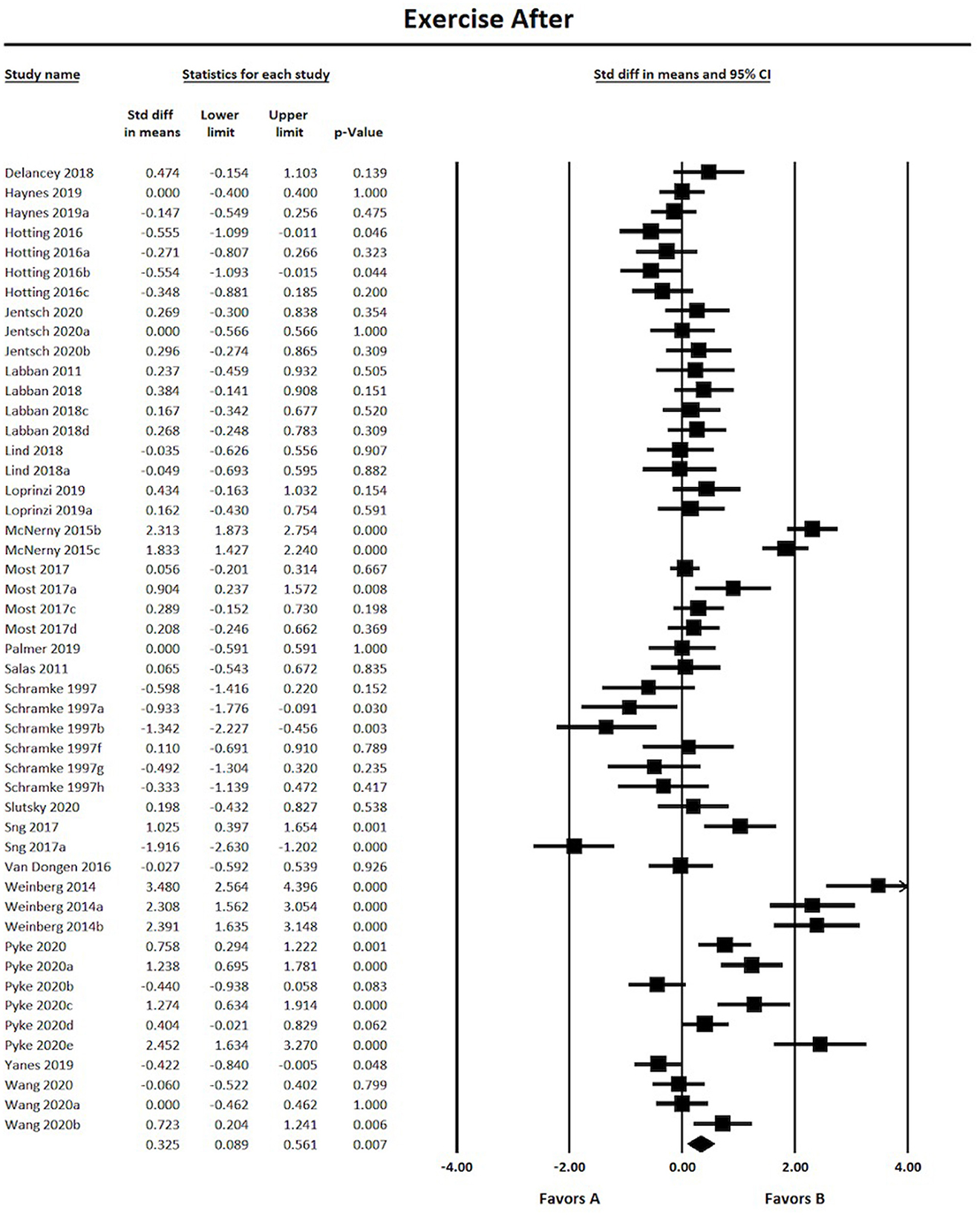
Figure 6. Forest plot indicating effect sizes for exercise after memory encoding.
Through the secondary search, Loprinzi (2019) found null results, and Zabriskie and Heath (2019) found that exercise during encoding benefitted free recall memory more than exercise before encoding.
3.2.3 Exercise during encoding
The overall effect size for exercise performed during memory encoding compared to control conditions was non-significant d = −0.04 (95% CI [−0.31, 0.24], p = 0.78; Table 4, Figure 7). There was evidence of a significant moderation effect (Q = 36.21, df (11), p < 0.001, I2 = 69.62). Moderator analyses yielded one significant result. The effect of participants' age on episodic memory was greatest for elementary-aged children (d = 1.272, CI [0.395, 2.15], p = 0.004). The regression intercept for the Egger's test (intercept −1.62, p = 0.40) was not statistically significant, indicating that there was no evidence of publication bias.
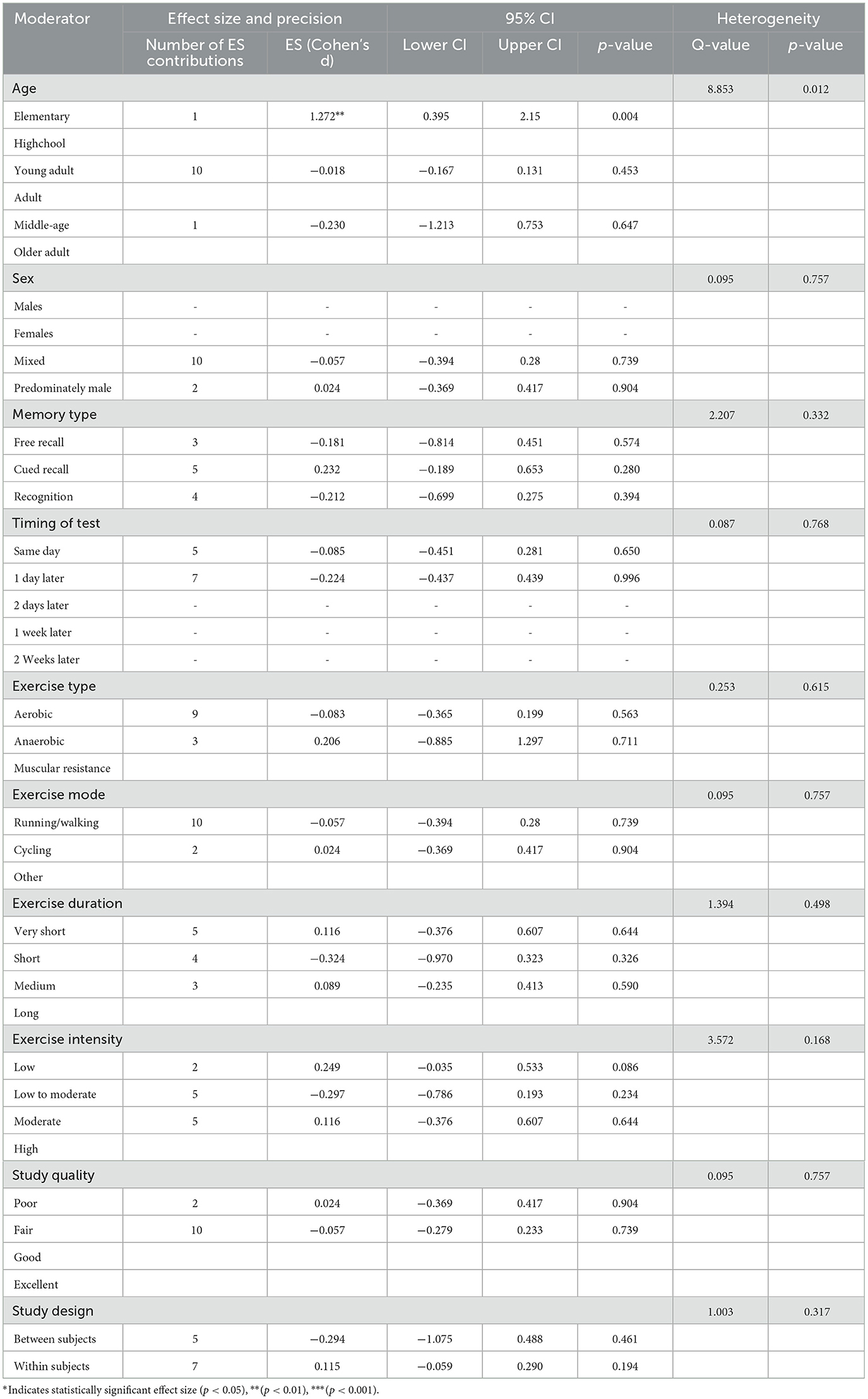
Table 4. Moderation results for exercise during memory encoding vs. control.
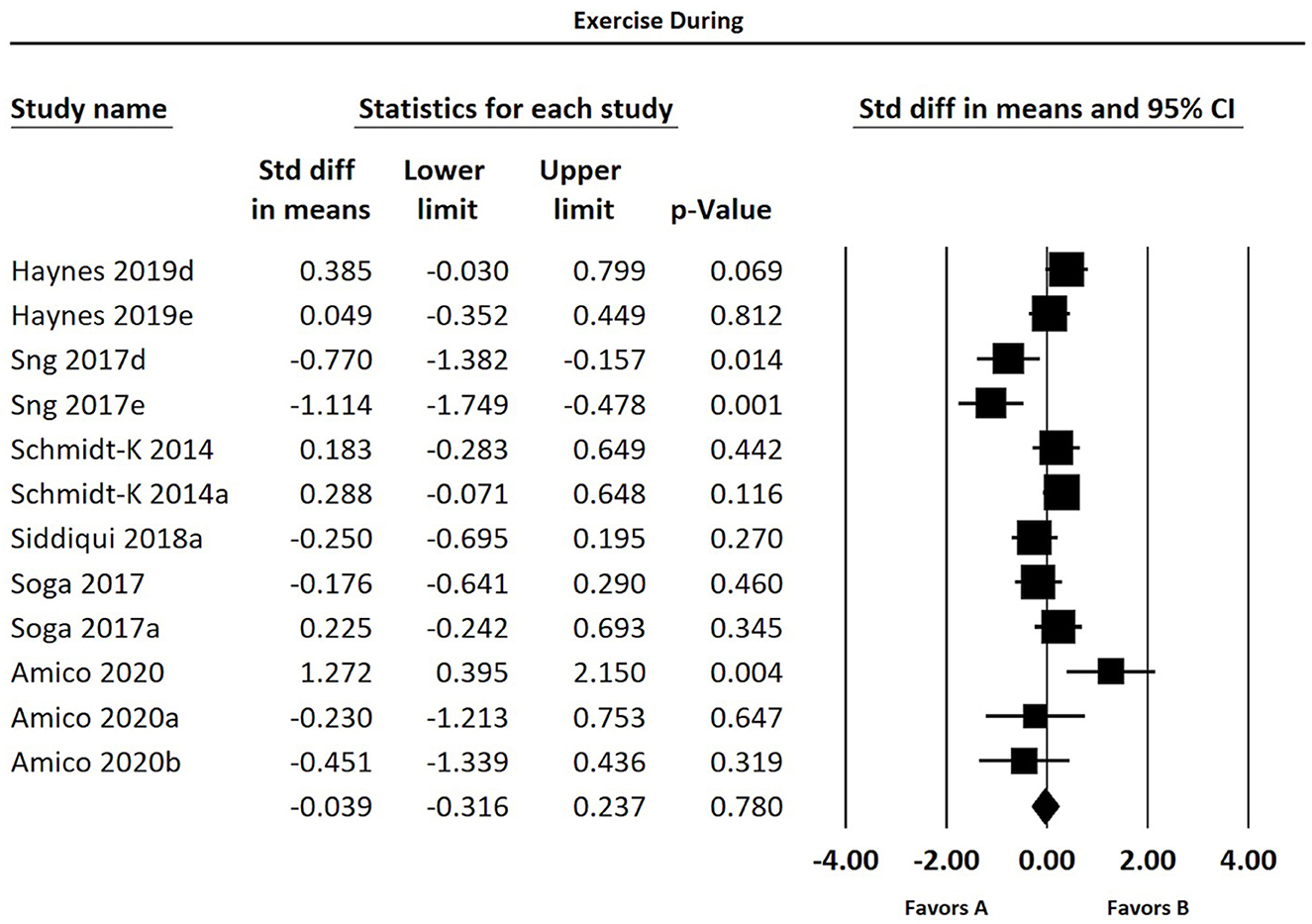
Figure 7. Forest plot indicating effect sizes for exercise during memory encoding.
4 Discussion
The primary finding of this meta-analytic review is that acute bouts of exercise performed prior to or following encoding have selective effects on episodic memory processes. We assessed 42 primary research studies and our main findings indicated that performance on free-recall tests of memory significantly improved (d = 0.399) more than either cued-recall (d = 0.077) or recognition (d = −0.05) tests of memory when exercise preceded memory encoding. Exercise performed following encoding had a greater impact on recognition memory performance (d = 0.623) than on either free- (d = 0.194) or cued-recall (d = 0.142) performance. A secondary narrative review affirmed the findings of the former meta-analysis. Contemporary psychological theories of memory and recent advances in the study of the neurophysiology of memory systems provide the means to explain why exercise has selective effects on memory processes.
When exercise preceded encoding, there was a significant improvement in memory performance (d = 0.29), with the greatest effect exhibited on free-recall processes. Conceptually, free-recall memory is an issue of item remembrance, which can be viewed as the developing strength of a memory trace (Malmberg et al., 2019). Remembering items for later recall is influenced by a wide variety of factors which have been studied extensively. Theories of Levels of Processing (Amico and Schaefer, 2020), strategy utilization (Craik and Lockhart, 1972), mental engagement (Coles and Tomporowski, 2008; Kahneman, 1973; Hockey et al., 1986), and other cognitive constructs have addressed conditions that affect the degree to which individuals allocate attentional resources to environmental events. Physical exercise has also been hypothesized to influence attentional allocation. From the perspective of psychological theory, Audiffren (McMorris et al., 2009) proposed that the energetic property of acute bouts of exercise influences attentional processes and may augment memory storage processes. Energetics theory assumes three interrelated processes: cognition, which reflects an individual's knowledge and skills; affection, which reflects feelings and emotions; and conation, which is the willingness, or motivation, to expend physical and mental effort to perform (Delancey et al., 2019; Haynes and Loprinzi, 2019; Hilgard, 1980; Spirduso et al., 2007). From the neurophysiological perspective, several researchers propose that exercise prior to encoding leads to elevations of brain catecholamines, which presumably increase attention by altering neural signal-to-noise conditions, and by brain-derived neurotrophic factors (BDNF) (Etnier et al., 2014; Hötting et al., 2016; Dilley et al., 2019; Gomez-Pinilla and Hillman, 2013) and growth factors (Loprinzi, 2019). A comprehensive description of brain structures and pathways involved in episodic memory processes and how they may be affected by acute bouts of exercise has been provided by Loprinzi et al. (2017). A meta-analytic review of studies conducted with adults found that moderately intense warm-up exercises had a small positive effect on learning while high-intensity exercise had a substantial negative effect (Johnson et al., 2019; McMorris et al., 2015). The authors of a recent meta-analysis of acute exercise experiments that focused on motor learning drew similar conclusions. Wanner et al. (2020) hypothesize that exercise performed prior to practicing motor tasks influence motor performance by optimizing movement planning, which relies heavily on the allocation of cognitive resources. Psychological theory and neurophysiological research may explain how acute bouts of exercise engage executive processes and control of operations of prefrontal cortical networks that select and weigh the importance of encoded information. Drawing upon the Search of Associative Memory model, exercise prior to encoding appears to alter the sampling and search processes that are involved in free-recall memory. This explanation is in line with those expressed in the contextual-binding model (Yonelinas et al., 2019), which hypothesizes that hippocampal structures are central to item-context associations and activations that influence recollection.
Episodic memory was improved when exercise occurred following encoding (d = 0.37). Bouts of exercise enhanced performance on recognition memory tests more than free- or cued-recall tests. Viewed from a psychological perspective, recognition is an issue of item familiarity and involves making a rational response based on the weight of an item and context trace strength via a Bayesian process, which is a reasonable expectation based on past knowledge (Kao et al., 2018; Shiffrin and Steyvers, 1997). Recognition involves discrimination between items that belong to a target population and items that belong to a non-target population (Labban and Etnier, 2011; Green and Swets, 1974). The probability of responding to targets (hits) and responding to non-targets (false alarms) provide the basis for Receiver Operating Curve analyses, which can be applied to the study of recognition memory (Labban and Etnier, 2018; Stanislaw and Todorov, 1999). Studies of attention reveal that the likelihood of hits and false alarms in a given task are affected by a variety of factors (e.g., cost/benefits, ratio of target to non-target items, personal beliefs, and arousal states) (Lind et al., 2019; Warm, 1984). Acute exercise temporarily alters individuals' response bias when performing decision-making tasks (Loprinzi et al., 2021). Exercise-induced shifts in participant's bias would be expected to influence performance on tests of recognition memory. Neurophysiological models of long-term memory propose that item familiarity is altered by emotional arousal and the biological stress response when exercise follows encoding, which is characterized by a cascade of neurohormonal changes (Loprinzi et al., 2019a,b, 2020a,b, 2021; McGaugh, 2000, 2004, 2018). The release of adrenal stress hormones results in widespread changes throughout the peripheral and central nervous system. In particular, the stress hormones epinephrine and cortisol are implicated in memory consolidation. Considerable evidence obtained from animal studies indicates that systemic administration of stimulant drugs, epinephrine, glucose, and cortisol can enhance memory (see reviews by Cahill and McGaugh, 1998; Gold et al., 2001; McGaugh, 2015). Exercise-induced stress responses have also been shown to influence human memory storage (Segal et al., 2012). Much of the consolidation process research has focuses on the bi-directional relation between the amygdala and hippocampus (Loprinzi et al., 2017). The Wanner et al. (2020) review of experiments that focused on motor learning reached similar conclusions. They propose that exercise performed following encoding enhances learning via consolidation and neuroplasticity processes, as opposed to arousal, attention, or energetic processes. Together, psychological theory and neurophysiological research may explain how acute bouts of exercise engage hippocampal processes and the storage of episodic memories. Drawing upon the Retrieving Effectively from Memory model, exercise following encoding appears to impact individual's response bias during recognition memory tests. Drawing on the Contextual-Binding model (Yonelinas et al., 2019), tests of recognition memory involve not only the recognition of an item but also the retrieval of past memory of contexts in which the item was initially acquired. The perirhinal cortex is hypothesized to play the pivotal role for familiarity-based recognition. Brain lesion studies have also provided evidence that the function of the medial temporal lobe is not unitary. Because the medial temporal lobe differentially influences recollection (free-recall) and familiarity (recognition) of items, it provides a dual-process model (Bowles et al., 2010). Our findings are in line with the dual-processing model of the medial temporal lobe as we present a clear distinction between free-recall and recognition memory processes. When exercise follows encoding the consolidation of memory for items may increase the strength of item representation.
Regardless of the temporal relation between exercise and encoding, the strength of the effect of exercise on cued-recall test performance was found to range between very small and small (d = 0.077 when exercise preceded encoding; d = 0.142 when exercise followed encoding, d = 0.232 when exercise occurred during encoding). Cued-recall memory tests are viewed as a hybrid between free-recall and recognition tests (Pesce et al., 2009; Wilson and Criss, 2017; Piepmeier et al., 2020). Free-recall performance depends on self-generated cues and available context cues; recognition performance depends on researcher-generated cues and the participant's available context cues. Cued-recall is similar to free recall in that the individual must generate a target cue that is employed during memory search. Cued-recall is also similar to recognition in that an item cue is provided to the participant. A series of experiments conducted by Wilson and Criss (2017) using cued-recall methods provide data that support predictions from the SAM and REM models. They hypothesize that a cue comes to be associated with a specific target item when a list of cue-target pairs is presented; however, the cue also comes to be associated with other target items on the list. Interference due to mismatches between cues and targets with different trace strengths leads to confusion and results in changes in response bias for memory traces during the search process (Pyke et al., 2020). Prior research using cued-recall methods reveals that test performance is altered via manipulating some list variables, such as word frequency, but not by others, such as context variability (Criss et al., 2011). The findings of the present reviews suggest that acute bouts of exercise performed following encoding has a slightly greater impact on the processes involved in cued-recall test performance than exercise performed prior to encoding. The lack of strong evidence for the relation between exercise and cued-recall memory may be explained via the context-binding model, which hypothesizes that while the pathways that impact recognition and familiarity are distinct, they merge within the medial temporal lobe of the neocortex. The reciprocal relations that exists within neocortical and deeper brain structures result in considerable overlap in the subjective evaluation of memory of past experiences (Eichenbaum et al., 2007).
Since the initial research conducted over a century ago by Yerkes and Dodson (1908), there has been a longstanding interest in the relationship between arousal and memory. The results of the present review suggest that acute bouts of exercise provide an ideal model to advance general theories of memory and learning. Via the systematic manipulation of the temporal relation between exercise and encoding, as well as quantitative and qualitative aspects of exercise, researchers may derive a clearer understanding of brain structures involved in memory as well as psychological and environmental factors that may moderate memory storage and retrieval during recall and recognition tests.
The results of the present review suggest that long-term episodic memory is not influenced by exercise when performed simultaneously with encoding (d = −0.04). This finding differs from the conclusion drawn by Loprinzi et al. (2019a), who found that exercise performed under dual-task conditions significantly impaired long-term encoding (d = −0.23). The lack of agreement may be due to including the results of several recently published experiments that found that treadmill walking and ergometer cycling (Schramke and Bauer, 1997; Schmidt-Kassow et al., 2014, 2013, 2010) resulted in improvements on tests of long-term memory for words. Alternatively, the lack of clarity may be due to the complexities of dual-task performance and learning. The mental operations that underlie dual-task performance have been studied extensively and several theories have been proposed to explain how individuals optimize decision making when placed in conditions in which they simultaneously perform a motor-movement task (e.g., walking) and a cognitive task (e.g., encoding a word list) (see historical review by Wickens, 2008). Under these conditions, cognitive-motor interference may occur. However, the interference between motoric activities and encoding depends on several factors. A task-classification system developed by Plummer et al. (2013) describes nine dual-task conditions and possible outcomes ranging from no interference, to mutual facilitation, to mutual deterioration, to tradeoffs that differentially impact motor performance and cognitive performance (see reviews by Dietrich and Audiffren, 2011; Tomporowski and Qazi, 2020). Thus, there may be specific dual-task conditions in which the encoding of episodic information into long-term memory may be lessened, enhanced, or have null effects.
A series of experiments conducted recently with children provides insights into dual-task conditions that may facilitate encoding and long-term memory. They may also help explain children's enhanced memory performance found in our meta-analysis. We found that children's memory performance was enhanced when exercise was performed prior to and simultaneously with encoding. These experiments involved teaching children academic material over several training sessions and, as such, were not included in our review. A prototypical experiment conducted by Schmidt et al. (2019) targeted elementary-age children who were instructed to associate foreign animal words with known animal words during four brief teaching sessions that were distributed over 2 weeks. Word pairs were presented to groups of children who repeated the word items while either enacting the movements of the animal, running in place, or sitting at a desk. A cued-recall test administered following the final training session revealed that word recall was greater for children who were physically active during encoding than for children who were inactive. These findings were similar to those obtained in an experiment conducted with pre-school age children (van Dongen et al., 2016; Toumpaniari et al., 2015) and a series of experiments that focused on words acquired during geography, science, and mathematics instruction (Mavilidi et al., 2016, 2017, 2018). In several of these experiments, children's long-term memory gain advantage was maintained for 6 weeks. In a recent meta-analysis affirming these findings, Schmid et al. (2023) report a large, positive relationship between physical activity and episodic free (Hedges g = 0.76) and cued (Hedges g = 0.84) recall memory. Similar to the present review, these results did not translate to recognition memory performance (Hedges g = 0.06).
One explanation advanced for children's memory improvements in these experiments (Paas and Sweller, 2012) was based on Cognitive Load Theory, which makes specific hypotheses concerning the bidirectional relation between working memory and long-term memory stores. The theory posits that the limited operational capacity of working memory is offset by the availability of schemas stored in long-term memory. Schemas, which consist of multiple items, reduce the computational limitations of working memory. Paas and Sweller (2012) and Paas and Ayres (2014) draw on an evolutionary theory of human cognitive architecture (Geary, 2006), and suggest that schemas controlling motor movements take precedence over schemas that organize and refine the acquisition of semantic information. However, motor schemas can be used to leverage the encoding of secondary, academic material.
An alternative explanation for these findings (Mavilidi et al., 2021) is grounded in ecological theories of embodiment, which propose that learning emerges from a dynamical interaction among an individual's body movements, the sensory experiences obtained from the movements, and the context of those movements (Lindgren and Johnson-Glenberg, 2013; Wade and Whiting, 2011; Newell, 1986). Memory of movements accumulates in real time via sensory and motor experiences obtained during physical actions that include gestures, walking, and play (Gallagher and Lindgren, 2015). Movements that occur during enactment are hypothesized to engage not only the motor system but also to facilitate the construction of mental representations that enhance memory recall (Cappuccio, 2019).
Several researchers have suggested that acute bouts of exercise may be particularly useful for enhancing cognition in developing children (Tomporowski et al., 2008; Howie and Pate, 2012; Donnelly et al., 2016). This conclusion should be taken with caution as our analyses were based on the results of a limited sample of experiments. If substantiated, the finding would be of importance to educators who could implicate exercise interventions in school setting to improve children's cognitive function.
4.1 Analyses of moderators of secondary interest
The analyses revealed commonalities and differences with prior systematic reviews. Focusing on conditions in which exercise was performed prior to encoding, participants' age was found to influence long-term memory. Young adults had significantly better memory performance compared to older adults' performance. These results are in line with those of Roig et al. (2013) and Loprinzi et al. (2019a). The delay between encoding and subsequent tests of memory also influenced the strength of the relation. Performance on memory tests completed during the same day and within 24 h later of encoding was significantly better when compared to longer delays, with the exception of one experiment that evidenced enhanced memory 2 weeks after encoding. Exercise intensity influenced memory performance at low and moderate levels, but not high intensity levels (Roig et al., 2013). These findings differ from those of Loprinzi et al. (2019a), who found high intensity exercise moderated long-term memory. Exercise mode also influenced memory performance, with aerobic exercise producing greater effects than anaerobic and resistance exercise. Exercise duration also impacted the relation, with medium to long durations producing greater effects than shorter durations. Cycling and running/walking impacted memory more than other activities (Loprinzi et al., 2019a).
Meta-analytic evidence supports the notion that chronic exercise interventions improve long-term memory (Northey et al., 2018) and executive function (Chen et al., 2020) among older adults. Additional evidence is needed to definitively clarify the relationship between acute exercise and long-term memory among older adults in clinical and applied settings. Children did not benefit from exercise under these encoding conditions. The delay between encoding and memory tests influenced the relation, with larger effects obtained when measured within 48 h and 1 week following encoding than following shorter delays. It may be that the underlying brain structures involved in consolidation processes may lead to more durable episodic memory storage than the activation of prefrontal neural circuits produced by exercise performed prior to encoding. Exercise intensity performed at low- and moderate-levels resulted in larger positive effects than high intensity exercise, and exercise durations that were relatively long produced greater effects than shorter periods. Exercise type also moderated the relation, with anaerobic and resistance training producing greater effects than aerobic exercise. These results differ from those obtained under conditions in which exercise was performed prior to encoding. While these findings may reflect the limited number of effects available for analyses, they highlight an important variable in need of further examination. The role of exercise mode also differed for this analysis; cycling and other modes were superior to running/walking. The evidence for the moderating effects of specific variables on episodic memory obtained in this and prior reviews (Roig et al., 2013; Loprinzi et al., 2019a) provide numerous avenues for future research that explores the relation between exercise and cognition. The characteristics of the exercise modality impacted the relationship between exercise and long-term memory, regardless of the temporal relation. Given the range of exercise characteristics that were analyzed, the possibility of variability was highly likely, potentially impacting the interpretation of the results. The most common characteristics of exercise modalities in the present meta-analysis consisted of short, low to moderate intensity aerobic exercise protocols that were short in duration. The variation in exercise modalities often has been implicated as a potential mediator between the exercise-cognition relationship (Tomporowski and Pesce, 2019). Though the heterogeneity among exercise protocols may introduce some variability that makes interpretation of results difficult, it is evident that most randomized controlled trials utilize similar exercise protocols (Figure 4).
4.2 Limitations and future directions
The primary finding of this review is that the strength of the exercise-memory relation depends on the type of memory process measured. It is acknowledged, however, that the results obtained were restricted to episodic long-term memory, which is only one of several types of memory processing. Additional research designed to understand how the interactions among multiple types of long-term memory processes (e.g., semantic, spatial, perceptual, and procedural) is needed. There are research areas that necessitate additional scrutiny. For example, the analysis of experiments in which participants exercised simultaneously while encoding yielded null effects. Yet, experiments conducted with children that involved multiple training sessions consistently reported memory gains for those who were physically active while encoding academic material. The duration of each lesson and the length of the instructional interventions were brief and it is unlikely that the physical activity induced the changes in brain structure and function found with chronic exercise interventions (McMorris, 2016b; Voss et al., 2011). In the main, researchers have made distinctions between acute, single-bout experiments and chronic exercise interventions lasting months. Chronic exercise experiments typically use pre- and post-treatment performance to assess the effects of the intervention. Relatively little is known about changes in the strength of memory traces that may occur over multiple training sessions. Few experiments that manipulate exercise provide information concerning the effects of repetition and practice on participant's long-term memory over repeated training sessions.
The selection of a single theory of long-term episodic memory (i.e., Atkinson and Shiffrin, 1968, 1971) to serve as a framework for the present review is a limitation. Episodic memory is a complex phenomenon that has attracted the attention of researchers for over 150 years. Numerous psychological theories have been proposed to explain the processes that underlie memory. Considerable theory-based research has been performed to address the variables that influence free-recall, cued-recall, and recognition memory (Piepmeier et al., 2020; Criss and Howard, 2015). The intent of the present review was not to test specific theories or models but, rather, to determine whether the effects of acute bouts of exercise have global or selective effects on episodic memory. The results of our review may stimulate additional research that derive hypotheses from psychological theories as well as from neurophysiological models proposed by Yonelinas et al. (2019) to explain how the context in which items are encoded influenced item storage, recall, and recognition.
Additional well-designed exercise experiments that explore conditions that promote memory encoding and retention are warranted. The assessment of the quality of the experiments selected for this review revealed that the majority were rated as poor or fair. The quality of such research can be bolstered by utilizing reporting guidelines as a method of best practice and by conducting experiments in which hypotheses are grounded in established psychological theory and confirmed by convergent evidence obtained from studies that explore the neurobiology of memory.
Our analyses for the effects of exercise prior to encoding revealed a significant regression intercept for the Egger's test, suggesting evidence of publication bias as a limitation. Effects of exercise after and during encoding did not reveal a significant regression intercept for the Egger's test. Future well-conducted experiments with limited publication bias are warranted to strengthen the current exercise-cognition literature.
Advances in exercise research that focus on moderators that influence the relation between exercise and long-term declarative memory will benefit academics who seek to explain the phenomenon as well as practitioners who plan interventions designed to influence cognitive functions. The results of our review are germane for translational research and application. Physical activity and exercise breaks during children's academic routines are often recommended as interventions that favorably impact class performance and learning (Tomporowski et al., 2015). The results of experiments that examine the effects of exercise on students' academic performance, however, are quite variable (see reviews by Donnelly et al., 2016; Daly-Smith et al., 2018; Singh et al., 2019). The discrepancies that exist across experiments that focus on academic progress may be explained, at least partially, by the temporal relation between physical activity and academic classwork and by the methods that are used to assess learning.
5 Conclusions
The present review and systematic meta-analysis focused on mental processes that underlie the encoding and retrieval of information from long-term episodic declarative memory as assessed by tests of free-recall, cued-recall, and recognition. Based on a contemporary theory of long-term memory, we provide evidence that bouts of exercise differentially influenced free-recall and recognition memory processes. Exercise performed prior to encoding influence memory search processes that are employed in free-recall memory tests but not cue-recall or recognition memory. Exercise may alter free-recall processes via mechanisms that impact working memory and attentional allocation policy. Exercise performed following encoding influence memory search processes that are employed during recognition memory and to a lesser degree cued-recall, but not free-recall. Exercise may alter the consolidation of episodic memory. These results provide a theory-based approach to predicting the effectiveness of exercise interventions designed to enhance memory storage and retrieval. Left to be disentangled are the research outcomes obtained from studies of episodic memory that examine the effects of exercise performed simultaneously with encoding. We obtained tantalizing evidence that young children may be impacted via properly designed dual-task academic interventions. Additional dual-task research may lead to the development of exercise interventions designed for children in academic settings as well as older adults who evidence degraded memory function.
Data availability statement
The raw data supporting the conclusions of this article will be made available by the authors, without undue reservation.
Author contributions
AQ: Writing – original draft, Writing – review & editing. DS: Writing – review & editing. NG: Writing – original draft, Writing – review & editing. KL: Writing – original draft, Writing – review & editing. AD-S: Writing – original draft, Writing – review & editing. PT: Writing – original draft, Writing – review & editing.
Funding
The author(s) declare that no financial support was received for the research, authorship, and/or publication of this article.
Conflict of interest
KL was employed by ICF Inc.
The remaining authors declare that the research was conducted in the absence of any commercial or financial relationships that could be construed as a potential conflict of interest.
Publisher's note
All claims expressed in this article are solely those of the authors and do not necessarily represent those of their affiliated organizations, or those of the publisher, the editors and the reviewers. Any product that may be evaluated in this article, or claim that may be made by its manufacturer, is not guaranteed or endorsed by the publisher.
Supplementary material
The Supplementary Material for this article can be found online at: https://www.frontiersin.org/articles/10.3389/fcogn.2024.1367569/full#supplementary-material
References
Amico, G., and Schaefer, S. (2020). Running during encoding improves word learning for children. Front. Psychol. 11:684. doi: 10.3389/fpsyg.2020.00684
Atkinson, R. C., and Shiffrin, R. M. (1968). “Human memory: a proposed system and its control processes,” in Psychology of learning and motivation (London: Academic press), 89–195. doi: 10.1016/S0079-7421(08)60422-3
Atkinson, R. C., and Shiffrin, R. M. (1971). The control of short-term memory. Sci. Am. 225, 82–90. doi: 10.1038/scientificamerican0871-82
Austin, M., and Loprinzi, P. D. (2019). Acute exercise and mindfulness meditation on learning and memory: randomized controlled intervention. Health Promot. Perspect. 9, 314–318. doi: 10.15171/hpp.2019.43
Bowles, B., Crupi, C., Pigott, S., Parrent, A., Wiebe, S., Janzen, L., et al. (2010). Double dissociation of selective recollection and familiarity impairments following two different surgical treatments for temporal-lobe epilepsy. Neuropsychologia 48, 2640–2647. doi: 10.1016/j.neuropsychologia.2010.05.010
Brickman, A. M., Khan, U. A., Provenzano, F. A., Yeung, L.-K., Suzuki, W., Schroeter, H., et al. (2014). Enhancing dentate gyrus function with dietary flavanols improves cognition in older adults. Nat. Neurosci. 17, 1798–1803. doi: 10.1038/nn.3850
Cahill, L., and McGaugh, J. L. (1998). Mechanisms of emotional arousal and lasting declarative memory. Trends Neurosci. 21, 294–299. doi: 10.1016/S0166-2236(97)01214-9
Cappuccio, M. L. (2019). Handbook of Embodied Cognition and Sport Psychology. New York: MIT Press. doi: 10.7551/mitpress/10764.001.0001
Chang, Y. K., Labban, J. D., Gapin, J. I., and Etnier, J. L. (2012). The effects of acute exercise on cognitive performance: a meta-analysis. Brain Res. 1453, 87–101. doi: 10.1016/j.brainres.2012.02.068
Chen, F.-T., Etnier, J. L., Chan, K.-H., Chiu, P.-K., Hung, T.-M., and Chang, Y.-K. (2020). Effects of exercise training interventions on executive function in older adults: a systematic review and meta-analysis. Sports Med. 50, 1451–1467. doi: 10.1007/s40279-020-01292-x
Coles, K., and Tomporowski, P. D. (2008). Effects of acute exercise on executive processing, short-term and long-term memory. J. Sports Sci. 26, 333–344. doi: 10.1080/02640410701591417
Cox, G. E., and Shiffrin, R. M. (2017). A dynamic approach to recognition memory. Psychol. Rev. 124, 795–860. doi: 10.1037/rev0000076
Craik, F. I. M., and Lockhart, R. S. (1972). Levels of processing: a framework for memory research. J. Verbal Learn. Verbal Behav. 11, 671–684. doi: 10.1016/S0022-5371(72)80001-X
Criss, A. H., Aue, W. R., and Smith, L. (2011). The effects of word frequency and context variability in cued recall. J. Memory Lang. 64, 119–132. doi: 10.1016/j.jml.2010.10.001
Criss, A. H., and Howard, M. W. (2015). “Models of episodic memory,” in The Oxford Handbook of Computational and Mathematical Psychology (Oxford: Oxford University Press), 165–183. doi: 10.1093/oxfordhb/9780199957996.013.8
Criss, A. H., and Shiffrin, R. M. (2004). Context noise and item noise jointly determine recognition memory: a comment on Dennis and Humphreys (2001). Psychol. Rev. 111:800. doi: 10.1037/0033-295X.111.3.800
Daly-Smith, A. J., Zwolinsky, S., McKenna, J., Tomporowski, P. D., Defeyter, M. A., and Manley, A. (2018). Systematic review of acute physically active learning and classroom movement breaks on children's physical activity, cognition, academic performance and classroom behaviour: understanding critical design features. BMJ Open Sport Exer. Med. 4:e000341. doi: 10.1136/bmjsem-2018-000341
Delancey, D., Frith, E., Sng, E., and Loprinzi, P. D. (2019). Randomized controlled trial examining the long-term memory effects of acute exercise during the memory consolidation stage of memory formation. J. Cogn. Enhan. 3, 245–250. doi: 10.1007/s41465-018-0106-z
Dietrich, A., and Audiffren, M. (2011). The reticular-activating hypofrontality (RAH) model of acute exercise. Neurosci. Biobehav. Rev. 35, 1305–1325. doi: 10.1016/j.neubiorev.2011.02.001
Dilley, E. K., Zou, L., and Loprinzi, P. D. (2019). The effects of acute exercise intensity on episodic and false memory among young adult college students. Health Promot. Perspect. 9, 143–149. doi: 10.15171/hpp.2019.20
Donnelly, J. E., Hillman, C. H., Castelli, D., Etnier, J. L., Lee, S., Tomporowski, P., et al. (2016). Physical activity, fitness, cognitive function, and academic achievement in children: a systematic review. Med. Sci. Sports Exer. 48, 1197–1222. doi: 10.1249/MSS.0000000000000901
Downs, S. H., and Black, N. (1998). The feasibility of creating a checklist for the assessment of the methodological quality both of randomised and non-randomised studies of health care interventions. Epidemiol. Commun. Health. 52. doi: 10.1136/jech.52.6.377
Eichenbaum, H. (2017). Prefrontal-hippocampal interactions in episodic memory. Nat. Rev. 18, 547–558. doi: 10.1038/nrn.2017.74
Eichenbaum, H., Yonelinas, A. P., and Ranganath, C. (2007). The medial temporal lobe and recognition memory. Ann. Rev. Neurosci. 30, 123–152. doi: 10.1146/annurev.neuro.30.051606.094328
El-Sayes, J., Harasym, D., Turco, C. V., Locke, M. B., and Nelson, A. J. (2019). Exercise-induced neuroplasticity: a mechanistic model and prospects for promoting plasticity. Neuroscientist 25, 65–85. doi: 10.1177/1073858418771538
Etnier, J., Labban, J. D., Piepmeier, A., Davis, M. E., and Henning, D. A. (2014). Effects of an acute bout of exercise on memory in 6th grade children. Pediatr. Exer. Sci. 26, 250–258. doi: 10.1123/pes.2013-0141
Etnier, J. L., Sprick, P. M., Labban, J. D., Shih, C.-H., Glass, S. M., and Vance, J. C. (2020). Effects of an aerobic fitness test on short- and long-term memory in elementary-aged children. J. Sports Sci. 38, 2264–2272. doi: 10.1080/02640414.2020.1778251
Etnier, J. L., Vance, J. C., and Ueno, A. (2021). Effects of acute exercise on memory performance in middle-aged and older adults. J. Aging Phys. Activ. 29, 753–760. doi: 10.1123/japa.2020-0208
Frith, E., Sng, E., and Loprinzi, P. D. (2017). Randomized controlled trial evaluating the temporal effects of high-intensity exercise on learning, short-term and long-term memory, and prospective memory. Eur. J. Neurosci. 46, 2557–2564. doi: 10.1111/ejn.13719
Gallagher, S., and Lindgren, R. (2015). Enactive metaphors: learning through full-body engagement. Educ. Psychol. Rev. 27, 391–404. doi: 10.1007/s10648-015-9327-1
Garber, C. E., Blissmer, B., Deschenes, M. R., Franklin, B. A., Lamonte, M. J., Lee, I.-M., et al. (2011). American College of Sports Medicine position stand. Quantity and quality of exercise for developing and maintaining cardiorespiratory, musculoskeletal, and neuromotor fitness in apparently healthy adults: guidance for prescribing exercise. Med. Sci. Sports Exerc. 43, 1334–1359. doi: 10.1249/MSS.0b013e318213fefb
Geary, D. C. (2006). Evolutionary developmental psychology: current status and future directions. Dev. Rev. 26, 113–119. doi: 10.1016/j.dr.2006.02.005
Gillund, G., and Shiffrin, R. M. (1984). A retrieval model for both recognition and recall. Psychol. Rev. 91, 1–67. doi: 10.1037/0033-295X.91.1.1
Gold, P. E., McIntyre, C., McNay, E., Stefani, M., and Korol, D. L. (2001). “Neurochemical referees of dueling memory systems,” in Memory consolidation: Essays in honor of James L. McGaugh (American Psychological Association), 219–248. doi: 10.1037/10413-012
Gomez-Pinilla, F., and Hillman, C. (2013). The influence of exercise on cognitive abilities. Compr. Physiol. 3, 403–428. doi: 10.1002/cphy.c110063
Green, D. M., and Swets, J. A. (1974). Signal Detection Theory and Psychophysics. New York: Wiley, 479.
Haynes, J. T., and Loprinzi, P. D. (2019). Acute cardiovascular exercise on proactive memory interference. J. Cogn. Enhanc. 3, 139–143. doi: 10.1007/s41465-018-0101-4
Higgins, J. P. T., Thompson, S. G., Deeks, J. J., and Altman, D. G. (2003). Measuring inconsistency in meta-analyses. BMJ 327, 557–560. doi: 10.1136/bmj.327.7414.557
Hilgard, E. R. (1980). The trilogy of mind: cognition, affection, and conation. J. History Behav. Sci. 16, 107–117. doi: 10.1002/1520-6696(198004)16:2<107::AID-JHBS2300160202>3.0.CO;2-Y
Hillman, C. H., Erickson, K. I., and Kramer, A. F. (2008). Be smart, exercise your heart: exercise effects on brain and cognition. Nat. Rev. 9, 58–65. doi: 10.1038/nrn2298
Hockey, G. M., Gaillard, A. W. K., and Coles, M. (1986). Energetics and Human Information Processing. New York: Springer Science and Business Media. doi: 10.1007/978-94-009-4448-0
Hötting, K., Schickert, N., Kaiser, J., Röder, B., and Schmidt-Kassow, M. (2016). The effects of acute physical exercise on memory, peripheral BDNF, and cortisol in young adults. Neural. Plast. 2016, 6860573. doi: 10.1155/2016/6860573
Howie, E. K., and Pate, R. R. (2012). Physical activity and academic achievement in children: a historical perspective. J. Sport Health Sci. 1, 160–169. doi: 10.1016/j.jshs.2012.09.003
Huedo-Medina, T. B., Sánchez-Meca, J., Marín-Martínez, F., and Botella, J. (2006). Assessing heterogeneity in meta-analysis: Q statistic or I2 index? Psychol. Methods 11, 193–206. doi: 10.1037/1082-989X.11.2.193
Jentsch, V. L., and Wolf, O. T. (2020). Acute physical exercise promotes the consolidation of emotional material. Neurobiol. Lear. Memory 173:107252. doi: 10.1016/j.nlm.2020.107252
Johnson, L., Yao, J., Zou, L., Xiao, T., and Loprinzi, P. D. (2019). Mental imagery and acute exercise on episodic memory function. Brain Sci. 9:E237. doi: 10.3390/brainsci9090237
Kao, S.-C., Drollette, E. S., Ritondale, J. P., Khan, N. A., and Hillman, C. H. (2018). The acute effects of high-intensity interval training and moderate-intensity continuous exercise on declarative memory and inhibitory control. Psychol. Sport Exer. 38, 90–99. doi: 10.1016/j.psychsport.2018.05.011
Labban, J. D., and Etnier, J. L. (2011). Effects of acute exercise on long-term memory. Res. Quart. Exer. Sport 82, 712–721. doi: 10.1080/02701367.2011.10599808
Labban, J. D., and Etnier, J. L. (2018). The effect of acute exercise on encoding and consolidation of long-term memory. J. Sport Exer. Psychol. 40, 336–342. doi: 10.1123/jsep.2018-0072
Lambourne, K., and Tomporowski, P. (2010). The effect of exercise-induced arousal on cognitive task performance: a meta-regression analysis. Brain Res. 1341, 12–24. doi: 10.1016/j.brainres.2010.03.091
Lind, R. R., Beck, M. M., Wikman, J., Malarski, K., Krustrup, P., Lundbye-Jensen, J., et al. (2019). Acute high-intensity football games can improve children's inhibitory control and neurophysiological measures of attention. Scand. J. Med. Sci. Sports 29, 1546–1562. doi: 10.1111/sms.13485
Lindgren, R., and Johnson-Glenberg, M. (2013). Emboldened by embodiment: six precepts for research on embodied learning and mixed reality. Educ. Res. 42, 445–452. doi: 10.3102/0013189X13511661
Loprinzi, P. D. (2019). IGF-1 in exercise-induced enhancement of episodic memory. Acta Physiol. 226:e13154. doi: 10.1111/apha.13154
Loprinzi, P. D., Blough, J., Crawford, L., Ryu, S., Zou, L., and Li, H. (2019a). The temporal effects of acute exercise on episodic memory function: systematic review with meta-analysis. Brain Sci. 9:E87. doi: 10.3390/brainsci9040087
Loprinzi, P. D., Crawford, L., Moore, D., Blough, J., Burnett, G., Chism, M., et al. (2021). Motor behavior-induced prefrontal cortex activation and episodic memory function. Int. J. Neurosci. 132, 133–153. doi: 10.1080/00207454.2020.1803307
Loprinzi, P. D., Edwards, M. K., and Frith, E. (2017). Potential avenues for exercise to activate episodic memory-related pathways: a narrative review. Eur. J. Neurosci. 46, 2067–2077. doi: 10.1111/ejn.13644
Loprinzi, P. D., Frith, E., and Crawford, L. (2020a). The effects of acute exercise on retroactive memory interference. Am. J. Health Promot. 34, 25–31. doi: 10.1177/0890117119866138
Loprinzi, P. D., Green, D., Wages, S., Cheke, L. G., and Jones, T. (2020b). Experimental effects of acute high-intensity resistance exercise on episodic memory function: consideration for post-exercise recovery period. J. Lifestyle Med. 10, 7–20. doi: 10.15280/jlm.2020.10.1.7
Loprinzi, P. D., Harris, F., McRaney, K., Chism, M., Deming, R., Jones, T., et al. (2019b). Effects of acute exercise and learning strategy implementation on memory function. Medicina 55:568. doi: 10.3390/medicina55090568
Loprinzi, P. D., Koehler, L., Frith, E., Ponce, P., Delancey, D., Joyner, C., et al. (2019c). Acute exercise, psychological stress induction, and episodic memory. Am. J. Health Behav. 43, 1016–1029. doi: 10.5993/AJHB.43.6.1
Ludyga, S., Gerber, M., Brand, S., Pühse, U., and Colledge, F. (2018). Effects of aerobic exercise on cognitive performance among young adults in a higher education setting. Res. Quart. Exer. Sport 89, 164–172. doi: 10.1080/02701367.2018.1438575
Malmberg, K. J., Raaijmakers, J. G. W., and Shiffrin, R. M. (2019). 50 years of research sparked by Atkinson and Shiffrin (1968). Memory Cogn. 47, 561–574. doi: 10.3758/s13421-019-00896-7
Mavilidi, M.-F., Okely, A., Chandler, P., Louise Domazet, S., and Paas, F. (2018). Immediate and delayed effects of integrating physical activity into preschool children's learning of numeracy skills. J. Exper. Child Psychol. 166, 502–519. doi: 10.1016/j.jecp.2017.09.009
Mavilidi, M.-F., Okely, A. D., Chandler, P., and Paas, F. (2016). Infusing physical activities into the classroom: effects on preschool children's geography learning. Mind, Brain Educ. 10, 256–263. doi: 10.1111/mbe.12131
Mavilidi, M.-F., Okely, A. D., Chandler, P., and Paas, F. (2017). Effects of integrating physical activities into a science lesson on preschool children's learning and enjoyment. Appl. Cogn. Psychol. 31, 281–290. doi: 10.1002/acp.3325
Mavilidi, M. F., Ouwehand, K., Schmidt, M., Pesce, C., Tomporowski, P. D., Okely, A. D., et al. (2021). “Embodiment as a pedagogical tool to enhance learning,” in The Body, Embodiment, and Education (London: Routledge), 183–203. doi: 10.4324/9781003142010-10
McGaugh, J. L. (2000). Memory—A century of consolidation. Science 287, 248–251. doi: 10.1126/science.287.5451.248
McGaugh, J. L. (2004). The amygdala modulates the consolidation of memories of emotionally arousing experiences. Ann. Rev. Neurosci. 27, 1–28. doi: 10.1146/annurev.neuro.27.070203.144157
McGaugh, J. L. (2015). Consolidating memories. Ann. Rev. Psychol. 66, 1–24. doi: 10.1146/annurev-psych-010814-014954
McGaugh, J. L. (2018). Emotional arousal regulation of memory consolidation. Curr. Opin. Behav. Sci. 19, 55–60. doi: 10.1016/j.cobeha.2017.10.003
McMorris, T. (2016a). Developing the catecholamines hypothesis for the acute exercise-cognition interaction in humans: lessons from animal studies. Physiol. Behav. 165, 291–299. doi: 10.1016/j.physbeh.2016.08.011
McMorris, T. (2016b). Reappraisal of the acute, moderate intensity exercise-catecholamines interaction effect on speed of cognition: Role of the vagal/NTS afferent pathway. J. Appl. Physiol. 120, 657–658. doi: 10.1152/japplphysiol.00749.2015
McMorris, T., and Hale, B. J. (2015). Is there an acute exercise-induced physiological/biochemical threshold which triggers increased speed of cognitive functioning? A meta-analytic investigation. J. Sport Health Sci. 4, 4–13. doi: 10.1016/j.jshs.2014.08.003
McMorris, T., Hale, B. J., Corbett, J., Robertson, K., and Hodgson, C. I. (2015). Does acute exercise affect the performance of whole-body, psychomotor skills in an inverted-U fashion? A meta-analytic investigation. Physiol. Behav. 141, 180–189. doi: 10.1016/j.physbeh.2015.01.010
McMorris, T., Tomporowski, P. D., and Audiffren, M. (2009). Exercise and Cognitive Function. London: Wiley. doi: 10.1002/9780470740668
McNerney, M. W., and Radvansky, G. A. (2015). Mind racing: the influence of exercise on long-term memory consolidation. Memory 23, 1140–1151. doi: 10.1080/09658211.2014.962545
McSween, M.-P., McMahon, K. L., Maguire, K., Coombes, J. S., Rodriguez, A. D., Erickson, K. I., et al. (2021). The acute effects of different exercise intensities on associative novel word learning in healthy older adults: a randomized controlled trial. J. Aging Phys. Activ. 29, 793–806. doi: 10.1123/japa.2020-0093
Meeusen, R., Schaefer, S., Tomporowski, P., and Bailey, R. (2017). Physical Activity and Educational Achievement: Insights from Exercise Neuroscience. London: Routledge. doi: 10.4324/9781315305790
Most, S. B., Kennedy, B. L., and Petras, E. A. (2017). Evidence for improved memory from 5 minutes of immediate, post-encoding exercise among women. Cogn. Res. 2:33. doi: 10.1186/s41235-017-0068-1
Newell, K. M. (1986). “Constraints on the development of coordination,” in Motor Development in Children: Aspects of Coordination and Control, eds. M. G. Wade and H. T. A. Whiting (Netherlands: Springer), 341–360. doi: 10.1007/978-94-009-4460-2_19
Northey, J. M., Cherbuin, N., Pumpa, K. L., Smee, D. J., and Rattray, B. (2018). Exercise interventions for cognitive function in adults older than 50: a systematic review with meta-analysis. Br. J. Sports Med. 52, 154–160. doi: 10.1136/bjsports-2016-096587
O'Connor, S. R., Tully, M. A., Ryan, B., Bradley, J. M., Baxter, G. D., and McDonough, S. M. (2015). Failure of a numerical quality assessment scale to identify potential risk of bias in a systematic review: a comparison study. BMC Res. Notes 8:224. doi: 10.1186/s13104-015-1181-1
Paas, F., and Ayres, P. (2014). Cognitive load theory: a broader view on the role of memory in learning and education. Educ. Psychol. Rev. 26, 191–195. doi: 10.1007/s10648-014-9263-5
Paas, F., and Sweller, J. (2012). An evolutionary upgrade of cognitive load theory: using the human motor system and collaboration to support the learning of complex cognitive tasks. Educ. Psychol. Rev. 24, 27–45. doi: 10.1007/s10648-011-9179-2
Palmer, M. A., Stefanidis, K., Turner, A., Tranent, P. J., Breen, R., Kucina, T., et al. (2019). Acute physical exercise can influence the accuracy of metacognitive judgments. Sci. Rep. 9:12412. doi: 10.1038/s41598-019-48861-3
Pesce, C., Crova, C., Cereatti, L., Casella, R., and Bellucci, M. (2009). Physical activity and mental performance in preadolescents: effects of acute exercise on free-recall memory. Mental Health Phys. Activ. 2, 16–22. doi: 10.1016/j.mhpa.2009.02.001
Piepmeier, A. T., Etnier, J. L., Wideman, L., Berry, N. T., Kincaid, Z., and Weaver, M. A. (2020). A preliminary investigation of acute exercise intensity on memory and BDNF isoform concentrations. Eur. J. Sport Sci. 20, 819–830. doi: 10.1080/17461391.2019.1660726
Plummer, P., Eskes, G., Wallace, S., Giuffrida, C., Fraas, M., Campbell, G., et al. (2013). Cognitive-motor interference during functional mobility after stroke: state of the science and implications for future research. Arch. Phys. Med. Rehabilit. 94, 2565–2574.e6. doi: 10.1016/j.apmr.2013.08.002
Pyke, W., Ifram, F., Coventry, L., Sung, Y., Champion, I., and Javadi, A.-H. (2020). The effects of different protocols of physical exercise and rest on long-term memory. Neurobiol. Learn. Memory 167:107128. doi: 10.1016/j.nlm.2019.107128
Raaijmakers, J. G., and Shiffrin, R. M. (1981). Search of associative memory. Psychol. Rev. 88, 93–134. doi: 10.1037/0033-295X.88.2.93
Roig, M., Nordbrandt, S., Geertsen, S. S., and Nielsen, J. B. (2013). The effects of cardiovascular exercise on human memory: a review with meta-analysis. Neurosci. Biobehav. Rev. 37, 1645–1666. doi: 10.1016/j.neubiorev.2013.06.012
Salas, C. R., Minakata, K., and Kelemen, W. L. (2011). Walking before study enhances free recall but not judgement-of-learning magnitude. J. Cogn. Psychol. 23, 507–513. doi: 10.1080/20445911.2011.532207
Schacter, D. L., Curran, T., Reiman, E. M., Chen, K., Bandy, D. J., and Frost, J. T. (1999). Medial temporal lobe activation during episodic encoding and retrieval: a PET study. Hippocampus 9, 575–581. doi: 10.1002/(SICI)1098-1063(1999)9:5<575::AID-HIPO11>3.0.CO;2-K
Schmid, D. G., Scott, N. M., and Tomporowski, P. D. (2023). Physical activity and children's episodic memory: a meta-analysis. Pediatr. Exer. Sci. 1, 1–15. doi: 10.1123/pes.2023-0020
Schmidt, M., Benzing, V., Wallman-Jones, A., Mavilidi, M.-F., Lubans, D. R., and Paas, F. (2019). Embodied learning in the classroom: Effects on primary school children's attention and foreign language vocabulary learning. Psychol. Sport Exer. 43, 45–54. doi: 10.1016/j.psychsport.2018.12.017
Schmidt-Kassow, M., Deusser, M., Thiel, C., Otterbein, S., Montag, C., Reuter, M., et al. (2013). Physical exercise during encoding improves vocabulary learning in young female adults: a neuroendocrinological study. PLoS ONE 8:e64172. doi: 10.1371/journal.pone.0064172
Schmidt-Kassow, M., Kulka, A., Gunter, T. C., Rothermich, K., and Kotz, S. A. (2010). Exercising during learning improves vocabulary acquisition: behavioral and ERP evidence. Neurosci. Lett. 482, 40–44. doi: 10.1016/j.neulet.2010.06.089
Schmidt-Kassow, M., Zink, N., Mock, J., Thiel, C., Vogt, L., Abel, C., et al. (2014). Treadmill walking during vocabulary encoding improves verbal long-term memory. Behav. Brain Funct. 10:24. doi: 10.1186/1744-9081-10-24
Schramke, C. J., and Bauer, R. M. (1997). State-dependent learning in older and younger adults. Psychol. Aging 12, 255–262. doi: 10.1037/0882-7974.12.2.255
Segal, S. K., Cotman, C. W., and Cahill, L. F. (2012). Exercise-induced noradrenergic activation enhances memory consolidation in both normal aging and patients with amnestic mild cognitive impairment. J. Alzheimer's Dis. 32, 1011–1018. doi: 10.3233/JAD-2012-121078
Shiffrin, R. M., and Steyvers, M. (1997). A model for recognition memory: REM—retrieving effectively from memory. Psychon. Bull. Rev. 4, 145–166. doi: 10.3758/BF03209391
Siddaway, A. P., Wood, A. M., and Hedges, L. V. (2019). How to do a systematic review: a best practice guide for conducting and reporting narrative reviews, meta-analyses, and meta-syntheses. Ann. Rev. Psychol. 70, 747–770. doi: 10.1146/annurev-psych-010418-102803
Siddiqui, A., and Loprinzi, P. D. (2018). Experimental investigation of the time course effects of acute exercise on false episodic memory. J. Clin. Med. 7:E157. doi: 10.3390/jcm7070157
Singh, A. S., Saliasi, E., van den Berg, V., Uijtdewilligen, L., de Groot, R. H. M., Jolles, J., et al. (2019). Effects of physical activity interventions on cognitive and academic performance in children and adolescents: a novel combination of a systematic review and recommendations from an expert panel. Br. J. Sports Med. 53, 640–647. doi: 10.1136/bjsports-2017-098136
Slutsky-Ganesh, A. B., Etnier, J. L., and Labban, J. D. (2020). Acute exercise, memory, and neural activation in young adults. Int. J. Psychophysiol. 158, 299–309. doi: 10.1016/j.ijpsycho.2020.09.018
Sng, E., Frith, E., and Loprinzi, P. D. (2018). Temporal effects of acute walking exercise on learning and memory function. Am. J. Health Promot. 32, 1518–1525. doi: 10.1177/0890117117749476
Soga, K., Kamijo, K., and Masaki, H. (2017). Aerobic exercise during encoding impairs hippocampus-dependent memory. J. Sport Exer. Psychol. 39, 249–260. doi: 10.1123/jsep.2016-0254
Spirduso, W. W., Poon, L. W., and Chodzko-Zajko, W. J. (2007). Exercise and Its Mediating Effects on Cognition. Hanover, PA: Human Kinetics. doi: 10.5040/9781492597315
Squire, L. R., and Wixted, J. T. (2011). The cognitive neuroscience of human memory since H.M. Ann. Rev. Neurosci. 34, 259–288. doi: 10.1146/annurev-neuro-061010-113720
Stanislaw, H., and Todorov, N. (1999). Calculation of signal detection theory measures. Behav. Res. Methods Instr. Comput. 31, 137–149. doi: 10.3758/BF03207704
Stones, M. J., and Dawe, D. (1993). Acute exercise facilitates semantically cued memory in nursing home residents. J. Am. Geriatr. Soc. 41, 531–534. doi: 10.1111/j.1532-5415.1993.tb01890.x
Tomporowski, P., McCullick, B. A., and Pesce, C. (2015). Enhancing Children's Cognition With Physical Activity Games. Hanover, PA: Human Kinetics. doi: 10.5040/9781718209008
Tomporowski, P. D. (2003). Effects of acute bouts of exercise on cognition. Acta Psychol. 112, 297–324. doi: 10.1016/S0001-6918(02)00134-8
Tomporowski, P. D., Davis, C. L., Miller, P. H., and Naglieri, J. A. (2008). Exercise and children's intelligence, cognition, and academic achievement. Educ. Psychol. Rev. 20, 111–131. doi: 10.1007/s10648-007-9057-0
Tomporowski, P. D., and Pesce, C. (2019). Exercise, sports, and performance arts benefit cognition via a common process. Psychol. Bull. 145, 929–951. doi: 10.1037/bul0000200
Tomporowski, P. D., and Qazi, A. S. (2020). Cognitive-motor dual task interference effects on declarative memory: a theory-based review. Front. Psychol. 11:1015. doi: 10.3389/fpsyg.2020.01015
Toumpaniari, K., Loyens, S., Mavilidi, M.-F., and Paas, F. (2015). Preschool children's foreign language vocabulary learning by embodying words through physical activity and gesturing. Educ. Psychol. Rev. 27, 445–456. doi: 10.1007/s10648-015-9316-4
van Dongen, E. V., Kersten, I. H. P., Wagner, I. C., Morris, R. G. M., and Fernández, G. (2016). Physical exercise performed four hours after learning improves memory retention and increases hippocampal pattern similarity during retrieval. Curr. Biol. 26, 1722–1727. doi: 10.1016/j.cub.2016.04.071
Voss, M. W., Nagamatsu, L. S., Liu-Ambrose, T., and Kramer, A. F. (2011). Exercise, brain, and cognition across the life span. J. Appl. Physiol. 111, 1505–1513. doi: 10.1152/japplphysiol.00210.2011
Wade, B., and Loprinzi, P. D. (2018). The experimental effects of acute exercise on long-term emotional memory. J. Clin. Med. 7:E486. doi: 10.3390/jcm7120486
Wade, M. G., and Whiting, H. T. A. (2011). Motor Development in Children: Aspects of Coordination and Control. Netherlands: Springer.
Wang, X., Zhu, R., Zhou, C., and Chen, Y. (2020). Distinct effects of acute aerobic exercise on declarative memory and procedural memory formation. Brain Sci. 10:691. doi: 10.3390/brainsci10100691
Wanner, P., Cheng, F.-H., and Steib, S. (2020). Effects of acute cardiovascular exercise on motor memory encoding and consolidation: a systematic review with meta-analysis. Neurosci. Biobehav. Rev. 116, 365–381. doi: 10.1016/j.neubiorev.2020.06.018
Weinberg, L., Hasni, A., Shinohara, M., and Duarte, A. (2014). A single bout of resistance exercise can enhance episodic memory performance. Acta Psychol. 153, 13–19. doi: 10.1016/j.actpsy.2014.06.011
Wickens, C. D. (2008). Multiple resources and mental workload. Hum. Fact. 50, 449–455. doi: 10.1518/001872008X288394
Wilson, J. H., and Criss, A. H. (2017). The list strength effect in cued recall. J. Memory Lang. 95, 78–88. doi: 10.1016/j.jml.2017.01.006
Winter, B., Breitenstein, C., Mooren, F. C., Voelker, K., Fobker, M., Lechtermann, A., et al. (2007). High impact running improves learning. Neurobiol. Learn. Memory 87, 597–609. doi: 10.1016/j.nlm.2006.11.003
Winters, B. D., Forwood, S. E., Cowell, R. A., Saksida, L. M., and Bussey, T. J. (2004). Double dissociation between the effects of peri-postrhinal cortex and hippocampal lesions on tests of object recognition and spatial memory: heterogeneity of function within the temporal lobe. J. Neurosci. 24, 5901–5908. doi: 10.1523/JNEUROSCI.1346-04.2004
Yanes, D., Frith, E., and Loprinzi, P. D. (2019). Memory-related encoding-specificity paradigm: experimental application to the exercise domain. Eur. J. Psychol. 15:3. doi: 10.5964/ejop.v15i3.1767
Yanes, D., and Loprinzi, P. D. (2018). Experimental effects of acute exercise on iconic memory, short-term episodic, and long-term episodic memory. J. Clin. Med. 7:146. doi: 10.3390/jcm7060146
Yerkes, R. M., and Dodson, J. D. (1908). The relation of strength of stimulus to rapidity of habit-formation. J. Compar. Neurol. Psychol. 18, 459–482. doi: 10.1002/cne.920180503
Yonelinas, A. P., Ranganath, C., Ekstrom, A. D., and Wiltgen, B. J. (2019). A contextual binding theory of episodic memory: Systems consolidation reconsidered. Nat. Rev. Neurosci. 20:6. doi: 10.1038/s41583-019-0150-4
Zabriskie, H. A., and Heath, E. M. (2019). Effectiveness of studying when coupled with exercise-induced arousal. Int. J. Exer. Sci. 12, 979–988.
Keywords: episodic memory, memory encoding, long-term memory, acute exercise, free-recall, recognition, cued-recall
Citation: Qazi AS, Schmid D, Gridley N, Lambourne K, Daly-Smith AJ and Tomporowski PD (2024) The effects of acute exercise on long-term episodic memory: a systematic review and meta-analysis. Front. Cognit. 3:1367569. doi: 10.3389/fcogn.2024.1367569
Received: 09 January 2024; Accepted: 16 February 2024;
Published: 04 April 2024.
Edited by:
Keita Kamijo, Chukyo University, JapanReviewed by:
Noriteru Morita, Hokkaido University of Education, JapanMohamed Aly, Assiut University, Egypt
Copyright © 2024 Qazi, Schmid, Gridley, Lambourne, Daly-Smith and Tomporowski. This is an open-access article distributed under the terms of the Creative Commons Attribution License (CC BY). The use, distribution or reproduction in other forums is permitted, provided the original author(s) and the copyright owner(s) are credited and that the original publication in this journal is cited, in accordance with accepted academic practice. No use, distribution or reproduction is permitted which does not comply with these terms.
*Correspondence: Ahmed S. Qazi, YXEwMjM5MkB1Z2EuZWR1