 Uta Maria Jürgens
- 1Department of Environmental System Science, Swiss Federal Institute of Technology ETH, Zürich, Switzerland
- 2Social Science in Landscape Research, Swiss Federal Research Institute WSL, Birmensdorf, Switzerland
A Corrigendum on
“I am Wolf, I Rule!”Attributing intentions to animals in human-wildlife interactions
by Jürgens UM (2022) 3:803074. doi: 10.3389/fcosc.2022.803074
In the published article, there was an error in Figure 1 as published. The six different forms of attributions made to wild animals (species-level, literal, accurate; species-level, metaphoric, projected; species-level, literal, projected; individual-level, literal, accurate; individual-level, metaphoric, projected; individual-level, literal, projected) had been incorrectly delimited by horizontal grey bars.
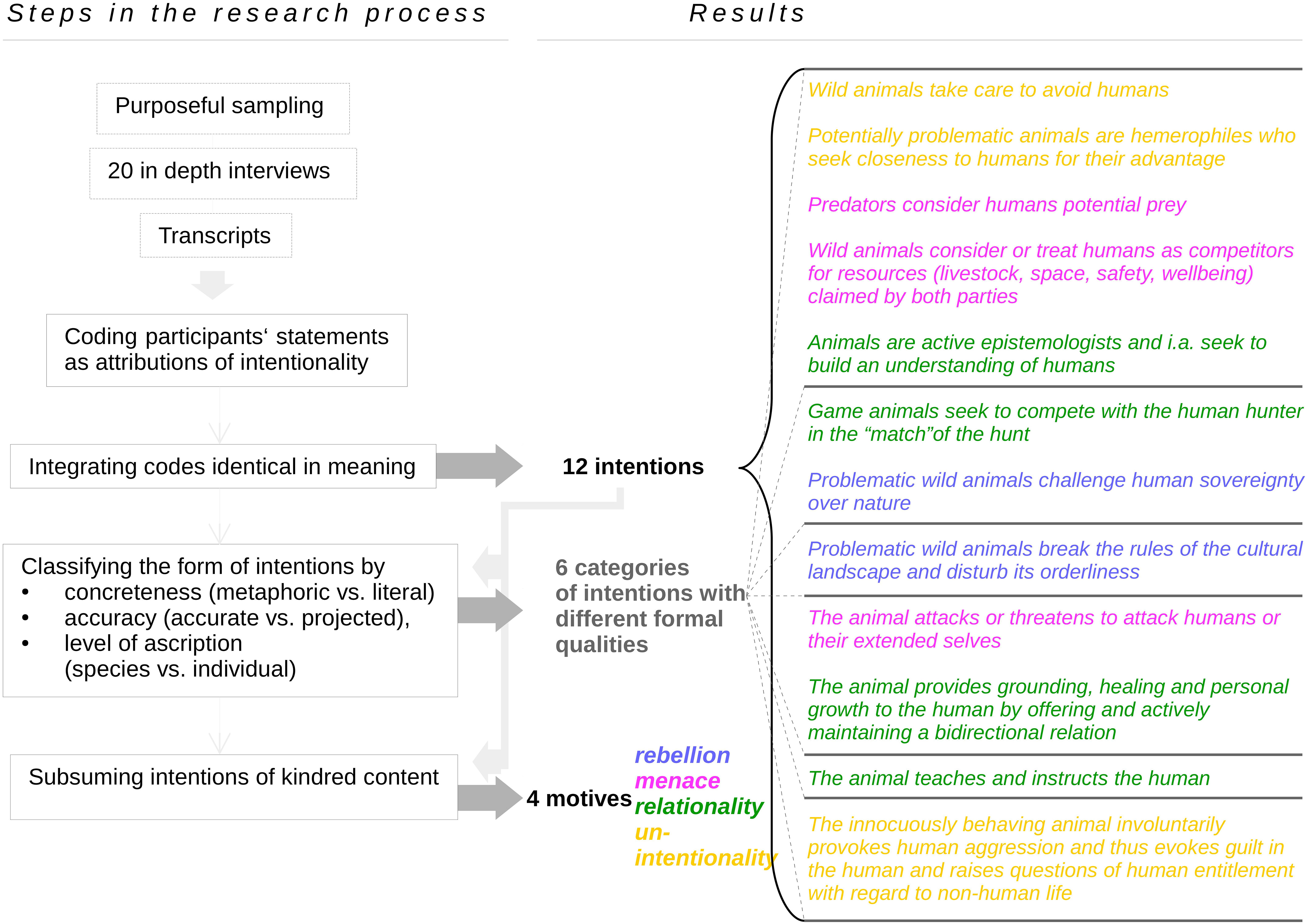
Figure 1 Graphical abstract of the individual steps in the research process and the results they yield.
The corrected version of Figure 1 and its caption “Graphical abstract of the individual steps in the research process and the results they yield.” appear below.
The author apologizes for this error and state that this does not change the scientific conclusions of the article in any way. The original article has been updated.
Text correction
In the published article, there was an error.
In the course of revising the manuscript, the phrasing of some intentions attributed to wildlife were changed. However, this change was not implemented in all places where these intentions were named: specifically in the following section, where sample intentions were named, the old phrasing of the intention was wrongly retained.
A correction has been made to the RESULTS section, sub-section “Four Motives Underlying the 12 Attributed Intentions” on page 10 of the published article. This sentence previously stated: “Across the different categories defined by the three continua, some of the 12 individual intentions exhibit analogies with regard to their content. For example, the metaphoric allegation that “problematic wildlife challenges human sovereignty over nature” and the more literal attribution that “problematic wildlife breaks the rules of the cultural landscape and disturb its orderliness” share a common thread with regard to animals’ presumed incentive to rebel against human rule and rules.”
The corrected sentence appears below: “Across the different categories defined by the three continua, some of the 12 individual intentions exhibit analogies with regard to their content. For example, the metaphoric allegation that “problematic wild animals challenge human sovereignty over nature” and the more literal attribution that “problematic wild animals break the rules of the cultural landscape and disturb its orderliness” share a common thread with regard to animals’ presumed incentive to rebel against human rule and rules.”
The author apologizes for this error and state that this does not change the scientific conclusions of the article in any way. The original article has been updated.
Publisher’s note
All claims expressed in this article are solely those of the authors and do not necessarily represent those of their affiliated organizations, or those of the publisher, the editors and the reviewers. Any product that may be evaluated in this article, or claim that may be made by its manufacturer, is not guaranteed or endorsed by the publisher.
Keywords: human dimensions, human-wildlife coexistence, wolves, corvids, spiders, intentionality, anthropomorphism, Anthrozoology
Citation: Jürgens UM (2022) Corrigendum: “I am Wolf, I Rule!” - Attributing intentions to animals in human-wildlife interactions. Front. Conserv. Sci. 3:1087514. doi: 10.3389/fcosc.2022.1087514
Received: 02 November 2022; Accepted: 25 November 2022;
Published: 22 December 2022.
Edited and Reviewed by:
Alexandra Zimmermann, University of Oxford, United KingdomCopyright © 2022 Jürgens. This is an open-access article distributed under the terms of the Creative Commons Attribution License (CC BY). The use, distribution or reproduction in other forums is permitted, provided the original author(s) and the copyright owner(s) are credited and that the original publication in this journal is cited, in accordance with accepted academic practice. No use, distribution or reproduction is permitted which does not comply with these terms.
*Correspondence: Uta Maria Jürgens, dS5tLmp1ZXJnZW5zQHV0YS5pbmZv