 Thomas NE Gray1*
 Rachel Rosenbaum2
 Guangshun Jiang3
 Pablo Izquierdo4
 JIN Yongchao3,5
 Leoung Kesaro6Arnaud Lyet7
 MKS Pasha8David J. Patterson9Phan Channa6
 QI Jinzhe3William J. Ripple10Jennifer L. Roberts1
 Sugoto Roy11Nay Myo Shwe12
 Christopher Wolf10Stuart Chapman13
- 1World Wild Fund for Nature (WWF) Tigers Alive Initiative, c/o WWF Cambodia, Phnom Penh, Cambodia
- 2North Carolina State University, Raleigh, NC, United States
- 3Feline Research Center of National Forestry and Grassland Administration, College of Wildlife and Protected Area, Northeast Forestry University, Harbin, China
- 4World Wild Fund for Nature (WWF) Norway, Oslo, Norway
- 5World Wild Fund for Nature (WWF) China, Beijing, China
- 6General Department of Natural Protected Area (GDNPA), Ministry of Environment, Royal Government of Cambodia, Phnom Penh, Cambodia
- 7World Wildlife Fund, Washington, DC, United States
- 8International Union for the Conservation of Nature (IUCN) Asia Regional Office, Bangkok, Thailand
- 9World Wild Fund for Nature (WWF) UK, The Living Planet Centre, Woking, United Kingdom
- 10Department of Forest Ecosystems and Society, Oregon State University, Corvallis, OR, United States
- 11International Union for the Conservation of Nature (IUCN) Species Survival Commission (SSC) Cat Specialist Group, c/o Foundation KORA, Ittigen, Switzerland
- 12World Wild Fund for Nature (WWF) Myanmar, Yangon, Myanmar
- 13World Wild Fund for Nature (WWF) Tigers Alive Initiative, c/o WWF Nepal Programme, Kathmandu, Nepal
Wildlife conservation in the Anthropocene requires bold conservation solutions including restoration of ecosystems and species. The recovery of large carnivore populations is a conservation goal which can generate significant benefits in terms of ecosystem services, ecological functionality, and human well-being. Tigers Panthera tigris, Asia’s most iconic species, are currently restricted to less than 10% of their historic range with recent national extinctions from a number of countries in mainland Southeast Asia. Tiger recovery through range expansion requires suitable habitat, a robust prey base, and high levels of institutional support for conservation. We explored government support for conservation to produce a ranking of the political opportunities for tiger restoration across current and former tiger range countries. We used this analysis, in combination with globally remotely sensed data-sets on human impact, to show that there is potential for significant tiger range expansion. We identified large expanses of currently unoccupied, but potentially suitable, habitat in at least 14 countries including all extant tiger range countries and four countries with extirpated tiger populations – Cambodia, Lao PDR, Viet Nam, and Kazakhstan. Thirty-two percent of expansion areas were within 50-km, and 50% within 100-km, of current tiger populations highlighting that in many landscapes range expansion could be driven by the natural dispersal of tigers provided connectivity is maintained or enhanced. The proportion of potential range within existing protected areas varied between <5% in India, Indonesia, and China, to >60% in Thailand and Cambodia. As such socially appropriate conservation approaches, in collaboration with local communities, will be necessary to support tiger recovery in many areas. We recommend that some of the areas which we have identified should be highlighted as significant for future tiger conservation by tiger range country governments. Whilst the landscapes and sites which we identify will require detailed ground-truthing, and all tiger reintroductions need extensive planning and feasibility assessments, safeguarding these areas for human-carnivore coexistence could provide significant planetary benefits and support both tiger recovery and Global Sustainable Development Goals.
1 Introduction
Wildlife conservation in the Anthropocene requires bold conservation solutions. Current global conservation efforts have largely failed, and more ambitious commitments and innovations are required to stem wildlife declines (Mace et al., 2018; Bhola et al., 2021). Such innovations need to move beyond protection to the re-expansion of nature including ecosystem restoration and rewilding (Svenning, 2020). The UN Decade on Ecosystem Restoration (2021-2030) is a rallying call for the protection and revival of ecosystems and highlights that a strong connection exists between recovering nature and sustainable human development (Perino et al., 2019). Large carnivores have the potential to be leveraged as symbols for ecosystem restoration. They are amongst the most charismatic and ecologically significant animals and require large expanses of suitably managed habitat (Ripple et al., 2014; Albert et al., 2018). Restoring, then maintaining, viable wild populations of large carnivores, can act as a driver to preserve larger, better connected, and better-quality ecosystems. The majority of the world’s terrestrial large carnivores are restricted to a fraction of their historic ranges and restoring carnivore distribution is a conservation goal which can also generate significant benefits in terms of ecosystem services, ecological functionality, and human well-being (Laliberte and Ripple, 2004; Wolf and Ripple, 2018). The Anthropocene extinction crisis is particularly acute in Asia and is exemplified by the state of the continent’s most iconic species: tiger Panthera tigris. Whilst global tiger populations, if not distribution, are increasing, tigers remain the world’s most threatened large cat. There are fewer than 5,000 wild tiger individuals and these are restricted to less than 10% of their historic distribution (Jhala et al., 2021; Goodrich et al., 2022). Since ~1850, tigers have been lost from at least 14 countries with three national extirpations, in Viet Nam, Lao PDR, and Cambodia, having occurred in the past 25 years (O’Kelly et al., 2012; Goodrich et al., 2015; Johnson et al., 2016). The successful long-term recovery of tigers requires both securing current source populations (Walston et al., 2010) and expanding the species’ occupied range. Under the recently developed IUCN Green Status Assessment (Grace et al., 2021) tiger likely meets the criteria for Critically Depleted. Increasing the species’ distribution, and the ecological breadth of places where tiger occur and are functional, is necessary to recover the species globally. Implementing actions to reverse the centuries-long decline in tiger range is an ambitious and politically relevant conservation goal. Such planning needs to be long-term and could help create proactive and inspirational conservation goals which move beyond defending current tiger space and allow tiger populations, and conservation successes, to expand.
Increases in tiger range can be driven by both natural range expansion, through dispersal from current tiger population sources, as well as planned translocations and reintroductions into parts of the historic distribution from which tigers have been lost (Chestin et al., 2017; Gray et al., 2017). Both of these processes are known to have driven large carnivore recovery in Europe (Chapron et al., 2014). Natural dispersal of grey wolves Canis lupus from sources in remote and mountainous strongholds, combined with specific reintroduction and translocation programs for Eurasian lynx Lynx lynx and brown bear Ursus arctos, have resulted in significant range expansion of these carnivores in recent decades (Boitani and Linnell, 2015). Strong legislative frameworks and political support for law enforcement, combined with increasing social tolerance for carnivores and rural depopulation, were significant drivers of this range expansion across Europe (Martínez-Abraín et al., 2020; Cimatti et al., 2021). Despite their appeal to many people, often distant from carnivore occupied landscapes, the conservation and recovery of large carnivores can be controversial (Hiroyasu et al., 2019; Manfredo et al., 2021; Vasudeva et al., 2021). Large carnivores can compete with people for space and resources. Human wildlife conflict, both real and perceived, can impact attitudes to carnivore recovery globally (Treves and Karanth, 2003; Miller et al., 2016). Most successful examples of carnivore range recovery occur in countries and landscapes with strong governmental policies facilitating and resourcing conservation and with support from local communities (Chapron et al., 2014). Similarly, landscapes with increasing tiger populations are often characterised by high levels of law enforcement, good management of species and their habitats, high community support, and local economies and jobs created around wildlife (e.g. tourism) (Dudley et al., 2020; Jhala et al., 2021). However, when assessing where the conditions for tiger recovery are present, less attention has been paid to the enabling political conditions which may support tiger conservation.
We explored issues linked to government support for conservation to produce a ranking of the political opportunities for tiger restoration across 30 current and former tiger range countries. We used this analysis, in combination with globally remotely sensed data-sets on human impact, to identify possible opportunities for tiger range expansion across Asia. We compared opportunities for tiger range expansion with current conservation priorities and focuses, measured through overlap with government protected areas and Key Biodiversity Areas (KBAs; Eken et al., 2004). Identifying range expansion opportunities and constraints is important to guide the future tiger conservation agenda and to proactively identify spaces for possible future tiger conservation. Landscapes and sites with opportunities for tiger range expansion are likely to require conservation interventions at all levels from national government to local communities. Protecting such future tiger space, in collaboration with local stakeholders, will ensure conservationists remain ahead of the curve on global tiger recovery.
2 Materials and methods
We mapped the historic range of tiger through identifying terrestrial ecoregions from which tiger were reported based on georeferenced historic tiger records, indicative of a breeding population, from between ~1750 and 2020. This historic resident breeding distribution (henceforth historic distribution) covered 11,792,218-km2 in 30 countries (Figure 1). We mapped the current tiger distribution (henceforth current distribution) based on ‘Extant’ areas within the 2015 IUCN Red List assessment of tiger (Goodrich et al., 2015) which we modified to account for recently documented extirpations (Johnson et al., 2016; Suttidate et al., 2021). This current tiger distribution covered 673,737 km2 in 10 countries (Figure 1; SI Table 1). Multiple factors influence distribution of tigers including habitat structure and, notably, prey abundance (Wolf & Ripple, 2016; Harihar et al., 2018). However, carnivore distribution may also be influenced by human pressures and behaviour which could be manifested in, for example, levels of retaliatory killing of tigers or elevated hunting pressures on prey species. We hypothesised that current (and future) tiger distribution is strongly influenced by human pressures and that the relationship between human pressure and probability of tiger presence differs between regions due to political, cultural, and ecological factors (Karanth et al., 2009; Sanderson et al., 2010). We used the global Human Modification Index (HMI) to establish the relationship between human impact and current tiger presence. HMI is a global 1-km2 resolution raster data-set indicating the impact of human activity and comprising data on human settlement, agriculture, transportation, mining and energy production, and electrical infrastructure (Kennedy et al., 2019). We calculated the mean (plus-minus Standard Deviation) HMI score of polygons within current tiger distribution in each of the ten countries in which tiger currently occur and within each of three continental regions (South Asia; Southeast Asia; East-Central-West Asia).
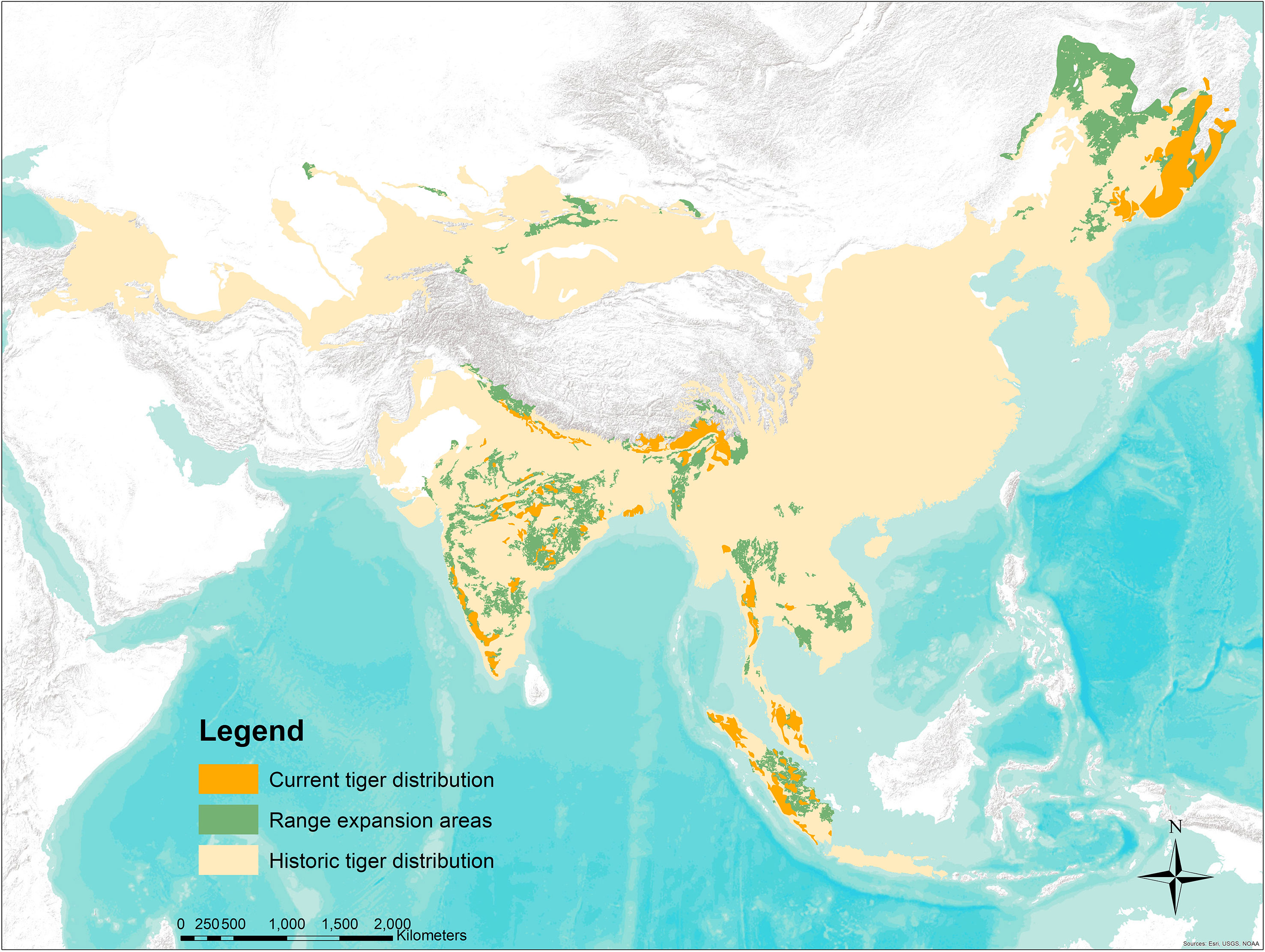
Figure 1 Historic and current tiger distribution and range expansion areas. Historic tiger distribution (as described in the text), current tiger distribution from Goodrich et al. (2015) amended per text. Tiger range expansion (1,293,921-km2) per our analysis.
Within each country in which tiger currently occur we identified polygons of area greater than 500 km2, equivalent to the size of the smaller Tiger Conservation Landscapes identified by Sanderson et al. (2010), across the historic distribution with a mean HMI score below, and within one standard deviation either side of, the mean score for occupied tiger polygons within each country. For the 20 countries within the historic distribution that do not have current tiger populations we identified polygons of greater than 3,000 km2 with HMI below, and within one standard deviation either side of, the mean score for the continental region (i.e. for Cambodia the score for Southeast Asia). We used this larger threshold size within former tiger range countries due to the likely need for large landscapes for new reintroductions (c.f. natural range expansion). In China we applied this 3,000 km2 threshold for all habitat blocks outside the Amur Heilong Ecoregion except when within 100-km of current tiger distribution.
In addition to the direct human impact, indicated by the HMI score, the appropriateness of countries and landscapes for large carnivore recovery may be dependent upon a supportive political environment. We scored each of the 30 countries which comprised the historic tiger distribution based on perceived political support for conservation. Data we used provided information on general support to biodiversity conservation and specific information on planning for carnivore conservation. We collated data on domestic conservation funding (Waldron et al., 2013), protected area ranger density (Appleton et al., 2022), and, national governance (Kaufmann et al., 2011): all factors which may correlate with the probability of successful large carnivore conservation. Details of these data-sets are provided in Supplemental Materials. We weighted each of the above factors (domestic conservation funding, protected area ranger density, and governance) equally and ranked each country (high-medium-low; scored 3-2-1 points respectively) based on the relative mean score for each metric. For each country we summed the points for the three metrics. We also searched the literature and our personal knowledge to identify whether large carnivore reintroductions or translocations have been implemented in each country (Stepkovitch et al., 2022). Any country with a large carnivore reintroduction project was given an additional three points; any countries with tiger or other large carnivore reintroduction or translocations specifically in National Action Plans were given an additional 1.5 points. Based on this ranking the 30 countries comprising the historic tiger distribution were divided into three classes (high-intermediate-low) dependent on political support for large carnivore conservation.
To identify possible landscapes for tiger range expansion we combined the HMI polygons with the political support scores. For countries identified as likely highly supportive of large carnivore conservation all polygons with a mean HMI value smaller (i.e. less human impact) than the mean plus one standard deviation of occupied tiger polygons for the respective country or continental region (for countries from which tiger have been extirpated) were selected. For countries with intermediate levels of political support all polygons with HMI values less than the mean value for occupied tiger landscapes were selected, and for those with low support all polygons with HMI less than the mean value minus one standard deviation were selected. To identify overlap between current conservation priorities and possible tiger range expansion areas we compared range expansion polygons with current protected area coverage from the World Database of Protected Areas and the locations of KBAs (Eken et al., 2004). We compared land-cover between the current tiger distribution and predicted expansion areas based on the European Space Agency GlobCover data-set which has a 300-m resolution (Arino et al., 2012). We broadly classified land-cover as forested, human-modified, or other land-cover (SI Table 2). To identify predicted range expansion areas in which natural dispersal of tigers might be possible we extracted all range expansion areas within 50, 100, 250, and 500-km buffers of current tiger distribution.
3 Results
Our mapped current tiger distribution covers ~674,000 km2 in ten countries (SI Table 1; Figure 1). This represents 5.7% of the historic tiger distribution (Figure 1). The mean Human Modification Index (HMI) within current tiger distribution varied among the ten extant tiger range countries (SI Table 1; Figure 2) and was highest in India, Bangladesh, and Nepal and lowest in Russia and Myanmar. The HMI of the current tiger distribution was higher in South Asia than in Southeast and East Asia, and higher in Southeast Asia than East Asia (SI Table 1). Almost three-quarters of current tiger distribution was classified as forest (SI Table 1). Lowest forest cover of current tiger distribution was in Nepal and India, where 40 and 55% of current tiger distribution respectively, was in human modified habitats (SI Table 1).
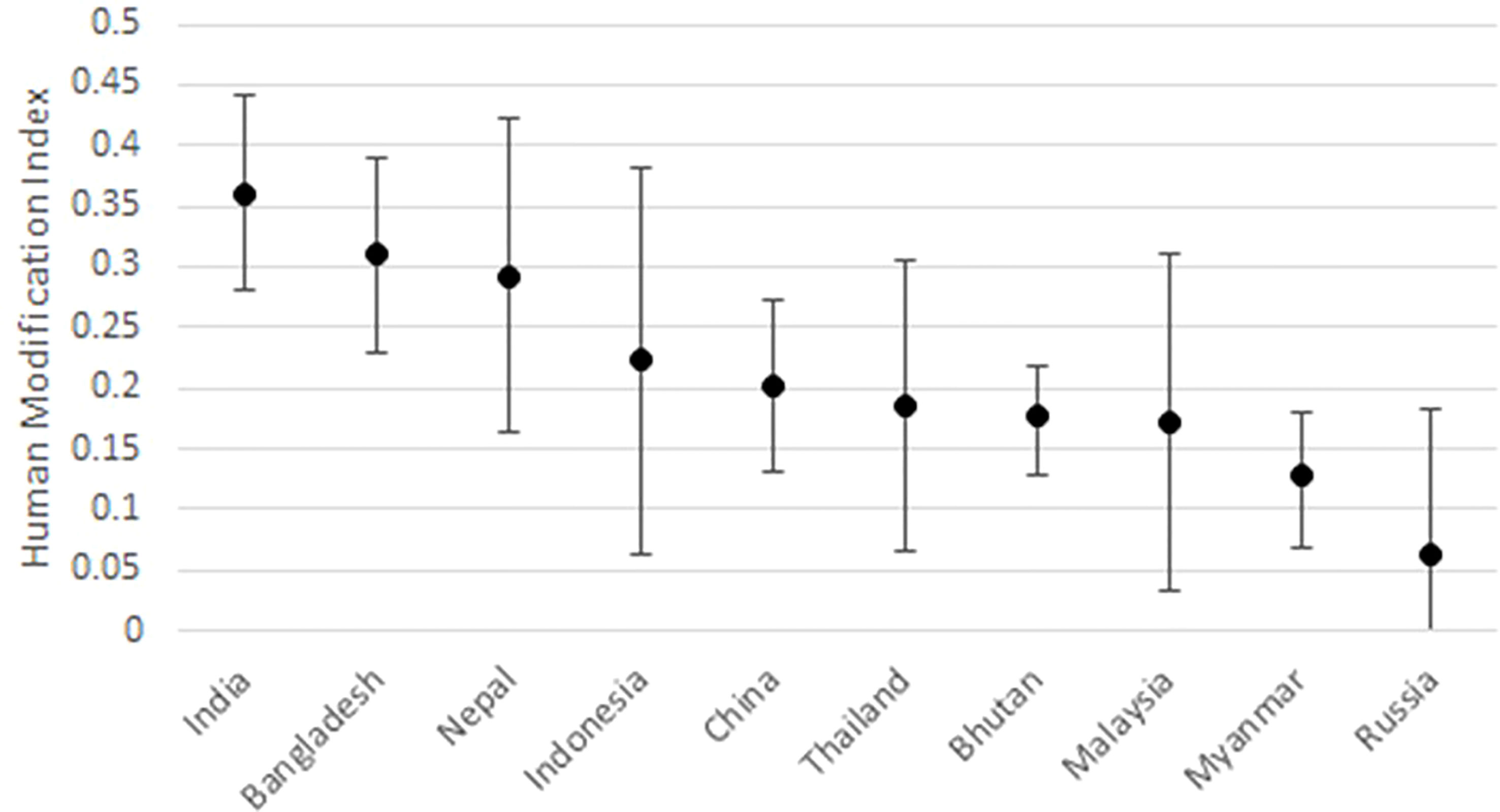
Figure 2 Mean (± Standard Deviation) Human Modification Index (HMI) scores for current tiger distribution in each extant tiger range country.
3.1 Political support indicators
Domestic conservation funding across the 30 current and former tiger range countries varied between 0 (10 countries) and 82 million USD/year (South Korea) with a mean of 13.7 million USD/year for the period for which data was available i.e. 2001-2008 (Waldron et al., 2013). Five of the 30 countries, including two extant tiger range countries, had 2019 governance scores above the global average (South Korea, Bhutan, Georgia, Malaysia, Mongolia). North Korea, and six former range states in Central and West Asia, had the lowest governance scores. Protected Area ranger densities varied considerably from >20 individuals per 100-km2 to <1 per 100-km2 in 8 countries (Appleton et al., 2022). We found evidence of implemented large carnivore reintroductions in five countries and formal plans for reintroductions (for tiger or other large carnivore) in an additional seven countries. Scoring for each country for domestic conservation funding, governance, ranger densities, and carnivore reintroductions are given in SI Table 3. Overall, we scored three countries (India, Thailand, and South Korea) as having strongly supportive political environments for large carnivore conservation and recovery. Ten countries were identified as having likely weak supportive political environments for large carnivore conservation. These were seven countries in the former range of Caspian tiger in Central Asia, North Korea, and two countries in Southeast Asia with recently extirpated (Lao PDR) or currently very low (Myanmar) populations of tiger. The remaining 18 countries were identified as having intermediate levels of political support for large carnivore conservation and recovery (SI Table 3).
3.2 Mapping areas for tiger range expansion
The HMI values we used to identify areas for possible tiger range expansion varied from 0.52 in India, to <0.01 for the six former tiger range countries with low levels of political support for conservation in Central and West Asia (SI Table 4). Using these thresholds, we identified 1,293,921-km2 within 176 blocks of habitat ( 7,346-km2; range 500 – 502,007-km2) across the historic tiger distribution that is potentially suitable for range expansion (Figure 1). These areas (henceforth ‘expansion areas’) occurred across 14 countries (Table 1) including all extant tiger range countries (92.7% of predicted expansion area) and four countries with extirpated tiger populations – Cambodia, Lao PDR, Viet Nam, and Kazakhstan. The countries with the largest extent of expansion areas were India (612,718-km2), China (201,656-km2), and Russia (137,684-km2). These countries comprised >70% of all expansion areas. No expansion areas were identified from 16 countries within the historic tiger distribution including North and South Korea and the majority of countries in central and western Asia. In total 32% of expansion areas were within 50-km of current tiger distribution and 50% were within 100-km. Four countries (Indonesia, Bangladesh, Malaysia, and Bhutan) had >50% of their expansion areas within 50-km of current tiger distribution (Table 1; SI Table 5).
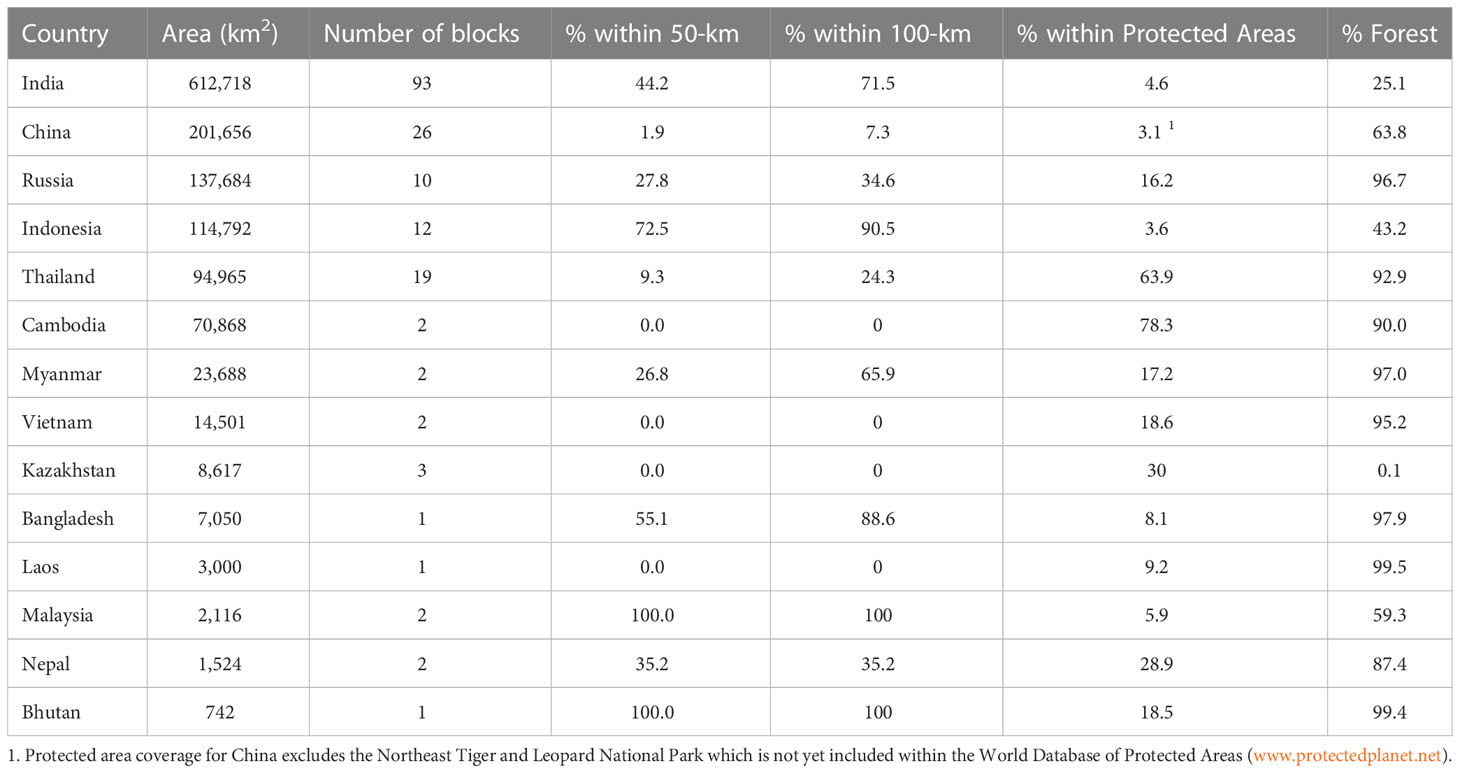
Table 1 Range expansion area (km2) per country plus the number of discrete blocks of habitat and the percentage of expansion area within 50-km and 100-km of current tiger distribution, the percentage within Protected Areas, and the percentage classified as Forest (SI Table 2).
The proportion of expansion areas within existing protected areas varied between <5% in India, Indonesia, and China to 64% in Thailand and 78% in Cambodia (Table 1). Overall, 188,066-km2 of expansion areas (14%) were within protected areas. Overlap between protected areas and range expansion areas was low in the four extant tiger range countries in South Asia (4.7%) and highest in mainland Southeast Asian (30%). Just under 14% of range expansion areas overlapped KBAs (SI Table 4). Overlap with KBAs was highest in Lao PDR and Myanmar (>60%) and lowest in Indonesia (4.8%) and Russia (3.4%). More than 500,000-km2 (41.5%) of range expansion area was in human modified habitat including large areas of low intensity agricultural and forest mosaics in India (SI Table 6). In Malaysia and Indonesia almost half of expansion area was in human modified habitats. In 8 of 14 countries, including all Southeast Asian countries apart from Malaysia and Indonesia, >90% of range expansion areas were in forest (SI Table 6).
4 Discussion
We demonstrate that there is potential for significant tiger range expansion across the species’ historic distribution with large expanses of currently unoccupied, but potentially suitable habitat, remaining in 14 countries. Whilst the global tiger population may be increasing from a nadir in the first decade of the 21st century, the species’ range contraction continues (Goodrich et al., 2022). Tigers currently occupy ~675,000 km2, less than 6% of their indigenous range, and in the majority of the ten extant tiger range countries this distribution continues to shrink. Incorporating area-based conservation targets into global tiger recovery efforts may present an opportunity to reverse this decline whilst also ensuring conservation efforts focus on some of the most important conservation wildernesses in Asia. Our expansion areas for tigers cover more than 1,290,000-km2 in 14 countries. Safeguarding these areas for human-carnivore coexistence, through targeted conservation and land-use management interventions, could provide significant planetary benefits and support the global Sustainable Development Goals (Perino et al., 2019). We recommend that a proportion of the areas which we have identified be highlighted as significant for tiger recovery by tiger range country governments. By identifying these opportunities awareness can be raised regarding possibilities for tiger restoration and the landscapes where more detailed feasibility assessments may be required can be highlighted. Securing and increasing the protection of such areas is required to sustain tiger recovery in the long-term. Such an approach clearly fits the philosophy of the United Nations Decade for Ecosystem Restoration and may be aligned with the global vision of 30x30: a global commitment to protect 30% of the world’s terrestrial and marine ecosystems as part of the 2030 Agenda for Sustainable Development (Dreiss et al., 2022). A wide range of policies, laws and regulations related to land use, forestry and natural resource management, including land tenure regulations, agricultural, forestry, environmental, rural development and climate change policies, would be needed to for integration of range expansion areas with protected area systems (DeFries et al., 2010).
The expansion areas which we have identified are not a prescriptive blueprint for tiger recovery, reintroductions, or translocations. Instead, we hope that they represent some of the opportunities for future range expansion provided that the landscapes are protected, prey are sufficiently abundant, and threats are mitigated. Many of the sites identified may be worse on the ground than predicted – particularly in terms of tiger prey density, levels of effective land-use management, and community support. There is a need for country and landscape-specific ground-truthing of the expansion areas and global analyses cannot replace the need for detailed site-based assessments. Such studies, using more up-to-date and accurate information on the current distribution and status of tigers, will refine our analysis. Such country specific assessments are critical with regard to understanding habitat quality and tiger prey densities: important factors for tiger recovery but which cannot be obtained through remotely sensed data-sets. We hope that country specific assessments will be used to develop global goals for tiger range expansion which could be formalized as part of the revision of the Global Tiger Recovery Program (GTRP) for the next 12-years.
We demonstrate that the relationship between human activity, identified through the Human Modification Index (HMI), and the presence of tigers differs significantly between countries and regions. This relationship is likely driven by levels of anthropogenic mortality to tigers and tiger prey which in turn is linked to levels of tolerance for living with large mammals (both carnivores and ungulates) as well as the degree of enforcement of legal protection. The HMI of occupied tiger areas was higher in South Asia, particularly within India, Bangladesh and Nepal, than across the rest of the current tiger distribution. Understanding the political, cultural, and ecological mechanisms by which tigers are able to coexist with different intensities of human activity is essential for global tiger recovery. Combining HMI with political support scores adds an extra nuance to our identification of where future tiger conservation opportunities may exist. Whilst Asian countries have been identified generally as underperformers in megafauna conservation (Lindsey et al., 2017) there is significant variation in terms of conservation success, and political support for conservation, across the continent. This is exemplified across tiger range countries with more than half of the world’s remaining wild tiger within a single country, India, which comprises less than 15% of the species’ historic distribution (Jhala et al., 2021). We suggest there is value in incorporating measures of political support for conservation in any global analysis of conservation opportunities. Increasing both political and social carrying capacity for large carnivores is likely to expand the available area for tiger recovery globally and will be vital to the success of any range expansion goals.
We identified three of the thirty indigenous tiger range countries as being highly supportive for large carnivore conservation: India, Thailand, and South Korea. These conclusions are validated by some independent information such as India’s success in tiger conservation (Jhala et al., 2021) and that Thailand supports the most significant tiger population in mainland Southeast Asia (Duangchantrasiri et al., 2016). We believe both Thailand and India have significant opportunities for tiger range expansion. South Korea has successfully reintroduced Asiatic black bears Ursus thibetanus (Andersen et al., 2022) but our analysis did not indicate opportunities for range expansion due to the country’s high HMI in comparison with the regional (i.e. Northeast Asia) threshold. However, opportunities for big cat conservation may exist in the Korean peninsula (Jo and Baccus, 2016) and we recommend including South Korea within the family of tiger range countries. Two Southeast Asian countries were classified as having a poor political environment for large carnivore conservation: Lao PDR and Myanmar. Lao PDR is the most recent country to have lost its tiger population and is regularly highlighted as a country of concern for the global illegal wildlife trade (van Uhm and Wong, 2021). Tiger populations in Myanmar have significantly declined in the past 20-30 years and currently ~20 individuals remain in the transboundary Dawna Tenasserim and Upper Chindwin Landscapes (Goodrich et al., 2022). Whilst both Lao PDR and Myanmar remain extensively forested, with low HMI, the opportunities for proactive tiger conservation and range expansion are limited by the current political realities.
In South and Southeast Asia, the majority of range expansion areas were within 100-km of current tiger distribution: significantly less than the documented straight-line dispersal distance of tigers (Smith, 1993; Singh et al., 2013; Hussain et al., 2022). Natural dispersal into many of these areas may be possible provided that the landscape matrix allows tiger movement through both reducing anthropogenic mortality and physical barriers to dispersal. Expansion areas close to current tiger distribution may be the future frontiers of tiger dispersal and colonisation. As such they need to be the focus of conservation and land-use planning and community sensitisation to prepare for possible future tigers. To drive such tiger recovery, the protection of source populations must remain a priority for tiger conservation (Walston et al., 2010). In South Asia the majority of range expansion areas are outside protected areas and, particularly in India, comprise mosaics of low intensity agricultural cultivation and forest. There is increasing recognition of the critical role in which non-protected areas and indigenously managed land play for conservation (Garnett et al., 2018). Community-led studies are needed to understand the impact of possible tiger expansion into all areas, but particularly those outside of protected areas, and to develop supportive conservation strategies that incorporate the needs and perspectives of local communities. Such studies would need to be conducted largely at a site level, given the variation of social carrying capacity between sites, and will need to capture the heterogeneity that exists within communities and thus examine how range expansion can impact different groups. Using a rights-based approach to build partnership with local communities is of vital importance to ensure conservation investments are effective and that conservation actions benefit the local people who most often bear the highest costs (Carter et al., 2014; Hanson et al., 2019). Appropriate area-based conservation mechanisms, in collaboration with local communities, may be appropriate to secure many of these areas for tiger range expansion. Such an approach is likely to be aligned with the global vision of 30x30 and accelerate active contributions towards multiple targets of the Post-2020 Global Biodiversity Framework (GBF).
For expansion areas that are isolated from current tiger distribution, reintroductions can be considered. Large carnivore reintroductions are an increasingly widespread, and increasingly successful, conservation tool. Tiger reintroductions using wild captured or rehabilitated tigers, have been successful in a number of tiger range countries including India and Russia (Goodrich et al., 2015; Sarkar et al., 2016). Three landscapes which we identified - Ili-Balkhash in Kazakhstan, the Cardamom Rainforest and the Eastern Plains Landscapes in Cambodia – are the focus of current tiger reintroduction plans (Chestin et al., 2017; Gray et al., 2017). Those in Kazakhstan, where initial tiger releases are planned for 2025, are the most advanced. Tiger conservation efforts in China, the country with the second largest expansion area and where the vast majority of expansion areas are >100-km away from current tiger distribution, are also likely to greatly benefit from reintroduction. Such reintroductions could complement the ongoing recover of tiger populations and habitat within China (Qi et al., 2021). The possibility of using captive tigers for reintroduction and translocations within China to support range expansion should be explored particularly given evidence of inbreeding within wild populations (Ning et al., 2022). However captive tigers for rewilding must be obtained from reputable, conservation breeding programs, in no way implicated in illegal tiger trade. Gray et al. (2017) developed a framework for assessing broad scale site feasibility for tiger reintroductions. We recommend such analysis be conducted within any proposed reintroduction landscape. Effective protected area management, community support, and sufficient prey numbers are essential. In landscapes where tigers have become extinct, developing coexistence and monitoring tools with extant carnivore species such as leopards Panthera pardus and clouded leopards Neofelis spp., could pave the way to easing political support for eventual tiger reintroductions or natural recolonisation.
Across much of the tiger’s historic distribution the density of tiger prey species is significantly depleted due to both legal and illegal hunting. Half of the mammalian prey species of tiger are threatened with extinction, and roughly 80% have decreasing population trends (Wolf and Ripple, 2018). This lack of prey is a major constraint to tiger recovery (Harihar et al., 2018; Steinmetz et al., 2021). The impact of prey declines on the feasibility of tiger recovery is illustrated in Cambodia’s Eastern Plains Landscape where robust monitoring has demonstrated ongoing reduction in the densities of key tiger prey species (Groenenberg et al., 2020). This has delayed plans for reintroduction. In Kazakhstan increasing prey densities, through habitat manipulation and active reintroductions of prey, is a conservation focus in readying Ili-Balkhash for the return of tigers. Prey restoration in Kazakhstan includes reintroduction of Bukhara deer Cervus hanglu bactrianus as part of a multi-country conservation initiative which has seen recovery of the subspecies from as low as 350 individuals to over 3,500 in the past 20 years (Pereladova et al., 2020). In many expansion areas the opportunities for tiger recovery could benefit wider species conservation. In both Cambodia and Kazakhstan, plans for tiger reintroduction led to the creation of new protected areas (Souter et al., 2016; Chestin et al., 2017), and in both countries the tiger is being used as a flagship conservation initiative to support wider investment in biodiversity protection. Moreover, if they reach ecologically effective densities, tiger populations may themselves support conservation of other species, although more research into potential trophic cascades is needed (Ripple et al., 2014).
Given their large home-ranges the conservation of carnivores can compete for space with economic development, including extractive industries and infrastructure. Many areas of low human impact globally are targeted for exploitation particularly for minerals and fossil fuels. Grantham et al. (2021) found that nearly a fifth of Intact Forest Landscapes in the tropics are currently designated as some form of extractive concession. We found similar patterns across our expansion areas many of which are impacted by infrastructure and extractive industries (SI Table 7). Roads are known to impact large carnivores (Quintana et al., 2022) due to wildlife-vehicle collisions, habitat loss and fragmentation, and increased access leading to increased poaching of tiger and prey including through snaring (Gray et al., 2018). As such road expansion has been identified as a threat to tiger conservation (Carter et al., 2020). Roads occurred within the vast majority of blocks of range expansion within highest densities of roads in South Asia and Indonesia (SI Table 7). Minimising threats from roads for both expanding and reintroduced tiger populations will be important and, in some cases, there may be a need for the diversion or closure of existing roads. Extractive industries, for both minerals and fossil fuels, are impacting approximately 15% of the blocks of range expansion (SI Table 7). This impact is not evenly distributed across countries with expansion areas in mainland Southeast Asia (Cambodia, Lao PDR, Myanmar), particularly impacted. Efforts to invest in range expansion of tigers will need to consider the full added value of large carnivore recovery including social and environmental services provided by a restored and protected ecosystem. Key aspects of this would be around economic viability and sustainability and critically the economic benefits to local communities in the area. Co-benefits could include but are not limited to carbon storage and sequestration, watershed management, job creation, and ecosystem resilience (WWF, 2017). The research and articulation of these co-benefits will be vital to securing and increasing political and social support for range expansion efforts.
As with all global conservation analysis our results are impacted by the quality of the data used. Neither our current or historic tiger distributions will be completely accurate. The current tiger distribution from Goodrich et al. (2015) is relatively dated and, particularly in South Asia, a number of our predicted expansion areas may now support tiger - albeit at relatively low densities. For example, the most recent national India tiger census detected a minimum of two tigers within Cauvery Wildlife Sanctuary in Karnataka, which forms part of a large block of our expansion habitat (Jhala et al., 2019). Conversely, not all of the historic tiger distribution may form habitat or ecosystems which are suitable for tigers even at low levels of human activity. It is likely that some of the expansion areas may not be currently suitable for tigers as a result of major landscape level transformations or other socio-cultural changes. However, predicted increases in urbanisation, under a number of future development trajectories, may reduce HMI in key landscapes and increase opportunities for future tiger range expansion (Sanderson et al., 2019).
The St Petersburg Tiger Summit in 2010 and the range-wide endorsement of the Tx2 Goal have revolutionised tiger conservation and spurred unprecedented conservation efforts and investments (Jhala et al., 2021). These led to tiger population increases in many landscapes. However, tiger population increases have not been mirrored by increases in tiger distribution with a 17% loss of area occupied by tigers between 2001 and 2020 (Goodrich et al., 2022). Globally we have more tigers but in fewer landscapes and fewer ecosystems than at the beginning of the 21st century. In many sites currently occupied by tigers there are considerable opportunities to increase tiger numbers (Harihar et al., 2018) through improved site management (Dudley et al., 2020) and increasing the density of prey species (Phumanee et al., 2020). In Southeast Asia, where tiger numbers continue to decline, effective anti-poaching and community engagement are also critical (Linkie et al., 2015). Securing a viable and ecologically representative future for tigers requires both securing current populations (Walston et al., 2010) and expanding the occupied range. Effective management of current tiger populations is essential for driving natural dispersal of tigers into new areas particularly within South and East Asia (Qi et al., 2021). However, we argue there is also a need for proactive planning for future tiger range expansion. This should include both places into which tigers may naturally disperse and those which may be suitable for future reintroduction. Tiger reintroductions can galvanise conservation efforts and help protect additional habitat and support the expansion of Protected Areas and Other Effective Conservation Measures (OECMs). We identify some of the opportunities for tiger range expansion across the species’ historic distribution and recommend that some of these areas be included within a tiger range expansion target which should be developed and endorsed by tiger range countries. Focusing conservation efforts on some of these places could prepare for the return of the tiger whilst also securing critical conservation landscapes and benefiting both people and wildlife.
Data availability statement
The original contributions presented in the study are included in the article/Supplementary Material. Further inquiries can be directed to the corresponding author.
Author contributions
TG, SC conceived the study. TG, RR, PI, DP conducted the analysis. TG, RR, GJ, PI, JY, LK, AL, MP, PC, QJ, WR, JR, SR, NS, CW wrote the manuscript. All authors contributed to the article and approved the submitted version.
Acknowledgments
Michael Belecky, Ashley Brooks, Smriti Dahal, Rajesh Gopal, Abigail Hehmeyer, Grigory Mazmaniants, and Rohit Singh provided advice and insights during the development and drafting of this paper. Paolo Tibaldeschi assisted with data analysis. WWF US, WWF Sweden, WWF Germany, WWF UK, and WWF International provided funding support for this work.
Conflict of interest
The authors declare that the research was conducted in the absence of any commercial or financial relationships that could be construed as a potential conflict of interest.
Publisher’s note
All claims expressed in this article are solely those of the authors and do not necessarily represent those of their affiliated organizations, or those of the publisher, the editors and the reviewers. Any product that may be evaluated in this article, or claim that may be made by its manufacturer, is not guaranteed or endorsed by the publisher.
Supplementary material
The Supplementary Material for this article can be found online at: https://www.frontiersin.org/articles/10.3389/fcosc.2023.1124340/full#supplementary-material
References
Albert C., Luque G. M., Courchamp F. (2018). The twenty most charismatic species. PloS One 13, e0199149. doi: 10.1371/journal.pone.0199149
Andersen D., Yi Y., Borzée A., Kim K., Moon K.-S., Jeong-Jin K., et al. (2022). Use of a spatially explicit individual-based model to predict population trajectories and habitat connectivity for a reintroduced ursid. Oryx 56, 298–307. doi: 10.1017/S0030605320000447
Appleton M. R., Courtiol A., Emerton L., Slade J. L., Tilker A., Warr L. C., et al Protected area personnel and ranger numbers are insufficient to deliver global expectations. Nat. Sustainability. 5, 1100–1110.doi: 10.1038/s41893-022-00970-0
Arino O., Ramos Perez J. J., Kalogirou V., Bontemps S., Defourny P., Van Bogaert E. (2012). Global land cover map for 2009 (GlobCover 2009). Paris, France
Bhola N., Klimmek H., Kingston N., Burgess N. D., van Soesbergen A., Corrigan C., et al. (2021). Perspectives on area-based conservation and its meaning for future biodiversity policy. Conserv. Biol. 35, 168–178. doi: 10.1111/cobi.13509
Boitani L., Linnell J. D. (2015). “Bringing large mammals back: large carnivores in Europe,” in Rewilding European landscapes (Cham: Springer), 67–84.
Carter N., Killion A., Easter T., Brandt J., Ford A. (2020). Road development in Asia: Assessing the range-wide risks to tigers. Sci. Adv. 6, eaaz9619. doi: 10.1126/sciadv.aaz9619
Carter N. H., Riley S. J., Shortridge A., Shrestha B. K., Liu J. (2014). Spatial assessment of attitudes toward tigers in Nepal. AMBIO 43, 125–137. doi: 10.1007/s13280-013-0421-7
Chapron G., Kaczensky P., Linnell J. D., von Arx M., Huber D., Andrén H., et al. (2014). Recovery of large carnivores in europe’s modern human-dominated landscapes. science 346, 1517–1519. doi: 10.1126/science.1257553
Chestin I. E., Paltsyn M. Y., Pereladova O. B., Iegorova L. V., Gibbs J. P. (2017). Tiger re-establishment potential to former Caspian tiger (Panthera tigris virgata) range in central Asia. Biol. Conserv. 205, 42–51. doi: 10.1016/j.biocon.2016.11.014
Cimatti M., Ranc N., Benítez-López A., Maiorano L., Boitani L., Cagnacci F., et al. (2021). Large Carnivore expansion in Europe is associated with human population density and land cover changes. Diversity Distributions 27, 602–617. doi: 10.1111/ddi.13219
DeFries R. S., Rudel T., Uriarte M., Hansen M. (2010). Deforestation driven by urban population growth and agricultural trade in the twenty-first century. Nat. Geosci 3, 178–181. doi: 10.1038/ngeo756
Dreiss L. M., Lacey L. M., Weber T. C., Delach A., Niederman T. E., Malcom J. W. (2022). Targeting current species ranges and carbon stocks fails to conserve biodiversity in a changing climate: opportunities to support climate adaptation under 30× 30. Environ. Res. Lett. 17, 024033. doi: 10.1088/1748-9326/ac4f8c
Duangchantrasiri S., Umponjan M., Simcharoen S., Pattanavibool A., Chaiwattana S., Maneerat S., et al. (2016). Dynamics of a low-density tiger population in southeast Asia in the context of improved law enforcement. Conserv. Biol. 30, 639–648. doi: 10.1111/cobi.12655
Dudley N., Stolton S., Pasha M., Sharma M., Chapman S., Roberts J., et al. (2020). How effective are tiger conservation areas at managing their sites against the conservation assured| tiger standards (CA| TS)? Parks 26, 115–128. doi: 10.2305/IUCN.CH.2020.PARKS-26-2ND.en
Eken G., Bennun L., Brooks T. M., Darwall W., Fishpool L. D., Foster M., et al. (2004). Key biodiversity areas as site conservation targets. BioScience 54, 1110–1118. doi: 10.1641/0006-3568(2004)054[1110:KBAASC]2.0.CO;2
Garnett S. T., Burgess N. D., Fa J. E., Fernández-Llamazares Á., Molnár Z., Robinson C. J., et al. (2018). A spatial overview of the global importance of indigenous lands for conservation. Nat. Sustain 1, 369–374. doi: 10.1038/s41893-018-0100-6
Goodrich J., Lynam A., Miquelle D., Kawanishi K., Pattanavibool A., Htun S., et al. (2015). Panthera tigris. the IUCN red list of threatened species 2015. IUCN, Gland, Switzerland
Goodrich J., Wibisono H., Miquelle D., Lynam A., Sanderson E., Chapman S., et al. (2022). Panthera tigris. the IUCN red list of threatened species 2022. IUCN, Gland, Switzerland
Grace M. K., Akçakaya H. R., Bennett E. L., Brooks T. M., Heath A., Hedges S., et al. (2021). Testing a global standard for quantifying species recovery and assessing conservation impact. Conserv. Biol. 35 (6), 1833–1849. doi: 10.1111/cobi.13756
Grantham H. S., Tibaldeschi P., Izquierdo P., Mo K., Patterson D. J., Rainey H., et al. (2021). The emerging threat of extractives sector to intact forest landscapes. Front. Forests Global Change 72. doi: 10.3389/ffgc.2021.692338
Gray T., Crouthers R., Ramesh K., Vattakaven J., Borah J., Pasha M., et al. (2017). A framework for assessing readiness for tiger panthera tigris reintroduction: a case study from eastern Cambodia. Biodiversity Conserv. 26, 2383–2399. doi: 10.1007/s10531-017-1365-1
Gray T. N. E., Hughes A. C., Laurance W. F., Long B., Lynam A. J., O’Kelly H., et al. (2018). The wildlife snaring crisis: an insidious and pervasive threat to biodiversity in southeast Asia. Biodivers Conserv. 27, 1031–1037. doi: 10.1007/s10531-017-1450-5
Groenenberg M., Crouthers R., Yoganand K. (2020). Population status of ungulates in the Eastern plains landscape (WWF Cambodoia: Srepok Wildlife Sanctuary and Phnom Prich Wildlife Sanctuary, Cambodia).
Hanson J. H., Schutgens M., Leader-Williams N. (2019). What factors best explain attitudes to snow leopards in the Nepal Himalayas? PloS One 14, e0223565. doi: 10.1371/journal.pone.0223565
Harihar A., Chanchani P., Borah J., Crouthers R. J., Darman Y., Gray T. N. E., et al. (2018). Recovery planning towards doubling wild tiger panthera tigris numbers: Detailing 18 recovery sites from across the range. PloS One 13, e0207114. doi: 10.1371/journal.pone.0207114
Hiroyasu E. H., Miljanich C. P., Anderson S. E. (2019). Drivers of support: The case of species reintroductions with an ill-informed public. Hum. Dimensions Wildlife 24, 401–417. doi: 10.1080/10871209.2019.1622055
Hussain Z., Ghaskadbi P., Panchbhai P., Govekar R., Nigam P., Habib B. (2022). Long-distance dispersal by a male sub-adult tiger in a human-dominated landscape. Ecol. Evol. 12, e9307. doi: 10.1002/ece3.9307
Jhala Y., Gopal R., Mathur V., Ghosh P., Negi H. S., Narain S., et al. (2021). Recovery of tigers in India: Critical introspection and potential lessons. People Nat. 3, 281–293. doi: 10.1002/pan3.10177
Jhala Y., Qureshi Q., Nayak A. (2019). Status of tigers, Co-predators and prey in India 2018. summary report (Uttarakhand, India: National Tiger Conservation Authority, Government of India, New Delhi & Wildlife Institute of India, Dehradun. TR).
Jo Y.-S., Baccus J. T. (2016). Are large cats compatible with modern society on the Korean peninsula? Ecol. Restor. 34, 173–183. doi: 10.3368/er.34.3.173
Johnson A., Goodrich J., Hansel T., Rasphone A., Saypanya S., Vongkhamheng C., et al. (2016). To protect or neglect? design, monitoring, and evaluation of a law enforcement strategy to recover small populations of wild tigers and their prey. Biol. Conserv. 202, 99–109. doi: 10.1016/j.biocon.2016.08.018
Karanth K. K., Nichols J. D., Hines J. E., Karanth K. U., Christensen N. L. (2009). Patterns and determinants of mammal species occurrence in India. J. Appl. Ecol. 46, 1189–1200. doi: 10.1111/j.1365-2664.2009.01710.x
Kaufmann D., Kraay A., Mastruzzi M. (2011). The worldwide governance indicators: methodology and analytical issues1. Hague J. Rule Law 3, 220–246. doi: 10.1017/S1876404511200046
Kennedy C. M., Oakleaf J. R., Theobald D. M., Baruch-Mordo S., Kiesecker J. (2019). Managing the middle: A shift in conservation priorities based on the global human modification gradient. Global Change Biol. 25, 811–826. doi: 10.1111/gcb.14549
Laliberte A. S., Ripple W. J. (2004). Range contractions of north American carnivores and ungulates. BioScience 54, 123–138. doi: 10.1641/0006-3568(2004)054[0123:RCONAC]2.0.CO;2
Lindsey P. A., Chapron G., Petracca L. S., Burnham D., Hayward M. W., Henschel P., et al. (2017). Relative efforts of countries to conserve world’s megafauna. Global Ecol. Conserv. 10, 243–252. doi: 10.1016/j.gecco.2017.03.003
Linkie M., Martyr D. J., Harihar A., Risdianto D., Nugraha R. T., Leader-Williams N., et al. (2015). Safeguarding Sumatran tigers: evaluating effectiveness of law enforcement patrols and local informant networks. J. Appl. Ecol. 52 (4), 851–860. doi: 10.1111/1365-2664.12461
Mace G. M., Barrett M., Burgess N. D., Cornell S. E., Freeman R., Grooten M., et al. (2018). Aiming higher to bend the curve of biodiversity loss. Nat. Sustain 1, 448–451. doi: 10.1038/s41893-018-0130-0
Manfredo M. J., Berl R. E., Teel T. L., Bruskotter J. T. (2021). Bringing social values to wildlife conservation decisions. Front. Ecol. Environ. 19, 355–362. doi: 10.1002/fee.2356
Martínez-Abraín A., Jiménez J., Jiménez I., Ferrer X., Llaneza L., Ferrer M., et al. (2020). Ecological consequences of human depopulation of rural areas on wildlife: A unifying perspective. Biol. Conserv. 252, 108860. doi: 10.1016/j.biocon.2020.108860
Miller J. R., Jhala Y. V., Schmitz O. J. (2016). Human perceptions mirror realities of carnivore attack risk for livestock: implications for mitigating human-carnivore conflict. PloS One 11, e0162685. doi: 10.1371/journal.pone.0162685
Ning Y., Roberts N. J., Qi J., Peng Z., Long Z., Zhou S., et al. (2022). Inbreeding status and implications for amur tigers. Anim. Conserv. 25 (4), 521–531. doi: 10.1111/acv.12761
O’Kelly H. J., Evans T. D., Stokes E. J., Clements T. J., Dara A., Gately M., et al. (2012). Identifying conservation successes, failures and future opportunities; assessing recovery potential of wild ungulates and tigers in eastern Cambodia. PLOS One. doi: 10.1371/journal.pone.0040482
Pereladova O. B., Mazmaniants G., Akramov U., Marmazinskaja N., Baidavletov E. (2020). Bukhara deer. Moscow, Russia
Perino A., Pereira H. M., Navarro L. M., Fernández N., Bullock J. M., Ceauşu S., et al. (2019). Rewilding complex ecosystems. Science 364, eaav5570. doi: 10.1126/science.aav5570
Phumanee W., Steinmetz R., Phoonjampa R., Bejraburnin T., Grainger M., Savini T. (2020). Occupancy-based monitoring of ungulate prey species in Thailand indicates population stability, but limited recovery. Ecosphere 11 (9), e03208. doi: 10.1002/ecs2.3208
Qi J., Gu J., Ning Y., Miquelle D. G., Holyoak M., Wen D., et al. (2021). Integrated assessments call for establishing a sustainable meta-population of amur tigers in northeast Asia. Biol. Conserv. 261, 109250. doi: 10.1016/j.biocon.2021.109250
Quintana I., Cifuentes E. F., Dunnink J. A., Ariza M., Martínez-Medina D., Fantacini F. M., et al. (2022). Severe conservation risks of roads on apex predators. Sci. Rep. 12, 1–12. doi: 10.1038/s41598-022-05294-9
Ripple W. J., Estes J. A., Beschta R. L., Wilmers C. C., Ritchie E. G., Hebblewhite M., et al. (2014). Status and ecological effects of the world’s largest carnivores. Science 343, 1241484. doi: 10.1126/science.1241484
Sanderson E. W., Forrest J., Loucks C., Ginsberg J., Dinerstein E., Seidensticker J., et al. (2010). “Setting priorities for tiger conservation,” in Tigers of the world (Cambridge, UK: Elsevier), 143–161. doi: 10.1016/B978-0-8155-1570-8.00009-8
Sanderson E. W., Moy J., Rose C., Fisher K., Jones B., Balk D., et al. (2019). Implications of the shared socioeconomic pathways for tiger (Panthera tigris) conservation. Biol. Conserv. 231, 13–23. doi: 10.1016/j.biocon.2018.12.017
Sarkar M. S., Ramesh K., Johnson J. A., Sen S., Nigam P., Gupta S. K., et al. (2016). Movement and home range characteristics of reintroduced tiger (Panthera tigris) population in panna tiger reserve, central India. Eur. J. Wildl Res. 62, 537–547. doi: 10.1007/s10344-016-1026-9
Singh R., Qureshi Q., Sankar K., Krausman P. R., Goyal S. P. (2013). Use of camera traps to determine dispersal of tigers in semi-arid landscape, western India. J. arid environments 98, 105–108. doi: 10.1016/j.jaridenv.2013.08.005
Smith J. L. D. (1993). The role of dispersal in structuring the chitwan tiger population. Behaviour 124, 165–195. doi: 10.1163/156853993X00560
Souter J., Simpson V., Mould A., Eames J. C., Gray T., Sinclair R., et al. (2016). Will the recent changes in protected area management and the creation of five new protected areas improve biodiversity conservation in Cambodia. Cambodian J. Natural History 1, 1–5.
Steinmetz R., Seuaturien N., Intanajitjuy P., Inrueang P., Prempree K. (2021). The effects of prey depletion on dietary niches of sympatric apex predators in southeast Asia. Integr. Zool. 16, 19–32. doi: 10.1111/1749-4877.12461
Stepkovitch B., Kingsford R. T., Moseby K. E. (2022). A comprehensive review of mammalian carnivore translocations. Mammal Rev. 52, 554–572. doi: 10.1111/mam.12304
Suttidate N., Steinmetz R., Lynam A. J., Sukmasuang R., Ngoprasert D., Chutipong W., et al. (2021). Habitat connectivity for endangered indochinese tigers in Thailand. Global Ecol. Conserv. 29, e01718. doi: 10.1016/j.gecco.2021.e01718
Svenning J.-C. (2020). Rewilding should be central to global restoration efforts. One Earth 3, 657–660. doi: 10.1016/j.oneear.2020.11.014
Treves A., Karanth K. U. (2003). Human-carnivore conflict and perspectives on carnivore management worldwide. Conserv. Biol. 17, 1491–1499. doi: 10.1111/j.1523-1739.2003.00059.x
van Uhm D. P., Wong R. W. (2021). Chinese Organized crime and the illegal wildlife trade: diversification and outsourcing in the golden triangle. Trends Organized Crime 24 (4), 486–505.
Vasudeva V., Ramasamy P., Pal R. S., Behera G., Karat P. R., Krishnamurthy R. (2021). Factors influencing people’s response toward tiger translocation in satkosia tiger reserve, Eastern India. Front. Conserv. Sci. 11. doi: 10.3389/fcosc.2021.664897
Waldron A., Mooers A. O., Miller D. C., Nibbelink N., Redding D., Kuhn T. S., et al. (2013). Targeting global conservation funding to limit immediate biodiversity declines. Proc. Natl. Acad. Sci. 110, 12144–12148. doi: 10.1073/pnas.1221370110
Walston J., Robinson J. G., Bennett E. L., Breitenmoser U., da Fonseca G. A., Goodrich J., et al. (2010). Bringing the tiger back from the brink–the six percent solution. PloS Biol. 8, e1000485. doi: 10.1371/journal.pbio.1000485
Wolf C., Ripple W. J. (2016). Prey depletion as a threat to the world’s large carnivores. R. Soc. Open Sci. 3, 160252. doi: 10.1098/rsos.160252
Wolf C., Ripple W. J. (2018). Rewilding the world’s large carnivores. R. Soc. Open Sci. 5, 172235. doi: 10.1098/rsos.172235
Keywords: restoration, landscape, tiger conservation, Asia, carnivore, protected area management, reintroduction
Citation: Gray TNE, Rosenbaum R, Jiang G, Izquierdo P, Yongchao JIN, Kesaro L, Lyet A, Pasha MKS, Patterson DJ, Channa P, Jinzhe QI, Ripple WJ, Roberts JL, Roy S, Shwe NM, Wolf C and Chapman S (2023) Restoring Asia’s roar: Opportunities for tiger recovery across the historic range. Front. Conserv. Sci. 4:1124340. doi: 10.3389/fcosc.2023.1124340
Received: 15 December 2022; Accepted: 15 March 2023;
Published: 20 April 2023.
Edited by:
Zuofu Xiang, Central South University Forestry and Technology, ChinaReviewed by:
Xueyou Li, Kunming Institute of Zoology (CAS), ChinaChris Carbone, Zoological Society of London, United Kingdom
Copyright © 2023 Gray, Rosenbaum, Jiang, Izquierdo, Yongchao, Kesaro, Lyet, Pasha, Patterson, Channa, Jinzhe, Ripple, Roberts, Roy, Shwe, Wolf and Chapman. This is an open-access article distributed under the terms of the Creative Commons Attribution License (CC BY). The use, distribution or reproduction in other forums is permitted, provided the original author(s) and the copyright owner(s) are credited and that the original publication in this journal is cited, in accordance with accepted academic practice. No use, distribution or reproduction is permitted which does not comply with these terms.
*Correspondence: Thomas NE Gray, dGdyYXlAd3dmLXRpZ2Vycy5vcmc=