 Juan E. Bezaury-Creel
- Fundación BD BioDiversidad Mexicana, Mexico City, Mexico
In 2002, the first privately protected area (PPA) was legally “certified” by the Mexican government. The last PPA country review used data from 2012, so a decadal update is considered to be timely. By June 2023, 546 land parcels within 27 states held valid certificates as PPAs or ICCAs, for a total of 718,526 ha. PPAs include 175,006 ha of private lands plus 9,860 ha of public property, which jointly represent a 44% increase from their 2012 coverage of 128,369 ha, while community lands or “territories and areas conserved by indigenous peoples and local communities” (ICCAs) now comprise 486,082 ha. No new uncertified PPA inventory has been developed to date, but their number and territorial coverage have increased. After more than 20 years of use of the certified “voluntary conservation use areas” (ADVCs) mechanism, this review gives us a clearer and more mature picture of the benefits and limitations of using this legal tool. For example, no 10-year—the initial minimum required by law—certificates remain. Meanwhile, the Kunming-Montreal Global Biodiversity Framework’s 30x30 target, with emphasis on effectively conserved and managed areas, has resulted in the development of an ADVC assessment tool, while advances toward the establishment of a legal “easement in gross” mechanism, through contractual means, have been developed for one Mexican state, which will serve as a proof-of-concept precedent for other states. Overall, certification of ADVCs has proved to be a useful tool for conservation of biodiversity and environmental services, which certainly needs to evolve to become more effective and efficient, in order to be a more widely used tool and increase its contribution for achieving Target 3 of the Kunming-Montreal Global Biodiversity Framework for Mexico.
Introduction
Mexico’s unique rural land tenure structure, a mixture of the country’s pre-Hispanic heritage, its 19th-century struggle to incorporate land into a market-based economy, and the results of the land redistribution process that was carried out as a consequence of the early 20th-century agrarian revolution, can be a determinant factor for establishing privately protected areas (PPAs) (for details, refer to Bezaury-Creel, 2014).
The last PPA country review for Mexico used data from 2012 (Bezaury-Creel, 2014); thus, a decadal update on the advances achieved in their evolution and consolidation is timely. In Mexico, “voluntary conservation use areas” (áreas destinadas voluntariamente a la conservación or ADVCs) are considered by law as a special kind of federal protected areas (PAs) that are established, administered, and managed by their owners (SEMARNAT - Secretaría de Medio Ambiente y Recursos Naturales, 1988) (Figure 1). ADVCs are certified by the Federal Government through the National Protected Areas Commission (Comisión Nacional de Áreas Naturales Protegidas or CONANP) for a specified time period—a minimum of 15 years and a maximum of 99 years; the first ADVC was certified in 2002. ADVCs include not only PPAs but also “territories and areas conserved by indigenous peoples and local communities” (ICCAs). ADVCs can be established outside of or within governmental protected areas, a situation that could be interpreted as shared governance.
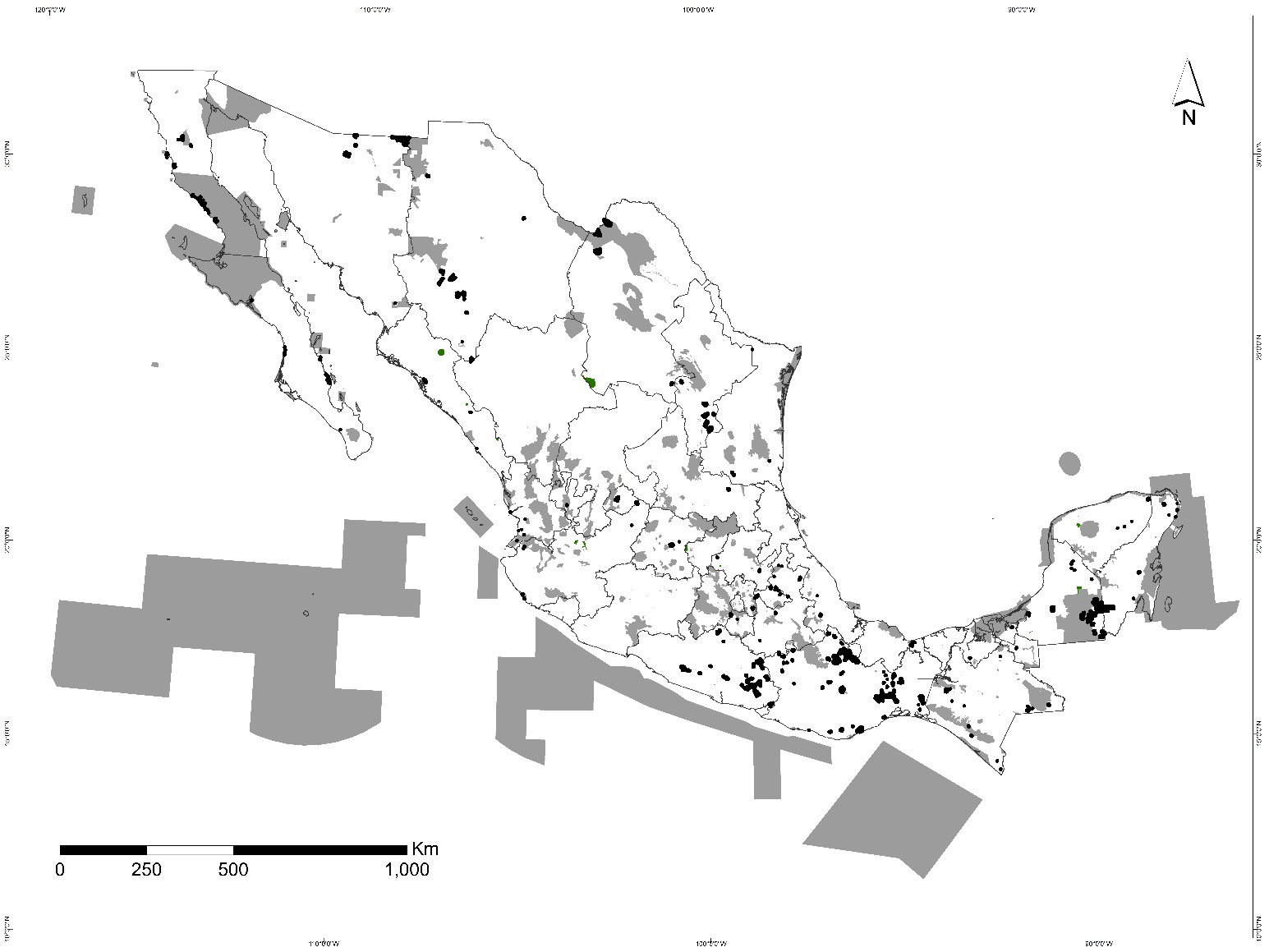
Figure 1 Government-protected area (CONANP - Comisión Nacional de Áreas Naturales Protegidas, 2023a) in gray and ADVCs (CONANP - Comisión Nacional de Áreas Naturales Protegidas, 2022a) including PPAs and ICCAs in black, coverage for Mexico in 2023. (For 2012, see Stolton et al., 2014.) Note: PPAs were drawn larger than their corresponding scale for clarity.
Statistics on moving toward maturity
In Mexico, PPAs and ICCAs also exist outside this formal legal framework, as social conservation initiatives that are not certified by the Federal Government. Thus, four broad groups of PPAs and ICCAs currently coexist in Mexico (Table 1): on one side, officially recognized government-certified ADVCs and, on the other, independent non-certified private and community land conservation efforts. Since non-certified PPAs and ICCAs by their own nature correspond to independent and highly decentralized sets of individual and community conservation initiatives, information on them will always include only an incomplete set of these properties. The last effort to map and quantify non-certified PPAs took place in 2012 (Bezaury-Creel et al., 2012), so this update will only analyze progress on certified PPAs. Nevertheless, the number and territorial coverage of non-certified PPAs and ICCAs have increased since then.
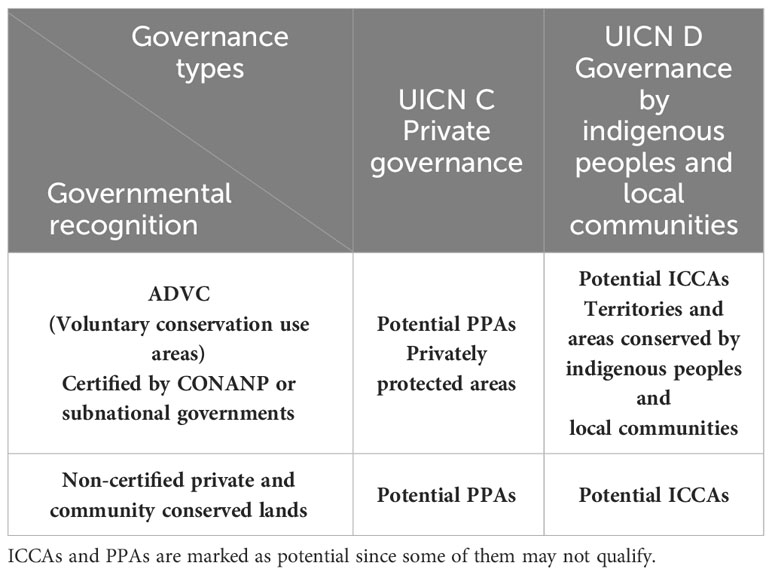
Table 1 Governance type and governmental recognition of private and community initiatives for land conservation in Mexico.
Since certification of ADVCs is by its own nature a voluntary process, they can also be later voluntarily “uncertified” by their owners, or by not renewing the certificate after the specified time period expires, thus losing their PA status and existing incentives. A total of 677 properties have been certified since the inception of this policy tool; 131 of them have been uncertified, and 546 or 81% (CONANP - Comisión Nacional de Áreas Naturales Protegidas, 2023b) still hold a valid certificate (Figure 2). This proves the effectiveness of the instrument since, for example, out of the 131 uncertified areas, 88 were ejido parceled lands corresponding to 5 ejidos (post-revolution properties, recognized or distributed to legally landless rural communities or groups and later on parceled) that were certified between 2005 and 2007 on the initially required 10-year period and which were not renewed, excluding only 1,457 ha. This situation was a direct result of an intensive top-down institutional approach for promoting new ADVCs that was carried out between 2005 and 2007, with an unforeseen reduced capacity to follow up after 10 years, especially in the case of multiple small ejido parcels whose owners had not obtained any tangible benefits from being certified. This highlights the importance of developing new incentives that will enhance permanence and commitment of their owners.
From the 546 currently certified ADVCs, 395 (72%) are classified as PPAs, which include six different types of land ownership that can be grouped within three broad categories:
● Community lands: ejido parceled lands (ejido and communal common use or un-parceled lands are considered ICCAs and thus not covered in this review).
● Private lands: private property lands, private company lands, and non-governmental organization (NGO)–owned lands.
● Other government lands: government-owned company lands and other certified federal, state, and municipal owned lands (different from federally, state, or municipally established PA properties).
Figures 2–5 illustrate data pertaining to certified PPAs for the different types of ownership categories (Figures 2–4 based on CONANP - Comisión Nacional de Áreas Naturales Protegidas, 2023b). Even after a significant reduction of their number derived from many of them being uncertified and the reclassification of the largest parcel to private property, by 2023, ejido parceled lands still represent the greatest number of certified PPAs but still contribute with a very low territorial coverage. A number of government-owned company lands, plus other federal, state, or municipal ADVCs, are also still basically not significant territorial contributors. NGO, private company, and private properties increasingly represent the greatest territorial coverage. The total average size of PPAs increased by 2023, due to the numerical reduction of ejido parceled lands, but the average size of NGO and private company properties decreased due to an increase of newly certified smaller properties.
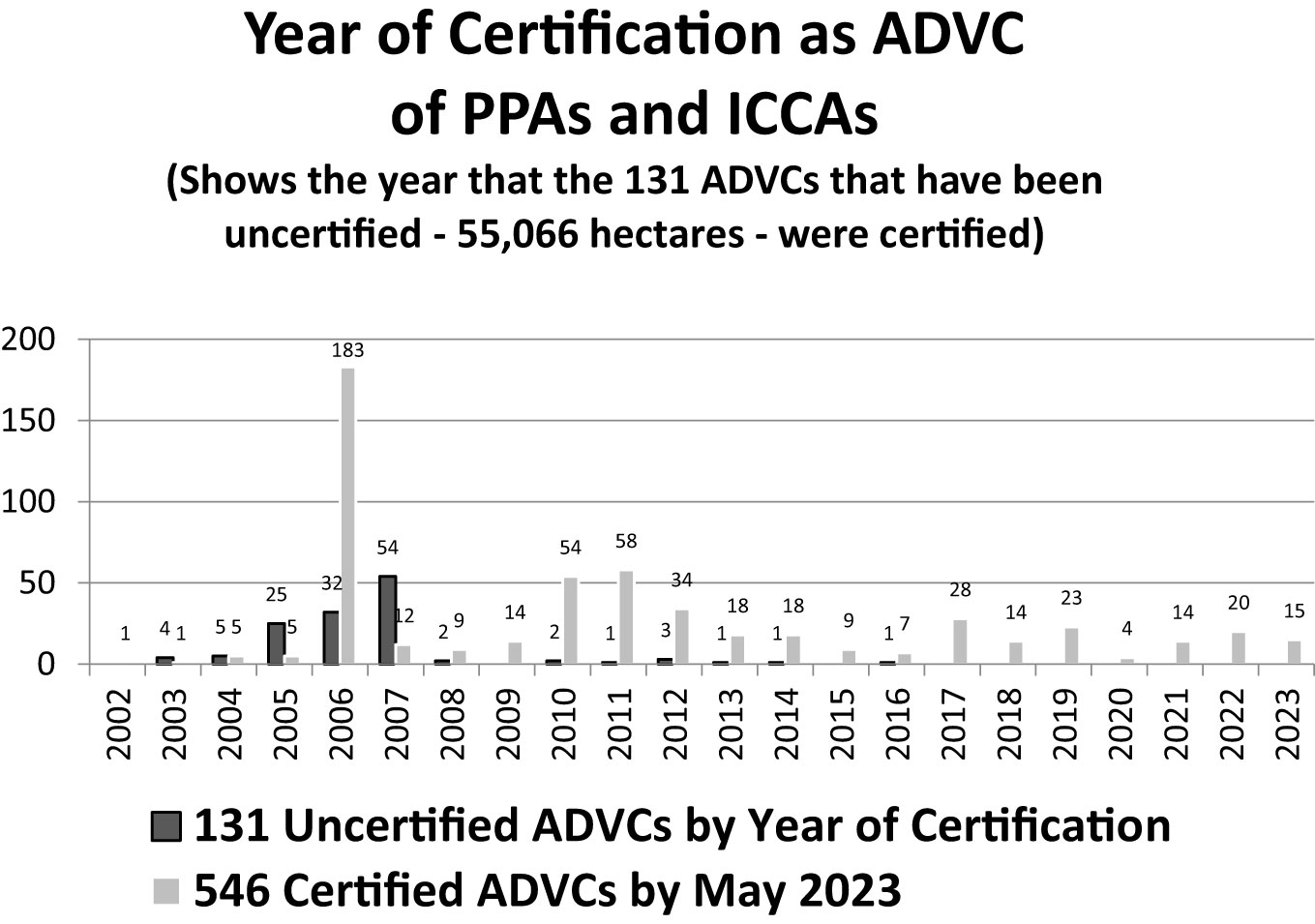
Figure 2 Date of initial certification of ADVCs.
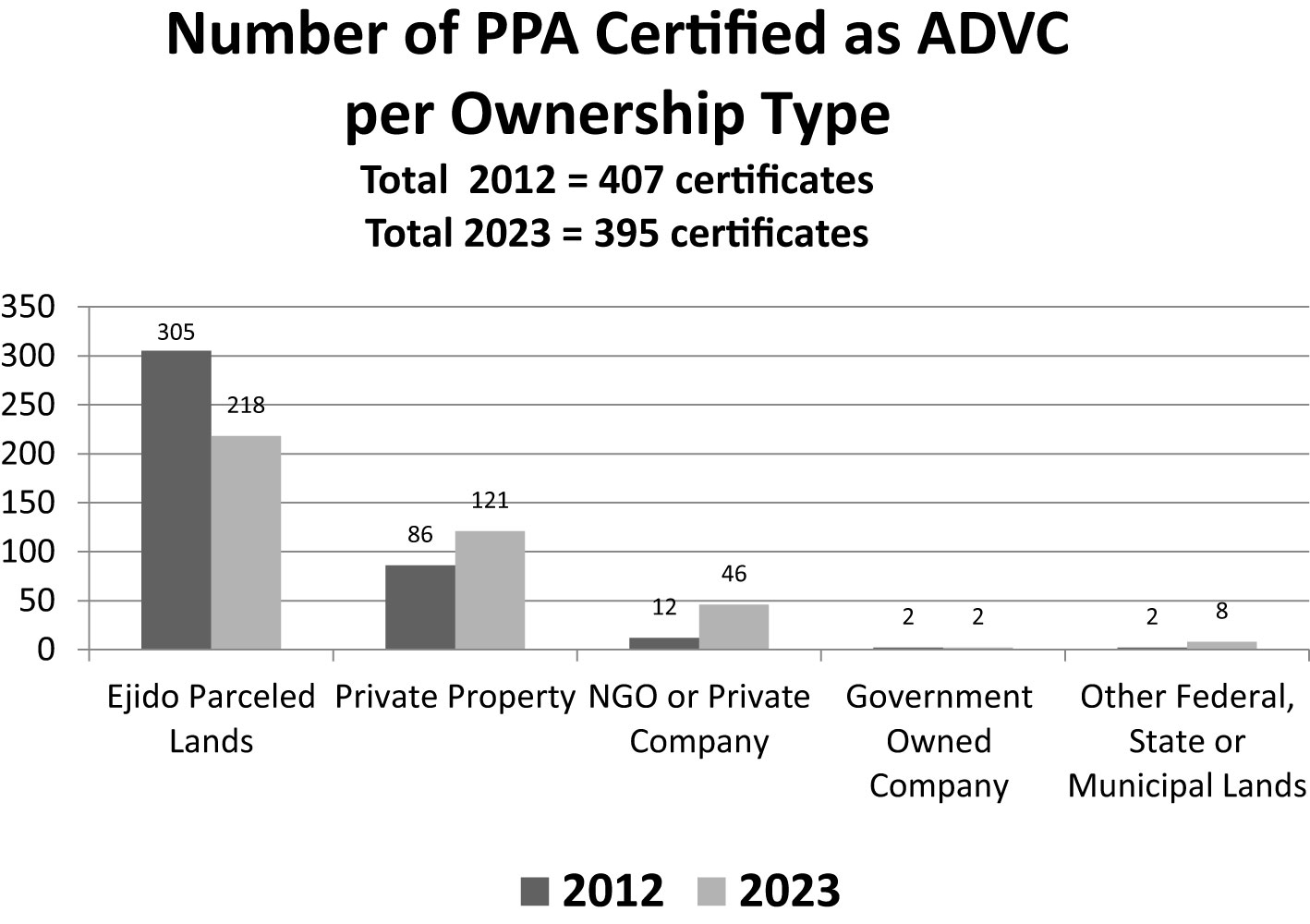
Figure 3 Ownership of certified PPAs.
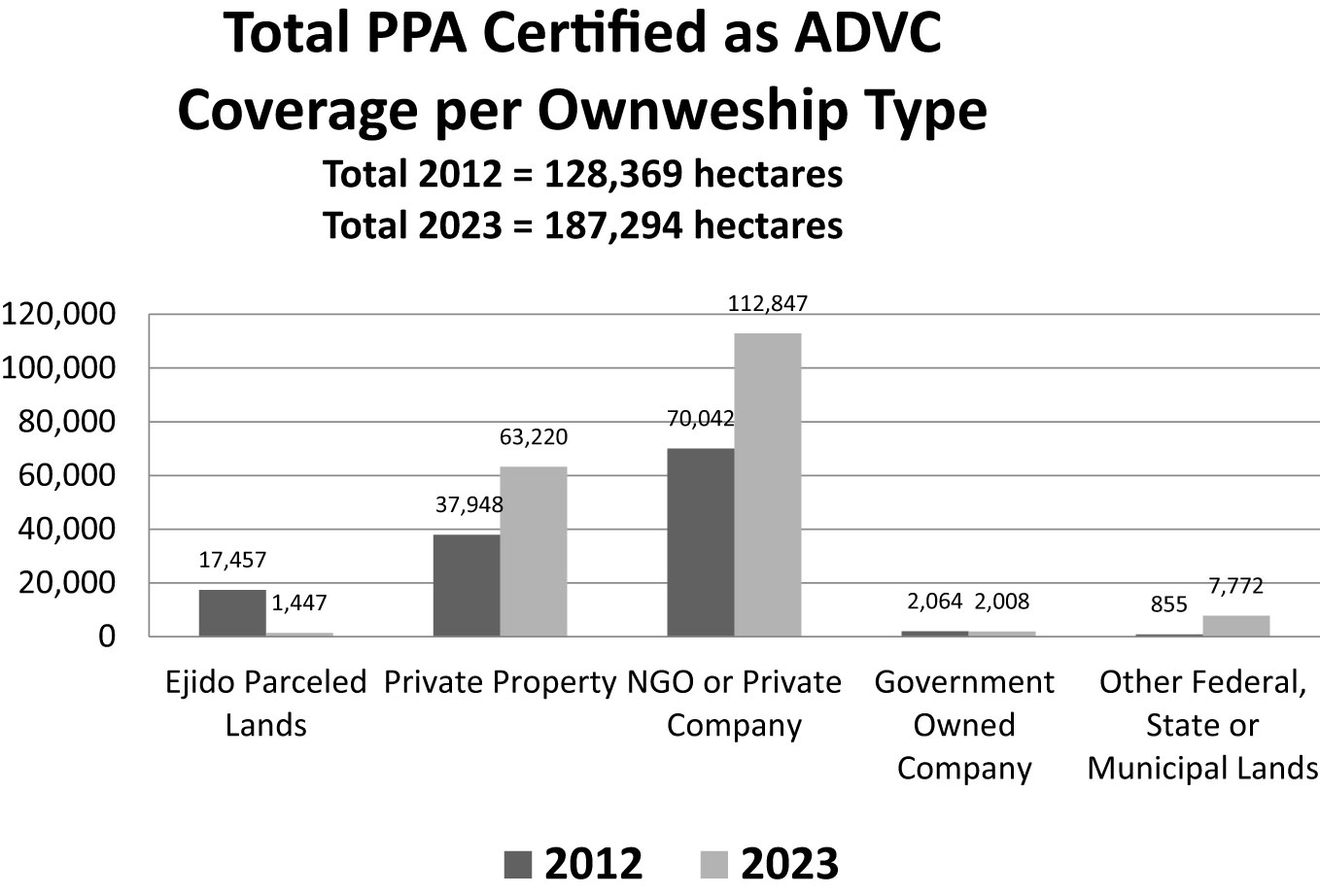
Figure 4 Territorial coverage of certified PPAs.
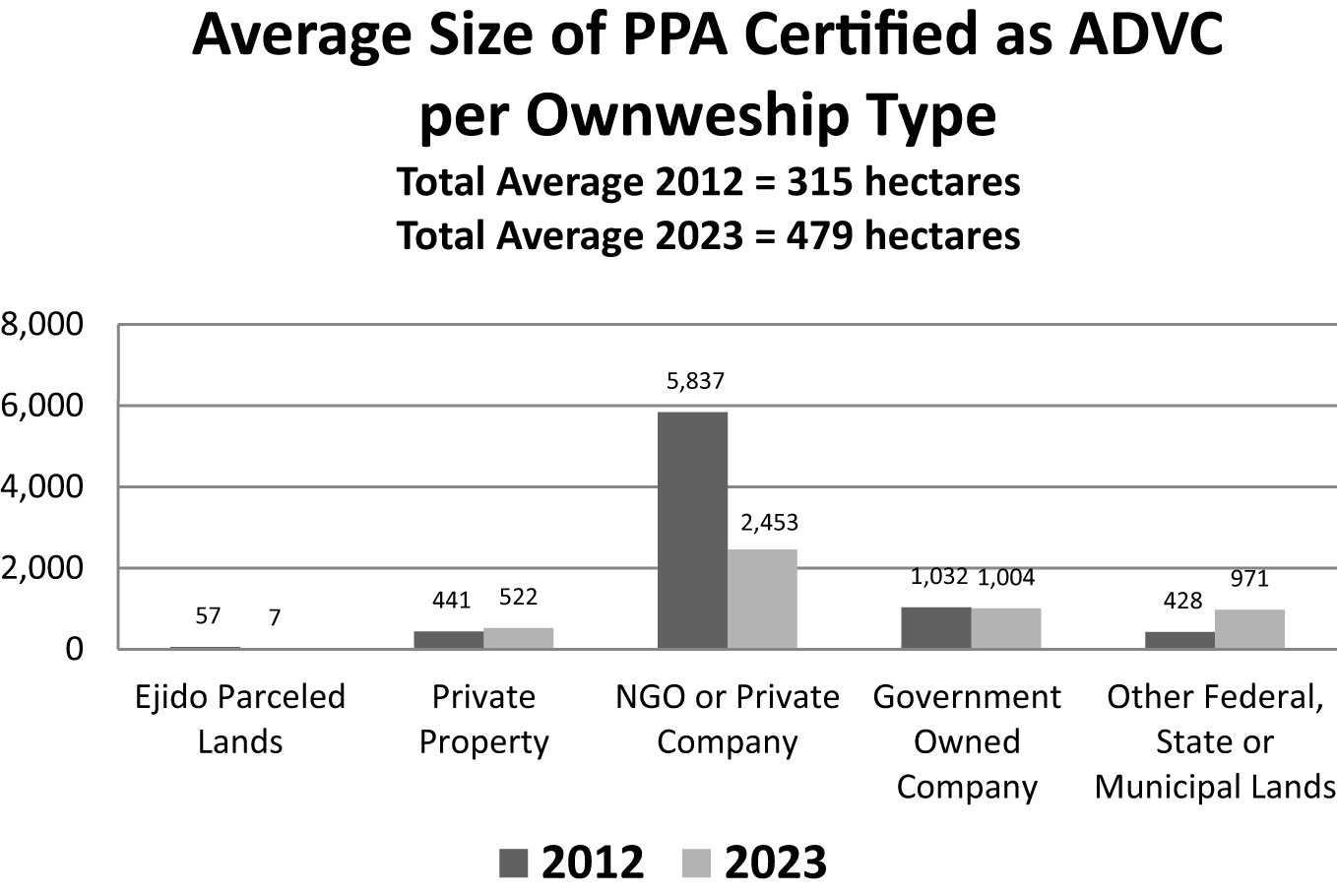
Figure 5 Average size of certified PPAs.
Legal instruments and policy framework
In 2014, changes and additions were instrumented within the protected areas chapter of the Regulations to the General Law on Protection of the Environment (SEMARNAT - Secretaría de Medio Ambiente y Recursos Naturales, 2014). These provisions specify administrative and procedural aspects related to ADVCs, including changing the minimum certification period requirement from 10 years to 15 years. Two other issues are noteworthy, even though they have not yet been fully implemented. The first one is the definition of “levels of certification,” based upon distinct biodiversity/cultural values. By June 2022, 382 ADVCs had their certification level assigned as follows: basic, 27%; intermediate, 57%; and high priority, 16% (CONANP - Comisión Nacional de Áreas Naturales Protegidas, 2022b). These levels would define the ADVCs’ preferential access to governmental economic instruments, but new incentives have not been established. The second one deals with the possibility of establishing a “sustainability seal” to products and services that conform to specifications, which would be established through an Official Mexican Norm.
At the subnational level, 22 of Mexico’s 32 federated entities (31 states plus Mexico City) have included private and community protected areas in their local legislation, 2 of them only considering community protected areas (Ciudad de México and Colima). Only 9 of these have established ADVCs based upon their own legislation (Aguascalientes, Chiapas, Coahuila, Ciudad de México, Hidalgo, Puebla, Querétaro, Tabasco, and Veracruz), which represent a significant increase from the 2 states that had created them by 2013 (in italics). Nevertheless, there is still ample room for consolidating these subnational initiatives; 10 federated entities need to include PPAs in their legislation (8 private and community and 2 private), and many of them have only certified one property.
ADVCs were not relevant within the context of the “2007–2012 National Protected Areas Program” (CONANP - Comisión Nacional de Áreas Naturales Protegidas, 2007), save for one objective that called for stimulating the establishment of private, ejido, and communal properties for conservation; all these were lumped together as alternative conservation modalities (certified areas, conservation easements, aquatic species refuge areas, critical habitats, and marine turtle protection facilities) with an overall modest goal of reaching together 80,000 ha of new protected territories by 2012. Nevertheless, during this period, ADVC territorial coverage was increased by over 238,000 ha.
Metrics for other conservation modalities were separated from the ones for ADVCs in the “2014–2018 National Protected Areas Program” (CONANP - Comisión Nacional de Áreas Naturales Protegidas, 2014) and were added to federal protected area metrics as a distinct component, within an integrated landscape management objective. A more aggressive goal of reaching a 412,000 ha total coverage for ADVCs was set, thus increasing the previous surface covered by 174,000 ha or 73%. This goal was missed by 3%, reaching 399,500 ha, in part due to the phasing out of the original 10-year certification period initially permitted.
Even though in 2019 the Secretary for the Environment announced a goal of one million hectares of ADVCs (PlanetaB, 2019), the “2020–2024 National Protected Areas Program” (CONANP - Comisión Nacional de Áreas Naturales Protegidas, 2020) only called for reaching a 10% minimum coverage of each ecoregion (INEGI, 2008) under governmental protected areas, ADVCs, and other conservation measures. The program stated that through ADVCs, progressive protection of underrepresented ecosystems within governmental protected areas would be sought; thus, in addition to their role in increasing the country’s protected territorial coverage, they will seek achieving greater representativeness of ecosystems under protection. The program also indicates a specific action to promote and incentivize the certification of ADVCs.
A series of four “seminars” were successfully organized with legislators and CONANP, at the Federal House of Representatives in 2014, 2016, 2017, and 2019, in order to promote greater awareness of the importance and needs to legally and budgetarily strengthen ADVCs. Unfortunately, significant budget cuts have not enabled CONANP to increase its capacity to do so.
Stewardship, reporting, and management effectiveness
Most ADVCs in Mexico include limited natural resource use within their boundaries such as lumber and useful plant collection practices, others include management for sustainable cattle activities, and still others protect the large trees that form forest canopies and intermediate forest strata while growing coffee plants in the understory. Some focus on developing nature tourism activities or environmental education, and some are dedicated only to conservation or research purposes.
Although a formal exercise for assigning International Union for Conservation of Nature (IUCN) categories to privately protected areas has not been developed, most of Mexican PPAs are consistent within Category VI management objectives. A minimum number of ADVCs are managed as Category Ia, but other properties or portions of them could actually be managed as such. Mexico’s only wilderness or Category Ib area, the “Tierra Silvestre Cañón del Diablo,” was established in 2009 as an ADVC by CEMEX, a private cement company, covering 22,377 ha, within an existing much larger Category VI governmental protected area.
While it is widely recognized that PPAs can play an important function to enhance connectivity between governmental protected areas, a formal policy or specific programs to encourage such function have not been implemented.
There are currently only very basic reporting obligations required for ADVCs by CONANP. A “management strategy,” which is equivalent to a basic management plan, is pre-agreed between the landowner(s) and CONANP before the certificate is issued. Standard certified landowner general obligations include.
● Maintaining the land’s conservation status while the certificate retains its validity.
● Abiding by the policies, guidelines, criteria, and actions outlined within the management strategy approved by CONANP.
● Informing CONANP of conservation projects implemented for land protection.
● Facilitating access to CONANP’s personnel so that technical supervision and monitoring of authorized conservation activities are taking place within authorized parameters.
● Providing legal and regulatory compliant public use facilities if public access is permitted.
● Posting the area’s boundaries.
● Conducting flora and fauna inventories in the property.
● Establishing an environmental education program for visitors.
Non-compliance with the terms of the management strategy or with the landowner’s general obligations is a cause for the parcel being uncertified. Currently, CONANP’s institutional capacity for verifying existing certified ICCAs and PPAs is still extremely limited. One solution to this problem, which would also help solve the lack of knowledge on existing uncertified ICCAs and PPAs and their conservation and management effectiveness, could be the establishment of a national and/or corresponding regional non-governmental conservation land practitioners and landowner networks, which could support CONANP by playing this role.
Incentives for the establishment and stewardship of ADVCs
Because of their official status, currently only certified ADVCs (PPAs and ICCAs) are eligible to receive the limited existing incentives provided by governmental programs. Since ADVCs are considered to be protected areas by the Environmental Law, they are automatically subjected to its regulations (Article I, Section IV, SEMARNAT - Secretarı́a de Medio Ambiente y Recursos Naturales, 1988), situation which represents an important incentive to many landowners. Thus, through the certification process PPAs attain the same legal status as a federal protected area and in theory their owners can defend them against certain outside threats. Due to old stipulations still included in articles 116 to 124 of the Agrarian Law (SRA - Secretarı́a de la Reforma Agraria, 1992), one potential threat derives from the fact that conservation is still not recognized as a valid land use by it. In this case uncertified PPAs could be considered as non-productive fallow lands and thus the owner be forced to subdivide and sell, in order to reach the maximum size allowed for agricultural lands, which is less than that used for forestry or cattle raising.
Construction of new public infrastructure designed to go across ADVCs, which could negatively affect their natural/cultural values, can be successfully challenged due to their Federal PA status. Uncertified PPAs and ICCAs with legally based enforceable contractual “rights” such as easements, usufructs etc., could in theory be legally defended from certain outside threats, although none of the above-mentioned situations have yet actually been judicially challenged. Since May 2023 mining and prospecting are not authorized within federal PAs (SE - Secretarı́a de Economı́a, 2023), situation that relives ADVCs from these threats. Oil and gas extraction and related activities have not been yet excluded from PAs and thus still remain a threat to ADVCs, A disincentive for certifying temperate climate ADVCs, is ironically derived from their Federal PA status. Since all forestry activities within PAs require an environmental impact statement (EIS), ADVCs with temperate forests need to develop one if they want to use their forests for activities other than tourism, while no EIS is required outside PAs for these forests. Thus, at least four landowners have uncertified their land and some will not be inclined to certify them, in order to avoid the cost and time involved in the EIS procedure. This disincentive does not apply to tropical forests, since forestry activities within them always requires an EIS, whether or not they are within a PA.
Financial support for ADVCs
Traditionally and since 2011 the main financial incentive provided for the establishment of certified PPAs and ICCAs, was the general Mexican Payment for Environmental Services Program which is investing in conservation of forest cover at priority areas mainly for the enhancement of hydrological resources (SEMARNAT - Secretarı́a de Medio Ambiente y Recursos Naturales, 2010). The program is managed by Mexico’s National Forestry Commission (Comisión Nacional Forestal or CONAFOR), which provides financial compensations to owners of forest lands in order to maintain conditions that favor environmental services production. In this case a contractual relationship is formed between the forest owner and the government, the latter assuming the role of the buyer of the environmental service for a five-year period funding cycle. The program´s “operational rules” lay out specific guidelines for the allocation of funds, where the number of potential beneficiaries is always greater than available funding. Certified PPAs and ICCAs in this case receive extra points in the allocation process and thus are able to access the program, ahead of other non-certified solicitors with otherwise equal potential. Nevertheless the extra points for this window have been greatly reduced and are now merely marginal.
Federal support to ADVCs has been provided by CONANP, which aside from its ADVCs administrative responsibilities undertaken with its yearly operations budget, since 2023 can provide funding for projects within certified community, ejido common lands or ejido´s parceled lands through the Conservation for Sustainable Development Program (SEMARNAT - Secretarı́a de Medio Ambiente y Recursos Naturales, 2022). Support from CONAFOR, aside from its general Payment for Environmental Services Program, has also focalized these payments on specific regions such as the Lacandon Forest Region in Chiapas, the Chinantla region of Oaxaca and the Maya Railway affected project area in the states of the Yucatan Peninsula, Tabasco and Chiapas. The National Commission for the Knowledge and Use of Biodiversity (CONABIO) through the Mesoamerican Biological Corridor Mexico (CBMM) project, supported until 2018, projects, meetings and publications to strengthen the role of ADVCs as important elements to enhance ecological connectivity (see for example Elizondo and López-Merlín, 2009). Although not specifically targeted to ADVCs, the National Institute for Indigenous Peoples PROBIPI program (INPI, 2022) supports protection of biodiversity in territories owned by indigenous and afromexican communities, which can fund projects within ejido´s parceled lands, including supporting direct conservation activities, climate change mitigation and nature tourism activities, amongst others.
External philanthropic support targeted to ADVCs, has mainly consisted of specific funding for certifying individual land parcels, initiating stewardship activities and developing sustainable productive activities within them, has provided strength to the mechanism. Grants and/or direct support for these activities have been provided amongst others by: The Nature Conservancy (TNC), Resources Legacy Fund (RLF), Deutsche Gesellschaft für Internationale Zusammenarbeit (GIZ), Agence Française de Développement (AFD), the UNDP Small Grants Program, American Bird Conservancy (ABC) and World Wildlife Fund (WWF).
Since 2017 AFD, the Mexican government and other partners, have been engaged with the implementation of the "Bioconnect" Project (Agence Française de Développement - AFD 2022), which aims to support the development of a national policy on ecological connectivity. Amongst other components and environmental policy tools being explored by Bioconnect, AFD´s funding has supported ADVCs, as a territorial management tool that helps the creation of biological corridors between protected areas according to the principles of ecological connectivity. A 2021 evaluation of the project points out that through this support, the concept of connectivity, which is not enshrined in Mexican legal frameworks, has gained more prominence within the government’s agenda. The following Bioconnect interventions have a direct link into consolidating Mexicans efforts to strengthen both ADVCs coverage territorial growth and their management effectiveness, which directly support the implementation of the Kunming-Montreal Global Biodiversity Framework´s 30x30 target:
● Identifying incentives for owners of ADVCs for certification and stewardship.
● Developing a methodology and pilot project for voluntary evaluation of management effectiveness of ADVCs.
● Preparing and signing of a contract instituting a “real conservation right” on a property certified as ADVC in the State of Sonora, pilot project.
The “Identifying incentives for owners of ADVCs for certification and stewardship” report (CIPAD - Centro de Investigación y Proyectos en Ambiente y Desarrollo, 2021) provides an interesting set of recommendations for strengthening and creating these incentives, but of greater value for this state-of review are the results of the first ever survey applied to owners on their perception of the value of certifying an ADVC. This limited survey includes both ICCAs (32% of the properties participating in the survey) and PPAs (68% of them). Information on certification motivation obtained from the 46 survey respondents, representing 56 ADVCs (15.4 % of the total in 03/2021), indicate that the owners of ADVCs received information about the process, mainly from CONANP (72% of cases), had an interest in conservation (91%) and had their own financial resources (65% for obtaining the certificate and 74% for land stewardship). Two secondary motivations for the certification are the legal protection of their property (63%) and the possibility of accessing public resources (50%). The incentives report also includes an estimate of the partial value of some ecosystem services provided by these ADVCs, based upon the vegetation type they protect, which represents US$ 95 million annually.
On the disincentives side, the following potential problems were identified for obtaining certification of a property, the four most important being: direct investment on the process (30%); long processing time (22%); lack of information and interest on the certification process (19%); and, lack of institutional efforts to increase general knowledge on ADVCs (11%). Other disincentives include: insufficient compensation for the provision of public benefits for biodiversity conservation; insufficient institutional capacities to meet the demand for certification (i.e. currently only three FTE are specifically available for ADVCs, plus legal support to review each certificate in Mexico City and pre certification site visits support from regional offices within CONANP); limited influence over the process by owners requesting to certify their lands; and, CONANPs objectives or priorities that may sometimes conflict with those of the owners.
According to information provided by the owners, the cost of certifying an ADVC is on average US$ 6,808 (at an annual average for 2021 of Mx$ 20.27 per US$ 1), while the yearly cost for stewardship is US$ 44,401 on average (US $110 per ha/year). Owners who have managed to receive additional funding to cover the costs of these activities have done so mainly through access to public resources and subsidies and, to a lesser extent through philanthropic donations. Only 13% of owners have managed to reinvest income obtained through activities carried out on the property (sale of products and/or provision of services). The majority (83%) of owners declared that they would renew the certificate once it expires, so it is assumed that the benefits they receive are valued, at least on par with the costs that they have incurred to participate in the program.
The “Developing a methodology and pilot project (ECOSUR, Vo,Bo, 2022) for voluntary evaluation of management effectiveness of ADVCs” report, concluded that the adaptation of the “i-efectividad” platform used by CONANP, was not only viable, but will also facilitate systematization and data management within CONANP. I-efectividad covers five themes or components (context and planning; administrative and financial; governance and participation; stewardship; and, benefits provided) to calculate an index of effectiveness, that can determine not only strengths but also opportunity areas for improvement. The self-evaluation tool was piloted on 20 ADVCs. It was designed in Google Forms and mainly but not exclusively accessed through a cellphone, which allows the user to answer 36 questions. The report concludes that a simple platform accessible to all ADVC owners/stewards can become a very powerful management effectiveness evaluation tool.
Real conservation rights are recently created instrument for private lands protection within the civil law framework, which were first established in Chile in 2016 and are somewhat an equivalent to easements in gross within common law. Real conservation rights consist of the faculty of owners of properties to sign contracts constituting said right, with the purpose of guaranteeing their conservation. In June 2022, the Congress of the State of Sonora approved a bill that reforms the Law of Ecological Equilibrium and Environmental Protection of the State of Sonora and other regulations (Congreso del Estado de Sonora, 2022), to incorporate real conservation rights and also create fiscal, financial and market economic instruments to encourage certification of properties as "Conservation Areas of state competence" or as federal ADVCs. This bill still pending approval by the State governor. The “Preparing and signing of a contract instituting a “real conservation right on a property certified as ADVC in the State of Sonora, pilot project.” is currently being coordinated by the Ecology and Sustainable Development Commission of the State of Sonora and executed by the Wildlands Network.
Private and community land conservation networks
Non-governmental private and community land conservation networks, alliances, or other organized citizen-based structures should play an increasingly important role to consolidate social land conservation initiatives. The creation of a nationwide entity or regional entities as appropriate to represent the interests of Mexico’s citizen-driven conservation initiatives could.
● Increase the number and territorial coverage of non-governmental conservation initiatives.
● Develop methodologies and tools for measuring conservation results and management effectiveness of social conservation land initiatives.
● Improve stewardship efficacy through sharing experiences and best practices on land stewardship among members and non-members.
● Ensure the permanence of conservation efforts by helping create the policies, laws, and regulations required to defend protected land over the long term.
The development of such networks in Mexico has proved to be a rocky road, much easier to discuss and plan than to implement. Since 1997, TNC collaborated with Pronatura A.C., for hiring and sending staff to a Land Trust Alliance Rally, and provided funding and direction on tool research activities. In 2002, TNC, with support from The David and Lucile Packard Foundation, convened a round table toward the establishment of a national network of private and community practitioners, and by 2004, the establishment of a national network, the Red Mexicana de Organizaciones de Conservación de Tierras Privadas y Sociales (REDCOT), had been agreed upon, and a network coordinator was hired. By 2003, an NGO named Asociación de Reservas Naturales Privadas de México A.C. (ARENA) was created and supported by Pronatura, but it imploded due to the lack of a shared vision among its multiple members and insufficient funding. An informal ICCA practitioners’ network named Red Nacional de Conservación Comunitaria (CONSERCOM) met infrequently, funded by CONABIO, the Global Diversity Foundation, The European Union’s Fondo de Cooperación Internacional en Ciencia y Tecnología de la Unión Europea-México (FONCICYT), Spain’s Agencia Española de Cooperación Internacional para el Desarrollo (AECID), and the University of Barcelona’s Fundación Autònoma Solidària (FAS).
Regional initiatives for the Yucatan Peninsula and Northwest Mexico supported partially by TNC, previous to the establishment of a national network, were just not able to gather momentum. Perhaps the most successful examples of regional networks take place in Chiapas, where the Red de Áreas Naturales Protegidas Comunitarias y Servicios Ambientales (RED ANPCs), promoted by the Instituto para el Desarrollo Sustentable en Mesoamérica, A.C. (IDESMAC) since 2008, with support from the US Fish and Wildlife Service, includes only ICCAs and has been developing an innovative evaluation and certification protocol. The Red de Reservas Naturales Voluntarias de Chiapas (RENACH), which includes both PPAs and ICCAs, was established in 2011 as a network being promoted by Pronatura Sur A.C. A local organization working exclusively in the northern part of the State of Coahuila, just south of the Big Bend National Park in the US, named Conservadores de Ecosistemas del Puerto del Pino (CONECO), loosely coordinated since the end of the 1980s an important network of private conservation–minded ranchers in the Sierra del Burro and Maderas del Carmen.
A private and community reserve network for the Yucatan Peninsula was launched in 2015. The Red de Reservas Privadas y Sociales de la Península de Yucatán (RRPSPY), established by four regional and local NGOs, Amigos de Sian Ka’an A.C., Pronatura Península de Yucatán A.C., Kaxil Kiuic A.C., and Reserva Ecológica el Edén A.C., was funded through the Itzincab Alliance by the Méxicoredd+ Alliance [TNC/US Agency for International Development (USAID)], Fundación Claudia y Roberto Hernández, and Fundación Alfredo Harp Helú. A regional NGO, Terra Habitus A.C. (THAC), was established in 2020, with the goal of helping private landowners develop practical conservation finance tools to better manage their properties. Tools such as knowledge hubs and networks, regenerative ranching practices, and public–private partnerships are part of the approach. A very loose informal network of land conservation NGOs exists in northwestern Mexico that includes: Pronatura Noroeste A.C. (PNO), the Sociedad de Historia Natural Niparajá A.C. (Niparajá), Terra Peninsularis A.C. COSTASALVAJE (Wildcoast), the Comité para la Conservación de Especies Silvestres, A.C. (Naturalia), and Cuenca Los Ojos (CLO).
Many of the abovementioned network initiatives have been put on hold after the initial creative impetus passed and external funding diminished or disappeared altogether. Nevertheless, some of them are still viable and could become the core of a potential national network. AFD’s Bioconnect project went through a bidding process for creating a strategy to foster the development of private/community networks, but the project did not materialize due mainly to CONANP’s lack of capacity to support its development.
Recommendations and discussion
Privately protected areas increase global protected area coverage and connectivity (Palfrey et al., 2022) and are important toward achieving Target 3 of the Convention on Biological Diversity’s (CBD) Kunming-Montreal Global Biodiversity Framework. Thus, the enhancement of the role that ADVCs will play in the fulfillment of Mexico’s commitments will require a creative approach to the following pending issues among others:
Institutional capacity
Increasing CONANP’s capacity to coordinate all the different procedural components involved in ADVC certification, which include technical, legal, and physical verification of submissions; expedition of certificates; database management; monitoring and evaluation and uncertification processes; and outreach, is of critical importance to consolidate this policy tool. A dedicated budget line item, not only for their Mexico City office but also for their nine regional offices, is urgently needed to consolidate private and community efforts and capacities to protect lands.
Incentives
Providing the widest range possible of financial, fiscal, and knowledge support incentives to landowners for certifying their lands not only will help increase the territorial coverage of ADVCs but will also enable them to provide better stewardship practices and evaluate by themselves their management effectiveness on their lands, which can only result in better-protected ADVCs. Implementation of already existing legal instruments, such as the sustainability seal and the use of certification levels, could create a basis for creating new incentives that could also help increase ADVCs’ permanence.
Permanence
Not only will increasing the minimum certification period from 15 years to 25 years (Mitchell et al., 2018) result in a decreased workload for CONANP but it will also serve as a filter that advances real commitment for long-term conservation from the landowners. Some potential incentives, especially those that could include substantial financial support from fiscal sources, could be used to increase their permanence through contractual obligations for returning such resources plus interests, in case of non-compliance of the negotiated terms or voluntary uncertification before the specified time period agreed upon expires.
After the original minimum 10-year period of commitment for certification was modified in 2014 to 15 years, no substantial changes in the number of years structure for certified areas were detected (Figure 6) and only a minor reduction of newly certified areas per year during 2015 and 2016 was observed (Figure 2), while social opposition to this measure was minimal. This situation underlines the feasibility of implementing a new 25-year minimum commitment period for future ADVCs.
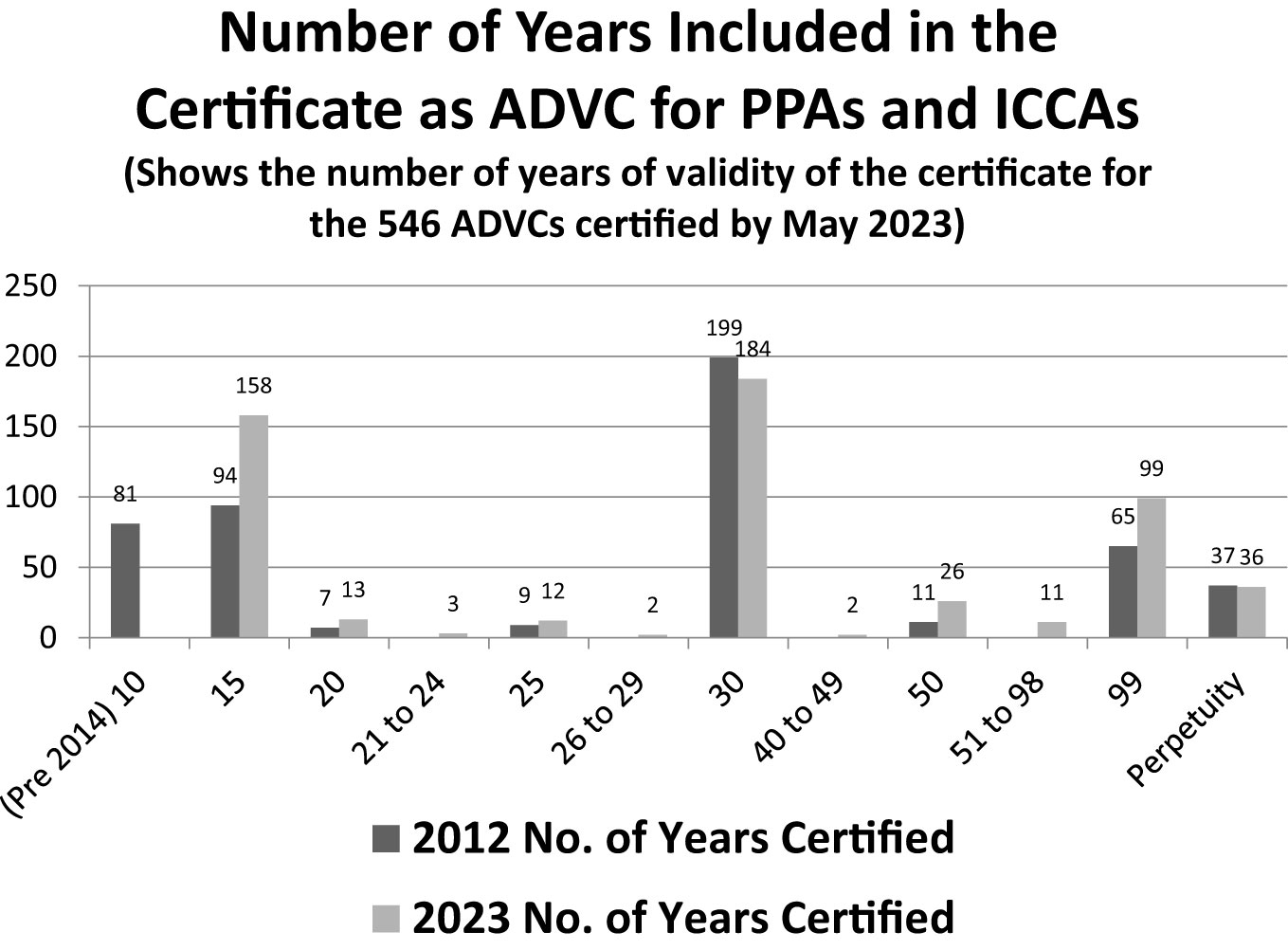
Figure 6 Number of years of certification for all ADVCs.
Management effectiveness
Increasing monitoring and evaluation capacity within CONANP, together with a widespread use of voluntary evaluation of management effectiveness practices, will help Mexico achieve Target 3 of the Kunming-Montreal Global Biodiversity Framework, within a context of a highly decentralized set of private and community landholdings and owners’ idiosyncrasies.
Networks
The creation of networks of private and community land conservation efforts that include both certified ADVCs and non-certified landholding will not only empower landowners’ participation in the certification process but also promote a culture of social responsibility in protecting lands to preserve biodiversity and environmental services, which could increase the level of commitment from landowners.
Overall certification of ADVCs by the Mexican government has proved to be a useful tool for conservation of biodiversity and environmental services, which certainly needs to evolve to become more effective and efficient, in order to be a more widely used tool and increase its contribution on achieving the 30x30 Kunming-Montreal Global Biodiversity target for Mexico.
Author contributions
JB-C: Conceptualization, Data curation, Formal analysis, Investigation, Methodology, Validation, Writing – review & editing.
Funding
The author(s) declare that no financial support was received for the research, authorship, and/or publication of this article.
Acknowledgments
I would like to thank the National Protected Area Commission (CONANP) for publishing on their webpage the raw data that were used in this article; Rosa Marína Rodríguez-Marín, who provided GIS support; and The Rockefeller Foundation Bellagio Center, who provided the ideal setting for consolidating the databases and clarifying ideas for working on documenting private and community conservation efforts in Mexico.
Conflict of interest
The authors declares that the research was conducted in the absence of any commercial or financial relationships that could be construed as a potential conflict of interest.
Publisher’s note
All claims expressed in this article are solely those of the authors and do not necessarily represent those of their affiliated organizations, or those of the publisher, the editors and the reviewers. Any product that may be evaluated in this article, or claim that may be made by its manufacturer, is not guaranteed or endorsed by the publisher.
References
Agence Française de Développement - AFD (2022) La Unión Europea y la AFD unen esfuerzos en favor de la biodiversidad en México. Comunicado de Prensa. Available at: https://www.afd.fr/es/actualites/communique-de-presse/union-europea-y-afd-unen-esfuerzos-biodiversidad-Mexico (Accessed December 24, 2023).
Bezaury-Creel J. E. (2014). “Chapter 6 Country reviews. 7.9 Mexico,” in The Futures of Privately Protected Areas. Gland, Switzerland: IUCN. Note that uncertified areas in this document are named non-certified areas in this article, which refers to areas that have never been certified, since uncertified ADVCs now refer to areas that were previously certified as ADVCs and subsequently lost their certification. Eds. Stolton S., Redford K. H., Dudley N.
Bezaury-Creel J. E., Ochoa-Ochoa L. M., Torres-Origel. J. F. (2012). Base de Datos Geográfica de las Reservas de Conservación Privadas y Comunitarias en México – Versión 2.1 Diciembre 31, 2012. The Nature Conservancy. 2 Capas ArcGIS 9.2 + 1 Capa Google Earth KMZ + 1 Archivo de Metadatos en texto, Unpublished (AP_Privadas_Sociales_ccl_93).
CIPAD - Centro de Investigación y Proyectos en Ambiente y Desarrollo (2021). Reporte Final del Trabajo de Consultoría para la Definición de Incentivos para los Propietarios de Áreas Destinadas Voluntariamente a la Conservación (ADVCs) para la Certificación y Mantenimiento de Dichas Áreas. Agence Française de Développement, Secretaría de Medio Ambiente y Recursos Naturales, Comisión Nacional de Áreas Naturales Protegidas (México), 266.
CONANP - Comisión Nacional de Áreas Naturales Protegidas (2007). Programa Nacional de Áreas Naturales Protegidas 2007-2012 (México: Gobierno de la República).
CONANP - Comisión Nacional de Áreas Naturales Protegidas (2014). Programa Nacional de Áreas Naturales Protegidas 2014-2018 (México: Gobierno de la República).
CONANP - Comisión Nacional de Áreas Naturales Protegidas (2020). Programa Nacional de Áreas Naturales Protegidas 2020-2024 (México: Gobierno de la República).
CONANP - Comisión Nacional de Áreas Naturales Protegidas (2022a). Shapefiles - Áreas Destinadas Voluntariamente a la Conservación. México. Available at: http://sig.conanp.gob.mx/website/pagsig/iin.htm Accessed (December 1, 2022).
CONANP - Comisión Nacional de Áreas Naturales Protegidas (2022b). Niveles de Certificación, Áreas destinadas Voluntariamente a la Conservación. Documento Excel (México). Available at: https://advc.conanp.gob.mx/niveles-de-certificacion/ Accessed (June 07, 2023).
CONANP - Comisión Nacional de Áreas Naturales Protegidas (2023a). Shapefiles - Áreas Naturales Protegidas decretadas (México). Available at: http://sig.conanp.gob.mx/website/pagsig/iin.htm Accessed (September 1, 2023).
CONANP - Comisión Nacional de Áreas Naturales Protegidas (2023b). Estadísticas ADVC. México. Documento Excel. 01/06/2023.México. Note: In three and a half months, by 15/09/2023 the total number of ADVCs had slightly increased from 546 to 557 properties, while significantly increasing their territorial coverage from 718,526 ha to 1,214,427 ha. No new PPAs were certified, only ICCAs coverage represented this important expansion.
Congreso del Estado de Sonora (2022). Dictamen que presentan las Comisiones de Energía Medio Ambiente y Cambio Climático y de Hacienda, en forma unida, con proyecto de Decreto que reforma, adiciona y deroga diversas disposiciones de la Ley del Equilibrio Ecológico y Protección al Ambiente del Estado de Sonora y del Código Fiscal del Estado de Sonora. La Gaceta Parlamentaria, Año 16, No. 1490, 05/06/2022 (México). Available at: http://www.congresoson.gob.mx:81/api/ServiceDos?id=4531 Accessed (January 20, 2024).
ECOSUR, Vo,Bo (2022). Proyecto piloto para el desarrollo de una metodología para la evaluación voluntaria de la efectividad de manejo de las áreas destinadas voluntariamente a la Conservación (ADVC). Agence Française de Développement, Secretaría de Medio Ambiente y Recursos Naturales, Comisión Nacional de Áreas Naturales Protegidas. Reporte interno (México), 48.
Elizondo C., López-Merlín D. (2009). Las áreas voluntarias de conservación en Quintana Roo (Corredor Biológico Mesoamericano. Serie Acciones/Número 6. México: CONABIO).
INEGI (2008). Ecorregiones terrestres de México. Escala 1:1 000 000.México, INEGI-CONABIO-INE. (23 Level 2 terrestrial ecoregions) (CONABIO e Instituto Nacional de Ecología).
INPI (2022). Instituto Nacional de los Pueblos Indígenas Acuerdo por el que se modifican las Reglas de Operación del Programa para el Bienestar Integral de los Pueblos Indígenas a cargo del Instituto Nacional de los Pueblos Indígenas, para el ejercicio fiscal (México: Diario Oficial de la Federación).
Mitchell B. A., Stolton S., Bezaury-Creel J., Bingham H. C., Cumming T. L., Dudley N., et al. (2018). Guidelines for privately protected areas. Best Practice Protected Area Guidelines Series No. 29 (Gland, Switzerland: IUCN).
Palfrey R., Oldekop J. A., Holmes. G. (2022). Privately protected areas increase global protected area coverage and connectivity. Nat. Ecol. Evol. Mexico was one of the 15 countries that were analyzed in this study. Nature Ecology & Evolution 6(6):1–8. doi: 10.1038/s41559-022-01715-0
PlanetaB (2019) Por recorte presupuestal, Semarnat busca crear 1 millón de hectáreas para conservación. Available at: https://www.planetab.com.mx/post/2019/03/04/por-recorte-presupuestal-semarnat-busca-crear-1-millon-de-hectareas-para-conservacion (Accessed June 26, 2023).
SEMARNAT - Secretaría de Medio Ambiente y Recursos Naturales (1988). Ley General del Equilibrio Ecológico y la Protección al Ambiente. Diario Oficial de la Federación 28/01/1988 (México: Diario Oficial de la Federación).
SEMARNAT - Secretaría de Medio Ambiente y Recursos Naturales (2010). Reglas de Operación del Programa ProArbol 2011 (México: Diario Oficial de la Federación).
SEMARNAT - Secretaría de Medio Ambiente y Recursos Naturales (2014). Decreto por el que se reforman, adicionan y derogan diversas disposiciones del Reglamento de la Ley General del Equilibrio Ecológico y la Protección al Ambiente en Materia de Áreas Naturales Protegidas (México: Diario Oficial de la Federación).
SEMARNAT - Secretaría de Medio Ambiente y Recursos Naturales (2022). Acuerdo por el que se establecen las Reglas de Operación del Programa de Conservación para el Desarrollo Sostenible (PROCODES), para el ejercicio fiscal 2023 (México: Diario Oficial de la Federación).
SE - Secretaría de Economía (2023). Decreto por el que se reforman, adicionan y derogan diversas disposiciones de la Ley Minera, de la Ley de Aguas Nacionales, de la Ley General del Equilibrio Ecológico y la Protección al Ambiente y de la Ley General para la Prevención y Gestión Integral de los Residuos, en materia de concesiones para minería y agua (México: Diario Oficial de la Federación).
SRA - Secretaría de la Reforma Agraria (1992). Ley Agraria. Diario Oficial de la Federación 26/02/1992, última reforma Diario Oficial de la Federación 08/03/2022 (México). Available at: https://www.diputados.gob.mx/LeyesBiblio/pdf/LAgra.pdf Accessed (January 20, 2024).
Keywords: Mexico, voluntary conservation use areas -ADVCs, PPAs, ICCAs, decadal assessment, 30x30 target
Citation: Bezaury-Creel JE (2024) Privately protected areas in Mexico, a 2012–2023 update. Front. Conserv. Sci. 4:1304771. doi: 10.3389/fcosc.2023.1304771
Received: 30 September 2023; Accepted: 26 December 2023;
Published: 14 February 2024.
Edited by:
Miquel Rafa, Fundacio privada Catalunya La Pedrera, SpainReviewed by:
Alberto Navarro, University of Oviedo, SpainCarlos Javier Durá Alemañ, International Center for Environmental Law Studies, Spain
Copyright © 2024 Bezaury-Creel. This is an open-access article distributed under the terms of the Creative Commons Attribution License (CC BY). The use, distribution or reproduction in other forums is permitted, provided the original author(s) and the copyright owner(s) are credited and that the original publication in this journal is cited, in accordance with accepted academic practice. No use, distribution or reproduction is permitted which does not comply with these terms.
*Correspondence: Juan E. Bezaury-Creel, anVhbmJlemF1cnlAZ21haWwuY29t