 Sally Hawkins
 Ian Convery
 Steve Carver
- 1Institute of Science and Environment, University of Cumbria, Ambleside, United Kingdom
- 2Department of Geography, University of Leeds, Leeds, United Kingdom
Introduction: There remain a number of debates and conflicts about the concept of rewilding which can be barriers to its application. Some of these conflicts stem from the variety of contextual interpretations of rewilding, leading to conflict between rewilding theories and approaches. Conclusions have also been drawn about rewilding based on limited case studies, so that emergent rewilding theories aren’t applicable to all rewilding projects, limiting their support in the field. Past theories have distinguished different types of rewilding, encouraging debate over the proposed methods, although in practice these approaches often share similar goals and use similar interventions. One barrier to achieving consensus in the practice of rewilding is that there are no clear guidelines for rewilding, and there are limited broad-scale studies focusing on how rewilding is practiced. This paper addresses this by offering the first broad study of rewilding guidelines and interventions.
Methods: A grounded theory study was undertaken, using data sourced from rewilding organisations, case studies, and research. Expressions were coded in the data relating to intentions for how rewilding should be practiced and the interventions used.
Results: Drawing from these data, the paper offers three tools to guide rewilding practitioners: (1) an overview of guidelines for rewilding practice, (2) a list of interventions used in rewilding, considering them against rewilding goals, (3) a theory of change framework to guide rewilding application.
Discussion: The tools presented here will inform work towards IUCN rewilding guidelines. Several areas that require further consideration are highlighted. We hope that this initial study of application can improve agreement and collaboration among the rewilding community.
1 Introduction
It has been suggested that a lack of clarity regarding the concept of rewilding (e.g. definitions, key principles) remains a barrier to rewilding application (Cózar-Escalante, 2019; Dandy and Wynne-Jones, 2019; Jones and Comfort, 2020). Some progress is being made towards consensus, as demonstrated by the IUCN CEM guiding principles and definition, which highlight social and ecological goals and implications for rewilding practice (Carver et al., 2021). However, there remain several existing and emerging debates or perceived paradoxes that demand our attention. Some of this confusion and/or conflict is caused by conceptual “stretching”; whereby rewilding is being altered to align with the values, perceptions, or priorities of those promoting rewilding, perhaps to appeal to stakeholders, or align with existing policy (Deary and Warren, 2019; Holmes et al., 2020; Wynne-Jones et al., 2020; Martin et al., 2021; Thomas, 2022). For example, in an empirical study of two rewilding projects in England, Thomas (2022) demonstrates that rewilding is being “domesticated”, with its more radical potential being moderated for the English context. Whilst stretching is not necessarily problematic, as there is a stated need for rewilding to be adaptable to different contexts (Carver et al., 2021), the issue here is that rewilding is continually judged by how it is practiced in the present and what is pragmatically possible within the current paradigm and culture, thus limiting the resulting definitions and conceptualisations. For example, Dempsey (2021) undertook a study of rewilding at Knepp Wildland to measure existing levels of human control over natural processes. They conclude that based on the Knepp example, rewilding does not necessarily represent reduced human control of nature, due to management of ecological trajectories at Knepp to achieve a desired outcome of wood pasture in an English landscape. While the interrogation of notions of control is warranted and welcome, current levels of control in one project are not a fair representation of rewilding aspirations, limiting the validity of the conclusion drawn. This trend has led to a perceived paradox being reflected in the literature between rewilding’s transformative1 goals and a need for pragmatism in its application, with concerns that desired paradigm shifts are being compromised in rewilding practice and policies, alongside concerns that rewilding interventions may lead to unwanted social or ecological outcomes (Delibes-Mateos et al., 2019; Genes et al., 2019; Holmes et al., 2020; Wynne-Jones et al., 2020). This demonstrates a need to expand conceptualisations of rewilding, to consider its aims and motivations alongside its practice. This may help to specify and address perceived conflicts between aims, current practices, and underpinning ethics.
To address the issues highlighted above, we conducted a broad-scale study of rewilding to identify common themes emerging from various data sources related to rewilding practice and theory. While we consider the results relating to rewilding’s transformative goals elsewhere (Hawkins, 2022; Hawkins, 2023; Hawkins et al., in prep.2), this paper presents a study of rewilding application. Data includes a survey of rewilding leaders (those leading rewilding projects, organisations, and research) and influential texts that have guided rewilding application in different geographic locations, which include references to and case studies of many rewilding projects. Drawing from these data, the paper offers three tools to guide rewilding practitioners: (1) an overview of guidelines for rewilding practice, (2) a list of interventions used in rewilding, considering them against rewilding goals, (3) a theory of change (ToC) framework to guide rewilding application. This framework addresses the perceived paradox highlighted above, demonstrating that rewilding is a balance between transformative goals and place-based pragmatism. These tools act as a basis to inform the work towards IUCN rewilding guidelines. One barrier to achieving consensus in the practice of rewilding is that there are no clear guidelines for rewilding, and there are limited broad-scale studies focusing on how rewilding is practiced. Past studies have chosen to separate different approaches to rewilding, i.e., 3Cs rewilding (cores, carnivores, corridors), trophic rewilding, passive rewilding, ecological rewilding (e.g., Pettorelli et al., 2018), however, we feel these distinctions are unhelpful and can cause unnecessary conflict, as many rewilding projects have similar goals and use similar interventions despite these distinctions. The hope is that the tools presented here can affect some agreement and collaboration among the rewilding community.
2 Method
Grounded theory (GT) is a form of exploratory research (Glaser and Strauss, 1965; Stebbins, 2001), guided by the precept that to understand any phenomenon well it is necessary to start by looking at it in broad, nonspecialized terms and to search for understanding wherever it may be found. In practice GT is an inductive/abductive approach which allows for flexible data collection and analysis, with the researcher exploring data for patterns, ideas, or hypotheses (Stebbins, 2001; Creswell, 2007; Charmaz, 2014). The intention is to produce inductively derived generalizations about the topic under study, and to weave these generalizations into a “grounded theory” that goes some way to explaining the phenomenon as experienced by people operating within (Stebbins, 2001; Creswell, 2007; Charmaz, 2014).
2.1 Data collection
GT allows for flexibility when it comes to sources of data, which can include interviews, surveys, and existing texts or secondary material (Bryant and Charmaz, 2019). Given that there were limitations to data collection brought about by COVID while data collection was ongoing, we decided to focus on a desk-based study, drawing on two accessible data sources: existing results from a rewilding pioneer survey (RPS) and influential rewilding texts (IRT).
2.1.1 Rewilding pioneer survey
The RPS serves as the initial data collection method and was originally designed to support the work of the IUCN Commission for Ecosystem Management Rewilding Thematic Group (RTG) in developing guiding principles for rewilding (Carver et al., 2021). The existing RPS data presented an opportunity for further investigation, as its previous analysis had been constrained by its focus on guiding principles.
The survey targeted individuals recognized as influential figures in the development of the rewilding field, referred to as “rewilding pioneers.” These pioneers were identified based on their contributions to rewilding projects, literature, or research, and through a snowball sampling method. Specifically, they were identified through authorship of rewilding publications, self-identification through contact with the RTG, and a survey question asking for participant recommendations. The survey encompassed 19 predominantly open-ended questions and included six questions related to demographic information and contact details. It was conducted in 2018, yielding 60 responses (out of 126 invitations to participate). Participants represented diverse backgrounds, including academics, authors, and practitioners from various disciplines, with many associated with well-known rewilding organizations or widely cited rewilding publications. The participant composition leaned towards North American and Western European individuals, aligning with the survey’s focus on “pioneers” and the historical roots of rewilding in the USA and Western Europe since the 1980s. Ethical approval was obtained from the University of Cumbria research ethics panel prior to participant recruitment (Hawkins, 2023).
2.1.2 Secondary material: influential rewilding texts
The second data set consists of texts cited by RPS respondents. These texts are referenced in response to various RPS questions, with many responses prompting further exploration of these influential texts. The IRT encompasses 10 journal articles, nine non-peer-reviewed articles (including policy briefs, magazine articles, and speeches), six single-author books, four edited books, and an additional book chapter. A comprehensive list can be found in Supplementary Table S1.
Given the breadth of texts identified in the RPS, all texts cited in the RPS were used and this allowed us to delimit a clear set of influential texts among a proliferation of literature in rewilding and related fields. This also allowed us to include influential “grey” literature that is often overlooked in literature reviews. The texts provide valuable insights from influential figures on the rewilding concept, address gaps in cases where influential figures had not participated in the RPS, and represent a range of influential rewilding organizations or projects.
2.2 Data analysis
Given the nature of GT and the emphasis on exploring data through coding to inform emerging theories (Bryant and Charmaz, 2019), both sets of data were treated as qualitative data and the results presented combine findings from the RPS and IRT data. The data analysis process was conducted using Nvivo 12 to categorize the data under three parent nodes focusing on the concept of change: “change what” (aims and intentions of rewilding), “change why” (context and drivers), and “change how” (rewilding interventions and practical guidance). These three nodes align with the basic categories in a ToC (see section 2.3). This article primarily presents the findings related to the parent node “change how” which comprised two sub-categories – interventions and guidelines. The proposed ToC framework emerged as a theory drawing from these sub-categories.
RPS data coding was carried out during 2020, resulting in the creation of an initial ToC (Hawkins, 2022). Subsequently, IRT data collection and coding took place over 2021 and 2022. This second dataset allowed for a deeper exploration through focused coding (Charmaz, 2014), leading to further refinement, analysis, and conceptualization of the initial codes. Focused coding involves examining how initial codes account for the data, enabling the synthesis, analysis, and conceptualization of larger data segments (Charmaz, 2014). During this process, codes became more precisely defined, sub-nodes emerged, and certain categories were repositioned under different parent nodes, while the overarching parent nodes remained consistent.
Throughout all stages of coding, the researcher employed memoing as recommended by Charmaz (2014). Memoing involved spontaneous, unedited writing to capture reflections, emotional responses, emerging theories, connections between nodes, and encountered challenges. It played a vital role in keeping the researcher engaged with the data analysis, overcoming obstacles, identifying emerging theories and connections, and maintaining momentum.
2.3 Theory of change
ToC is an outcomes-based framework which was initially developed to aid agencies concerned with creating long-term social change, encouraging them to create a vision for the future which can be used to plan interventions and demonstrate causal links and sequences of events needed to lead to that desired outcome. In short it “provides a roadmap to get from here to there” (Centre for Theory of Change), mapping the steps that must be taken between the present context and the desired future (Biggs et al., 2017; Centre for Theory of Change). ToC is increasingly used across different sectors and disciplines, including conservation, environmental decision making, and conflict management (Allen et al., 2017; Baynham-Herd et al., 2018). The models or instructions for creating ToCs vary, but the main components are similar (Figure 1).
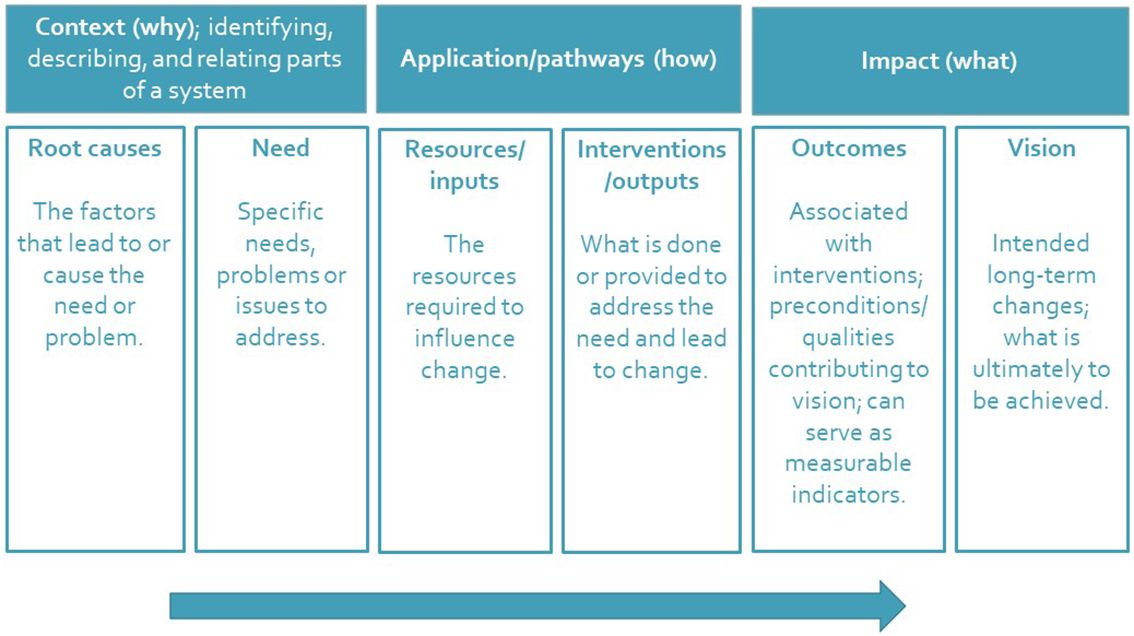
Figure 1 Suggested components of a ToC (adapted from Biggs et al., 2017; Ghate, 2018; Reinholz and Andrews, 2020).
It has been suggested that a route to unifying global rewilding and promoting its transformative potential is to focus on shared goals (Pettorelli et al., 2019; Carver et al., 2021; Hawkins et al., 2022). These goals can provide a vision on which to focus the development of a rewilding ToC. The nature of the themes emerging from the data and the emphasis on theory creation in a CGT approach further justify the adoption of a ToC framework to represent the grounded theories emerging from this research.
3 Results
3.1 Guidelines for rewilding practice
Many drivers of rewilding relate to a desire to change the culture and practice of conservation biology and related institutions (Carver et al., 2021; Hawkins, 2022). These include concerns that some practices promote human-nature dualism (Ward, 2019), objectives based on pre-determined conditions (Taylor, 2011), anthropocentrism (Noss, 1992), and ineffective practices that do not acknowledge complex ecological interactions (Soule and Noss, 1998). Given that the data were sourced from influential rewilding practitioners or organisations, several themes emerging from the data analysis expressed strong views for how rewilding should be practiced, reflecting the intentions for paradigm shifts in the conservation and restoration of nature. These have been thematically analysed and the themes are presented below as guidelines to inform rewilding application.
However, throughout this section it is noted that the intentions are difficult to achieve in practice. Therefore, this list of guidelines acts as a baseline study to inform future research on how to overcome barriers to achieving genuine change in how rewilding is applied.
3.1.1 Be transformative and visionary
The ambitions for rewilding are considered by some to be outside of what is accepted or comfortable within a current system or culture (e.g., Soule and Noss, 1998; Foreman, 2004; Monbiot, 2013), echoing intentions or potential for rewilding to promote paradigm shifts in policy, culture, or nature conservation (Soule and Terborgh, 1999b; Taylor, 2011; Pettorelli et al., 2018; Hawkins et al., 2022; Taylor et al., 2022). For example, the goals of rewilding organisation Trees for Life are described as stretch goals, “which may seem overly ambitious viewed from the current paradigm, but can be achieved with bold, creative thinking, strategic planning, and a willingness to think outside the box” (Puplett, 2008). This is reflected in principle 10 of the RTG principles (Carver et al., 2021), which focuses on a paradigm shift in the coexistence of humans and nature, with related institutional paradigm shifts.
Many rewilding organisations create ambitious visions for the future (Foreman, 2004; Helmer et al., 2015) and Noss (1992) describes rewilding as a vision toward which to strive over decades. The data show that there is intent behind the use of bold visions, i.e., to promote hope, innovation, and inspiration. As an example, Soule and Terborgh (1999b) write, “An inspiring vision is essential. In the frenetic, noisy years ahead, only such visions will attract attention and kindle hope.” Those leading rewilding projects are encouraged to create visions for rewilding, considering ecological restoration and overcoming largely social barriers to rewilding (Weber Hertel and Luther, 2023), thereby combining social, ecological, and systemic change (Hawkins, 2022).
3.1.2 Be pragmatic, work iteratively
The visionary and transformative goals of rewilding are reconciled with pragmatism through iterative progression, whereby appropriate interventions are applied successively to progress a system towards a bold vision. Intentions for rewilding to be pragmatic (e.g., Soule and Terborgh, 1999b; Jepson et al., 2018) and to progress iteratively along a scale of rewilding (e.g., Bakker and Svenning, 2018; Butler et al., 2021) are expressed in the data. This reflects conceptualisations of rewilding as a continuum or scale, with the intention to move systems along a scale towards rewilding goals (Holmes et al., 2020; Carver et al., 2021). Jepson and Schepers (2016), for example, suggest that rewilding is:
“a graduated and situated approach, where the goal is to move up a scale of wildness within the constraints of what is possible, and interacting with local cultural identities … Rewilding is not a state; it is a process. It is about moving up a scale of wildness and giving the ecosystems a functional ‘up-grade’ whatever their nature, scale, and location.”
Future rewilding guidelines may wish to draw on agile project management (Fernandez and Fernandez, 2008) and adaptive governance frameworks (Butler et al., 2021) which are both intrinsically iterative to provide guidance for how to integrate iterative progression into rewilding practice.
3.1.3 Be place-based
Every social-ecological system (SES) or landscape will offer a unique context, with their own opportunities for or barriers to rewilding. Hence, place-based approaches and thorough assessments of local social-ecological conditions are key to developing rewilding plans and prioritizing interventions (Ceausu et al., 2015; Navarro and Pereira, 2015b; Butler et al., 2019). This is reflected in contextual assessments (e.g., Soule and Terborgh, 1999a; Foreman, 2004; Cerqueira et al., 2015; Jepson et al., 2018) and considerations for ecological or cultural conditions that influence what interventions are appropriate, e.g., a natural seed source influences the potential for natural regeneration (Navarro et al., 2015), or culturally significant species enhance opportunities for species reintroductions (Monbiot, 2013; Jepson et al., 2018; Heuer et al., 2023). Thorough and genuine place-based assessments of socio-cultural factors allow projects to avoid making assumptions about levels of support, stakeholder priorities, or reasons for opposition. This guideline encourages practitioners to develop rewilding plans after contextual assessments are made, rather than approaching areas with pre-conceived notions of what interventions should be used. Even when a certain intervention may be desirable, it is not prioritised or applied ahead of interventions that are more suited to the current context. This may also help to address negative perceptions of rewilding as practitioners are encouraged to address existing socio-cultural barriers to rewilding prior to or in tandem with other interventions (Weber Hertel and Luther, 2023).
3.1.4 Think large-scale and long-term
Emerging ecological theories considering the requirements of large, wide-ranging mammals, prompted large- or landscape-scale implications for rewilding (Soule and Terborgh, 1999a; Carver et al., 2021). This reflects a move from traditional conservation which tended to focus on delimited areas based on habitat type (Soule and Noss, 1998; Taylor, 2011). Soule and Terborgh (1999b), for example, encourage rewilding practitioners “to think and plan on scales that transcend traditional political boundaries … and familiar spans of time.”
Thinking large scale requires practitioners to acknowledge the multiple requirements of diverse (human and non-human) inhabitants of a landscape, considering social factors alongside ecological ones. Hence this guideline encourages a more systemic and interdisciplinary practice (linked to systems thinking in section 3.1.5).
Long-term perspectives require consideration for the longevity of projects, for example going beyond limitations associated with short-term funding or goals (Johns, 2019). To enhance sustainability, it is suggested that projects are integrated into the fabric of the system (Saunders, 2011; Jepson et al., 2018). This includes considering how funding and resourcing for rewilding can be integrated within a system (Groom et al., 1999; Donlan et al., 2005; Gow, 2006; Jobse et al., 2015), so that finite and external funding is less critical. However, examples demonstrate that longevity is not just about economic sustainability but also about engendering a sustainable culture suited to the place, seeking to reform existing industry or resource use, for example hunting, forestry, or mining (Jepson et al., 2018). For example, Parfitt (2006) highlights the WWF Netherlands Living Rivers project which introduced clay extraction as a new economic driver which could (partly) substitute the declining role of agriculture, contribute to the ecological restoration of the riparian landscape, and contribute to improved and sustainable flood prevention. McKibben (1995) demonstrates the potential for reform in commercial forestry to mitigate rising unemployment and rural poverty while improving ecological conditions in traditional logging areas.
3.1.5 Use systems thinking
Working at a large scale accentuates the complexity associated with nested systems, so that rewilding surpasses geographic, ecological, or disciplinary boundaries, acknowledging the complexity and diversity reflected in the concept of SES (Biggs et al., 2021). Reflecting a trend towards holism and SES framings of rewilding, systems thinking is increasingly encouraged in rewilding theory (Butler et al., 2021; Jones and Jones, 2023). The emphasis on scale drove the integration of socio-cultural elements of landscapes into rewilding. This is reflected in guidance on how to address socio-cultural factors in rewilding across the data and wider literature (Groom et al., 1999; Foreman, 2004; Jepson et al., 2018; Linnell and Jackson, 2019; Weber Hertel and Luther, 2023) and reflections on complex interactions between ecological and socio-political factors effecting the potential for rewilding at larger scales (Soule and Terborgh, 1999b; Taylor, 2011; Pettorelli et al., 2018; Johns, 2019). In this way, landscapes can be considered as SES. Systems thinking also creates the potential for rewilding to be applied to systems that are not associated with a spatial area. For example, in relation to the culture of education (Prince, 2022) or recreation and adventure travel (Loynes, 2022), perhaps offering the potential to “rewild” the culture and practice of rewilding.
While this guideline overlaps with a number of the other guidelines presented here, we felt it important to highlight separately as the integration of complexity in practice is hindered by a wider lack of knowledge, methods, or skills for systems thinking. It requires moving from a current paradigm which tends to simplify, towards a paradigm that considers complexity. This is identified as a priority for research to inform rewilding, restoration, and sustainability science (Biggs et al., 2017; Butler et al., 2021; Jones and Jones, 2023; San Miguel, 2023). Iterative, agile project management and ToC frameworks seek to address these issues in many different disciplines (Fernandez and Fernandez, 2008; Allen et al., 2017) and may help rewilding projects to integrate complex systems thinking, long-term transformative change, transdisciplinarity, and collaboration. There is also evidence to suggest that holistic, systems thinking is inherent in some indigenous knowledge systems and philosophies (Cusicanqui, 2012; Berkes, 2017; Fenton and Playdon, 2022), highlighting an imperative to address institutional biases in pursuit of inclusive, globally applicable rewilding policy and guidance.
3.1.6 Be adaptive, embrace uncertainty and indeterminacy
This guideline reflects a desire to address values for control, order, and predictability that is highlighted as a concern in the data (e.g., Taylor, 2011; Monbiot, 2013). In response, rewilding asks practitioners to accommodate uncertainty, indeterminacy, and change.
An important implication for rewilding application is that rewilding has no end point or predetermined compositional objectives. This is best described by Monbiot (2013, p. 168):
“Rewilding has no end points, no view about what a ‘right’ ecosystem or a ‘right’ assemblage of species looks like. It does not strive to produce a heath, a meadow, a rainforest, a kelp garden, or a coral reef. It lets nature decide. The ecosystems that will emerge, in our changed climates, on our depleted soils, will not be the same as those which prevailed in the past. The way they evolve cannot be predicted, which is one of the reasons why this project enthrals.”
This reflects complex systems thinking that encourages no end point and is associated with the need to accommodate greater levels of uncertainty and indeterminacy (Fougères et al., 2022; Jones and Jones, 2023), and emerging ecological theories that emphasise change [e.g., alternative stable states (Beisner et al., 2003) and novel ecosystems (Klop-Toker et al., 2020)]. This has caused some debate in rewilding literature over the concepts of reference ecosystems and novel ecosystems (e.g., Pettorelli et al., 2018; Genes et al., 2019). The results presented here address this conflict by demonstrating that reference ecosystems are not intended to serve as ecological aims for rewilding projects, but rather provide historical evidence of coevolution to inform rewilding interventions (see section 3.1.7). This is important as this conflict remains prevalent in the data, which show that while rewilding application seeks to embrace uncertainty and indeterminacy in theory, pragmatism and personal preference are barriers to achieving this in practice as some rewilding projects remain prescriptive about habitat types, e.g., projects that seek to create wood pasture (Vera, 2000; Kirby et al., 2004; Dempsey, 2021). Related projects such as Knepp and Oostvardersplassen have been criticised for being led by human priorities and for limiting the potential for natural autonomy (Kopnina et al., 2022; Leadbeater et al., 2022), but are also promoted for their positive impacts on ecological function, biodiversity, and natural autonomy, according to the RPS data. It is suggested that tolerance for adaptability and uncertainty and allowing nature to lead restoration (see section 3.1.9) are key leverage points for achieving a more adaptable, non-determinist rewilding practice. More targeted, longitudinal studies are required to understand whether human preferences and habitat-focused objectives are a barrier to achieving rewilding aims and to identify social or ecological barriers that limit indeterminacy in rewilding application.
Another concern acknowledged in the data coded to this node is that there remains uncertainty over how best to approach rewilding. This guideline therefore encourages trial and error as new methods are developed or new knowledge or realisations are made, rather than a desire to know and predict the outcome of an intervention before it is applied (Noss, 1992). Knowledge, best practice, and definitions of concepts evolve, as is demonstrated by the concept of rewilding (Gammon, 2018). Embracing indeterminacy may offer a route to reduce conflict related to different interpretations of or approaches to rewilding and instead encourage creativity, collaboration, and knowledge sharing despite divergences. This highlights the need for rewilding guidelines to also be adaptable. The guidelines and framework suggested here offer routes to unifying practice without being prescriptive of ecosystem composition.
3.1.7 Collect evidence and monitor rewilding to inform adaptive plans
While the above guideline asks practitioners to be adaptable and embrace uncertainty, this guideline encourages the use of evidence to inform practice in the absence of proof or certainty. Early conceptualisations of rewilding called for rewilding practice to be science based (e.g., Noss, 1992; Vera, 2000). This emphasis continues to be reflected throughout the data, however, there are increasingly calls to integrate other forms of evidence, as reflected in principle 7 of the existing guiding principles (Carver et al., 2021) which states that rewilding is informed by science, traditional ecological knowledge, and other local knowledge. This forms part of a movement towards knowledge democracy and transdisciplinarity in conservation and environmental management (Berkes, 2009; Fenton and Playdon, 2022; Raymond et al., 2022). However, it is suggested here that the term “evidence” is used as a democratic word, avoiding issues associated with terms that seek to legitimate and distinguish between knowledge types, such as the term “traditional ecological knowledge” (Fenton and Playdon, 2022).
Different types of evidence, reflecting different scales or emphases, are required to inform rewilding application. At a policy level, evidence is provided from research, academic literature, frameworks, and related policies. At a local scale, and reflecting that rewilding is place-based (section 3.1.3), those driving rewilding must seek local evidence to inform the choice and prioritisation of rewilding interventions. Initial assessments provide a baseline for the project, while ongoing monitoring assesses the impacts of rewilding interventions and identifies emerging opportunities or barriers around which to adapt rewilding plans.
There are monitoring examples and suggestions for evidence in the data, including historical evidence, such as reference ecosystems (Genes et al., 2019; Carver et al., 2021) or evidence of historical land use and change; baseline ecological surveys; social studies that consider stakeholder preferences or values; or social or ecological feasibility studies. Methods used to monitor rewilding projects vary and are influenced by project priorities and resource availability, from less intensive, traditional ecological survey methods such as those undertaken at Carrifran Wildwood (Adair and Ashmole, 2022) to intensive, innovative monitoring techniques including remote sensing, eDNA, and natural capital accounting approaches as undertaken at Birchfield (White et al., 2022). While evidence and monitoring are typically viewed as essential to inform practice and improve knowledge of rewilding (Groom et al., 1999; Svenning et al., 2016; Pettorelli et al., 2018; Corlett, 2019), establishing monitoring guidance for rewilding in complex systems remains a challenge (Root-Bernstein, 2022; White et al., 2022) that reflects a paradigm shift from command-and-control approaches towards the need to embrace uncertainty and indeterminacy as highlighted in section 3.1.6. For example, Corlett’s (2019) consideration of monitoring reflects traditional forms of project management and monitoring, reliant on “SMART” objectives (specific, measurable, achievable, relevant, and time-bound), which conflicts with emergent conceptualisations of rewilding as long-term, adaptable, and indeterminate (Butler et al., 2021; Root-Bernstein, 2022).
This is an area that requires further work to inform monitoring guidelines, which should seek to include a variety of methods to suite varying project resources and consider the indeterminate nature of rewilding. Although these may be flexible, some level of standardisation would aid knowledge and data sharing to inform rewilding research and best practice. Work towards monitoring guidelines could draw on methods for monitoring complex systems (UNDP Strategic Innovation, 2022) or might consider establishing core common outcomes, a concept initially used in medical fields but increasingly used in restoration (e.g., Reed et al., 2022), to provide a standardized framework for monitoring and evaluation.
3.1.8 Be inclusive and collaborative
The intention for rewilding to be inclusive and collaborative is highlighted in the data in response to calls to counteract exclusivity, injustice, and inequity in conservation (e.g., Monbiot, 2013; Ward, 2019). Counter to command-and-control approaches (Holling and Meffe, 1996; Briggs, 2003), rewilding practitioners are encouraged to see themselves as part of a system, collaborating with others to achieve rewilding goals, rather than as external entities that are furnished with power to make decisions effecting the wellbeing of others (Martin et al., 2023). The data reflect that inclusive approaches could counteract perceptions that rewilding is exclusive and improve support for rewilding. But it is emphasised that rewilding practice looks beyond superficial notions of inclusivity that merely seek to promote rewilding to a community or demonstrate stakeholder support for rewilding to influence decision makers. Inclusion promotes transdisciplinarity, involvement of a diverse range of stakeholders, and deeper engagement with place (see section 3.1.3).
Increasingly, the perspectives and contributions of non-human species to rewilding are also being considered (Irwin, 2021; Bekoff, 2022; Kopnina et al., 2022; Moyano-Fernández, 2022), suggesting that holistic worldviews that view landscapes as collaborations among humans and other species can promote more sustainable practices (Washington et al., 2017). This has raised the importance of paradigm shifts in how humans relate to the rest of nature, “personal rewilding,” or the “rewilding of hearts and minds” promoted in the data and elsewhere (Carver et al., 2021; Rawles, 2022) along with considerations for how this might be applied in practice (Maffey and Arts, 2022; Taylor et al., 2022). This is reflected in the interventions used within rewilding, which seek to promote ecological knowledge, human-nature connection, or coexistence (see section 3.2). This guideline therefore encourages practitioners to move from dualistic perceptions and a language of human dominance or control that can lead to objectives to remove all human influence, towards a language encouraging collaboration and coexistence to achieve system sustainability. Promoting place-based approaches may help with this and further longitudinal studies are required to understand how holistic worldviews, or transitions towards more holistic worldviews, influence system sustainability and resilience, while being mindful of risks of oversimplification, misinterpretation, and cultural and knowledge appropriation (Battiste and Henderson, 2000; Berkes, 2017; Schmitt et al., 2021; Fenton and Playdon, 2022).
In practice, opportunities for and extent of inclusivity or collaboration will vary depending on the scale and the context. Some rewilding projects may be small with no obvious human stakeholders other than those driving the project. However, this guideline encourages projects to look beyond the geographical limits of their projects or limitations of their own worldviews and actively seek collaborations to increase the scale and/or sustainability of rewilding application. Given the multiple barriers to genuine collaboration highlighted in the data and elsewhere (Martin et al., 2023), further practical guidance to promote genuine collaboration and inclusion at various scales, and to address institutional biases, are required.
3.1.9 Rewilding is nature-led, human-enabled
There is a clear desire for rewilding to furnish other-than-human nature with the freedom and function to look after itself (Prior and Ward, 2016; Carver et al., 2021; Hawkins, 2022). However, it is also agreed that rewilding application requires some level of human influence, as action and intervention are integral to rewilding practice, as is reflected throughout this paper. This has caused a perceived paradox between the rewilding goal for non-human autonomy and human intervention (e.g., Cózar-Escalante, 2019; Dandy and Wynne-Jones, 2019; Deary and Warren, 2019; Sweeney et al., 2019; Holmes et al., 2020; Wynne-Jones et al., 2020), with conflicting ideas over the amount of human influence compatible with wildness or within rewilding practice. It is this reason that this guideline is included, even though it is strongly linked to other suggested guidelines. Adding to the confusion, human influence or interventions can be seen as controlling of some ecological processes (e.g., induced burning to suppress natural succession), while also being used in rewilding to emulate ecological processes (e.g., induced burning to mimic natural disturbance). Rewilding seeks to improve ecological function and the capacity for ecosystems to be self-sustaining by “giving nature a helping hand” (as reflected in the RPS data). However, the conflict between intervention and autonomy is evident in this statement. Rewilding application therefore requires a balance of ecological knowledge and evidence (linked to section 3.1.7) and humility – acknowledging limits to human understanding of complex ecological interactions. Alan Watson Featherstone suggests asking, “What’s Nature seeking to do here? That is crucially different from the ethos of human domination. Rewilding is about humility, about stepping back” (Monbiot, 2013, p.105).
To address the perceived conflict, this guideline suggests that rewilding is nature led, human enabled. Addressing ongoing discussion over the similarities and differences between the fields of ecological restoration and rewilding (du Toit and Pettorelli, 2019; Nelson, 2022), this suggests that one difference may be that ecological restoration is human led, nature enabled, while rewilding is nature led, human enabled. That is to say that approaches in ecological restoration tend to focus on using natural processes and nature-based solutions (e.g. natural flood management) to achieve desired goals or end states as determined by written management plans, whereas rewilding is us, as humans, giving nature the space and the time to determine its own trajectories and outcomes.
3.2 Interventions used in rewilding
While an aim of rewilding is to reduce the need for continued management by enhancing the sustainability and resilience of wild systems (Hawkins, 2022), the data and wider literature reflect that rewilding often entails active intervention. Here we provide a list of interventions associated with rewilding extracted from the data, either those that are suggested or that have been applied. As far as we know, this is the first broad-scale study to provide a list of interventions used in rewilding. These are listed in Table 1 which considers the actions associated with each intervention and their potential for contributing to rewilding aims (as presented in Hawkins et al., in prep.). Relevant projects and existing guidelines are also included, for reference, however this is not a comprehensive list. This table provides a useful tool to inform rewilding practice and can be used as a starting point for planning. However, due to the constraints of this study, the table draws on a limited data set and so further work on this is warranted to inform the ongoing development of IUCN guidelines for rewilding. As rewilding is contextual (as discussed in section 3.1.3) the interventions may not be suitable in all contexts and there may be other suitable interventions that are not listed here.

Table 1 A list of interventions that are associated with rewilding as extracted from the RPS and IRT data, demonstrating how these are intended to contribute to rewilding aims and the actions that are associated with these interventions. Related projects and guidance are suggested for further reference.
A key point to note is that this table demonstrates that rewilding uses a suite of interventions in pursuit of rewilding aims, it is therefore more than one intervention or more than the sum of its parts. This can help to encourage more place-based, holistic thinking in rewilding, addressing tendencies to equate rewilding with an intervention, e.g., reintroductions, grazing, or wilderness – perceptions which can cause conflict among rewilding proponents, as reflected in the data. As Table 1 demonstrates, interventions that are highlighted in the data relate both to ecological restoration and socio-cultural change. This further reflects the transdisciplinarity of rewilding (Hawkins et al., 2022). It should also be noted that the data reflect that rewilding can happen without any intervention, through spontaneous rewilding or natural recolonisation (McKibben, 1995; Boitani and Linnell, 2015; Navarro and Pereira, 2015a; Carver, 2019), for example due to land abandonment. As this involves no direct conscious choice or intervention, this is not listed as an intervention in Table 1, but it must be noted that ecological processes continue, develop, or change where they are given the opportunity to do so. Spontaneous responses to the (unintended or intended) removal of human influence has had significant influence on rewilding theory and practice (McKibben, 1995; Carver, 2019; Locquet and Carver, 2022), and future examples may continue to provide guidance for if, how, and when to intervene.
Table 1 demonstrates potential conflicts between rewilding interventions. For example, interventions to promote connectivity can include removing fencing (Foreman, 2004), while fencing is also used to limit unwanted herbivory (Ashmole and Chalmers, 2004; Featherstone, 2004) and to limit the movement of reintroduced animals (Taylor, 2008). Another conflict noted is between interventions that seek to limit successional processes [which include introducing wild, de-domesticated, or domestic grazers, burning, or cutting (Navarro et al., 2015; Svenning et al., 2016)] and interventions that seek to promote succession and afforestation, including limiting over grazing and over browsing by wild or domestic animals (Ashmole and Chalmers, 2004; Featherstone, 2004). This reflects the conflict between herbivore-focused rewilding and afforestation noted in the data (e.g., Fenton et al., 2004; Sandom and Wynne-Jones, 2019). Variations in the perceptions or roles of non-native species are also noted, i.e., the use of ecological surrogates and the lethal control of non-native invasive species, both to aid rewilding (Sandom et al., 2013; Cidrás and Paül, 2022). These conflicts highlight the difficulty in achieving natural autonomy or total withdrawal of human influence, with human preferences influencing practice and ongoing intervention needed to address perceived ecological inadequacies, such as a lack of habitat, missing species, or non-native species. Rewilding principles (Carver et al., 2021) and the guidelines presented here are intended to guide the planning and prioritisation of interventions, but personal or stakeholder preferences and priorities continue to influence rewilding (Sandom and Wynne-Jones, 2019; Holmes et al., 2020). There is a question over whether rewilding should be flexible and allow for “creative pluralism” (Deary and Warren, 2019). This is reflected in the intention for rewilding to be contextual and place-based (section 3.1.3) and adaptable (section 3.1.6). Table 1 may help practitioners to consider a wide suite of interventions to encourage creative pluralism and respond to contextual factors, rather than to approach rewilding with pre-conceived ideas of which interventions to apply.
3.3 Rewilding theory of change framework
The results of the analysis of the RPS and IRT data led to the construction of a proposed ToC framework which is aimed at practitioners, encouraging the construction of adaptive, place-based ToCs (Figure 2). This ToC framework integrates the guidelines from section 3.1, providing further guidance on when and how to address these in project planning. This ToC framework to inform rewilding application is adaptable to different contexts. The purpose of each stage is outlined below, while the rewilding vision included in the figure refers to rewilding aims established by Hawkins (2022) and Hawkins (2023).
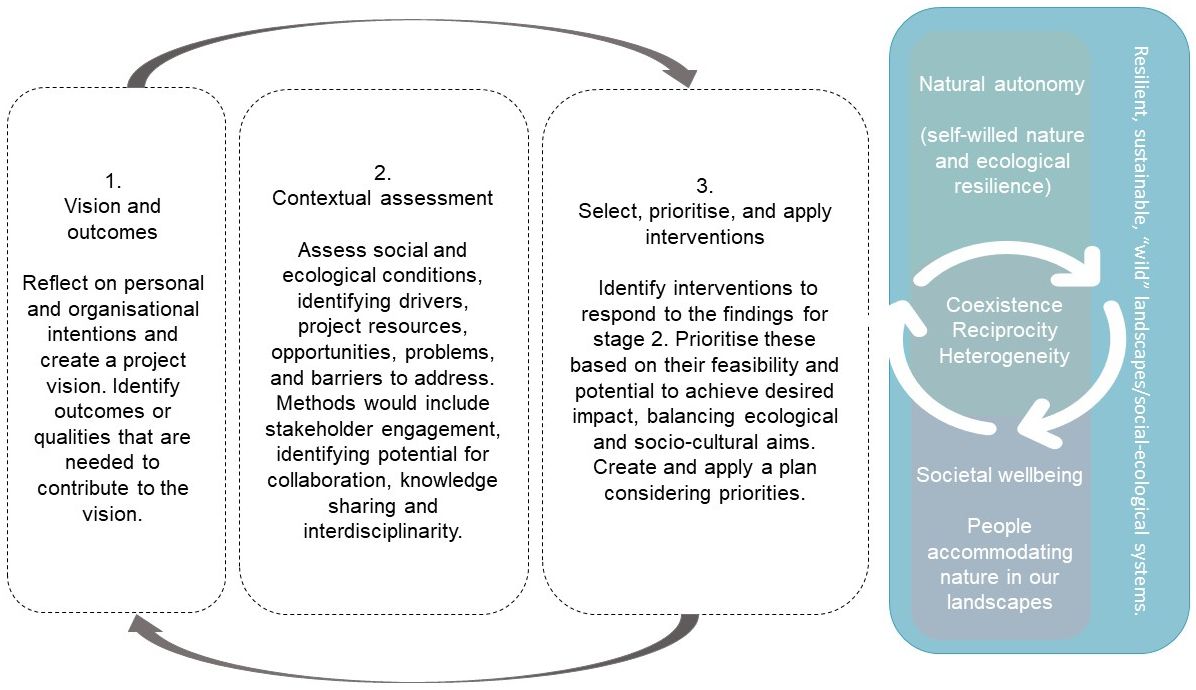
Figure 2 A proposed rewilding ToC framework to inform rewilding application. An earlier version of this framework, based on the RPS data, was published in Hawkins (2022).
3.3.1 Stage 1: vision and outcomes
A defining principle of a ToC is that a vision for the future related to the intended change is created to provide a focus for the project or organisation (Reinholz and Andrews, 2020; Centre for Theory of Change). This is related to the intention for rewilding to be transformative and visionary (section 3.1.1). As such, the social-ecological aims of rewilding (Hawkins, 2022; Figure 2) can be used as a template from which to adapt a context-specific rewilding vision that represents what is ultimately to be achieved. Here those driving rewilding are asked to reflect on their intentions and are encouraged to think long term and systemically, as reflected in the above guidelines, considering the ecological, socio-cultural, and systemic change required to achieve their vision. Following the creation of the vision, outcomes can be identified, which are the pre-conditions or qualities that are needed to achieve the vision (Figure 1). These qualities can serve as measurable indicators to monitor the impacts of rewilding application.
3.3.2 Stage 2: contextual assessments
Reflecting intentions for rewilding to be contextual and place-based, the second stage entails a thorough assessment of social and ecological conditions in the focal area or system. This would include the drivers of change and specific needs, problems, or barriers to address. These consider historic land use and conditions related to ecological and socio-cultural factors and so would encourage interdisciplinary collaborations (section 3.1.8) and systems thinking (section 3.1.5). This stage may also include the identification of opportunities and resources available, such as available land or sources of funding. This stage encourages projects to assess the conditions to inform rewilding plans, rather than adopting approaches or imitating other rewilding projects, that were developed in other contexts.
This stage is critical for creating the evidence required to inform rewilding plans and establish ongoing monitoring (section 3.1.7); it integrates monitoring into rewilding, a crucially important step towards improving rewilding application and to inform rewilding policy and guidelines. In the first iteration of a project, the assessment would provide a baseline while further iterations would monitor change over time. As is identified in section 3.1.7, there is a need to develop clear guidance for monitoring. In the absence of such guidance, Table 1 provides some examples of monitoring in rewilding projects and some guidance from the literature.
3.3.3 Stage 3: selecting, prioritising, and applying interventions
Based on the above assessments, a list of potential interventions can be created. These would ideally look to take advantage of opportunities and work to overcome barriers identified in stage 2. Table 1 demonstrates the variety of interventions used in rewilding and can be used to inform the selection of interventions, although there may be other suitable interventions that are not reflected in this list. This list also includes related guidance to improve the effectiveness of these interventions, but wider evidence to inform interventions should be considered given the limitations to this table.
The initial list of potential interventions must then be prioritised based on current feasibility, aligning with intentions for rewilding application to be contextual and pragmatic. Interventions that are most feasible are prioritised, recognising their potential to enhance the feasibility of other intended interventions. As an example, in the Rangelands Restoration project in Australia, non-native species have been identified as a major barrier to rewilding and therefore non-native species management has been prioritised over species reintroductions (Kealley and Burrows, 2022). As interventions are prioritised, they provide the basis to map steps from the present context to the desired future, as is encouraged by a ToC framework (Figure 1). High priority interventions are then applied first, and others applied successively. Considering the example of Carrifran Wildwood (Adair and Ashmole, 2022), priority interventions included seeking funding and purchasing land, these were followed by interventions to address barriers to habitat restoration (removing grazing sheep, constructing deer fencing, and culling of deer), followed by interventions to restore habitat (seed propagation, sourcing of saplings, tree planting). Application should consider existing guidelines for each intervention to ensure that these are applied ethically and effectively (informed by Table 1 and other existing guidance). Depending on the scale of the project and resources available, several interventions may be applied simultaneously, and the time scale of this stage will depend on the complexity of the project and the interventions applied.
3.3.4 Successive iterations
Reflecting agile project management (Fernandez and Fernandez, 2008) and the adaptive governance framework for rewilding identified in the literature (Butler et al., 2021), stages 1–3 are repeated iteratively. Hence the project goals, project context, and application are reassessed, and plans updated in an adaptive approach. This allows ongoing monitoring of change and effectiveness of interventions which will contribute to the growing rewilding knowledge base. ToC iterations are critical as they encompass the adaptability and uncertainty (section 3.1.6) inherent in rewilding. Rewilding remains adaptable, as in reality projects are likely to adapt plans around emerging opportunities or barriers that were not identified in stage 2. Rewilding application is unlikely to be as linear as suggested by this framework, but it provides a useful tool to guide application nonetheless.
Reflecting intentions for rewilding to be inclusive and collaborative (section 3.1.8), project leaders will need to consider who to include in decision making and project governance related to each stage. Some interventions listed in Table 1 are done with the aim of promoting inclusion and collaboration, including networking and knowledge sharing which are promoted by organisations including Rewilding Europe, Rewilding Britain, and the Rewilding Institute. Given the iterative nature of this framework, who is included in decision making can be adapted depending on the progress of the project or the resources available. Smaller projects with limited resources and space, or existing projects which have not previously identified as rewilding projects, are encouraged to embrace systems thinking and consider several aims and outcomes as part of the rewilding vision suggested by this framework. They can adapt plans as opportunities arise to extend the area and/or impact of their project. Examples of two projects highlighted in Table 1 can help to demonstrate how the ToC can be adapted to suit different scales or to different priorities or resources. Firstly, Hilty et al. (2022) demonstrate that a large-scale rewilding vision (stage 1) was critical for the Yellowstone to Yukon project. This organisation does not own any land and interventions relate to engaging with people to influence land use or management decisions over a large spatial scale to promote connectivity and coexistence. In contrast, Adair and Ashmole (2022) demonstrate how even small-scale projects can expand their aims over time. Carrifran Wildwood initially focused funding and ecological restoration to achieve a rewilding vision, but later sought to expand the influence and impact of the project beyond the original spatial boundary by approaching local landowners and forming collaborations.
4 Conclusion
This article seeks to highlight the diversity of interventions available to rewilding practitioners to promote creativity and dynamism in application, while the guidance drawn from the data promotes more holistic thinking and paradigm shifts in the culture of rewilding practice. In many cases, rewilding is still driven by human decision making and individual preference. There is inherent difficulty in applying rewilding, as we continue working with (our own or others’) extant values and assumptions while promoting transformative change. For example, Wynne-Jones et al. (2020) note that metrics used to measure or plan for rewilding are still denominated by benefits for humans, which is a barrier to integrating notions of intrinsic value and ecocentrism. Martin et al. (2023) show that, despite aspirations and commitments for rewilding to be inclusive, genuine collaboration is limited by entrenched views of power, ownership, and tendencies to prioritise one’s own interests. While rewilding may seek to be inclusive, it also looks to counteract root causes of ecological degradation, many of which are cultural (Maffey and Arts, 2022), and so there is uncertainty reflected in the data and wider literature over how to balance promoting cultural change with respect for people’s extant values (Hawkins et al., 2020; Root-Bernstein, 2022). Notions of equity may help to promote equitable routes to system sustainability, as are reflected by circular economics (UNDP), systems thinking (section 3.1.5, Fougères et al., 2022), and the social-ecological aims of rewilding (Hawkins, 2022.). In this framing, change is justified as it is promoted in pursuit of equity, holistic wellbeing, and SES sustainability and resilience. This approach promotes collaboration in the pursuit of a shared vision. In this sense rewilders ideally become facilitators promoting change and encouraging collaboration across the more than human community.
The literature also highlights some key issues that may serve as barriers to realising the desired paradigm shifts in rewilding practice, or its transformative goals. These include dualistic ontologies that drive commodification of natural resources (Irwin, 2021), anthropocentrism (Wynne-Jones et al., 2020), and continued compartmentalisation of human and non-human nature (Cózar-Escalante, 2019); scientific rationalism and intolerance for risk and uncertainty; and tendencies to limit project areas to avoid social-ecological complexity, limit dispute, and maintain control over rewilding application (Wynne-Jones et al., 2020; Martin et al., 2023). Desired qualities that are promoted in response to these barriers include more holistic or ecocentric worldviews that expand notions of wellbeing and interests to more-than-human nature (Cózar-Escalante, 2019; Wynne-Jones et al., 2020; Irwin, 2021); improved adaptiveness and tolerance for uncertainty and dynamism inherent in wilder systems (Cózar-Escalante, 2019; Holmes et al., 2020); and genuine collaboration, trust, and empowerment among stakeholders (Pettersson and de Carvalho, 2021; Martin et al., 2023). While there are a range of legitimate concerns about compromise, the literature also suggests that there is the potential for rewilding to be both pragmatic and visionary. For example, Pettersson and de Carvalho (2021), in their study of rewilding at Iberá National Park, note a need to continually balance pragmatic legitimacy (meeting the direct needs or interests of stakeholders) and output legitimacy (delivering milestones and communicating success related to the rewilding vision). Holmes et al. (2020) discuss the possibility for rewilding projects to adapt to socio-cultural contexts, with the potential to balance pragmatism with transformative goals over time, however they highlight that this requires further investigation. The framework presented here in Figure 2 offers a route to balancing transformation with pragmatism.
However, the above demonstrates that while rewilding is intent on outwardly shifting paradigms, i.e., in wider society, much of the work needs to be done inwardly, focusing on the paradigms and institutions within the culture of conservation, restoration, and rewilding, and the suggested guidelines presented here encourage these shifts in rewilding application. This is also important when considering the RTG’s work towards guidelines for rewilding and some of the limitations inherent in research and policy environments. One of the barriers to maintaining adaptability is that published guidelines themselves are usually limited by time and resources and are fixed for a certain time rather than adaptable. In this time of uncertainty, it may be prudent to consider the adaptability of published guidelines and frameworks. Part of the process of “rewilding” the culture and practice of rewilding will need to include long-term commitments to adaptable approaches to rewilding that focus on finding place-based responses to dewilding and ecological degradation. This means that projects must adapt around social-ecological assessments of rewilding areas to inform plans, rather than approaching rewilding with pre-conceived ideas of what interventions to use. The guidelines highlighted in this article ask those driving rewilding to consider their own intentions and consider themselves as part of the systems within which they are operating, rather than as external and temporary “experts”. Barriers to incorporating these principles into practice are highlighted, for example many of the institutions that inform and influence rewilding, such as funding mechanisms, are not adaptable or long-term. In this sense, long-term commitments to achieving rewilding aims are needed, along with longitudinal studies to understand what contributes to the success or failure of rewilding projects.
The tools presented in this paper – guidelines, list of interventions, and ToC – are based on a limited data set and will therefore require testing against global rewilding theory and policy and in case studies of rewilding application to improve their usability and adaptability to different contexts. Despite these limitations, they provide a useful and evidence-based starting point for unifying rewilding policy and practice and a focal point for identifying areas requiring further research or refinement. The framework and the findings presented here encourage the rewilding community to work towards common goals, to adopt complex systems thinking considering social-ecological interactions, and to collaborate and share experiences and lessons learned across systems, cultures, and disciplines to enhance the potential for rewilding. While the framework proposed in Figure 2 is aimed at rewilding practitioners who are looking to apply rewilding interventions on the ground, if we truly intend to effect transformational change, we must also look more widely at the systems and institutions in which rewilding research and practice operates (Fougères et al., 2022). If rewilding is to be a global undertaking, and if it truly has the potential to create transformational change, it must embrace and encourage change across the multiple systems that affect it. Time will tell whether rewilding will affect a virtuous cycle and paradigm shift towards more systemic ways of thinking about rewilding application, embracing uncertainty and indeterminacy, and releasing expectations over the outcomes of rewilding.
Data availability statement
The datasets presented in this article cannot be publicly shared due to privacy restrictions. Requests to access the datasets should be directed to the corresponding author.
Ethics statement
The studies involving humans were approved by University of Cumbria ethics committee. The studies were conducted in accordance with the local legislation and institutional requirements. The participants provided their written informed consent to participate in this study.
Author contributions
SH: Writing – original draft, Methodology, Investigation, Data curation, Conceptualization. IC: Writing – review & editing, Supervision, Conceptualization. SC: Writing – review & editing, Supervision, Conceptualization.
Funding
The author(s) declare financial support was received for the research, authorship, and/or publication of this article. This paper is adapted from the PhD thesis of the lead author, which was supported by a University of Cumbria PhD studentship and supervised by IC, SC, Lisa Fenton, and Darrell Smith. The APC was funded by the University of Cumbria.
Conflict of interest
The authors declare that the research was conducted in the absence of any commercial or financial relationships that could be construed as a potential conflict of interest.
Publisher’s note
All claims expressed in this article are solely those of the authors and do not necessarily represent those of their affiliated organizations, or those of the publisher, the editors and the reviewers. Any product that may be evaluated in this article, or claim that may be made by its manufacturer, is not guaranteed or endorsed by the publisher.
Supplementary material
The Supplementary Material for this article can be found online at: https://www.frontiersin.org/articles/10.3389/fcosc.2024.1384267/full#supplementary-material
Footnotes
- ^ Transformative change is described as a “fundamental, system-wide reorganization across technological, economic, and social factors, including paradigms, goals, and values and is promoted as essential to achieving global sustainability” (IPBES, 2019).
- ^ Hawkins, S., Convery, I., and Carver, S. (in prep.) A study of rewilding aims: Integrating coexistence into a rewilding continuum.
References
Adair S., Ashmole P. (2022). “Rewilding case study: Carrifran Wildwood,” in Routledge Handbook of Rewilding. Ed. Hawkins S., Convery I., Carver S., Beyers R. (Routledge, Oxford).
Allen W., Cruz J., Warburton B. (2017). How decision support systems can benefit from a theory of change approach. Environ. Manage. 59, 956–965. doi: 10.1007/s00267-017-0839-y
Bakker E. S., Svenning J. C. (2018). Trophic rewilding: Impact on ecosystems under global change. Philos. Trans. R. Soc. B: Biol. Sci. 373 (1761). doi: 10.1098/rstb.2017.0432
Barlow C. (2000). The Ghosts Of Evolution: Nonsensical Fruit, Missing Partners, and Other Ecological Anachronisms (New York; Plymouth: Basic Books).
Battiste M., Henderson J. Y. (2000). Protecting Indigenous Knowledge and Heritage: A Global Challenge (Vancouver: UBC Press). doi: 10.59962/9781895830439
Baynham-Herd Z., Redpath S., Bunnefeld N., Molony T., Keane A. (2018). Conservation conflicts: Behavioural threats, frames, and intervention recommendations. Biol. Conserv. 222, 180–188. doi: 10.1016/j.biocon.2018.04.012
Beisner B. E., Haydon D. T., Cuddington K. (2003). Alternative stable states in ecology. Front. Ecol. Environ. 1, 376–382. doi: 10.1890/1540-9295(2003)001[0376:ASSIE]2.0.CO;2
Bekoff M. (2022). “Rewilding from the Inside Out,” in Routledge Handbook of Rewilding. Ed. Hawkins S., Convery I., Carver S., Beyers R. (Routledge, Oxford).
Benayas J. M. R., Bullock J. M. (2015). “Vegetation restoration and other actions to enhance wildlife in European agricultural landscapes,” in Rewilding European Landscapes. Eds. Pereira H., Navarro L. (Springer, Amsterdam). doi: 10.1007/978-3-319-12039-3_7
Berkes F. (2009). Evolution of co-management: Role of knowledge generation, bridging organizations and social learning. J. Environ. Manage. 90, 1692–1702. doi: 10.1016/j.jenvman.2008.12.001
Beyers R., Sinclair A. R. E. (2022). “Measuring success in rewilding: Ecological overview,” in Routledge Handbook of Rewilidng. Ed. Hawkins S., Convery I., Carver S., Beyers R. (Routledge, Oxford).
Biggs D., Cooney R., Roe D., Dublin H. T., Allan J. R., Callender D. W. S., et al. (2017). Developing a theory of change for a community-based response to illegal wildlife trade. Conserv. Biol. 31, 5–12. doi: 10.1111/cobi.12796
Biggs R., Clements H., De Vos A., Folke C., Manyani A., Maciejewski K., et al. (2021). What are social-ecological systems and social-ecological systems research? In The Routledge Handbook of Research Methods for Social-Ecological Systems (Eds) Biggs R., Vos A., Preiser R., Clements H., Maciejewski K., Schluter M. (Oxford: Routledge). doi: 10.4324/9781003021339-1
Boitani L., Linnell J. D. C. (2015). “Bringing large mammals back: Large carnivores in Europe,” in Rewilding European Landscapes. Eds. Pereira H. M., Navarro L. (Springer, Amsterdam). doi: 10.1007/978-3-319-12039-3_4
Briggs S. (2003). Command and control in natural resource management: Revisiting Holling and Meffe. Ecol. Manage. Restor. 4, 161–162. doi: 10.1046/j.1442-8903.2003.00151.x
Bryant A., Charmaz K. (2019). The SAGE Handbook of Current Developments in Grounded Theory (London: SAGE Publications Ltd). doi: 10.4135/9781526485656
Butler J. R. A., Young J. C., Marzano M. (2019). “Adaptive co-management and conflict resolution for rewilding across development contexts,” in Rewilding (Cambridge: Cambridge University Press), 386–412. Available at: https://www.scopus.com/inward/record.uri?eid=2-s2.0-85087059750&partnerID=40&md5=54b64e8f3c45f8f6a9b75e640d22fe5a.
Butler J. R. A., Marzano M., Pettorelli N., Durant S. M., du Toit J. T., Young J. C. (2021). Decision-making for rewilding: an adaptive governance framework for social-ecological complexity. Front. Conserv. Sci. 2. doi: 10.3389/fcosc.2021.681545
Carruthers-Jones J., Gregory A., Guette A. (2022). “Cores and corridors: Natural landscape linkages to rewild protected areas and wildlife refuges,” in Routledge Handbook of Rewilding. Ed. Hawkins S., Convery I., Carver S., Beyers R. (Routledge, Oxford).
Carter N. H., Linnell J. D. C. (2016). Co-adaptation is key to coexisting with large carnivores. Trends Ecol. Evol. 31, 575–578. doi: 10.1016/j.tree.2016.05.006
Carver S. (2019). “Rewilding through land abandonment,” in Rewilding. Eds. Pettorelli N., Durant S., du Toit J. T. (Cambridge University Press, Cambridge).
Carver S. (2022). “Mapping wildness and opportunities for rewilding,” in Routledge Handbook of Rewilding. Ed. Hawkins S., Convery I., Carver S., Beyers R. (Routledge, Oxford).
Carver S., Convery I., Hawkins S., Beyers R., Eagle A., Kun Z., et al. (2021). Guiding principles for rewilding. Conserv. Biol. 35, 1882–1893. doi: 10.1111/cobi.13730
Ceausu S., Hofmann M., Navarro L. M., Carver S., Verburg P. H., Pereira H. M. (2015). Mapping opportunities and challenges for rewilding in Europe. Conserv. Biol. 29, 1017–1027. doi: 10.1111/cobi.12533
Centre for Theory of Change What is Theory of Change? In: Theory of Change Community. Available online at: https://www.theoryofchange.org/what-is-theory-of-change/ (Accessed 29 December 2022).
Cerqueira Y., Navarro L. M., Maes J., Marta-Pedroso C., Honrado J. P., Pereira H. M.. (2015). “Ecosystem services: The opportunities of rewilding in Europe,” in Rewilding European Landscapes (Amsterdam: Springer International Publishing), 47–64. doi: 10.1007/978-3-319-12039-3_3
Charles A. (2021) Communities, conservation and livelihoods (Resource. IUCN). Available online at: https://www.iucn.org/resources/publication/communities-conservation-and-livelihoods (Accessed 23 August 2023). doi: 10.2305/IUCN.CH.2021.01.en
Cidrás D., Paül V. (2022). Rewilding shouldn’t be reactive: fragas do eume natural park in the face of an invasive alien species. J. Nat. Conserv. 69. doi: 10.1016/j.jnc.2022.126252
Corlett R. T. (2019). “Auditing the wild: How do we assess if rewilding objectives are achieved?,” in Rewilding. Eds. Pettorelli N., Durant S., du Toit J. T. (Cambridge University Press, Cambridge). doi: 10.1017/9781108560962
Cózar-Escalante J. M. D. (2019). Rewilding. A pragmatist vindication. Ethics Policy Environ. 22, 303–318. doi: 10.1080/21550085.2019.1652234
Creswell J. W. (2007). Qualitative Inquiry And Research Design: Choosing Among Five Approaches (London: SAGE).
Cusicanqui S. R. (2012). Ch’ixinakax utxiwa: A reflection on the practices and discourses of decolonization. South Atlantic Q. 111, 95–109. doi: 10.1215/00382876-1472612
Dandy N., Wynne-Jones S. (2019). Rewilding forestry. For. Policy Econ. 109. doi: 10.1016/j.forpol.2019.101996
Dawes A. (2006). Good news from the Plain - the reintroduction of Great Bustards to the UK. ECOS 27, 41–48.
Deary H., Warren C. R. (2019). Trajectories of rewilding: A taxonomy of wildland management. J. Environ. Plann. Manage. 62. doi: 10.1080/09640568.2018.1425134
Delibes-Mateos M., Barrio I. C., Barbosa A. M., Martinez-Solano I., Fa J. E., Ferreira C. C. (2019). “Rewilding and the risk of creating new, unwanted ecological interactions,” in Rewilding. Eds. Pettorelli N., Durant S., du Toit J. T. (Cambridge University Press, Cambridge). doi: 10.1017/9781108560962
Dempsey B. (2021). Everything under control? Comparing Knepp Estate rewilding project with “traditional” nature conservation. PloS One 16. doi: 10.1371/journal.pone.0241160
Dobson A., Ralls K., Foster M., Soule' M. E., Simberloff D., Doak D., et al. (1999). “Connectivity: Maintaining Flows in Fragmented Landscapes,” in Continental Conservation: Scientific Foundations of REgional Reserve Networks. Eds. Soule’ M. E., Terborgh J. W. (Island Press, Washington).
Donadio E., Zamboni T., Di Martino S. (2022). “Rewilding case study: Going wild in Argentina, a multidisciplinary and multispecies reintroduction programme to restore ecological functionality,” in Eds. Hawkins S., Convery I., Carver S., Beyers R. Routledge Handbook of Rewilding (Routledge, Oxford).
Donlan J., Berger J., Bock C. E., Bock J. H., Burney D. A., Estes J. A., et al. (2005). Re-wilding North America. Nature 436, 913–914. doi: 10.1038/436913a
du Toit J. T., Pettorelli N. (2019). The differences between rewilding and restoring an ecologically degraded landscape. J. Appl. Ecol. 56, 2467–2471. doi: 10.1111/1365-2664.13487
Eagle A., Cooper A., Espin R., Gould J., Blackshaw-Crosbie E., Eagle A., et al. (2022). “Rewilding: A legal perspective Rewilding: A legal perspective,” in Routledge handbook of rewilding. Eds. Hawkins S., Convery I., Carver S., Beyers R., Hawkins S., Convery I., Carver S., Beyers R. (Oxford: Routledge).
Fenton L., Playdon Z. (2022). “Rewilding “knowledges”: Blending science and Indigenous knowledge systems,” in Routledge Handbook of Rewilding. Ed. Hawkins S., Convery I., Carver S., Beyers R. (Routledge, Oxford).
Fernandez D. J., Fernandez J. D. (2008). Agile project management —Agilism versus traditional approaches. J. Comput. Inf. Syst. 49, 10–17. doi: 10.1080/08874417.2009.11646044
Foreman D. (2004). Rewilding North America: A Vision for Conservation in the 21st Century (Washington: Island Press).
Foreman D. (2008) The Rewilding Institute’s Vision and Work, Rewilding Earth. Available online at: https://rewilding.org/about-tri/vision/ (Accessed 23 August 2023).
Foreman D., Davis J., Johns D., Noss R. F., Soule M. E. (1992). The wildlands project mission statement. Wild Earth 2, 3–4.
Fougères D., Jones M., McElwee P. D., Andrade A., Edwards S. R. (2022). Transformative conservation of ecosystems. Global Sustainabil. 5. doi: 10.1017/sus.2022.4
Gammon A. R. (2018). The many meanings of rewilding: an introduction and the case for a broad conceptualisation. Environ. Values 27, 331–350. doi: 10.3197/096327118X15251686827705
Genes L., Svenning J. -S., Pires A. S., Fernandez F. A. S. (2019). Why we should let rewilding be wild and biodiverse. Biodivers. Conserv. 28, 1285–1289. doi: 10.1007/s10531-019-01707-w
Ghate D. (2018). Developing theories of change for social programmes: co-producing evidence-supported quality improvement. Palgrave Commun. 4, 1–13. doi: 10.1057/s41599-018-0139-z
Groom M., Jensen D. B., Knight R. L., Gatewood S., Mills L., Boyd-Heger D., et al. (1999). “Buffer Zones: Benefits and Dangers of Compatible Stewardship,” in Continental Conservation: Scientific Foundations of Regional Reserve Networks (Island Press, Washington).
Hawkins S. (2022). “Developing a framework for rewilding based on its social-ecological aims,” in Routledge Handbook of Rewilding. Ed. Hawkins S., Convery I., Carver S., Beyers R. (Routledge, Oxford).
Hawkins S. A., Brady D., Mayhew M., Smith D., Vangerschov Iversen S., Lipscombe S., et al. (2020). Community perspectives on the reintroduction of Eurasian lynx (Lynx lynx) to the UK. Restor. Ecol. 28, 1408–1418. doi: 10.1111/rec.13243
Hawkins S. A., et al. (2022). “Introduction: What is rewilding?,” in The Routledge Handbook of Rewilding. Ed. Hawkins S., Convery I., Carver S., Beyers R. (Routledge, Oxford).
Helmer W., Saavedra D., Sylven M., Schepers F. (2015). “Rewilding Europe: A new strategy for an old continent,” in Rewilding European Landscapes (Amsterdam: Springer International Publishing), 171–190. doi: 10.1007/978-3-319-12039-3_9
Heuer K., Farr J., Littlebear L., Hebblewhite M. (2023). Reintroducing bison to Banff National Park – an ecocultural case study. Front. Conserv. Sci. 4. doi: 10.3389/fcosc.2023.1305932
Hilty J., Chester C., Wright P. (2022). “Rewilding case study: Yellowstone to Yukon,” in Routledge Handbook of Rewilding. Ed. Hawkins S., Convery I., Carver S., Beyers R. (Routledge, Oxford).
Hilty J., Worboys G. L., Keeley A., Woodley S., Lausche B. J., Locke H., et al. (2020) Guidelines for conserving connectivity through ecological networks and corridors (Gland, Switzerland: IUCN). Available online at: https://portals.iucn.org/library/node/49061 (Accessed 29 January 2021). doi: 10.2305/IUCN.CH.2020.PAG.30.en
Hilty J. A., Chester C. C., Wright P. A., Zenkewich K. (2024). Uniting hearts and lands: advancing conservation and restoration across the Yellowstone to Yukon region. Front. Conserv. Sci. 4. doi: 10.3389/fcosc.2023.1264460
Holden P., Clunas A. (2004). Scotland’s core wild land - the potential of Mar Lodge. ECOS 25, 20–23.
Holling C. S., Meffe G. K. (1996). Command and control and the pathology of natural resource management. Conserv. Biol. 10, 328–337. doi: 10.1046/j.1523-1739.1996.10020328.x
Holmes G., Marriott K., Briggs C., Wynne-Jones S. (2020). What is rewilding, how should it be done, and why? a Q-method study of the views held by European rewilding advocates. Conserv. Soc. 18, 77–88. doi: 10.4103/cs.cs_19_14
IPBES (2019) UN Report: Nature’s Dangerous Decline ‘Unprecedented’; Species Extinction Rates ‘Accelerating’. Available online at: https://www.un.org/sustainabledevelopment/blog/2019/05/nature-decline-unprecedented-report/ (Accessed 8 May 2023).
Irwin R. (2021). Rewilding policy futures: Maori whakapapa and the ecology of the subject. Policy Futures Educ. 19, 307–323. doi: 10.1177/1478210320980580
IUCN (2013) Guidelines for reintroductions and other conservation translocations (Resource. IUCN). Available online at: https://www.iucn.org/resources/publication/guidelines-reintroductions-and-other-conservation-translocations (Accessed 22 August 2023). doi: 10.1017/S0962728600005637
IUCN WCPA IUCN WCPA Good Practice Guidelines on Protected and Conserved Areas Series (IUCN). Available online at: https://www.iucn.org/our-union/commissions/world-commission-protected-areas/our-work/wcpa-publications/iucn-wcpa-good (Accessed 12 August 2023).
Jepson P., Schepers F. (2016). Making Space for Rewilding: Creating an enabling policy environment (Rewilding Europe). doi: 10.13140/RG.2.1.1783.1287
Jepson P., Schepers F., Helmer W. (2018). Governing with nature: A European perspective on putting rewilding principles into practice. Philos. Trans. R. Soc. B: Biol. Sci. 373. doi: 10.1098/rstb.2017.0434
Jobse J. C., Witteveen L., Santegoets J., Stobbelaar D. J. (2015). “Preparing a new generation of wilderness entrepreneurs: Lessons from the erasmus intensive programme “European wilderness entrepreneurship” 2013,” in Rewilding European Landscapes. Eds. Pereira H. M., Navarro L. (Springer, Amsterdam). doi: 10.1007/978-3-319-12039-3_10
Johns D. (2019). “History of rewilding: ideas and practice*,” in Rewilding. Eds. du Toit J. T., Pettorelli N., Durant S. M. (Cambridge University Press (Ecological Reviews, Cambridge), 12–33. doi: 10.1017/9781108560962.002
Jones P., Comfort D. (2020). A commentary on rewilding in Europe. J. Public Affairs. doi: 10.1002/pa.2071
Jones M., Jones C. (2023). The Cornwall Beaver Project: navigating the social-ecological complexity of rewilding as a nature-based solution. Front. Conserv. Sci. 4. doi: 10.3389/fcosc.2023.1252275/full
Kealley I., Burrows N. (2022). “Rewilding case study: Restoring western australia's rangelands: Muttawa/Kurrara kurrara,” in Routledge handbook of rewilding. Eds. Hawkins S., Convery I., Carver S., Beyers R. (Oxford: Routledge).
Klop-Toker K., Clulow S., Shuttleworth C., Hayward M. W. (2020). Are novel ecosystems the only novelty of rewilding? Restor. Ecol. 28, 1318–1320. doi: 10.1111/rec.13241
Kopnina H., Leadbeater S., Heister A. (2022). “Wild democracy: Ecodemocracy in rewilding,” in Routledge Handbook of Rewilding. Ed. Hawkins S., Convery I., Carver S., Beyers R. (Routledge, Oxford).
Lambert J. E., Berger J. (2022). “Restoring what we’ve lost: Lessons from evolutionary history for rewilidng and coexisting in landscapes with predators,” in Routledge Handbook of Rewilding. Ed. Hawkins S., Convery I., Carver S., Beyers R. (Routledge, Oxford).
Leadbeater S., Kopnina H., Cryer P. (2022). “Knepp Wildland: The ethos and efficacy of Britain’s first private rewilding project,” in Routledge Handbook of Rewilding. Ed. Hawkins S., Convery I., Carver S., Beyers R. (Routledge, Oxford).
Lindon A., Root-Bernstein M. (2015). Phoenix flagships: Conservation values and guanaco reintroduction in an anthropogenic landscape. Ambio 44, 458–471. doi: 10.1007/s13280-014-0608-6
Linnell J. D. C., Jackson C. R. (2019). “Bringing back large carnivores to rewild landscapes,” in Rewilding. Eds. Pettorelli N., Durant S., du Toit J. T. (Cambridge University Press, Cambridge).
Locquet A., Carver S. (2022). “The emergence of rewilding in Europe,” in The Routledge Handbook of Rewilding. Ed. Hawkins S., Convery I., Carver S., Beyers R. (Routledge, Oxford).
Loynes C. (2022). “Wild adventure: A restorying,” in Routledge Handbook of Rewilding. Ed. Hawkins S., Convery I., Carver S., Beyers R. (Routledge, Oxford).
Maffey G., Arts K. (2022). “Human Rewilding: Practical pointers to address a root cause of global environmental cirses,” in The Routledge Handbook of Rewilding. Ed. Hawkins S., Convery I., Carver S., Beyers R. (Routledge, Oxford).
Maller C., Mumaw L., Cooke B. (2019). “Health and social benefits of living with “wild” nature,” in Rewilding. Eds. Pettorelli N., Durant S. M., du Toit J. T. (Cambridge University Press, Cambridge).
Martin A., Fischer A., McMorran R., Smith M. (2021). Taming rewilding - from the ecological to the social: How rewilding discourse in Scotland has come to include people. Land Use Policy 111, 105677. doi: 10.1016/j.landusepol.2021.105677
Martin A., Fischer A., McMorran R. (2023). Who decides? The governance of rewilding in Scotland “between the cracks”: Community participation, public engagement, and partnerships. J. Rural Stud. 98, 80–91. doi: 10.1016/j.jrurstud.2023.01.007
May A., Hall J., Pretty J. (2006). Managed retreat in Essex: Rewilding the coast at Abbots Hall. Ecos 27, 36–43.
McKibben B. (1995) An Explosion of Green, The Atlantic. Available online at: https://www.theatlantic.com/magazine/archive/1995/04/an-explosion-of-green/305864/ (Accessed 11 November 2021).
Merckx T. (2015). “Rewilding: Pitfalls and opportunities for moths and butterflies,” in Rewilding European Landscapes (Amsterdam: Springer International Publishing), 107–125. doi: 10.1007/978-3-319-12039-3_6
Moyano-Fernández C. (2022). Building ecological solidarity: rewilding practices as an example. Philosophies 7. doi: 10.3390/philosophies7040077
Navarro L. M., Proenca V., Kaplan J. O., Pereira H. M. (2015). “Maintaining Disturbance-Dependent Habitat,” in Rewilding European Landscapes. Eds. Pereira H. M., Navarro L. M. (Amsterdam: Springer, London).
Navarro L. M., Pereira H. M. (2015a). “Rewilding abandoned landscapes in Europe,” in Rewilding European Landscapes (Amsterdam: Springer International Publishing), 3–23. doi: 10.1007/978-3-319-12039-3_1
Navarro L. M., Pereira H. M. (2015b). “Towards a European policy for rewilding,” in Rewilding European Landscapes (Amsterdam: Springer International Publishing), 205–223. doi: 10.1007/978-3-319-12039-3_11
Nelson C. R. (2022). “Ecological restoration and rewilding: Integrating communities of practice to acheive common goals,” in Routledge Handbook of Rewilding. Ed. Hawkins S., Convery I., Carver S., Beyers R. (Routledge, Oxford).
Noss R. F., Strittholt J. R., Vance-Borland K., Carroll C., Frost P. (1999). A conservation plan for the Klamat-Siskiyou ecoregion. Natural Areas J. 19, 392–411.
Owens M., Wolch J. (2019). “Rewilding cities,” in Rewilding (Cambridge: Cambridge University Press), 280–302. Available at: https://www.scopus.com/inward/record.uri?eid=2-s2.0-85087073530&partnerID=40&md5=6847088e8b8fd050c128b5ec949b989c.
Pettersson H. L., de Carvalho S. H. C. (2021). Rewilding and gazetting the Iberá National Park: Using an asset approach to evaluate project success. Conserv. Sci. Pract. 3. doi: 10.1111/csp2.258
Pettorelli N., Durant S. M., du Toit J. T. (2019). “Rewilding: A captivating, controversial, twenty-first-century concept to address ecological degradation in a changing world,” in Rewilding. Eds. Pettorelli N., Durant S. M., du Toit J. T. (Cambridge University Press, Cambridge). doi: 10.1017/9781108560962
Pettorelli N., Barlow J., Stephens P. A., Durant S. M., Connor B., Schulte to Buhne H., et al. (2018). Making rewilding fit for policy. J. Appl. Ecol. 55, 1114–1125. doi: 10.1111/1365-2664.13082
Prince H. (2022). “Rewilding children and young people: The role of education and schools,” in Routledge Handbook of Rewilding. Ed. Hawkins S., Convery I., Carver S., Beyers R. (Routledge, Oxford).
Pringle R. M. (2017). Upgrading protected areas to conserve wild biodiversity. Nature 546, 91–99. doi: 10.1038/nature22902
Pringle R. M., Goncalves D. (2022). “Rewilding case study: Gorongosa National Park, Mozambique,” in Routledge Handbook of Rewilding (Routledge, Oxford).
Prior J., Ward K. J. (2016). Rethinking rewilding: A response to Jorgensen. Geoforum 69, 132–135. doi: 10.1016/j.geoforum.2015.12.003
Ram Bhandari A., Raj Bhatta S. (2022). Rewilding case study: Forest restoration: Conservation outcomes and lessons from Terai Arc Landscape, Nepal. Ed. Hawkins S., Convery I., Carver S., Beyers R. (Oxford: Routledge).
RARE (2014) Theory of change for community-based conservation (RARE). Available online at: https://www.europarc.org/wp-content/uploads/2015/05/2014-Theory-of-Change-Theory-of-Change.pdf (Accessed 23 August 2023).
Rawles K. (2022). “Wilder values: The ethics and philosophy of rewilding,” in The Routledge Handbook of Rewilding. Ed. Hawkins S., Convery I., Carver S., Beyers R. (Routledge, Oxford).
Raymond C. M., Cebrian-Piqueras M. A., Andersson E., Andrade R., Arroyo Schnell A. (2022). Inclusive conservation and the Post-2020 Global Biodiversity Framework: Tensions and prospects. One Earth 5, 252–264. doi: 10.1016/j.oneear.2022.02.008
Reed M. S., Young D. M., Taylor N. G., Andersen R., Bell N. G. A. (2022). Peatland core domain sets: building consensus on what should be measured in research and monitoring. Mires Peat 28.
Reinholz D. L., Andrews T. C. (2020). Change theory and theory of change: what’s the difference anyway? Int. J. Stem Educ. 7, 2. doi: 10.1186/s40594-020-0202-3
Rewilding Britain The Rewilding Network, Rewilding Britain. Available online at: https://www.rewildingbritain.org.uk/rewilding-network (Accessed 23 August 2023).
Rewilding Europe Rewilding Europe Capital, Rewilding Europe. Available online at: https://rewildingeurope.com/rewilding-europe-capital/ (Accessed 23 August 2023).
Root-Bernstein M. (2022). “Measuring success in rewilding? Coping with socio-ecological uncertainties in rewilding projects,” in Routledge Handbook of Rewilding. Ed. Hawkins S., Convery I., Carver S., Beyers R. (Routledge, Oxford).
Sandom C. J., Hughes J., Macdonald D. W. (2013). Rooting for rewilding: quantifying wild boar’s sus scrofa rooting rate in the Scottish highlands. Restor. Ecol. 21, 329–335. doi: 10.1111/j.1526-100X.2012.00904.x
Sandom C. J., Wynne-Jones S. (2019). “Rewilding a country: Britain as a study case,” in Rewilding. Eds. Pettorelli N., Durant S., du Toit J. T. (Cambridge University Press, Cambridge).
San Miguel M. (2023). Frontiers in complex systems. Front. Complex Syst. 1. doi: 10.3389/fcpxs.2022.1080801
Saunders G. (2011). The Neroche Scheme: transforming landscapes, working practices, communities and lives. ECOS 32.
Schmitt M. T., Neufeld S. D., Fryberg S. A., Adams G., Viljoen J. L., Patrick L., et al. (2021). “Indigenous” Nature connection? A response to Kurth, Narvaez, Kohn, and Bae, (2020). Ecopsychology 13, 64–67. doi: 10.1089/eco.2020.0066
Seddon P. J., Armstrong D. P. (2019). “The role of translocation in rewilding,” in Rewilding (Cambridge: Cambridge University Press), 303–324. Available at: https://www.scopus.com/inward/record.uri?eid=2-s2.0-85088403658&partnerID=40&md5=653cffbe27d11ef4a3cea07e6fc6b812.
Simberloff D., Doak D., Groom M., Trombulak S., Dobson A., Gatewood S., et al. (1999). “Regional and Continental Restoration,” in Continental Conservation: Scientific Foundations of Regional Reserve Networks. Eds. Soule’ M. E., Terborgh J. W. (Washington: Island Press).
Soule M. E., Noss R. F. (1998). Rewilding and biodiversity: complementary goals for continental conservation. Wild Earth 8, 18–28.
Soule M. E., Terborgh J. (Eds.) (1999a). Continental Conservation: Scientific Foundations of Regional Reserve Networks (Washington: Island Press).
Soule M. E., Terborgh J. (1999b). “The Policy and Science of Regional Conservation,” in Continental Conservation (Washington: Island Press).
Stanley-Price M. (2022). “Species translocations, taxon replacements, and rewilding,” in Routledge Handbook of Rewilding. Ed. Hawkins S., et al (Routledge, Oxford).
Stebbins R. (2001). Exploratory Research in the Social Sciences (London: SAGE Publications, Inc). doi: 10.4135/9781412984249
Svenning J.-C., Pedersen P. B. M., Donlan C. J., Ejrnaes R., Faurby S., Galetti M. (2016). Science for a wilder Anthropocene: Synthesis and future directions for trophic rewilding research. Proc. Natl. Acad. Sci. United States America 113, 898–906. doi: 10.1073/pnas.1502556112
Sweeney O. F., Turnbull J., Jones M., Letnic M., Newsome T. M., Sharp A. (2019). An Australian perspective on rewilding. Conserv. Biol. 33. doi: 10.1111/cobi.13280
Taylor P., Featherstone A. W., Ayres S., Griffin A., Maddern E. (2022). “Rewilding and cultural transformation: Healing nature and reweaving humans back into the web of life,” in Routledge Handbook of Rewilding. Ed. Hawkins S., Convery I., Carver S., Beyers R. (Routledge, Oxford).
Thomas V. (2022). Domesticating rewilding: interpreting rewilding in England’s green and pleasant land. Environ. Values 31, 515–532. doi: 10.3197/096327121X16328186623841
Tree I. (2019). Wilding: The Return of Nature to a British Farm. Main Market edition (London: Picador).
Trees for Life Affric Highlands, Trees for Life. Available online at: https://treesforlife.org.uk/about-us/affric-highlands/ (Accessed 7 August 2023).
UNDP Circular Economy, UNDP Climate Promise. Available online at: https://climatepromise.undp.org/what-we-do/areas-of-work/circular-economy (Accessed 14 August 2023).
UNDP Strategic Innovation (2022)Rethinking monitoring and evaluation in complex systems — when learning is a result in itself. In: Medium. Available online at: https://medium.com/@undp.innovation/rethinking-monitoring-and-evaluation-in-complex-systems-when-learning-is-a-result-in-itself-3d1fc90d22fc (Accessed 14 August 2023).
von Arx M., Breitenmoser U. (2004). Reintroducted lynx in Europe: their distribution and problems. ECOS 25, 64–68.
Ward K. (2019). “For wilderness or wildness? Decolonising rewilding,” in Rewilding (Cambridge: Cambridge University Press), 34–54. Available at: https://www.scopus.com/inward/record.uri?eid=2-s2.0-85070630066&partnerID=40&md5=3814873620da51edd8d5c84caafeecfa.
Warrington S., Soans C., Cooper H. (2009). The Wicken Fen Vision: the first 10 years. ECOS 28, 58–65.
Washington H., Taylor B., Kopnina H., Cryer P., Piccolo J. J. (2017). Why ecocentrism is the key pathway to sustainability. Ecol. Citizen, 35–41.
Weald to Waves Weald To Waves. Available online at: https://www.wealdtowaves.co.uk/ (Accessed 23 August 2023).
Weber Hertel S., Luther D. (2023). The role of social and political factors in the success of rewilding projects. Front. Conserv. Sci. 4. doi: 10.3389/fcosc.2023.1205380
White C., Leese E., Convery I., Rooney P. (2022). “Rewilding case study: Monitoring natural capital and rewilding at the Natural Capital Laboratory, Birchfield, Loch Ness,” in Routledge Handbook of Rewilding. Ed. Hawkins S., Convery I., Carver S., Beyers R. (Routledge, Oxford).
Wynne-Jones S., Clancy C., Holmes G., O'Mahony K., Ward K. J. (2020). Feral political ecologies?: The biopolitics, temporalities and spatialities of rewilding. Conserv. Soc. doi: 10.4103/cs.cs_20_67
Keywords: rewilding, adaptive co-management, theory of change (ToC), transformative conservation, ecological restoration
Citation: Hawkins S, Convery I and Carver S (2024) Developing guidelines and a theory of change framework to inform rewilding application. Front. Conserv. Sci. 5:1384267. doi: 10.3389/fcosc.2024.1384267
Received: 09 February 2024; Accepted: 23 April 2024;
Published: 14 June 2024.
Edited by:
Silvio Marchini, University of Oxford, United KingdomReviewed by:
Matthew Grainger, Norwegian Institute for Nature Research (NINA), NorwayMelissa Songer, Smithsonian Conservation Biology Institute (SI), United States
Copyright © 2024 Hawkins, Convery and Carver. This is an open-access article distributed under the terms of the Creative Commons Attribution License (CC BY). The use, distribution or reproduction in other forums is permitted, provided the original author(s) and the copyright owner(s) are credited and that the original publication in this journal is cited, in accordance with accepted academic practice. No use, distribution or reproduction is permitted which does not comply with these terms.
*Correspondence: Sally Hawkins, c2FsbHkuaGF3a2luc0BjdW1icmlhLmFjdWs=