 Jamie K. Reaser
 Hongying Li
 Sean Southey4
- 1Smithsonian National Zoo and Conservation Biology Institute, Front Royal, VA, United States
- 2Smithsonian-Mason School of Conservation, Front Royal, VA, United States
- 3EcoHealth Alliance, New York, NY, United States
- 4International Union for Conservation of Nature (IUCN) Commission on Education and Communications, Gland, Switzerland
Wild animals have been implicated as the source for disease outbreaks in humans (e.g., bubonic plague, Ebola, Hendra virus). Public health messaging intended to mitigate these zoonotic disease risks can inadvertently induce fear of wildlife, thereby resulting in wildlife culling and habitat destruction. We propose a science-based social marketing campaign – Love Them & Leave Them – to protect people and wildlife. This One Health campaign will be primarily implemented by public health communicators who work with government officials and/or local communities. The campaign’s six key messages emphasize the inter-linkages between wildlife and human well-being for pandemic prevention and encourage the campaign target audiences to appreciate (love) wildlife while refraining from touching wildlife or occupying places that wildlife inhabit or feed (leave them … alone). We provide guidance for tailoring the global campaign vision to local ecological and socio-cultural contexts. The campaign is responsive to a recent call by multilateral bodies for governments to prevent pandemics at the source.
1 Introduction
1.1 Protect people. Protect wildlife
In this Perspective we draw on social science investigations to make the case for and propose a transdisciplinary social marketing (behavior change) campaign that prevents pandemics at the source—protecting people and protecting wildlife. The human species has evolved in concert with countless micro-organisms (microbes), some of which are highly beneficial for maintaining human health and others that have adverse, potentially fatal, health consequences (Rook et al., 2017). Peoples around the world have long recognized non-human animals as a source of disease-causing microbes transmissible to humans (zoonotic pathogens). Although the total number of zoonotic pathogens is undeterminable, at least 62% of the pathogens known to cause disease in humans have animal origins (Taylor et al., 2001) and at least 75% of emerging infectious diseases in humans are zoonotic in origin (zoonoses; Jones et al., 2008). Wild animals (wildlife) are implicated in the biological dynamics of most zoonoses and serve as major hosts (reservoirs) for zoonotic pathogen transmission. In this context, reservoir refers to the body of an animal in which an infectious microbe lives, multiples, and is viable for transmission to another host (CDC (CENTERS FOR DISEASE CONTROL AND PREVENTION, ND). For example, rabbits can carry Francisella tularensis which causes Tularemia, parrots can carry Chlamydia psittaci which causes Psittacosis, and various reptiles can carry various strains of Salmonella that cause Salmonellosis. Zoonotic disease risk mitigation may be at the root of cultural taboos that prohibit eating or otherwise encountering wildlife species believed to host pathogens of concern (e.g., Golden and Comaroff, 2015). Wildlife culling and habitat destruction are extreme, often fear-based, zoonoses risk mitigation measures that can have adverse impacts on wildlife populations. Research indicates that the process of enacting such measures may actually increase the risk of human exposure to zoonotic pathogens (Anderson and Reaser, 2024; this Research Topic).
Due to increases in human population size, economic growth, and the consequent impacts on ecological and climatic systems, the emergence and spread of zoonotic diseases is on the rise (Marie and Gordon, 2023). As a result, there is a growing perception that wildlife reservoirs constitute a major public health problem globally (Hilderink and De Winter, 2021). This perception and the responses to it—from local to multi-national levels—raise concerns for wildlife welfare and biodiversity conservation. Given the massive scale of wildlife extinction (Finn et al., 2023), it is imperative that public health messaging aimed at zoonoses risk mitigation aspires to hold two goals simultaneously: a) safeguard human health and b) protect native wildlife and the ecological systems they inhabit. In concept, a One Health approach to risk communication – one that considers human, animal, and environmental health (Pitt and Gunn, 2024) – could achieve messaging that motivates people away from wildlife-oriented behaviors that are risky for zoonotic pathogen exposure while simultaneously motivating people to appreciate and respect wildlife species of zoonotic concern. Kirkey (2024; this Research Topic) provides a Perspective on the importance of promoting biophilia (nature affinity) at the human health-biodiversity conservation interface.
1.2 A social marketing approach
Social marketing is the application of marketing principles and techniques to influence human behavior for a broad social good. It is a socially aware behavior change strategy that integrates behavioral science, psychology, and communication to promote actions that influence society as a whole (Andreasen, 1994; Ryan et al., 2019). Social marketing campaigns have been used in the conservation sector to influence behaviors beneficial to biodiversity conservation (Smith et al., 2020). These campaigns facilitate behavioral change, community engagement, awareness and education, cultural sensitivity, and the promotion of policy adoption and regulatory enforcement (Wright et al., 2015; Green et al., 2019). However, zoonoses risk communication typically falls under the purview of the public health sector, where messaging tends to prioritize human health and often overlooks the critical role of biodiversity in maintaining human well-being. The public health sector has a well-established history of employing social marketing to discourage at-risk behaviors and encourage healthy practices across various public health issues, including some infectious diseases (Grier and Bryant, 2005). Nevertheless, in the case of emerging zoonotic diseases, the focus remains predominantly on risk communication during zoonoses outbreaks rather than disease prevention. In the zoonoses context, public health communication often emphasizes urgency, immediate actions, and compliance, relying on straightforward and sometimes fear-based messaging (Decker et al., 2010; Tabbaa, 2010). Across conservation and public health sectors, there is a clear need for social marketing initiatives aimed at zoonotic disease risk prevention and mitigation that address the underlying motivation and barriers to fostering long-term behavior changes.
A transdisciplinary One Health social marketing campaign could dynamically and interactively motivate people to mitigate zoonotic disease risk by engaging in behaviors consistent with an appreciation and respect for wildlife. The application of social marketing to a wide range of wildlife-related behaviors allows for an understanding of the underlying motivations, beliefs, and social norms that shape human-wildlife interactions (Reddy et al., 2017). Campaigns can be tailored for different populations to reshape attitudes, challenge norms, and encourage behaviors that reduce the likelihood of exposure to zoonotic pathogens (Leonard, 2008). Drawing from different behavioral change theories, social marketing can identify barriers and facilitators to adopting zoonotic risk mitigation behaviors that can simultaneously foster a deep connection with nature (Glanz and Bishop, 2010). At the same time, social marketing can cultivate biophilia by promoting eco-centric values that underscore the interdependent, intrinsic bond between humans and wildlife, employing public health messages that resonate emotionally and cognitively with people’s values (Ives et al., 2018). Through this integrated approach, social marketing provides a robust framework to align human behavior with public health objectives and biodiversity conservation, fostering a more harmonious and resilient coexistence between humans, wildlife, and their shared environment.
We recognize that social marketing campaigns aimed at behavior change are one aspect of a comprehensive zoonoses risk mitigation “toolkit” that may include additional approaches to risk communication, as well as veterinary, medical, or ecological countermeasures. In many instances, there will also to be a need to address social, cultural, and/or economic factors in order to reduce human exposure to zoonotic pathogens (e.g., by providing alternative livelihoods/food sources; WOAH (World Organization for Animal Health), 2024). We thus encourage a strategic approach to integrating the campaign into the matrix of risk mitigation activities, ideally such that they are mutually reinforcing and thereby enhance returns on investment.
2 Campaign framework
Love them and leave them. This is the essence of the message needed to promote biophilia while responsibly communicating wildlife-associated zoonoses risks with the aim of preventing zoonotic spillover (pathogen transmission to people). It is also the title of the global social marketing campaign that we propose herein. The Love Them & Leave Them campaign will promote two tiers of human behavior change:
1. Motivate human and animal health practitioners who engage in zoonoses risk communication to recognize the linkages between biodiversity conservation and health security and thereafter identify as One Health practitioners who will incorporate the campaign messages into their zoonoses risk communication programming.
In general, these health practitioners will thus be motivated away from a single disciplinary/sectoral approach to risk communication toward an integrated One Health approach to risk communication that fosters human, animal, and ecological health simultaneously. Specifically, these practitioner’s will be motivated to implement the Love Them & Leave Them campaign by implementing the second tier of behavior change – tailoring the campaigns to their context.
2. Motivate the human and animal health practitioner’s target audiences for zoonoses risk communication to have an affinity for biodiversity, understand the role of wildlife in zoonoses disease transmission, and engage in behaviors that demonstrate an appreciation and respect for wildlife (even species believed to host zoonotic pathogens) while simultaneously taking precautions to avoid zoonotic pathogen exposure.
This audience will thus be motivated away from biophobia-induced actions against wildlife and wildlife habitats toward a biophilic relationship with ecological systems that ultimately reduces zoonotic disease risk by fostering landscape immunity–the ecological conditions that, in combination, maintain and strengthen the immune function of wild species within a particular ecosystem and prevent elevated pathogen prevalence and pathogen shedding into the environment (Reaser et al., 2022).
The Love Them & Leave Them campaign draws from the social sciences (e.g., communication psychology, neuro-linguistics, and social marketing frameworks), as well as the authors’ first hand experiences in executing effective social marketing campaigns in the health and conservation sectors. We anticipate that campaign implementors will incorporate their own professional expertise, as well as geographic, cultural, and target species knowledge when contextualizing the campaign. It may be useful, for example, to consider how people vary in their perception of zoonoses risk due to differences in levels of trust and confidence in information (Sjöberg, 2000; Siegrist et al., 2005).
The overarching strategic framework for Love Them & Leave Them campaign development and launch is outlined in Table 1. Further refinement of the global campaign strategy will take place through a consultative process engaging the membership of at least two key campaign partners: IUCN (esp. the Commission on Education and Communication) and the International Alliance Against Health Risk in the Wildlife Trade (esp. the Human Dimensions Working Group).
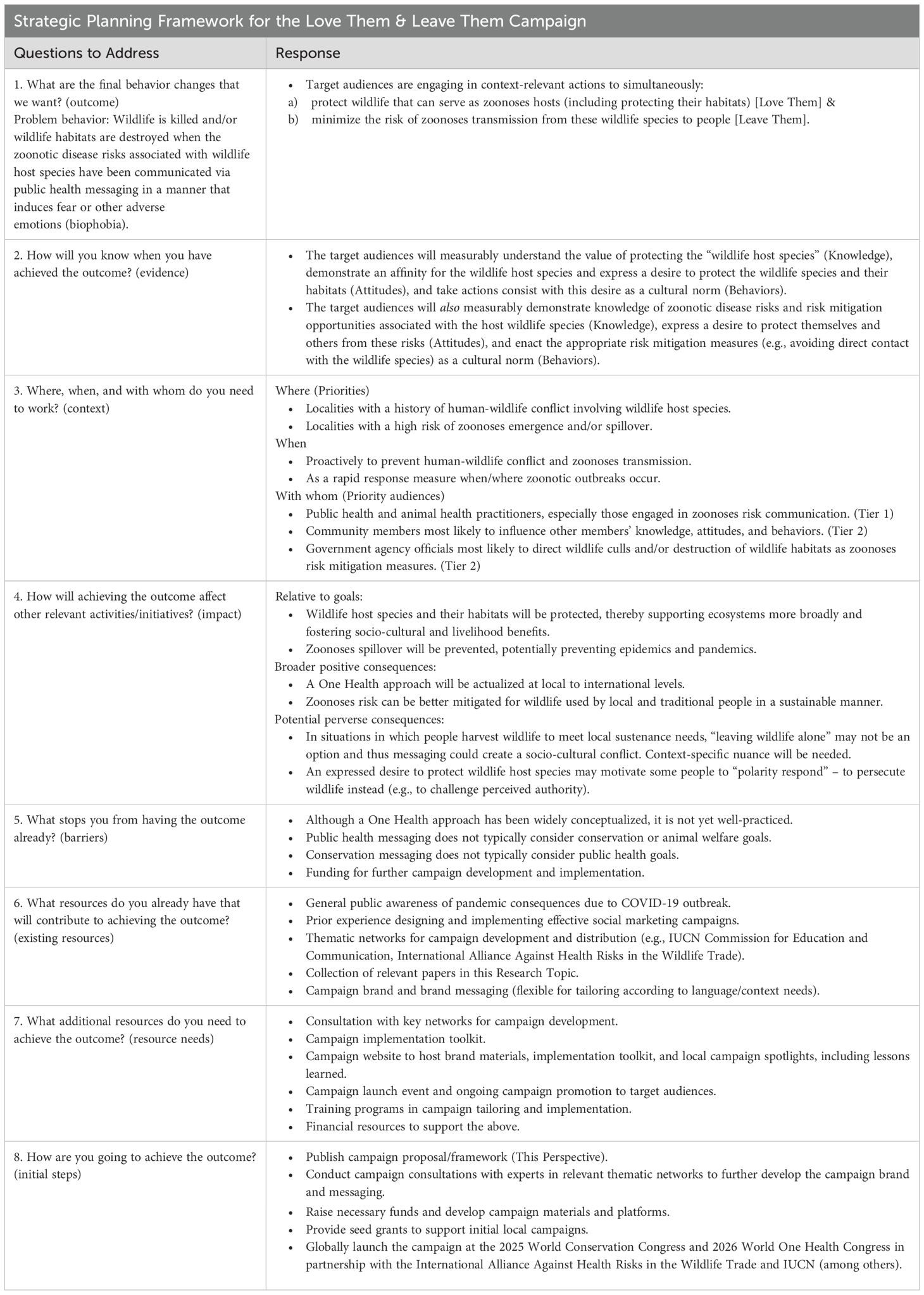
Table 1. Questions and responses that define elements of a strategic framework for conceptualizing, developing, and launching a social marketing campaign to foster appreciation (biophilia) and healthy respect for wildlife that have the potential to transmit zoonotic pathogens.
The “love them” aspect of the campaign is intended to encourage an affinity for wildlife species even though the species can carry zoonotic pathogens (biophilic response). The campaign is primarily intended to influence people who might otherwise fear or disdain these species (biophobic response), particularly in contexts where the “dark emotions” elicited by their beliefs about species might result in wildlife culling and/or habitat destruction. Research has shown that love (related to compassion, connection, empathy, and attachment) is neurologically and molecularly linked to emotional self-regulation mechanisms (Esch and Stefano, 2011), meaning that people in states of love (biophilia) have a greater capacity to process information and make well-informed decisions about their actions than people in reactionary states of fear or disdain (biophobia).
The “leave them” aspect of the campaign addresses one of the key elements of zoonoses risk mitigation: the dynamics of proximity. The risk of being exposed to viable zoonotic pathogens is a function of contact (proximity) to infected wildlife, including the parts, excrement, bodily fluids, and products thereof (Reaser et al., 2022). Thus, refraining from direct or indirect contact with wildlife reservoir species and their habitats reduces the likelihood of zoonoses spillover (human infection). Generally, “leaving them alone” is thus optimal for human and animal health. There will, however, be important reasons for the campaign to recognize exceptions to the “leave them” aspect of the campaign message. Local and traditional peoples may have long-established relationships with some of potential pathogen hosts that result in close contact, even consumption. Where sustainable use of potential pathogen hosts takes place, the campaign messaging will need to be particularly socio-culturally sensitive (see further details in the next section). Public health officials and conservation practitioners may also have a need to come into close proximity with potential pathogen hosts to advance science and risk management. In such situations, the campaign message can be reinforced using non-contact approaches (as feasible), as well as the readily apparent use of personal protective equipment (PPE) to demonstrate contact minimization.
Six key messages have been developed for the global campaign:
● Protect people. Protect wildlife.
● Wildlife is important for human survival and well-being. Various species seed the forests, pollinate food crops and eat crop pests, and bring beauty and joy through their presence.
● Wildlife can also spread diseases to people, including some dangerous illnesses.
● The risk of getting a disease from wildlife increases if you touch wildlife or occupy places that wildlife frequent (e.g., caves that bats live in or trees where they feed).
● Love wildlife! Wildlife makes life better. Healthy wildlife equals healthy, happy people.
● Leave wildlife alone! Be safe and kind. Avoid handling wildlife (dead or alive) or occupying places that wildlife inhabit or feed. Harming wildlife may be a crime.
The campaign brand (Figure 1A) clearly states the two campaign goals: 1) protect people and 2) protect wildlife (particularly species that may host zoonotic pathogens). The protection of people is stated first because the campaign will be primarily implemented through the public health community. The two behaviors the campaign is intended to elicit are also explicitly stated in the logo. The “Love Them” statement is in red type as red is commonly associated with love and romance. It is stated in the largest font in the logo to invoke a sense of association with the message. The “Leave Them” statement is in smaller, dark gray text to invoke a sense of disassociation and distance that is consistent with the message. The ampersand emphasizes that the behaviors are to be enacted in concert rather than as options. Size, distance, color, and location are all submodalities (codings) of the visual representational system that influence one’s sense of experience and behavioral responses to that experience. The distinction of form or structure has deeply held (subconscious) associations with individual and collective values and beliefs–and can therefore motivate human behavior more strongly and lastingly than content stimuli (Zamfir, 2014; Grosu et al., 2021).
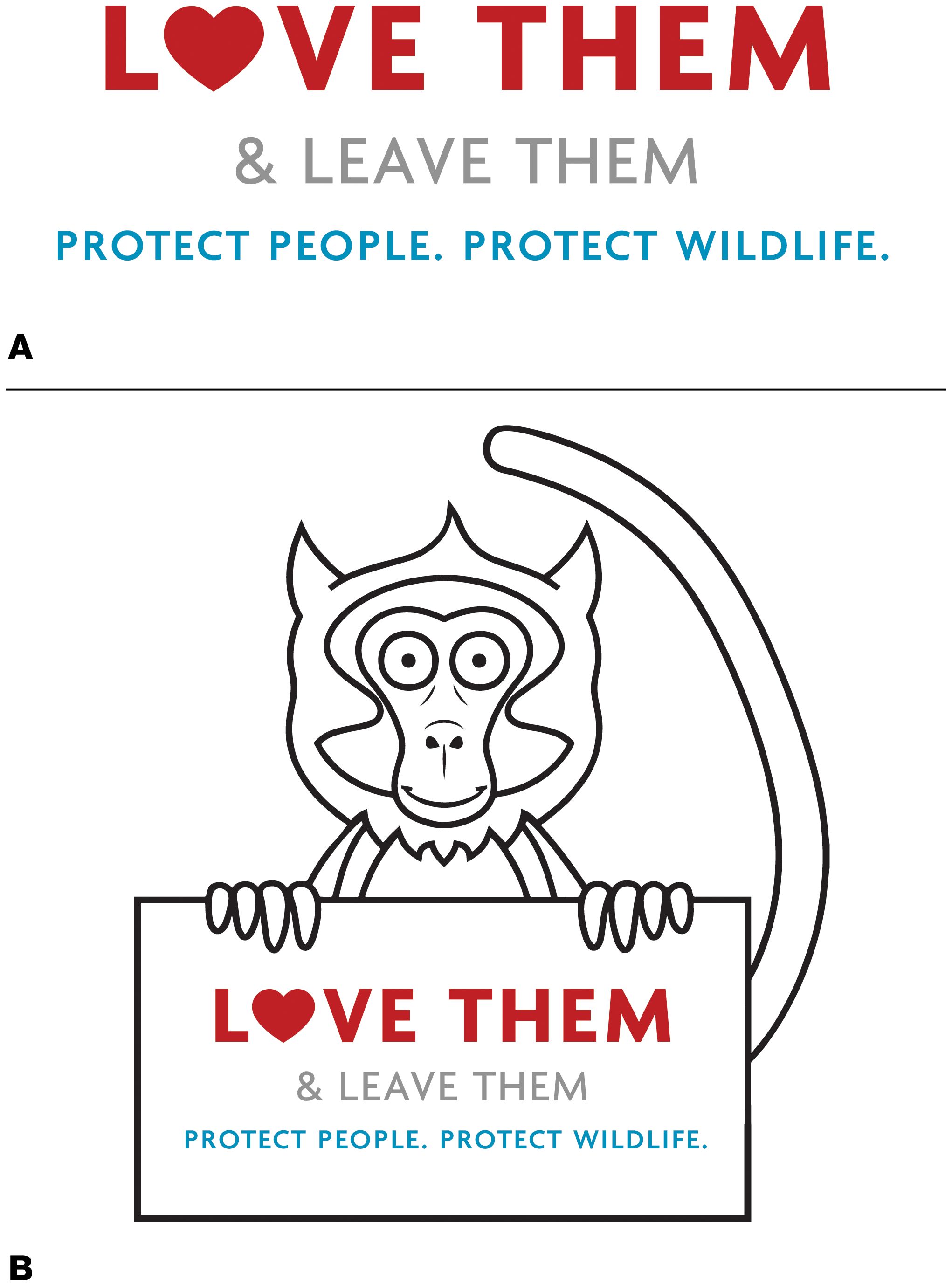
Figure 1. Brand concepts for the Love Them & Leave Them campaign depicting the succinct global campaign tagline message (A) and a means of localizing this message by pairing it with illustrations of wildlife species of particular concern (B).
The global campaign is intended to be sufficiently flexible to allow for the fit-to-context modifications necessary for campaign effectiveness, including presentation in different languages and with different wildlife species. Note that the verbiage in the campaign brand (Figure 1) and primary messages is short and jargon-free, thereby enabling translation that is clear, concise, and accurate. The primary messages can be contextualized by replacing the word “wildlife” with the name of specific wildlife species and phrases such as “Harming wildlife might be a crime” can be replaced by a statement about locality-specific regulations. The brand image can be displayed as text only (Figure 1A) or as signage held by an illustrated version of one or more wildlife species that are the contextual focus for zoonoses risk mitigation (Figure 1B). Culturally relevant symbols, organizational logos, and other art that contextualizes the campaign can be incorporated into illustrated presentations of the brand image. Further guidance for localizing the campaign is provided in Section 3.
We anticipate that Love Them & Leave Them campaign implementation will vary with context. We intend to create a set of clear, concise, adaptable materials that are readily accessible on a digital platform. To explain the need for the campaign and its behavior change goals, subject matter papers and briefing notes will accompany the campaign materials. We will also provide a compendium of general guidance on the design and implementation of social marketing (behavior change) campaigns, as well as standards for Love Them & Leave Them campaign messaging and brand application. The site will provide contact information for campaign mentors.
3 Guidance for localizing the campaign
The success of the Love Them & Leave Them campaign is contingent upon its effective localization, given the variety of human-wildlife interactions across a spectrum of cultural, ecological, and socioeconomic contexts. The following brief guidance for localizing the campaign focuses on assessment and planning to further clarify and expand the campaign framework, ensuring that the core message remains impactful while respecting local realities. This guidance is drawn from the work on the IUCN Commission on Education and Communication (Oepen and Southey, 2024).
3.1 Audience and one health stakeholder analysis
The campaign is developed to primarily target human and animal health practitioners engaged in zoonotic risk communication and their audience. Further context-based analysis should be conducted to identify local audiences who will be potentially influenced by zoonotic risk communications based on various interactions with wildlife (e.g., local communities living nearby natural habitats, Indigenous groups, park managers or rangers, etc.) and/or who may be involved in biophobia-induced behaviors. A comprehension of the audience’s demographic, social, and economic background will also help determine the most accessible and preferred communication channels for the campaign (Noar, 2006).
Involving a diverse range of stakeholders from multiple disciplines and sectors is critical for the development and implementation of the campaign (The World Bank, 2018). Identifying a wide range of local One Health stakeholders will ensure the inclusion of key decision-makers for zoonotic disease risk mitigation. It is imperative to include who might direct wildlife culls or habitat destruction, whether representatives of human or animal health agencies or members of community groups. Forming partnerships with media outlets, journalism organizations, and education institutions is potentially beneficial in identifying suitable communication channels and broadening the campaign’s impacts. Collaboration with industry partners (e.g., eco-tourism, agriculture corporations, etc.) and government and international organizations interested in a One Health approach may help mobilize resources for the campaign.
3.2 Species-specific design
While the overall campaign may focus on various wildlife species, featuring species of local concern as potential zoonotic reservoirs should be prioritized. The campaign brand materials can be designed with tailored imagery and messages to ensure accurate and recognizable depictions. Assessments of local taboos, spiritual beliefs, cultural significance, and practices associated with specific wildlife species can enable incorporation of culturally appropriate imagery, language, and messaging so as to increase campaign comprehension and the acceptability (Voyer et al., 2015). In instances where cultural beliefs, traditional practices, and social norms significantly influence how risks are perceived and managed, co-creation with partners within local communities may be a valuable approach (Waylen et al., 2010; Asaaga et al., 2022). Multi-dimensional information about the ecological roles, cultural significance, and associated zoonotic risks of wildlife species will lay a knowledge foundation to foster attitude and behavior changes (Schrader and Lawless, 2004). If applicable, aligning the campaign message with local wildlife protection regulations may help shape human behaviors and reinforce the campaign’s legitimacy. These activities will also strengthen the multi-sectoral platform by facilitating the coordinative, responsive, and adaptive campaign design, implementation, and evaluation.
3.3 Social and economic considerations
Although “Leave Them” is the optimal option for human and animal health, it is crucial to acknowledge the potential conflicts between campaign objectives and local livelihoods and traditional practices dependent on wildlife use or trade, where completely avoiding wildlife contact is not a viable option. It is recommended that nuanced messaging be developed in collaboration with community leaders and traditional knowledge holders to respect customary use while promoting safe practices (van Vliet et al., 2018; Kadykalo et al., 2021). It may be beneficial to offer practical and context-based alternatives that emphasize risk mitigation strategies (e.g., proper handling and hygiene practices) rather than complete avoidance. Additionally, framing messages around the concept of healthy wildlife populations (“Love Them”) could be a viable approach for promoting sustainable traditional practices.
3.4 Monitoring and evaluation mechanisms
Monitoring and evaluation are essential parts of this campaign. Table 1 provides some recommended indicators for evaluating the campaign, more measurable indicators can be developed based on the specific messages, communication channels, and audience. In contexts where resources are limited, it is possible to implement practical monitoring and evaluation mechanisms by leveraging existing data from knowledge, attitude, practice studies, and health and conservation data systems to establish baseline metrics and measure the impact. Using digital tools and stakeholder feedback and review mechanisms may lower costs in data collection and improve real-time analysis. As a global campaign, establishing a mechanism for sharing lessons learned across the various localized implementations will benefit a broad range of implementers. WOAH (World Organization for Animal Health) (2024) provides guidance for monitoring and evaluation in the context of zoonoses risk mitigation.
4 A call to action
In 2023, the Quadripartite, consisting of the Food and Agriculture Organization of the United Nations (FAO), United Nations Environment Program (UNEP), World Health Organization (WHO) and World Organization for Animal Health (WOAH), came together to urge all countries and key stakeholders to, among other things, “strengthen and sustain prevention of pandemics and health threats at source, targeting activities and places that increase the risk of zoonotic spillover between animals to humans” (World Health Organization, 2023). Members of the One Health High-Level Expert Panel (OHHLEP) have reiterated this zoonoses risk mitigation priority (One Health High-Level Expert Panel et al., 2023). The Love Them & Leave Them campaign provides an opportunity for donors, national governments, and multi-lateral frameworks to respond to these calls to action. Further, the campaign provides an opportunity for those working in the public health and conservation communities to collaboratively actualize the One Health approach from global to local scales of impact. To prevent future pandemics, we must learn to love this world and act responsibly toward each other.
Author contributions
JR: Conceptualization, Funding acquisition, Project administration, Resources, Visualization, Writing – original draft, Writing – review & editing. HL: Resources, Writing – original draft, Writing – review & editing. SS: Conceptualization, Resources, Writing – original draft.
Funding
The author(s) declare financial support was received for the research, authorship, and/or publication of this article. The publication of this paper was sponsored through an Interagency Agreement Between the US Fish & Wildlife Service and Smithsonian National Zoo & Conservation Biology Institute. It advances work on risk communication as a component of study directed by the American Rescue Plan Act. Additional in-kind partners in this sponsorship include the International Alliance Against Health Risks in the Wildlife Trade and the International Union for the Conservation of Nature (IUCN).
Acknowledgments
We thank Isla Kirkey for assisting with manuscript formatting, two reviewers for constructive comments, and Daniel Blumstein for his gracious editorial management. For Figure 1B, an original cartoon sketch by author JKR was enhanced using Adobe Firefly, July 20, 2024. Funding was provided to JKR through an Inter-agency Agreement (#19145) between the USFWS Office of Fish and Aquatic Conservation and the Smithsonian’s Conservation Biology Institute for implementation of American Rescue Plan Act provisions. Opinions expressed in the article are those of the authors and do not represent policy positions of the Smithsonian Institution or any organization.
Conflict of interest
The authors declare that the research was conducted in the absence of any commercial or financial relationships that could be construed as a potential conflict of interest.
The author(s) declared that they were an editorial board member of Frontiers, at the time of submission. This had no impact on the peer review process and the final decision.
Publisher’s note
All claims expressed in this article are solely those of the authors and do not necessarily represent those of their affiliated organizations, or those of the publisher, the editors and the reviewers. Any product that may be evaluated in this article, or claim that may be made by its manufacturer, is not guaranteed or endorsed by the publisher.
References
Anderson C. J., Reaser J. K. (2024). Wildlife culling as a biophobic response to zoonotic disease risk. Front. Conserv. Sci. 5, 56. doi: 10.3389/fcosc.2024.1488981
Andreasen A. R. (1994). Social marketing: its definition and domain. J. Public Policy Mark. 13, 108–114. doi: 10.1177/074391569401300109
Asaaga F. A., Young J. C., Srinivas P. N., Seshadri T., Oommen M. A., Rahman M., et al. (2022). Co-production of knowledge as part of a OneHealth approach to better control zoonotic diseases. PloS Global Public Health 2, e0000075. doi: 10.1371/journal.pgph.0000075
CDC (Centers for Disease Control and Prevention. “Introduction to reservoirs: where germs live,” in Body reservoirs, vol. Session 1. . Available at: https://www.cdc.gov/project-firstline/media/pdfs/ReservoirsTK-S1-Booklet-508.pdf (Accessed July 20, 2024).
Decker D. J., Evensen D. T. N., Siemer W. F., Leong K. M., Riley S. J., Wild M. A., et al. (2010). Understanding risk perceptions to enhance communication about human-wildlife interactions and the impacts of zoonotic disease. ILAR J. 51, 255–261. doi: 10.1093/ilar.51.3.255
Esch T., Stefano G. B. (2011). The neurobiological link between compassion and love. Med. Sci. Monit. 17, RA65–RA75. doi: 10.12659/MSM.881441
Finn C., Grattarola F., Pincheira-Donoso D. (2023). More losers than winners: investigating Anthropocene defaunation through the diversity of population trends. Biol. Rev. 98, 1732–1748. doi: 10.1111/brv.12974
Glanz K., Bishop D. B. (2010). The role of behavioral science theory in development and implementation of public health interventions. Annu. Rev. Public Health 31, 399–418. doi: 10.1146/annurev.publhealth.012809.103604
Golden C. D., Comaroff J. (2015).Effects of social change on wildlife consumption taboos in northeastern Madagascar. Available online at: https://www.jstor.org/stable/26270203 (Accessed August 30, 2024).
Green K. M., Crawford B. A., Williamson K. A., DeWan A. A. (2019). A meta-analysis of social marketing campaigns to improve global conservation outcomes. Soc Mar. Q. 25, 69–87. doi: 10.1177/1524500418824258
Grier S., Bryant C. A. (2005). Social marketing in public health. Annu. Rev. Public Health 26, 319–339. doi: 10.1146/annurev.publhealth.26.021304.144610
Grosu V. T., Grosu E. F., Vari H., Ciufudean E. (2021). Metalanguage and sensory sub-modalities in mental training techniques through neurolinguistic programming. Cypriot J. Educ. Sci. 14, 482–491. doi: 10.18844/cjes.v11i4.1274
Hilderink M. H., De Winter I. I. (2021). No need to beat around the bushmeat–The role of wildlife trade and conservation initiatives in the emergence of zoonotic diseases. Heliyon 7, e07692. doi: 10.1016/j.heliyon.2021.e07692
Ives C. D., Abson D. J., von Wehrden H., Dorninger C., Klaniecki K., Fischer J. (2018). Reconnecting with nature for sustainability. Sustain. Sci. 13, 1389–1397. doi: 10.1007/s11625-018-0542-9
Jones K. E., Patel N. G., Levy M. A., Storeygard A., Balk D., Gittleman J. L., et al. (2008). Global trends in emerging infectious diseases. Nature 451, 990–993. doi: 10.1038/nature06536
Kadykalo A. N., Cooke S. J., Young N. (2021). The role of western-based scientific, Indigenous and local knowledge in wildlife management and conservation. People Nat. 3, 610–626. doi: 10.1002/pan3.10194
Kirkey J. R. (2024). What’s love got to do with it? A biophilia-based approach to zoonoses prevention through a conservation lens. Front. Conserv. Sci. 5. doi: 10.3389/fcosc.2024.1488909
Leonard T. C. (2008). Richard H. Thaler, Cass R. Sunstein, Nudge: Improving decisions about health, wealth, and happiness. Const. Polit. Econ. 19, 356–360. doi: 10.1007/s10602-008-9056-2
Marie V., Gordon M. L. (2023). The (re-)emergence and spread of viral zoonotic disease: a perfect storm of human ingenuity and stupidity. Viruses 15, 1638. doi: 10.3390/v15081638
Noar S. M. (2006). A 10-year retrospective of research in health mass media campaigns: where do we go from here? J. Health Commun. 11, 21–42. doi: 10.1080/10810730500461059
Oepen M., Southey S. (2024). “Creating effective environmental communication strategies: a ten step guide for practitioners,” (International Union for the Conservation of Nature (IUCN) Commission on Education and Communication (CEC, Gland, Switzerland).
One Health High-Level Expert Panel, Markotter W., Mettenleiter T. C., Adisasmito W. B., Almuhairi S., Barton Behravesh C., et al. (2023). Prevention of zoonotic spillover: from relying on response to reducing the risk at source. PloS Pathog. 19, e1011504. doi: 10.1371/journal.ppat.1011504
Pitt S. J., Gunn A. (2024). The one health concept. Br. J. Biomed. Sci. 81. doi: 10.3389/bjbs.2024.12366
Reaser J. K., Hunt B. E., Ruiz-Aravena M., Tabor G. M., Patz J. A., Becker D. J., et al. (2022). Fostering landscape immunity to protect human health: a science-based rationale for shifting conservation policy paradigms. Conserv. Lett. 15, e12869. doi: 10.1111/conl.12869
Reddy S. M. W., Montambault J., Masuda Y. J., Keenan E., Butler W., Fisher J. R. B., et al. (2017). Advancing conservation by understanding and influencing human behavior. Conserv. Lett. 10, 248–256. doi: 10.1111/conl.12252
Rook G., Bäckhed F., Levin B. R., McFall-Ngai M. J., McLean A. R. (2017). Evolution, human-microbe interactions, and life history plasticity. Lancet 390, 521–530. doi: 10.1016/S0140-6736(17)30566-4
Ryan J. C., Mellish S., Le Busque B. R., Litchfield C. A. (2019). Enhancing the impact of conservation marketing using psychology: a research agenda. J. Environ. Stud. Sci. 9, 442–448. doi: 10.1007/s13412-019-00565-w
Schrader P. G., Lawless K. A. (2004). The knowledge, attitudes, & behaviors approach how to evaluate performance and learning in complex environments. Perform. Improv. 43, 8–15. doi: 10.1002/pfi.4140430905
Siegrist M., Gutscher H., Earle T. C. (2005). Perception of risk: the influence of general trust, and general confidence. J. Risk Res. 8, 145–156. doi: 10.1080/1366987032000105315
Smith R. J., Salazar G., Starinchak J., Thomas-Walters L. A., Veríssimo D. (2020). “Social marketing and conservation,” in Conservation research, policy and practice. Eds. Sutherland W. J., Brotherton P. N. M., Davies Z. G., Ockendon N., Pettorelli N., Vickery J. A. (Cambridge, UK: Cambridge University Press), 309–321. doi: 10.1017/9781108638210
Tabbaa D. (2010). Emerging zoonoses: responsible communication with the media—lessons learned and future perspectives. Int. J. Antimicrob. Agents 36, S80–S83. doi: 10.1016/j.ijantimicag.2010.06.028
Taylor L. H., Latham S. M., Woolhouse M. E. J. (2001). Risk factors for human disease emergence. Phil. Trans. R. Soc Lond. B 356, 983–989. doi: 10.1098/rstb.2001.0888
The World Bank (2018). One Health: operational framework for strengthening human, animal, and environmental public health systems at their interface (Washington, DC: The World Bank). Available online at: https://documents.worldbank.org/en/publication/documents-reports/documentdetail/961101524657708673/One-health-operational-framework-for-strengthening-human-animal-and-environmental-public-health-systems-at-their-interface (Accessed August 30, 2024).
van Vliet N., L’haridon L., Gomez J., Vanegas L., Sandrin F., Nasi R. (2018). “The use of traditional ecological knowledge in the context of participatory wildlife management: examples from indigenous communities in puerto nariño, amazonas-Colombia,” in Ethnozoology. Eds. Nóbrega Alves R. R., Albuquerque U. P. (Academic Press, Cambridge, Massachusetts), 497–512. doi: 10.1016/B978-0-12-809913-1.00026-0
Voyer M., Gollan N., Barclay K., Gladstone W. (2015). [amp]]lsquo;It's part of me’; understanding the values, images and principles of coastal users and their influence on the social acceptability of MPAs. Mar. Policy 52, 93–102. doi: 10.1016/j.marpol.2014.10.027
Waylen K. A., Fischer A., Mcgowan P. J. K., Thirgood S. J., Milner-Gulland E. J. (2010). Effect of local cultural context on the success of community-based conservation interventions. Conserv. Biol. 24, 1119–1129. doi: 10.1111/j.1523-1739.2010.01446.x
WOAH (World Organization for Animal Health) (2024). Guidelines for addressing the disease risks in the wildlife trade (Paris: WOAH). doi: 10.20506/woah.3368.
World Health Organization (2023). Quadripartite call to action for One Health for a safer world (World Health Organization). Available online at: https://www.who.int/news/item/27-03-2023-quadripartite-call-to-action-for-one-health-for-a-safer-world (Accessed August 30, 2024).
Wright A. J., Veríssimo D., Pilfold K., Parsons E. C. M., Ventre K., Cousins J., et al. (2015). Competitive outreach in the 21st century: why we need conservation marketing. Ocean Coast. Manage. 115, 41–48. doi: 10.1016/j.ocecoaman.2015.06.029
Keywords: biophilia, communication, human health, social marketing, zoonoses
Citation: Reaser JK, Li H and Southey S (2025) Love Them & Leave Them: science-based rationale for a campaign at the public health-conservation interface. Front. Conserv. Sci. 5:1488974. doi: 10.3389/fcosc.2024.1488974
Received: 31 August 2024; Accepted: 30 December 2024;
Published: 23 January 2025.
Edited by:
Daniel T. Blumstein, University of California, Los Angeles, United StatesReviewed by:
K. C. Prager, University of California, Los Angeles, United StatesCopyright © 2025 Reaser, Li and Southey. This is an open-access article distributed under the terms of the Creative Commons Attribution License (CC BY). The use, distribution or reproduction in other forums is permitted, provided the original author(s) and the copyright owner(s) are credited and that the original publication in this journal is cited, in accordance with accepted academic practice. No use, distribution or reproduction is permitted which does not comply with these terms.
*Correspondence: Jamie K. Reaser, UmVhc2VyamtAc2kuZWR1