 Inés Arroyo-Quiroz
 Meredith L. Gore
 Jamie K. Reaser
- 1Programa de Estudios Socioambientales, Centro Regional de Investigaciones Multidisciplinarias, Universidad Nacional Autónoma de México, Chamilpa, Cuernavaca, Morelos, Mexico
- 2Department of Geographical Sciences, University of Maryland College Park, College Park, MD, United States
- 3Smithsonian National Zoo & Conservation Biology Institute, Front Royal, VA, United States
- 4Smithsonian Mason School of Conservation, Front Royal, VA, United States
The international wildlife trade can be a significant driver of biodiversity loss, as well as a facilitator of zoonotic disease transmission with pandemic potential. Environmental justice has never been more relevant to the wildlife trade as it is today. Yet, environmental justice has not been sufficiently mainstreamed into conservation science, nor practice. Here, we propose a framework for advancing the transdisciplinary science of environmental justice in the international wildlife trade context. The framework is organized via three interrelated domains: a) social justice, b) wildlife species justice, c) ecological justice. Each of these domains is described in terms of transdisciplinary questions that are intended to foster the translation of science of environmental justice for wildlife trade and should be tailored to cultural and historical contexts. It is our hope that the framework stirs open, transparent, mutually respectful discussions about justice between conservation researchers, practitioners, and the vast array of wildlife trade stakeholders.
1 Introduction
The trade in live wildlife, wildlife parts, and wildlife products—whether legal or illegal—can be a significant driver of biodiversity loss (Hughes et al., 2023), as well as a facilitator of zoonotic disease transmission with pandemic potential (Pavlin et al., 2009). This has led to increased calls for industry regulation—ranging from comprehensive bans to risk-based strategies that are species, product, and/or geography specific (Borzée et al., 2020). Yet, at the local level, the wildlife trade may support vital sustenance, livelihood, and cultural needs (Rao et al., 2011; Robinson et al., 2018; IPBES, 2019; Future Earth and GEO BON, 2022) and, at the global scale, it comprises a mega billion dollars/year industry (UNODC (United Nations Office on Drugs and Crime), 2016, 2020, 2024). Those with a strong desire to maximize the socio-economic benefits of the wildlife trade, while simultaneously minimizing adverse impacts, have thus pointed to the need for more balanced oversight and regulation of this globally distributed industry (Borzée et al., 2020). To achieve effective regulatory outcomes that mutually benefit wildlife and people along the trade pathway, there is a need for a discussion of justice (Spapens et al., 2016; Brockett and Woolaston, 2022; Sollund, 2022).
Environmental justice is commonly regarded as the human right to a safe, healthy, productive, and sustainable environment for all peoples, where “environment” is considered holistically to include ecological (biological), physical (natural and built), social, political, aesthetic, and economic contexts (Chowkwanyun, 2023). For the purposes of this paper, we regard environmental justice broadly to include the assignment of these rights as inclusive of a) social justice (all people have equal, protected, rights and opportunities; Montgomery et al., 2024), b) species justice (all non-human wild species are to be protected against discrimination, abuse, or exploitation by humans; Fitz-Henry, 2022), and c) ecological justice (all beings are part of an integrated Earth system and warrant the protection of equal rights and respects, including the ability to access sufficient natural resources for survival; Washington et al., 2018).
Environmental justice has never been more relevant to conservation, or wildlife trade in particular, as it is today. Issues of equity, gender, fairness, legitimacy, and inclusion are widely diffused across the social and ecological systems touched by wildlife trade (Agu and Gore, 2022; Milne et al., 2023; Sovacool et al., 2023). Yet, environmental justice has not been sufficiently mainstreamed into conservation science, nor practice. Specifically, environmental justice is lacking in scientific inquiry, policy, and planning processes relating to the wildlife trade. When environmental justice is not taken into consideration, the sustainability and efficacy of these efforts is likely to fail at best (McGregor et al., 2020); at worst, interventions may reinforce, as well as introduce, new injustices and contribute to biodiversity loss (Sovacool et al., 2023).
The opportunity exists for scientists working for society to conceptualize an environmental justice framework that better informs regulation of the international wildlife trade to help minimize biodiversity loss, harmful practices and infectious disease risks while also affording sustainable justice outcomes. Here, we propose a framework for advancing the transdisciplinary science of environmental justice in the international wildlife trade context. The framework arises as a synthesis of biological and social sciences, insights from conservation and social justice practitioners, and lessons drawn from case studies. It is organized via three interrelated domains: a) social justice, b) wildlife species justice, c) ecological justice. Each of these domains is described in terms of transdisciplinary questions that are intended to foster translation of the science of environmental justice to society, specifically for wildlife trade. The framework does not offer rigid authority for considering major types of justice with touchpoints to wildlife trade (e.g., distributive, corrective, commutative; Kuehn, 2000). Rather, our goal is to help better facilitate transdisciplinary scientific analysis and inclusion of environmental justice into legal and illegal wildlife trade policies and practices.
Every aspect of international wildlife trade and every proposed risk reduction measure has implications for environmental justice (Sollund, 2019, 2022). Amongst a range of factors driving global biodiversity loss (e.g., Hald-Mortensen, 2023), wildlife trade stands apart in its diversity of influencing factors and functions, socio-cultural roles and impacts, levels of legality, and enforcement (Fukushima et al., 2021). The need to improve understanding of the environmental justice issues tied to wildlife trade is readily apparent. This is particularly true for consumer demand versus supply provision along the trade pathways, as well as how the supply chain is influenced by, and impacts, economic, cultural, and geographic biases. Deeper understanding of environmental justice patterns and trends can enable the design and evaluation of more effective regulatory and control frameworks that help manage risks and harms in actuality—rather than merely in concept. For example, improved insight about environmental justice can facilitate efforts to determine where and how to support legal and sustainable wildlife trade, versus where the trade should be more tightly regulated. A better understanding of environmental justice can also elucidate the societal implications of restrictive regulation and point to opportunities for proactively mitigating potential adverse impacts on affected stakeholders. For example, it would be useful to assess the potential of trade bans to drive historically legal wildlife trade into black markets. Likewise, in instances in which wildlife trade bans could undermine the security of local peoples and whole cultures, it would be wise to support these communities in developing alternative livelihoods consistent with their socio-cultural norms, use and conservation goals. Some scholars also recognize opportunities for environmental justice studies in the wildlife trade context to help advance green criminological concepts of ecological citizenship and institutionalized harm (e.g., Sollund, 2021) as well as rights-based approaches, which are scant in wildlife trade activities (Osorio and Bernaz, 2024).
2 Characterization of the international wildlife trade pathway
For the purposes of this paper, the international wildlife trade is defined as the intentional translocation of wild animals (wildlife), wildlife parts, or wildlife products across national borders in exchange for currency or other goods. The term “international wildlife trade” covers legal (regulated and unregulated) and illegal activities that, at a minimum, includes wildlife provisioning (harvesting, ranching, or farming), containment, preparation to meet consumer needs, transportation, and exchange (trade) to fulfill a wide range of consumer end uses (e.g., pets, food, décor, research). We recognize that, when appropriately managed, the trade in wild animals, parts, and products can provide livelihood benefits to local and rural communities, as well as contribute to species conservation (Cooney et al., 2015; IPBES, 2019). It is also clear that the opposite can be true; poorly managed trade, including illegal trade, can put people, cultures and wildlife at risk of harm as a direct and indirect consequence (Baker et al., 2013; Maher and Sollund, 2016; Van Uhm, 2016). Environmental justice is of particular concern in poorly managed trade contexts but warrants consideration under even the most well managed wildlife trade circumstances.
Trade is often discussed in terms of the “supply side” versus “demand side” of a commerce pathway equation, given the impression that trade is a simple binary. In actuality, the international wildlife trade is interconnected, spatio-temporally complex, constantly transforming and in flux. For this reason, the framework proposed herein should be regarded as a generalized model. The structure and details of an environmental justice framework will need to be specified (fit-to-context) on a case-by-case basis.
These diagrams (Figures 1A, B) draw partial ontological components from green criminology, geography, law, economics, logistics, and conservation science. They are intended to be flexible in application across geographical, political, and cultural contexts, as well as the market(s) and taxonomic groups involved. They should be adapted and fit-to-context on a case-by-case basis corresponding with issues to be analyzed. The diagram details will differ, for example, among inquiries taken from ecological justice, animal welfare, and species at risk perspectives. These diagrams are linked to Table 1. The numbers correspond to the proposed environmental justice framework, emphasizing the significance of environmental justice inquiry at these stages.
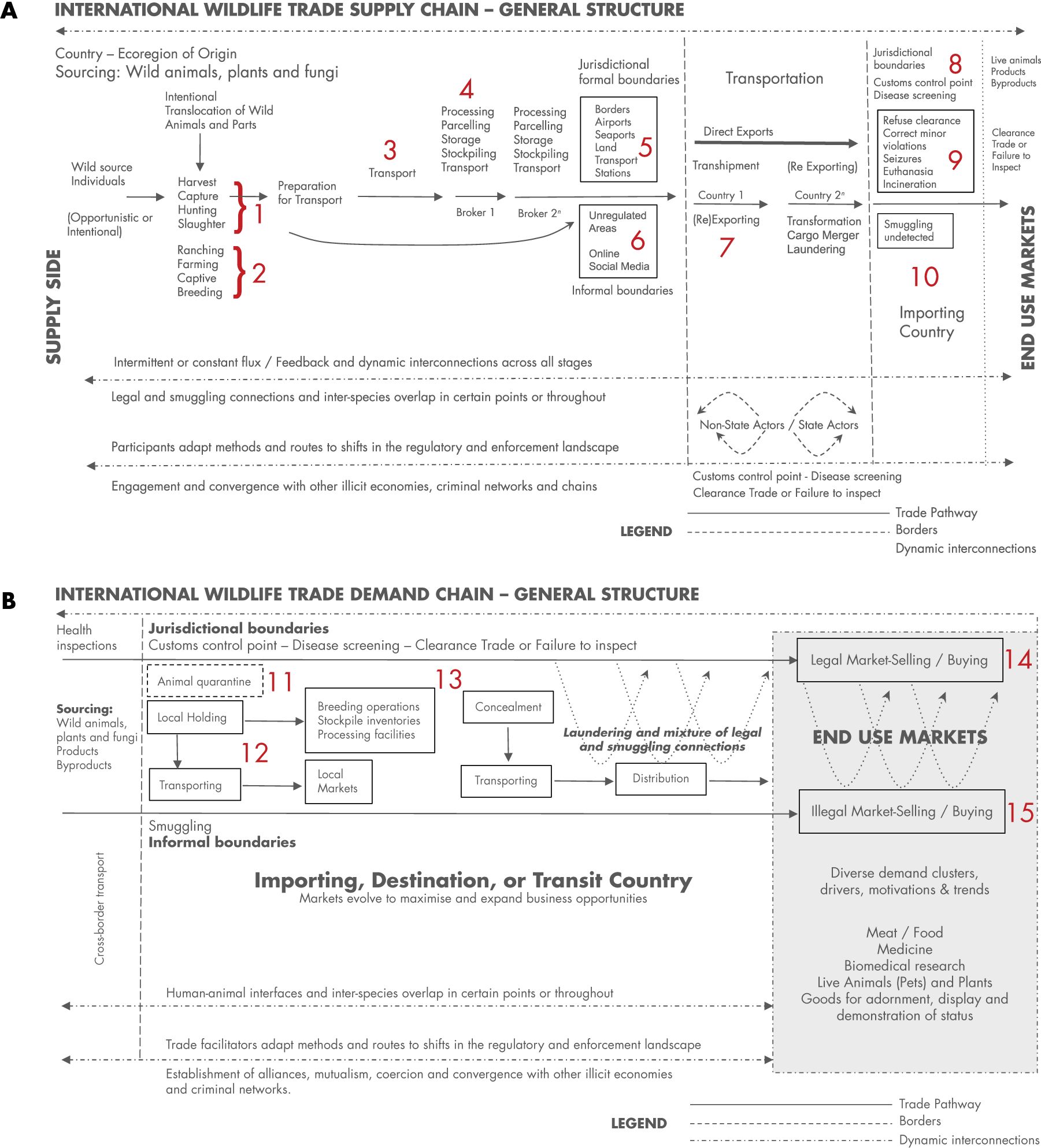
Figure 1. Diagrams depicting the general structure of the international wildlife trade pathway with numbers corresponding to social, wildlife species and ecological justice inquiry topics (Table 1). (A) The export pathway. (B) The import pathway.
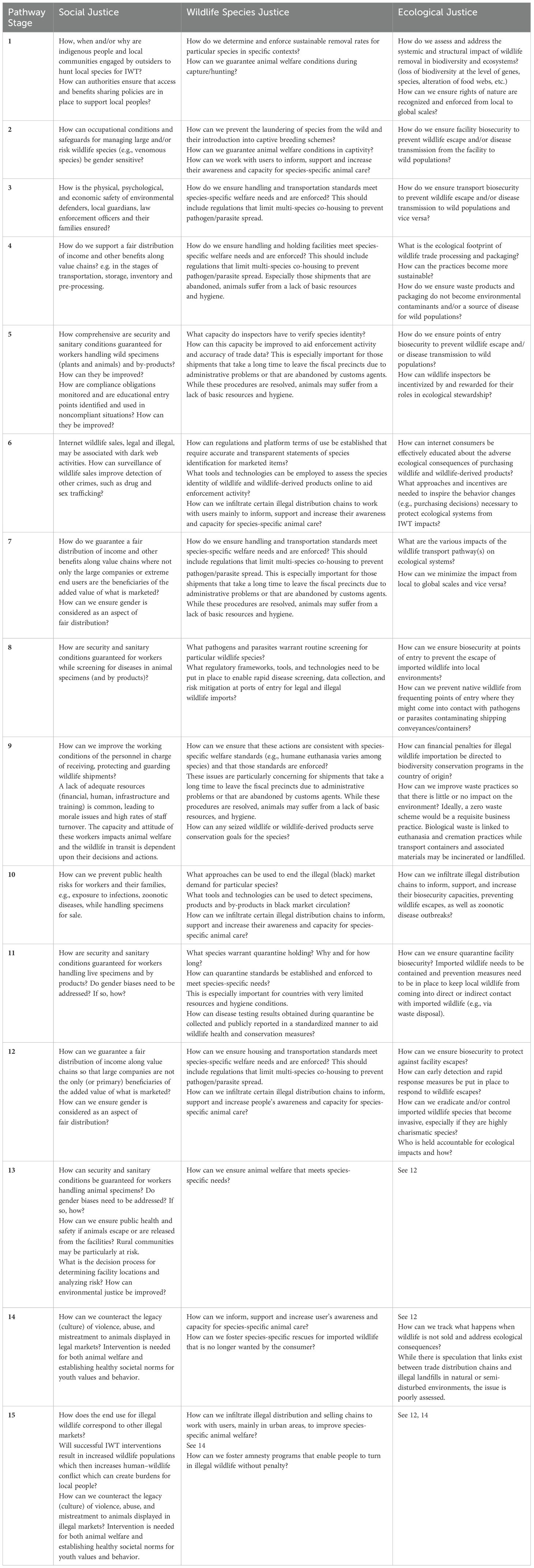
Table 1. Science-based environmental justice questions to investigate along the international wildlife trade (IWT) pathway.
The major difference between illegal and legal wildlife trade pathways is that illegal wildlife shipments are not, by definition, subject to regulatory scrutiny unless intercepted by enforcement officers. Live animals are thus more vulnerable to animal welfare injustices such as poor-quality transport conditions (e.g., overcrowding, inhumane containment). It is also likely that illegal wildlife shipments bypass all pre-export pathogen testing and vaccinations, thereby facilitating the risk of disease transmission to other animals and people. This presents social, species (domestic animals and wildlife), and ecological injustices. We offer the following points to emphasize and clarify environmental justice concerns across the pathway. These points underpin the inquiries offered in Table 1.
A. Illegal trade. What constitutes illegal trade can range from a wildlife shipment with an unintended error in accompanying documents (which is correctable) to intentional wildlife smuggling. Which acts constitute crimes depends on the applicable national legislation, which vary within countries, among countries, and over time. Illegal trade undermines the rule of law, leads to losses in revenue, and increases health risks to wildlife and people. Illegal wildlife trade may be intermingled with other criminal activity, such as drug and human trafficking. However, the evidence base for specific points of vulnerability to corruption in the wildlife trafficking chain, how those points vary over time and by context, and on the effectiveness of risk mitigation responses remains weak.
B. Pathogens (including parasites) can be present anywhere along the chain; they may enter and exit via secondary interactions. There are relatively few requirements for wildlife, or their parts, to be quarantined, tested, and/or vaccinated for pathogens at any point along the pathway. Pathogen transmission among animals in transit should be of the greatest concern when a) multiple species are held in close quarters and/or b) shipping conveyances or containers are reused without sterilization. Transmission risk to people is a function of human exposure to wildlife and/or the bodily materials (e.g., blood, excrement).
C. Gender shapes the engagement in and roles of people involved in all stages of the international wildlife trade supply chain. Across the trade chain from source to end market gender undoubtedly influences trade patterns and processes, including criminality and efforts to mitigate harm. For example, on the supply side, gender likely influences roles in wildlife extraction. Gender is known to influence wildlife poaching prevention efforts (e.g., ranger employment). On the consumer side, gender likely influences what wildlife species and products are in demand. However, the gender dimensions of wildlife trade have been poorly studied and thus warrant environmental justice research (Agu and Gore, 2020, 2022; Seager, 2021).
3 Proposed environmental justice framework
Advancing the science of environmental justice is an act of expanded, deepened, and better integrated inquiry. Table 1 is a transdisciplinary framework for advancing environmental justice research along the international wildlife trade pathway. The framework is intended to facilitate the ability of environmental justice researchers to identify broad questions that can then be refined for application to specific international wildlife trade contexts (wildlife species, geographies, players, purposes, victims, etc.). We also hope the framework will help funding agencies identify granting targets, needs, and priorities. The framework is not exhaustive; the questions are exemplary, and the invitation exists for researchers to identify other relevant inquiries fit-to-context.
Rather than function as an authoritative structure for the application of major types of justice (e.g., distributive, corrective, commutative, restorative), the framework is intended to facilitate transdisciplinary scientific inquiry into environmental justice in the wildlife trade context—from both legal and illegal perspectives—with the hope of better informing decision making across the whole trade pathway. For example, it is intended to promulgate the science that will enable decision makers who have a desire to regulate the importation of potential harmful species to consider the various ramifications of proposed regulatory actions on the suite of affected parties and systems involved in trade export activity (Martin et al., 2013).
Questions in Table 1 are largely framed from a “how can we…” perspective. The “we” refers to all those who self-identify as interested in improving environmental justice along the international wildlife trade pathway, with a particular emphasis on the conservation research community. The “how to” frame is intended to place the focus on capacity building rather than simply the identification of environmental justice challenges. The framework is, thus, a scholarly tool for addressing environmental injustices. Although actionability of the framework elements is critical, we have intentionally provided broad questions in multiple instances to catalyze innovation, a wide range of possible response narratives, and stakeholder inclusivity. We recognize that these justice issues are inter-related and may overlap. In some situations, it may be challenging to distinguish between Wildlife Species Justice (focused on species conservation, ethical treatment, and welfare) and Ecological Justice (focused on all biota and the processes among them). However, the inquiries can be framed differently according to the scale of impact (species vs. ecosystem).
4 Discussion
The international wildlife trade is a multi-billion dollar, cross-border, globally-distributed, socio-environmental phenomenon that is ecosystem, species, and socially agnostic (Gore and Bennett, 2022; Gore et al., 2023a, b). The complexities of trade pathways, particularly supply–demand dynamics, help highlight the need for context-specific solutions to risk mitigation. The international wildlife trade is not decreasing in scope or scale (UNODC (United Nations Office on Drugs and Crime), 2016, 2020, 2024); it is reasonable to assume that the legacy of [social and ecological] injustice(s) will continue alongside a range of escalating and emergent burdens (see Levy and Hernández, 2022). It is our hope that the framework herein offers a rendezvous point of sorts for conservation scholars and practitioners to accommodate the interconnectedness of human rights, animal welfare, and ecological health when seeking fair and sustainable outcomes responsive to international wildlife trade related risks. These interconnections may produce cumulative exposures and differential vulnerabilities; they may be generated via community engagement, empowerment, capacity building (Levy and Hernández, 2022), as well as creating awareness and involving all sectors of society.
The environmental justice framework herein is also intended to enhance extant, mainstream solutions that are broadly discussed in the conservation literature, such as prevention measures, trade bans (Challender et al., 2024), biosecurity measures (Pienaar et al., 2022), species-specific welfare standards (Pienaar et al., 2022; Wyatt et al., 2022) and global health governance (Willetts et al., 2024). In particular, the framework can be applied to community-engaged research and/or efforts to integrate environmental justice principles into wildlife management, regulation and controls, simultaneously mitigating biodiversity loss; reducing abuse; and, supporting socio-economic benefits with a particular focus on those local communities reliant on trade for their livelihoods (Schroeder, 2008). When adapting the framework across geographical, political, and cultural contexts, we encourage practitioners to consider how to shape inquiries relative to such factors as legal frameworks (e.g. strict vs. weak enforcement, socio-cultural traditions (e.g., focal species, harvest purpose, harvest demand patterns), user groups (e.g., local consumption vs commercial exportation), and ecological condition (e.g., human dominated, highly impacted system vs. relatively intact system with low anthropogenic pressures).
We offer three broad observations, reflections, and implications that emerge from the framework.
A. Justice issues along the international wildlife trade pathway are driven by internal and external attributes and factors, which in turn, have internal and external impacts. The pathway is not an isolated distribution and commerce chain. To advance the science of socio environmental justice, the pathway must be regarded as a complex system full of dynamic human-to-human and human-to-wildlife interactions.
B. There is broad opportunity for multi-dimensional policy innovations at individual, neighborhood, and community levels that foster justice and sustainability (Esmail et al., 2020). By more deliberately integrating social, species, and ecological justice into wildlife trade policies, policy makers may address ecological harms and mistreatment of wildlife while supporting the socio-economic needs of communities. Beyond the technological innovations to confront the international wildlife trade (Kretser et al., 2017), neighborhood, community, and regional policy innovations can equally help ensure that international wildlife trade interventions are effective, just and less harmful.
C. If risk prevention and mitigation strategies stemming from biosecurity, health and animal welfare are enhanced, a focus on the entire wildlife trade pathway—rather than specific points—may enable justice in a more holistic way (Adeeso, 2024). There are clear opportunities to mitigate risky public health issues and uphold ethical practices in wildlife management at discrete points along the wildlife trade pathway. However, because justice issues have so many intricate trade pathway touch points, narrowly focused strategies may simply displace injustices to other locations along the pathway. Justice in IWT spaces may not always emerge from adding innovations or strategies; de-adoption, de-implementation or discontinuance of practices that are known to be harmful or unjust (Ashcraft et al., 2024) are also possible paths to follow.
Some environmental justice scholars acknowledge that frameworks are ideally centered on the communities they seek to serve (Van Horne et al., 2023). We acknowledge our lived experiences and expertise as academics/scientists and recognize our framework is investigator led. We also point out that the framework is intended to serve the investigator community, particularly those practicing in the field of conservation from biological and/or social science perspectives. We encourage these investigators to collaborate with trade pathway stakeholders on data collection and ownership, communication and results dissemination, and project leadership—in the spirit of justice and equity both social and ecological.
5 Conclusion
The international wildlife trade impacts social, species, and ecological justice through the buying and selling of wild animals and plants and wildlife-derived products. We have provided a general socio environmental justice inquiry framework to support scholars and practitioners, but especially conservation scientists, in their efforts to understand and mitigate injustices along this type of trade pathways worldwide. The framework is to be regarded as a catalyst for the identification of additional real world research questions and challenges, as well as the tailoring of investigations by cultural and historical contexts. It is our hope that the framework stirs open, transparent, mutually respectful discussions about justice between researchers, practitioners, and the vast array of wildlife trade stakeholders. We trust that the findings generated by the application of this framework will point the way to greater justice in international wildlife trade policies and practices. Yet, we underscore the need to recognize that achieving justice is not a one-off, single step task. Achieving environmental justice throughout all the various international wildlife trade pathways that are constantly evolving requires the substantial and sustained will of every nation and of all those who inform national decision making, but also the responsibility and the commitment of users themselves.
Data availability statement
The original contributions presented in the study are included in the article/supplementary material. Further inquiries can be directed to the corresponding author.
Author contributions
IA-Q: Visualization, Writing – original draft, Writing – review & editing. MG: Visualization, Writing – original draft, Writing – review & editing. JR: Conceptualization, Funding acquisition, Project administration, Visualization, Writing – original draft, Writing – review & editing.
Funding
The author(s) declare that financial support was received for the research and/or publication of this article. The publication of this paper was sponsored through a Smithsonian Institution Life on a Sustainable Planet environmental justice grant to Reaser. In-kind partners in this sponsorship include the International Alliance Against Health Risks in the Wildlife Trade and the International Union for the Conservation of Nature (IUCN). Funding for Reaser was provided through an Inter-agency Agreement (191415) between the USFWS Office of Fish and Aquatic Conservation and the Smithsonian’s Conservation Biology Institute for implementation of American Rescue Plan Act provisions.
Acknowledgments
We thank Peyton Beaumont for digitizing Figure 1 and Jonathan Kolby and Orion Goodman for reviewing this figure presubmission. We are grateful to Isla Kirkey for proofreading the manuscript and assisting with reference management. We thank Chiara Bragagnolo as the handling editor and reviewer who provided constructive comments, improving manuscript clarity.
Conflict of interest
The authors declare that this Perspective was developed in the absence of any commercial or financial relationships that could be construed as a potential conflict of interest.
The author(s) declared that they were an editorial board member of Frontiers, at the time of submission. This had no impact on the peer review process and the final decision.
Generative AI statement
The author(s) declare that no Generative AI was used in the creation of this manuscript.
Publisher’s note
All claims expressed in this article are solely those of the authors and do not necessarily represent those of their affiliated organizations, or those of the publisher, the editors and the reviewers. Any product that may be evaluated in this article, or claim that may be made by its manufacturer, is not guaranteed or endorsed by the publisher.
Author disclaimer
The findings and conclusions in this article are those of the authors and do not necessarily represent the views of any government institution.
References
Adeeso B. (2024). The environment can save the country: how advancing environmental justice can improve biosecurity. J. Biosecur. Biosaf Biodefense Law 15, 25–33. doi: 10.1515/jbbbl-2024-2005
Agu H. U., Gore M. K. (2020). Women in wildlife trafficking in Africa: A synthesis of literature. GECCO 23, e01166. doi: 10.1016/j.gecco.2020.e01166
Agu H. U., Gore M. L. (Eds.) (2022). Women and wildlife trafficking: participants, perpetrators and victims (New York: Routledge).
Ashcraft L. E., Cabrera K. I., Lane-Fall M. B., South E. C. (2024). Leveraging implementation science to advance environmental justice research and achieve health equity through neighborhood and policy interventions. Annu. Rev. Public Health 45, 89–108. doi: 10.1146/annurev-publhealth-060222-033003
Baker S. E., Cain R., van Kesteren F., Zommers Z. A., D’Cruze N., Macdonald D. W. (2013). Rough trade: animal welfare in the global wildlife trade. Bioscience 63, 928–938. doi: 10.1525/bio.2013.63.12.6
Borzée A., McNeely J., Magellan K., Miller J. R. B., Porter L., Dutta T., et al. (2020). COVID-19 highlights the need for more effective wildlife trade legislation. Trends Ecol. Evol. 35, 1052–1055. doi: 10.1016/j.tree.2020.10.001
Brockett C., Woolaston K. (2022). Environmental justice and the post-COVID-19 regulation of wildlife trade and markets. J. Hum. Rights Environ. 13, 371–398. doi: 10.4337/jhre.2022.02.03
Challender D. W. S., Mallon D., Sas-Rolfes M.‘t., Dickman A., Hare D., Hart A. G., et al. (2024). Disproportionate regulation of wildlife trade. bioRxiv. doi: 10.1101/2024.11.11.622931
Chowkwanyun M. (2023). Environmental justice: where it has been, and where it might be going. Annu. Rev. Public Health 44, 93–111. doi: 10.1146/annurev-publhealth-071621-064925
Cooney R., Kasterine A., MacMillan D., Milledge S., Nossal K., Roe D., et al. (2015). The trade in wildlife: a framework to improve biodiversity and livelihood outcomes (Geneva, Switzerland: International Trade Centre).
Esmail N., Wintle B. C., t-Sas-Rolfes M., Athanas A., Beale C. M., Bending Z., et al. (2020). Emerging illegal wildlife trade issues: a global horizon scan. Conserv. Lett. 13, e12715. doi: 10.1111/conl.12715
Fitz-Henry E. (2022). Multi-species justice: a view from the rights of nature movement. Environ. Polit. 31, 338–359. doi: 10.1080/09644016.2021.1957615
Fukushima C. S., Tricorache P., Toomes A., Stringham O. C., Rivera-Téllez E., Ripple W. J., et al. (2021). Challenges and perspectives on tackling illegal or unsustainable wildlife trade. Biol. Conserv. 263, 109342. doi: 10.1016/j.biocon.2021.109342
Future Earth and GEO BON (2022). Sustainable use in the post-2020 Global Biodiversity Framework. Future Earth and GEO BON. Available online at: https://geobon.org/science-briefs (Accessed December 5, 2024).
Gore M. L., Bennett A. (2022). Importance of deepening integration of crime and conservation sciences. Conserv. Biol. 36, e13710. doi: 10.1111/cobi.13710
Gore M. L., Griffin E., Dilkina B., Ferber A., Griffis S. E., Keskin B. B., et al. (2023a). Advancing interdisciplinary science for disrupting wildlife trafficking networks. Proc. Natl. Acad. Sci. U. S. A. 120, e2208268120. doi: 10.1073/pnas.2208268120
Gore M. L., Hilend R., Prell J. O., Griffin E., Macdonald J. R., Keskin B. B., et al. (2023b). A data directory to facilitate investigations on worldwide wildlife trafficking. Big Earth Data, 1–11, 338–348. doi: 10.1080/20964471.2023.2193281
Hald-Mortensen C. (2023). The main drivers of biodiversity loss: a brief overview. J. Ecol. Nat. Resour. 7, 000346. doi: 10.23880/jenr-16000346
Hughes A., Auliya M., Altherr S., Scheffers B., Janssen J., Nijman V., et al. (2023). Determining the sustainability of legal wildlife trade. J. Environ. Manage. 341, 117987. doi: 10.1016/j.jenvman.2023.117987
IPBES. (2019). Summary for policymakers of the global assessment report on biodiversity and ecosystem services. Zenodo. doi: 10.5281/ZENODO.3553579
Kretser H., Stokes E., Wich S., Foran D., Montefiore A. (2017). “Technological innovations supporting wildlife crime detection, deterrence, and enforcement,” in Conservation Criminology (John Wiley & Sons, Ltd, Chichester, UK), 155–177.
Levy J. I., Hernández D. (2022). New frontiers of environmental justice. Am. J. Public Health 112, 48–49. doi: 10.2105/AJPH.2021.306614
Maher J., Sollund R. (2016). “Wildlife trafficking: harms and victimization,” in Fighting Environmental Crime in Europe and Beyond: The Role of the EU and Its Member States. Eds. Sollund R., Stefes C. H., Germani A. R. (Palgrave Macmillan UK, London), 99–128. doi: 10.1057/978-1-349-95085-0_5
Martin A., McGuire S., Sullivan S. (2013). Global environmental justice and biodiversity conservation. Geogr. J. 179, 122–131. doi: 10.1111/geoj.12018
McGregor D., Whitaker S., Sritharan M. (2020). Indigenous environmental justice and sustainability. Curr. Opin. Environ. Sustain. 43, 35–40. doi: 10.1016/j.cosust.2020.01.007
Milne E., Davies P., Heydon J., Peggs K., Wyatt T. (Eds.) (2023). Gendering green criminology. 1st Edn (Bristol, UK: Bristol University Press). doi: 10.2307/jj.6445829
Montgomery R. A., Kabra A., Kepe T., Garnett S., Merino R. (2024). Re-centering social justice in conservation science: progressive policies, methods, and practices. Biol. Conserv. 294, 110600. doi: 10.1016/j.biocon.2024.110600
Osorio C. P., Bernaz N. (2024). Addressing the international illegal wildlife trade through a human rights approach. Rev. Eur. Comp. Int. Environ. Law 33, 507–520. doi: 10.1111/reel.12563
Pavlin B. I., Schloegel L. M., Daszak P. (2009). Risk of importing zoonotic diseases through wildlife trade, United States. Emerg. Infect. Dis. 15, 1721–1726. doi: 10.3201/eid1511.090467
Pienaar E. F., Episcopio-Sturgeon D. J., Steele Z. T. (2022). Investigating public support for biosecurity measures to mitigate pathogen transmission through the herpetological trade. PloS One 17, e0262719. doi: 10.1371/journal.pone.0262719
Rao M., Zaw T., Htun S., Myint T. (2011). Hunting for a living: wildlife trade, rural livelihoods and declining wildlife in the Hkakaborazi National Park, north Myanmar. Environ. Manage. 48, 158–167. doi: 10.1007/s00267-011-9662-z
Robinson J. E., Griffiths R. A., Fraser I. M., Raharimalala J., Roberts D. L., St. John F. A. V. (2018). Supplying the wildlife trade as a livelihood strategy in a biodiversity hotspot. Ecol. Soc 23, art13. doi: 10.5751/ES-09821-230113
Schroeder R. A. (2008). Environmental justice and the market: the politics of sharing wildlife revenues in Tanzania. Soc. Nat. Resour 21, 583–596. doi: 10.1080/08941920701759544
Seager J. (2021). Gender and illegal wildlife trade: Overlooked and underestimated (Gland, Switzerland: World Wildlife Fund).
Sollund R. A. (2019). The crimes of wildlife trafficking: issues of justice, legality and morality., 1st Edn (New York, NY: Routledge). doi: 10.4324/9781315550428
Sollund R. (2021). Green criminology: its foundation in critical criminology and the way forward. Howard J. Crime Justice 60, 304–322. doi: 10.1111/hojo.12421
Sollund R. (2022). Wildlife trade and law enforcement: a proposal for a remodeling of CITES incorporating species justice, ecojustice, and environmental justice. Int. J. Offender Ther. Comp. Criminol. 66, 1017–1035. doi: 10.1177/0306624X221099492
Sovacool B. K., Bell S. E., Daggett C., Labuski C., Lennon M., Naylor L., et al. (2023). Pluralizing energy justice: incorporating feminist, anti-racist, indigenous, and postcolonial perspectives. Energy Res. Soc Sci. 97, 102996. doi: 10.1016/j.erss.2023.102996
Spapens A. C., White R. D., Kluin M. (Eds.) (2016). Environmental crime and its victims: perspectives within green criminology. (London New York: Routledge). doi: 10.4324/9781315580005
UNODC (United Nations Office on Drugs and Crime) (2016). World wildlife crime report: trafficking in protected species Vol. 2016 (New York: United Nations).
UNODC (United Nations Office on Drugs and Crime) (2020). World wildlife crime report: trafficking in protected species Vol. 2020 (Vienna: United Nations).
UNODC (United Nations Office on Drugs and Crime) (2024). World wildlife crime report: trafficking in protected species Vol. 2024 (Vienna: United Nations).
Van Horne Y. O., Alcala C. S., Peltier R. E., Quintana P. J. E., Seto E., Gonzales M., et al. (2023). An applied environmental justice framework for exposure science. J. Expo Sci. Env. Epidemiol. 33, 1–11. doi: 10.1038/s41370-022-00422-z
Van Uhm D. (2016). “Illegal wildlife trade to the EU and harms to the world,” in Environmental crime in transnational context: global issues in green enforcement and criminology. Eds. Spapens T., White R., Huisman W. (New York: Routledge).
Washington H., Chapron G., Kopnina H., Curry P., Gray J., Piccolo J. J. (2018). Foregrounding ecojustice in conservation. Biol. Conserv. 228, 367–374. doi: 10.1016/j.biocon.2018.09.011
Willetts L., Van De Pas R., Woolaston K., Bennett N. J., Vora N. M., Shah D., et al. (2024). Implementing the global action plan on biodiversity and health. Lancet, S0140673624025571. doi: 10.1016/S0140-6736(24)02557-1
Keywords: conservation policy, ecological justice, social justice, species justice, research agenda, Wildlife trade
Citation: Arroyo-Quiroz I, Gore ML and Reaser JK (2025) A framework for advancing the science of environmental justice along the international wildlife trade pathway. Front. Conserv. Sci. 6:1541080. doi: 10.3389/fcosc.2025.1541080
Received: 06 December 2024; Accepted: 24 February 2025;
Published: 12 March 2025.
Edited by:
Chiara Bragagnolo, Federal University of Alagoas, BrazilReviewed by:
Bright Olunusi, Cornell University, United StatesCopyright © 2025 Arroyo-Quiroz, Gore and Reaser. This is an open-access article distributed under the terms of the Creative Commons Attribution License (CC BY). The use, distribution or reproduction in other forums is permitted, provided the original author(s) and the copyright owner(s) are credited and that the original publication in this journal is cited, in accordance with accepted academic practice. No use, distribution or reproduction is permitted which does not comply with these terms.
*Correspondence: Jamie K. Reaser, UmVhc2VyamtAc2kuZWR1