 Denise Molmou1,2,3*
 Charlotte Couch1,3
 George Gosline3
 Philippa Ryan3
 George P. Burton3Pépé M. Haba4Pierre K. Haba4Gbamon Konomou1Sékou Magassouba1Moussa Diabate5Soundiata Keita6Saïdou Doumbouya7Xander van der Burgt3
 Martin Cheek3
 Carolina Tovar3
 Isabel Larridon3
 Ana Rita G. Simões2,3,8
- 1Herbier National de Guinée, Université de Gamal Abdel Nasser, Conakry, Guinea
- 2Systematic and Evolutionary Botany Lab, Department of Biology, Ghent University, Gent, Belgium
- 3Royal Botanic Gardens, Kew Science, Richmond, Surrey, United Kingdom
- 4Guinée Biodiversité , Conakry, Guinea
- 5Institut de Recherche Agronomique de Guinée, Conakry, Guinea
- 6Département de Pharmacie, Université de Gamal Abdel Nasser, Conakry, Guinea
- 7Ministère de l’Environnement des Eaux et Forêts, Republic de Guinée, Conakry, Guinea
- 8Africa and Madagascar Department, Missouri Botanical Garden, St. Louis, MO, United States
Introduction: Guinea is one of the most biologically and culturally diverse countries in West Africa, home to over 3,500 native plant species and 20 ethnolinguistic groups. The country has a large rural population who mainly depend on these plants and their products for their livelihood. Traditional knowledge on plant uses is passed from generation to generation but is often not formally documented, which hinders sustainable development in Guinea.
Methods: This study aims to document the uses of the wild plant species in Guinea, through interviews with local communities in the four geographical regions of Guinea and a literature survey, to improve sustainable use and management of Guinea's plant resources. The conservation status of the useful native plant species and the potential threats to their survival are report. In addition, a comparison is presented between the four geographical regions of Guinea, in the context of their environmental and cultural characteristics.
Results: In Guinea, at least 399 wild useful plant species are harvested, representing c. 10% of the total Guinean flora. Plants were mostly used for medicinal purposes (55% of species), materials (32%) and as a source of food (11%). Of these species, 28 have been assessed as globally threatened and six as near threatened, potentially impacting their long-term survival and use.
Discussion: Plants contribute to the economic and social welfare of the people of Guinea. The data gathered in this study will be helpful to orientate future conservation efforts of wild useful plant species for future generations.
1 Introduction
In Africa, the use of wild plants plays a crucial socio-economic role in people’s daily lives, particularly in rural areas and for the most vulnerable populations (Osemeobo, 2005; Andriamparany et al., 2014; Cunningham, 2014; MEEA, 2014). They provide essential material and non-material contributions such as food, fodder, medicines, firewood, materials for construction and crafts, and are also used in cultural and spiritual practices (Lévêque, 2008; Meybeck et al., 2017; Traoré et al., 2019). It is estimated that between 70 to 80% of people in Africa use medicinal plants and consult traditional healers for their primary health care, including the urban population (Aumeeruddy-Thomas and Pei, 2003; Sofowora, 2010; Sofowora et al., 2013; Leciak and Bah, 2008; Asigbaase et al., 2023; WHO, 2023). Some plant parts are also sold, which generates an important income for local communities (Aubertin et al., 2007; Pinton et al., 2015). Useful wild plants are often linked to ethnic, cultural and spiritual practices, and their conservation preserves intangible heritage (Loubelo, 2012). Additionally, they contribute to the stability of ecosystems, the protection of soils, and the regulation of climate and natural cycles, such as those of water and carbon (Bernoux and Chevallier, 2013; Goussard and Labrousse, 2010). As crop wild relatives, these species serve as reservoirs of genes that can improve agricultural crops and enhance their resistance to diseases and climate change, thereby ensuring the availability of natural resources and helping communities cope with environmental and economic crises (Le Roux et al., 2008).
Guinea is home to one of the highest levels of plant diversity in West Africa (Burgess et al., 2006), with 3,505 native plant species (Gosline et al., 2023), including many useful plants (Basilevskaia, 1969). Guinea is organized into four major geographical regions: Guinée Maritime, Moyenne Guinée, Haute Guinée and Guinée Forestière. Each region holds unique geographic and climatic characteristics, biodiversity richness and ethnic diversity, which translates into a diversity of native plant species and uses across the country (Couch et al., 2019). The geography of Guinea ranges from the highland ranges of the Fouta Djalon in Moyenne Guinée, and the Loma-Man in Guinée Forestière (Couch et al., 2019), where upland forests and grasslands house endemic species or with peculiar distribution patterns (Cheek et al., 2018, 2019), through to large tracts of forests and high-elevation grasslands, in Guinée Forestière and Guinée Maritime. Although most forests in Guinea are now very fragmented, small patches remain (<1 km2); by 1992, 96% of the original forest in Guinea was thought to have already disappeared (Sayer et al., 1992). The largest intact areas are around the Kounounkan massif in the Forécariah prefecture, Guinée Maritime, the Ziama massif and the Diécké classified forest in the Nzérékoré prefecture, in Guinée Forestière (Couch et al., 2023a); in Haute Guinée, areas of both lowland wooded grassland and woodland can be found (Figure 1).

Figure 1. Map of villages interviewed, showing the four geographical areas of Guinea and examples of habitats in Guinea (A) Agricultural landscape dominated by the oil palm Elaeis guineensis (Guinée Maritime); (B) Woodland (Moyenne Guinee); (C) Grassland and forest mosaic (Guinée Forestière); (D) Secondary swamp grassland (Haute-Guinée).
Ranked 182 on the international poverty index (UNDP, 2023), Guinea (c. 14 million people) has a large rural population, who depend on native plants for their daily lives, such as for food and health care (Jusu and Sanchez, 2013). Some of these species’ products also have economic value, which are harvested and sold by women and children in the local markets in Guinea (Molmou et al., 2022). Traditional knowledge of native wild plant species regarding their identification, use, harvesting techniques for food, medicine, cultural practices and materials is often transmitted orally from generation to generation and may offer sustainable solutions to face environmental and economic crises adapted to local contexts (Sofowora, 2010). In some communities, this knowledge is inherited through the family, while in others, it is kept secret to safeguard their culture and traditional customs. When not formally documented, this knowledge risks gradually disappearing, with a resulting loss of value of plant resources that may otherwise have been used for sustainable development and poverty reduction (Caballero-Serrano et al., 2019; Da Costa et al., 2021; Ouma, 2022; Mekonnen et al., 2022).
To date, most studies on useful plants of Guinea have focused either exclusively on medicinal plants (Basilevskaia, 1969; Carrière, 1994; Traoré et al., 2013, 2022), or have inventoried edible species and their medicinal importance (Diabaté et al., 2021; Haba et al., 2021). In Guinea, and particularly in Guinée Forestière, no study has yet been undertaken to inventory systematically the useful plants collected in the forests, the products derived from them, or the uses and traditional knowledge associated with them (Diabaté et al., 2021). Additionally, many species new to science are still being discovered with compounds of potential therapeutic value (Cheek et al., 2018). Documenting the native plant species, and their uses by local communities, will ensure that this traditional knowledge is not lost over time and enable the sustainability of Guinea’s plant resources such as Neocarya macrophylla (Sabine) Prance ex F.White, the gingerbread plum (Molmou et al., 2025).
The present study aims to contribute to the knowledge of wild useful plant diversity in Guinea by: (1) documenting the human use of wild plant species in Guinea, including the different parts of the plant used and methods for processing them into useful products; (2) documenting the conservation status of the useful plant species and potential threats to their survival; and (3) comparing the plants used by the sociocultural groups in the four geographical regions of Guinea, in context of their environmental and cultural characteristics.
2 Methodology
2.1 Environmental and cultural characteristics of the study area
Guinea is home to at least 20 ethnolinguistic groups, including: Kpélé, Konon, Toma, Kissi in Guinée Forestière; Pular in Moyenne Guinée; Malinké, Konianké in Haute Guinée; and Soussou in Guinée Maritime. The Fulani, Malinké, and Soussou are the most populous ethnic groups in the country, with the highest ethnolinguistic diversity in the Guinée Forestière region (Gibbs, 2024). Guinée Maritime, also known as Basse Guinée, is home to Guinea’s capital, Conakry, where almost all of Guinea’s ethnic groups can be found, as well as immigrants from other countries. The indigenous people of Guinée Maritime are dominated by the Soussou, and also present are the Baga, Nalou, Mikhifôré, Balanté, Landouma and Diakanke, Traditionally, the main activities of the Soussou people consist of cultivating food crops, such as rice (Oryza glaberrima Steud.), bananas (Musa acuminata Colla) and pineapples (Ananas comosus (L.) Merr), small-scale fishing, salt and palm oil production, and trading (Diakhaby, 2017; Gibbs, 2024). This region also has the highest rainfall of the country, with an annual rainfall of 2–4 m (Diawara, 2001). Rainforest has been almost entirely cleared for agriculture, but large tracts of mangrove remain.
Moyenne-Guinée is home mainly to the Peuls (or Peuhl) and Dialonkés. The Peuls are sedentary farmers and herdsmen, originally nomads, inhabiting the Fouta Djalon highlands, with their major population centers concentrated at high altitudes (>1000 m in elevation) where the landscape has been highly transformed and agriculture is dominant e.g. fonio (Digitaria exilis (Kippist) Stapf), African rice (Oryza glaberrima), sorghum (Sorghum bicolor (L.) Moench), and more recently potatoes (Solanum tuberosum L.). The Peuls have also specialized as traders, dominating most of the public markets and major business centers in Conakry and the regional capitals (Diakhaby, 2017; Gibbs, 2024).
In Haute Guinée, the prevalent ethnic group are the Malinké, subsistence farmers who rely mainly on yams (Dioscorea rotundata Poir.), rice (Oryza sativa), millet (Sorghum bicolor) and maize (Zea mays L.), and inhabit the lowest rainfall region of Guinea. This area is characterized by vast tracts of lowland woodland or savannah, which are part of the Sahel, a semi-arid vegetation belt that extends from Senegal to Sudan below the Sahara and acts as a transition between the Sahara Desert and more humid savannas in the South.
Guinée Forestière, located in the southeastern part of the country, is inhabited by the Guerzés, Kissi, Mano, Konon, Koniaké and Toma. Their main activities are agriculture, such as rice (Oryza glaberrima Steud.), cassava (Manihot esculenta Crantz), taro (Colocasia esculenta (L.) Schott), bananas (Musa × paradisiaca L.), groundnuts (Arachis hypogaea L.), and palm oil (Elaeis guineensis Jacq.) production, dyeing and trade. This region, which benefits from a longer rainy season than the rest of the country, also has the largest forest cover of all four Guinean regions. The forest is mainly evergreen, low altitude and highly species diverse. Guinée Forestière also includes mountains, part of the Loma-Man highlands, which extend into Sierra Leone and Ivory Coast, and separate from the Fouta Djalon. Major natural areas include the Mont Nimba Strict Nature Reserve, the Ziama Massif, the Diécké, Mont Béro and Pic de Fon forests, which are rich in biodiversity and endemism.
2.2 Data collection
Our study focused on the native plant species harvested from the wild, excluding strictly cultivated species, but including species that are naturalized. Information on Guinea’s native plant species and their uses was collected from a literature survey and detailed interviews with local communities (Supplementary Methods 1).
2.2.1 Community interviews
Interviews were conducted in two sets (2016–2018 and 2020-2022). Four prefectures in each of the four geographical regions of Guinea (Guinée Maritime, Moyenne Guinée, Haute Guinée and Guinée Forestière) were visited, with interviews conducted in a total of 277 villages (Figure 1, Supplementary Table 1). The villages were selected based on the ecosystem diversity, distance and accessibility. Guinée Maritime accounted for 24% of communities surveyed, compared with 23% for Moyenne Guinée, 22% for Haute Guinée and 31% for Guinée Forestière. Interviews were carried out in focus groups of four to six people per village, and participants were recruited and selected depending on their availability at the time of the interviews and their self-declared knowledge of native useful plant species.
Permission for interviews was obtained from village authorities, and individuals were interviewed after being shown the “Ordre de Mission” (fieldwork permit), signed by the administrative authorities, and an explanation of why and how the knowledge would be used, following regulations surrounding Prior Informed Consent in the Code of Ethics of the Society of Ethnobiology (International Society of Ethnobiology, 2006). Full details of participants per area are given in Supplementary Table 1.
All interviews were conducted in the participants’ native languages. A total of eight languages have been identified: the Soussou ethnolinguistic group inhabiting in Guinée Maritime; the Pular or Peul ethnolinguistic group inhabiting in Moyenne Guinée; the Malinké and Konianké Malinke ethnolinguistic groups inhabiting in Haute Guinée; and the Kpélé, Konon, Toma, Kissi ethnolinguistic groups inhabiting in Guinée Forestière. These eight languages are commonly spoken in Guinea and were spoken either both by researchers and interview participants, or by a translator doing the mediation between them. The interview consisted of 27 questions, for which the participants provided the vernacular names of the socio-economically important plants in their own languages, the uses, the part of the plant used, among other information (Supplementary Methods 1). Then, researcher and participants visited together the field to locate the species, and plant specimens were collected, photographed and all information recorded for later confirmation of the species identification. Collected plant specimens were deposited at the National Herbarium of Guinea (HNG) and RBG Kew (K). The identification of plant species was later confirmed by botanical experts at Kew and HNG. A representative sample of local communities was interviewed, which included 1,623 people, of which 970 (64%) were women and 653 men (36%), 40–70 years old, of which 95% between 40–50. The occupations of the respondents were all related to agriculture or working with the local land. Overall, 70% of those surveyed had primary education, although the majority were, nonetheless, illiterate.
2.2.2 Literature survey
A list of plant species with socio-economical uses occurring in Guinea was compiled from floristic, taxonomic ethnobotanical literary sources for Africa (Burkill, 1985; Tabuti et al., 2003; Sarr et al., 2013; Badjaré et al., 2018; Almeida, 2018), and for Guinea in particular (Basilevskaia, 1969; Carrière, 1994; Lisowski, 2009; Diabaté et al., 2021; Haba et al., 2021). Guinean botanists also provided private lists of useful species: although no new data were generated from these lists, it reaffirmed information gathered from other sources. For each species, information on the socio-economic use and plant part used were recorded, when this information was available. It was challenging to ensure that all species identifications in the literature were accurate, especially where no voucher specimens, illustrations or photographs were provided in the original texts. However, most parts of ethnobotanically relevant species are relatively well known, with well-established local vernacular names, so in general the identification can be trusted. Thus, care was taken to verify the identity of historically recorded species. Yet, the misidentification of some species cannot be ruled out. Plant species names were taxonomically verified against Plants of the World Online (POWO, 2023) and the Checklist of the Vascular Plants of the Republic of Guinea (Gosline et al., 2023). Non-wild plant species were then excluded from the list, based on the Flore des Angiospermes de Guinée (Lisowski, 2009), resulting in a final list of 399 species (Supplementary Table 2).
2.2.3 Database of plant records and economic uses
The data of socio-economically important plants collected from interviews and literary sources were compiled into a single database (Supplementary Data 1), in a total of 3,826 records, where each record represents a species, with a corresponding use and plant part, and an indication of the information source (interview or literature). Species were entered more than once in the database if they had several uses, several parts of the same plant used for different purposes and/or if it had been reported in different sources. A category of socio-economic use was assigned to each species based on Cook’s standardized categories (1995), which include: food, food activities, animal food, bee plants, invertebrate food, materials, fuels, social uses, vertebrate poisons, non-vertebrate poisons, medicines, environmental uses and gene sources (Table 1).

Table 1. Categories of socio-economically important uses (Cook, 1995).
2.3 Data analysis
Considering both the interview and literature information, summarized in Supplementary Data 1, the data was analyzed to query the following: 1) distribution of species across botanical families and geographical regions, at country and regional level; 2) distribution of species across categories of use in Guinea; 3) most commonly used plant parts; 5) identification of most common and most restricted species; 6) number of species per threat category, using IUCN Red List Assessments. Graphics and tables were generated in Microsoft Excel.
3 Results
3.1 Wild plant species used in Guinea
Based on the literature survey and interviews, a total of 399 wild useful plant species were identified, belonging to 84 plant families (Supplementary Table 3). The most frequently cited categories of use are medicine, material and food, while the least recorded plant use categories were poisons and bee plants (Figure 2). The most cited during the interviews were: Nauclea latifolia Sm., Uapaca togoensis Pax, Nauclea pobeguinii (Pobég.) Merr, Holarrhena floribunda (G.Don) T.Durand & Schinz, Newbouldia laevis (P.Beauv.) Seem. ex Bureau, Combretum micranthum G.Don, Xylopia aethiopica (Dunal) A.Rich. and Vitellaria paradoxa C.F.Gaertn. These species are directly used by the communities, and many of them also provide commercially traded products such as Nauclea pobeguinii of which the medicinal bark is traded in all regions of Guinea, and Vitellaria paradoxa as the source of shea butter.

Figure 2. Number of species per category of use as recorded in the interviews and from the literature (A) and plant parts used for each category of use (B). Note that in A, one species can have more than one category of use.
A total of 329 species (82%) are used by the Guinean communities as medicine to treat various illnesses. The most commonly cited plant species for medicine are Stereospermum acuminatissimum K.Schum. (Bignoniaceae), Alchornea cordifolia (Schumach. & Thonn.) Müll.Arg. and Ricinodendron heudelotii (Baill.) Heckel (both Euphorbiaceae), Xylopia aethiopica (Annonaceae), Combretum micranthum (Combretaceae), Vitellaria paradoxa (Sapotaceae), Elaeis guineensis and Raphia hookeri G.Mann & H.Wendl. (both Arecaceae). The recipes indicated by the community are used to treat 32 illnesses and symptoms, the most cited being: dysentery, diarrhea, headaches, rheumatism, malaria, stomach aches, haemorrhoids, jaundice, urinary tract infection, and intestinal parasites (Supplementary Figure 2B). Certain conditions such as hypertension, gastric problems, leprosy, oedema, respiratory diseases, asthma, painful periods, diabetes and inflammation of the testicles were less represented in the interviews. Four methods of preparation were documented for medicinal plants. Of these, decoction (65%) and infusion (22%) were the most cited, while maceration (8%) and carbonization (5%) were the least used (Supplementary Figure 2C).
In Guinea, 32% of the wild useful plants documented are used as materials (based on interview data). The most popular species used for construction materials include species in the palm genus Raphia P.Beauv. (Raphia hookeri, Raphia palma-pinus (Gaertn.) Hutch., Raphia sudanica A.Chev.), as well as mahogany species in the genus Khaya A.Juss. in Meliaceae (Khaya anthotheca (Welw.) C.DC., Khaya grandifoliola C.DC., Khaya ivorensis A.Chev., and Khaya senegalensis (Desr.) A.Juss.; Gaoue and Ticktin, 2009; Ismail et al., 2019; Ali Mbodou et al., 2024). The various uses as materials are grouped into two categories of use: construction and packaging (Supplementary Figure 2A). During the interviews, some species, such as Afzelia africana Sm. ex Pers., Alstonia boonei De Wild., Ceiba pentandra (L.) Gaertn., Entandrophragma angolense (Welw.) C.DC., Khaya anthotheca, Milicia regia (A.Chev.) C.C.Berg, Prosopis africana (Guill. & Perr.) Taub., Pterocarpus erinaceus Poir. Terminalia ivorensis A.Chev, and Ricinodendron heudelotii were cited for building houses and roads. Others, such as Elaeis guineensis, Mitragyna stipulosa (DC.) Kuntze, Piper umbellatum L., Raphia hookeri and Thaumatococcus daniellii (Benn.) Benth. ex Eichler, were cited for packaging.
A total of 82 (20%) of the wild useful plant species in Guinea were found to be used as food, based on interviews. The most popular species used for food are, Beilschmiedia mannii (Meisn.) Benth. & Hook.f. ex, Ricinodendron heudelotii, Raphia hookeri, Piper guineense Schumach. & Thonn., Combretum micranthum, Anisophyllea laurina R.Br. ex Sabine, Xylopia aethiopica, Saba senegalensis (A.DC.) Pichon, Neocarya macrophylla, Parinari excelsa Sabine, Vitellaria paradoxa, Dioscorea bulbifera L., Elaeis guineensis, Pterocarpus santalinoides L’Hér. ex DC. and Parkia biglobosa (Jacq.) Benth. (Supplementary Figure 3). The consumption of leaves, followed by fresh fruits, and tubers, was the most common.
The number of uses from interviews and literature sources were compared (Figure 2A), and it was found that there are far more uses reported in the literature than what we could document through the interviews. The greater number of records from literature sources possibly reflects the earlier date of many of these publications and, therefore, that some uses may have disappeared over the last century, and secondly that some of these literature sources aggregate information from wider West Africa (e.g., Burkill, 1985).
A total of 13 plant parts, including combinations of plant parts, were identified from the interviews as useful. The most commonly used parts are the leaves (30% of all uses), followed by stems (22%), bark (13%), fruits (11%) and roots (10%). Exudates, entire plant, seed, unspecified part and combinations of other organs all scored below 5% use (Figure 2). Figure 2B provides the plants parts used by category of use.
3.2 Conservation of the wild useful plant of Guinea
Of the 399 socio-economically important plant species identified, 312 have published IUCN Red List assessments available (Figure 3). Of these, 28 species are threatened with extinction, of which four are Endangered (EN) and 24 species are Vulnerable (VU). Of the remaining plant species, six are Near Threatened (NT), 277 are of Least Concern (LC), and one species is data deficient (DD). Of all categories of use, medicinal plants are the ones with the highest proportion of threatened species according to the interview data (Figure 3).

Figure 3. Number of wild useful plant species recorded in Guinea by category of use and conservation status. EN, Endangered; LC, least concern; NT, Near threatened; VU, Vulnerable; NE, Not evaluated; DD, Data deficient.
3.3 Comparison between the four geographical regions of Guinea
In total, 37 useful plant species were recorded from all four geographical regions (Table 2, Supplementary Table 2). Somes of these commonly known useful species have multiple categories of use such as Beilschmiedia mannii, Piper guineense or Xylopia aethiopica which are used as medicine, food and material. During the interviews, we observed that the number of wild useful plants is highest in Guinée Forestière (260), followed by Guinée Maritime (181), Moyenne Guinée (163) and Haute Guinée (147) (Figure 4A). Fabaceae was the most represented plant family in interviews across all regions (Figure 4B), its species being mostly used as medicine, materials and food. While the most represented plant family was the same in all regions, the second most important family varied (Figure 4B). In Guinée Maritime and Moyenne-Guinée, it was the Apocynaceae, with useful species such as Landolphia dulcis (Sabine ex G.Don) Pichon and Saba senegalensis (A.DC.) Pichon; in Haute-Guinée, it was the Euphorbiaceae, with e.g. Bridelia grandis Pierre ex Hutch. subsp. grandis and Uapaca guineensis Müll.Arg, and in Guinée Forestière, it was the Rubiaceae, with e.g. Craterispermum laurinum (Poir.) Benth. and Mitragyna stipulosa. It is also worth noting that no general distinction between men and women was found in the traditional knowledge of plant species and their uses.

Table 2. The wild useful plant species recorded common to all four geographical regions of Guinea, ordered alphabetically by plant family.
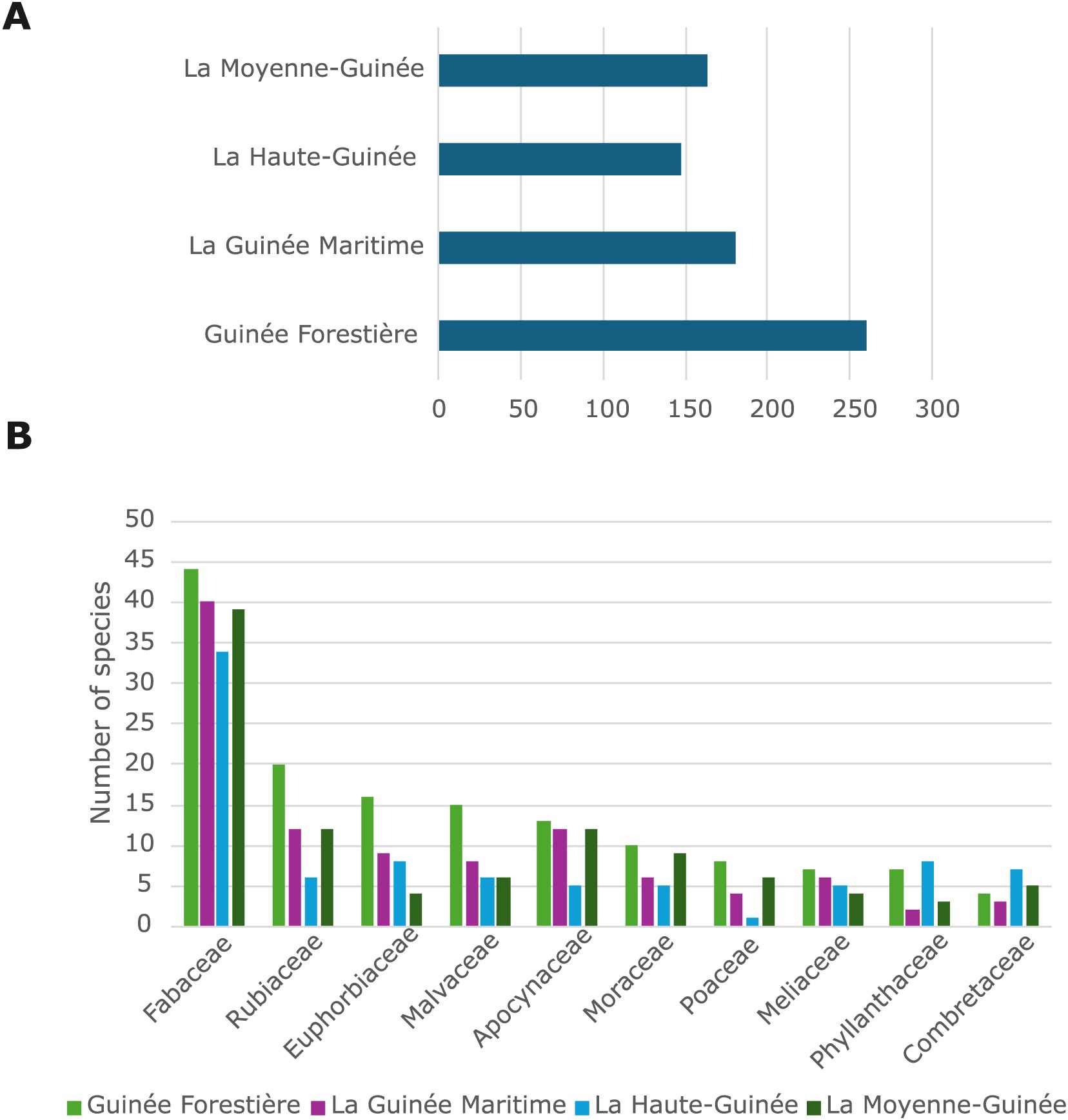
Figure 4. Useful wild plants per region. (A) Number of useful wild plants for each region. (B) Ten most common families showing their distribution across the Guinea regions.
4 Discussion
4.1 Wild plant species used in Guinea
This study recorded 399 wild useful plant species in Guinea, from 85 plant families, representing c. 10% of the total flora of Guinea. Analysis of the results shows that plant species are important for their traditional uses in local communities across the four geographical regions of the country. This importance is supported by the high number of species used and by the often large number of uses for each species. The plant uses varied from region to region, depending on the species present in the locality and the community’s traditional knowledge, reflecting the botanical and cultural diversity of each region.
The number of wild useful plants recorded here is higher than a previous study by Carrière (2000), which recorded 371 species used in Guinea including cultivated species. These results are comparable to others recorded in Africa, for example in Namaqualand (South Africa) where 383 vascular plant species with socio-economic uses were documented out of a total of 2,902 wild species (c. 13%; Nortje and Van Wyk, 2019), but lower than those recorded in Uganda where 1,037 species with known human uses were identified out of c. 4,816 vascular plant species native to Uganda (c. 21%; O’Sullivan et al., 2025).
The traditional use of medicinal plants forms the basis of curative medicine for many low-income populations, especially in rural communities (Lawin et al., 2016). Despite the common use of medicinal plants, few studies are available focused on West Africa (Ayensu, 1978; Burkill, 1985; Tabuti et al., 2003; Jusu and Sanchez, 2013; Sarr et al., 2013; Lebbie et al., 2017; Manzo et al., 2017; Badjaré et al., 2018; Almeida, 2018). Our study documented 329 medicinal plant species in Guinea (from interviews), of which 211 in the Guinée Forestière region alone. This is lower than a previous study (Carrière, 2000) which recorded 371 medicinal species for Guinea, although they included cultivated species.
In Guinea, 129 native plant species (32%) are documented as used for material. The use of native plant species for material needs in Guinea may be explained by the high rural population and low GDP of the country; people use what is at hand for their construction needs. Wood is one of the most popular products in this category. It is in strong demand for several uses including crafts, construction of houses, roads, and furniture. Fabaceae is the most represented family, however, there are also several plant families with non-woody material uses. For example, nine species of palm have parts that are used for making mats, baskets, thatch and, in the case of rattan, furniture.
In many African countries, charcoal is the fuel of the urban poor and provides employment in rural and urban areas (Zulu and Richardson, 2013). Wood is also in high demand as a source of fuel, it is a major source of energy for most households, especially for cooking (Iheke and Osuji, 2015). An estimated 2.5 to 3.0 billion people rely on wood for fuel globally; in Africa, it is projected that wood meets 58% of all energy needs (Johnson and Bryden, 2012). In Guinea, fuel has the fourth highest number of species uses (11%). Wood fuel is the main source of energy for cooking in Africa, where more than 90% of household cooking uses wood or charcoal (Seidel, 2008), both of which are a big threat to the remaining forests of Guinea (Couch et al., 2023b). In addition, in Guinée Forestière between 2000 and 2018, 25% of the remaining forest cover was lost (Fitzgerald et al., 2021). A key driver of this deforestation is the increased demand for wood and charcoal fuel (Diawara, 2001).
Of the socio-economically important plant species of Guinea, 82 (20%) are reported as used for food. Non-timber forest products, such as fruits, are largely collected and traded by women and children (Molmou et al., 2022) and may constitute an important source income for communities as documented during the interviews of this study. In Guinée Forestière alone, 55 species of wild food plants were documented, similar to what was reported in Guinée Maritime (46 species). The difference between the regions in Guinea could be due to higher population levels and reduced forest cover in Guinée Maritime, in addition to the difference in size of the four geographical regions.
This survey of how plants are used by people in Guinea collected information relating to vernacular names, uses and different parts of plants (Supplementary Table S3). Nearly a third of the parts used were leaves (30%). This is similar to a study from Côte d’Ivoire on food plants, where c. 32% of all useful plant species parts were leaves (Dan Guimbo et al., 2013). The predominance of leaves, roots and bark of medicinal plants are indicated by several authors (Betti, 2002; Monteiro and Azevedo, 2010; Dibong et al., 2011). Unlike fruits, of which the availability is influenced by the phenological seasons, leaves are more likely to be stored for a long time; we found 41% of fruits are used as food and c. 63% of leaves. This is higher than what is found in neighboring country Mali, where only c. 14% of fruits are used as food (Diarra et al., 2016). This study focused on socio-economically important plants, and the stems occupy the second rank of the most used categories at 22%. This supports that in Guinea, as in many other developing countries, wood is a main source of energy (Nuberg, 2015), and is also used for the construction of buildings, roads, and furniture. Of the three forms of medicinal preparations identified, the decoction and maceration forms are most often administered as a drink. The use of decoctions can be justified by the fact that they have the advantage of facilitating extraction and releasing volatile toxic substances (Traoré et al., 2011).
4.2 Conservation of the wild useful plant of Guinea
The communities surveyed were aware of the threat to their forest resources (Hassen et al., 2023). This was evidenced from the interviews, from which we understand that in the past, many useful plant species were abundant and collected near villages, but today most of them have become rare and people have to travel further to find certain species. The threats cited by the communities are urbanization, slash-and-burn agriculture, exploitation of forest resources, and inappropriate collection methods.
Twenty-eight plants on our list are threatened with extinction according to the IUCN Red List (2023). This number includes some of the most used useful plant species across Guinea, such as the kola tree (Garcinia kola Heckel, VU), African mahogany (Khaya senegalensis, VU), African teak (Milicia excelsa, NT), and Shea tree (Vitellaria paradoxa, VU). In their respective Red List assessments, a common threat was described as tendency for overexploitation by local and non-local people and clearing forest land for agriculture. In general, many of the threats are anthropogenic (Yaovi et al., 2021; Taonda et al., 2024). For example, the method of collection of the various plant parts can be destructive including cutting a tree to access the fruit in the case of Landolphia macrantha (K.Schum.) Pichon, Piper guineense and Xylopia aethiopica, debarking a tree for medicinal uses like in the case of Nauclea latifolia, Nauclea pobeguinii and Zanthoxylum zanthoxyloides (Lam.) Zepern. & Timler, or by cutting down trees to use as lumber e.g. Pterocarpus erinaceus, Cryptosepalum tetraphyllum (Hook.f.) Benth., Khaya anthotheca and Milicia regia.
While many of the useful species in our study were found to be assessed as LC, increased pressure by a growing rural population using local wild plants is likely to have a negative effect their conservation status in the future. This is especially true for species which are only used in one region in Guinea, like the important Meliaceae tree species Entandrophragma candollei Harms (VU), Entandrophragma angolense (NT), Khaya anthotheca (VU) and Khaya ivorensis (VU), which are only found in Guinée Forestière, and are harvested for fuel and as construction materials. These plants require locally adapted and culturally sensitive conservation efforts which can include new protected areas (Couch et al., 2023a) in a participatory process with local communities, to continue supporting their needs. An example is provided by a project setting up community-led native tree nurseries supporting livelihoods and reforestation efforts in the buffer zones of some of the Tropical Important Plant Areas identified in Guinea (Couch, 2020). Engaging the community in conservation actions, for example those undertaken as part of conservation efforts to protect Tropical Important Plant Areas and the newly developed National Conservation Action Plan for threatened trees of Guinea (Couch et al., 2023b), will increase the protection of these species and increase their populations through tree planting schemes.
4.3 Comparison between the four geographical regions of Guinea
The plant uses varied from region to region, depending on the species present in the locality and the community’s traditional knowledge, reflecting the botanical and cultural diversity of each region (Traoré et al., 2021). Yet, some species were recorded as useful in all four regions (Supplementary Table 2). Although various other reasons such as trade need further investigation, intermarriage between ethnolinguistic groups may play a role (Diallo, 1998). However, each region practices its own cultural traditions, depending on its ethnolinguistic group and the presence of plant species. For example, in Guinée Forestière, Thaumatococcus daniellii is a plant traditionally made into ordinary mats, and its use in wedding and death ceremonies is a sign of respect for their customs. This is similar to the case in Haute-Guinée, where oil extracted from Vitellaria paradoxa is used for cooking food and medicinal purposes. Also, in Guinée Maritime, Avicennia germinans (L.) L. wood is used for fish fumigation. As for Moyenne-Guinée, dominated by the Fouta Djalon mountain range, the inhabitants are known as pastoralists and trade specialists in Guinea (Diakhaby, 2017; Gibbs, 2024). Guinée Forestière had the highest number of wild useful plant species recorded in this study, representing c. 57% of the total number of wild useful plants of Guinea. This can be explained by the fact this region has the largest remaining forest cover and higher diversity of ethnic groups, who have extensive traditional knowledge of the use of these plants as medicines, materials and foods (Diawara, 2001).
Across the four geographical regions of Guinea, Fabaceae represent the plant family with most species with a recorded use, with the most common categories of use being medicine, material and food. This result is expected as Fabaceae are one of the most species-rich families of flowering plants, with >22,000 species (POWO, 2023). In sub-Saharan Africa, 10% of the 1,085 medicinal plants recorded to treat cardiovascular disease are Fabaceae (Odukoya et al., 2022). In an ethnobotanic study in Burkina Faso (Zizka et al., 2015), Fabaceae was the top family for useful plants, especially those used in medicine. For Guinean traditional medicine, 72 Fabaceae species were recorded as treatment for various illnesses These results are higher than, for example, in studies in Niger, where 39 Fabaceae species are used, among others, in the treatment of diarrhea and dysentery (Manzo et al., 2017), and Nigeria, where 17 species are used to treat hypertension and cardiovascular disease (Obode et al., 2020).
Some plants occur in several regions but are only used in some because, while the plant occurs in that region, there is no traditional knowledge of how to use it. This is the case of Ricinodendron heudelotii (‘njangsa’ seed oil), which is used in Guinée Forestière as a medicine and food but was not recorded for use in Guinée Maritime and Moyenne Guinée, where it also occurs. Another example is Thaumatococcus daniellii (‘miracle berry’), which is used in Guinée Forestière to make mats and for its edible fruit but was not recorded for use in Guinée Maritime where it also occurs. A last example is Borassus aethiopum Mart., a palm tree found both in Guinée Maritime and Haute Guinée, but more widely known and exploited in Moyenne Guinée for the manufacture of baskets.
Regionally, there are differences between the next most dominant families at both species and use level. These vary between Rubiaceae, Euphorbiaceae and Apocynaceae. During interviews in Haute Guinée we noted a predominance of Fabaceae, Phyllanthaceae, followed by Combretaceae at the species level. However, at the uses level, Fabaceae, Euphorbiaceae and Phyllanthaceae dominate, followed by Combretaceae. A study by Traoré et al. (2011) in the South-West of Burkina Faso, also reported Combretaceae dominating at the level of uses. The habitats in their study area are similar to those in Haute Guinée, where it is mainly savannah and open forest, and these are the more dominant families. In Haute Guinée, Euphorbiaceae, such as Alchornea cordifolia (Figure 5A), represent 21% in the study, this figure is higher than that found in Côte d’Ivoire by Béné et al. (2016) in Transua Department, where Euphorbiaceae only represented 8.51% of medicinal plants used in their study area.
Some of the most commonly cited useful species across the four geographical regions like Bitter Kola (Garcinia kola, Clusiaceae), African locust bean (Parkia biglobosa, Fabaceae), the Shea tree (Vitellaria paradoxa, Sapotaceae; Figure 5B), the ‘njangsa’ seed oil (Ricinodendron heudelotii, Euphorbiaceae) and the Guinea Pepper tree (Xylopia aethiopica, Annonaceae; Figure 5C), are important in providing both food and medicine to local communities across the four regions of Guinea and are also used in other countries such as Bénin (Adomou et al., 2012; Houmenou et al., 2017; Azongnide et al., 2019; Codjia et al., 2018), Cameroon (Djeugap et al., 2013; Couvreur et al., 2022; Emmanuel et al., 2022; Ogwu et al., 2024), Côte d’Ivoire (Kouame et al., 2017), Ghana (Nyadanu et al., 2017), and Mali (Diarra et al., 2016). Four species (Alchornea cordifolia, Ricinodendron heudelotii, Uapaca guineensis, Uapaca togoensis) are especially important for material – these species are also common across West Africa, and the genus Uapaca Baill. is a keystone species in many tropical forests (Chawafambira et al., 2020). This while Elaeis guineensis (Figure 5D) has become globally important as the source of palm oil.
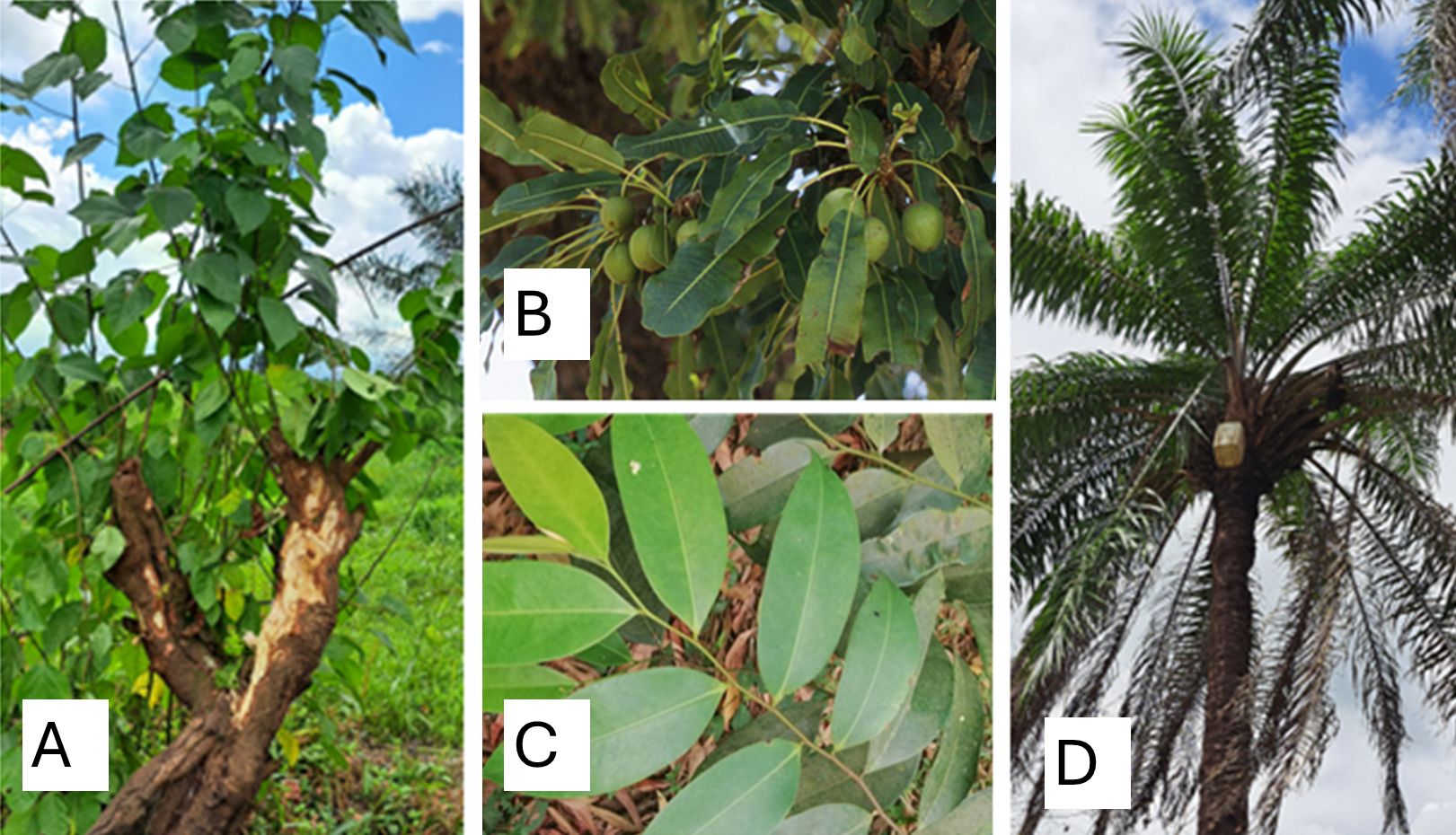
Figure 5. Prominent useful wild plant species in Guinea (A) Alchornea cordifolia (Christmas bush, Euphorbiaceae); (B) Vitellaria paradoxa (Shea tree, Sapotaceae); (C) Xylopia aethiopica (Guinea pepper, Annonaceae); (D) Elaeis guineensis (oil palm, Arecaceae). These four species are commonly used for medicine, material, food and fuel.
5 Conclusion
This study reported 399 wild socio-economically important plant species harvested in Guinea for different purposes, representing c. 10% of the total Guinean flora. Plants were mostly used for medicinal purposes (55% of species), materials (32%) and as a source of food (11%). While literature sources were important to build a baseline dataset of useful species, the results of this paper underline the importance of primary fieldwork for generating data for conservation strategies, ensuring that information on useful plants is locally specific and up-to-date. Furthermore, without urgent documentation, much essential local technical knowledge on useful plants and how to process or harvest them sustainably may be lost.
We looked at the variation across regions, and between uses and plant parts used. There are clear differences between the four geographical regions in the number of species used, due to differences in the available species diversity and cultural factors. How knowledge is passed down through the different ethnolinguistic communities could also have an influence, though more research is required to determine this. Our results show that useful plants contribute to the economic and social welfare of the people of Guinea among others through trade. Due to increased population pressure, unsustainable harvesting could pose a future threat to the availability and long-term survival of species. To allow the possibility of continuing to use wild plant species, management strategies are necessary, such as the implementation of locally adapted and culturally sensitive conservation measures, particularly for species that are already threatened or those that only occur in one of the regions. The information gained here will enable orientating future conservation efforts ensuring the availability of the economically and culturally important plant species of Guinea for future generations.
Data availability statement
The original contributions presented in the study are included in the article/Supplementary Material. Further inquiries can be directed to the corresponding author.
Ethics statement
The original data on current socio-economic uses of plants in the Republic of Guinea was collected by the first author (DM) who is indigenous to the country. Data was collected over much of Guinea (see map, Figure 2) over several years (from 2016 to 2022), authorized by National Mission Orders (Ordre des Mission) issued by Herbier National de Guinée (HNG), Université de Gamal Abdel Nasser, BP 680, République de Guinée. HNG has a national remit (under Government of Guinea decree) to research all aspects of the indigenous plant species of Guinea. The Mission orders were subsequently authorized at Prefectural and Sub-prefectural level before communities to be surveyed were approached. Prior informed consent to conduct interviews with community members was also obtained from the community council concerned. This was done verbally since illiteracy levels are very high in Guinea among the older members of rural communities. Semi-structured interviews were conducted with community members using standard questionnaires (see Electronic Supplementary Material 2).
Author contributions
DM: Writing – review & editing, Writing – original draft, Conceptualization, Methodology, Formal analysis, Data curation, Investigation. CC: Investigation, Conceptualization, Writing – original draft, Writing – review & editing, Methodology, Data curation, Formal analysis. GG: Data curation, Writing – original draft. PR: Methodology, Formal analysis, Writing – original draft, Writing – review & editing. GB: Writing – review & editing, Writing – original draft. PH: Writing – original draft, Methodology, Data curation. PH: Writing – original draft, Data curation. GK: Data curation, Methodology, Writing – original draft. SM: Methodology, Formal analysis, Writing – original draft, Data curation, Investigation, Conceptualization. MD: Methodology, Data curation, Writing – original draft. SK: Data curation, Writing – original draft, Methodology. SD: Data curation, Methodology, Writing – original draft. Xv: Writing – review & editing, Methodology, Investigation, Conceptualization, Validation, Data curation. MC: Investigation, Writing – review & editing, Supervision, Conceptualization, Formal analysis, Writing – original draft, Data curation, Methodology. CT: Methodology, Data curation, Supervision, Writing – review & editing, Formal analysis. IL: Writing – original draft, Investigation, Writing – review & editing, Data curation, Validation, Formal analysis, Methodology, Supervision, Project administration, Conceptualization. AS: Validation, Data curation, Formal analysis, Writing – review & editing, Investigation, Project administration, Supervision, Writing – original draft.
Funding
The author(s) declared financial support was received for the research and/or publication of this article. This study was funded by the Ellis Goodman Family Foundation (EGFF) supported by Royal Botanic Gardens, Kew, and international partners such as Ghent University (Belgium) and the National Herbarium of Guinea – Gamal Abdel Nasser University. Additionally grant from the Guinean government through the Ministry of Higher Education and Scientific Research and from Rio Tinto Guinea. Fieldwork was part funded through a Darwin Initiative grant (23-002) Important Plant Areas of Guinea-Conakry.
Acknowledgments
We acknowledge the contributions of the late Sékou Moussa Keita and Niankoye Camara, both previously based at University Gamal Abdel Nasser in Conakry. We thank Eimear Nic Lughadha and Lars Chatrou for helpful comments and revision of the manuscript. We highly appreciate the contributions made to the quality of this manuscript by the two reviewers and the handling editor Samuel Awuah-Nyamekye.
Conflict of interest
The authors declare that the research was conducted in the absence of any commercial or financial relationships that could be construed as a potential conflict of interest.
The author(s) declared that they were an editorial board member of Frontiers, at the time of submission. This had no impact on the peer review process and the final decision.
Generative AI statement
The author(s) declare that no Generative AI was used in the creation of this manuscript.
Any alternative text (alt text) provided alongside figures in this article has been generated by Frontiers with the support of artificial intelligence and reasonable efforts have been made to ensure accuracy, including review by the authors wherever possible. If you identify any issues, please contact us.
Publisher’s note
All claims expressed in this article are solely those of the authors and do not necessarily represent those of their affiliated organizations, or those of the publisher, the editors and the reviewers. Any product that may be evaluated in this article, or claim that may be made by its manufacturer, is not guaranteed or endorsed by the publisher.
Supplementary material
The Supplementary Material for this article can be found online at: https://www.frontiersin.org/articles/10.3389/fcosc.2025.1599399/full#supplementary-material
Supplementary Methods 1 | Interview questions and survey sheet.
Supplementary Data Sheet 1 | Uses per species.
Supplementary Figure 1 | Interview demographics.
Supplementary Figure 2 | Plant uses examples.
Supplementary Figure 3 | The most frequently cited plants as food.
Supplementary Table 1 | List of interviewed villages.
Supplementary Table 2 | List of the 399 socio-economic plant species in Guinea.
Supplementary Table 3 | Number of indigenous useful plant species in Guinea per plant family.
References
Adomou A., Yedomonhan H., Djossa B., Legba S., Oumorou M., and Akoegninou A. (2012). Etude Ethnobotanique des plantes médicinales vendues dans le marché d’Abomey-Calavi au Bénin. Int. J. Biol. Chem. Sci. 6, 745–772. doi: 10.4314/ijbcs.v6i2.18
Ali Mbodou L., Padonou E. A., Akabassi G. C., Akakpo B. A., and Assogbadjo A. E. (2024). Diversity and structure of khaya Senegalensis (desr.) A.Juss. Habitats along phytogeographical zones in Chad (Central africa): implications for conservation and sustainable use. J. Environ. Geogr. 17, 45–56. doi: 10.14232/jengeo-2024-45530
Almeida P. D. (2018). “The role of threat in collective action,” in The wiley blackwell companion to social movements. Eds. Snow D. A., Soule S. A., Kriesi H., and McCammon H. J. (Bognor Regis: John Wiley & Sons), 43–62. doi: 10.1002/9781119168577.ch2
Andriamparany J. N., Brinkmann K., Jeannoda V., and Buerkert A. (2014). Effects of socio-economic household characteristics on traditional knowledge and usage of wild yams and medicinal plants in the Mahafaly region of south-western Madagascar. J. Ethnobiol. Ethnomed. 10, 82. doi: 10.1186/1746-4269-10-82
Asigbaase M., Adusu D., Anaba L., Abugre S., Kang-Milung S., Acheamfour S. A., Adamu I., Ackah D. K., et al. (2023). Conservation et bénéfices économiques des plantes médicinales : perspectives des communautés vivant en bordure des forêts du sud-ouest du Ghana. Arbres, Forêts et Populations 14, 100462. 10.1016/j.tfp.2023.100462
Aubertin C., Pinton F., and Boisvert V. (2007). Les marchés de la biodiversité. Marseille: IRD Éditions.
Aumeeruddy-Thomas Y. and Pei S. (2003). “Applied Ethnobotany: case-studies from the Himalayan region.,” in People and Plants working paper 12 (WWF, Godalming).
Azongnide G. G., Issa R., Houetchegnon T., Wedjangnon A. A., and Ouinsavi C. (2019). Perception locale des contraintes à la culture de Vitellaria paradoxa C.F.Gaertn. et essai d’amélioration de sa croissance juvénile par fertilisation minérale et organique. Int. J. Biol. Chem. Sci. 13, 925–936. doi: 10.4314/ijbcs.v13i2.28
Badjaré B., Kokou K., Bigoulare N., Koumantiga D., Akpakouma A., Adjayi M. B., et al. (2018). Étude ethnobotanique d’espèces ligneuses des savanes sèches au Nord-Togo: diversité, usages, importance et vulnérabilité. BASE 22, 152–171. doi: 10.25518/1780-4507.16487
Basilevskaia V. (1969). Plante médicinale de Guinée (Conakry: Imprimerie Nationale Patrice Lumumba).
Béné K., Camara D., Fofie N. B. Y., Kanga Y., Yapi A. B., Yapo Y. C., et al. (2016). Étude ethnobotanique des plantes médicinales utilisées dans le Département de Transua, District du Zanzan (Côte d’Ivoire). J. Anim. Plant Sci. 27, 4230–4250. doi: 10.4236/oalib.1110026
Bernoux M. and Chevallier T. (2013). “Le carbone dans les sols des zones sèches,” in Des fonctions multiples indispensables. Les dossiers thématiques du CSFD (CSFD/Agropolis International, N°10. Montpellier), 40.
Betti J. L. (2002). Plantes médicinales vendues sur les marchés de Yaoundé, Cameroun. African Study Monographs 23, 47–64. http://hdl.handle.net/2433/68215.
Burgess N. D., D’Amico Hales J., Ricketts T. H., and Dinerstein E. (2006). Factoring species, non-species values and threats into biodiversity prioritisation across the ecoregions of Africa and its islands. Biol. Conserv. 127, 383–401. doi: 10.1016/j.biocon.2005.08.018
Burkill H. M. (1985). The useful plants of west tropical africa (Richmond: Royal Botanic Gardens, Kew).
Caballero-Serrano V., McLaren B., Carrasco J. C., Alday J. G., Fiallos L., Amigo J., et al. (2019). Traditional ecological knowledge and medicinal plant diversity in Ecuadorian Amazon home gardens. Global Ecol. Conserv. 17, e00524. doi: 10.1016/j.gecco.2019.e00524
Carrière M. (1994). Plantes de Guinée à l’usage des éleveurs et des vétérinaires (Maisons-Alfort: CIRAD-EMVT, 235 p).
Carrière M. (2000). Flore de Guinée: appellations vernaculaires et usages traditionnels de quelques plantes (Maisons-Alfort: CIRAD-EMVT), 235.
Chawafambira A., Sedibe M. M., Mpofu A., and Achilonu M. (2020). Uapaca kirkiana, an indigenous fruit tree in sub-Saharan Africa: A comprehensive review. Cogent Food Agric. 6, 1766735. doi: 10.1080/23311932.2020.1766735
Cheek M., Haba P. M., Konomou G., and van der Burgt X. M. (2019). Ternstroemia guineensis (Ternstroemiaceae), a new endangered cloud forest shrub with neotropical affinities from Kounounkan, Guinea, W Africa. Willdenowia 49, 351–360. doi: 10.3372/wi.49.49306
Cheek M., Magassouba S., Molmou D., Doré T. S., Couch C., Yasuda S., et al. (2018). A key to the species of Keetia (Rubiaceae - Vanguerieae) in West Africa, with three new, threatened species from Guinea and Ivory Coast. Kew Bull. 73, 56. doi: 10.1007/s12225-018-9783-0
Codjia S., Aoudji A., Koura K., and Ganglo J. C. (2018). Systèmes Agroforestiers a Garcinia kola Heckel au Sud-Est du Bénin: Distribution Géographique, Connaissances Endogènes et Retombées Financières. Eur. Sci. J. 14, 188. doi: 10.19044/esj.2018.v14n12p188
Couch C. (2020). Saving Guinea’s threatened trees. Available online at: https://www.kew.org/read-and-watch/saving-Guinea-trees (Accessed August 18, 2025).
Couch C., Magassouba S., Kante M. S., Diallo S., Dieng M., Guilavogui K., et al. (2023b). Plan d’Action National de Conservation pour les arbres menaces de Guinée. Available online at: https://doi.org/10.13140/RG.2.2.14881.58722 (Accessed May 30, 2023).
Couch C., Molmou D., Haba P. M., Keita S., Magassouba S., Keita S. M., et al. (2019). Liste préliminaire des espèces végétales socioéconomiques indigène en Guinée. Available online at: https://www.herbierguinee.org/uploads/2/6/3/0/26303479/liste_pr%C3%A9liminaire_des_esp%C3%A8ces_v%C3%A9g%C3%A9tales_socio%C3%A9conomiques_indig%C3%A8ne_en_guin%C3%A9e.pdf (Accessed May 30, 2023).
Couch C., Molmou D., Magassouba S., Doumbouya S., Diawara M., Diallo M. Y., et al. (2023a). Piloting development of species conservation action plans in Guinea. Oryx 57, 497–506. doi: 10.1017/S0030605322000138
Couvreur T. L. P., Dagallier L.-P. M. J., Crozier F., Ghogue J.-P., Hoekstra P. H., Kamdem N. G., et al. (2022). Flora of Cameroon – annonaceae vol 45. PhytoKeys 207, 1–532. doi: 10.3897/phytokeys.207.61432
Cunningham A. B. (2014). Applied ethnobotany: people, wild plant use and conservation (Routledge: London), 320. doi: 10.4324/9781849776073
Da Costa F. V., Guimarães M. F. M., and Messias M. C. T. B. (2021). Gender differences in traditional knowledge of useful plants in a Brazilian community. PloS One 16, e0253820. doi: 10.1371/journal.pone.0253820
Dan Guimbo I., Barage M., and Douma S. (2013). Etudes préliminaires sur l’utilisation alimentaire des plantes spontanées dans les zones périphériques du parc W du Niger. Int. J. Biol. Chem. Sci. 6, 4007–4017. doi: 10.4314/ijbcs.v6i6.12
Diabaté M., Koné F., Haba O. O., De Foresta H., and Labouisse J.-P. (2021). “Diversité floristique et usages des plantes forestières en zones rurales de Guinée forestière,” in Biodiversité des écosystèmes intertropicaux: connaissance, gestion durable et valorisation. Eds. Profizi J. P., Ardila-Chauve S., Billot C., Couteron P., Delmas M., Diep T. M. H., Grandcolas P., Kokou K., Muller S., Rana A., Ranarijaona H. L. T., and Sonke B. (IRD, Marseille).
Diakhaby O. (2017). L’ethnicité en Guinée-Conakry au prisme de l’organisation sociopolitique (Guinea: L’Harmattan), 254.
Diallo Y. (1998). La médecine traditionnelle en Guinée Maritime. Traitements des maladies de la fécondité (Conakry: Ministère de la Santé Publique).
Diarra N., Togola A., Denou A., Willcox M., Daou C., and Diallo D. (2016). Etude ethnobotanique des plantes alimentaires utilisées en période de soudure dans les régions Sud du Mali. Int. J. Biol. Chem. Sci. 10, 184. doi: 10.4314/ijbcs.v10i1.14
Diawara D. (2001). Situation des ressources génétiques forestières de la Guinée (Note Thématique sur les Ressources Génétiques Forestières. Conaky: FAO, IPGRI/SAFORGEN, DFSC & ICRAF).
Dibong S. D., Mpondo M. E., and Ngoye A. (2011). Vulnérabilité des espèces à fruits sauvages vendus dans les marchés de Douala (Cameroun). Journal of Animal and Plant Sciences 11, 1435–1441. https://www.m.elewa.org/JAPS/2011/11.3/2.pdf
Djeugap F., Bernier L., Dostaler D., Khasa D., Fontem D., and Nwaga D. (2013). Opportunités et contraintes agroforestières de Ricinodendron heudelotii au Cameroun. Int. J. Biol. Chem. Sci. 7, 344. doi: 10.4314/ijbcs.v7i1.30
Emmanuel O., Uche M. E., Dike E. D., Etumnu L. R., Ugbogu O. C., and Ugbogu E. A. (2022). A review on garcinia Garcinia kola Hheckel: traditional uses, phytochemistry, pharmacological activities, and toxicology. Biomarkers 27, 101–117. doi: 10.1080/1354750X.2021.2016974
Fitzgerald M., Nackoney J., Potapov P., and Turubanova S. (2021). Agriculture is the primary driver of tree cover loss across the Forestière region of the Republic of Guinea, Africa. Environ. Res. Commun. 3, 121004. doi: 10.1088/2515-7620/ac4278
Gaoue O. G. and Ticktin T. (2009). Fulani Knowledge of the Ecological Impacts of Khaya Senegalensis (Meliaceae) Foliage Harvest in Benin and its Implications for Sustainable Harvest. Econ. Bot. 63, 256–270. doi: 10.1007/s12231-009-9091-6
Gibbs E. (2024). Groupes ethniques de guinée (Conakry). Available online at: https://fr.ripleybelieves.com/ethnic-groups-of-Guinea-3039 (Accessed January 20, 2024).
Gosline G., Bidault E., van der Burgt X., Cahen D., Challen G., Condé N., et al. (2023). A taxonomically-verified and vouchered checklist of the vascular plants of the republic of Guinea. Sci. Data 10, 327. doi: 10.1038/s41597-023-02236-6
Goussard J. J. and Labrousse R. (2010). ““Ecosystems: reconciling conservation, production, and sustainable management,” in Challenges in african agriculture. Ed. Deveze J. C. (World Bank Group, Washington, DC), 59–84.
Haba O. O., Diabaté M., Simmy P. L., Monèmou P., Sangaré A., Soropogui. Z., et al. (2021). “Plantes forestières commercialisées dans les marchés urbains de la Guinée forestière,” in Biodiversité des écosystèmes intertropicaux: connaissance, gestion durable et valorisation. Eds. Profizi J. P., Ardila-Chauve S., Billot C., Couteron P., Delmas M., Diep T. M. H., Grandcolas P., Kokou K., Muller S., Rana A., Ranarijaona H. L. T., and Sonke B. (IRD, Marseille), 45–55.
Hassen A., Zander K. K., Manes S., and Meragiaw M. (2023). Local People’s perception of forest ecosystem services, traditional conservation, and management approaches in North Wollo, Ethiopia. J. Environ. Manage. 330, 117118. doi: 10.1016/j.jenvman.2022.117118
Houmenou V., Adjatin A., Tossou M. G., Yedomonhan H., Dansi A., Gbenou J., et al. (2017). Etude ethnobotanique des plantes utilisées dans le traitement de la stérilité féminine dans les départements de l’Ouémé et du plateau au Sud Bénin. Int. J. Biol. Chem. Sci. 11, 1851. doi: 10.4314/ijbcs.v11i4.34
Iheke O. and Osuji J. (2015). Demand for fuel wood and its substitution possibilities in urban areas of Umuahia metropolis of Abia State. J. Soc. Sci. Res. 7, 1213–1218. doi: 10.24297/jssr.v7i1.3575
International Society of Ethnobiology (2006). International Society of Ethnobiology Code of Ethics (with 2008 additions). Available online at: https://www.ethnobiology.net/code-of-ethics/ (Accessed October 15, 2024).
Ismail S., Rao N. K., and Dagar J. C. (2019). “Identification, evaluation, and domestication of alternative crops for saline environments,” in Research developments in saline agriculture. Eds. Dagar J. C., Yadav R. K., and Sharma P. C. (Springer, Singapore), 505–536. doi: 10.1007/978-981-13-5832-6_17
IUCN (2023). IUCN red list of threatened species 2023-1. Available online at: www.iucnredlist.org (Accessed May 30, 2023).
Johnson N. G. and Bryden K. M. (2012). Factors affecting fuelwood consumption in household cookstoves in an isolated rural West African village. Energy 46, 310–321. doi: 10.1016/j.energy.2012.08.019
Jusu A. and Sanchez A. C. (2013). Economic Importance of the Medicinal plant trade in Sierra Leone. Econ. Bot. 67, 299–312. doi: 10.1007/s12231-013-9245-4
Kouame N. M.-T., Ake C. B., Mangara A., and N’guessan K. (2017). Analyse de l’intérêt socio-économique des graines de Garcinia kola Heckel (Clusiaceae) dans la commune de Koumassi (Abidjan), Côte d’Ivoire. Int. J. Biol. Chem. Sci. 10, 2587–2595. doi: 10.4314/ijbcs.v10i6.15
Lawin H., Agodokpessi G., Ayelo P., Kagima J., Sonoukon R., Mbatchou Ngahane B. H., et al. (2016). A cross-sectional study with an improved methodology to assess occupational air pollution exposure and respiratory health in motorcycle taxi driving. Sci. Total Environ. 550, 1–5. doi: 10.1016/j.scitotenv.2016.01.068
Lebbie A., Kouamé F., and Kouassi E. (2017). Specialization in ethnomedicinal plant knowledge among herbalists in the forest region of Rivercess County, Liberia. J. Med. Plants Res. 11, 264–274. doi: 10.5897/JMPR2017.6329
Leciak E. and Bah O. (2008). Les végétaux du quotidien: usages des ligneux dans les terroirs de Guinée maritime. Bois Forêts Des. Tropiques 298, 77–88.
Le Roux X., Barbault R., Baudry J., Burel F., Doussan I., Garnier E., et al. (2008). Agriculture et biodiversité. Valoriser les synergies (Doctoral dissertation, INRA). Available online at: https://hal.science/hal-03148269v1 (Accessed September 10, 2024).
Lévêque C. (2008). La biodiversité au quotidien: le développement durable à l’épreuve des faits (Marseille: IRD Éditions/Quae).
Loubelo E. (2012). Impact des produits forestiers non ligneux (PFNL) sur l’économie des ménages et la sécurité alimentaire: cas de la République du Congo (Doctoral dissertation, Université Rennes 2). Available online at: https://theses.hal.science/tel-00713758v1 (Accessed March 12, 2025).
Manzo L. M., Moussa I., and Ikhri K. (2017). Ethnobotanical survey: A comprehensive review of medicinal plants used against gastrointestinal disorders in Niger, west africa. Jundishapur J. Nat. Pharm. Prod. 12, e65730. doi: 10.5812/jjnpp.65730
MEEA (2014). Cinquième Rapport du Mali sur la mise en œuvre de la Convention sur la Diversité Biologique (Bamako: Ministère de l’Environnement, de l’Eau et de l’Assainissement).
Mekonnen A. B., Mohammed A. S., and Tefera A. K. (2022). Ethnobotanical study of traditional medicinal plants used to treat human and animal diseases in sedie muja district, south gondar, Ethiopia. Evid.-Based Complementary Altern. Med. 2022, 1–22. doi: 10.1155/2022/7328613
Meybeck A., Laval E., Lévesque R., and Parent G. (2017). Sécurité alimentaire et nutrition à l’heure des changements climatiques. Communication présentée au Actes du Colloque Int. organisé par le gouvernement du Québec en collaboration avec la FAO. Québec 24-27 septembre 2017. Rome: Organisation des Nations Unies pour l'Alimentation et 'Agriculture.
Molmou D., Cheek M., Konomou G., Magassouba S., Simões A. R. G., Larridon I., et al. (2025). Traditional uses, population, threats and conservation of the bansouman or gingerbread plum Neocarya macrophylla (Chrysobalanaceae) in Republic of Guinea (West Africa). bioRxiv. doi: 10.1101/2025.06.08.655547
Molmou D., Magassouba S., Dore T. S., Couch C., Larridon I., Howes M. J., et al. (2022). “The cultural and economic importance of indigenous plants,” in WWF living planet report 2022 (WWF, Gland). Available online at: https://wwf.org.uk/sites/default/files/2023-05/WWF-Living-Planet-Report-2022.pdf (Accessed April 2, 2024).
Monteiro R. and Azevedo I. (2010). Chronic Inflammation in Obesity and the Metabolic Syndrome. Mediators of Inflammation 2010, 289645. doi: 10.1155/2010/289645
Nortje J. M. and Van Wyk B.-E. (2019). Useful plants of Namaqualand, South Africa: A checklist and analysis. S. Afr. J. Bot. 122, 120–135. doi: 10.1016/j.sajb.2019.03.039
Nuberg I. K. (2015). Developing the fuelwood economy of Papua New Guinea. Energy Sustain. Dev. 24, 9–18. doi: 10.1016/j.esd.2014.10.006
Nyadanu D., Adu Amoah R., Obeng B., Kwarteng A. O., Akromah R., Aboagye L. M., et al. (2017). Ethnobotany and analysis of food components of African locust bean (Parkia biglobosa (Jacq.) Benth.) in the transitional zone of Ghana: implications for domestication, conservation and breeding of improved varieties. Genet. Resour. Crop Evol. 64, 1231–1240. doi: 10.1007/s10722-016-0432-x
Obode O. C., Adebayo A. H., Omonhinmin C. A., and Yakubu O. F. (2020). A systematic review of medicinal plants used in Nigeria for hypertension management. Int. J. Pharm. Res. 12, 2231–2276. doi: 10.31838/ijpr/2020.12.04.142
Odukoya J. O., Odukoya J. O., Mmutlane E. M., and Ndinteh D. T. (2022). Ethnopharmacological study of medicinal plants used for the treatment of cardiovascular diseases and their associated risk factors in sub-saharan africa. Plants 11, 1387. doi: 10.3390/plants11101387
Ogwu M. C., Ogwu H. I., Osawaru M. E., and Izah S. C. (2024). “Garcinia kola heckel. (Clusiaceae): an overview of the cultural, medicinal, and dietary significance for sustainability,” in Herbal medicine phytochemistry, reference series in phytochemistry. Eds. Izah S. C., Ogwu M. C., and Akram M. (Berlin: Springer Nature), 273–301. doi: 10.1007/978-3-031-43199-9_74
O’Sullivan F., Richards S. L., Kalema J., et al. (2025). The Useful Plants of Uganda: Conserving Socio-economically Valuable Plant Species Using Important Plant Areas (IPAs). Econ Bot 79, 151–170. doi: 10.1007/s12231-025-09631-7
Osemeobo G. J. (2005). Living on wild plants: evaluation of the rural household economy in Nigeria. Environ. Pract. 7, 246–256. doi: 10.1017/S1466046605050386
Ouma A. (2022). Intergenerational learning processes of traditional medicinal knowledge and socio-spatial transformation dynamics. Front. Sociol. 7. doi: 10.3389/fsoc.2022.661992
Pinton F., Julliand C., and Lescure J. P. (2015). Le producteur-cueilleur, un acteur de l’interstice? Anthropology Food, S11. doi: 10.4000/aof.7902
POWO (2023). Plants of the world online. Facilitated by the royal botanic gardens, kew. Available online at: https://powo.science.kew.org/ (Accessed September 2, 2023).
Sarr O., Diatta S., Gueye M., Ndiaye P. M., Guisse A., and Akpo L. E. L. (2013). Importance des ligneux fourragers dans un systéme agropastoral au Sénégal (Afrique de l’ouest). Revue de Médecine Vétérinaire. https://hal.science/hal-01722601/document.
Sayer J. A., Harcourt C. S., and Collins N. M. (1992). The conservation atlas of tropical forests: Africa. IUCN & Simon and Schuster.
Seidel A. (2008). “Charcoal in africa importance, problems and possible solution strategies,” in Household energy programme (GTZ, Eschborn). Available online at: https://energypedia.info/images/2/22/Charcoal-in-africa-gtz_2008-eng.pdf (Accessed March 8, 2025).
Sofowora A., Ogunbodede E., Onayade A., et al. (2013). Le rôle et la place des plantes médicinales dans les stratégies de prévention des maladies. Revue africaine des médecines traditionnelles, complémentaires et alternatives 10, 210–229. 10.4314/ajtcam.v10i5.2
Tabuti J. R., Dhillion S. S., and Lye K. A. (2003). Médicaments ethnovétérinaires pour bovins (Bos indicus) dans le comté de Bulamogi, Ouganda : espèces végétales et mode d'utilisation. Journal d'Ethnopharmacologie 88, 279–286. https://doi.org/10.1016/S0378-8741(03)00265-4
Taonda A., Zerbo I., N’Guessan A. E., N’Dja Kassi J., and Thiombiano A. (2024). Local perceptions of anthropogenic and climate factors affecting the use and the conservation of Detarium microcarpum and Detarium Senegalense in Burkina Faso (West Africa). Integr. Conserv. 3, 58–75. doi: 10.1002/inc3.41
Traoré M. S., Baldé M. A., Diallo M. S. T., Baldé E. S., Diané S., Camara A., et al. (2013). Ethnobotanical survey on medicinal plants used by Guinean traditional healers in the treatment of malaria. J. Ethnopharm. 150, 1145–1153. doi: 10.1016/j.jep.2013.10.048
Traoré L., Hien M., and Ouédraogo I.. (2021). Usages, disponibilité et stratégies endogènes de préservation de Canarium schweinfurthii (Engl.)(Burseraceae) dans la région des Cascades (Burkina Faso). Ethnobotany Research and Applications 21, 1–17. http://dx.doi.org/10.32859/era.21.01.1-17
Traoré M. S., Camara A., Balde M. A., Diallo M. S., Barry N. S., Balde E. S., et al. (2022). Ethnobotanical survey of medicinal plants used to manage hypertension in the Republic of Guinea. J. Pharm. Pharmacog. Res. 10, 938–951. doi: 10.56499/jppres22.1470_10.5.938
Traoré L., Ouedraogo I., Ouedraogo A., and Thiombiano A. (2011). Perceptions, usages et vulnérabilité des ressources végétales ligneuses dans le Sud-Ouest du Burkina Faso. Int. J. Biol. Chem. Sci. 5, 258–278. doi: 10.4314/ijbcs.v5i1.68103
Traoré G. H., Sanou L., and Koala J. (2019). Diversité d’utilisations et de connaissances des espèces locales préférées dans le corridor forestier de la Boucle du Mouhoun, Burkina Faso. Sci. Nat. Appl. 38, 101–117.
UNDP (2023). 2023 Global Multidimensional Poverty Index (MPI): Unstacking global poverty: Data for high impact action (New York: United Nations Development Programme). Available online at: https://hdr.undp.org/content/2023-global-multidimensional-poverty-index-mpi (Accessed September 16, 2024).
Yaovi C. R., Hien M., Kabore S. A., Sehoubo Y. J., and Somda I. (2021). Utilisation et vulnérabilité des espèces végétales et stratégies d’adaptation des populations riveraines de la Forêt Classée du Kou (Burkina Faso). Int. J. Biol. Chem. Sci. 15, 1140–1157. doi: 10.4314/ijbcs.v15i3.22
Zizka A., Thiombiano A., Dressler S., Nacoulma B. M., Ouédraogo A., Ouédraogo I., et al. (2015). Traditional plant use in Burkina Faso (West Africa): a national-scale analysis with focus on traditional medicine. J. Ethnobiol. Ethnomed. 11, 9. doi: 10.1186/1746-4269-11-9
Keywords: cultural diversity, plant diversity, traditional knowledge, useful plants, West Africa
Citation: Molmou D, Couch C, Gosline G, Ryan P, Burton GP, Haba PM, Haba PK, Konomou G, Magassouba S, Diabate M, Keita S, Doumbouya S, van der Burgt X, Cheek M, Tovar C, Larridon I and Simões ARG (2025) The useful wild plants of Guinea: an analysis of socio-economically important species and implications for conservation. Front. Conserv. Sci. 6:1599399. doi: 10.3389/fcosc.2025.1599399
Received: 24 March 2025; Accepted: 18 November 2025; Revised: 10 November 2025;
Published: 08 December 2025.
Edited by:
Samuel Awuah-Nyamekye, University of Cape Coast, GhanaReviewed by:
Yamikani Harry Makwinja, Technical University Dresden, GermanyAna Leite, Norwegian University of Life Sciences, Norway
Copyright © 2025 Molmou, Couch, Gosline, Ryan, Burton, Haba, Haba, Konomou, Magassouba, Diabate, Keita, Doumbouya, van der Burgt, Cheek, Tovar, Larridon and Simões. This is an open-access article distributed under the terms of the Creative Commons Attribution License (CC BY). The use, distribution or reproduction in other forums is permitted, provided the original author(s) and the copyright owner(s) are credited and that the original publication in this journal is cited, in accordance with accepted academic practice. No use, distribution or reproduction is permitted which does not comply with these terms.
*Correspondence: Denise Molmou, ZC5tb2xtb3VAa2V3Lm9yZw==; ZGVuaXNlLm1vbG1vdUByaW90aW50by5jb20=