 Ling Hu
 Stanley Y. B. Huang
 Hung-Xin Li
 Shih-Chin Lee
- 1Department of Finance, Hsing Wu University, New Taipei City, Taiwan
- 2Ming Chuan University, Master Program of Financial Technology, Taipei City, Taiwan
- 3Department of Logistics Management, National Defense University, Taipei City, Taiwan
- 4Department of Finance, Chihlee University of Technology, New Taipei City, Taiwan
This article proposes a moderated mediation model of emotional dissonance. In the model, emotional leadership negatively affects emotional dissonance, which, in turn, negatively affects helping behavior. Furthermore, the negative effect of emotional dissonance is assumed to be moderated by work-family conflict. Direct effects from both emotional leadership and work-family conflict to helping other behavior are also considered. Previous studies have neglected the mechanism of emotional dissonance, but this paper fills the gap with a moderated mediation model of emotional dissonance. This article not only provides an incremental contribution to the emotional dissonance literature but also suggests means by which companies might enhance employe helping behaviors in order to achieve greater organizational efficiency.
Introduction
The service industry has become the main industrial structure in countries around the world (The World Bank, 2016; Indregard et al., 2018), so exploring emotion regulation mechanisms has become a major topic in the industry (Geisler et al., 2019; Madrid et al., 2020). However, due to the current highly competitive service industry environment, employes often experience emotional dissonance because their emotional resources are insufficient to meet the needs of emotional work (Park et al., 2019). Emotional dissonance denotes the degree to which individuals show work emotions that are inconsistent with their values (Zapf and Holz, 2006). For example, organizations expect employes to smile and be professional to customers, but such behaviors might not necessarily be in line with the employes’ own values, resulting in emotional dissonance. That is, some employes may have the value that, as long as the customer’s problems are dealt with, there is no need to show additional emotional behaviors, such as showing a smile or professionalism.
To fill this gap, this article employs emotional leadership (Grandey, 2000) as an antecedent to emotional dissonance. Indeed, the emotional leadership of supervisors can shape an employe’s values to conform more to a company’s expectations (Huang et al., 2021). In this way, the company can deliver expectations of work emotions to the employe through emotional leaders, thus decreasing the inconsistency between individuals’ values and work emotions (i.e., emotional dissonance). For example, by smiling and acting professionally, emotional leaders can convey the behaviors that the organization wants employes to show. Hence, emotional leaders can shape employes’ values, which ultimately lead to employes’ willingness to smile and be professional themselves. Emotional leadership denotes the degree to which a leader employs consideration, understanding, and respect to transform employes’ emotions to meet organizational expectations (Grandey, 2000).
In addition, emotional dissonance can lead to low levels of helping other behaviors in employes because these employes rarely perform helping other behaviors that drain personal resources. Previous research has also examined work-family conflict and its impact on employe negative behavior (Li et al., 2021; Zhang et al., 2021) because of the highly competitive service industry environment (Obrenovic et al., 2020). However, the moderating role of work-family conflict has not been examined in the service industry environment because work-family conflict is almost regarded as a driving factor of negative employe behavior. This article argues that work-family conflict can worsen the relationship between emotional dissonance and helping other behaviors, because employes with high levels of work-family conflict should lead to more resource scarcity problems, thereby further exacerbating the effect of emotional dissonance on helping other behaviors. For example, when employes have emotional dissonance, their values are inconsistent with the emotional performance expected by the organization. However, to continue to work, employes must display emotional behaviors that do not conform to their values but meet the organization?s expectations, such as smiling and professionalism. Because employes may suppress their anger or sadness to show these emotional behaviors, this will inevitably consume more emotional resources. Moreover, if these employes have stronger work-family conflict, they have over lower resources to show helping other behaviors.
Literature review
This paper proposes a new framework in Figure 1 that emotional leadership influences emotional dissonance, which then influences helping other behaviors, in the manner that is moderated by work-family conflict.
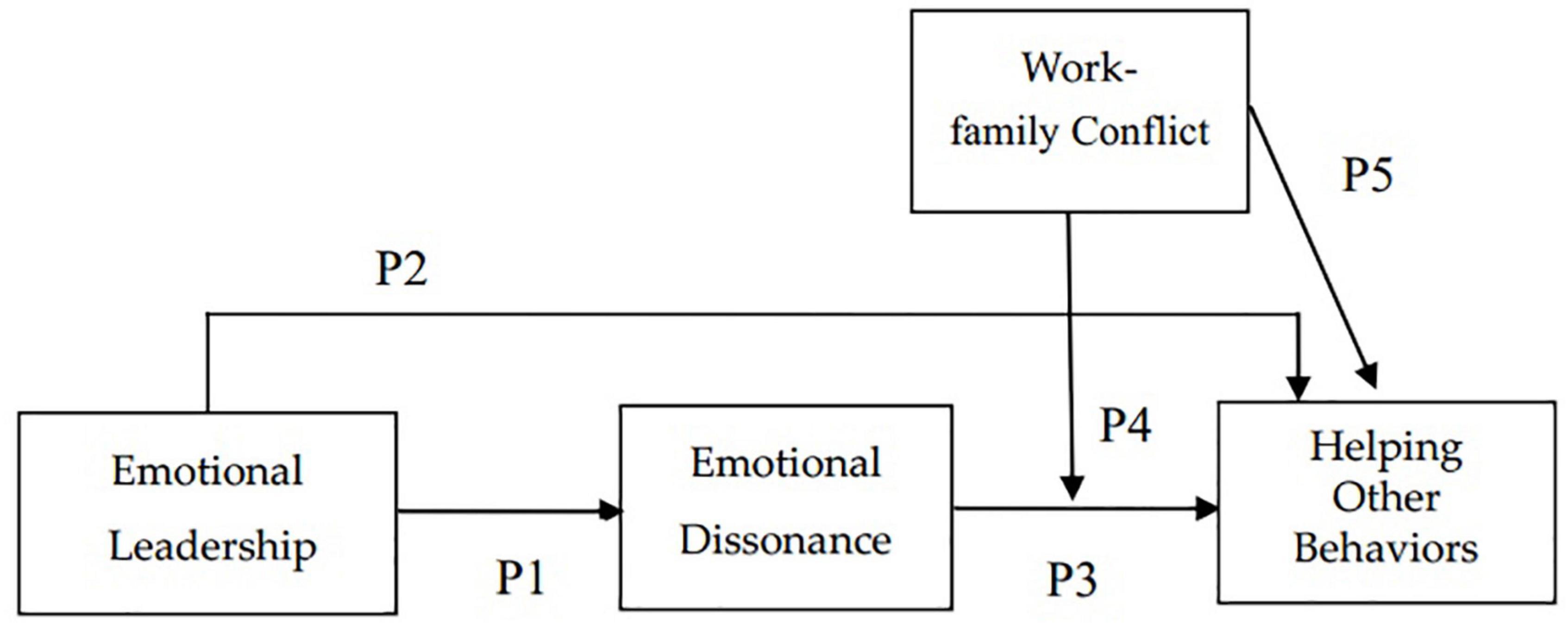
Figure 1. A moderated mediation model of emotional dissonance.
(1). Emotional leadership and emotional dissonance
Because an emotional leader can transform the original values of employes into the expected ones that meet the need of an organization by caring, understanding, and respecting the needs of employes (Huang et al., 2021), an emotional leader can pass the value expected by the organization to the employes (Shamir et al., 1993), which will eventually lead to the employes’ values, meeting organizational expectations of work emotions. That is to say, emotional dissonance occurs when employes display work emotions that are inconsistent with their values (Zapf and Holz, 2006), and emotional leadership can reduce this dissonance through an emotional leadership process. Indeed, a leader is expected to manage the employes in a meaningful way that meets the expectations of the organization based on the theory of meaning management (Smircich and Morgan, 1982), so these employes should show emotional behaviors that are expected by organizations. Therefore, he/she will transmit the expected value of the organization to the subordinates, and also shape the work behavior of the subordinates to meet the expectations of the organization, hence reducing the emotional dissonance of these employes.
However, to date, there have been no surveys to explore that relationship. In addition, emotional leadership is a work resource that can support employes’ emotional needs (Totterdell and Holman, 2003), because the emotional leadership process can guide the optimal management of employes’ emotions, thereby generating more emotional resources for being used by employes. In the same vein, emotional leadership can shape the work values of employes into the expected organizations’ values, so it will increase employes’ positive behaviors more generally, such as helping others. Therefore, this article proposes the two propositions as follows:
Proposition 1: Emotional leadership can decrease emotional dissonance.
Proposition 2: Emotional leadership can increase helping-other behaviors.
(2). Emotional dissonance and helping other behaviors
Emotion regulation is an element of emotional work, which includes various positive and negative emotions of employes (Zapf and Holz, 2006). An important dimension of emotion regulation is emotional dissonance (Zapf, 2002), which refers to the fact that employes express emotions that are in line with a company’s expectations but are contrary to their emotional values. When employes are immersed in a state of emotional dissonance, they exhibit various negative behaviors, such as emotional exhaustion, absenteeism, and illness (Indregard et al., 2016). Indeed, when employes’ emotional resources are unable to cope with job demands, they may display emotional exhaustion or absenteeism to preserve the last few resources. Since these employes have few resources, they may conserve resources by reducing helping-other behaviors. Employes are thoughtful in allocating key resources (Macan, 1994), and they should reduce non-performance-related helping behaviors in the absence of personal resources.
Proposition 3: Emotional dissonance can decrease helping other behaviors.
(3).Work-family conflict, emotional dissonance, and helping other behaviors
Work-family conflict denotes a “form of inter-role conflict in which the role pressures from the work and family domains are mutually incompatible in some respect” (Greenhaus and Beutell, 1985, p. 777). That is to say, employes invest most of their resources in their work because these employes need to earn money to maintain their families. Based on the conservation of resources theory (Hobfoll, 1989), this will cause these employes to go home with very few resources. If employes occur high levels of work-family conflict, it follows that these employes do not have sufficient resources to meet work and family needs. Therefore, a high level of work-family conflict will further deteriorate the relationship between emotional dissonance and helping-other behaviors, because these employes with high-level emotional dissonance have little resources to yield helping-other behavior.
In the same vein, if employes do not have sufficient resources to meet work and family needs, these employes must reduce helping-others behavior to hold their resources. Therefore, this article proposes the two propositions as follows:
Proposition 4: Work-family conflict can moderate the relationship between emotional dissonance and helping-other behaviors
Proposition 5: Work-family conflict can decrease helping-other behaviors.
Discussion
This article proposes a new model of emotion regulation to predict the cognitive processes underlying helping behaviors, which is unique and cannot be explained by past models. Emotion regulation has emerged as an important antecedent of employe performance, as many negative employe behaviors are associated with the demands incurred by emotion regulation, such as emotional exhaustion (Alsalhe et al., 2021), counterproductive behaviors (Huang et al., 2021), and disorders of emotion (Greening et al., 2014). However, past investigations have not explored the relationship between emotional leadership and emotional dissonance to predict helping behaviors. They have also not considered the role of work-family conflict as an important moderating variable, which could significantly advance the literature on emotion regulation.
In addition, contemporary businesses must develop strategies to deal with the emotional issues of employes, as employes are an important source of performance and competitive advantage. Indeed, emotional problems lead to many negative employe behaviors. This article considers emotional leadership as a significant organizational leadership mechanism because it should not only alleviate emotional dissonance but also increases helping behaviors. Therefore, emotional leadership could be regarded as important educational and training content for cultivating executive leadership.
Finally, although this article proposes an emotion regulation model, future investigations should adopt empirical data to verify the model’s validity. Moreover, a multi-country sample should be used to verify the external validity of the model.
Author contributions
All authors listed have made a substantial, direct, and intellectual contribution to the work, and approved it for publication.
Conflict of interest
The authors declare that the research was conducted in the absence of any commercial or financial relationships that could be construed as a potential conflict of interest.
Publisher’s note
All claims expressed in this article are solely those of the authors and do not necessarily represent those of their affiliated organizations, or those of the publisher, the editors and the reviewers. Any product that may be evaluated in this article, or claim that may be made by its manufacturer, is not guaranteed or endorsed by the publisher.
References
Alsalhe, T. A., Chalghaf, N., Guelmami, N., Azaiez, F., and Bragazzi, N. L. (2021). Occupational burnout prevalence and its determinants among physical education teachers: A systematic review and meta-analysis. Front. Hum. Neurosci. 15:553230. doi: 10.3389/fnhum.2021.553230
Geisler, M., Buratti, S., and Allwood, C. M. (2019). The complex interplay between emotion regulation and work rumination on exhaustion. Front. Psychol. 10:1978. doi: 10.3389/fpsyg.2019.01978
Grandey, A. A. (2000). Emotional regulation in the workplace: A new way to conceptualize emotional labor. J. Occup. Health Psychol. 5, 95–110. doi: 10.1037/1076-8998.5.1.95
Greenhaus, J. H., and Beutell, N. J. (1985). Sources of conflict between work and family roles. Acad. Manage. Rev. 10, 76–88.
Greening, S. G., Lee, T.-H., and Mather, M. (2014). A dual process for the cognitive control of emotional significance: Implications for emotion regulation and disorders of emotion. Front. Hum. Neurosci. 8:253. doi: 10.3389/fnhum.2014.00253
Hobfoll, S. E. (1989). Conservation of resources: A new attempt at conceptualizing stress. Am. Psychol. 44, 513–524.
Huang, S. Y. B., Li, M.-W., and Chang, T.-W. (2021). Transformational leadership, ethical leadership, and participative leadership in predicting counterproductive work behaviors: Evidence from financial technology firms. Front. Psychol. 12:658727. doi: 10.3389/fpsyg.2021.658727
Indregard, A.-M. R., Ulleberg, P., Knardahl, S., and Nielsen, M. B. (2018). Emotional dissonance and sickness absence among employees working with customers and clients: A moderated mediation model via exhaustion and human resource primacy. Front. Psychol. 9:436. doi: 10.3389/fpsyg.2018.00436
Indregard, A. R., Knardahl, S., and Nielsen, M. B. (2016). Emotional dissonanceand sickness absence: A prospective study of employees working with clients. Int. Arch. Occup. Environ. Health 90, 83–92.
Li, X., Lin, X., Zhang, F., and Tian, Y. (2021). Playing roles in work and family: Effects of work/family conflicts on job and life satisfaction among junior high school teachers. Front. Psychol. 12:772025. doi: 10.3389/fpsyg.2021.772025
Madrid, H. P., Barros, E., and Vasquez, C. A. (2020). The emotion regulation roots of job satisfaction. Front. Psychol. 11:609933. doi: 10.3389/fpsyg.2020.609933
Obrenovic, B., Jianguo, D., Khudaykulov, A., and Khan, M. A. S. (2020). Work-family conflict impact on psychological safety and psychological well-being: A job performance model. Front. Psychol. 11:475. doi: 10.3389/fpsyg.2020.00475
Park, Y.-N., Hyun, H., and Jhang, J. (2019). Do emotional laborers help the needy more or less? The mediating role of sympathy in the effect of emotional dissonance on prosocial behavior. Front. Psychol. 10:118. doi: 10.3389/fpsyg.2019.00118
Shamir, B., House, R. J., and Arthur, M. A. (1993). The motivational effects of charismatic leadership: A self-concept based theory. Organ. Sci. 4, 577–594. doi: 10.1016/j.pubrev.2021.102118
Smircich, L., and Morgan, G. (1982). Leadership: The management of meaning. J. Appl. Behav. Sci. 18, 257–273.
The World Bank (2016). The World Bank. Available online at: https://www.worldbank.org (accessed March 11, 2022).
Totterdell, P., and Holman, D. (2003). Emotion regulation in customer service roles: Testing a model of emotional labor. J. Occup. Health Psychol. 8, 55–73. doi: 10.1037//1076-8998.8.1.55
Zapf, D. (2002). Emotion work and psychological well-being: A review of theliterature and some conceptual considerations. Hum. Resour. Manag. Rev. 12, 237–268.
Zapf, D., and Holz, M. (2006). On the positive and negative effects of emotionwork in organizations. Eur. J. Work Organ. Psychol. 15, 1–28.
Keywords: emotional dissonance, emotional leadership, help other behavior, work-to-family conflict, emotion regulation
Citation: Hu L, Huang SYB, Li H-X and Lee S-C (2022) To help others or not: A moderated mediation model of emotional dissonance. Front. Hum. Neurosci. 16:893623. doi: 10.3389/fnhum.2022.893623
Received: 10 March 2022; Accepted: 15 July 2022;
Published: 04 August 2022.
Edited by:
Carmen Moret-Tatay, Catholic University of Valencia San Vicente Mártir, SpainReviewed by:
Craig Leth-Steensen, Carleton University, CanadaCopyright © 2022 Hu, Huang, Li and Lee. This is an open-access article distributed under the terms of the Creative Commons Attribution License (CC BY). The use, distribution or reproduction in other forums is permitted, provided the original author(s) and the copyright owner(s) are credited and that the original publication in this journal is cited, in accordance with accepted academic practice. No use, distribution or reproduction is permitted which does not comply with these terms.
*Correspondence: Shih-Chin Lee, aWNlc3Rvcm1AbWFpbC5jaGlobGVlLmVkdS50dw==