Abstract
Background: Sepsis associated with acute lung injury (ALI) is a common acute and severe disease with severe socioeconomic burden. The aim of this study is to explore the literatures of sepsis associated with ALI from a bibliometric perspective.
Methods: Articles and reviews related to sepsis associated with ALI published from 2012 to 2021 in the Web of Science Core Collection were retrieved. Countries, affiliations, journals, authors, references, co-citation and keyword analysis in this field were visually analyzed using WOS citation reports, bibliometric.com, CtieSpace and VOSviewer software.
Results: Over the last decade (2012–2021), marked progress has been made in the area of sepsis associated with ALI research. 836 papers were enrolled in this study. China accounts for the most contributors. Articles from the United States has the highest average cited. Shanghai Jiao Tong University, University of California System and Huazhong University of Science Technology were the main contributing institutions. Articles in International Immunopharmacology, Inflammation, Shock and Critical Care were cited the most. Matthay MA and Ware LB were the main contributors to this field. Inflammation and NF-κB have always been the focus of sepsis associated with ALI related research, and programmed cell death (including apoptosis, necroptosis and pyroptosis) may be the important direction of future research.
Conclusion: Research on the sepsis associated with ALI is flourishing. The research on programmed cell death is a hot spot and may be a promising research field in the coming years.
1 Introduction
Sepsis is a life-threatening organ dysfunction caused by the dysregulation of the body’s response to infection (Singer et al., 2016). The global study of adult sepsis hospitalized patients showed that the overall mortality rate of sepsis patients was 26.7%, while the mortality rate of sepsis patients in intensive care unit (ICU) was 41.9% (Fleischmann-Struzek et al., 2020). According to studies in China, the annual medical cost of 230,000 septic patients treated in ICU is about $4.6 billion (Xie et al., 2020). Sepsis has become an important global public health problem. Acute lung injury (ALI) is one of the most common complications of sepsis. Study has shown that 6%–42% of ALI is caused by sepsis (Sessler et al., 1996). ALI caused by sepsis refers to acute hypoxic respiratory failure caused by sepsis, which is secondary to alveolar injury caused by dysregulation of inflammatory response. The pathophysiology of ALI is mainly manifested by severe inflammatory injury of alveolar capillary barrier, depletion of pulmonary surfactant, reduction of effective ventilation lung tissue, and reduction of lung compliance (Ranieri et al., 2012; Matthay et al., 2019). Since ALI was first described in 1967, people’s understanding and definition of its clinicopathology have been constantly updated. Nowadays, the clinical diagnosis and treatment of ALI have always followed the Berlin definition in 2012 (Ranieri et al., 2012). Since ALI is a complex and clinically heterogeneous syndrome, the effective treatment strategies that can reach consensus today are limited to protective ventilation therapy (auxiliary neuromuscular blockers and prone ventilation), while other anti-inflammatory drugs [e.g., glucocorticoids, macrophage colony stimulating factor (GM-CSF), statins, aspirin] and drugs to improve lung function (β receptor agonists, nitric oxide inhalation) did not significantly reduce the mortality of ALI (Bellani et al., 2016). ALI associated with sepsis involves multiple molecular mechanisms. Consequently, it is significant to quantitatively analyze the status quo, focus areas, and future prospects related to ALI associated with sepsis.
Bibliometrics is an interdisciplinary science that uses mathematical and statistical methods to study literature and bibliometrics features (Wu et al., 2022). Bibliometrics uses mathematical methods to break through the limitations of time and space, so that researchers can fully understand the current situation, hot spots and trends of a research field. Currently, bibliometric analysis has been used in many fields, including atherosclerosis, Parkinson’s disease, gout and liver transplantation (Jiang et al., 2022; Li et al., 2022; Wang et al., 2022; Wen et al., 2022). To date, there is no literature about bibliometrics analysis of sepsis associated with ALI. To fill this gap, this study analyzed the characteristics and trends of publications related to sepsis associated with ALI through bibliometrics.
2 Materials and methods
2.1 Data sources and search strategy
The search was conducted using the Web of Science (WOS) Core Collection database. All the literature was retrieved in WOS. The search terms were TS= (sepsis OR endotoxemia) AND TS= ((acute lung injury) OR (ALI) OR (acute respiratory distress syndrome) OR (respiratory distress syndrome) OR (ARDS)). The language is limited to English, and the document types are limited to article or review. For the time span, we chose the 10 years between 2012 and 2021. In total, 4,790 articles were initially identified in our study. Two reviewers independently screened the titles and abstracts to exclude literature which unrelated to sepsis associated with ALI. After the full-text reading, 836 articles that exclusively addressed the topic of sepsis associated with ALI were included. Since the data of this study is from WOS, which is an open database, there are no ethical issues related to access in this study.
2.2 Bibliometric analyzing
“Citation Report” function of the web science was employed to evaluate the citation rates and the H-index. The “bibliometric.com” is a website for online bibliometric analysis (https://bibliometric.com/). CiteSpace (Vesion 5.8) is a widely used visual analysis software (Chen, 2004). VOSviewer (Vesion 1.16.18) is a software for plotting maps based on network data (van Eck and Waltman, 2010). We used WOS citation reports, bibliometric.com, CtieSpace and VOSviewer software for bibliometric analysis. Detailed procedures of the enrolment and analysis are illustrated in Figure 1.
FIGURE 1
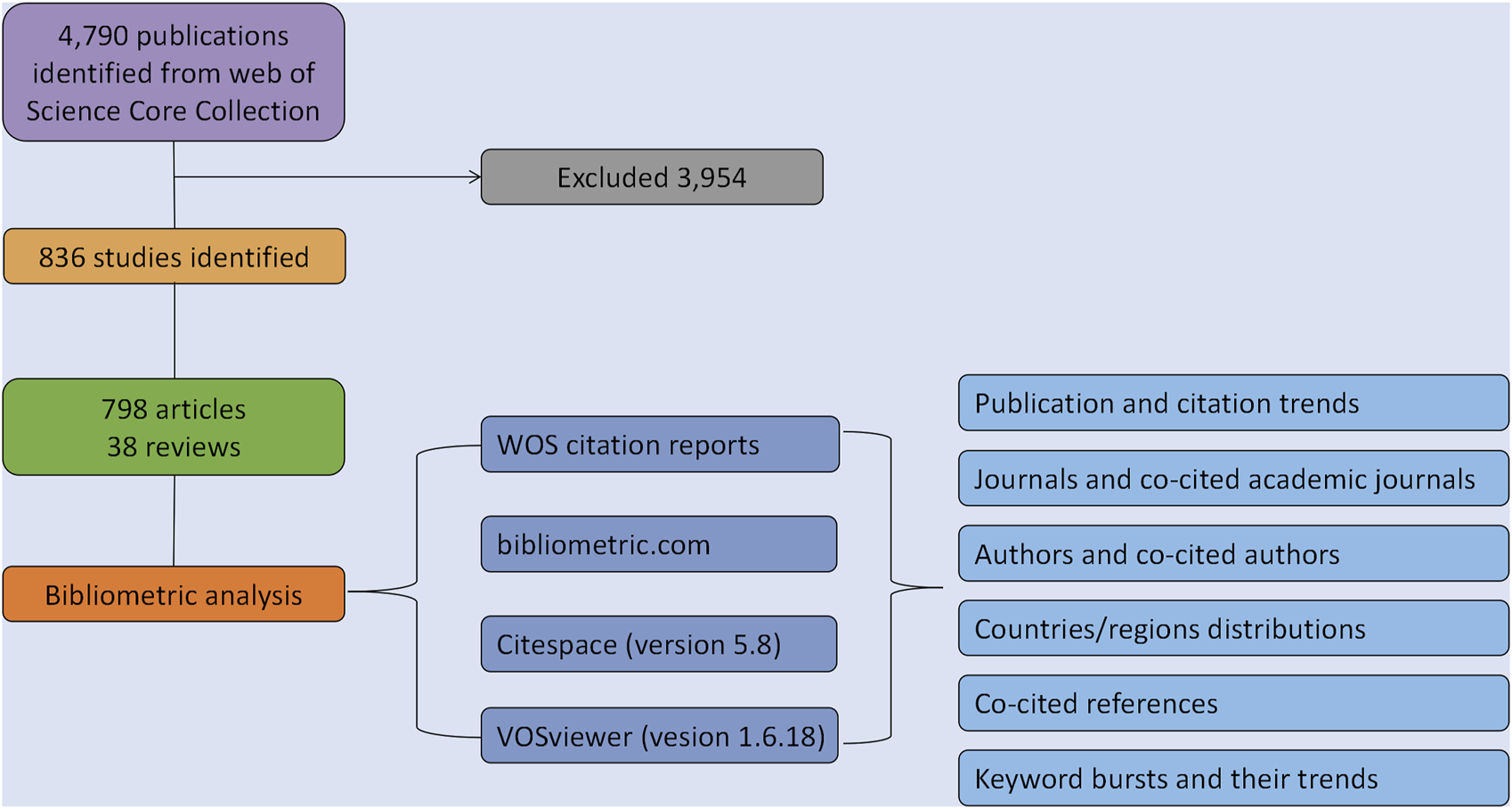
Detailed procedures of the enrolment and analysis.
3 Results
3.1 The research trends
We collected 836 publications from the Web of Science core collection published in 312 journals over the period 2012–2021. The number of publications related to sepsis associated with ALI by year was presented in Figure 2. In total, 836 publications have been cited 13,491 times, and the average number of citations per publication is 21.76 times.
FIGURE 2
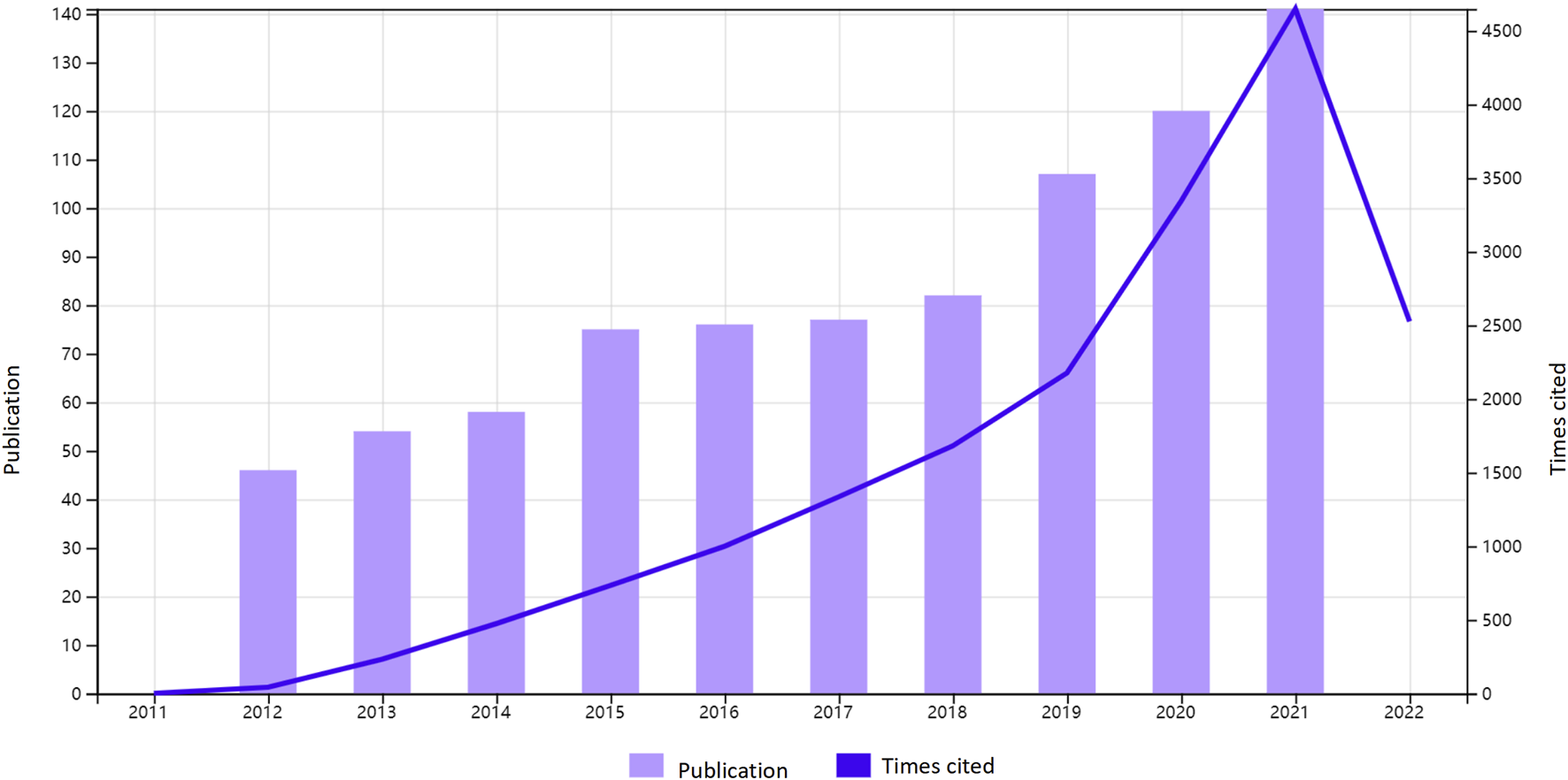
The number of publications by year over the past 10 years.
3.2 Analysis of the top 10 countries
The top 10 most productive countries were shown in Table 1. Table 1 shows the total citations, average number of citations per publication, H-index and publications/population (per million people) of the top 10 countries. Among the top 10 countries, China ranked first in the sum of total publications (534), cited times (9,331) and H-index (43), but only ranked seventh in the average cited times of a single article (17.47). In terms of the total publications, the United States ranked second. However, the United States ranked first in the average number of citations per publication (38.31). It was followed by Japan, Germany, Brazil, Canada, Spain, South Korea, United Kingdom and Turkey. Canada ranked first in publications/population (per million people) (0.61). Figure 3A showed the total of publications by each country each year, and Figure 3B showed the cooperative relationship between each country. The results showed the greatest cooperation between China and the United States, and the United States cooperated with other countries more broadly.
TABLE 1
| No. | Country | Counts (%) | Total cites | Average cites | H-index | Publications/population (per million people) |
|---|---|---|---|---|---|---|
| 1 | China | 534 (59.532%) | 9,331 | 17.47 | 43 | 0.41 |
| 2 | United States of America | 194 (21.628%) | 7,432 | 38.31 | 42 | 0.58 |
| 3 | Japan | 35 (3.902%) | 724 | 20.69 | 16 | 0.27 |
| 4 | Germany | 27 (3.010%) | 671 | 24.85 | 15 | 0.33 |
| 5 | Brazil | 24 (2.676%) | 247 | 10.29 | 11 | 0.11 |
| 6 | Canada | 23 (2.564%) | 639 | 27.78 | 13 | 0.61 |
| 7 | Spain | 18 (2.007%) | 379 | 21.06 | 13 | 0.38 |
| 8 | South Korea | 16 (1.784%) | 256 | 16 | 10 | 0.31 |
| 9 | United Kingdom | 13 (1.449%) | 398 | 30.62 | 8 | 0.19 |
| 10 | Turkey | 13 (1.449%) | 257 | 19.77 | 7 | 0.15 |
Publications in the 10 most productive countries/regions.
FIGURE 3
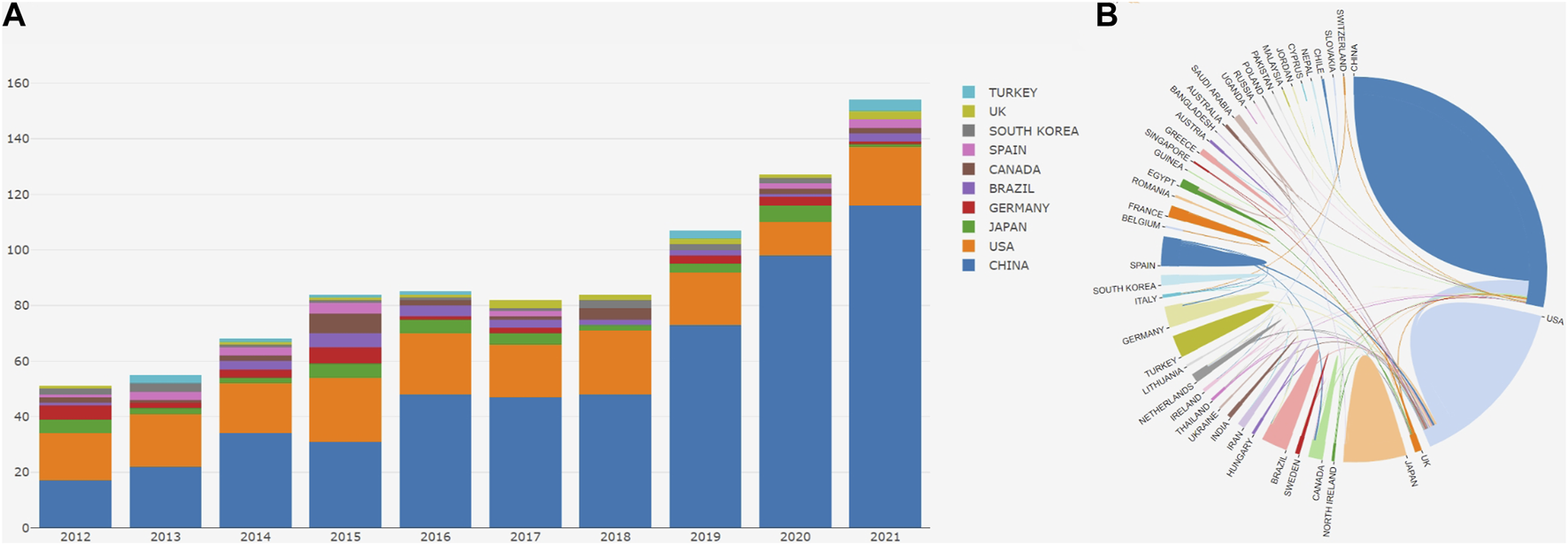
The number of publications by country (A) The total of publications by each country each year; (B) The cooperative relationship between each country.
3.3 Analysis of the top 10 affiliations
The top 10 productive affiliations were shown in Table 2. Shanghai Jiao Tong University had the highest the sum of total publications (32), followed by University of California System (25), Huazhong University of Science Technology (25), University of Pennsylvania (21), Wenzhou Medical University (21), Wuhan University (21), Nanjing Medical University (20), China Medical University (19), Tongji University (19) and Harvard University (17). University of California System ranked first in terms of the average number of citations per publication (71.24), the highest cited times (1,781) and H-index (17). Nanjing Medical University ranked first in publications/students (per thousand people) (1.33). Although the total publications of Nanjing Medical University in China were relatively high, their average number of citations per publication was far behind other high-yield universities. It may be related to the low quality of the published articles and the relatively obscure journals.
TABLE 2
| No. | Affiliations | Country | Counts | Total cites | Average cites | H-index | Publications/students (per thousand people) |
|---|---|---|---|---|---|---|---|
| 1 | Shanghai Jiao Tong University | China | 32 | 858 | 26.81 | 12 | 0.71 |
| 2 | University of California System | United States of America | 25 | 1781 | 71.24 | 17 | 0.05 |
| 3 | Huazhong University of Science Technology | China | 25 | 352 | 14.08 | 12 | 0.42 |
| 4 | University of Pennsylvania | United States of America | 21 | 468 | 22.29 | 13 | 1.05 |
| 5 | Wenzhou Medical University | China | 21 | 379 | 18.05 | 11 | 1.31 |
| 6 | Wuhan University | China | 21 | 296 | 14.1 | 10 | 0.36 |
| 7 | Nanjing Medical University | China | 20 | 153 | 7.65 | 7 | 1.33 |
| 8 | China Medical University | China | 19 | 438 | 23.05 | 13 | 1.06 |
| 9 | Tongji University | China | 19 | 406 | 21.37 | 11 | 0.54 |
| 10 | Harvard University | United States of America | 17 | 1,021 | 60.06 | 14 | 0.55 |
The top 10 productive affiliations.
3.4 Analysis of the top 10 journals
The top 10 most active journals were shown in Table 3. International Immunopharmacology (IF = 5.714, 2021) was the most active journal in sepsis associated with ALI research, with 35 articles, followed by Inflammation (IF = 4.657, 2021), with 27 articles; Shock (IF = 3.533, 2021), with 26 articles; Critical Care (IF = 19.334, 2021), with 21 articles; American Journal of Physiology Lung Cellular and Molecular Physiology (IF = 6.011, 2021), with 15 articles; Journal of Surgical Research (IF = 2.417, 2021), with 15 articles; Molecular Medicine Reports (IF = 3.423, 2021), with 15 articles; Scientific Reports (IF = 4.996, 2021), with 15 articles; Biomedicine Pharmacotherapy (IF = 7.419, 2021), with 12 articles and Critical Care Medicine (IF = 9.296, 2021), with 12 articles. Among the top 10 journals, International Immunopharmacology published the most sepsis associated with ALI related articles. International Immunopharmacology was an interdisciplinary journal devoted to the publication of original scientific papers interrelating immunology and pharmacology. Additionally, Critical Care (836 citations) had the most total citations. Inflammation (H-index of 18) ranked first in H-index. Critical Care aimed to improve the care of critically ill patients by acquiring, discussing, distributing, and promoting evidence-based information relevant to intensivists. In addition, American Journal of Physiology Lung Cellular and Molecular Physiology had relatively high average number of citations per publication (39.33 average citations). The American Journal of Physiology Lung Cellular and Molecular Physiology published original research covering the broad scope of molecular, cellular, and integrative aspects of normal and abnormal function of cells and components of the respiratory system.
TABLE 3
| No. | Journal | Counts | Total cites | Average cite | H-index | If (2021) | JCR | Scope |
|---|---|---|---|---|---|---|---|---|
| 1 | International Immunopharmacology | 35 | 750 | 21.43 | 16 | 5.714 | Q1/Q2 | An interdisciplinary journal devoted to the publication of original scientific papers interrelating immunology and pharmacology |
| 2 | Inflammation | 27 | 801 | 29.67 | 18 | 4.657 | Q3 | The latest international advances in experimental and clinical research on the physiology, biochemistry, cell biology, and pharmacology of inflammation |
| 3 | Shock | 26 | 739 | 28.42 | 16 | 3.533 | Q2/Q3 | A vehicle for timely publication in the areas of basic and clinical studies of shock, trauma, sepsis, inflammation, ischemia, and related pathobiological states, with particular emphasis on the biologic mechanisms that determine the response to such injury |
| 4 | Critical Care | 21 | 836 | 39.81 | 16 | 19.334 | Q1 | Aims to improve the care of critically ill patients by acquiring, discussing, distributing, and promoting evidence-based information relevant to intensivists |
| 5 | American Journal of Physiology Lung Cellular and Molecular Physiology | 15 | 590 | 39.33 | 14 | 6.011 | Q1/Q2 | Original research covering the broad scope of molecular, cellular, and integrative aspects of normal and abnormal function of cells and components of the respiratory system |
| 6 | Journal of Surgical Research | 15 | 291 | 19.4 | 11 | 2.417 | Q3 | Original articles concerned with clinical and laboratory investigations relevant to surgical practice and teaching |
| 7 | Molecular Medicine Reports | 15 | 344 | 22.93 | 9 | 3.423 | Q3 | Studies devoted to molecular medicine, underscoring aspects including pharmacology, pathology, genetics, neurosciences, infectious diseases, molecular cardiology and molecular surgery |
| 8 | Scientific Reports | 15 | 471 | 31.4 | 12 | 4.996 | Q2 | All areas of the natural sciences, psychology, medicine and engineering |
| 9 | Biomedicine Pharmacotherapy | 12 | 282 | 23.5 | 10 | 7.419 | Q1 | A multidisciplinary journal which publishes full-length, original research reports, reviews, and preliminary communications or letters to the editor which fall within the general scope of clinical and basic medicine and pharmacology |
| 10 | Critical Care Medicine | 12 | 239 | 19.92 | 10 | 9.296 | Q1 | Original articles on significant work in critical care medicine |
The top 10 most active journals.
3.5 Analysis of the top 10 authors
The top 10 authors with the most publications were shown in Table 4. 4,366 authors contributed to sepsis associated with ALI related publications. Matthay MA was the most productive which published 11 articles (1,398 citations and 127.9 average citations), followed by Ware LB (11 articles, 534 citations and 48.55 average citations), Calfee, CS (9 articles, 625 citations and 69.44 average citations), Meyer, NJ (9 articles, 313 citations and 34.78 average citations), Villar, J (8 articles, 147 citations and 18.38 average citations), Christie, JD (7 articles, 294 citations and 42 average citations), Reilly, JP (7 articles, 208 citations and 29.71 average citations), Shi Jia (6 articles, 133 citations and 22.17 average citations), Zhang Yuan (6 articles, 133 citations and 22.17 average citations) and Flores, C (6 articles, 119 citations and 19.83 average citations). In addition, most of the top 10 authors were from the United States of America (6), China (2) or Spain (2).
TABLE 4
| No. | Author | Country | Count | Total cites | Average cites |
|---|---|---|---|---|---|
| 1 | Matthay MA | United States of America | 11 | 1,398 | 127.9 |
| 2 | Ware LB | United States of America | 11 | 534 | 48.55 |
| 3 | Calfee CS | United States of America | 9 | 625 | 69.44 |
| 4 | Meyer NJ | United States of America | 9 | 313 | 34.78 |
| 5 | Villar J | Spain | 8 | 147 | 18.38 |
| 6 | Christie JD | United States of America | 7 | 294 | 42 |
| 7 | Reilly JP | United States of America | 7 | 208 | 29.71 |
| 8 | Shi Jia | China | 6 | 133 | 22.17 |
| 9 | Zhang Yuan | China | 6 | 133 | 22.17 |
| 10 | Flores C | Spain | 6 | 119 | 19.83 |
The top 10 authors with the most publications.
3.6 Analysis of the top 10 most cited publications
Table 5 shows the 10 most cited articles, and the range of citations was from 158 to 439. “The pulmonary endothelial glycocalyx regulates neutrophil adhesion and lung injury during experimental sepsis (Schmidt et al., 2012)” published by Schmidt EP et al. (2012) and had 439 citations; “Human Mesenchymal Stem Cell Microvesicles for Treatment of Escherichia coli Endotoxin-Induced Acute Lung Injury in Mice (Zhu et al., 2014)”, published by Zhu YG et al. (2014), which was with 426 citations; and the third with 373 citations was the “Effect of Vitamin C Infusion on Organ Failure and Biomarkers of Inflammation and Vascular Injury in Patients With Sepsis and Severe Acute Respiratory Failure: The CITRIS-ALI Randomized Clinical Trial (Fowler et al., 2019)” published by Fowler AA third. et al. (2019).
TABLE 5
| No. | Title | Author | Journal | Year | Type | If (2021) | Times cited |
|---|---|---|---|---|---|---|---|
| 1 | The pulmonary endothelial glycocalyx regulates neutrophil adhesion and lung injury during experimental sepsis | Schmidt EP et al | Nature Medicine | 2012 | Article | 87.241 | 439 |
| 2 | Human Mesenchymal Stem Cell Microvesicles for Treatment of Escherichia coli Endotoxin-Induced Acute Lung Injury in Mice | Zhu YG et al | Stem Cells | 2014 | Article | 5.845 | 426 |
| 3 | Effect of Vitamin C Infusion on Organ Failure and Biomarkers of Inflammation and Vascular Injury in Patients With Sepsis and Severe Acute Respiratory Failure: The CITRIS-ALI Randomized Clinical Trial | Fowler AA 3rd et al | JAMA-Journal of The American Medical Association | 2019 | Article | 157.335 | 373 |
| 4 | Rosuvastatin for Sepsis-Associated Acute Respiratory Distress Syndrome | National Heart, Lung, and Blood Institute ARDS Clinical Trials Network | New England Journal of Medicine | 2014 | Article | 176.079 | 331 |
| 5 | Enrichment of the lung microbiome with gut bacteria in sepsis and the acute respiratory distress syndrome | Dickson RP et al | Nature Microbiology | 2016 | Article | 30.964 | 240 |
| 6 | Caspase-11-mediated endothelial pyroptosis underlies endotoxemia-induced lung injury | Cheng KT et al | Journal of Clinical Investigation | 2017 | Article | 19.456 | 191 |
| 7 | Conservative fluid management or deresuscitation for patients with sepsis or acute respiratory distress syndrome following the resuscitation phase of critical illness: a systematic review and meta-analysis | Silversides JA et al | Intensive Care Medicine | 2017 | Review | 41.787 | 181 |
| 8 | Toward Smarter Lumping and Smarter Splitting: Rethinking Strategies for Sepsis and Acute Respiratory Distress Syndrome Clinical Trial Design | Prescott HC et al | American Journal of Respiratory and Critical Care Medicine | 2016 | Article | 30.582 | 176 |
| 9 | Anti-Inflammatory Effects of Apigenin in Lipopolysaccharide-Induced Inflammatory in Acute Lung Injury by Suppressing COX-2 and NF-kB Pathway | Wang J et al | Inflammation | 2014 | Article | 4.657 | 173 |
| 10 | Mesenchymal stem cells: mechanisms of potential therapeutic benefit in ARDS and sepsis | Walter J et al | Lancet Respiratory Medicine | 2014 | Review | 102.642 | 158 |
The top 10 most cited publications.
3.7 Co-citation analysis
3.7.1 Journals
Figure 4 shows the relationship between 288 identified journals (the minimum number of citations of journals exceeds 20) and the total link strength using VOSviewer. As presented in Table 6, the top 10 journals by total link strength were as follows: Critical Care Medicine (total link strength = 52,752 times), American Journal of Respiratory and Critical Care Medicine (46,606 times), New England Journal of Medicine (6,234 times), Journal of immunology (34,933 times), American Journal of Physiology-lung Cellular and Molecular Physiology (33,680 times), Shock (25,489 times), Plos One (23,774 times), Critical Care (21,499 times), JAMA (20,633 times) and Journal of Clinical Investigation (20,633 times). Therefore, Critical Care Medicine was the predominant journal in sepsis associated with ALI globally according to co-citation analysis.
FIGURE 4
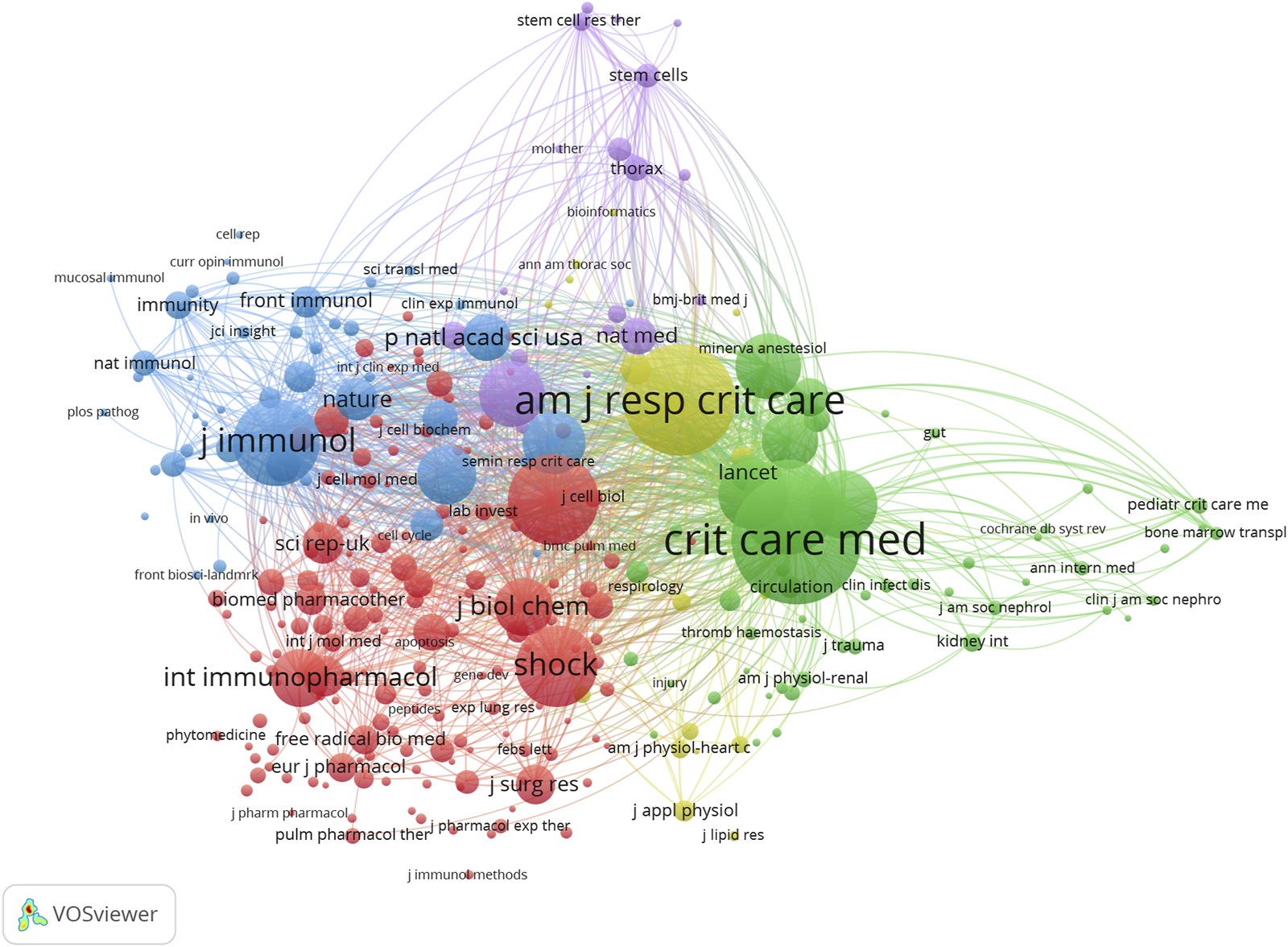
The mapping on journals of sepsis associated with ALI. The relationship between 288 identified journals (the minimum number of citations of journals exceeds 20) and the total link strength.
TABLE 6
| No. | Journals | Citations | Total link strength | If | JCR |
|---|---|---|---|---|---|
| 1 | Critical Care Medicine | 1,503 | 52,752 | 9.296 | Q1 |
| 2 | American Journal of Respiratory and Critical Care Medicine | 1,196 | 46,606 | 30.582 | Q1 |
| 3 | New England Journal of Medicine | 920 | 36,234 | 176.09 | Q1 |
| 4 | Journal of Immunology | 805 | 34,933 | 5.426 | Q2 |
| 5 | American Journal of Physiology-lung Cellular and Molecular Physiology | 858 | 33,680 | 6.011 | Q1/Q2 |
| 6 | Shock | 730 | 23,489 | 3.533 | Q2/Q3 |
| 7 | Plos One | 531 | 23,774 | 3.752 | Q2 |
| 8 | Critical Care | 581 | 21,499 | 19.334 | Q1 |
| 9 | JAMA-Journal of The American Medical Association | 533 | 20,633 | 157.335 | Q1 |
| 10 | Journal of Clinical Investigation | 497 | 20,633 | 19.456 | Q1 |
The top 10 co-citation journals.
3.7.2 Authors
Figure 5 shows the relationship between 179 identified authors (the minimum number of citations of journals exceeds 15) and the total link strength using VOSviewer. As presented in Table 7, the top 10 authors by total link strength were as follows: Matthay MA (total link strength = 1,753 times), Ware LB (1,439 times), Rubenfeld GD (1,239 times), Abraham E (935 times), Ranieri VM (933 times), Matute-Bello G (780 times), Singer M (768 times), Calfee CS (742 times), Bernard GR (714 times) and Hotchkiss RS (666 times). Therefore, Matthay MA was the predominant author in sepsis associated with ALI globally according to co-citation analysis.
FIGURE 5
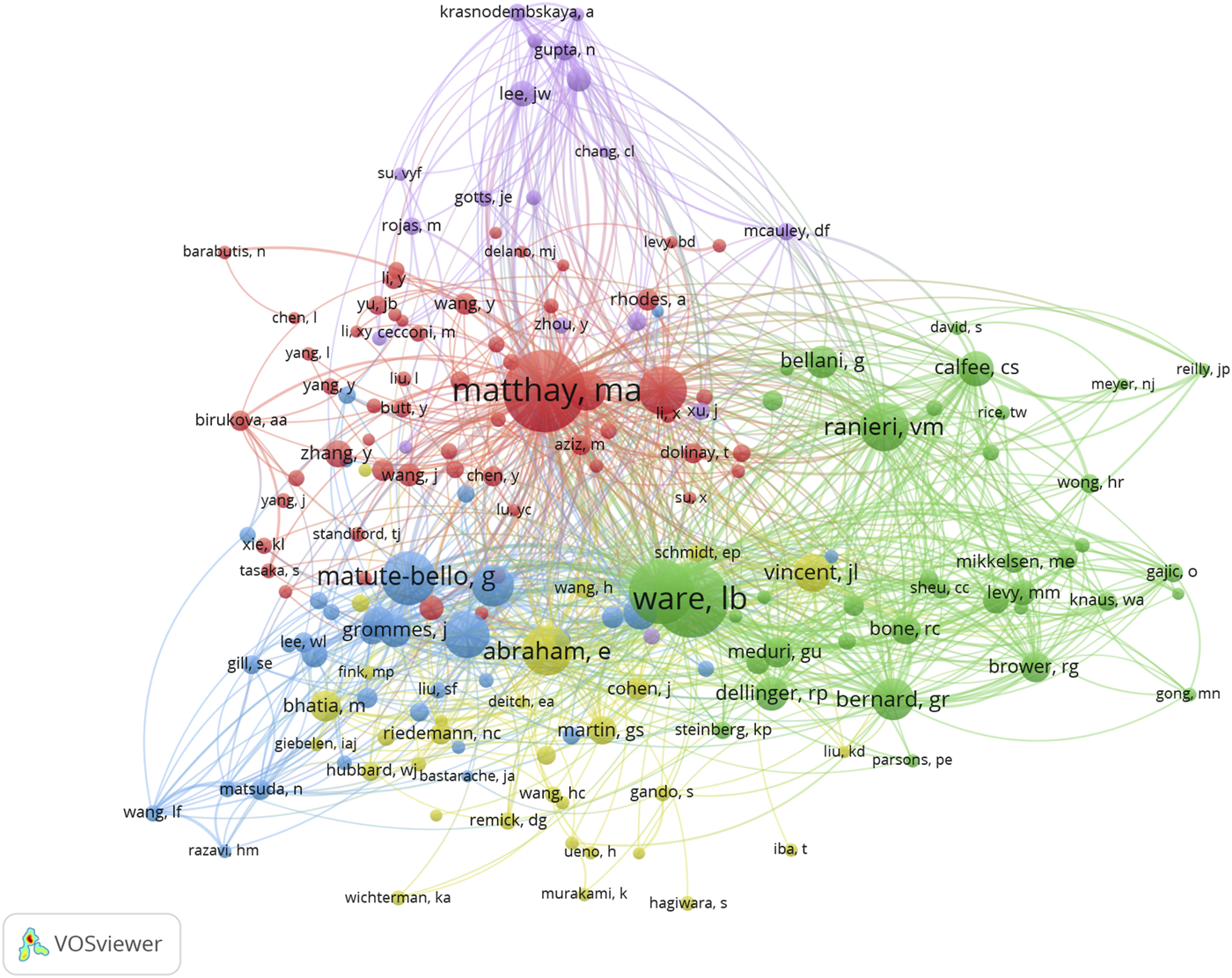
The mapping on authors of sepsis associated with ALI. The relationship between 179 identified authors (the minimum number of citations of journals exceeds 15) and the total link strength.
TABLE 7
| No. | Authors | Citations | Total link strength | Country |
|---|---|---|---|---|
| 1 | Matthay MA | 251 | 1,753 | United States of America |
| 2 | Ware LB | 218 | 1,439 | United States of America |
| 3 | Rubenfeld GD | 174 | 1,236 | Canada |
| 4 | Abraham E | 116 | 935 | United States of America |
| 5 | Ranieri VM | 113 | 933 | Italy |
| 6 | Matute-bello G | 132 | 780 | United States of America |
| 7 | Singer M | 111 | 768 | United Kingdom |
| 8 | Calfee CS | 70 | 742 | United States of America |
| 9 | Bernard GR | 92 | 714 | United States of America |
| 10 | Hotchkiss RS | 89 | 666 | United States of America |
The top 10 co-citation authors.
3.7.3 References
Figure 6 shows the relationship between 193 identified references (the minimum number of citations of journals exceeds 10) and the total link strength using VOSviewer. As presented in Table 8, the top 10 references by total link strength were as follows: Rubenfeld GD, “Incidence and outcomes of acute lung injury (Rubenfeld et al., 2005)”, New England Journal of Medicine, 2005 (total link strength = 932 times). Ware LB, “The acute respiratory distress syndrome (Ware and Matthay, 2000)”, New England Journal of Medicine, 2000 (602 times). Ranieri VM, “Acute respiratory distress syndrome: the Berlin Definition (Ranieri et al., 2012)”, JAMA, 2012 (581 times). Singer M, “The Third International Consensus Definitions for Sepsis and Septic Shock (Sepsis-3) (Singer et al., 2016)”, JAMA, 2016 (579 times). Matthay MA, “The acute respiratory distress syndrome (Matthay et al., 2012)”, Journal of Clinical Investigation, 2012 (495 times). Grommes J, “Contribution of neutrophils to acute lung injury (Grommes and Soehnlein, 2011)”, Molecular Medicine, 2011 (395 times). Rittirsch D, “Immunodesign of experimental sepsis by cecal ligation and puncture (Rittirsch et al., 2009)”, Nature Protocols, 2009 (381 times). Matute-Bello G, “Animal models of acute lung injury (Matute-Bello et al., 2008)”, American Journal of Physiology-Lung Cellular, 2008 (364 times). Bellani G, “Epidemiology, Patterns of Care, and Mortality for Patients With Acute Respiratory Distress Syndrome in Intensive Care Units in 50 Countries (Bellani et al., 2016)”, JAMA, 2016 (338 times) and Bernard G, “The American-European Consensus Conference on ARDS. Definitions, mechanisms, relevant outcomes, and clinical trial coordination (Bernard et al., 1994)”, American Journal of Respiratory and Critical Care Medicine, 1994 (320 times). Therefore, “Incidence and outcomes of acute lung injury (Rubenfeld et al., 2005)” was the predominant reference in sepsis associated with ALI globally according to co-citation analysis. The authors of this literature conducted a prospective, population-based cohort study at 21 hospitals using a validated screening protocol to identify patients meeting consensus criteria for ALI.
FIGURE 6
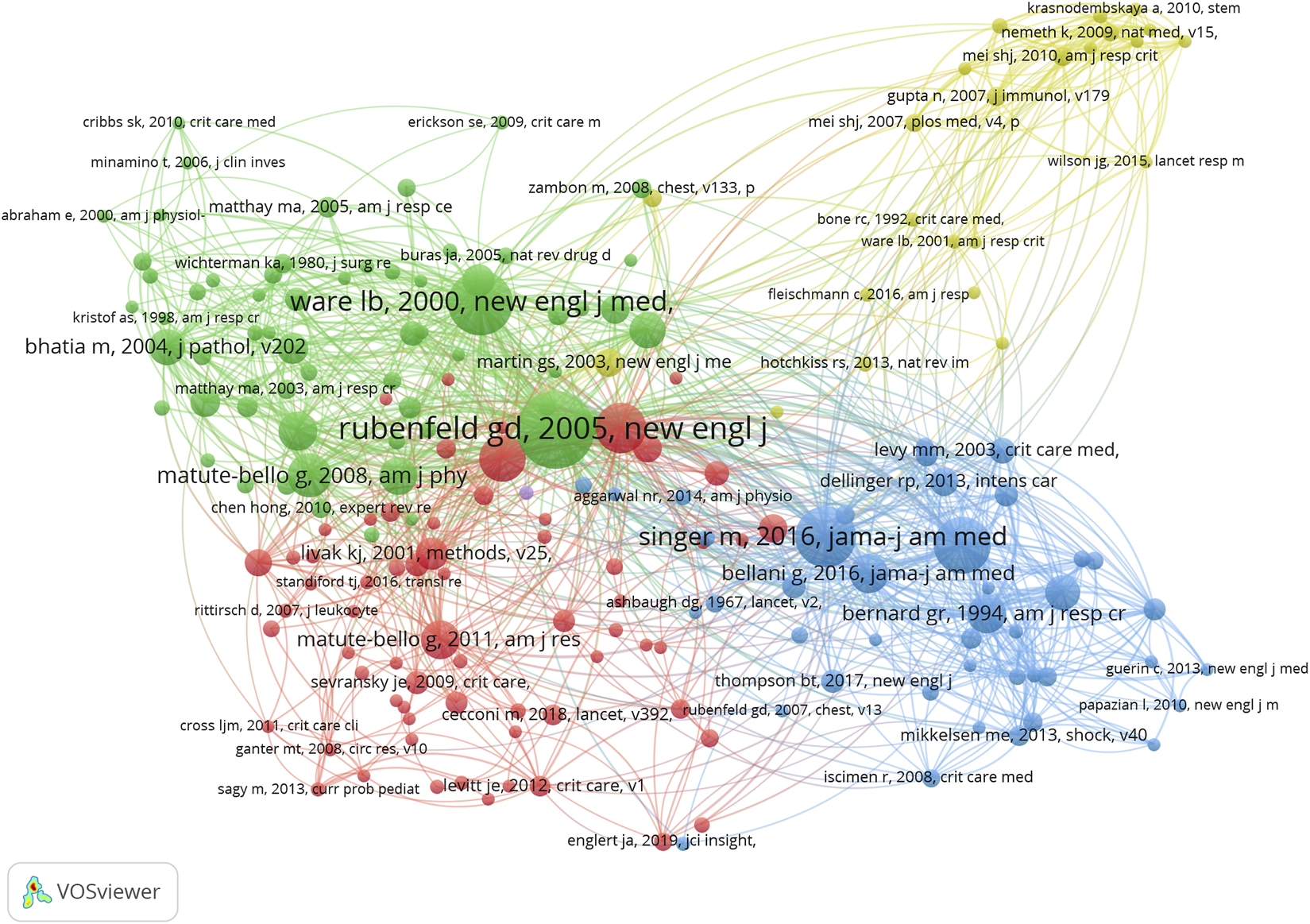
The mapping on references of sepsis associated with ALI. The relationship between 193 identified references (the minimum number of citations of journals exceeds 10) and the total link strength.
TABLE 8
| No. | Title | Times cited | Total link strength | Author | Journal | Year | Type | If (2021) |
|---|---|---|---|---|---|---|---|---|
| 1 | Incidence and outcomes of acute lung injury | 153 | 932 | Rubenfeld GD et al | New England Journal of Medicine | 2005 | Article | 176.079 |
| 2 | The acute respiratory distress syndrome | 117 | 602 | Ware LB et al | New England Journal of Medicine | 2000 | Review | 176.079 |
| 3 | Acute respiratory distress syndrome: the Berlin Definition | 97 | 581 | Ranieri VM et al | JAMA-Journal of The American Medical Association | 2012 | Article | 157.335 |
| 4 | The Third International Consensus Definitions for Sepsis and Septic Shock (Sepsis-3) | 107 | 579 | Singer M et al | JAMA-Journal of The American Medical Association | 2016 | Article | 157.335 |
| 5 | The acute respiratory distress syndrome | 80 | 495 | Matthay MA et al | Journal of Clinical Investigation | 2012 | Review | 19.456 |
| 6 | Contribution of neutrophils to acute lung injury | 54 | 395 | Grommes J et al | Molecular Medicine | 2011 | Review | 6.376 |
| 7 | Immunodesign of experimental sepsis by cecal ligation and puncture | 71 | 381 | Rittirsch D et al | Nature Protocols | 2009 | Article | 17.021 |
| 8 | Animal models of acute lung injury | 64 | 364 | Matute-Bello G et al | American Journal of Physiology-Lung Cellular and Molecular Physiology | 2008 | Review | 6.011 |
| 9 | Epidemiology, Patterns of Care, and Mortality for Patients With Acute Respiratory Distress Syndrome in Intensive Care Units in 50 Countries | 53 | 338 | Bellani G et al | JAMA-Journal of The American Medical Association | 2016 | Article | 157.335 |
| 10 | The American-European Consensus Conference on ARDS. Definitions, mechanisms, relevant outcomes, and clinical trial coordination | 55 | 320 | Bernard G R et al | American Journal of Respiratory and Critical Care Medicine | 1994 | Review | 30.528 |
The top 10 co-citation references.
3.8 The analysis of keywords
Keywords usually reflect the theme of research, and systematic analysis of keywords reflect the research hotspot in a specific field. When analyzing the keywords, we combined some different versions of the same terms, including different spelling versions (e.g., “nf-kappa-b”, “nuclear factor-kappa b” and “NF-κB”), and abbreviated terms (e.g., “LPS” and “lipopolysaccharide”). Table 9 shows the top 20 keywords, with most of them falling into two groups. One group is mechanisms involved in sepsis associated with ALI, such as inflammation, NF-κB, cytokines and oxidative stress. The other group is research methods involved in sepsis associated with ALI, including keywords like LPS (lipopolysaccharide), CLP (cecal ligation and puncture), and macrophages. In Figure 7A, we used VOSviewer software to show the primary keywords more compact. As presented in Figure 7B, the blue keywords appeared earlier, while the yellow keywords appeared later. The results of co-occurrence analysis indicated that programmed cell death (PCD) might become the hot spot of future sepsis associated with ALI research. The evolution of a knowledge domain can be represented by citation bursts. Citation burst refers to the literature that has attracted the attention of scholars in a specific field during a specific period of time. CiteSpace has a burst detection function, which we use to find the top 25 terms with the most cited bursts (Figure 7C). Keywords related to ALI, such as nitric oxide synthase, pneumonia, and interleukin-6, began to burst at an early stage. Subsequently, keywords such as mechanical ventilation began to burst, indicating that the focus of the study has shifted to the treatment of ALI. It is also noteworthy that TLR4 and NF-κB only had bursts recently.
TABLE 9
| No. | Keywords | Count |
|---|---|---|
| 1 | inflammation | 289 |
| 2 | lps | 164 |
| 3 | nuclear factor-kappa b | 164 |
| 4 | expression | 161 |
| 5 | activation | 126 |
| 6 | septic shock | 106 |
| 7 | mice | 94 |
| 8 | oxidative stress | 92 |
| 9 | mortality | 91 |
| 10 | cells | 80 |
| 11 | model | 77 |
| 12 | mechanism | 59 |
| 13 | clp | 57 |
| 14 | cytokines | 54 |
| 15 | inhibition | 54 |
| 16 | pathway | 53 |
| 17 | macrophages | 52 |
| 18 | rat | 49 |
| 19 | dysfunction | 47 |
| 20 | protects | 42 |
The top 20 Keywords.
FIGURE 7
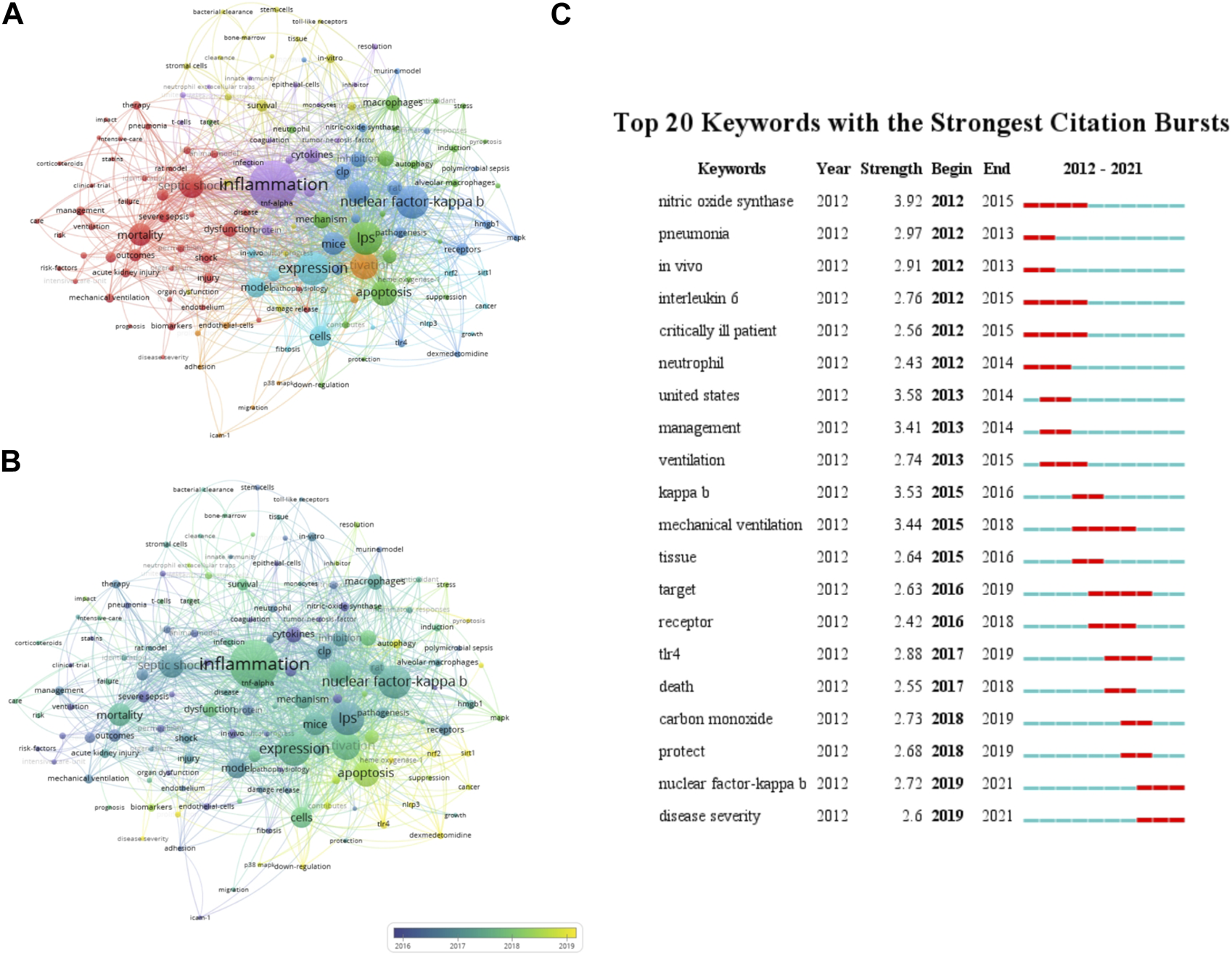
The mapping on keywords of sepsis associated with ALI (A) Visualization of 151 identified keywords in sepsis associated with ALI; (B) Overlay visualization of the 151 identified keywords in sepsis associated with ALI based on the average time they appeared in the publications. The blue keyword appeared earlier, while the yellow keyword appeared later. (C) The top 25 terms with the most cited bursts.
4 Discussion
Bibliometrics plays a very important role in improving the ability of literature retrieval and utilization, helping beginners to rapidly enter a particular field. For the first time, we reported the bibliometric analysis to review the progress of sepsis associated with ALI related research in worldwide in the past decade. At present, research on the sepsis associated with ALI is flourishing. In the initial phase, the definition of ALI and diagnostic criteria predominated and, nowadays, the focus of interest is on understanding the pathophysiological mechanisms that lead to apoptosis, necroptosis and pyroptosis. The research on programmed cell death is a hot spot and may be a promising research field in the coming years.
Among the top 10 countries, China ranked first in the total number of publications, cited times and H-index, which indicated that China is a high-yield country in the study of sepsis associated with ALI, and the United States ranked first in average number of citations per publication, which means that the United States has more influence in this field. Seven Chinese affiliations came in the top 10 affiliations in the research of sepsis associated with ALI, the United States affiliations only three came in the top 10 affiliations, but the United States affiliations had a relatively high cited times, average number of citations per publication and H-index. Among the top journals, International Immunopharmacology ranked first in the sum of total publications, Inflammation first in H-index, Critical Care ranked first in cited times, average number of citations per publication and IF. Six authors of the United States came in the top 10 authors in the research of sepsis associated with ALI, Chinese and Spain each have two authors came in the top 10 authors. Matthay MA has published the most papers. His important contribution to this field is he screened a number of markers and therapeutic targets related to sepsis associated with ALI through clinical and basic research. Although China ranked first in the sum of total publications, only two authors have come in the top 10 authors in the world, indicating that China still needs to increase investment in this field to lead the research trend. Among the top 10 most cited publications, “The pulmonary endothelial glycocalyx regulates neutrophil adhesion and lung injury during experimental sepsis” ranked first, which was published in Nature Medicine in 2012 and has been cited 439 times in total. The article found that heparinase inhibition could alleviating sepsis-induced ALI and mortality in mice. From the perspective of co-cited journals, Critical Care Medicine had been the most co-cited journal. From the perspective of co-cited authors, Matthay MA had been the most co-cited author. Among the 24,236 co-cited references retrieved, Table 8 shows the top 10 references by total link strength, of which “Incidence and outcomes of acute lung injury” is the most frequently cited.
In the results, a systematic bibliometric analysis has been conducted on the studies on sepsis associated with ALI published in WOS from 2012 to 2021. Table 9 shows the top 20 keywords, with most of them falling into two groups. One group is mechanisms involved in sepsis associated with ALI, such as inflammation, NF-κB, oxidative stress and cytokines. The other group is research methods involved in sepsis associated with ALI, including keywords like LPS, CLP, and macrophages. NF-κB is an important nuclear transcription factor in cells. It is related to the inflammatory changes of many human diseases, such as ALI, rheumatoid arthritis, heart and brain diseases (Gong et al., 2021; Jiao et al., 2021; Wang et al., 2021; Xie et al., 2022). Many studies have demonstrated that NF-κB pathways are involved in sepsis associated with ALI (Wang et al., 2014; Li et al., 2016; Wang et al., 2020; Du et al., 2021). There are five members of NF-κB family, including RelA (p65), RelB, NF-κB1 (P50), NF-κB2 (P52) and c-Rel (Jimi and Katagiri, 2022). Commonly referred to as NF-κB protein, it refers to NF-κB1 dimer protein formed by P65/p50 subunit. The classical NF-κB pathway can be activated by various stimuli (e.g., TNF-α, LPS, IL-1β). It is mediated by cell surface receptors, such as TLR, TNF-R and antigen receptors, and activated by various adaptor proteins and signaling kinase IKK (including IKKα, IKKβ and IKKγ). Activation of the IKK complex leads to phosphorylation of the NF-κB inhibitor protein IκBα, which ultimately leads to proteasome degradation and release and translocation of NF-κB dimers, such as p50-RelA (p65), to the nucleus to drive transcription of target genes. The activation of immune response genes ultimately leads to sepsis associated with ALI (Figure 8).
FIGURE 8
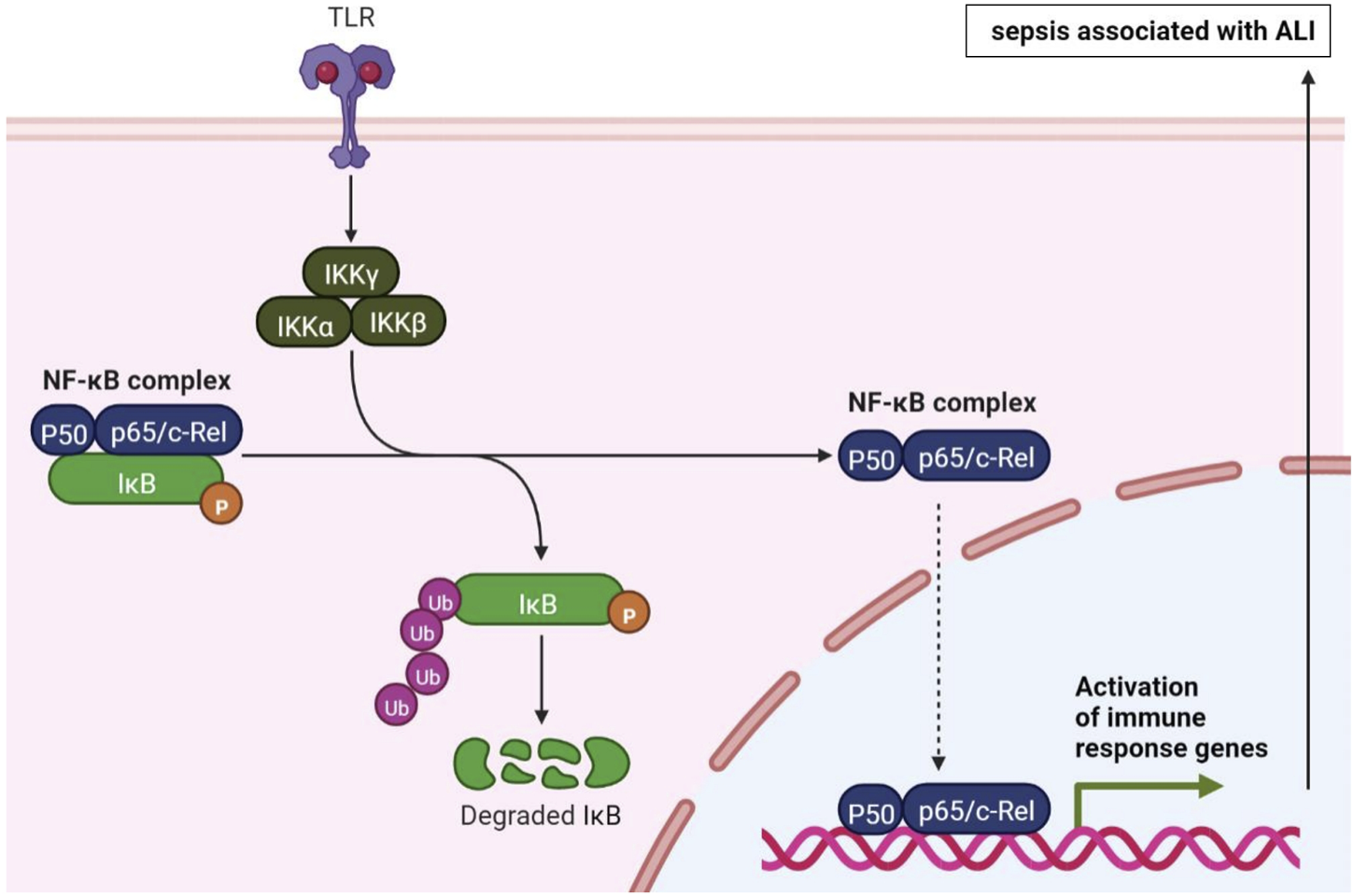
The mechanism of NF-κB in sepsis associated with ALI (Created with BioRender.com).
The results of co-occurrence analysis suggested that PCD might become a research hotspot of sepsis associated with ALI in the future, and before 2017, most studies focused on the study of complications and inflammation. PCD is a genetically regulated process leading to the death of cells. It plays a critical role in organismal development, homeostasis, and pathogenesis (Liang and He, 2022). At present, it is found that besides apoptosis, PCD also includes necroptosis and pyroptosis. According to our study, PCD has been extensively involved in sepsis associated with ALI studies in recent years.
It is important to clarify the future research direction of sepsis associated with ALI. Therefore, the recent articles with high citation rate should be divided into subgroups to analyze their research hotspots. As presented in Figure 9, the top 100 cited articles were used for bibliographic coupling and divided into 6 clusters according to the research direction. Cluster #1 contains 28 articles, the main research topic is the effect of different drugs on sepsis associated with ALI. Schmidt EP et al., in 2012 found that heparanase inhibition prevented endotoxemia-associated glycocalyx loss and neutrophil adhesion and, accordingly, attenuated sepsis-induced ALI and mortality in mice. Cluster #2 contains 25 articles, the main research topic is the pathogenesis of sepsis associated with ALI. Cheng KT et al., in 2017 discovered that caspase-11-mediated endothelial pyroptosis underlies sepsis-induced ALI (Cheng et al., 2017). Toll-like receptor 4 (TLR4) activation of TRPC6-dependent calcium signaling mediates endotoxin-induced lung vascular permeability and inflammation (Tauseef et al., 2012). Cluster #3 contains 21 articles, the main research topic is clinical study of sepsis associated with ALI. In CITRIS-ALI randomized clinical trial, a 96-h infusion of vitamin C compared with placebo did not significantly improve organ dysfunction scores or alter markers of inflammation and vascular injury (Fowler et al., 2019). Many common drugs, including statins (Mansur et al., 2015; Dinglas et al., 2016; Needham et al., 2016), hydrocortisone (Tongyoo et al., 2016), carbon monoxide (Fredenburgh et al., 2018) and aspirin (Toner et al., 2015), have been tested in clinical trials for the treatment of sepsis-induced ALI. Cluster #4 contains 12 articles, the main research topic is the role of intracellular substances in sepsis associated with ALI. Zhou et al., in 2019 demonstrated that human endothelial progenitor cell (EPC) exosomes are beneficial in LPS-induced ALI mice (Zhou et al., 2019). Jiang J et al. identified that targeting NOX4 may be an innovative therapeutic option that is markedly effective in treating sepsis-induced ALI (Jiang et al., 2020). Cluster #5 contains 10 articles, the main research topic is markers and therapeutic targets of sepsis associated with ALI. Reilly JP et al. found that plasma angiopoietin-2 as a potential causal marker in sepsis-associated ALI development (Reilly et al., 2018). Cluster #6 contains 4 articles, the main research topic is application of mesenchymal stem cells (MSC) in sepsis associated with ALI. Human MSC-derived microvesicles were therapeutically effective following E. coli sepsis-induced ALI in mice (Zhu et al., 2014).
FIGURE 9
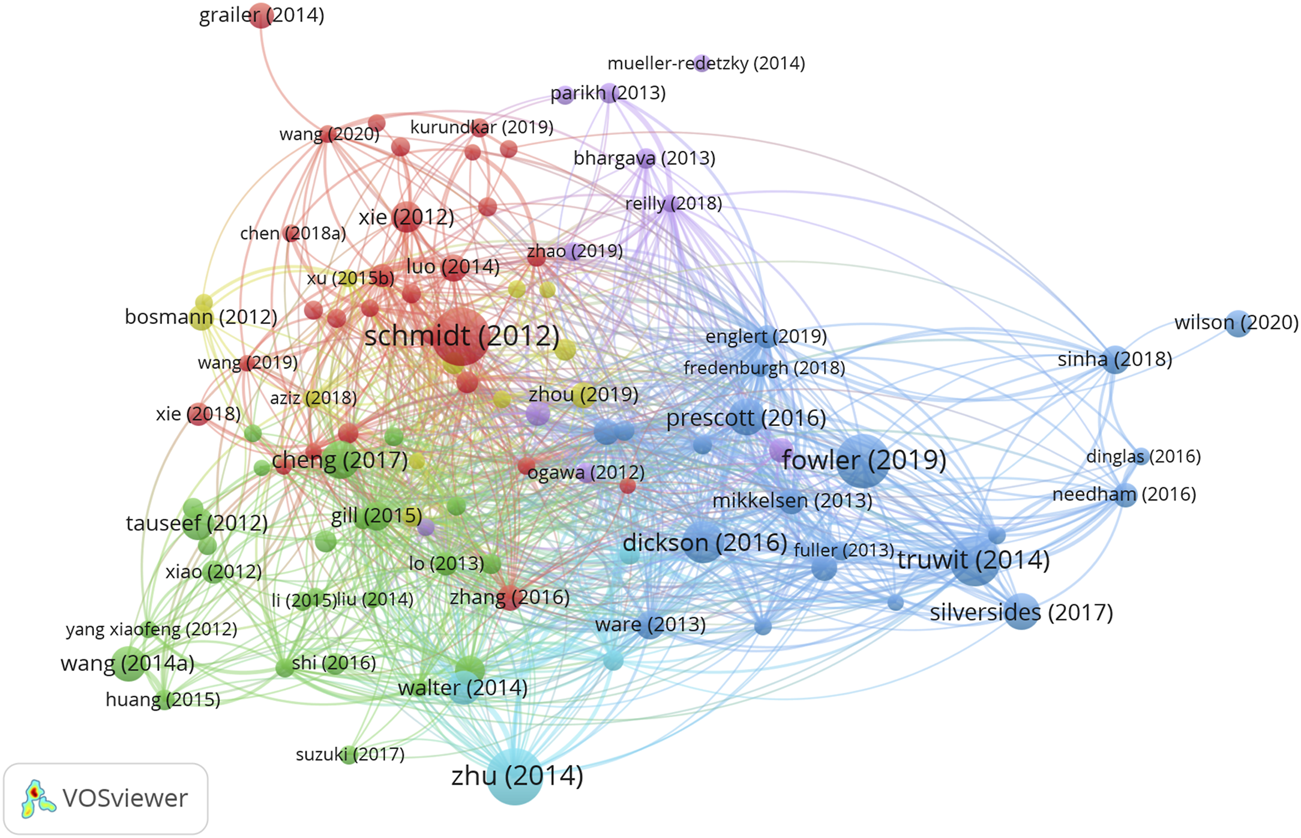
The mapping on top 100 cited references of sepsis associated with ALI.
5 Limitations
There are some limitations in the present study. First of all, we chose WOS as the only literature search database, which may have missed some publications, resulting in database bias. Second, only literatures published during 2012–2021 were included, articles published before were missed. Finally, some of the latest high-quality articles may not be enrolled in top 10 journals and top 10 most cited publications due to the low number of citations. However, we believe that this work can still be used to present the overall situation and trends in this field.
6 Conclusion
China is a major producing country, and the United States has more influence in this field. Shanghai Jiao Tong University, University of California System and Huazhong University of Science Technology were the main contributing institutions to sepsis associated with ALI. International Immunopharmacology, Inflammation, Shock and Critical Care have published the latest studies and novel progress in this field. Matthay MA and Ware LB were the main contributors to this field. Inflammation and NF-κB have always been the focus of sepsis associated with ALI related research, and PCD (including apoptosis, necroptosis and pyroptosis) may be the important direction of future research. Overall, our study will provide useful reference for further research on sepsis associated with ALI.
Statements
Data availability statement
The raw data supporting the conclusions of this article will be made available by the authors, without undue reservation.
Author contributions
GL conceived the study, data analysis, and drafted the manuscript. WW conceived the study, data analysis. ZH conceived the study, its design and critically revised the manuscript. All authors contributed to the article and approved the submitted version.
Funding
The work was supported by the Natural Science Foundation of Hunan Province (2021JJ31005) and the National Natural Science Foundation of China (no: 82272216).
Conflict of interest
The authors declare that the research was conducted in the absence of any commercial or financial relationships that could be construed as a potential conflict of interest.
Publisher’s note
All claims expressed in this article are solely those of the authors and do not necessarily represent those of their affiliated organizations, or those of the publisher, the editors and the reviewers. Any product that may be evaluated in this article, or claim that may be made by its manufacturer, is not guaranteed or endorsed by the publisher.
References
1
Bellani G. Laffey J. G. Pham T. Fan E. Brochard L. Esteban A. et al (2016). Epidemiology, Patterns of care, and mortality for patients with acute respiratory distress syndrome in intensive care units in 50 countries. Jama315 (8), 788–800. 10.1001/jama.2016.0291
2
Bernard G. R. Artigas A. Brigham K. L. Carlet J. Falke K. Hudson L. et al (1994). The American-European Consensus Conference on ARDS. Definitions, mechanisms, relevant outcomes, and clinical trial coordination. Am. J. Respir. Crit. Care Med.149 (3), 818–824. 10.1164/ajrccm.149.3.7509706
3
Chen C. (2004). Searching for intellectual turning points: Progressive knowledge domain visualization. Proc. Natl. Acad. Sci. U. S. A.101 (1), 5303–5310. 10.1073/pnas.0307513100
4
Cheng K. T. Xiong S. Ye Z. Hong Z. Di A. Tsang K. M. et al (2017). Caspase-11-mediated endothelial pyroptosis underlies endotoxemia-induced lung injury. J. Clin. investigation127 (11), 4124–4135. 10.1172/JCI94495
5
Dinglas V. D. Hopkins R. O. Wozniak A. W. Hough C. L. Morris P. E. Jackson J. C. et al (2016). One-year outcomes of rosuvastatin versus placebo in sepsis-associated acute respiratory distress syndrome: Prospective follow-up of SAILS randomised trial. Thorax71 (5), 401–410. 10.1136/thoraxjnl-2015-208017
6
Du Y. Zhang H. Guo Y. Song K. Zeng L. Chen Y. et al (2021). CD38 deficiency up-regulated IL-1β and MCP-1 through TLR4/ERK/NF-κB pathway in sepsis pulmonary injury. Microbes Infect.23 (9-10), 104845. 10.1016/j.micinf.2021.104845
7
Fleischmann-Struzek C. Mellhammar L. Rose N. Cassini A. Rudd K. E. Schlattmann P. et al (2020). Incidence and mortality of hospital- and ICU-treated sepsis: Results from an updated and expanded systematic review and meta-analysis. Intensive care Med.46 (8), 1552–1562. 10.1007/s00134-020-06151-x
8
Fowler A. A. 3rd Truwit J. D. Hite R. D. Morris P. E. DeWilde C. Priday A. et al (2019). Effect of vitamin C infusion on organ failure and Biomarkers of inflammation and vascular injury in patients with sepsis and severe acute respiratory failure: The CITRIS-ALI randomized clinical trial. Jama322 (13), 1261–1270. 10.1001/jama.2019.11825
9
Fredenburgh L. E. Perrella M. A. Barragan-Bradford D. Hess D. R. Peters E. Welty-Wolf K. E. et al (2018). A phase I trial of low-dose inhaled carbon monoxide in sepsis-induced ARDS. JCI insight3 (23), e124039. 10.1172/jci.insight.124039
10
Gong F. Li R. Zheng X. Chen W. Zheng Y. Yang Z. et al (2021). OLFM4 regulates lung epithelial cell function in sepsis-associated ARDS/ALI via LDHA-mediated NF-κB signaling. J. Inflamm. Res.14, 7035–7051. 10.2147/JIR.S335915
11
Grommes J. Soehnlein O. (2011). Contribution of neutrophils to acute lung injury. Mol. Med. Camb. Mass)17 (3-4), 293–307. 10.2119/molmed.2010.00138
12
Jiang D. Ji T. Liu W. Bednarsch J. Selzner M. Pratschke J. et al (2022). Four decades of clinical liver transplantation research: Results of a comprehensive bibliometric analysis. Transplantation106, 1897–1908. 10.1097/TP.0000000000004224
13
Jiang J. Huang K. Xu S. Garcia J. G. N. Wang C. Cai H. (2020). Targeting NOX4 alleviates sepsis-induced acute lung injury via attenuation of redox-sensitive activation of CaMKII/ERK1/2/MLCK and endothelial cell barrier dysfunction. Redox Biol.36, 101638. 10.1016/j.redox.2020.101638
14
Jiao D. Liu Y. Hou T. Xu H. Wang X. Shi Q. et al (2021). Notoginsenoside R1 (NG-R1) promoted lymphatic drainage function to ameliorating rheumatoid arthritis in TNF-tg mice by suppressing NF-κB signaling pathway. Front. Pharmacol.12, 730579. 10.3389/fphar.2021.730579
15
Jimi E. Katagiri T. (2022). Critical roles of NF-κB signaling molecules in bone metabolism revealed by genetic mutations in osteopetrosis. Int. J. Mol. Sci.23 (14), 7995. 10.3390/ijms23147995
16
Li X. Wei W. Wang Y. Wang Q. Liu Z. (2022). Global trend in the research and development of acupuncture treatment on Parkinson's disease from 2000 to 2021: A bibliometric analysis. Front. Neurol.13, 906317. 10.3389/fneur.2022.906317
17
Li Y. Zeng Z. Cao Y. Liu Y. Ping F. Liang M. et al (2016). Angiotensin-converting enzyme 2 prevents lipopolysaccharide-induced rat acute lung injury via suppressing the ERK1/2 and NF-κB signaling pathways. Sci. Rep.6, 27911. 10.1038/srep27911
18
Liang G. He Z. (2022). High mobility group proteins in sepsis. Front. Immunol.13, 911152. 10.3389/fimmu.2022.911152
19
Mansur A. Steinau M. Popov A. F. Ghadimi M. Beissbarth T. Bauer M. et al (2015). Impact of statin therapy on mortality in patients with sepsis-associated acute respiratory distress syndrome (ARDS) depends on ARDS severity: A prospective observational cohort study. BMC Med.13, 128. 10.1186/s12916-015-0368-6
20
Matthay M. A. Ware L. B. Zimmerman G. A. (2012). The acute respiratory distress syndrome. J. Clin. investigation122 (8), 2731–2740. 10.1172/JCI60331
21
Matthay M. A. Zemans R. L. Zimmerman G. A. Arabi Y. M. Beitler J. R. Mercat A. et al (2019). Acute respiratory distress syndrome. Nat. Rev. Dis. Prim.5 (1), 18. 10.1038/s41572-019-0069-0
22
Matute-Bello G. Frevert C. W. Martin T. R. (2008). Animal models of acute lung injury. Am. J. Physiol. Lung Cell Mol. Physiol.295 (3), L379–L399. 10.1152/ajplung.00010.2008
23
Needham D. M. Colantuoni E. Dinglas V. D. Hough C. L. Wozniak A. W. Jackson J. C. et al (2016). Rosuvastatin versus placebo for delirium in intensive care and subsequent cognitive impairment in patients with sepsis-associated acute respiratory distress syndrome: An ancillary study to a randomised controlled trial. Lancet Respir. Med.4 (3), 203–212. 10.1016/S2213-2600(16)00005-9
24
Ranieri V. M. Rubenfeld G. D. Thompson B. T. Ferguson N. D. Caldwell E. Fan E. et al (2012). Acute respiratory distress syndrome: The Berlin definition. Jama307 (23), 2526–2533. 10.1001/jama.2012.5669
25
Reilly J. P. Wang F. Jones T. K. Palakshappa J. A. Anderson B. J. Shashaty M. G. S. et al (2018). Plasma angiopoietin-2 as a potential causal marker in sepsis-associated ARDS development: Evidence from mendelian randomization and mediation analysis. Intensive care Med.44 (11), 1849–1858. 10.1007/s00134-018-5328-0
26
Rittirsch D. Huber-Lang M. S. Flierl M. A. Ward P. A. (2009). Immunodesign of experimental sepsis by cecal ligation and puncture. Nat. Protoc.4 (1), 31–36. 10.1038/nprot.2008.214
27
Rubenfeld G. D. Caldwell E. Peabody E. Weaver J. Martin D. P. Neff M. et al (2005). Incidence and outcomes of acute lung injury. N. Engl. J. Med.353 (16), 1685–1693. 10.1056/NEJMoa050333
28
Schmidt E. P. Yang Y. Janssen W. J. Gandjeva A. Perez M. J. Barthel L. et al (2012). The pulmonary endothelial glycocalyx regulates neutrophil adhesion and lung injury during experimental sepsis. Nat. Med.18 (8), 1217–1223. 10.1038/nm.2843
29
Sessler C. N. Bloomfield G. L. Fowler A. A. 3rd (1996). Current concepts of sepsis and acute lung injury. Clin. chest Med.17 (2), 213–235. 10.1016/s0272-5231(05)70310-5
30
Singer M. Deutschman C. S. Seymour C. W. Shankar-Hari M. Annane D. Bauer M. et al (2016). The third international consensus definitions for sepsis and septic Shock (Sepsis-3). Jama315 (8), 801–810. 10.1001/jama.2016.0287
31
Tauseef M. Knezevic N. Chava K. R. Smith M. Sukriti S. Gianaris N. et al (2012). TLR4 activation of TRPC6-dependent calcium signaling mediates endotoxin-induced lung vascular permeability and inflammation. J. Exp. Med.209 (11), 1953–1968. 10.1084/jem.20111355
32
Toner P. McAuley D. F. Shyamsundar M. (2015). Aspirin as a potential treatment in sepsis or acute respiratory distress syndrome. Crit. care (London, Engl.19, 374. 10.1186/s13054-015-1091-6
33
Tongyoo S. Permpikul C. Mongkolpun W. Vattanavanit V. Udompanturak S. Kocak M. et al (2016). Hydrocortisone treatment in early sepsis-associated acute respiratory distress syndrome: Results of a randomized controlled trial. Crit. care (London, Engl.20 (1), 329. 10.1186/s13054-016-1511-2
34
van Eck N. J. Waltman L. (2010). Software survey: VOSviewer, a computer program for bibliometric mapping. Scientometrics84 (2), 523–538. 10.1007/s11192-009-0146-3
35
Wang J. Li R. Peng Z. Hu B. Rao X. Li J. (2020). HMGB1 participates in LPS-induced acute lung injury by activating the AIM2 inflammasome in macrophages and inducing polarization of M1 macrophages via TLR2, TLR4, and RAGE/NF-κB signaling pathways. Int. J. Mol. Med.45 (1), 61–80.
36
Wang J. Liu Y. T. Xiao L. Zhu L. Wang Q. Yan T. (2014). Anti-inflammatory effects of apigenin in lipopolysaccharide-induced inflammatory in acute lung injury by suppressing COX-2 and NF-kB pathway. Inflammation37 (6), 2085–2090. 10.1007/s10753-014-9942-x
37
Wang X. Li X. Ong H. Tan T. Park K. H. Bian Z. et al (2021). MG53 suppresses NF-κB activation to mitigate age-related heart failure. JCI insight6 (17), e148375. 10.1172/jci.insight.148375
38
Wang Y. Li D. Jia Z. Hui J. Xin Q. Zhou Q. et al (2022). A bibliometric analysis of research on the links between gut microbiota and atherosclerosis. Front. Cardiovasc. Med.9, 941607. 10.3389/fcvm.2022.941607
39
Ware L. B. Matthay M. A. (2000). The acute respiratory distress syndrome. N. Engl. J. Med.342 (18), 1334–1349. 10.1056/NEJM200005043421806
40
Wen P. Luo P. Zhang B. Zhang Y. (2022). Mapping knowledge structure and global research trends in gout: A bibliometric analysis from 2001 to 2021. Front. public health10, 924676. 10.3389/fpubh.2022.924676
41
Wu F. Gao J. Kang J. Wang X. Niu Q. Liu J. et al (2022). Knowledge mapping of exosomes in autoimmune diseases: A bibliometric analysis (2002-2021). Front. Immunol.13, 939433. 10.3389/fimmu.2022.939433
42
Xie J. Wang H. Kang Y. Zhou L. Liu Z. Qin B. et al (2020). The epidemiology of sepsis in Chinese ICUs: A national cross-sectional survey. Crit. Care Med.48 (3), e209–e218. 10.1097/CCM.0000000000004155
43
Xie N. Fan F. Jiang S. Hou Y. Zhang Y. Cairang N. et al (2022). Rhodiola crenulate alleviates hypobaric hypoxia-induced brain injury via adjusting NF-κB/NLRP3-mediated inflammation. Phytomedicine Int. J. phytotherapy Phytopharm.103, 154240. 10.1016/j.phymed.2022.154240
44
Zhou Y. Li P. Goodwin A. J. Cook J. A. Halushka P. V. Chang E. et al (2019). Exosomes from endothelial progenitor cells improve outcomes of the lipopolysaccharide-induced acute lung injury. Crit. care (London, Engl.23 (1), 44. 10.1186/s13054-019-2339-3
45
Zhu Y. G. Feng X. M. Abbott J. Fang X. H. Hao Q. Monsel A. et al (2014). Human mesenchymal stem cell microvesicles for treatment of Escherichia coli endotoxin-induced acute lung injury in mice. Stem cells Dayt. Ohio)32 (1), 116–125. 10.1002/stem.1504
Summary
Keywords
sepsis, acute lung injury, bibliometric analysis, NF-κB, programmed cell death
Citation
Liang G, Wang W and He Z (2023) Sepsis associated with acute lung injury over the period 2012–2021: a bibliometric analysis. Front. Physiol. 14:1079736. doi: 10.3389/fphys.2023.1079736
Received
25 October 2022
Accepted
07 June 2023
Published
15 June 2023
Volume
14 - 2023
Edited by
Rajasvaran Logeswaran, Asia Pacific University of Technology & Innovation, Malaysia
Reviewed by
Nazareth Novaes Rocha, Fluminense Federal University, Brazil
Max Brenner, Feinstein Institute for Medical Research, United States
Updates
Copyright
© 2023 Liang, Wang and He.
This is an open-access article distributed under the terms of the Creative Commons Attribution License (CC BY). The use, distribution or reproduction in other forums is permitted, provided the original author(s) and the copyright owner(s) are credited and that the original publication in this journal is cited, in accordance with accepted academic practice. No use, distribution or reproduction is permitted which does not comply with these terms.
*Correspondence: Zhihui He, hzh703@csu.edu.cn
Disclaimer
All claims expressed in this article are solely those of the authors and do not necessarily represent those of their affiliated organizations, or those of the publisher, the editors and the reviewers. Any product that may be evaluated in this article or claim that may be made by its manufacturer is not guaranteed or endorsed by the publisher.