PS
petra schneider
Department of Water, Environment, Construction and Safety, Magdeburg-Stendal University of Applied Sciences
Magdeburg, Germany
4,790
Total downloads
29k
Total views and downloads
According to the International Union for Conservation of Nature (IUCN), nature-based solutions are actions to protect, sustainably manage and restore natural or modified ecosystems, which address societal challenges effectively and adaptively, while simultaneously providing human well-being and biodiversity benefits. Nature-based solutions work with nature instead against it, and ideally they might be designed with the built environment, for instance as swamp cities and climate smart cities. The Research Topic addresses the topic of climate adaptation through urban green infrastructure, focusing on a multifunctional use of spaces. Nature-based solutions are designed to combat environmental threads and to manage social challenges, like water and food security, risks resulting from climate extremes and the need for a sustainable management of natural resources.
The development of a changing environment in recent decades, due to population growth, industrialisation, globalisation and climate change, has caused pressure on natural and engineered ecosystems. The built environment, being home to human societies, is particularly vulnerable to climate extremes like floods, droughts, heat, hurricanes, etc. To deal with these challenges, nature-based solutions provide an approach to upgrade the features of the built environment in order manage, in a more sustainable way, their environmental impacts. The solutions include water sensitive blue-green cities, with closed material flows, that serve not only the health and wellbeing of humans, but also other species in the urban context. The overall goal is to complement the grey infrastructure through green infrastructure, and in this way contribute to the development of resilient cities.
This Research Topic particularly invites contribution with a focus on the following areas:
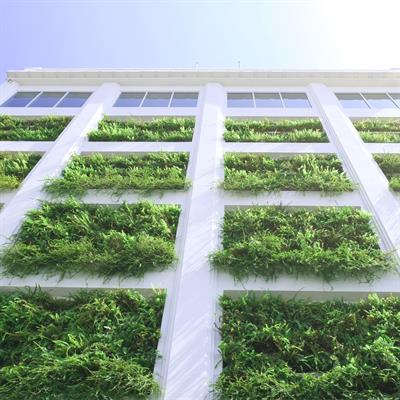
- green infrastructure in the built environment like facades and roof greening and green reinforced walls
- roof water harvesting systems
- urban gardening and urban farming
- constructed wetlands for urban waste water treatment
- natural wetlands as water balancing elements in cities
- sustainable urban drainage systems
- water sensitive cities, swamp cities, climate smart cities
- multifunctional urban land use systems
- urban biodiversity systems like biotope networks in the urban realm, fostering habitat connectivity
- urban planning and animal aided design
Keywords: nature-based solutions, green infrastructure, climate adaptation, closing urban material flows, sustainable urban drainage, heat buffer, water sensitive cities, swamp cities, climate smart cities, multifunctionality
Important note: All contributions to this Research Topic must be within the scope of the section and journal to which they are submitted, as defined in their mission statements. Frontiers reserves the right to guide an out-of-scope manuscript to a more suitable section or journal at any stage of peer review.
