AN
alexander n. pisarchik
Centro de Tecnología Biomédica, Universidad Politécnica de Madrid
Madrid, Spain
2,820
Total downloads
13k
Total views and downloads
Topic summary: This article collection addresses complex aspects of biological and neural system dynamics, highlighting themes of transient synchronization, altered states of consciousness, synchronization metrics, and bistability in biological contexts. The studies cover diverse phenomena, including transient synchronization and metastability in inhibitory neuronal populations modulated by excitatory input, the balance of integration and segregation in brain networks under anesthesia, and methodologies such as inter-system recurrence networks for detecting coupling strength and direction between physiological systems. Additionally, one paper discusses bistability by modeling frailty states through mutually inhibitory biomarkers, providing mechanistic insights into how small variations around critical points can strongly impact clinical outcomes. Collectively, these articles underscore the importance of network dynamics, synchronization, coupling interactions, and dynamical states transitions in understanding biological complexity across neural, physiological, and health-related domains.
-----
Neural networks are characterized by high dimensionality and multiple nonlinear interactions between neurons, involving complex network topologies, coupling delays, synaptic plasticity and feedback. Multistability and metastability between states of partial synchronization are believed to provide the basis for numerous cognitive processes, but also pathologies, from perception to epilepsy. The important problems include both the origin of multi- and metastability, as well as the mechanisms allowing for the spontaneous or induced switching between coexisting states at different levels of spatial and temporal organization. Neuronal activity is inherently irregular in terms of action potential generation, axonal propagation and subsequent synaptic transmission, constant bombardment of synaptic inputs, and synaptic unreliability. Therefore, both deterministic and stochastic mechanisms regulate the dynamics of neural networks, but affect functional connectivity, reflecting the synchronization features, in different ways.
This Research Topic aims to provide the academic community with a forum to present and discuss the latest theoretical and applied research related to recent advances in synchronization and multistability in neural networks. Many experimental results of neuroimaging of the brain can be interpreted in terms of complex high-level networks who’s mathematical modeling is based on high-dimensional systems of nonlinear differential equations. Thus, nonlinear dynamics is the basis for a rigorous description of the behavior of large-scale neural networks. An interesting application of the theory of nonlinear dynamical systems to neuroscience is the study of the phenomena of the central nervous system, which exhibits almost discontinuous transitions between metastable states of the brain. The focus is on advancing modern understanding of the origins of multistability and metastability in neural networks, as well as the mechanisms underlying transitions between coexisting partial synchronization states. We will also try to explain how multi- and metastability at different levels of brain organization changes as a result of adaptation, cognition, neurological diseases, and ageing processes.
We invite original and review papers covering new physical and mathematical methods, biologically plausible models, innovative approaches, and novel important techniques that could lead to significant advances in understanding of synchronization and multistability in neural network dynamics. The topics of interest include, but are not limited to the following issues:
- Deterministic Neural Models
- Stochastic Neural Models
- Discrete Neural Models
- Continuous Neural Models
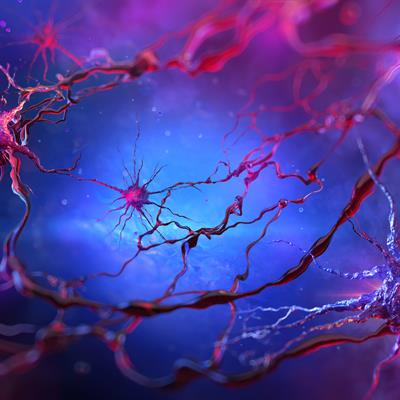
Keywords: tractor, neural network, multistability, metastability, synchronization, nonlinear dynamics, chaos, noise, inhibitory neurons, EcoG, mathematical modeling, network physiology
Important note: All contributions to this Research Topic must be within the scope of the section and journal to which they are submitted, as defined in their mission statements. Frontiers reserves the right to guide an out-of-scope manuscript to a more suitable section or journal at any stage of peer review.
Centro de Tecnología Biomédica, Universidad Politécnica de Madrid
Madrid, Spain
Rochester Institute of Technology (RIT)
Rochester, United States
Institute of Physics, University of Belgrade
Belgrade, Serbia
Bernstein Center for Computational Neuroscience, Humboldt University of Berlin
Berlin, Germany
