OT
orestis tsonis
Guy's Hospital
London, United Kingdom
5,102
Total downloads
36k
Total views and downloads
Despite advances made in assisted reproduction in the past thirty years, only one-third of all in-vitro fertilization (IVF) cycles resulted in a pregnancy, and less in a healthy living baby. Although ovarian stimulation is becoming more and more personalized, the collected oocytes may be of better quality if these protocols and the gonadotrophin types used are well-suited for each patient. Gamete selection could also benefit from appropriate tools to pick gametes of the best quality, leading to enhanced fertilization rates and embryo quality. Furthermore, assessing embryo quality might be one of the most important steps in conditioning pregnancy and implantation rates. Until then, we rely mostly on the embryologists’ assessment of embryo morphology on the day of transfer, but also on genetic testing when it is indicated.
Developing more objective tools might be a great contribution to improving IVF results. An appliance for gathering and treating every patient's data could aid gynecologists in choosing the right protocol and assist them in making the right decisions during ovarian stimulation, as well as aiding embryologists in selecting the right sperm for injection or the best embryos for transfer.
In this field, artificial intelligence (AI), machine learning (ML), and deep learning (DL) could be powerful allies to assist clinicians and embryologists in their tasks.
Deep learning is based on the idea that we can build algorithms to process data to learn on their own, without our constant supervision. It is a way of achieving artificial intelligence. These algorithms use statistics to find patterns in massive amounts of data, which are then used to make predictions or to calculate scores. The pertinence of such predictions or scores is that they will not be affected by human subjectivity and will rely only on statistics of previous data.
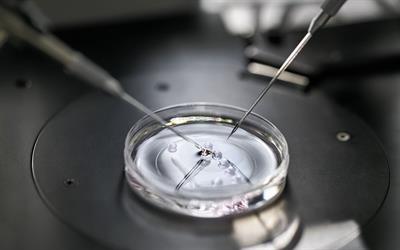
The goal of this Research Topic is to promote emerging knowledge about the different applications of artificial intelligence in the IVF laboratories such as:
- Sperm classification
- Sperm selection
- Choosing stimulation protocols, type, and dose of gonadotrophins
- Oocyte quality assessment
- Embryo annotation and selection
- Quality control and key performance indicators monitoring
- Dish and media preparation lists
- Procedure scheduling
Keywords: Human Reproduction, Artificial Intelligence, Deep Learning, Sperm Classification, Sperm Selection, Ovarian Stimulation Protocols, Oocyte Quality, Embryo Annotation, Embryo Selection, Predictive Models
Important note: All contributions to this Research Topic must be within the scope of the section and journal to which they are submitted, as defined in their mission statements. Frontiers reserves the right to guide an out-of-scope manuscript to a more suitable section or journal at any stage of peer review.
