NE
natallia e. uzunbajakava
Holst Centre, Netherlands Organisation for Applied Scientific Research
Eindhoven, Netherlands
1,311
Total downloads
8,336
Total views and downloads
Submit your idea
Select the journal/section where you want your idea to be submitted:
Manuscript Summary Submission Deadline 31 March 2026 | Manuscript Submission Deadline 30 April 2026 | Manuscript Extension Submission Deadline 9 May 2026
This Research Topic is currently accepting articles.
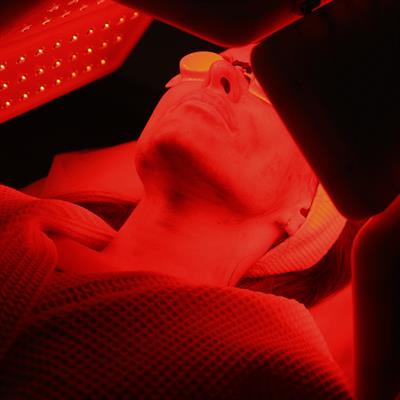
Light can accelerate skin damage and aging, and increases the risk of malignancies. Yet over the past decade, light has been increasingly leveraged in dermatological treatments to promote both cutaneous and systemic health benefits. This dual role of light is mediated by the interaction of optical radiation with chromophores and photoreceptors in the skin and hair follicles. Despite substantial progress, we still lack mechanistic clarity regarding how variations in spectral composition, irradiance, fluence (dose), and exposure timing elicit distinct biological effects—and how these parameters can be rationally tailored to develop and optimize a wide range of health applications.
This Research Topic, cross-listed in Frontiers in Physiology and Frontiers in Medicine, aims to integrate findings from dermatology and skin physiology studies to:
1. advance basic science and translational research underpinning improved therapeutic strategies and light applications for both patients and consumers; and
2. integrate clinical data to deepen the understanding of skin physiology.
We welcome articles addressing, but not limited to, the following themes:
1. Molecular interaction of light with skin and hair (including chromophores, photoreceptors, and the role of circadian clock regulation)
2. Light-induced changes in the skin microbiota
3. Clinical measurements and interventions (including wound healing, hair growth control, pigmentation, and other dermatologically relevant topics)
4. Investigations into photoprotection (encompassing the effects of UV, visible, and near-infrared light)
5. Computational, AI and other emerging approaches
6. Provocative hypotheses that challenge current paradigms
Article types accepted: Original Research, Clinical Trials, Reviews, Systematic Reviews, Case Reports, Brief Research Reports, Methods, Opinions, Commentaries, Hypothesis & Theory, Technology and Code.
About the Editorial Team:
Natallia Uzunbajakava, PhD (Program Manager, Holst Centre, Eindhoven, The Netherlands) — Internationally recognized leader in biomedical optics and skin physiology with 20+ years in photomedicine. She pioneered work on light–tissue interactions, photobiomodulation, Raman spectroscopy, IPL, laser-induced optical breakdown, and optical diagnostics, bridging fundamental science and translation in dermatology and aesthetics. At Holst Centre, she leads next‑generation MedTech programs that have shaped non‑invasive diagnostics and therapies.
Babu Varghese, PhD (Scientist & Project Leader, PHILIPS Research, Eindhoven, The Netherlands) — Industry‑leading innovator in biomedical optics and skin‑focused photonics. He develops non‑invasive diagnostic and therapeutic devices, with notable advances in photorejuvenation, sensitive‑skin assessment, and optical imaging. A prolific inventor with numerous patents and publications, he brings a strong translation‑to‑impact perspective.
David Baeza Moyano, PhD (Professor, Faculty of Pharmacy, CEU San Pablo University, Madrid, Spain) — Expert in photobiology and the non‑visual effects of light on human health. His research spans visible/infrared light impacts on circadian rhythms, skin physiology, and systemic health, uniting mechanistic insights with applications in light regulation and diagnostics. A thought leader in light–skin interactions and photoprotection.
This Research Topic accepts the following article types, unless otherwise specified in the Research Topic description:
Articles that are accepted for publication by our external editors following rigorous peer review incur a publishing fee charged to Authors, institutions, or funders.
Keywords: Human skin, light-based techniques, light, optical radiation, chromophores, photoreceptor, ultraviolet, visible light, infrared, skin health, cutaneous applications of light, skin microbiota, photoaging, dermatology
Important note: All contributions to this Research Topic must be within the scope of the section and journal to which they are submitted, as defined in their mission statements. Frontiers reserves the right to guide an out-of-scope manuscript to a more suitable section or journal at any stage of peer review.

Manuscripts can be submitted to this Research Topic via the main journal or any other participating journal.
Submit your idea
Select the journal/section where you want your idea to be submitted: