GR
gioele ruffini
Sapienza University of Rome
Rome, Italy
2,077
Total downloads
8,297
Total views and downloads
Submit your idea
You will be redirected to our submission process.
Manuscript Submission Deadline 31 July 2026
This Research Topic is currently accepting articles.
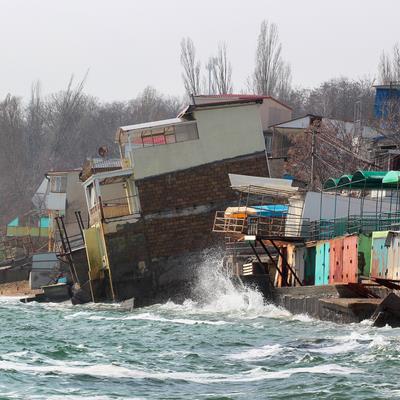
Accelerated climate change is impacting an increasing number of coastal environments and will continue in the future. Evidence of the effects of these climate-driven changes suggests an increased occurrence and/or severity of certain types of extreme events (e.g., cyclones, typhoons, storms, and tsunamis), resulting in more frequent and more severe coastal flooding events. Coastal flooding negatively affects coastal communities and habitats in multiple ways, including (I) inland water flows and (II) entrainment and transport of debris and pollutant of different nature. Extreme flows and their connected phenomena can be extremely hazardous to individuals, buildings and critical (infra)structure, crops and natural habitats. Therefore, it is essential to understand the path and intensity of these extreme flows in order to develop strategies aimed at reducing potential risks to affected areas. Consolidated and innovative methodologies are at the basis of monitoring and forecasting the potentially significant impact of extreme events on highly vulnerable areas, including those with elevated environmental interest (e.g. protected areas), dense anthropization, or anthropogenic activities with high potential for pollution.
At the same time, at local scale it is crucial to comprehend the involved processes to quantify the effects of coastal flooding on both urbanised and natural coastal areas. This allows to envision innovative approaches to mitigate associated hazards and enhance their assessment. Such studies are also essential for governments and regulatory bodies to understand how to address these issues, as well as to update and improve current design codes and guidelines.
The goal of this Research Topic is to disseminate better knowledge on the physical processes occurring during coastal flooding, as well as to facilitate the development of more effective engineering strategies that could be used worldwide to reduce risk and damages caused by coastal flooding events.
The scope of this Research Topic is to mainly focus on the evaluation of coastal flooding and strategies to mitigate their risk for, and not limited to:
- Extreme coastal events and inland inundations;
- Debris transport and accumulation;
- Pollutant transport during flood events;
- Impact of floods on structures, individuals, and/or natural habitats;
- Flooding in enclosed spaces e.g., pressurised waterways, subway stations, densely built environments.
This Research Topic accepts the following article types, unless otherwise specified in the Research Topic description:
Articles that are accepted for publication by our external editors following rigorous peer review incur a publishing fee charged to Authors, institutions, or funders.
Keywords: Coastal flooding, extreme events, risk mitigation, debris transport, flow-structure interaction, flow impact on people, flood-transported pollutants
Important note: All contributions to this Research Topic must be within the scope of the section and journal to which they are submitted, as defined in their mission statements. Frontiers reserves the right to guide an out-of-scope manuscript to a more suitable section or journal at any stage of peer review.
Sapienza University of Rome
Rome, Italy
Delft University of Technology
Delft, Netherlands
Universitat Politecnica de Catalunya
Barcelona, Spain
Department of Civil Engineering, Construction and Architecture, Faculty of Engineering, Marche Polytechnic University
Ancona, Italy
Sapienza University of Rome
Rome, Italy
Manuscripts can be submitted to this Research Topic via the main journal or any other participating journal.
Submit your idea
You will be redirected to our submission process.
