SD
subhabrata das
JPMorgan Chase & Co (United States)
New York, United States
1,065
Total views and downloads
In the expanding field of renewable energy, traditional photovoltaic systems face ongoing challenges related to high production costs and significant environmental impacts. This context fuels the exploration of innovative alternatives such as Biophotovoltaics and Bioperovskites, which blend concepts from several scientific disciplines to forge new pathways in energy technology. Despite complexities in integrating biology, material science, and engineering, these alternatives promise considerable advancements in the optimization and standardization of effective renewable energy solutions.
Quantum dot solar cells (QDSC) have emerged as significant contenders due to their unique properties. Central to their appeal is the quantum confinement effect, which allows the size of the quantum dots to define the absorption band gap—enabling the potential design of multi-junction solar cells that can theoretically reach up to 87% efficiency. Nonetheless, the current power conversion efficiencies (PCE) of these QDSCs lag behind traditional semiconductors, coupled with challenges related to stability due to phase transition issues. Recent breakthroughs, however, have elevated QDSC PCE to approximately 18% and spurred the development of more robust hybrid cells comprising colloidal/organic composites. Importantly, advances have also been made in utilizing both classical and quantum coherence functions to enhance transport mechanisms in photosynthesis and photovoltaic applications. Among these advancements are tighter control over the compounding of photogenerated electrons and holes in biophotovoltaic anodes, the creation of multiple heterojunctions within biophotovoltaic cells, and notable improvements in the photoconversion efficiencies of biosolar cells.
This Research Topic aims to foster the development and understanding of artificial photosynthesis and biosolar energy conversion systems, emphasizing the role of nanoscale and biological interfaces. This includes the modification of nano-TiO2 interfaces and their characterization with respect to Biosolar conversion, alongside the study of the photovoltaic properties exhibited by the multivariate heterojunctions within bio-photovoltaic cells, and Quantum and Density-Functional Theory based modeling of the performance exhibited biosolar cells. Ultimately, the research seeks to boost the efficiencies of biosolar cells and expand their practical applications, pushing the boundaries of current energy technologies into new territories.
To gather further insights into innovative artificial photosynthesis and biosolar technologies, we welcome articles addressing, but not limited to, the following themes:
• Design and synthesis of nano-biointerfaces for artificial photosynthesis.
• Biophotovoltaic solar panels and innovative bio-inspired perovskite applications.
• Integration of Microbial Fuel Cells (MFCs) with biosolar systems for improved energy generation.
• Biophotovoltaic solar panels and innovative bio-inspired perovskite applications.
• Topological materials and nano-biointerfaces triggered artificial photosynthesis.
• Comprehensive research spanning materials components, device design, and mechanisms of biosolar cells.
• Developments in novel quantum multi-junction solar cells.
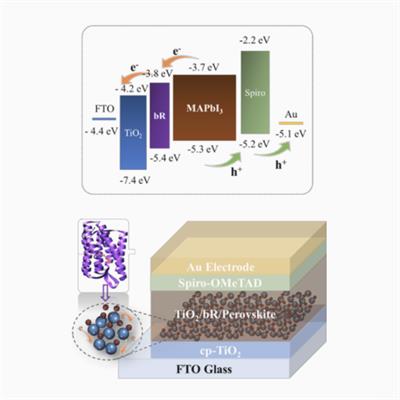
Keywords: Biophotovoltaics, Bioperovskites, Nanobiointerafaces, Artificial Photosynthesis, Quantum Dot Solar Cells (QDSC), Quantum Coherence in Photovoltaics, Biosolar Energy Conversion
Important note: All contributions to this Research Topic must be within the scope of the section and journal to which they are submitted, as defined in their mission statements. Frontiers reserves the right to guide an out-of-scope manuscript to a more suitable section or journal at any stage of peer review.
JPMorgan Chase & Co (United States)
New York, United States
Swiss Federal Institute of Technology Lausanne
Lausanne, Switzerland
Penn State Altoona
Altoona, United States
ETH Zürich
Zurich, Switzerland
University of Science and Technology of China
Hefei, China
