ZZ
zhen zhang
Tongji University
Shanghai, China
269
Total downloads
2,647
Total views and downloads
Submit your idea
You will be redirected to our submission process.
Manuscript Submission Deadline 31 July 2026
This Research Topic is currently accepting articles.
In recent years, geotechnical engineering applications have increasingly utilized innovative materials and techniques to address the diverse challenges of modern construction. Among these advancements, the use of lightweight fill materials has emerged as a promising solution to a variety of geotechnical problems. Lightweight fill materials, characterized by their low density and high strength-to-weight ratio, offer significant benefits in terms of reducing the load on supporting soils and structures, enhancing stability, reducing deformation, and improving construction efficiency. Lightweight fill materials encompass a broad range of substances, including but not limited to controlled low-strength materials (CLSM), expanded shale, clay, and slate (ESCS), foamed glass aggregates (FGA), lightweight cellular concrete (LCC), polystyrene geofoams, recycled glass aggregates, and tire-derived aggregates (TDA).
Lightweight fill materials are particularly desirable in geotechnical engineering applications (e.g., retaining walls, bridge abutments, pipes/culverts, embankments, and slopes) where traditional fill would impose excessive stress on underlying soils, leading to potential settlement and stability issues. By reducing the load imposed on underlying soils, lightweight fills mitigate the risk of differential settlement and enhance the overall durability and safety of geotechnical engineering applications. Furthermore, the use of lightweight fill materials contributes to the sustainability of geotechnical engineering applications. Many lightweight fill options incorporate recycled or waste materials, thus reducing the environmental footprint of construction projects. The reduced self-weight also translates to lower transportation and handling costs, further enhancing the economic efficiency of these materials.
This special issue “Lightweight Fill for Geotechnical Engineering Applications” aims to explore the latest advancements, practical implementations, and theoretical insights into the performance of lightweight fill for geotechnical engineering applications. Research topics will include but not be limited to the following aspects:
State-of-the-art review of the performance of lightweight fill for geotechnical engineering applications;
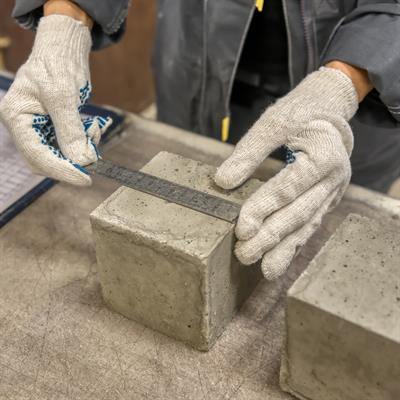
• Laboratory test on the mechanical and physical properties of lightweight fill;
• Physical modeling and field test on the performance of lightweight fill for geotechnical engineering applications;
• Numerical modeling of the performance of lightweight fill for geotechnical engineering applications;
• Theoretical analysis of the performance of lightweight fill for geotechnical engineering applications;
• Machine learning applications on the performance of lightweight fill for geotechnical engineering applications.
This Research Topic accepts the following article types, unless otherwise specified in the Research Topic description:
Articles that are accepted for publication by our external editors following rigorous peer review incur a publishing fee charged to Authors, institutions, or funders.
Keywords: Lightweight Fill, Innovative Materials, Low Density, High strength-To-Weight Ratio, Geotechnical Engineering Applications
Important note: All contributions to this Research Topic must be within the scope of the section and journal to which they are submitted, as defined in their mission statements. Frontiers reserves the right to guide an out-of-scope manuscript to a more suitable section or journal at any stage of peer review.
Manuscripts can be submitted to this Research Topic via the main journal or any other participating journal.
Submit your idea
You will be redirected to our submission process.
